标签: Africa

非洲

  • A surge in violence followed Trump’s cuts to USAID programs in Africa, a study finds

    A surge in violence followed Trump’s cuts to USAID programs in Africa, a study finds

    A new academic study published Thursday in the journal *Science* has uncovered a clear correlation between former U.S. President Donald Trump’s 2025 sudden decision to shut down the U.S. Agency for International Development (USAID) — a historic leading global aid provider — and a sharp, sustained rise in violent conflict across aid-dependent regions of Africa.

    For decades, USAID anchored international development and humanitarian support across Africa, channeling critical funding to fragile states grappling with insurgency, post-conflict recovery and civilian crises. The Trump administration’s dissolution of the agency terminated more than 90 percent of active foreign aid contracts, wiping out an estimated $60 billion in committed development funding. The sudden pullout disrupted ongoing aid operations, halted planned programming, and left gaps in staffing, service delivery and procurement across communities that relied entirely on USAID support, the study found.

    A team of researchers from European and American universities analyzed conflict patterns across African regions that had historically received the highest volumes of USAID assistance to reach their conclusions. While the study’s authors stop short of definitively attributing the violence increase solely to the aid cuts, they emphasize that the data confirms a key risk: large-scale, abrupt withdrawals of development aid can severely destabilize already fragile political and social contexts. Crucially, the researchers clarify the findings do not prove that increased foreign aid inherently reduces conflict — they only demonstrate the measurable destabilizing effect of sudden, unplanned disruption to long-standing aid programming.

    The study’s conclusions come amid growing alarm over rising extremist violence across Africa. A separate report released Wednesday by the Armed Conflict Location & Event Data Project (ACLED) echoed this concern, noting that jihadist-linked violence has grown steadily across the continent over the past four years, with insurgents increasingly targeting civilian populations.

    Case studies included in the new *Science* study illustrate the gaps left by USAID’s exit. In northeast Nigeria, the agency had long supported civilian victims of the Boko Haram insurgency, which has displaced millions and killed tens of thousands since 2002. In Ethiopia’s war-ravaged Tigray region, local authorities depended heavily on USAID funding to launch post-conflict recovery after a two-year civil war that claimed hundreds of thousands of lives. And in northern Ivory Coast, a frontline in regional counter-extremism efforts, USAID had committed significant resources to programs blocking the expansion of al-Qaida and Islamic State-affiliated groups.

    Outside experts warn the damage from USAID’s abrupt dissolution will outlast the funding gap itself. Nathaniel Raymond, executive director of the Humanitarian Research Lab at the Yale School of Public Health, who was not involved in the study, noted that even if funding is eventually restored, much of the institutional knowledge and on-the-ground program experience built up over decades by USAID staff has already been lost.

    Ladd Serwat, senior Africa analyst at ACLED, added that many USAID programs were designed to stop conflict from spreading across borders and into stable communities. “We now see increasing insurgency and spillover, so some of those programs may have supported these communities against insurgent threats, and now they are no longer active,” Serwat explained.

  • African fans face World Cup issues despite visa bond U-turn

    African fans face World Cup issues despite visa bond U-turn

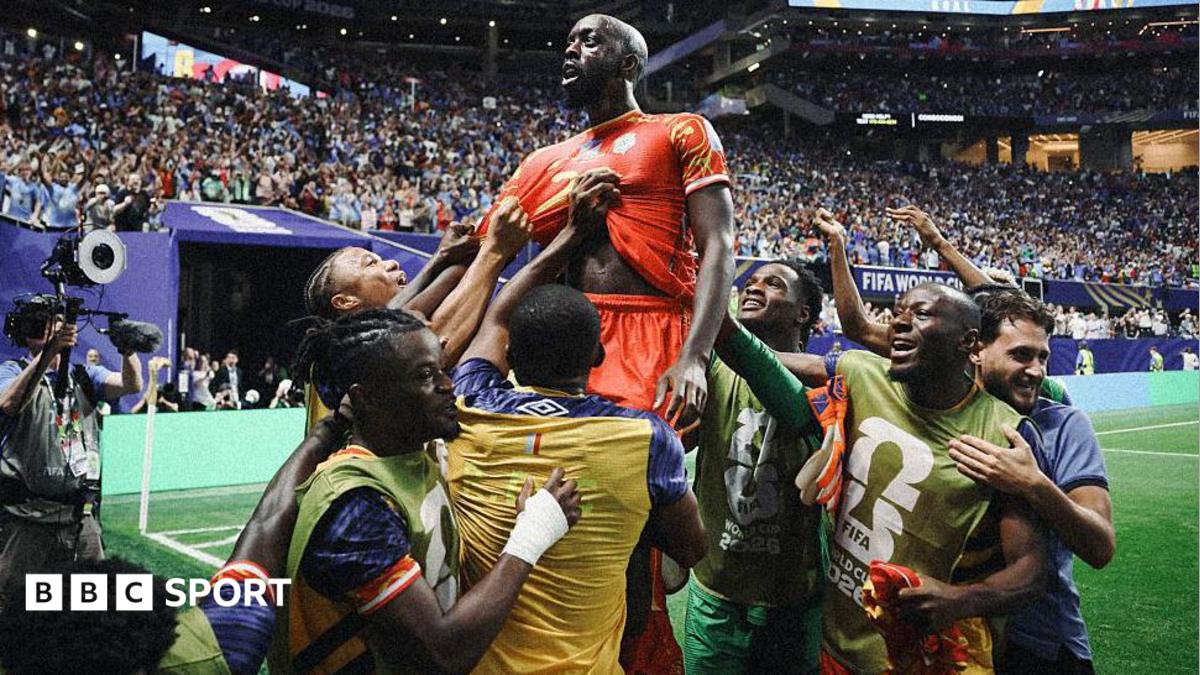
    As the 2026 FIFA World Cup prepares to welcome a historic 10 African national teams to the tri-nation tournament co-hosted by the United States, Canada and Mexico, a last-minute policy adjustment from the Trump administration has offered only limited relief to traveling supporters, leaving a host of costly and bureaucratic barriers still in place for fans from the continent.

    In a confirmation issued late Wednesday, the White House announced it would waive the mandatory visa bond requirement for ticket-holding fans from five African countries – Algeria, Cape Verde, Ivory Coast, Senegal and Tunisia – that were included in a broader 2025 immigration rule. The policy, which imposes bonds ranging from $5,000 to $15,000 on visitors from 50 nations, was crafted to curb visa overstays as part of the administration’s wider immigration crackdown. For fans who meet the exemption criteria, the change eliminates a potential $15,000 financial burden ahead of their trip.

    “We are waiving visa bonds for qualified fans who bought World Cup tickets,” U.S. Assistant Secretary of State for Consular Affairs Mora Namdar confirmed in a statement shared with BBC Sport Africa. However, the exemption comes with a critical caveat: only supporters who registered their valid match tickets through FIFA’s online FIFA Pass system by the 15 April cutoff date qualify for the waived bond. The FIFA Pass system, launched last November, was originally designed to help ticket holders secure expedited visa appointment processing.

    FIFA welcomed the policy shift in an official statement, framing it as proof of the governing body’s productive collaboration with the Trump administration “to deliver a successful, record-breaking and unforgettable global event.” But for thousands of African fans hoping to attend the tournament, the announcement has come too late to remove obstacles to their travel.

    It remains unclear whether fans from the five affected countries who purchase last-minute match tickets after the registration deadline will still be required to pay the full visa bond. Worse, persistent travel restrictions remain in place for supporters from Ivory Coast and Senegal under the administration’s ongoing entry ban: any fan from these two nations who did not secure a valid U.S. visitor visa before December 2025 will be automatically barred from entering the country for the tournament.

    The partial exemption also does nothing to resolve widespread visa challenges for fans from other African qualified nations. BBC Sport Africa has confirmed that multiple Ghanaian supporters, whose team will play group stage matches in Boston and Philadelphia, have already been denied U.S. entry visas, despite not being subject to the visa bond requirement.

    Beyond visa hurdles, African fans face a cascade of additional financial and logistical challenges that put in-person attendance out of reach for many. The 2026 tournament is spread across three North American countries, requiring most fans to cross multiple international borders just to attend their team’s group stage matches. Only Algeria, Cape Verde and Morocco will play all their group stage games exclusively on U.S. soil. Egypt, Ghana, Ivory Coast and Senegal all have group stage fixtures in Canada, requiring additional Canadian entry visas, while DR Congo, South Africa and Tunisia will play at least one match in Mexico, bringing another set of entry requirements.

    Ticket costs have also reached prohibitive levels for most casual supporters from the continent. As of mid-January, the only tickets available under $1,170 for any of the first 10 matches featuring African teams were $600 seats for Egypt’s group stage fixture against Belgium, listed on FIFA’s official ticketing portal. Remaining tickets for the tournament’s opening match between Mexico and South Africa are listed for $3,840 apiece on the primary market, while FIFA’s official resale platform has seen even more extreme inflation: two category three upper-tier seats for the Mexico City opener are being resold for a staggering $34,500 per ticket.

    On top of steep ticket prices, transcontinental flights, cross-border transit and accommodation across North America carry far higher price tags than most African fans can afford. Adding another layer of uncertainty, the U.S. government late last year expanded entry requirements to demand five years of social media history from most tourists applying for visitor visas, a policy change that rights groups warn opens the door to racial profiling, arbitrary entry denials, heightened surveillance and increased risk of arrest for traveling supporters.

    With 78 of the tournament’s 104 total matches set to be held on U.S. soil, the Trump administration’s partial climb-down on visa bonds marks a small win for African fans, but it does little to address the sweeping barriers that will keep most supporters from the continent from cheering on their nations in person this summer.

  • Over 40% of Sudan’s population face high levels of acute food insecurity, monitoring group warns

    Over 40% of Sudan’s population face high levels of acute food insecurity, monitoring group warns

    CAIRO – As Sudan’s brutal civil conflict approaches its second full year, a leading global food security monitoring body has delivered a grim new assessment, revealing that more than two-fifths of the war-ravaged nation’s population is already suffering from extreme levels of acute hunger. The Integrated Food Security Phase Classification (IPC), a global initiative that tracks and grades food insecurity worldwide, published its updated analysis Thursday, laying bare the catastrophic humanitarian fallout of the 14-month-old war between Sudan’s regular army and the Rapid Support Forces (RSF) paramilitary group.

    According to the report, nearly 19.5 million Sudanese are currently experiencing high levels of acute food insecurity. Of this vulnerable population, 135,000 people are already in the most severe IPC Phase 5, a classification defined by catastrophic food shortages, widespread starvation, acute malnutrition at critical levels, and elevated mortality from hunger and preventable disease.

    The IPC’s assessment warns that the situation is on track to worsen dramatically in the coming months, as Sudan enters the annual June-to-September lean season, when crop supplies from the previous harvest are depleted before new yields can be harvested. Looking ahead to 2026, the group projects that roughly 825,000 children under the age of five will develop severe acute malnutrition – a life-threatening condition that disproportionately kills young children in conflict zones. That figure marks a 7% rise from 2024 levels, and a 25% jump from the rates of severe child malnutrition recorded before the war erupted.

    Even with limited aid access, more than 98,500 children have already received life-saving treatment for severe acute malnutrition in the first three months of 2025, according to IPC data. But widespread gaps in healthcare and humanitarian access leave hundreds of thousands more without the care they need to survive.

    Sudan’s ongoing civil conflict ignited in April 2023, when years of festering power-sharing tensions between the national army and the RSF boiled over into open armed confrontation across the country. The fighting has already killed at least 59,000 people, displaced roughly 13 million Sudanese from their homes, and pushed vast swathes of the country to the brink of mass starvation. Currently, more than 30 million Sudanese – over two-thirds of the country’s pre-war population – require emergency humanitarian assistance to meet basic survival needs.

    While the IPC confirmed that no regions across Sudan are currently classified as being in formal famine, the organization warned that 14 local areas across three hard-hit provinces – North Darfur, South Darfur and South Kordofan – are at imminent risk of famine if conflict intensifies, food access continues to shrink, healthcare and sanitation infrastructure further collapses, and more people are forced to flee their homes. Famine was formally confirmed in two Sudanese locations last year: el-Fasher, the largest city in western Darfur, and Kadugli, the capital of South Kordofan.

    Compounding the existing crisis driven by internal conflict, Sudan’s agricultural sector – the backbone of the country’s food supply – is facing new, external pressures that threaten to deepen food shortages in the coming months. Farmers across the country are bracing for a prohibitively expensive planting season, as key input costs for fertilizer, fuel for farm machinery, and diesel for irrigation pumps have skyrocketed, driven in large part by ongoing tensions in the Middle East that have disrupted global supply chains.

    More than half of Sudan’s imported fertilizer arrives via sea routes from the Gulf region, where hundreds of commercial vessels have been stranded in recent weeks amid heightened tensions around the Strait of Hormuz. The resulting supply disruptions have pushed domestic fuel prices in Sudan up by roughly 30%, making it even harder for small-scale farmers to plant the crops that would feed millions in the coming year.

  • Springboks’ Ntlabakanye given 18-month doping ban

    Springboks’ Ntlabakanye given 18-month doping ban

    South African international rugby prop Asenathi Ntlabakanye, who features for the Johannesburg-based Lions franchise, has received an 18-month competition ban after being found in violation of global anti-doping regulations. The sanction will effectively exclude the 27-year-old front-rower from competing at the 2027 Rugby World Cup hosted in Australia.

    The case dates back to a routine out-of-competition test conducted in 2025, where Ntlabakanye returned a positive result for Anastrozole, a classified hormone and metabolic modulator. While a positive test for this substance alone does not trigger an automatic mandatory suspension under current anti-doping frameworks, the prop further complicated his case when he voluntarily admitted to also using Dehydroepiandrosterone, more commonly known as DHEA.

    According to the World Anti-Doping Agency (WADA), DHEA is categorized as a banned substance because it works to naturally boost the body’s testosterone production. Elevated testosterone levels accelerate muscle recovery and growth, which can deliver an unfair competitive advantage to athletes who use the compound. Court documents confirm Ntlabakanye told investigators he was unaware DHEA was prohibited, believing it was a permitted supplement.

    Following formal charges brought by the South African Institute for Drug-Free Sport (SAIDS), an independent anti-doping tribunal reviewed the evidence and handed down the 18-month suspension. The ban officially entered into force on 13 May 2025, and is scheduled to end in November 2026 – which falls after the conclusion of the 2027 Rugby World Cup in Australia. Ntlabakanye retains the right to launch an appeal against the ruling within a 21-day window from the announcement of the decision.

    In an official statement confirming the sanction, the Lions Rugby Company acknowledged that SAIDS had notified the club of the anti-doping rule violation. The franchise added that it would stand by the player throughout the remainder of the process, saying: “During this time, the Lions Rugby Company will continue to support Ntlabakanye as he navigates the process ahead.”

    Ntlabakanye earned his first senior international cap for the Springboks against Italy in July 2025, and went on to feature in two more test matches for the world-famous national side, bringing his total senior South Africa caps to three before the ban was announced. His final outing for the Lions came just last Saturday, where the Johannesburg side fell to defeat against Irish giants Leinster in the United Rugby Championship.

  • Former Nigerian minister sentenced to 75 years in rare corruption verdict

    Former Nigerian minister sentenced to 75 years in rare corruption verdict

    In a landmark conviction that has sent shockwaves through Nigeria’s political landscape, former Nigerian Power Minister Saleh Mamman has been handed a 75-year prison sentence for laundering 33.8 billion naira (equivalent to roughly $24.7 million), marking one of the rare high-profile convictions of corrupt senior officials in the West African nation.

    The 68-year-old ex-minister, who led Nigeria’s power sector from 2015 to 2021 under former President Muhammadu Buhari’s administration, was found guilty last week on 12 separate corruption charges. Prosecutors proved that Mamman used privately owned front companies to siphon and launder public funds allocated for government-backed power infrastructure projects.

    In an unusual turn of proceedings, the Abuja High Court handed down the sentence on Wednesday in absentia. Nigeria’s lead anti-graft agency, the Economic and Financial Crimes Commission (EFCC), confirmed that Mamman has gone missing, and has been untraceable since the guilty verdict was issued. Just days after his conviction, the court issued a formal arrest warrant for the former minister on Monday. Mamman has not issued any public response to the charges or conviction.

    What makes the case even more remarkable is the timing: just weeks before his sentencing, Mamman officially announced his intention to run for governor of Taraba State in Nigeria’s 2027 general election, running on the ticket of the country’s ruling All Progressives Congress (APC). He made the announcement in a social media post, writing that he had picked up his Expression of Interest and Nomination Forms “with a deep sense of responsibility and unwavering commitment” to serve the state.

    Buhari, whose administration campaigned on a promise to crack down on endemic public sector corruption, ultimately removed Mamman from his cabinet in a 2021 reshuffle following what the presidency described as an “independent and critical self-review” of government performance.

    Along with the prison sentence, the high court ordered Mamman to repay 22 billion naira ($16 million) of the laundered funds to the Nigerian government. His conviction is part of a broader ongoing anti-corruption crackdown by the EFCC targeting former senior government officials. The agency is currently pursuing investigations into other high-profile figures, including former Justice Minister Abubakar Malami and former Humanitarian Affairs Minister Sadiya Umar Farouq, who was recently declared a wanted person by the EFCC. Both officials have denied all allegations against them.

    The verdict has also reignited long-simmering public anger over Nigeria’s ongoing national electricity crisis, a problem Mamman was tasked with solving during his tenure as power minister. Despite being one of Africa’s largest energy producers, Nigeria suffers from chronic, nationwide power shortages that bring frequent, extended blackouts to residential and commercial areas across the country. Millions of households and businesses are forced to rely on expensive private fuel-powered generators, and soaring global fuel prices have left countless Nigerians unable to afford the cost of backup power, deepening economic hardship across the country.

  • Underwater memorial to wrecked slave ship draws pilgrims seeking to connect with their roots

    Underwater memorial to wrecked slave ship draws pilgrims seeking to connect with their roots

    Off the sun-dappled coast of Key West, Florida, Ruthie Browning slipped into the glassy Atlantic waters in early May, expecting nothing more than a quiet moment of respect at a sunken memorial. She had joined a cohort of Black divers and community advocates on a journey to a sacred maritime site: the final resting place of the Henrietta Marie, a British slave ship that sank 326 years ago, at the height of the brutal trans-Atlantic slave trade.

    The vessel’s tragic story is etched into the seafloor: after delivering 200 kidnapped West African people into chattel slavery in Jamaica, the ship set sail for Britain in 1700, only to be swallowed by a storm at New Ground Reef, where the Atlantic merges with the Gulf of Mexico. Today, a six-meter-deep concrete marker anchors the site, a permanent tribute to the lives stolen and forever altered by the trans-Atlantic slave trade. Browning arrived ready to observe, honor, and depart—but the moment she reached the marker, an unexpected wave of emotion overtook her.

    Staring at the memorial, now a thriving micro-reef draped in soft corals and sponges, tears flooded her eyes. As she quieted her mind to listen, she felt a gentle, unmistakeable connection to the ancestors whose stories the site holds: “My daughter, we’re so glad you’re here.” Overwhelmed by gratitude, she lingered at the marker, which bears the inscription: “Henrietta Marie. In memory and recognition of the courage, pain and suffering on enslaved African people. Speak her name and gently touch the souls of our ancestors.” “Without their stamina, their spirit and survival, I wouldn’t be here today. None of us would be here today,” Browning reflected after her dive.

    This pilgrimage was years in the making. The group’s 2023 attempt to reach the site was foiled by dangerously choppy waters, which group members framed as a sign the timing was not right. “The ancestors were not smiling down on us then,” said Jay Haigler, a master diving instructor with Underwater Adventure Seekers, the world’s oldest Black scuba diving club. “This year was different.”

    Michael Cottman, an author of two books on the Henrietta Marie and a member of the National Association of Black Scuba Divers that installed the memorial in 1992, noted that this journey was never supposed to be simple. The site carries what he calls “spiritual turbulence”: “Even if it wasn’t carrying enslaved people, it embodies the oppression of our people.” After annual pilgrimages in the 1990s lapsed, the 2024 trip was revived by an underwater oral history project led by Stanford University anthropologist Ayana Omilade Flewellen, who serves on the board of Diving With a Purpose, a Black-led nonprofit dedicated to documenting and preserving slave shipwreck sites.

    For Flewellen, the submerged interviews conducted during the pilgrimage became a deeply personal spiritual practice. “I felt a kind of tenderness in my heart,” she said. Processing the traumatic history of death and suffering that defines the site has long been a challenge, she explained: “It’s hard to attach your life with this history. The only way I could do that was turn toward what the divers were experiencing on this pilgrimage. That’s where it all bloomed and blossomed.”

    Beyond the underwater memorial, the pilgrimage also included a land-based ritual at Higgs Beach, where 297 African refugees who were rescued from three illegal slave ships in 1860 are buried. After the U.S. Navy intercepted the ships *Wildfire*, *William* and *Bogota*, the government housed more than 1,400 surviving refugees in a coastal compound, but hundreds died from the devastating health effects of their inhumane confinement on the crossing, explained Corey Malcom, lead historian at the Florida Keys History Center.

    Forgotten for nearly 150 years, the burial ground was rediscovered by researchers using ground-penetrating radar, and in 2010 a mass grave holding 100 additional bodies was found at a nearby community dog park, which has since been fenced off to protect the site. During this year’s pilgrimage, the group gathered at the cemetery to hold a traditional libation ceremony, an ancient Afro-Caribbean spiritual practice. One by one, members poured white rum—believed to act as a messenger between the living and ancestral worlds—onto the sand, tearfully honoring the lives lost. “To honor your ancestors and the road they’ve traveled is very, very important because we’re all connected,” said Addeliar Guy, a group elder and lifelong diver.

    For many participants, the most striking revelation of the pilgrimage was that the Henrietta Marie site is not merely a place of death and grief—it is a place of living history. Joel Johnson, president and CEO of the National Marine Sanctuary Foundation, trained for weeks to complete his first open-water dive at the site. He was surprised by the vibrant life that now surrounds the memorial: colorful fish dart through swaying corals, and seashells dot the sandy seafloor. Protecting these marine habitats, he said, is inextricably linked to protecting the history they hold. “This was not a place of death, but a place of life,” Johnson explained. “I didn’t feel like I was grieving for my ancestors. I felt like I was in the stream of history, recognizing that I’m a part of that. It made me happy.”

    Michael Philip Davenport, president of Underwater Adventure Seekers, left the site inspired to create new art depicting ancestors emerging from the memorial. “Their spirituality is still in that space,” he said. “I was feeling their lives and their tragedy.”

    For Dr. Melody Garrett, an anesthesiologist who has worked with Diving With a Purpose to locate another slave shipwreck, the Guerrero, this pilgrimage is more urgent now than ever. She pointed to recent political efforts to erase references to slavery and Black history from U.S. national parks and federal cultural institutions, including moves during the Trump administration that labeled teachings on slavery as divisive “anti-American propaganda.” As the United States prepares to mark its 250th founding anniversary, Garrett said the site reinforces a fundamental truth about American identity: “Black people have been here since before this country’s inception, longer than many other people have. This is our country.”

    Fragments of the Henrietta Marie’s wooden hull still rest beneath the sand at the wreck site. Discovered in 1972 by treasure hunter Mel Fisher, the wreck was fully excavated in 1983, yielding hundreds of intact artifacts. Out of an estimated 35,000 ships that transported more than 12 million enslaved African people across the Atlantic, only a handful have ever been located—most were destroyed intentionally to cover up evidence of the illicit trade. Today, the Henrietta Marie’s artifacts fill an entire floor of Key West’s Mel Fisher Maritime Museum, including more than 80 sets of iron shackles, many sized for children.

    When Kory Lamberts, who runs a nonprofit working to expand equitable access to aquatic recreation, first visited the exhibit, the wooden display planks creaked under his feet, and the gravity of the history hit him instantly. “It was visceral,” he said. “It took me to a place. It also tells me that these were young people — children. These are baby shackles. There’s no sugarcoating it. The truth really hits you.” After his dive, Lamberts brought back fish caught near the Henrietta Marie site—fish he believes carry the ancestral DNA of those who died there. The group ate the fish for dinner the night after their dives, a quiet sacrament of connection. “I don’t practice a faith, but isn’t this what people are doing every Sunday at church?” he asked. “I wasn’t just bonded with this site through the experience of being there, but at this molecular level with a full circle moment of connection with myself and my history.”

    This coverage of religious and cultural practice is supported by the Associated Press through a partnership with The Conversation US, with funding from Lilly Endowment Inc. The AP holds sole responsibility for this content.

  • ‘They shot my neighbour in the head’ – the lakeside city traumatised by war

    ‘They shot my neighbour in the head’ – the lakeside city traumatised by war

    Years of simmering conflict in the resource-rich eastern region of the Democratic Republic of the Congo have erupted into one of the world’s most devastating unaddressed humanitarian crises, with a new bombshell investigation from leading global human rights watchdog Human Rights Watch (HRW) exposing systematic atrocities against civilians during the weeks-long occupation of the key lakeside city of Uvira.

    The investigation, the first comprehensive on-the-ground account of abuses during the occupation, documents extrajudicial summary executions, widespread sexual violence, targeted attacks on children, and mass civilian displacement, with direct blame placed on both the M23 rebel movement and uniformed troops from neighboring Rwanda.

    M23 forces, long alleged by Western powers and United Nations experts to be militarily backed by Rwanda, seized Uvira – a strategic port city on the shores of Lake Tanganyika that serves as a gateway to Burundi, a key Congolese military ally – in December 2024. The capture came just days after then U.S. President Donald Trump brokered a high-profile peace deal between Congolese President Felix Tshisekedi and Rwandan President Paul Kagame, designed to de-escalate years of fighting in the unstable region.

    Over 130 local residents who remained in or fled Uvira during the occupation were interviewed by HRW investigators, who collected firsthand testimony corroborating 53 documented civilian executions carried out during door-to-door search raids across residential neighborhoods. The victims included 46 men, one woman, and five minor boys. Multiple witnesses described watching family members and neighbors killed in cold blood. One survivor recalled, “I wasn’t hit so I just ran to the lake. I saw my brother, his wife, and two of his children fall,” after M23 fighters opened fire on his household. Another witness described seeing fighters execute his neighbor with a point-blank gunshot to the head.

    Beyond extrajudicial killings, HRW verified eight separate accounts of gang rape and sexual assault committed by M23 fighters and Rwandan soldiers, with many survivors describing brutal violence against their families for attempting to intervene. In one account, a woman told investigators that after uniformed men sexually assaulted her, they shot and killed her husband when he tried to stop the attack. Another survivor recalled Rwandan soldiers threatening to murder her if she did not comply with their demands, while a third survivor described fighters debating whether to kill her before deciding to assault her instead.

    Children were not spared from the violence, the report confirms. Multiple children were shot and killed after being falsely accused of being pro-government informants. One 12-year-old boy survived a execution attempt, HRW says, after fighters shot him and stabbed his leg with a bayonet to confirm he was dead before leaving him for dead. Investigators also located three unmarked mass graves in Uvira, including one on a site previously controlled by United Nations peacekeeping forces.

    The Rwandan government has long rejected all claims that it provides military support to M23 or deploys its own troops inside Congolese territory, and neither the Rwandan government nor M23 leadership responded to HRW’s requests for comment on the specific allegations outlined in the report, nor to separate requests for comment from the BBC.

    Following intense regional and international diplomatic pressure, M23 withdrew from Uvira in January 2025, allowing Congolese government forces to retake control of the city. By that point, tens of thousands of residents had already fled their homes to escape the violence.

    HRW says the pattern of documented abuses – which also include widespread abductions, enforced disappearances, and forced recruitment of local residents – meet the international legal definition of war crimes. The organization is calling for immediate international accountability measures to be brought against all parties responsible for the violence.

    This report is only the latest to highlight the catastrophic scale of the ongoing humanitarian disaster in eastern DRC. A separate 2025 analysis from the United Nations Children’s Fund (UNICEF) found that more than 35,000 cases of sexual violence against children were recorded across the country in the first nine months of 2025, the vast majority in the North and South Kivu provinces, where M23 controls large swathes of territory. The persistent fighting has displaced nearly two million people in South Kivu province alone, according to UN figures, leaving millions more facing acute food insecurity and limited access to basic medical and humanitarian services.

  • Somalia is in a deadly drought again. Most humanitarian aid isn’t there this time

    Somalia is in a deadly drought again. Most humanitarian aid isn’t there this time

    In the parched semi-autonomous region of Puntland, northern Somalia, 70-year-old pastoralist Abdi Ahmed Farah guards a rapidly dwindling stock of food that keeps his family of 23 alive. Three years of failed consecutive rains have turned his once-thriving herd of 680 goats into a pile of carcasses littered outside his makeshift tent, leaving just 110 emaciated animals barely clinging to life. Already trapped in debt from purchasing overpriced water, Farah’s family now survives on a single daily meal of rice mixed with sugar and oil. Three weeks after his youngest child was born, his wife produces barely a drop of breast milk to feed the newborn.

    “I have considered abandoning my family because I cannot provide for them,” Farah said, his voice heavy with desperation that echoes across millions of Somali households as the country faces what experts warn could be the worst drought in its recorded history. One of the world’s most climate-vulnerable nations, Somalia is now grappling with a climate-driven catastrophe that has dried up major rivers, withered entire harvests, and pushed a third of its population to the brink of starvation.

    The crisis has been severely compounded by cascading external pressures: deep cuts to international humanitarian aid, most sharply from the United States, Somalia’s former largest donor, and skyrocketing commodity prices spurred by ongoing tensions in the Middle East. Somalia relies on imports for 70% of its food supply and purchases nearly all of its fuel from the region, leaving its already fragile economy extremely exposed to global market shocks. Data from the United Nations Food and Agriculture Organization shows production of the country’s staple crops—maize and sorghum—during the key October-to-December rainy season fell to the lowest level on record this year.

    Humanitarian agencies now warn that nearly 500,000 children across Somalia are at risk of severe acute malnutrition, the deadliest form of hunger, a toll higher than that recorded during the catastrophic droughts of 2011 and 2022, according to UNICEF. “2026 is the worst year on record for Somalia in terms of drought,” said Hameed Nuru, country director for the U.N. World Food Programme (WFP) in Somalia. “Children have started dying.”

    Official joint estimates from the Somali government and the United Nations put the number of people facing crisis-level hunger at 6.5 million, a 25% jump since the start of the year that equals one-third of the entire national population. While aid organizations are stretching already thin resources to respond and the Somali diaspora has been sending critical funds to family members back home, humanitarian workers warn the support being mobilized is nowhere near enough to meet the scale of need.

    “This drought is not just another cycle of dry season. It’s a repeated climate shock with shrinking humanitarian support,” explained Mohamed Assair, a senior manager for Save the Children in Puntland.

    In Usgure, the small Puntland village where Farah and his family have taken shelter for 10 days after fleeing their depleted grazing lands, the local economy that relies entirely on pastoralist activity has completely collapsed. Almost a dozen rotting goat carcasses lie within meters of Farah’s tent, and even when herders manage to hold onto livestock, emaciated animals cannot be sold or traded for staple grains like they once could. “There is no market for my goats because they are so thin. Previously we would trade them for rice, but now we can’t,” Farah said.

    Community leader Abshir Hirsi Ali, who heads the 700-family village, says local shops have shuttered and food reserves have run dry. A brief, unseasonable shower that recently passed through the region left behind pools of contaminated rainwater, but desperate families with no other source of drinking water had no choice but to consume it. “Some families were so desperate they drank it … now there is a high number of people with fever,” Ali said. Save the Children occasionally delivers free water to the village, but private water vendors have quadrupled their prices amid scarcity. The cost of a 50-kilogram bag of flour has jumped by a third to $40, out of reach for most displaced and local households.

    For 47-year-old mother of 11 Muhubo Tahir Omar, the drought has erased even the possibility of education for her children. Like other families, she sold all her goats one by one to cover school fees, but when the money ran out, teachers abandoned the village school. Her last remaining goat is now also sick, leaving her with no assets to fall back on. “I’m not only afraid for my family but the future of the whole village,” she said.

    Decades of ongoing conflict in Somalia have already displaced millions of people across the country, and the drought has pushed an additional 200,000 people from their homes this year alone, per U.N. estimates. Many families cross hundreds of kilometers of harsh, arid terrain with almost no food or water to reach the nearest aid distribution sites, a journey that often proves fatal. “People are on the move … and when people move, people die,” said Kevin Mackey, country director for the humanitarian organization World Vision. Mackey recently met with a group of displaced people who walked for nine consecutive days across open desert to reach aid in the southern Somali town of Dollow.

    In a displacement camp outside Shahda village, Puntland, 20-year-old mother of four Shukri—who only provided her first name for safety—says she once managed to scrape together one meal a day for her children from aid handouts. Now, there is no food at all, and clean water remains almost impossible to access. “The children got diarrhea from dirty water and malnourishment worsened,” she said. “I know a few people who have died.”

    Thousands of displaced people flock to Mogadishu, Somalia’s capital, in search of better access to aid, but food scarcity plagues even the capital city. Forty-five-year-old mother of seven Fadumo fled to Mogadishu from Lower Shabelle, a region already besieged by violence from the al-Qaida-linked militant group al-Shabab. “The water sources we depended on for farming, including the river, dried up,” Fadumo said. “Conflict made our situation even worse, forcing us to flee.”

    The catastrophic 2022 drought in Somalia killed an estimated 36,000 people, per U.N. data, and today, the level of emergency aid that was rushed to the country during that crisis has all but evaporated. Total international aid funding to Somalia dropped to just $531 million in 2025, down from $2.38 billion in 2022, a collapse driven largely by deep cuts from the United States, which was previously the country’s largest donor.

    “Unless there is a sudden and substantial response from donors, the outlook is deeply concerning. A drought of similar severity in 2022 received a response five times greater than what we are seeing,” said Antoine Grand, head of the International Committee of the Red Cross in Somalia. WFP originally planned to deliver food aid to 2 million vulnerable Somalis this year, but crippling funding gaps mean the organization has only been able to reach 300,000 people to date.

    At a severe acute malnutrition treatment center run out of the main hospital in Qardho, Puntland, life-saving therapeutic milk for malnourished children is now rarely in stock, forcing nurses to rely on unfortified cow’s milk as a homemade alternative, according to center director Shamis Abdirahman. The center currently treats around 15 children a month, but staff expect cases to surge dramatically as more displaced families arrive from drought-stricken rural areas.

    Four-year-old Farhia, who weighs just 7.5 kilograms—less than 17 pounds—with sunken eyes and visible bones under her skin, is one of the children currently receiving care. Her family fled to Qardho after all of their goats died back in their home village. “I don’t know what to hope for, or see how we can get back to what we had,” said Farhia’s mother, Najma.

  • Two weeks of clashes in a southern Sudan region kill dozens, a local medical group says

    Two weeks of clashes in a southern Sudan region kill dozens, a local medical group says

    Two weeks of brutal, concentrated armed clashes in Sudan’s southern South Kordofan region have claimed the lives of more than 61 people — nine of them children — a Sudanese medical monitoring organization confirmed Wednesday, in the latest outbreak of violence tied to the full-scale civil war that has torn the East African nation apart since early 2023.

    According to the Sudan Doctors Network, a group that tracks civilian and combatant casualties across Sudan’s active conflict zones, the fighting flared earlier this month between fighters aligned with the rebel Sudan People’s Liberation Movement-North (SPLM-N) and militias from the local Otoro tribe in the town of Kauda. SPLM-N, a breakaway faction of the ruling party of neighboring South Sudan, has long operated in South Kordofan’s Nuba Mountains, where the Otoro are an indigenous minority community.

    SPLM-N leader Abdel Aziz al-Hilu has openly aligned his faction with the Rapid Support Forces (RSF), the powerful paramilitary group that has been locked in a war for control of Sudan against the country’s official national military since April 2023. Al-Hilu’s group has even joined a local governing administration established by the RSF in territories the paramilitary controls along Sudan’s border with South Sudan.

    As Sudan’s civil war enters its fourth year, the two main warring factions hold control over distinct swathes of the country. Sudan’s regular military governs most of the north, east, and central regions, including strategic Red Sea shipping ports and the country’s critical oil processing and pipeline infrastructure. The RSF and its allied armed groups, by contrast, hold the western region of Darfur as well as large sections of Kordofan along the South Sudan border — both territories rich in untapped oil reserves and gold deposits.

    The casualty breakdown compiled by the Sudan Doctors Network, drawn from firsthand survivor testimonies collected by the group’s on-the-ground teams in South Kordofan, shows that five women and nine children are among those killed in the recent Kauda clashes. Mohamed Elsheikh, spokesperson for the medical network, told the Associated Press that severely limited communication infrastructure in the conflict zone makes full casualty verification nearly impossible, and the actual death toll is almost certainly higher than the current confirmed count as fighting continues.

    Beyond the human toll, the medical group documented widespread property destruction: SPLM-N fighters are accused of burning down residential homes and local commercial shops, as well as looting civilian property across the Kauda area. Multiple survivors told the organization that civilians were deliberately and indiscriminately targeted in the attacks. The network added that systematic arson attacks on civilian communities have become commonplace around Kauda, with no established safe corridors to evacuate wounded civilians or bring life-saving humanitarian aid into the besieged area. The SPLM-N has not yet issued a public response to requests for comment on these allegations.

    In a separate outbreak of violence Tuesday, artillery shelling carried out by the RSF in Dilling, another major South Kordofan town, killed seven people and wounded 17 more, according to local hospital officials. Omran Teia, director of Umm Bakhita Hospital in Dilling, confirmed to the AP that civilians were the main targets of the shelling, carried out jointly by RSF fighters and their SPLM-N allies.

    Sudan’s ongoing civil war has already resulted in catastrophic humanitarian consequences across the country. The conflict erupted after years of escalating tensions between the military and the RSF boiled over into open combat. To date, the conflict has officially killed at least 59,000 people, displaced roughly 13 million Sudanese from their homes, pushed multiple entire regions into full-scale famine, and left more than 30 million people — nearly two-thirds of the country’s population — in need of urgent humanitarian aid.

    Both the Sudanese military and the RSF and its allied factions, including the SPLM-N, have been repeatedly accused by the United Nations and international human rights organizations of committing widespread atrocities against civilian populations. These accusations include mass ethnic cleansing, extrajudicial executions of non-combatants, and widespread sexual violence as a weapon of war. International aid organizations have repeatedly warned that the true overall casualty toll of the conflict is far higher than confirmed counts, because independent monitors are blocked from accessing most active fighting zones across Sudan’s large territory.

  • Macron ends Africa trip in Ethiopia with focus on UN reform and inclusive governance

    Macron ends Africa trip in Ethiopia with focus on UN reform and inclusive governance

    On Wednesday, French President Emmanuel Macron wrapped up his multi-stop African tour in Ethiopia’s capital Addis Ababa, where high-level talks centered on one of the continent’s longest-standing global governance demands: permanent representation on the United Nations Security Council.

    Macron’s three-nation trip, which also included stops in Egypt and Kenya, concluded with a full schedule of diplomatic engagements: he first held one-on-one discussions with Ethiopian Prime Minister Abiy Ahmed, then joined a multilateral meeting with African Union Commission Chairperson Mahamoud Ali Youssouf and UN Secretary-General António Guterres to examine reforms to global inclusive governance structures. A joint readout from the gathering confirmed all participants agreed on the critical necessity of expanding African representation within key UN bodies.

    The push for Security Council reform gained new momentum earlier during the trip, at the first-ever Africa Forward Summit co-hosted by France and Kenya in Nairobi, a landmark moment as the summit was held for the first time in an English-speaking African nation. During his opening address to the summit, Macron explicitly backed the call for African nations to receive permanent seats on the Security Council, a position he reiterated during his Addis Ababa talks. The final peace and security declaration adopted at the summit echoed this demand, calling for urgent comprehensive reform to make the Security Council both more effective and reflective of today’s global population.

    Africa’s campaign for permanent Security Council representation is rooted in a decades-long push to align the UN’s top decision-making body with modern geopolitical realities. Continental leaders and institutions have long criticized the current structure, which excludes the 1.4 billion people living on the African continent from permanent decision-making power, leaving the body out of touch with the world’s current demographic and geopolitical landscape.

    Guterres echoed this critique during Wednesday’s meeting, noting that global governance would be far stronger with a geographically inclusive Security Council. “A Security Council that today does not represent geographically the realities of the world,” he said. “We have three European permanent members, one North American and one Asian. No Latin American, no African is obviously a Security Council that has a problem of legitimacy, and that brings with it a problem of effectiveness.”

    Beyond high-level discussions of global governance, the diplomatic visit delivered tangible outcomes for Ethiopia: following Macron’s talks with Abiy, officials announced a new $63.9 million loan agreement to support the East African nation’s green energy investments and national digitalization program. This agreement aligns with the broader financial pledge Macron made at the Africa Forward Summit, where he announced that the French government and private sector would mobilize $27 billion in targeted investments to drive inclusive, sustainable economic growth across the entire African continent.