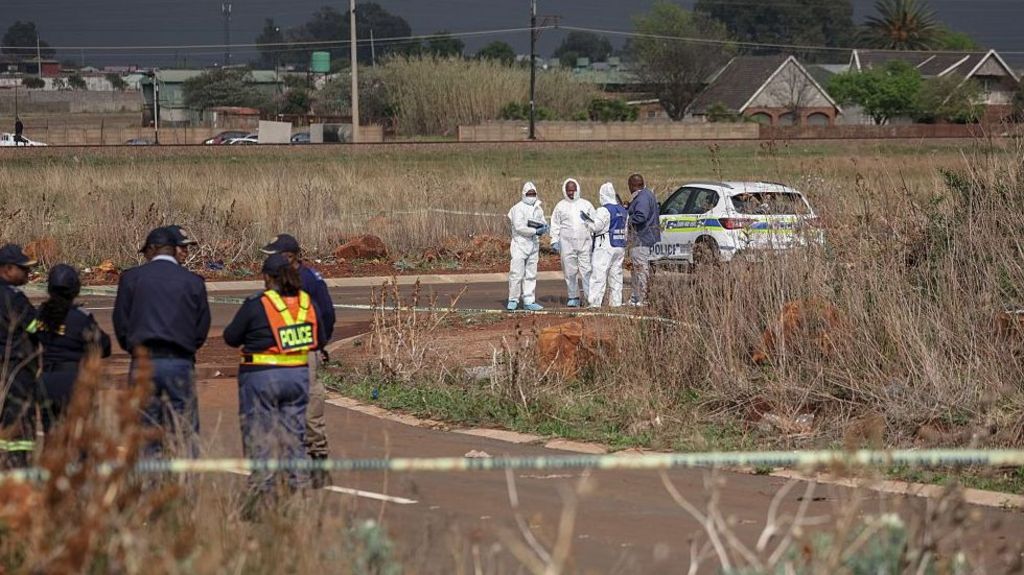
In a sharp escalation of cross-border tensions between two neighboring East African nations, Sudan has formally recalled its ambassador to Ethiopia and publicly accused Addis Ababa of orchestrating a series of recent drone strikes targeting key Sudanese sites, including the capital Khartoum’s international airport. The announcement, made during a press conference on Tuesday, marks one of the most serious diplomatic rifts between the two countries in years, unfolding against the backdrop of Sudan’s 13-month civil conflict between the national military and the Rapid Support Forces (RSF) paramilitary group.
标签: Africa
非洲
-

Do viruses spread more easily on cruise ships?
For years, cruise ships have carried a reputation as hotbeds for rapid viral transmission, with frequent news reports of norovirus and COVID-19 outbreaks making headlines during peak vacation seasons. But the question on every traveler’s mind remains: do viruses truly spread more easily on these large floating vessels compared to other crowded public spaces? To answer this pressing public health question, the British Broadcasting Corporation recently assembled a comprehensive breakdown of leading expert opinions, breaking down the unique factors that shape infection risk on cruises.
Experts point to several key characteristics of cruise travel that can create favorable conditions for viral spread, even when operators implement strict hygiene protocols. First, cruise ships house thousands of passengers and crew in close quarters, with shared dining halls, entertainment venues, swimming pools, and cabins that often have limited ventilation compared to land-based buildings. Many passengers also spend extended periods of time on board – often a week or more – which gives contagious viruses more time to move from person to person before infected guests can disembark and seek treatment. This combination of prolonged close contact and shared enclosed spaces has historically led to larger outbreaks than many other leisure settings.
That said, modern cruise lines have ramped up their infection control measures significantly in the wake of the COVID-19 pandemic. Today, most major operators maintain enhanced air filtration systems, regular surface sanitation, and updated protocols for isolating passengers who develop symptoms mid-cruise. Experts also note that the perception of heightened risk is partially skewed by the fact that outbreaks on cruise ships receive far more media attention than similar outbreaks in hotels or resort towns on land. When an outbreak is detected on a cruise, it is systematically tracked and reported because all passengers are contained in one closed environment, making it easier to count cases – a level of monitoring that rarely exists for land-based destinations.
Ultimately, experts agree that while cruise ships do carry some inherent elevated risk of viral spread compared to less crowded settings, the actual level of risk depends heavily on the specific measures operators take and the current state of circulating viruses in the broader community. Travelers can reduce their own risk by staying up to date on vaccinations, practicing good hand hygiene, and avoiding crowded indoor spaces on board when possible if they have underlying health conditions that put them at higher risk of severe illness.
-

Sudanese military downs drone launched by paramilitary forces at the main airport, officials say
As Sudan’s brutal civil conflict enters its fourth year of sustained bloodshed, a hostile drone launched by the country’s Rapid Support Forces (RSF), the dominant paramilitary faction opposing the ruling national military, was intercepted and destroyed by air defenses before it could strike Khartoum International Airport on Monday, senior airport officials confirmed. This attempted strike marks the latest escalation in sporadic violence that has shaken the capital in recent weeks, after months of relative calm following the Sudanese army’s recapture of Khartoum last year.
The foiled attack comes just three days after an RSF drone strike on a civilian passenger convoy traveling on the outskirts of Khartoum left at least five people dead, a massacre that underscored the persistent threat to civilian life across the war-torn nation. According to anonymous airport officials, who were not cleared to speak to international media outlets, the Monday drone approached the airport from the southern corridor before it was shot down by military air defenses. The interception caused no infrastructure damage and no reported injuries or fatalities, a statement from the Sudanese military government later confirmed. A senior military source also told the Associated Press that the drone was launched from territory in a neighboring country, though no additional details about the nation or cross-border involvement were provided.
Flights at Khartoum International Airport were temporarily suspended immediately after the interception, but aviation authorities announced that full operations would resume following standard security inspections. The site’s gradual reopening over the past year had been hailed as a critical milestone in efforts to restore a semblance of normalcy to the capital, which has been the epicenter of the conflict since open fighting broke out between the Sudanese army and the RSF in April 2023. Prior to Monday’s attempted strike, the capital had seen very little large-scale RSF attacks after the army retook full control of Khartoum, though small, intermittent strikes have become more common in recent weeks.
As of the latest updates from independent monitors, the four-year conflict has already killed at least 59,000 people across Sudan, according to data from the Armed Conflict Location & Event Data Project, a leading independent organization that tracks global conflict casualties. International aid organizations warn that the true death toll is almost certainly far higher, as restricted access to active combat zones across the large country makes full casualty counting impossible. The United Nations estimates that the war has displaced more than 12 million Sudanese people both internally and across international borders, and has pushed multiple regions of the country into full-scale famine, creating what aid groups have widely called an “abandoned global crisis.”
-

Mali junta leader names himself defence minister after predecessor killed
Mali, the West African nation grappling with a decade-long Islamist insurgency, has entered a new phase of political and security upheaval after a devastating large-scale coordinated attack by an insurgent alliance left its sitting defense minister dead and triggered a major cabinet shakeup.
The violence that unfolded across the country starting on April 25 marked one of the most sweeping insurgent offensives in recent years. Residents of towns and cities from the northern desert regions to areas near the capital Bamako awoke that morning to the sound of sustained gunfire and explosions, as two disparate armed groups — the separatist Azawad Liberation Front (FLA) and Jama’at Nusrat al-Islam wal-Muslimin (JNIM), an al-Qaeda-affiliated jihadist organization — launched synchronized raids targeting military and government positions across the country.
Among the highest-profile casualties of the offensive was Sadio Camara, Mali’s then-defense minister, who died in a suicide truck bombing targeting his residence just outside Bamako. More than a week after the initial attacks began, the country remains mired in a spiraling security crisis that has called into question the capability of Mali’s ruling military government to contain the decade-long insurgency.
In an official decree broadcast on Malian state television Monday, junta leader General Assimi Goïta announced he would step into the vacant defense minister role to lead the government’s counter-insurgency response. General Oumar Diarra, the Malian army chief of staff, was appointed to support Goïta as a delegate minister, according to the announcement.
Goïta, who first seized power in a 2020 military coup, initially rose to prominence on a promise to resolve Mali’s long-running security crisis and restore stability to the conflict-torn nation. But the recent offensive has delivered a major blow to the junta’s credibility: the coordinated attacks forced Malian government forces and their Russian allied fighters to withdraw from Kidal, a key strategic city in northern Mali, a retreat that has fueled widespread public and international skepticism about the government’s military hold on the country.
In the days following the offensive, Malian authorities have moved to crack down on alleged internal complicity in the attacks. Over the weekend, security services announced the arrest of a group of active and retired Malian soldiers suspected of providing support to the insurgents. The public prosecutor for a Bamako military court confirmed that an ongoing investigation has confirmed links between both serving and former military personnel and the planning and execution of the April 25 raids.
To ramp up counter-insurgency operations, Mali has partnered with military forces from neighboring Niger and Burkina Faso to launch joint air strikes against the insurgent alliance. Officials from Niger confirmed that the coordinated cross-border operation began just hours after the initial insurgent attacks were launched. All three Sahel nations are currently led by military governments, and together they formed the Alliance of Sahel States in recent years after expelling French counter-insurgency troops, the former colonial power that had deployed to the region to combat the insurgency. The three governments instead turned to Russian military fighters to support their counter-insurgency campaigns.
Despite this shift in military partnerships, the insurgency has continued to expand across the Sahel region. Large swathes of territory in all three countries remain outside of government control, and coordinated attacks on military and civilian targets have become increasingly frequent, leaving local populations trapped between ongoing violence and ineffective government security provision.
-

130 Nigerians seek repatriation after latest anti-immigration protests in South Africa
Amid a resurgence of violent anti-immigrant demonstrations in South Africa, Nigeria has launched a voluntary repatriation program to bring home more than 100 of its citizens stranded in the Southern African nation, the country’s top foreign affairs official confirmed Monday.
Nigerian Foreign Minister Bianca Odumegwu-Ojukwu announced the initiative after summoning South Africa’s acting high commissioner to Abuja to deliver the Nigerian government’s formal statement of deep concern over the recent unrest. She told reporters that 130 Nigerians have already registered to return, with additional people expected to join the voluntary repatriation effort in the coming days.
The renewed wave of protests targeting foreign migrants in South Africa, which unfolded last week, has not resulted in any Nigerian fatalities, according to the foreign minister. For years, migrants in South Africa have faced recurrent xenophobic hostility, with scapegoating rooted in the country’s persistent high unemployment rate, where locals often blame immigrant workers for taking scarce formal jobs.
South African authorities have already taken public steps to address the unrest, formally denouncing the violent attacks and pledging strict enforcement against all xenophobic criminal acts. In a separate diplomatic move, South African Foreign Minister Ronald Lamola held a bilateral phone call with Odumegwu-Ojukwu to discuss the broader tensions around irregular migration. The two officials agreed to collaborate on unpacking the root causes of the unrest and advancing mutually acceptable solutions to the ongoing challenges.
Beyond the recent anti-immigration protests, the Nigerian government has also raised urgent concerns over two separate fatal incidents from last month that claimed the lives of two Nigerian citizens at the hands of South African security operatives. Following Monday’s diplomatic meeting, Nigerian foreign ministry spokesperson stated that Abuja has formally requested a full, transparent investigation into the two deaths and is seeking cooperative action from South African authorities to share autopsy reports with the victims’ next of kin.
-

A cruise ship is waiting for help after a suspected outbreak of rare hantavirus onboard killed 3
A Dutch-operated polar cruise vessel carrying nearly 150 people is currently anchored off the coast of Cape Verde in the Atlantic Ocean, waiting for local authorities to grant evacuation permission after a suspected hantavirus outbreak left three passengers dead and at least three others in serious condition, the World Health Organization (WHO) and cruise line operator have confirmed. Among the 88 passengers on board the MV Hondius are 17 American citizens, alongside travelers from the United Kingdom, Spain and other nations.
The multi-week expedition, which began in Ushuaia, southern Argentina, was originally scheduled to take passengers through Antarctica, the Falkland Islands, South Georgia and a series of remote South Atlantic island outposts. The first fatality was recorded on April 11, when a 70-year-old Dutch passenger died on board after developing classic hantavirus symptoms including fever, headache, abdominal pain and diarrhea, according to Netherlands-based operator Oceanwide Expeditions. His remains were disembarked nearly two weeks later at Saint Helena, a British overseas territory roughly 1,900 kilometers off the African coast, where they remain awaiting repatriation to the Netherlands.
The man’s 69-year-old wife, who had also fallen ill, was evacuated to South Africa alongside the body. She collapsed shortly after arriving at Johannesburg’s OR Tambo International Airport and died at a nearby hospital. By April 27, the ship reached the remote Atlantic outpost of Ascension Island, where a sick British passenger was evacuated for emergency care in South Africa. That patient later tested positive for hantavirus, and remains in critical, isolated care in an intensive care unit in South Africa.
A third fatality occurred on board Saturday, when a German national passenger died. Their body is still being held on the MV Hondius, as local authorities have not yet permitted anyone to disembark after the vessel reached Cape Verde on Sunday to request emergency assistance. To date, only the evacuated British patient has received a confirmed positive hantavirus diagnosis; WHO officials note that five total cases are suspected, including the three fatalities.
Two additional crew members — one British, one Dutch — are currently on board experiencing severe symptoms and require urgent evacuation, Oceanwide Expeditions confirmed. As of Monday, the operator was still waiting for approval from Cape Verdean public health authorities to offload sick passengers and crew. If evacuation permission is not granted in Cape Verde, the company says it is considering rerouting to the Spanish Canary Islands, specifically Las Palmas or Tenerife, to offload those in need of care.
Oceanwide Expeditions stated that it has implemented strict precautionary protocols on the vessel, including isolation of symptomatic people, and no other people on board have reported developing hantavirus symptoms. The WHO is coordinating a multi-country public health response to the incident, working alongside local authorities and the cruise operator to conduct a full public health risk assessment, coordinate evacuations, and carry out further laboratory testing and epidemiological tracing. Viral sequencing is also underway to confirm the strain of the virus. The Dutch Ministry of Foreign Affairs is also assisting in exploring evacuation options for people on the vessel.
Hantavirus is a rare pathogen spread primarily through contact with urine or feces from infected rodent populations such as rats and mice. The virus gained renewed public attention last year, when Betsy Arakawa, wife of veteran Hollywood actor Gene Hackman, died from a hantavirus infection in New Mexico. While rare cases of person-to-person transmission have been recorded, the virus is not easily spread between humans, WHO officials emphasize. There is no specific cure or targeted treatment for hantavirus, but early clinical intervention significantly improves a patient’s chance of survival. The virus causes two severe syndromes: hantavirus pulmonary syndrome, which impacts the lungs, and hemorrhagic fever with renal syndrome, which affects kidney function; pulmonary syndrome is the more common presentation in the Americas, per the U.S. Centers for Disease Control and Prevention (CDC).
“While severe in some cases, it is not easily transmitted between people. The risk to the wider public remains low. There is no need for panic or travel restrictions,” Dr. Hans Henri P. Kluge, WHO Regional Director for Europe, said in a public statement Monday.
The MV Hondius is a 107-meter expedition vessel with capacity for 170 passengers across 80 cabins, and typically sails with a crew of approximately 70, including a full-time on-board doctor. Oceanwide offers 33- and 43-night “Atlantic Odyssey” expeditions along the route the MV Hondius was traveling when the outbreak began. While the source of the current outbreak has not yet been identified, a 2019 hantavirus outbreak in southern Argentina killed at least nine people, prompting a 30-day lockdown of a remote rural town to halt transmission.
South African public health officials are currently conducting contact tracing in the Johannesburg region to identify any people who may have been exposed to the infected passengers who disembarked in the country. Like the WHO, South Africa’s Department of Health has stressed that there is no cause for public panic, noting that international health authorities are coordinating a coordinated cross-border response to contain any potential spread.
-

A sun-baked Senegal village erupts in color for one of Africa’s biggest dance festivals
Over the weekend, 25 dynamic dance collectives from across the African continent gathered in the quiet Senegalese fishing community of Toubab Dialao to take part in the African Dance Biennial, the region’s biggest platform dedicated to celebrating contemporary African choreographic art. Against the backdrop of sun-scorched coastal sand, dozens of performers clad in eye-catching hues of tangerine, emerald and sapphire moved through their pieces — stomping, soaring through leaps, and melting into the shoreline, drawing audiences into the emotional core of their work. Just an hour’s drive outside Senegal’s capital city of Dakar, this tiny coastal village played host to three days of cutting-edge dance that wrapped up its programming late Sunday.
Established in 1997, the African Dance Biennial has traveled across the continent for nearly 30 years, bringing world-class choreography to audiences in a rotating roster of African cities. The 2023 edition of the event was most recently held in Maputo, Mozambique, and the festival’s core mission has remained consistent since its founding: to amplify the profile of underrepresented African choreographic talent on the global stage.
This year’s festival was hosted at the iconic École des Sables — the School of Sands — the continent’s leading professional dance training center. Founded in 1998 by Germaine Acogny, a figure universally hailed as the mother of contemporary African dance, the institution has shaped a generation of dance artists from around the world. Its signature open-air sand studio is a direct reflection of Acogny’s philosophy, which roots dance education in connection to the natural world. The school’s signature training programs blend Acogny’s original contemporary dance technique with traditional West African movement vocabularies and Black modern dance traditions, attracting students and professionals from more than 40 countries for intensive annual residencies. In recent years, the École des Sables has risen to global fame as the base for the first all-African production of Pina Bausch’s legendary *The Rite of Spring*, which has toured across 15 countries since 2021 and will continue its global run through 2025.
Despite the success of this year’s biennial and the school’s growing international acclaim, the institution now faces an uncertain future. A $1 billion deep-water port development project, led by global logistics giant Dubai Port World, is currently under construction just south of Toubab Dialao. The project puts the school at risk of forced expropriation of land surrounding its campus that the institution purchased specifically to protect the fragile coastal natural ecosystem that has long been central to its artistic and educational identity. In response, arts organizations across the region have joined forces to form a collective advocacy group, organizing to push back against the proposed development and protect the future of one of Africa’s most important cultural institutions.
-

New alliances shakes up Nigerian political landscape
Nigeria’s political landscape is bracing for a major shift nine months ahead of the 2026 presidential election, as two of the country’s highest-profile opposition figures have announced a surprise party switch that could upend the race against incumbent President Bola Tinubu.
Former governors Peter Obi and Rabiu Kwankwaso, who placed third and fourth respectively in the 2023 presidential contest, formally joined the Nigeria Democratic Congress (NDC) during a ceremony at the party’s Abuja national headquarters on Sunday, where they were welcomed by NDC national leader Senator Seriake Dickson. The move opens the door for a united opposition joint ticket to challenge Tinubu’s ruling All Progressives Congress (APC) in the January 2026 vote.
Prior to this switch, Obi and Kwankwaso were members of the African Democratic Congress (ADC), alongside 2023’s second-place finisher, former Vice-President Atiku Abubakar. Their exit from the ADC comes less than a year after all three opposition heavyweights merged into the party, an alliance that quickly collapsed amid messy public legal disputes over party leadership.
Obi, who ran as the Labour Party’s 2023 presidential candidate before leaving the party, blamed the infighting on interference from the ruling government. “The same Nigerian state and its agents that created unnecessary crises and hostility within the Labour Party that forced me to leave now appear to be finding their way into the ADC,” he stated in his remarks on Sunday. Allies of President Tinubu have rejected these claims, denying any coordinated effort to sabotage opposition political groups.
While some political observers frame the split as further fragmentation of Nigeria’s already fractured opposition, supporters of the new NDC alliance argue the move will eliminate internal chaos and create a more cohesive, focused challenge to the APC. Both Obi and Kwankwaso bring distinct, complementary electoral strengths to the new party: Obi commands massive, enthusiastic support from young voters across Nigeria’s southern regions, while Kwankwaso holds substantial political influence in the country’s populous north. Both have built robust grassroots followings from their tenures as state governors.
Following their formal induction into the NDC, Obi and Kwankwaso issued calls for national unity, expanded economic and social opportunities for Nigeria’s large youth population, and an end to the persistent internal infighting that has weakened the country’s opposition movements in past elections.
Political analyst Bala Yusuf told the BBC that the party switch has the potential to completely redraw Nigeria’s electoral map ahead of next year’s vote. “If the NDC fields Obi as its presidential candidate and Kwankwaso as vice-president, they will definitely give the ruling APC a run for their money at the polls,” Yusuf noted.
One key unresolved question remains: the alliance has not yet announced who will take the top spot on the presidential ticket, a contentious issue that has sunk previous opposition power-sharing deals in Nigeria. President Tinubu, who assumed office in May 2023, has not yet issued any public response to the opposition’s latest restructuring.
Next January’s election will mark Nigeria’s eighth democratic presidential contest since the end of military rule in 1999.
-

Africa eyes benefits from tariff waiver
When China’s expanded zero-tariff policy for African exporters took effect on May 1, 2026, business leaders and policy experts across South Africa began framing the move as a transformative opportunity to deepen cross-continental trade and unlock broad-based economic gains for the African continent. Previously, China’s duty-free access schemes only covered a limited group of the world’s least developed African nations. The updated policy extends this preferential treatment to include major middle-income African economies such as South Africa and Nigeria, opening new doors for a far wider range of export sectors. Theuns Botha, chief executive officer of Kingday Textiles — a South African firm that imports Chinese textile inputs and exports raw aluminum and zinc to China — has called on domestic businesses across the continent to move quickly to capitalize on the new trade terms. “This is an incredible opportunity. China is actively working to expand two-way trade with African countries,” Botha explained in an interview. “This tariff waiver covers multiple core sectors, from manufacturing to agriculture to mining, and strong demand from Chinese consumers and industrial operators will drive job creation across the continent. What we are seeing is China opening its markets and making tangible trade concessions to partners across the globe.” Botha added that the new zero-tariff scheme comes at a critical moment for many African nations, which have faced growing uncertainty and volatility in their trade relations with the United States amid Washington’s unilateral tariff policies. Under the current U.S. administration, trade negotiations with Washington have become “difficult and complicated,” he noted, urging South African producers to scale up production capacity to meet rising Chinese import demand and capture a larger share of the vast Chinese market. Wolfe Braude, a senior manager at the Agricultural Business Chamber of South Africa, also welcomed the policy, while reminding prospective exporters that they must meet all of China’s regulatory requirements to access the market. Any African country seeking to export agricultural commodities to China is required to negotiate and sign official sanitary and phytosanitary (SPS) protocols to ensure food safety and prevent the spread of pests and disease, Braude explained. To date, South Africa has already finalized several such agreements, and the nation plans to add cherries and blueberries to the list of approved exports for China in 2026, he added. For non-agricultural goods, exporters are required to comply with product safety and quality standards set by Chinese regulatory authorities, Braude noted. He acknowledged that navigating China’s regulatory framework and market entry procedures poses challenges for some African firms, particularly small and medium-sized enterprises (SMEs) that lack the administrative and operational capacity to meet requirements on their own. These smaller businesses will need targeted capacity-building support to fully capture the benefits of the zero-tariff waiver, he said. Looking ahead, the 2026 Framework Agreement on Economic Partnership for Shared Prosperity, which South Africa signed with China earlier this year, will help exporters gain a clearer understanding of Chinese trade systems, rules and regulatory requirements, Braude noted. Beyond trade, the agreement also paves the way for deeper Sino-African cooperation in high-priority areas including green energy development, digital transformation, technical capacity building and infrastructure financing, he added. Braude also emphasized that China’s decades of rapid development experience offers valuable, actionable insights for African economies, noting that China has successfully addressed many of the same structural development challenges that African nations continue to grapple with today. Philani Mthembu, executive director of the South Africa-based think tank Institute for Global Dialogue, echoed these positive views, saying the zero-tariff policy will further deepen and strengthen trade ties between Africa and China. “China is opening its market wide to South African products, especially in the agriculture sector, which is a very important development for our economy,” Mthembu said. Looking forward, Mthembu noted that the next phase of Sino-African trade cooperation should focus on expanding cross-border investment and building joint manufacturing partnerships on the continent. “Even in the automotive sector, we encourage Chinese firms to establish manufacturing facilities for high-tech goods and other products right here in Africa,” he said. As the policy enters its first days of implementation, African stakeholders remain optimistic that the expanded zero-tariff waiver will deliver inclusive, long-term economic benefits across the continent, while also creating new opportunities to rebalance African trade partnerships amid global economic uncertainty.
-

What is hantavirus? Cruise ship outbreak explained
A tragic suspected outbreak of hantavirus on a cruise ship has claimed the lives of three people, prompting public health officials to launch an investigation into how the rodent-borne pathogen spread in a confined maritime setting. As authorities work to contain the incident and identify additional cases, many members of the public are seeking clear answers about what hantavirus is, how it spreads, and what risks it poses to human populations. Hantavirus is a type of virus that is primarily hosted and transmitted by wild rodents, with different species of the virus found across regions of North America, Europe, Asia, and other parts of the world. Humans most commonly contract the virus through contact with rodent urine, feces, or nesting materials, when infectious particles become airborne and are inhaled. Rare cases of transmission can also occur through bites from infected rodents, and in some documented instances, person-to-person spread has been reported for specific strains of the virus. The most severe form of hantavirus infection in North America is hantavirus pulmonary syndrome (HPS), which causes rapid fluid buildup in the lungs and has a mortality rate of roughly 38% according to data from the U.S. Centers for Disease Control and Prevention. This current outbreak on a cruise ship, a closed environment that can facilitate exposure if rodents have gained access to food storage or living areas, has raised new questions about public health protocols on commercial passenger vessels. At this stage, investigations are ongoing to confirm that the three deaths were indeed caused by hantavirus, identify the source of the outbreak on the ship, and implement measures to prevent further infections among passengers and crew.