博客

  • Warrantless spying extension stalls in US Senate

    Warrantless spying extension stalls in US Senate

    In a surprising late-night vote that marked a major win for digital privacy protections, a Republican-led push to extend the controversial warrantless surveillance authority under Section 702 of the Foreign Intelligence Surveillance Act (FISA) failed to advance in the U.S. Senate Friday. Seven GOP senators broke with their party’s leadership to join all but one congressional Democrat in opposing the measure, delivering a critical setback to backers of the sprawling surveillance program just days before the existing authority is set to expire.

    Section 702, first enacted in 2008 and renewed multiple times since, grants the federal government broad power to conduct warrantless surveillance of electronic communications belonging to noncitizens located outside the United States. For years, however, civil liberties and privacy advocates have sounded alarms over systemic abuse of the law, documenting repeated instances where U.S. intelligence agencies have improperly used the framework to spy on American citizens, bypassing traditional court oversight required for domestic surveillance.

    The expiration of the current authorization is scheduled for next Friday, leaving congressional leaders and the White House with limited time to broker a new deal on the future of the program. Privacy campaigners immediately hailed the failed procedural vote as a landmark moment for civil liberties. Sean Vitka, executive director of the advocacy group Demand Progress, framed the result as a “resounding defeat for opponents of privacy,” emphasizing that the outcome makes clear no renewal of Section 702 can move forward without mandatory warrant requirements for accessing Americans’ data.

    “Clear majorities of Americans across the nation, and in Congress, do not want the government bypassing the courts to hoover up our private, personal data,” Vitka said. “If the White House and congressional leadership want to renew FISA, they have to stop ignoring this obvious fact and allow votes on real privacy reforms.”

    While privacy advocates celebrated the interim win, experts and observers noted the vote outcome was partially shaped by growing bipartisan backlash against former President Donald Trump’s recent nomination of Bill Pulte, a loyalist, to serve as acting director of national intelligence. Multiple senators who have previously supported extending Section 702 switched their positions to oppose advancing the bill in protest of the nomination.

    Elizabeth Goitein, co-director of the Liberty and National Security Program at the Brennan Center for Justice, called the blocked vote “an interim victory” but warned of the risks tied to putting the surveillance program under the control of a politically aligned unconfirmed intelligence leader. Goitein pointed out that Pulte, who currently leads the Federal Housing Finance Agency (FHFA), is already under investigation by the nonpartisan Government Accountability Office for allegations that he misused his position and access to government records to bring unsubstantiated mortgage fraud charges against people Trump views as political enemies.

    “If Pulte can do that with the limited access to Americans’ information he has as head of the [FHFA], imagine what he could do with all the authorities and capabilities of the intelligence community—including, of course, Section 702,” Goitein added. “What wouldn’t make sense? Handing Section 702 to whomever Trump could nominate in Pulte’s place without ensuring that they can’t use it as a tool for domestic spying.”

    Even prominent supporters of Section 702 came out against advancing the bill in the wake of the Pulte nomination. Sen. Mark Warner, a Virginia Democrat who has long backed extending the surveillance authority, announced he would vote against moving the legislation forward, calling Pulte an “enormously bad choice” who is “grossly unqualified” for the top intelligence post.

    The failed vote sets up a high-stakes showdown over the coming week, as Washington policymakers weigh whether to advance targeted reforms that address longstanding privacy concerns, allow the existing authority to lapse entirely, or negotiate a last-minute deal to salvage the program before the current authorization runs out.


  • Albanians protest against Kushner-backed project threatening the environment

    Albanians protest against Kushner-backed project threatening the environment

    Mass public demonstrations against a $1.6 billion luxury coastal resort development led by former U.S. President Donald Trump’s son-in-law Jared Kushner have stretched into their fourth consecutive day in Albania, fueled by widespread public anger over untransparent planning and irreversible threats to unique coastal ecosystems.

    Thousands of demonstrators have packed the capital city of Tirana all week, raising alarm over the project’s potential to destroy sensitive habitats located at the proposed construction site on Albania’s southern Adriatic coast. The development footprint encompasses the uninhabited Sazan Island, as well as the ecologically rich wetlands and coastal habitats that surround the landmass, with early groundwork already underway in recent weeks. Kushner’s private equity firm, Affinity Partners, is one of the primary backers of the large-scale tourism project.

    In a recent media interview, Ivanka Trump, Kushner’s wife and former U.S. first daughter, recalled how the pair first encountered Sazan Island during a leisure trip. “We were on a friend’s boat, and we stopped for a swim. Effectively, that’s how we found it,” she explained. “We swam to the island. We went on a hike, barefoot all the way up to the top, and we were just captivated.”

    Protestors have directed their criticism not only at Affinity Partners but also at Albanian Prime Minister Edi Rama and his ruling Socialist Party administration, which has positioned itself as a vocal supporter of the development. For Rama, the resort project is a core pillar of his agenda to transform Albania into a premium international tourist destination, boost foreign direct investment, and advance the country’s bid for European Union membership. The prime minister has argued the initiative would inject an estimated $4.6 billion in total investment into Albania’s economy, generate thousands of local jobs, and upgrade critical national infrastructure. Rama won a fourth consecutive term in 2025 on a platform centered on attracting foreign investment and advancing EU accession.

    Yet more than 40 domestic environmental organizations have signed an open letter to the government demanding an immediate halt to all construction activities. The site is recognized as one of the most biologically diverse areas along the Adriatic coast, serving as a critical stopover for hundreds of migratory bird species. The coastal waters adjacent to Sazan Island are also one of the last remaining protected refuges for the critically endangered Mediterranean monk seal, while the wetlands host populations of pink flamingos and Dalmatian pelicans among more than 200 recorded bird species. Many protestors have carried cutout images of pink flamingos to rallies to highlight the threat the development poses to these vulnerable animal populations.

    Aleksandr Trajce, executive director of the Protection and Preservation of the Natural Environment in Albania (PPNEA)—the country’s leading conservation organization—told reporters the entire project process has been marked by a complete lack of public accountability. “From start to finish there has been a total lack of transparency,” Trajce said. “We have seen no public consultation or public documentation regarding permits, and so now what we are saying is, if they remove the bulldozers, remove the fence and restore the habitats to what they were, then we can start talking.”

    While Rama has stated he is open to meeting with protest representatives to discuss their concerns, he has also ruled out any possibility of canceling the project. “There is absolutely no chance that the investment will stop as long as I am here,” the prime minister confirmed this week.

    Developers involved in the initiative have pushed back against criticism, framing the project as environmentally responsible and beneficial to local communities. “Our focus remains on responsible stewardship, environmental enhancement, job creation and creating long-term value for local communities. We respect the ongoing public and institutional processes,” said Asher Abehsera, chief executive of Sazan Real Estate Development LLC, which is co-developing the project alongside Affinity Partners.

    The Albanian protests are not the first controversy surrounding Kushner’s development projects in the Balkan region. Previously, Kushner planned to build a Trump International Hotel in Belgrade, Serbia, but withdrew from the project earlier this year after a senior Serbian government minister was arrested on charges of abuse of office tied to the development’s approval process. More recently, Kushner drew widespread international criticism for announcing a proposal to develop a “New Gaza” with luxury skyscrapers, coastal tourism hubs, and dedicated commercial districts. Analysts speaking to Middle East Eye described the Gaza plan as a clear example of private actors attempting to profit from conflict and humanitarian disaster in the occupied Palestinian territories.

  • US territories have a voice in Congress but no vote – here’s why

    US territories have a voice in Congress but no vote – here’s why

    As the United States prepares to mark its 250th year as an independent nation, a stark democratic contradiction lies at the heart of its identity: more than 3.6 million U.S. citizens born and residing in the nation’s overseas territories are shut out of full participation in the country’s federal democracy.

    These residents, spread across five territories — Puerto Rico, Guam, American Samoa, the Northern Mariana Islands, and the U.S. Virgin Islands — lack any representation in the U.S. Senate, and hold only non-voting delegate seats in the U.S. House of Representatives. While they are eligible to cast ballots in U.S. presidential primary contests, they are barred from voting in the general election that determines the nation’s commander-in-chief, a exclusion rooted entirely in their place of residence.

    This year also marks another pivotal, far less celebrated anniversary: 125 years since the Supreme Court issued the Insular Cases, a notorious series of landmark rulings that first cemented this unequal status into U.S. law in May 1901, and continues to shape the contours of American democracy to this day. As political scientists who study the legislative history of territorial rights, we trace how 19th and early 20th century lawmakers grappled with extending rights to newly acquired territorial populations, and how their racist, colonialist decisions continue to shape American governance today.

    The context for the Insular Cases stretches back to the 1898 Spanish-American War, a four-month conflict that left the U.S. in control of vast new territorial holdings seized from Spain, including Guam, Puerto Rico, and the Philippines. Overnight, the U.S. gained roughly 8 million new residents, all located thousands of miles from the continental mainland, pushing the nation into a long-unresolved constitutional crisis. What political status would these new populations hold? Would they be fully integrated into American democracy, or governed as colonial subjects with no elected representation in Congress?

    To resolve this question, the Supreme Court created a new, unprecedented distinction between two classes of U.S. territories: “incorporated” territories, which were marked for eventual statehood, and “unincorporated” territories, which were never intended to become states — including all the territories the U.S. still holds today. The ruling emerged from a political compromise: Congress had imposed tariffs on goods imported from Puerto Rico, a move that would have been unconstitutional if Puerto Rico was officially considered part of the U.S. Lawmakers deliberately passed the tariff bill and left it to the Supreme Court to justify the unequal arrangement.

    The court’s final ruling cemented a paradox: these new territories belonged to the United States, but were not formally part of it. This classification left 8 million new residents existing outside the full protection of the U.S. Constitution — a group nearly equal in size to the entire Black American population of the era. Even then, Chief Justice Melville Fuller warned in a dissenting opinion that this ruling would leave territorial residents stuck in “a disembodied shade, in an intermediate state of ambiguous existence for an indefinite period” — a prediction that has held true for 125 years.

    The bias at the heart of the Insular Cases was explicitly racial. Justice Henry Billings Brown, writing for the court majority, openly argued that “if those possessions are inhabited by alien races, differing from us in religion, customs, laws, methods of taxation, and modes of thought, the administration of government and justice according to Anglo-Saxon principles may for a time be impossible.”

    This racial exclusion was carried forward by Congress as it designed a system of unequal representation for the new territories. Before 1898, Congress had only allowed nonvoting delegates for territories that were on a clear path to statehood. But after the Spanish-American War, lawmakers overwhelmingly rejected statehood for the newly acquired territories, openly arguing that their majority non-white populations were racially and culturally inferior, and unfit for full democratic participation.

    In a 1900 speech on the House floor, Republican Representative John Dalzell of Pennsylvania encapsulated this view, arguing that “the methods of government prescribed by the principles of Anglican liberty as practiced in the United States would be grotesque in the Philippine Islands and would bring to their people no advantage.”

    For territories never intended for statehood, Congress created a new, second-tier position: the resident commissioner, a role originally modeled more after a foreign ambassador than an elected lawmaker, with no right to access the House floor or speak during legislative proceedings. Over time, the role was adjusted to match the position of territorial delegates, granting the right to serve on committees, introduce legislation, and speak on the floor — but still no right to vote on whether a bill becomes law. Today, Puerto Rico, which has a larger population than more than a dozen U.S. states, still has only this one nonvoting representative in Congress.

    125 years after the Insular Cases were decided, criticism of the rulings has grown across the political spectrum. Even current Supreme Court Justice Neil M. Gorsuch has rejected the decisions, writing that they “have no foundation in the constitution and rest instead on racial stereotypes. They deserve no place in our law.”

    A growing body of legal scholarship and grassroots activism has echoed Gorsuch’s call for the Supreme Court to overrule the decisions, but so far no action has been taken. What has received far less attention is the enduring legacy of this 1898 colonial expansion in Congress itself. Today, the resident commissioner of Puerto Rico and delegates from Guam, the U.S. Virgin Islands, American Samoa, the Northern Mariana Islands, and even Washington, D.C., all still serve with a voice, but no vote. On the U.S.’s 250th anniversary, this 125-year-old injustice remains a foundational flaw in American democracy.

  • India called on to arrest Israeli reservist holidaying in country

    India called on to arrest Israeli reservist holidaying in country

    A Brussels-based non-governmental organization has launched a formal legal push to force Indian authorities to detain an Israeli army reservist accused of committing war crimes in Gaza during his holiday in the country’s northern Himalayan state of Himachal Pradesh.

    The Hind Rajab Foundation (HRF) submitted an urgent legal complaint on Tuesday to three key Indian bodies: national police, the Ministry of Home Affairs, and the country’s immigration bureau. The filing names the suspect as Eitan Gilboa, a member of the Israel Defense Forces’ 271st Combat Engineering Battalion who is currently traveling in India.

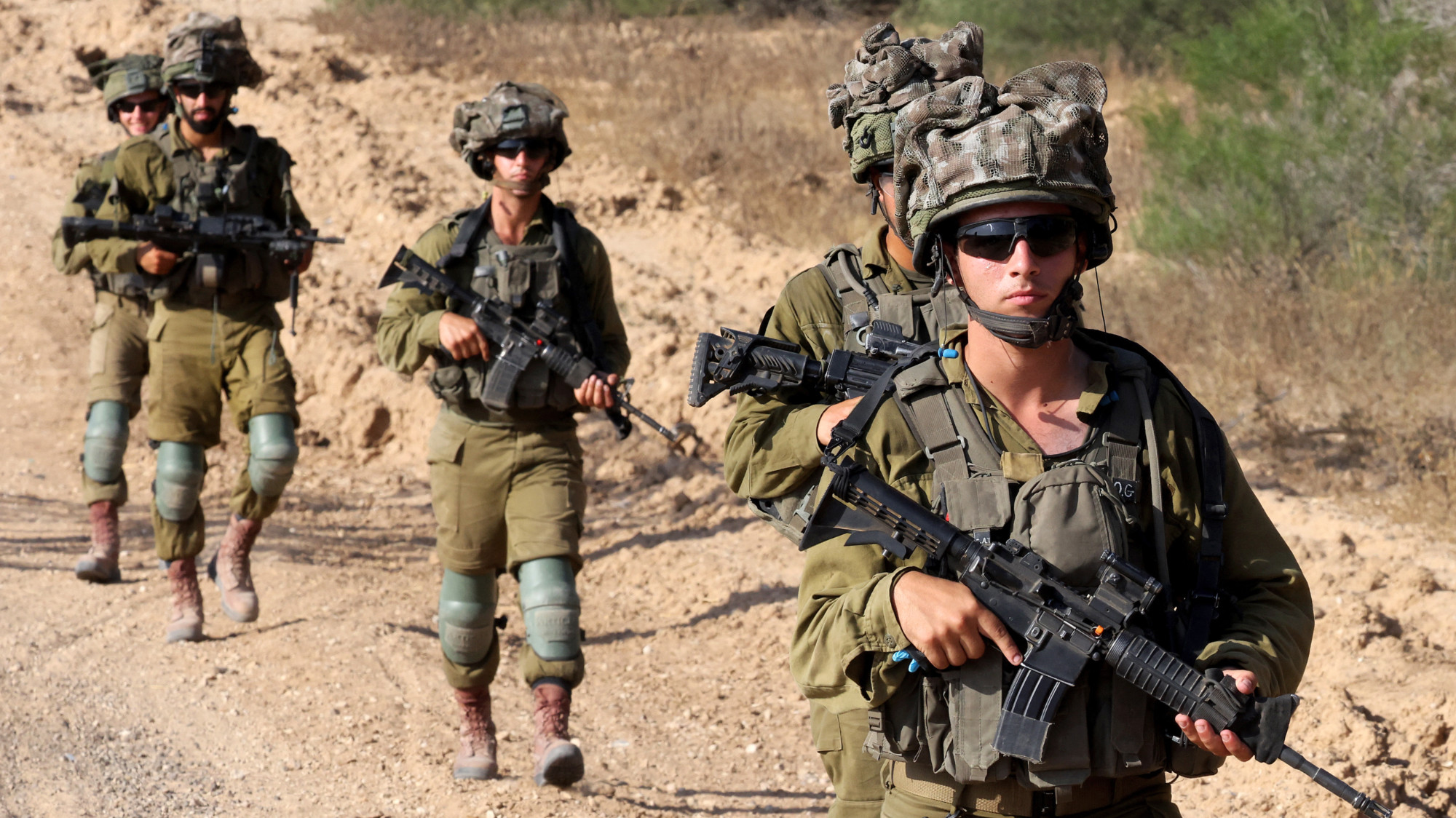
    In the complaint and a public statement accompanying it, HRF detailed its months-long investigation into Gilboa’s actions during the ongoing military campaign in Gaza. The organization alleges that Gilboa directly took part in and publicly celebrated the systematic leveling of entire residential neighborhoods in Gaza as an act of collective retaliation against Palestinian civilians. These actions, HRF argues, qualify as explicit war crimes under India’s 1960 Geneva Conventions Act.

    To back its claims, HRF points to social media content originally shared by Gilboa’s mother, which captures multiple instances of the reservist participating in and commemorating the destruction of civilian infrastructure across southern Gaza, including in the heavily bombed areas of Khan Younis and Rafah.

    The legal filing emphasizes that as a signatory to the Fourth Geneva Convention, India carries a binding international legal obligation to hunt for and prosecute any individual accused of grave breaches of the treaty, regardless of their nationality. This requirement is laid out explicitly in Article 146 of the convention.

    HRF has laid out three clear demands for Indian officials: immediately take Gilboa into custody, file a formal First Information Report (FIR) to open a criminal investigation into the allegations, and if arrest is not pursued, order the reservist’s immediate deportation from Indian territory.

    “Eitan Gilboa is not a tourist. He is a war criminal currently enjoying the hospitality of India while fleeing the consequences of his crimes,” HRF director Dyab Abou Jahjah, a prominent Lebanese political activist, said in a statement. “India must not allow Indian soil to become a safe haven for those who celebrate the destruction of civilian lives,” he added.

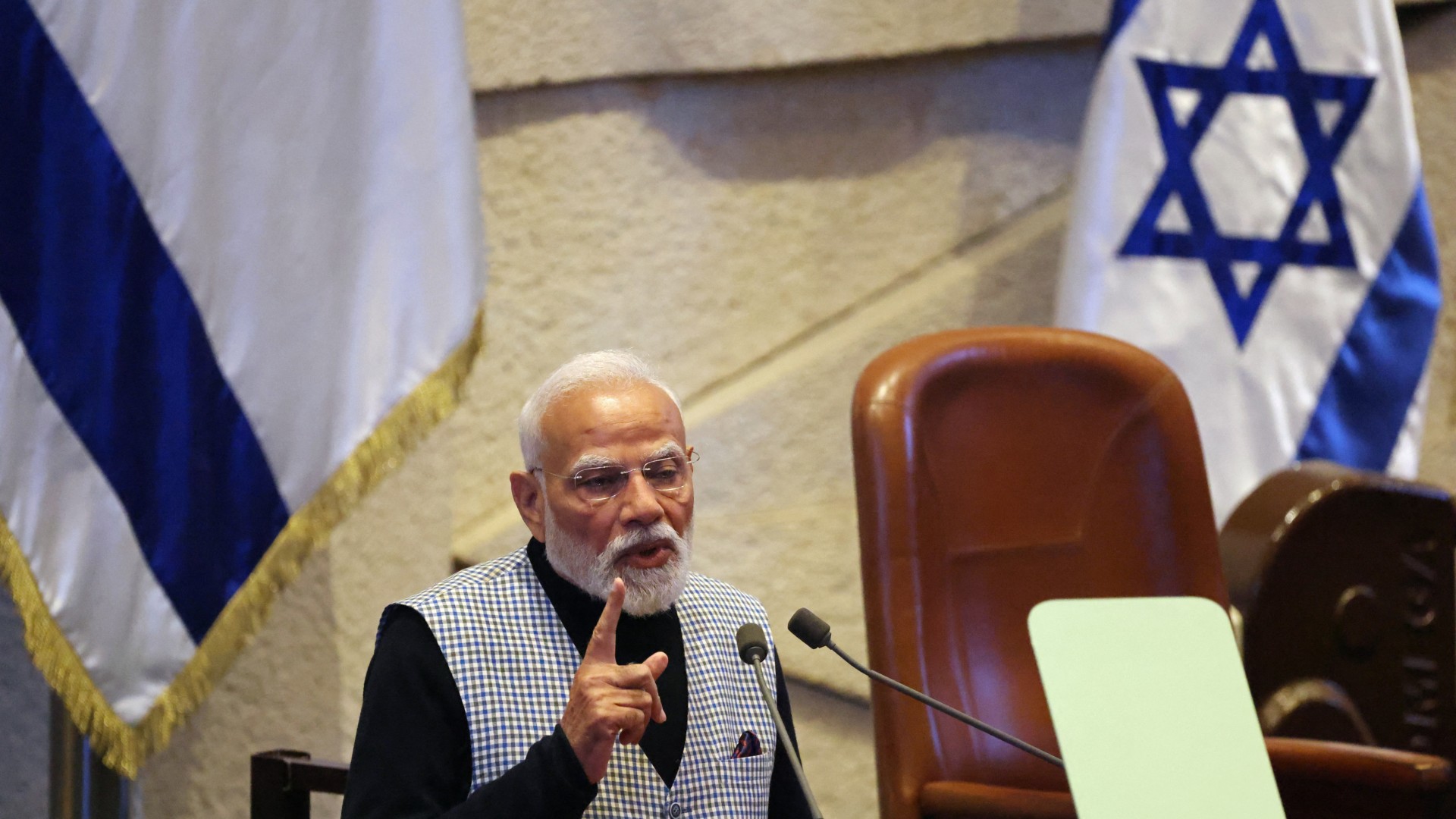
    Local Indian activist Shrishti Khanna, speaking to independent outlet Middle East Eye, noted that mass tourism from Israeli veterans to Himachal Pradesh is a decades-long trend, with thousands of former and active Israeli military personnel vacationing in the state since the 1980s. Khanna argued that the current complaint exposes a long-standing pattern of complicity by the Indian government, one that has deepened dramatically under Prime Minister Narendra Modi’s administration. Modi has overseen increasingly close political, military and ideological alignment with Israel, Khanna said, resulting in Israeli occupying forces being treated as harmless holidaymakers rather than potential suspects requiring scrutiny and legal accountability.

    Khanna added that she does not expect Indian authorities to actually move forward with an arrest and prosecution, but said that “even if no action is taken, the complaint itself will create a permanent public record of India’s position on this issue.”

    This legal action is the latest in a series of efforts by HRF to hold alleged Israeli war criminals accountable across the globe. To date, the organization has filed more than 90 similar criminal complaints in 30 different national jurisdictions, pursuing investigations and litigation against individuals suspected of participating in war crimes against Palestinians.

    The complaint comes amid sustained international and domestic pressure on the Indian government over its long-standing military relationship with Israel. New Delhi has continued to approve and ship arms to Israel throughout the current military campaign in Gaza, a policy that has drawn widespread criticism from human rights groups and civil society activists who argue the weapons are being used to commit widespread human rights abuses against Palestinian civilians.

  • ‘Taking our jobs’: Yemeni workers lose out to lower-paid Ethiopian migrants in low-skilled sectors

    ‘Taking our jobs’: Yemeni workers lose out to lower-paid Ethiopian migrants in low-skilled sectors

    Decades of ongoing conflict have reduced Yemen, already one of the Arab world’s poorest nations, to a state of systemic economic collapse, leaving millions of citizens fighting for daily survival. For the country’s low-skilled working-age population, the challenge of securing stable employment to support families has grown even more dire amid a growing wave of transient East African migrants, who have reshaped local low-wage labor markets.

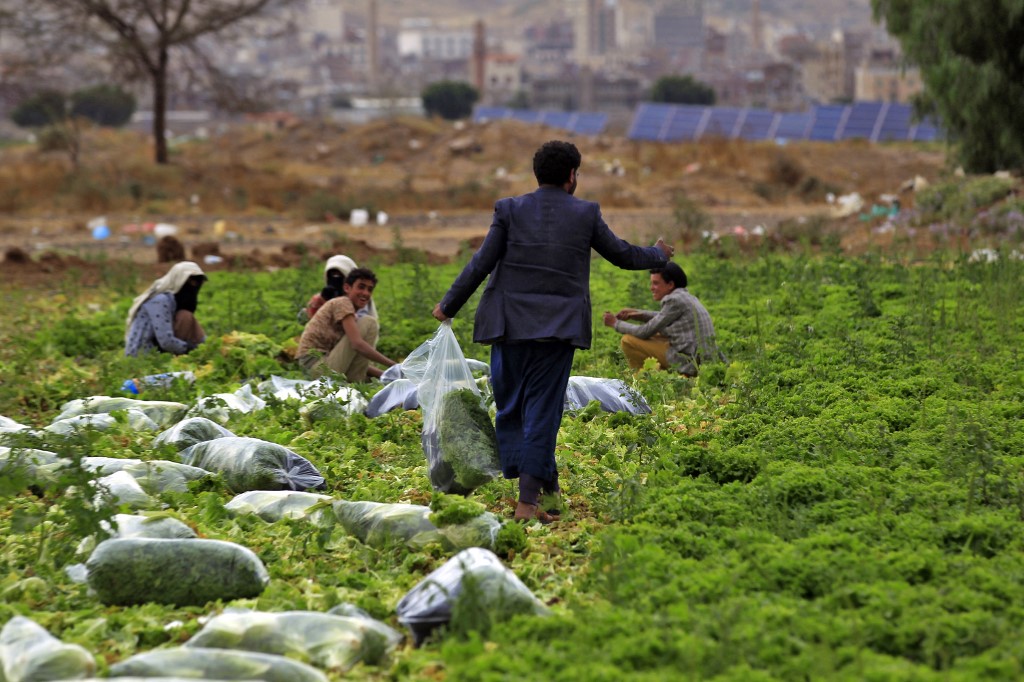
    Zahed al-Zabidi, a 30-something Yemeni native originally from conflict-battered Hodeidah governorate, knows this struggle intimately. Seven years ago, he relocated to the southern port city of Aden in search of more reliable work, leaving behind a life of inconsistent day labor that barely put food on the table for his five family members. For more than 15 years, Zabidi has made his living washing dishes and cleaning dining spaces at local restaurants – work that requires no formal education or specialized training, the only kind of employment he can access. Where he once had no trouble securing shifts, opportunity has all but dried up in recent years.

    Zabidi blames the growing competition from Ethiopian migrants passing through Yemen on their way to Gulf Cooperation Council nations. “I worked at several restaurants in Aden, but the situation gets worse every day because Ethiopian migrants are taking our jobs, and many restaurants have started hiring them,” he explained. “Ethiopian migrants are ready to work for any amount, so restaurant owners prefer them and fire us.” Zabidi once earned 130,000 Yemeni Riyals, roughly $83, per month – a sum already barely enough to cover his family’s basic needs – before he was replaced by an Ethiopian worker who accepted just 80,000 Yemeni Riyals ($51) for the same role. For Zabidi, that lower wage is impossible to accept: unlike many transient migrants, he has a family of five to support, and the reduced rate cannot cover even the most basic household expenses.

    Today, Zabidi remains out of work, traveling from restaurant to restaurant across Aden seeking any open position, with no luck. His family now survives on just bread and tea for most meals, with meat only appearing on their table when a charitable neighbor shared it during the Eid al-Fitr holiday. “It is difficult for a jobless person like me to buy good food for his family. We are only eating to survive,” Zabidi said. Now, he is planning to leave Aden to seek work on farms in Lahj governorate, where relatives already work, even though he has no prior experience in agricultural labor. “I don’t have experience in farming, but I will learn it from my relatives and try my best to work there,” he said.

    Official data underscores the scale of Zabidi’s crisis: Yemen’s national youth unemployment rate hit 32.39 percent in 2024, with the hardest impacts falling on low-skilled workers like him who rely on informal, unskilled roles. The United Nations estimates that 22.3 million Yemenis – nearly three-quarters of the country’s total population – require some form of humanitarian assistance or protection support in 2025.

    The influx of migrants that has reshaped Yemen’s labor market is part of a long-running regional migration pattern. Yemen’s strategic position on the southwestern edge of the Arabian Peninsula has made it a key transit hub for decades for migrants fleeing conflict and poverty in East Africa and the Horn of Africa, most notably Ethiopia and Somalia, who seek better economic opportunity and safety in Saudi Arabia and other wealthy Gulf states.

    According to the International Organization for Migration (IOM), 110,144 migrants have entered Yemen since the start of 2025, 97 percent of them Ethiopian and 3 percent Somali. More than 90 percent of these new arrivals list Saudi Arabia as their final destination, with only 10 percent planning to settle in Yemen permanently. For most, the country is nothing more than a temporary stopover as they coordinate the next leg of their dangerous journey.

    Because migrants only need enough income to cover immediate daily survival costs while they wait to continue north, most are willing to accept extremely low wages that Yemeni heads of household cannot afford to work for. One Ethiopian migrant, who gave his name as Ramadan, explained this dynamic in a brief interview with Middle East Eye. “We plan to reach Saudi Arabia, and while we are here, we need to eat, so we work just like anyone else,” he said. Ramadan, who has picked up basic Arabic during seven months working at an Aden restaurant, added: “I love Yemen and Yemenis, and I don’t want to make anyone unhappy. Yemenis are our brothers, and we share the same suffering.”

    Restaurant owners in Aden openly admit that they prefer to hire Ethiopian migrants for low-wage cleaning and dishwashing roles for this reason. Ali, an Aden restaurant owner who spoke to MEE on condition of anonymity, acknowledged that the lower labor costs and higher willingness to work long hours make migrants the more attractive option for business owners. “The Ethiopian migrants work hard and they clean the restaurant better than some Yemenis. Moreover, they accept lower wages and don’t complain,” Ali said. “While some Yemeni workers frequently demand higher wages and require a lot of time off, that is not the case with Ethiopians, who work silently and dutifully perform any task requested of them. As a businessman, I prefer to employ Ethiopians for these roles because they work longer hours for less pay.”

    Economic analysts note that while the migrant influx exacerbates strain on low-wage Yemeni workers, it is not the root cause of the country’s unemployment crisis – that stems from the 10-year ongoing civil conflict that collapsed Yemen’s national economy. “These migrants work in cleaning, strenuous domestic labour and farming, especially Qat farming, where they accept low wages,” explained economic expert Wafeeq Saleh. “These low wages are not enough for a Yemeni to eke out a decent living for a family, creating unfair competition in the labour market between Yemeni workers and Ethiopians.”

    Saleh added that shifting cultural norms have already pushed more Yemenis into these once-shunned low-skilled roles. “There used to be a relative reluctance among Yemenis to take up cleaning jobs because it was culturally viewed as ‘shameful’, but the severe economic crisis has contributed to the fading away of this culture, and Yemenis are now in dire need of any opportunity,” he said.

    Even many Yemeni workers who have lost jobs to migrants do not oppose migrants working, but rather call for uniform wage standards that eliminate the unfair advantage low-wage transient migrants give employers. “I am not against Ethiopian migrants working, but I am against the low salaries that encourage restaurant owners to hire them,” Zabidi said. “If we received the same salary for the same working hours, restaurant owners would prefer us.”

  • Israel sent troops to ‘Azerbaijan, UAE, Iraq and Somaliland’ during Iran war

    Israel sent troops to ‘Azerbaijan, UAE, Iraq and Somaliland’ during Iran war

    A bombshell new report published Friday by CNN has laid bare extensive, secretive deployments of Israeli special operations forces and intelligence personnel across four countries in the broader Middle East region, carried out amid Israel’s ongoing open conflict with Iran. Citing four anonymous sources with direct knowledge of the activities, the outlet details that operatives from Israel’s iconic foreign intelligence agency Mossad, alongside elite units of the Israeli military including a specialized airborne rescue detachment from the Israeli Air Force, were positioned in southern Azerbaijan, just kilometers from the Iranian border. At their closest point, these deployments sit roughly 100 kilometers outside of major Iranian city Tabriz, placing critical Iranian infrastructure and military assets well within operational range.

    According to the report, the deployed Israeli personnel have conducted two core mission sets: coordinated drone strikes against targeted individuals and broad, systematic intelligence gathering to map Iranian military movements and facilities. One high-profile strike launched from Azerbaijani soil, a source confirms, was the assassination of Rahman Moghaddam, a senior leader of the Islamic Revolutionary Guard Corps (IRGC) who oversaw the force’s special intelligence operations division. Moghaddam was killed in an attack on March 4. Just 24 hours after that killing, unmanned aerial vehicles targeted Nakhchivan International Airport in Azerbaijan and an adjacent local village. Azerbaijani authorities in Baku immediately pinned the blame for the strike on Iran, a charge Tehran has repeatedly and categorically denied.

    Beyond Azerbaijan, CNN’s investigation reveals that Israel has built and maintained a sprawling network of covert operational outposts and bases scattered across the broader Middle East and Horn of Africa, with additional facilities located in Iraq, the United Arab Emirates, and the self-declared independent state of Somaliland. The report notes that a portion of these sites were developed with the explicit knowledge and approval of host nation governments, while other covert positions may have been established without the host authority’s awareness.

    Within hours of the report’s publication, the Embassy of Azerbaijan in Washington DC issued a sharp rejection of the claims, telling CNN that Baku dismisses all unfounded assertions that Azerbaijani territory has been used to launch offensive operations against any third country.

    On the Somaliland front, the report confirms that the breakaway region in northern Somalia, which has not received widespread international recognition as an independent state, has hosted hidden Israeli operational positions. Notably, Israel made global headlines in December 2024 when it became the first United Nations member state to formally recognize Somaliland’s sovereignty. As of Saturday morning, Somaliland authorities had not issued any public response to CNN’s reporting.

    The new revelations build on similar reporting published in recent weeks by other major international outlets. The Wall Street Journal and The New York Times both reported last month that Israel had constructed two secret operational facilities inside Iraq amid its escalating conflict with Iran. Separately, Axios and the Financial Times also confirmed that Israel has deployed active-duty ground troops, an Iron Dome air defense battery, and additional advanced air defense systems to the UAE since the outbreak of the current conflict with Iran.

    CNN’s sources also shared details of pre-planned Israeli covert activity dating back to earlier this year. When large-scale anti-government protests roiled Iran in January, Israeli special operations command finalized preparations for a secret mission along the Azerbaijan-Iran border. The planned operation was designed to lay groundwork for future strikes by establishing long-term surveillance infrastructure in the border region. After the protests wrapped up, Israeli special forces accompanied by stealth aircraft were deployed to install the intelligence gathering equipment, which has since been used to continuously monitor Iranian military movements and key facilities along the border, the report says.

    Diplomatic records confirm that Israel has long maintained deep, formal strategic partnerships with both Azerbaijan and the UAE. For Baku, Israeli cooperation extends across energy development, advanced defense systems sales, and cybersecurity collaboration. With the UAE, Israeli ties focus heavily on expanding economic integration, joint intelligence sharing, and public and private security partnerships.

  • Putin says there is no point meeting Zelensky over ending Ukraine war

    Putin says there is no point meeting Zelensky over ending Ukraine war

    Fresh tensions have flared in the 3-year-old Russia-Ukraine conflict after Russian President Vladimir Putin turned down a public request from Ukrainian leader Volodymyr Zelenskyy for one-on-one negotiations to end the full-scale war that launched in 2022.

    Zelenskyy published an open letter Thursday that formally called for face-to-face talks with Putin, arguing that the international community cannot afford to wait for renewed U.S. focus on the conflict to push forward peace processes. The letter included a defiant, occasionally mocking tone toward the Russian leader — including jabs at his decades in power and recent Ukrainian drone strikes on Russian territory, one of which targeted St. Petersburg just days prior, which Zelenskyy framed as a “visit” to Russia. The Ukrainian president also called for an immediate ceasefire to precede formal negotiations.

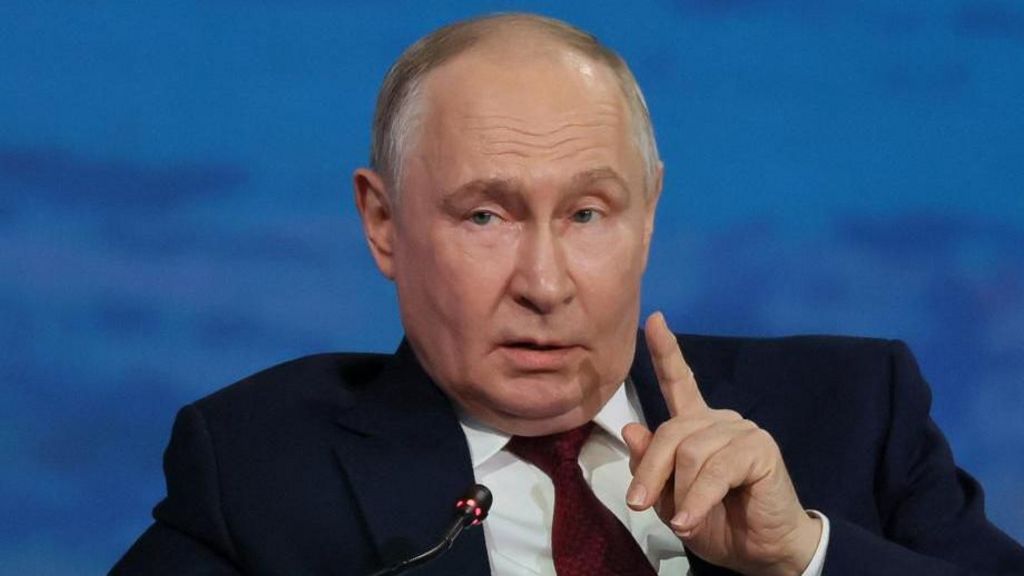
    Putin pushed back against the request Friday during remarks at Russia’s annual St. Petersburg International Economic Forum, dismissing the letter as “rude” and arguing it was never intended to set the groundwork for genuine dialogue. “Was it a way to create the conditions for a face-to-face meeting or a way not to set up a face-to-face meeting? I think it was the second,” Putin told attendees.

    The Russian leader doubled down on his long-held negotiating position, which holds that a ceasefire cannot come before binding peace agreements are reached. He warned that a temporary pause in fighting would only allow Ukrainian forces to regroup and rearm, while Moscow’s core demands remain unaddressed. “The only point [of a ceasefire] is for the Ukrainian side to halt the advance of our armed forces. But we need agreements — not for six months, not for three months, but for the long term,” Putin said. “Let the experts get to work and come up with some solutions. After that, we can meet.”

    Putin reaffirmed that military operations will continue until Russia achieves its stated war aims, which include Ukraine ceding control of the four Donetsk, Luhansk, Kherson, and Zaporizhzhia regions and permanently abandoning its bid to join NATO. Kyiv has repeatedly rejected these demands, refusing to surrender any sovereign territory and noting that Russia launched its full-scale 2022 invasion eight years after annexing Ukraine’s Crimean Peninsula, arguing territorial concessions would only embolden future Russian aggression.

    When asked directly whether he would meet Zelenskyy for talks, Putin responded clearly: “I don’t see any point for now.”

    While Zelenskyy’s overture was met with cautious hope in some international circles, including the White House, where former U.S. President Donald Trump said a meeting between the two leaders “would be great,” the conflict on the ground continued to escalate even as diplomatic efforts stalled.

    On the same day as Putin’s remarks, Ukrainian military officials announced they had struck five vessels carrying unauthorized cargo in the Sea of Azov and off the coast of Russian-occupied Ukrainian territory. Robert Brovdi, commander of Ukraine’s drone forces, said the targeted ships were involved in stealing Ukrainian grain and transferring fuel and military supplies to Russian forces.

    Azerbaijan’s foreign ministry later confirmed that five civilians were killed in attacks on two of the ships, adding that the vessels were not Azerbaijani-flagged and did not specify who it held responsible for the casualties.

    In another separate incident, a Ukrainian drone detonated in the Romanian Black Sea port of Constanta this week. Ukrainian military operators said the drone was blown off course by Russian electronic warfare interference, marking an accidental incursion into NATO-member Romanian territory.

    Russia launched a wave of new attacks across Ukraine in the 24 hours prior, killing at least 13 people and wounding 70 more, Ukrainian emergency officials confirmed. Four workers died when a dairy factory outside Kyiv was hit, while a 35-year-old woman was killed in a drone strike on a Kherson petrol station, among other casualties reported across the country.

  • Finding moments of childhood in Gaza, one bubble at a time

    Finding moments of childhood in Gaza, one bubble at a time

    When the Global Sumud Flotilla set sail on May 18 to break Israel’s aerial, land and sea blockade of the Gaza Strip, its cargo held far more than life-sustaining basics. Alongside stockpiles of food, clean drinking water, infant formula and critical medical equipment targeted to Gaza’s collapsing healthcare system, the aid mission carried a surprising, gentle addition: portable homemade bubble play kits. These simple kits, crafted from just soap, water, rope and wooden sticks, are the core initiative of Bubbles Not Bombs (BNB), a grassroots humanitarian project dedicated to giving children trapped in war zones and displaced by conflict small, precious moments of respite through mindful bubble play.

    For 15 years, BNB operated under the umbrella of Dr Zigs, a Welsh eco-friendly toy company founded by 56-year-old Italy-born Paola Dyboski that frames play as a foundational tool to support children’s emotional wellbeing in crisis settings. Just recently, the initiative spun off to become an independent non-profit organization, expanding its reach to conflict-hit regions across the globe.

    Dyboski does not minimize the urgent need to deliver basic necessities to Gaza, where the Palestinian health ministry confirms more than 22,000 Palestinian children have been killed since the start of Israel’s military campaign launched after the October 7, 2023 Hamas-led attack. But she has long argued that play itself is a universal human right that no child, even in the midst of active conflict, should be denied.

    Currently, BNB is working to deliver physical bubble kits to children across Gaza and southern Lebanon, where ongoing Israeli military operations have killed more than 3,500 people and displaced nearly one million since March 2024. To bridge gaps in delivery amid restricted access, the organization has already shared simple, open-source digital instructions for making homemade bubbles using locally available materials, so children and caregivers can build their own kits without waiting for external shipments.

    Dyboski explains that the soft, fleeting nature of bubbles, with their inherent joy and lightness, offers children living with chronic trauma a tangible tool to process fear and grief, articulate unspoken difficult feelings, regulate their breathing, and stabilize their emotions amid constant chaos.

    That impact is visible on the ground in Gaza, where Mohamed Abushbeka has cared for his two young nieces since their father was killed in the first weeks of Israel’s military campaign. Last week, BNB reposted a video Abushbeka shared of his older niece, Batool, blowing bubbles inside an overcrowded displacement camp.

    “Bubbles give children these rare stretches of joy, safety, and escape from all the anxiety and brutal reality around them,” Abushbeka told Middle East Eye in an interview. He emphasized that bubble play helps children release overwhelming emotions they often lack the words to name, giving them a brief, tangible sense of freedom. “You see them running, laughing, chasing the bubbles as they float up, then suddenly fall and burst,” he said.

    He added that bubble play is uniquely accessible in a context where most resources are scarce: it is low-cost, simple to make, and children will repurpose any available materials, from plastic cups to discarded small tubes, to make their own wands. For caregivers working to preserve any shred of normal childhood for the next generation, protecting these small moments of play is non-negotiable, Abushbeka said. “One day, Palestinian children will laugh without fear, sleep without bombs, and grow up surrounded by peace instead of loss,” he wrote on his Instagram page.

    Leigh Evans, a Welsh emergency nurse, paramedic and activist with four medical aid missions to Gaza under his belt, has witnessed first-hand the constant trauma that shapes daily life for Gaza’s children, and the heartbreak of seeing them robbed of the chance to just be kids. “I think children’s need to play and develop as whole human beings should be a major part of what we count as essential aid,” Evans said.

    He reflected on how Gazan families work tirelessly to preserve small bits of normalcy even amid widespread destruction, recalling invitations to share meals in partially bombed-out homes, where families leaned on cooking and play to comfort their children when death could come at any moment. Evans has long integrated BNB’s bubble kits into his solidarity work: he joined the Global Sumud Flotilla mission, used bubble play during the 2025 Global March to Gaza, blew bubbles during a peaceful Red Line solidarity rally in West Wales last week, and joined activists in a direct action outside Israeli weapons manufacturer Elbit Systems in March, where bubble play was used to disrupt production of munitions deployed in Gaza.

    “Bubbles are wonderfully therapeutic,” Evans said. “They offer a small but incredibly powerful form of psychological relief for children in conflict zones, letting them be children in a place where they would otherwise have no space for that.”

    Sabine Choucair, a Lebanese performer and co-founder of Clown Me In, an organization that brings arts programming to children in crisis zones, frames bubbles as uniquely magical for young people. “Bubbles are magical, like small globes that reflect everything around children,” she explained. “They bring kids together and give them a low-stakes way to experiment and play.”

    Choucair, who has 20 years of experience performing for children in refugee camps and disaster zones across the world, recently partnered with BNB by sharing a video of her original activity “Pop the Fear”, where children are invited to name their fears, visualize placing them inside a bubble, pop the bubble to release the fear, then blow new bubbles to make space for joy and hope.

    Speaking of the ongoing crisis in Lebanon, where children are once again displaced, forced out of school, and forced to re-live the trauma of bombardment and home loss, Choucair pushed back against the narrative that mental health and play support are secondary to basic aid. “Imagine re-living the loss of your home, hearing drones and bombs again, and being out of school once more,” she said. “How are we supposed to survive if our mental state is destroyed?”

    Mental health experts echo this framing, noting that even when basic survival needs are unmet, psychosocial support for children facing repeated bombardment, displacement and grief is not a secondary priority—it should be a core component of any emergency response. A powerful video from the Gaza-based Sameer Project illustrates this impact, showing a young girl channeling her fear of shelling and famine into popping bubbles, before sharing her wish to be reunited with her mother, who was killed in the conflict.

    “It’s a simple but deeply effective way to help children process trauma,” Dyboski said. “Creating moments of play is healing. They can feel a sense of control and make the experience their own.”

    Beyond Gaza and Lebanon, BNB has already begun distributing bubble kits to children in Myanmar and at Cox’s Bazar in Bangladesh, home to the world’s largest refugee camp. The organization is working to expand access to Sudan in partnership with local group Let’s Have Hope, though shipment challenges have delayed entry to date. It also plans to send kits to children in the Democratic Republic of Congo and Ethiopia’s Tigray region, both sites of ongoing protracted conflict.

    “We need to make sure children not only survive but are also able to grow into human beings who can live, love and function fully,” Evans said. Citing UNICEF data that an estimated 473 million children worldwide currently live in active conflict zones, Dyboski says the work is far from over. “We’ve got a lot of children to reach.”

  • Labour contender Andy Burnham declines to say Israel has committed genocide in Gaza

    Labour contender Andy Burnham declines to say Israel has committed genocide in Gaza

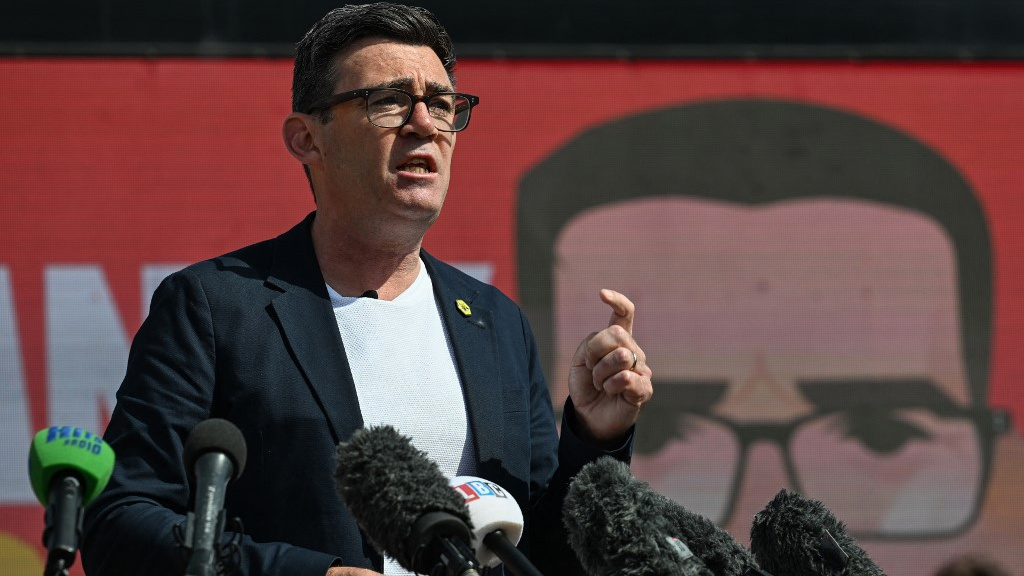
    As the race for leadership of Britain’s Labour Party slowly takes shape ahead of a upcoming by-election, two prospective contenders have staked out contrasting positions on the highly charged question of whether Israel’s military campaign in Gaza amounts to genocide, exposing deep internal divides within the party over Middle East policy.

    Andy Burnham, the sitting Mayor of Greater Manchester who is running to become Member of Parliament for Makerfield in the June 18 by-election — a step widely seen as paving his way to challenge Keir Starmer for the party leadership and eventually the post of prime minister — laid out his stance in a Thursday interview with *The Guardian*. When pressed to label Israel’s actions in Gaza as genocide, Burnham declined, arguing that the gravity of such an accusation puts it beyond his ability to rule on from his current position. “I can’t judge things of that enormity from where I am as mayor of Greater Manchester,” he told the outlet.

    That said, Burnham did not shy away from criticizing the scale of Israel’s military operation. He made clear he holds serious concerns about what he described as the disproportionate level of destruction inflicted on Gaza, and called for a full independent investigation to hold responsible parties to account. His comments come against a backdrop of mounting death and humanitarian catastrophe in the enclave: since the October 7, 2023 Hamas attack that killed roughly 1,200 people in Israel, Israeli military operations have killed nearly 73,000 Palestinians in Gaza, with an additional 170,000 wounded. Thousands more remain unaccounted for, presumed dead under rubble from Israeli airstrikes and ground operations. Humanitarian groups have also documented that Israel has implemented a deliberate policy of blocking entry of food, clean water, medicine and other essential supplies to Gaza’s civilian population, creating widespread famine; even when aid has been allowed in after global public outcry, the volume has been far too insufficient to meet the needs of Gaza’s 2 million trapped residents.

    Multiple prominent human rights organizations, including Amnesty International, Human Rights Watch, and leading Israeli human rights groups, have formally concluded that Israel’s actions in Gaza meet the legal definition of genocide, a finding echoed by dozens of leading global genocide studies experts. Last year, a United Nations commission of inquiry also reached the conclusion that Israel is committing genocide in Gaza.

    Burnham’s position is notably more muted than that of another likely Labour leadership challenger, Wes Streeting, the recently resigned UK Health Secretary who has also publicly stated his ambition to replace Starmer as prime minister. While Streeting has never publicly accused Israel of genocide or war crimes, internal details that emerged late last year revealed he privately stated that Israel was carrying out war crimes “before our eyes” and that the Israeli government was using the “language of ethnic cleansing.” This week, while he did not repeat those private accusations publicly, Streeting defended his decision to share a dossier of graphic images showing injured Palestinian children in Gaza with fellow cabinet ministers. He told reporters he was “horrified by the war in Gaza” and had worked behind closed doors to pressure the British government to act with what he called the moral urgency the crisis demands. “That included sharing the eyewitness testimony of doctors on the ground in Gaza, whose accounts needed to be heard at the highest levels of government to ensure that what was happening in Gaza wasn’t a war without witnesses,” Streeting explained.

    Streeting also launched a sharp rebuke of Starmer’s leadership on the issue, saying that while multiple cabinet ministers pushed for a stronger policy shift on Gaza, their efforts repeatedly ran into intransigence from the top. “We often felt like we were hitting up against a brick wall. Our concerns and motives were dismissed,” he said. Streeting sought to frame his position as balanced, noting that he has long backed both Israel’s right to self-defense and the Palestinian people’s right to an independent sovereign state, pointing to his past record as a backbench lawmaker when he called for sanctions on illegal Israeli settlements in the West Bank, his meeting with survivors of the October 7 attack, and his status as the first shadow cabinet minister to visit Israel.

    Disclosed documents released earlier this week showed a sharp negative reaction from senior Labour figure Peter Mandelson, the disgraced former cabinet minister, Labour peer and former UK ambassador to the U.S., who described Streeting’s criticisms of Israel as “wild” and “hysterical” and claimed the contender was “experiencing an early midlife crisis.”

    Unlike Streeting, who publicly backed the Labour leadership’s initial support for Israel’s post-October 7 war on Gaza, Burnham broke ranks with Starmer’s team just weeks after the conflict began, joining London Mayor Sadiq Khan and Scottish Labour leader Anas Sarwar to issue a joint statement calling for an immediate permanent ceasefire. Their statement expressed “profound concerns about the loss of thousands of lives in Gaza, the displacement of many more and widespread suffering through the ongoing blockade of essential goods and services.” Burnham also became one of the most prominent proponents within the Labour Party of pressing the government to formally recognize a Palestinian state, a step Starmer’s government ultimately took last September.

    In a rare show of unity with Starmer, however, Burnham defended the Labour leader’s recent diplomatic clash with U.S. President Donald Trump. Trump had publicly attacked Starmer, claiming the UK had failed to provide sufficient support for the U.S.-Israeli assault on Iranian military targets, despite Britain granting the U.S. access to British military bases to carry out strikes on Iranian missile sites. Burnham argued that Starmer’s approach had been correct, noting that “normally you would want a good relationship with the US, but if you can’t agree with them, then say that as well. That’s the only way I think to deal with him [Trump].” He added that while the US-UK special relationship remains important to Britain, that does not mean the UK should blindly align with every U.S. policy position. “We’ve got in trouble in the past when that happens, so no, I think the approach that Keir has taken is the right one”, Burnham said.

    This report was originally published by Middle East Eye, a media outlet that provides independent, in-depth coverage of the Middle East, North Africa and broader global affairs.

  • Zverev to face Cobolli in French Open final after beating Mensik

    Zverev to face Cobolli in French Open final after beating Mensik

    The 2025 French Open men’s singles final is set, after two dramatic days of semi-final action that saw a veteran chasing a long-awaited milestone and an Italian rising star advance under unexpected circumstances. Germany’s Alexander Zverev, the tournament’s second seed and world number three, fought past 20-year-old Czech rookie Jakub Mensik in a four-set thriller on Friday to book his spot in Sunday’s championship match, where he will face Italy’s Flavio Cobolli. For Zverev, the match marks his fourth appearance in a Grand Slam final, and a chance to claim the first major title of his decorated career.

    Zverev’s path to the final required every bit of his 11 years of Grand Slam experience against Mensik, who was competing in his first ever major semi-final. The young Czech had already fought through two draining five-set matches to reach the last four, and fatigue gradually took its toll over the course of the two-and-a-half-hour contest. Zverev struck first, breaking Mensik’s serve in the 11th game of a tight opening set after saving three break points that would have put the 26th seed up 5-3. The German dominated the second set, dropping only four points on his own serve and breaking Mensik twice to take a two-set lead.

    Mensik briefly turned the tide after calling a medical time-out early in the third set for a nagging neck injury. His improved use of drop shots caught Zverev off guard, and he broke to take a 4-2 lead before closing out the set 6-3 — the only second set Zverev has dropped through the entire tournament. But the young Czech could not maintain his momentum. Unforced backhand errors gifted Zverev an early break in the fourth set, putting him up 2-0, and the veteran never looked back. Zverev closed out the 7-5, 6-2, 3-6, 6-3 win on his first match point when Mensik sent a backhand into the net. Along the way, Zverev drew some criticism from spectators for disputing two line calls and received a time violation warning, but his ability to navigate through physical and mental pressure has kept his title dream alive.

    In the other semi-final, 10th seed Cobolli did not even take the court, after his compatriot and childhood friend Matteo Arnaldi withdrew just one hour before the match due to a sudden viral illness. Arnaldi, ranked 104th in the world, had pulled off a Cinderella run to the semi-finals, winning two back-to-back marathon matches in the third and fourth rounds before his quarter-final opponent Matteo Berrettini retired due to injury. Arnaldi said that despite feeling good through most of the tournament, he woke up suffering from dizziness and decided a withdrawal was the only responsible decision.

    “It’s tough — for how the tournament was, for how many hours I spent on court, I felt pretty good,” Arnaldi told reporters. “Every time I get up I feel dizzy and not the best… so that was the right decision for me.”

    Cobolli, who advanced to his first ever Grand Slam final via walkover, shared his disappointment for his friend and compatriot. “It’s tough for me to speak also. When he came to me an hour ago I almost cried,” he said. “At the same time I’m happy with the result this week.” Cobolli has been one of the tournament’s most impressive performers, dropping just two sets through five matches, including a standout quarter-final win over fourth seed Felix Auger-Aliassime of Canada.

    For Zverev, Sunday’s final will be the culmination of years of near-misses at the sport’s biggest events. He has fallen short in three previous Grand Slam finals, most recently losing to Carlos Alcaraz at the 2023 French Open, and held a two-set lead over Dominic Thiem in the 2020 US Open final before collapsing in five sets. He also entered the French Open in the middle of a 14-month title drought, dating back to his win at a small clay-court event in Munich in April 2024. With tournament favorites Novak Djokovic and Jannik Sinner exiting early in the second and third rounds respectively, Zverev has handled the pressure of being the top remaining seed well, losing only two sets across six matches to reach the final. He also holds a 3-1 career winning record against Cobolli, making him the clear favorite to lift the trophy on Philippe Chatrier Court.

    After reaching the final, the 29-year-old reflected on his journey to the championship match, leaning into his lighthearted approach to pressure. “This is a Grand Slam, it’s best of five, things are going to happen, opponents are going to play better. I managed it,” Zverev said. “Pure emptiness, there’s absolutely nothing in my head. We’re athletes, very few of us have anything in our heads. Sometimes it’s easier to be stupid and not to think too much. I hope to play another great match on Sunday.”