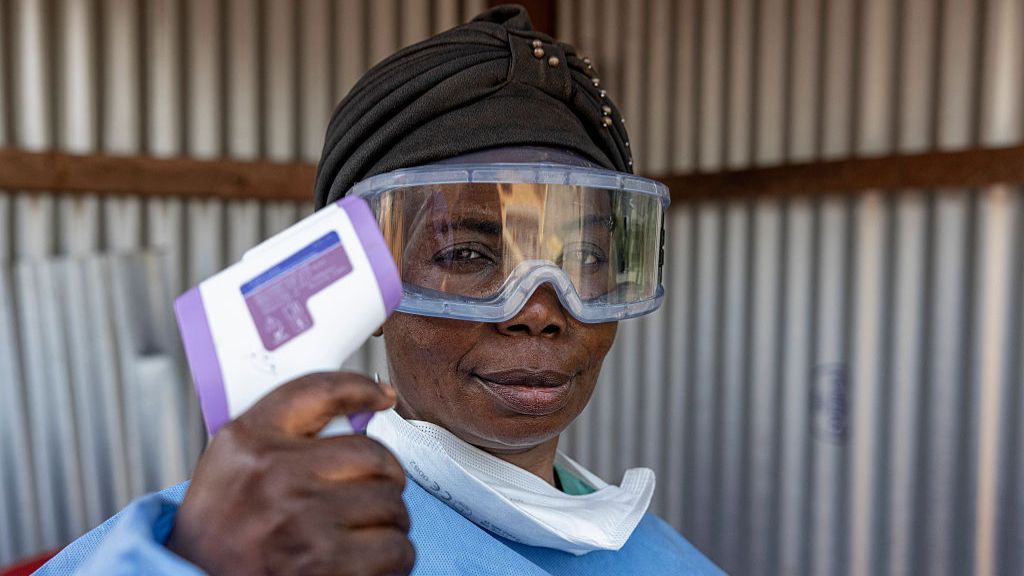
The Democratic Republic of Congo (DRC) has implemented a sweeping ban on mass gatherings in its capital city Kinshasa and four neighboring provinces, a public health measure aimed at stopping the fast-spreading Ebola outbreak from reaching one of Africa’s most densely populated urban centers, the country’s interior minister has announced.
As of Saturday, when the new directive was issued, the deadly viral outbreak has been officially confirmed in three eastern DRC provinces — Ituri, North Kivu, and South Kivu — located roughly 1,800 kilometers (1,100 miles) from Kinshasa, a megacity home to 18 million residents. The ban extends beyond Kinshasa to three additional eastern provinces that share borders with the affected regions: Tshopo, Haut-Uele, and Bas-Uele. Mass gathering restrictions have already been in place in the three core affected provinces for weeks, with Ituri bearing the overwhelming brunt of the crisis, accounting for more than 90% of all recorded infections.
On the day the new ban was announced, health authorities recorded a single-day jump of 47 new confirmed cases, pushing the national total of infections to 1,274, with the confirmed death toll rising to 360. Neighboring Uganda has also detected cross-border spread of the virus, with 20 confirmed infections and two recorded deaths, according to the World Health Organization (WHO).
This outbreak is unusual in that it is caused by the Bundibugyo strain of Ebola, for which no widely approved vaccine currently exists. Public health bodies including Africa’s Centres for Disease Control and Prevention (Africa CDC) and U.S. health agencies have warned that the outbreak has the potential to become one of the largest on record, because transmission went undetected for several weeks before the virus was formally identified. Ongoing armed conflict in eastern DRC, where the M23 rebel group controls large swathes of North and South Kivu, has further complicated outbreak response efforts, the WHO added.
The implementation of the ban has already sparked political controversy, with major opposition figures arguing the restriction is a deliberate attempt to block a planned opposition protest scheduled for July 8. The demonstration is organized by the C64 coalition, an opposition alliance opposing a proposed new law that critics warn would allow current President Felix Tshisekedi to extend his time in office beyond the constitutional two-term limit.
Opposition leaders point out that no Ebola cases have yet been confirmed in Kinshasa, making the public health justification for the ban unconvincing. Prince Epenge, spokesperson for the opposition Lamuka coalition, called the government’s decision an overtly political move. “It is not legitimate. We cannot accept this decision,” Epenge told the BBC Monday. Rodrigue Ramazani, secretary-general of the opposition Envol party, echoed those criticisms, saying the directive “reeks of a political manoeuvre rather than a public health measure,” and urged planned protesters to defy the ban and attend the march. As of Tuesday, the Congolese government has not issued any public response to the opposition’s allegations.
While Kinshasa has no confirmed local cases to date, the city has been linked to a recent exported case: a doctor who worked at an Ebola treatment center in the outbreak’s epicenter passed through Kinshasa while traveling home to France, where he later tested positive for the virus. Shortly after the doctor’s positive test was announced, the DRC government implemented a 21-day quarantine mandate for all travelers moving from affected provinces to other parts of the country.