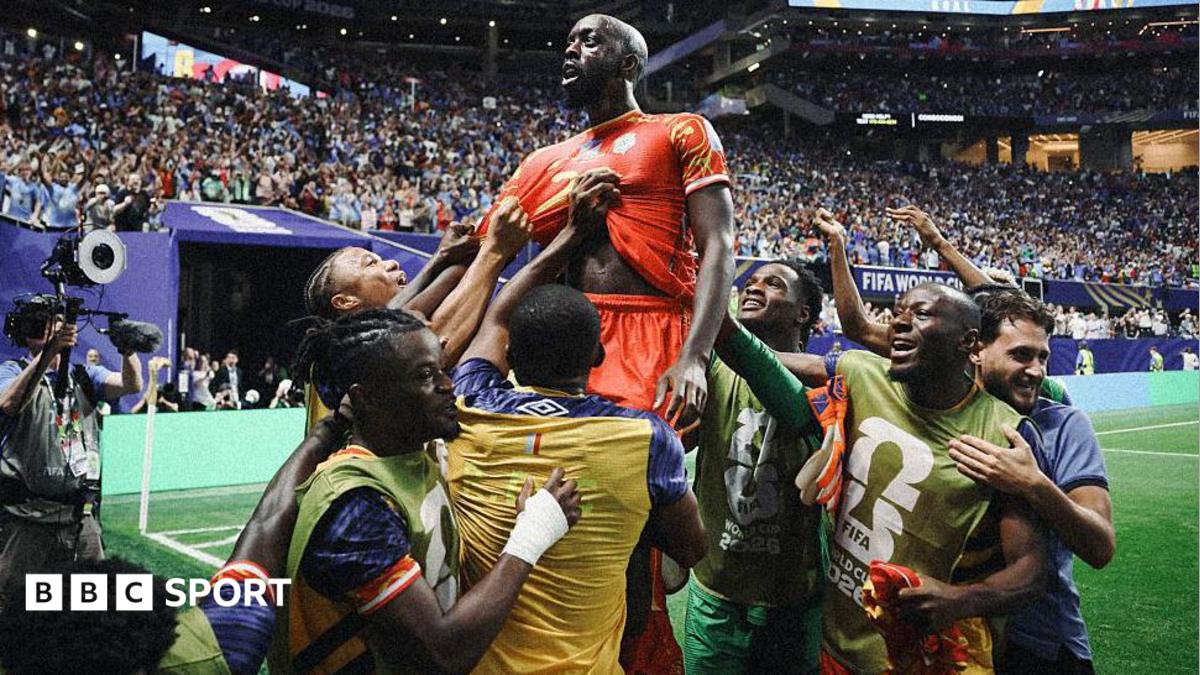
The 2026 FIFA World Cup has delivered one of the most dramatic shifts in global football dynamics in recent memory, as African nations have mounted a historic breakout performance that vindicates the controversial tournament expansion pushed by FIFA President Gianni Infantino — a stark contrast to a underwhelming showing from Asian sides that has sparked crisis across the confederation.
Just eight years ago at the 2018 Russia World Cup, African football hit a historic low point. None of the continent’s five competing nations advanced past the group stage, scraping together only three wins from a possible 15 matches. At the time, critics argued that Infantino’s plan to expand the World Cup from 32 to 48 teams, which allocated an additional four spots for African sides, lacked justification after the confederation’s underperformance. Critics questioned whether adding more African teams would simply dilute the quality of the tournament.
Eight years on, those doubts have been completely erased. Of the 10 African teams that qualified for the 2026 tournament, nine have advanced to the expanded 32-team knockout round. Only Tunisia failed to progress, with Cape Verde, Egypt, Ivory Coast, Morocco and South Africa finishing second in their groups, while Algeria, DR Congo, Ghana and Senegal claimed third-place spots to punch their tickets to the knockout stage. To put this achievement in context, before the 2022 Qatar World Cup, only three African nations had ever reached the World Cup quarter-finals: Cameroon in 1990, Senegal in 2002 and Ghana in 2010. Four years ago, Morocco made history by becoming the first African side to reach the semi-finals, beating powerhouse sides Belgium, Spain and Portugal along the way.
Confederation of African Football (Caf) president Patrice Motsepe attributes this turnaround to years of deliberate investment across the continent. “This progress is the result of hard work and targeted investments in youth football development, coaching education and the growth of professional domestic leagues,” he noted. Former Nigeria captain William Troost-Ekong added that Morocco’s success created a replicable blueprint for other African nations. “Morocco spent years and years investing in grassroots football and elite academies. They put in not just money, but time and effort, with a clear long-term vision for progress. The quality of their facilities and consistent development across all age groups is the model every country should follow,” Troost-Ekong told BBC Sport Africa.
While the expanded 48-team format, which allows third-place group finishers to advance to the knockout round, created additional opportunities for African sides, it cannot fully explain the gap between African and Asian performance. The expanded structure spreads traditional powerhouse nations across 12 groups, with only four groups hosting two top-ranked sides, meaning most groups were more competitive than critics initially predicted. Even with this context, the difference in results is stark: only two of Asia’s nine qualifying nations advanced to the knockout round, a major regression from 2022, when three Asian teams reached the knockout stage.
Across the group stage, African nations earned 1.33 points per game with 10 wins from 30 matches, while Asian sides managed just 0.67 points per game with only three wins from 27 matches. In five critical final group matches that pitted African against Asian teams for knockout qualification, Asian sides failed to win a single game, dropping four. The outcome has already triggered major fallout across Asian football. South Korea, a consistent World Cup qualifier, crashed out after a shock final-group defeat to South Africa, prompting South Korean President Lee Jae Myung to call for a full investigation into what he called “a failure of organisation and personnel” within the national team program. Within hours of elimination, head coach Hong Myung-bo stepped down. Rookie World Cup qualifier Jordan also lost all three of its group matches, and head coach Jamal Sellami pointed to a key structural gap explaining the performance difference between African and Asian sides: access to top-tier European club football.
Statistics bear out this observation: 20 of Morocco’s 26-man 2026 World Cup squad play in Europe, 15 of them in the continent’s top five leagues. DR Congo has 24 of its 26 players based in Europe, while even Egypt, the country with the lowest share of European-based players among African qualifiers, has six players competing on the continent. Compare that to Asian sides: Jordan has only one player from its squad competing in Europe, while Iraq and Uzbekistan have three each, and Iran have four. Even Japan, Asia’s most successful representative this tournament, has 23 European-based players, matching the depth of top African sides, while Australia has 16 and South Korea 15, demonstrating that the most competitive Asian nations do share a similar development path with top African sides — but most of the confederation has not kept pace.
Now, as the knockout round gets underway, African sides have a historic chance to build on their group stage success. DR Congo, thanks to two goals from Yoane Wissa, will face England in Atlanta on Wednesday, while Algeria, which claimed one of the best third-place spots, will face Switzerland in Vancouver on Thursday. South Africa became the first African knockout side to be eliminated, falling to a late winner from co-host Canada on Sunday, who will next face the winner of Morocco’s clash with the Netherlands. Morocco, currently ranked sixth in the FIFA global rankings — one spot above the Netherlands — enters the match as the slight favourite, a far cry from a decade ago, when the North African side would have been written off as heavy underdogs. A potential quarter-final clash against defending World Cup champions France awaits Morocco if they advance, setting up a rematch of their 2022 semi-final encounter. Defending champions Argentina, who face Cape Verde on Friday, are in a section of the knockout bracket that includes four African nations, setting up the possibility of an all-African last-16 tie between Algeria and Ghana.