标签: Africa

非洲

  • South Africa’s top court bars repeat asylum applications

    South Africa’s top court bars repeat asylum applications

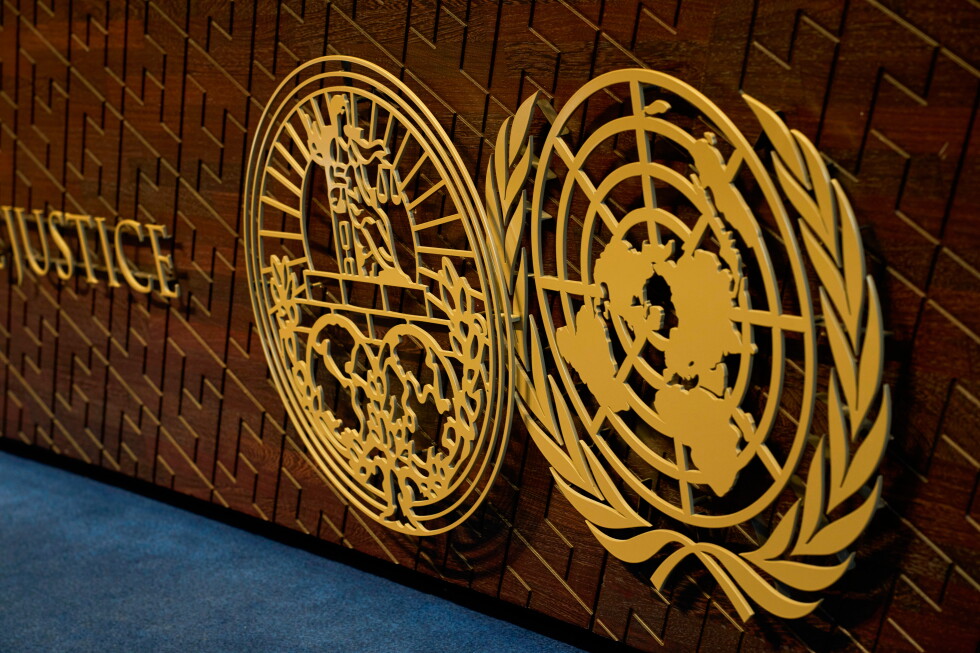
    In a landmark final ruling that has reshaped South Africa’s asylum framework, the country’s Constitutional Court has moved to block foreign nationals from submitting repeated asylum claims after an initial application has been rejected. The judgment, which upends a prior ruling from the Supreme Court of Appeal, addresses longstanding administrative and policy concerns over the nation’s overstretched refugee processing system.

    The court’s majority opinion emphasized that without explicit governing legislation, allowing endless cycles of repeat asylum applications would create a permanent logjam: a “never-ending cycle” of processing that would block ordered deportations and overwhelm government administrative capacity. The case that led to the ruling originated with two Burundian nationals who first had their asylum claims rejected in 2014, then submitted a new application in 2018. The pair argued that renewed political violence that erupted in Burundi following the 2015 controversial presidential election, which left at least 70 people dead amid widespread unrest after then-President Pierre Nkurunziza’s bid for a third term, justified a reevaluation of their claim.

    Lower courts sided with the two claimants, but the Constitutional Court, South Africa’s final court of appeal, overturned that decision. The ruling has been celebrated by the nation’s current coalition government as a critical check on systemic abuse. Home Affairs Minister Leon Schreiber, a member of the Democratic Alliance – the second-largest party in President Cyril Ramaphosa’s ANC-led unity government – called the outcome a “major victory” over misuse of the refugee system. In remarks to local broadcaster Newzroom Afrika, Schreiber explained his department had spearheaded the legal challenge to the Supreme Court of Appeal’s ruling, warning that upholding the lower court’s decision would have opened the door to “multiple bites at the cherry” for rejected claimants, enabling ongoing abuse of the asylum process.

    Schreiber added that the judgment is a key step toward the government’s broader goal of building a more “effective and fair system to manage refugees and asylum seekers.” As of 2025, UN High Commissioner for Refugees (UNHCR) data shows South Africa hosts more than 167,000 registered refugees and asylum seekers, the vast majority originating from neighboring and conflict-affected African states including Burundi, the Democratic Republic of Congo, Somalia, South Sudan, Rwanda and Zimbabwe. Official census figures estimate South Africa is home to roughly 2.4 million documented migrants, accounting for just under 4% of the total population, though observers believe a large additional number of undocumented migrants reside in the country without formal status. As Africa’s most industrialized economy, South Africa has long drawn migrant workers from across the continent seeking better economic opportunity.

    The ruling comes at a moment of heightened domestic tension over immigration, with South Africa recently swept by a wave of large-scale protests targeting undocumented migrants. Thousands of demonstrators have marched in major urban centers to demand mass deportations of foreign nationals, and the unrest has included targeted attacks on migrant-owned businesses and communities. Several African governments have formally raised concerns through the African Union and have issued travel advisories warning their citizens residing in South Africa of potential targeting. Earlier this week, President Ramaphosa issued a public statement blaming “opportunists” for orchestrating the violent anti-immigrant attacks, stressing that the unrest does not reflect the will of the South African public or official government policy. “The recent violent protests and criminal acts directed at foreign nationals in parts of our country do not represent the views of South Africa’s people nor reflect our government’s policy,” Ramaphosa said in an open letter.

    The judgment marks a significant shift in South Africa’s asylum policy, and comes as the government faces growing pressure from domestic political factions to crack down on unauthorized migration while navigating criticism from human rights groups and neighboring nations over the treatment of foreign residents.

  • South Africa declares natural disaster as flooding kills at least 10

    South Africa declares natural disaster as flooding kills at least 10

    JOHANNESBURG – A catastrophic weather system bringing record-breaking torrential rainfall has unleashed devastating flooding across six of South Africa’s provinces, leaving at least 10 people dead and destroying hundreds of vulnerable residential structures, with low-income informal communities bearing the brunt of the destruction. Since May 4, extreme weather spanning flooding, severe thunderstorms, powerful high winds, and unseasonal snowfall has impacted regions including Western Cape, North West, Free State, Eastern Cape, Northern Cape, and Mpumalanga, prompting national authorities to issue an official natural disaster designation. This official declaration unlocks immediate access to emergency government funding and priority deployment of response resources, allowing rapid relief action to reach affected communities. The coastal hub of Cape Town, located in Western Cape, has emerged as one of the hardest-hit urban centers. In response to rapidly deteriorating conditions, the Western Cape provincial government has ordered temporary closures for all public and private schools across high-risk flood zones, as well as restricted access to portions of the iconic Table Mountain, one of the city’s most popular global tourist attractions. Local officials confirmed Tuesday that at least 26 informal settlements on the outskirts of Cape Town have been inundated by floodwaters, damaging more than 10,000 informal residential structures that largely lack engineered flood-resilient infrastructure. South African President Cyril Ramaphosa, speaking Monday as winter officially gets underway across the Southern Hemisphere, voiced deep sorrow over the lives lost to the extreme weather event. “We grieve with the families who have lost their loved ones, and we are standing with all those who have lost their homes and livelihoods to this disaster,” Ramaphosa stated, adding that national disaster management authorities are leveraging modern meteorological science to improve early warning for future extreme weather events and streamline response efforts in the wake of disasters. The current disaster marks the second major flooding crisis to hit South Africa in 2024, underscoring a growing regional trend of intensifying extreme weather linked to shifting global climate patterns. Climate researchers have repeatedly warned that severe flood events across Southern Africa are growing more frequent and more destructive, driven by rising global temperatures that amplify extreme rainfall patterns. In recent months, neighboring Mozambique and Zimbabwe have also experienced unusually high rainfall and the worst regional flooding in decades. Back in January, South Africa was forced to declare a separate national disaster after torrential rains and flooding in the country’s northern regions killed at least 30 people, destroyed thousands of homes, and washed out critical road and bridge infrastructure connecting rural and urban communities.

  • Nigerian military airstrike kills 100 civilians at a market, rights group claims

    Nigerian military airstrike kills 100 civilians at a market, rights group claims

    ABUJA, Nigeria — A fresh public dispute has emerged over civilian casualties in Nigeria’s long-running counter-insurgency campaign in the country’s restive northern region, after the nation’s military rejected a prominent human rights group’s allegation that a weekend airstrike killed 100 civilian people at a local market.

  • Uganda’s president sworn in for record seventh term

    Uganda’s president sworn in for record seventh term

    Eight-one-year-old Yoweri Museveni, Uganda’s long-standing head of state, has officially been sworn into office for a historic seventh consecutive presidential term, capping off a turbulent electoral process that has divided the East African nation and drawn international scrutiny. Museveni’s latest inauguration extends his nearly 40-year rule, placing him among the longest-serving incumbent leaders on the African continent, and will keep him in power through 2031.

    Days before the inauguration ceremony held at Kampala’s Kololo Independence Grounds — a national holiday declared by the ruling government — authorities deployed heavy security across the capital, including armored battle tanks. Police officials framed the extraordinary security buildup as a necessary measure to preserve public order, but critics view it as a show of force intended to deter opposition protests.

    Museveni first claimed victory in the January 2026 general election, with official results granting him more than 70% of the popular vote. However, his main challenger, 44-year-old singer-turned-politician Bobi Wine (whose legal name is Robert Kyagulanyi Ssentamu), has flatly rejected the outcome, alleging widespread ballot stuffing and systemic electoral fraud. National election officials have repeatedly denied all claims of irregularity.

    Following the election, Wine, who leads the opposition National Unity Platform party, fled Uganda, stating he faced credible threats of assassination at the hands of the ruling regime. Prior to his departure, his home was raided by security forces, and he accused authorities of targeting him and his family. Police have refuted these accusations, claiming they only deployed personnel to provide standard security for a presidential candidate. Museveni, for his part, has labeled opposition figures challenging the election results “terrorists” seeking to overturn the democratic outcome through violence.

    Museveni first seized power as a rebel leader in 1986, and has since won seven consecutive presidential elections. He joins a small cohort of African leaders who have held national power for more than four decades, alongside figures including Denis Sassou Nguesso of Congo-Brazzaville, Teodoro Obiang Nguema Mbasogo of Equatorial Guinea, and Paul Biya of Cameroon.

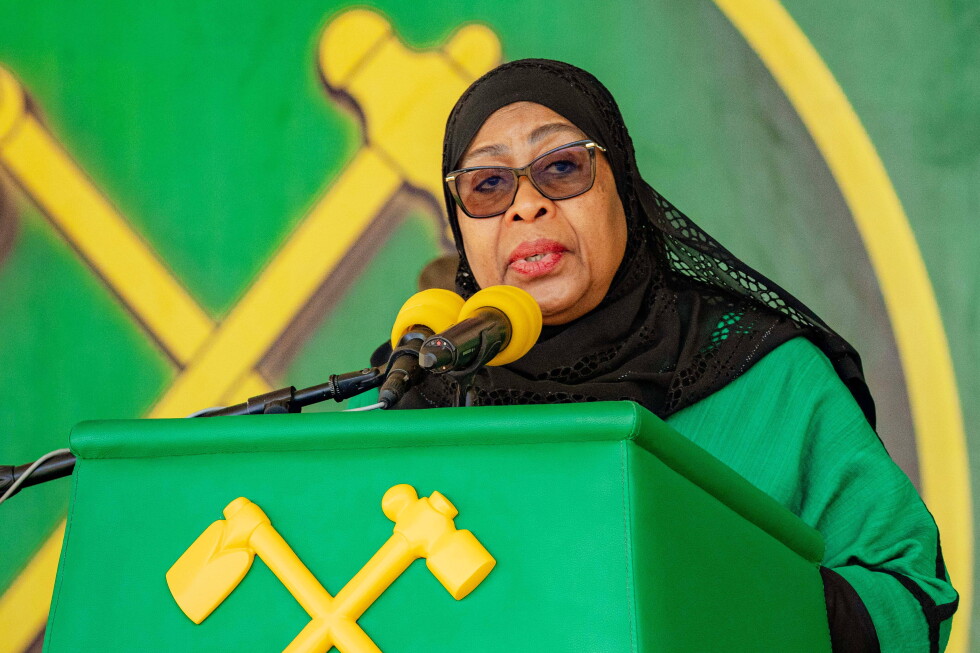
    The inauguration drew attendance from multiple regional heads of state, including Tanzania’s Samia Suluhu Hassan, Félix Tshisekedi of the Democratic Republic of Congo, South Sudan’s Salva Kiir, and Somalia’s Hassan Sheikh Mohamud. A defining demographic context of Museveni’s extended rule is Uganda’s status as one of the world’s youngest countries: a majority of the nation’s population has never lived under any other president.

    To date, Museveni has not publicly announced a timeline for his retirement, though many political analysts predict this seventh term will be his last. Widespread speculation has centered on his 51-year-old son, General Muhoozi Kainerugaba, the country’s top military commander, as the most likely successor. Kainerugaba, however, has faced growing backlash for inflammatory social media posts targeting opposition figures. Earlier this year, he posted — and later removed — a threat on X to remove Bobi Wine’s testicles, drawing widespread condemnation.

    Human rights organizations have continued to level sharp criticism at Museveni’s government over a harsh post-election crackdown on opposition dissent. In a report released last month, Amnesty International documented that at least 16 unarmed civilians, none of whom posed an immediate threat to security forces, were likely killed by police and military personnel between January 15 and 18, 2026. The organization has also criticized the detention of another senior opposition leader, Kizza Besigye, who has remained in Ugandan custody since late 2024 after being abducted from Kenya and forcibly returned to Uganda. He faces military charges of illegal pistol possession and attempting to purchase weapons abroad, all of which he denies.

    Most recently, the Ugandan parliament passed a controversial Sovereignty Bill that has raised alarm among civil society groups. The new legislation criminalizes any action deemed to “promote the interests of a foreigner against those of Uganda” and classifies organizations and individuals receiving foreign funding as “agents of foreigners”, a move critics say will further restrict political dissent and close democratic space in the country.

  • French president announces billions in African investments at summit focused on partnership

    French president announces billions in African investments at summit focused on partnership

    NAIROBI, KENYA – The 2024 Africa Forward Summit concluded on Tuesday with a core theme of reciprocal respect between France and African nations, marking a potential turning point in post-colonial relations between the European power and the African continent. During the closing proceedings, French President Emmanuel Macron announced a landmark 23-billion-euro ($27-billion) investment package designed to support key development sectors across Africa, from clean energy expansion and artificial intelligence innovation to agricultural modernization.

    Macron detailed the structure of the investment plan: 14 billion euros ($16.4 billion) will be contributed by private and public French companies, while the remaining 9 billion euros ($10.5 billion) will come from African institutional partners. He framed the mixed funding model as a clear break from past power dynamics, positioning the initiative as a financial shift that redefines ties between France and African countries, including its 14 former colonial territories across West and Central Africa.

    Kenya, the co-host of the summit alongside France, used its platform to underscore Africa’s demands for equal standing. Kenyan President William Ruto referenced national and continental sovereignty eight times in his closing address, emphasizing that the era of African reliance on European patronage has come to an end.

    “New partnerships between African nations and France must not be built on dependency but on sovereign equality, not on aid or charity but on mutually beneficial investment, and not on extraction or exploitation but on win-win engagements,” Ruto told assembled delegates. The summit is expected to wrap up with a formal joint declaration signed by 30 attending heads of state and government by the end of Tuesday.

    The gathering comes amid widespread tensions between France and several West African nations that were once its colonies. For decades, France maintained a sphere of political, economic and military influence across much of West Africa, a system widely known as Françafrique that included a permanent deployment of thousands of French troops across the region. In recent years, rising anti-French sentiment and criticism from newly installed leaders in Mali, Niger and Burkina Faso, who decried France’s approach as demeaning and overbearing, pushed Paris to withdraw nearly all of its military presence from the region. France completed its final troop pullout from Senegal in July this year.

    Macron used his summit address to confirm Paris’s new approach, committing to unconditional respect for every African nation’s independent policy choices. “Sovereignty and autonomy is shared, and your success is our success,” Macron said. He added that France’s long-standing model of one-sided aid to African countries is a thing of the past, and that Paris will now center its engagement on collaborative investment.

    “I’d like to focus on co-investment,” Macron stated, praising the high turnout of African leaders as evidence of a unified African continent with aligned priorities for forward-looking partnerships.

  • SA’s Ismail reverses retirement for T20 World Cup

    SA’s Ismail reverses retirement for T20 World Cup

    As the 2026 Women’s T20 World Cup in England approaches, South Africa has secured a major boost to its title bid with a surprising squad announcement: 37-year-old fast bowling legend Shabnim Ismail has reversed her decision to retire from international cricket and earned a spot on the Proteas roster. One of the fastest female bowlers to ever compete in the sport, Ismail holds South Africa’s all-time record for most wickets in women’s T20 international cricket, with 123 wickets at a stellar average of just 18.62. Notably, she has not appeared in an international fixture for more than three years ahead of this comeback.

    Ismail is far from the only high-profile returnee joining the South African squad this year. All-rounder Dane van Niekerk, who ended her own retirement just 12 months ago, has also been selected for the tournament after overcoming a recent calf injury. Veteran opening bowler Marizanne Kapp, meanwhile, has been cleared for inclusion after fully recovering from an unreported illness that had put her participation in doubt.

    South Africa enters the tournament as one of the form teams in global women’s cricket, having finished as runners-up in both of the previous two editions of the Women’s T20 World Cup. Most recently, the side notched a confidence-boosting 4-1 series victory over ODI world champions India, cementing their status as legitimate title contenders this summer. Their tournament campaign gets underway on 13 June, with a challenging opening match against defending champions Australia, followed by group stage fixtures against Pakistan, India, the Netherlands, and Bangladesh.

    Mandla Mashimbyi, head coach of the Proteas women’s team, highlighted the unique impact Ismail’s comeback will have on the squad. “Having someone like Shabnim back adds a lot of value to the group,” he said. “We had good conversations and you could see the hunger she still has to represent South Africa and help this team achieve something special.”

    The full 15-player South African squad for the 2026 Women’s T20 World Cup is: Laura Wolvaardt (captain), Tazmin Brits, Nadine de Klerk, Annerie Dercksen, Shabnim Ismail, Sinalo Jafta, Marizanne Kapp, Ayabonga Khaka, Sune Luus, Karabo Meso, Nonkululeko Mlaba, Kayla Reyneke, Tumi Sekhukhune, Chloe Tryon, and Dane van Niekerk.

  • France seeks to move beyond colonial ties by meeting African leaders in Kenya

    France seeks to move beyond colonial ties by meeting African leaders in Kenya

    In a landmark shift marking a profound reorientation of France’s engagement with the African continent, French President Emmanuel Macron joined Kenyan President William Ruto to co-host the first-ever Africa Forward Summit in Nairobi, Kenya’s capital, this week. The gathering represents a strategic break from decades of Paris-centered or Francophone Africa-only summits, coming amid growing anti-French sentiment and eroding French influence in its traditional West African former colonial sphere. Over 30 African heads of state, top business leaders including Nigerian billionaire Aliko Dangote, and executives from major French firms gathered for the two-day event focused on expanding cross-continental economic partnership.

    Macron used his opening address to announce a $27 billion package of new French investments across priority African sectors, ranging from energy transition, digital innovation and artificial intelligence, to the blue maritime economy and sustainable agriculture. The French president emphasized that the investment initiative is projected to generate an estimated 250,000 new jobs on both the African continent and in France, framing the partnership as a two-way street rather than a one-sided donor relationship. “Africa is succeeding. It’s the youngest continent in the world… and needs investment to become more self-reliant,” Macron told attendees at the Nairobi Convention Centre. He added that France is not only seeking to invest in African markets, but is actively encouraging leading African business leaders to expand their investments into the European country.

    The summit comes against a decades-long backdrop of criticism that France has maintained neocolonial-style political, economic and military control over its former African colonies decades after they gained independence in the 1960s. Tensions have boiled over in recent years in West Africa, where military juntas that seized power in Burkina Faso, Mali and Niger all expelled French counter-insurgency troops and pivoted to closer security ties with Russia; none of the three nations’ leaders are in attendance at the Nairobi summit. France now only maintains one operational military base on the continent, based in Djibouti at the entrance to the Red Sea. Ahead of the summit, Macron defended the drawdown of French military presence, framing the withdrawal from unwelcome stations as a deliberate step respecting African sovereignty, not a defeat. “When our presence was no longer wanted after the coups, we left. I’m convinced that we must let these states and their leaders, even putschists, chart their own course,” he said.

    By choosing to co-host the summit in English-speaking Kenya rather than a traditional Francophone African nation, French officials are sending a clear signal that Paris is expanding its African partnerships beyond its old colonial sphere. Kenyan Foreign Minister Musalia Mudavadi framed the location as a deliberate rejection of the colonial-era divisions that split African nations into Anglophone, Francophone and Lusophone blocs, which he argued have long hindered cross-continental integration. “Having this summit being held in a non-French-speaking African country on the continent, to me, is a very, very big message that we should not be looking at engagements on the basis of the official languages that are spoken in those countries,” Mudavadi told the BBC. He added that the summit, which covers both peace and security and broad economic cooperation, is a deliberate move to “start speaking as one” and focus on the future rather than rehashing colonial history. Kenyan officials note that as a former British colony, Kenya shares no direct colonial history with France, making it an ideal neutral diplomatic bridge for the event, a point echoed by Foreign Affairs Principal Secretary Korir Sing’oei, who described Kenya as a natural “bridge-builder” for pan-African engagement.

    Analysts broadly frame the summit as a deliberate strategic repositioning for France, which is competing with growing influence from other global powers including China, Russia and Turkey across the African continent. Gilles Yabi, a Senegal-based independent political analyst specializing in Franco-African relations, told the BBC that the shift reflects not just a reaction to deteriorating ties in West Africa, but a long-running recognition that France needs to pursue new, dynamic markets beyond its traditional sphere of influence. “It’s not only a reaction of France to the deteriorating relationship with some countries in West Africa. It’s also a trend that has been there for some time because France realises that it has to look for new markets, dynamic markets and looking beyond traditional former colonies of West and Central Africa,” Yabi explained.
    Beverly Ochieng, a senior analyst at global risk advisory firm Control Risks, argues that France is moving away from reliance on military influence toward a soft-power and economic engagement strategy. “France is repositioning and softening its presence and reputation. Rather than relying mainly on military influence, she believes that France is increasingly using business, investment and soft power to maintain its relevance on the continent. France is looking to leverage already recognisable commercial brands, cultural presence and its weight in the European Union to mobilise economic initiatives,” Ochieng explained.

    For Kenya, the summit offers significant potential economic and diplomatic gains: France is already Kenya’s fourth-largest source of foreign direct investment, with French brands including retail giant Carrefour already well-established across Nairobi’s more affluent neighborhoods, and French firms active in Kenyan transport, energy and retail infrastructure. Kenyan officials are actively seeking new foreign investment in infrastructure, renewable energy and digital technology, and have already held early exploratory talks with French counterparts about potential future cooperation on nuclear energy to diversify Kenya’s long-term energy mix. Last month, Nairobi also approved a new five-year renewable defense cooperation agreement with France, covering intelligence sharing, Indian Ocean maritime security and joint disaster response operations.

    The summit was not without controversy: during a public event, Macron drew criticism on social media after he interrupted a speaker to chide audience members for holding side conversations, saying “There is a total lack of respect” and urging disruptive attendees to move their discussions to private meeting rooms. Some social media users slammed the outburst as evidence that France has not abandoned its old colonial habit of lecturing African partners, while others argued the French president was well within his rights to call for order during formal proceedings.

    Macron struck a clear new tone for Franco-African relations in an address at the University of Nairobi ahead of the summit’s official opening, stressing that Paris now recognizes Africa’s demand for full sovereignty and no longer seeks to dictate policy to African nations. “Africa needs investment to become more sovereign. This is a continent that I no longer want France to view as a private preserve, where business leaders supposedly have all the rights or guaranteed contracts simply because it’s Francophone Africa,” Macron said. “The continent no longer… needs or wants to hear European leaders telling them what their countries need.” French Ambassador to Kenya Arnaud Suquet noted that France has long-standing ties with the East African nation, saying “it is not as if France has just discovered Kenya yesterday” ahead of the high-profile gathering, framing the summit as a deepening of already robust bilateral relations.

  • He was a refugee – now he’s Lord Mayor of Bristol

    He was a refugee – now he’s Lord Mayor of Bristol

    Fifteen years after putting down roots in Bristol’s St Jude’s neighborhood, a former Somali refugee is poised to take on one of the city’s highest civic honors. Green Party councillor Yassin Mohamud, who has represented the Lawrence Hill ward since 2021, will be sworn in as Bristol’s new Lord Mayor in a ceremony at City Hall, succeeding outgoing Conservative incumbent Henry Michallat.

    Mohamud’s journey to civic leadership began 20 years ago, when he left Somalia to reunite with family members who had already settled in Bristol. Recounting his early days as a new arrival, he reflected on the steep challenges of building a new life from scratch, navigating barriers to secure housing, employment and stable footing. What made the difference, he says, was the targeted guidance he received from local community members. That early support shaped his lifelong commitment to lifting up other new arrivals and marginalized residents.

    After starting out as a volunteer, Mohamud went on to earn a degree from the University of Plymouth before holding multiple public sector roles, including a position with Bristol City Council. Today, he counts himself as a proud Bristolian, with a family that has grown up and put down roots in the city. “My children were born in Bristol. We are a Bristol family,” he emphasized.

    His path into local politics grew directly out of his community and voluntary work, fueled by personal experience of the struggles that face many working-class and migrant residents in the city. As a councillor for Lawrence Hill, one of Bristol’s more deprived wards, Mohamud has already led high-profile response efforts for local residents. In November 2023, he was on the frontlines supporting hundreds of residents after Barton House was evacuated over dangerous major structural faults that threatened a building collapse. Even months later, many displaced families continue to live with the trauma of the displacement, Mohamud says. He hopes the incident will push the city to learn from technical and administrative missteps, and he has made improving local governance accountability a key personal priority.

    Mohamud says his unique background as a refugee, a member of Bristol’s black and minority ethnic community, and a representative of a low-income ward will define his tenure in the ceremonial role of Lord Mayor, a post that rotates annually between the city’s four major political groups: the Greens, Labour, Conservatives and Liberal Democrats. While the role is mostly ceremonial, with responsibilities including chairing full council meetings and representing Bristol at major civic events such as the Remembrance Sunday parade and the annual Lord Mayor’s Christmas Appeal for Children, Mohamud plans to center his tenure on a core mission.
    “Unity is the biggest priority for the city, working with all the parties and for all our communities,” he said. When he takes office, he aims to bring “unity, working together and helping each other” to the role, fulfilling the public service mission he set out when he first entered office: to listen, serve, and collaborate with Bristol residents to build a city where every person has the opportunity to thrive.

    A core focus of his tenure will be lifting up residents in the city’s most deprived communities, many of whom are former refugees like himself. He wants to send a clear message that migrant residents are full, contributing members of the Bristol community, and that any path is open to them: “They are no longer refugees, they are Bristolians and are part of the city. They can be anyone they want to be: as doctors, engineers, Lord Mayor.”

  • Uganda’s longtime president will be sworn in for another term as his son emerges as de facto ruler

    Uganda’s longtime president will be sworn in for another term as his son emerges as de facto ruler

    As the Ugandan capital Kampala prepares for Tuesday’s inauguration of 81-year-old Yoweri Museveni for an eighth five-year term, the East African nation turns its focus to a question that will define its future: how will power transition when the leader who has ruled for four decades finally steps down?

    For millions of Ugandans, Museveni’s presidency is the only national leadership they have ever known. While most accept his time in office is drawing to a close, the path forward remains deeply unclear, with growing speculation that the presidency could pass to his son, army chief General Muhoozi Kainerugaba, who has openly declared his ambition to succeed his father.

    Kainerugaba, 52, the widely presumed heir apparent, has already taken a prominent public role in the lead-up to the inauguration, overseeing days of military parade rehearsals that saw Russian-made Sukhoi fighter jets roar over Kampala’s ceremonial grounds. Two potential paths to the presidency have emerged for the general, though both carry significant questions. The first is an unconstitutional but peaceful handover of power directly to Kainerugaba, while the second would rely on the ruling party’s overwhelming parliamentary majority to pass a constitutional amendment clearing his path to the nomination. A straight electoral victory is widely seen as a major challenge: opposition leader Bobi Wine, a popular former entertainer who has already run for president twice and rejected the results of January’s election that extended Museveni’s tenure, is expected to mount a strong challenge if Kainerugaba runs.

    Top ruling party figures have already lined up to back Kainerugaba’s bid. Parliamentary Speaker Anita Among told a gathering of lawmakers celebrating the general’s birthday last month that the ruling party’s majority in parliament would clear any obstacle for him, noting that the opposition was already marginalized in the 11th parliament and would be soundly defeated in the 12th. “For the sake of MK, just assure MK that we will do whatever it takes,” Among said, using Kainerugaba’s initials.

    The rush of senior politicians to pledge allegiance to Kainerugaba not only reflects their own calculations for political survival but also confirms his growing status as Uganda’s de facto authority as his father ages and relies increasingly on military leadership to govern. Andrew Mwenda, a close associate of Kainerugaba, wrote last month in online publication The Independent that “Many Ugandans close to power have learned this lesson. That the president is old and exhausted, both intellectually and physically. He has a limited ability to monitor many things across a large spectrum of sectors.”

    Kainerugaba’s rise through the military ranks, which began after he joined the armed forces in the late 1990s, has long been controversial, with critics labeling the planned succession the “Muhoozi Project.” While Museveni and Kainerugaba have repeatedly denied any pre-planned hereditary transfer of power, observers say it has become increasingly clear over the past two years that this is Museveni’s preferred outcome. With no viable rivals to Museveni within the ruling National Resistance Movement, many analysts agree the military will ultimately wield decisive influence over the selection of the next president.

    “While people are waiting for the legal transition from Museveni, the de facto transition has already happened,” said Angelo Izama, an analyst with Uganda-based think tank Fanaka Kwawote. “Kainerugaba, more than the president, is the final voice on defense and security matters.”

    Unlike his father, who cultivated a charismatic, pragmatic populist style that allowed him to co-opt rivals and retain power for decades, Kainerugaba is known for a more confrontational approach. Associates describe him as a disciplined career military officer, educated at elite military institutions in the United States and United Kingdom, who avoids ostentatious displays of wealth. He also founded the Patriotic League of Uganda, a political activist group that draws support from across the ruling establishment, including sitting government ministers and prominent business figures. But he lacks Museveni’s ability to build cross-factional alliances, and has drawn criticism for provocative, offensive public posts on social media. He has also pursued a high-profile anti-corruption crackdown that has led to the arrest of several senior generals, including former allies.

    Museveni first seized power in 1986 at the head of a guerrilla movement, promising to bring democracy to Uganda after years of civil war and political chaos. At the time, he famously criticized Africa’s problem of leaders clinging to power long after they had lost public support. Later, he revised his stance, arguing his criticism only applied to leaders who extended their rule without winning an electoral mandate.

    Over his four decades in office, Museveni, a key U.S. ally in regional counterterrorism and security efforts, has been widely credited with delivering sustained relative peace and economic growth to Uganda. But in recent years, he has drawn growing international criticism for an increasingly authoritarian turn that contradicts his early democratic promises. Term and age limits for the presidency have been scrapped, leading political opponents have been jailed or sidelined, and new legislation has raised alarms about shrinking space for civil society and opposition activity.

    Most recently, Ugandan lawmakers passed a bill framed as a measure to counter foreign interference in domestic politics. The legislation caps annual funding from foreign sources for any local actor at roughly $110,000, requiring government approval for any funding above that limit. Critics warn the law will cripple the work of independent non-governmental organizations and opposition groups. Wine’s National Unity Platform condemned the legislation as “unconstitutional, irrelevant and brought in bad faith to further persecute those with divergent views.”

  • South African president says he will not step down after impeachment call

    South African president says he will not step down after impeachment call

    South Africa’s sitting president Cyril Ramaphosa, who has held the nation’s highest office since 2018, has announced he will not step down amid growing pressure over the Phala Phala cash theft scandal, and will instead launch a legal battle to block the report that cleared the way for parliamentary impeachment proceedings against him. The announcement on Monday put an end to weeks of widespread public speculation over whether Ramaphosa would choose to resign to avoid the unfolding political crisis, with the president stating firmly: “I remain here and am not resigning.”

    The controversy at the center of the current political standoff traces back to an incident of large-scale cash theft from Ramaphosa’s private game farm, Phala Phala, where thousands of U.S. dollars were discovered missing from concealed storage inside furniture on the property. An independent investigative panel assembled to probe the incident concluded that there was prima facie evidence suggesting Ramaphosa may have committed serious misconduct related to his handling of the theft. Ramaphosa has repeatedly denied any wrongdoing, maintaining that the stolen funds were proceeds from the legitimate sale of buffalo through his private farming operation.

    Last week, South Africa’s Constitutional Court delivered a landmark ruling that upended the existing parliamentary process, finding that the national legislature had acted unconstitutionally when it voted in 2022 to reject launching a formal impeachment inquiry into Ramaphosa based on the Phala Phala panel’s findings. The top court ordered that the matter must proceed to a full impeachment examination in parliament, rather than being dismissed entirely.

    In response to the ruling, Ramaphosa confirmed that his legal team would petition the courts to review the independent panel’s investigative report and ultimately have it set aside. The president argues the findings are fundamentally flawed because they relied heavily on unsubstantiated hearsay evidence rather than verifiable, direct proof of misconduct. If Ramaphosa’s legal challenge fails and the impeachment process moves forward, the report will become the core foundation for opposition parties’ legislative efforts to oust him from the presidency.

    Political analyst Professor Richard Calland, who studies South Africa’s political landscape, noted that even if the impeachment vote proceeds to a floor vote in parliament, Ramaphosa is likely to secure enough support to remain in office. Calland added that Ramaphosa’s decision to pursue a legal challenge may be a strategic move to avoid a public, damaging impeachment hearing entirely — a process that would inevitably cause lasting harm to the president’s public reputation and political legacy, regardless of the final vote outcome.