分类: world

  • Alarmed ASEAN leaders discuss crisis plan to mitigate backlash from Middle East war

    Alarmed ASEAN leaders discuss crisis plan to mitigate backlash from Middle East war

    Association of Southeast Asian Nations (ASEAN) leaders gathered Friday for their annual summit in Cebu, the central island province of the Philippines, facing mounting urgency to shield the bloc’s 600+ million people and interconnected economies from cascading spillover risks stemming from the ongoing conflict between the U.S.-Israel coalition and Iran. From the opening of the gathering, the shadow of the Middle East hostilities dominated the agenda, with top officials openly voicing deep alarm over the conflict that one senior minister says should never have been initiated.

    Ahead of the summit, Philippine President Ferdinand Marcos Jr. made the unusual decision to scrap the traditional ceremonial fanfare and lavish pageantry that typically mark the annual gathering, a choice aligned with growing global economic headwinds that have squeezed budgets and raised cost-of-living pressures across the region. The shift in tone reflects the gravity of the challenges that leaders have gathered to address.

    Unlike past summits that balance multiple regional priorities, this year’s meeting is anchored by urgent contingency planning tailored to the bloc’s unique vulnerabilities. ASEAN’s fast-growing economies rely heavily on imported oil and natural gas from the Middle East, with nearly all seaborne energy shipments passing through the Strait of Hormuz, the strategic chokepoint where sporadic hostilities have continued even after a ceasefire took hold a month ago. Existing related coverage has already documented regional market volatility: Asian stocks have dropped while global oil prices climbed following recent attacks that threatened to collapse the ceasefire, just one example of the immediate economic spillover the bloc is working to mitigate.

    One of the most pressing humanitarian dilemmas facing ASEAN leaders is mapping out protocols for large-scale evacuation of ASEAN citizens from the Middle East, where more than one million Southeast Asian nationals reside and work. Already, multiple Southeast Asian citizens have been killed in military strikes launched by the U.S. and Israel starting February 28, and widespread escalation of hostilities would put the entire community at severe risk.

    A draft joint declaration obtained by the Associated Press outlines a coordinated regional response framework, calling on all 11 ASEAN member states to share real-time information and strengthen collaborative ties with global multilateral organizations to protect the safety and well-being of ASEAN nationals in conflict-affected zones. The contingency plan also lays out a suite of long-term and immediate energy security measures, including potential ratification this year of a cross-regional emergency fuel-sharing agreement, development of an integrated regional power grid, diversification of crude oil import sources, expanded adoption of electric vehicles, and exploratory research into emerging energy technologies including civilian nuclear power.

    While most senior ASEAN delegates stuck to the bloc’s characteristic cautious, restrained rhetoric in public remarks, Thailand’s Foreign Minister Sihasak Phuangketkeow broke ranks to issue a blunt call for action, demanding that the current ceasefire be extended indefinitely and that unimpeded safe passage for commercial shipping through the Strait of Hormuz be guaranteed. “This war should not have occurred in the first place,” Sihasak told the AP in an interview, noting that all ASEAN member states share deep alarm over the conflict. “We don’t know what the objectives are right? The peace talks seem to be moving but we want the war to end.”

    Even with the Iran conflict dominating the summit’s urgent priorities, leaders still scheduled time to address long-simmering regional flashpoints that have destabilized Southeast Asia for years. These include the ongoing territorial disputes in the South China Sea involving China, the five-year-long civil conflict in Myanmar, and the recent cross-border armed clash between Thailand and Cambodia.

    In a forthcoming separate statement on maritime issues set to be released after the summit concludes, leaders have pledged to work toward finalizing negotiations for an effective and substantive Code of Conduct (CoC) for the South China Sea. Negotiations for the proposed non-aggression agreement between ASEAN and China have dragged on for more than a decade, and tensions have escalated sharply in recent years, particularly between Chinese and Philippine maritime forces in contested waters.

    The slow progress on the CoC has fueled longstanding criticism that ASEAN functions as little more than an ineffective “talk shop,” where leaders gather annually for photo opportunities and symbolic displays of unity despite deep internal divisions over core geopolitical issues. Four ASEAN member states — Brunei, Malaysia, Vietnam, and the Philippines — are directly involved in the decades-long territorial standoffs in the South China Sea, alongside China. The bloc’s other members include Cambodia, East Timor, Indonesia, Laos, Myanmar, Singapore, and Thailand.

  • 3 Australian women back from Syria face slavery and terrorism charges over alleged IS links

    3 Australian women back from Syria face slavery and terrorism charges over alleged IS links

    On a Thursday late last week, four Australian women and nine children touched down in Melbourne on two Qatar Airways flights originating from Doha, capping years of detention in the squalid, desert-side Roj Camp in northern Syria. What made their homecoming extraordinary was the fact it came despite explicit warnings from the Australian federal government that any citizens linked to the Islamic State (IS) group returning from the former IS caliphate would face immediate prosecution. By the following day, three of those four women had been arrested and slapped with serious slavery, terrorism and crimes against humanity charges that carry decades of potential prison time.

    The most severe allegations center on 53-year-old Kawsar Abbas and her 31-year-old daughter Zeinab Ahmed, who appeared in a Melbourne Magistrates Court on Friday following their arrival. According to official statements released by Australian police, the entire Abbas family migrated from Australia to Syria in 2014, when IS declared its self-styled caliphate centered on the northern Syrian city of Raqqa. Investigators allege the family purchased a young Yazidi woman as a slave for $10,000 USD, and held the captive in their family home while they resided in IS-controlled territory. Kawsar Abbas is accused of being an active accomplice in the purchase and unlawful detention of the enslaved woman.

    As a result of the allegations, Abbas faces four separate counts of crimes against humanity under Australian federal law, while Ahmed faces two counts of slavery offenses. Each individual charge carries a maximum penalty of 25 years behind bars, meaning both women could face life sentences if convicted. Their legal representation confirmed the pair will submit formal bail applications at a scheduled hearing on the following Monday.

    The third woman charged, a 32-year-old who was taken into custody at Sydney Airport after the group’s arrival, faces a separate set of terrorism-related charges. Police allege she traveled to Syria to join her partner, who was an active IS fighter. Under Australian law in place between 2014 and 2017, travel to Raqqa – the former IS stronghold – without a valid official reason was a criminal offense. She is charged with being a member of a designated terrorist organization and knowingly entering and remaining in territory controlled by the group. Each of those charges carries a 10-year maximum prison sentence, and she is scheduled to appear in a Sydney court for a bail hearing later the same day.

    The three women had been held in Kurdish custody since 2019, when IS’s territorial rule collapsed across northern Syria and Iraq, and had remained detained at Roj Camp ever since. The Australian government has repeatedly condemned citizens who traveled to Syria to support IS, and it refused to provide any official assistance to facilitate the group’s repatriation. Still, this arrival marks only the latest in a series of returns of Australian citizens held in Syrian detention camps: the federal government has organized two formal repatriation operations in recent years, and other citizens have made their own way back to Australia without state support.

    Currently, 21 more Australian citizens – 11 women and 10 children – remain detained in Roj Camp, located in northeast Syria just kilometers from the Iraqi border. Advocacy groups supporting the detainees have confirmed they are working to secure the repatriation of this remaining group within the next several weeks. Among those still held is one woman who is currently blocked from returning to Australia under a temporary exclusion order, a legal tool introduced in 2019 legislation designed to bar high-risk former IS affiliates from re-entering the country. The order allows the government to bar eligible citizens from returning for up to two years, and this marks one of the first times the power has been used since it was enacted. Temporary exclusion orders cannot be applied to children under the age of 14, and Australian officials have ruled out separating children from their mothers to enforce the orders, leaving the government with little option but to allow the entire family unit to remain detained if the mother is barred.

  • EU monitor says sea temperatures near all-time highs as El Nino looms

    EU monitor says sea temperatures near all-time highs as El Nino looms

    Against a backdrop of accelerating long-term human-caused global warming, the European Union’s official climate monitoring body has warned that global sea surface temperatures are on the cusp of hitting unprecedented all-time highs, as the planet moves toward the formation of a potentially powerful El Nino weather event.

  • Russia says intercepted drones as its unilateral truce begins

    Russia says intercepted drones as its unilateral truce begins

    Just hours after Russia launched its unilateral two-day ceasefire to coincide with its annual World War II Victory Day holiday celebrations, Russian authorities announced they had intercepted multiple drones targeting the capital Moscow on Friday, while escalating threats of retaliatory strikes against Kyiv that have drawn sharp international backlash.

    The temporary ceasefire has been dismissed by Ukrainian leadership as nothing more than a propaganda tactic designed to secure Russia’s iconic May 9 Red Square military parade – one of the most symbolically charged patriotic events in Russian President Vladimir Putin’s 25-year tenure in power. Putin has anchored much of his political narrative to the memory of the Soviet Union’s victory over Nazi Germany, even invoking that legacy to justify his full-scale invasion of Ukraine in 2022.

    In remarks ahead of the ceasefire taking effect, Ukrainian President Volodymyr Zelensky issued a stark warning to allied nations considering sending representatives to attend the Moscow parade. “We have also received messages from some states close to Russia, saying that their representatives plan to be in Moscow… A strange desire… in these days. We do not recommend it,” Zelensky stated. He went on to accuse Russia of seeking a temporary pause in fighting only to protect its ceremonial event before resuming military aggression: “They want from Ukraine a permit to hold their parade so that they can go out onto the square safely for one hour once a year, and then go on killing.”

    Zelensky’s own earlier proposal for a reciprocal Ukrainian ceasefire starting May 6 has gone unanswered by the Kremlin. In the final days leading up to the unilateral truce, Russian forces intensified their attacks on Ukrainian positions, with Ukraine launching counterstrikes of its own. On Thursday, Russia’s defense ministry claimed its forces had destroyed nearly 350 Ukrainian drones in overnight operations. Per updates posted by Moscow Mayor Sergei Sobyanin on Russian social platform Max, an additional 20 drones were intercepted in the first two hours after Russia’s ceasefire went into effect.

    In the lead-up to the holiday, the Russian defense ministry issued an urgent formal call for Kyiv residents and foreign diplomatic personnel to evacuate the Ukrainian capital, warning of impending retaliatory strikes should Ukraine continue offensive operations during the truce. “We remind the civilian population of Kyiv and staff at foreign diplomatic missions once again of the need to leave the city in good time,” the ministry said, echoing a similar evacuation warning for diplomats issued by the Russian foreign ministry late Wednesday.

    International reaction to the Russian threats was swift and critical. The United Kingdom’s foreign office called Moscow’s warnings “unwarranted, irresponsible and completely unjustified,” noting that any attack on foreign diplomatic premises would represent a dangerous new escalation of the ongoing conflict. German Foreign Ministry official Johann Wadephul confirmed to Bloomberg TV that Berlin has no plans to withdraw its embassy staff from Kyiv, while a senior anonymous source close to Zelensky told Agence France-Presse that the Ukrainian president would remain in Kyiv through the weekend.

    Under the terms of Russia’s unilateral ceasefire, the defense ministry pledged a “complete” halt to offensive fire along the entire front line and an end to long-range strikes on Ukrainian military infrastructure, while warning that any failure by Ukraine to match the pause would prompt a proportional Russian response. In a reflection of growing security unease ahead of this year’s event, Moscow has announced multiple unusual changes to the annual parade: for the first time in nearly two decades, no heavy military hardware such as tanks and ballistic missiles will be displayed along Red Square, a shift that comes as Ukraine has expanded its long-range drone strike capacity and stepped up attacks on Russian territory far from the front lines in recent weeks.

    Attendance from foreign leaders has also plummeted. According to the Kremlin, only the heads of state of Belarus, Malaysia, and Laos will attend the event, alongside leaders of two Russia-backed breakaway Georgian regions that lack United Nations recognition. Moscow has also implemented intermittent city-wide internet shutdowns that will remain in place through Saturday, further signaling heightened security concerns.

    The conflict, which has grown into the most devastating armed confrontation in Europe since World War II, remains at a stalemate, with diplomatic negotiations to end the hostilities making little to no progress and largely overshadowed by rising tensions in the Middle East tied to the Iran conflict. Moscow’s core peace demand – that Ukraine withdraw its forces from four eastern and southern regions Russia claims as its own – remains completely unacceptable to the Kyiv government.

  • One year after India-Pakistan conflict, ceasefire holds – but little else does

    One year after India-Pakistan conflict, ceasefire holds – but little else does

    Twelve months have passed since a four-day military confrontation between India and Pakistan pushed South Asia to the brink of a catastrophic, full-scale escalation, and the nuclear-armed neighbors now find themselves stuck in a brittle, deeply unsettled status quo. What began as a deadly militant attack targeting tourists in Indian-administered Kashmir rapidly spiraled into open conflict: India launched cross-border military strikes, and Pakistan responded with coordinated retaliatory action. Though the entire crisis unfolded in just 90 hours, it cemented years of growing political and diplomatic estrangement, eliminating nearly all space for even incremental steps toward normalization.

    Today, formal diplomatic engagement between the two nations is all but nonexistent. The shared border remains fully shuttered, cross-border trade has been indefinitely suspended, long-stalled cultural and sporting ties (including cricket exchanges) remain severed, and the decades-old Indus Waters Treaty, once a pillar of bilateral cooperation, is held in abeyance. “Relations remain in deep freeze,” explained Husain Haqqani, a former Pakistani diplomat now serving as a senior fellow at the Anwar Gargash Diplomatic Academy and the Hudson Institute, in an interview with the BBC. “Neither side sees domestic or international incentive to reach out to the other. While we have seen strained ties in past peacetime eras, this ranks among the longest stretches of completely frozen relations we have ever seen.”

    The aftershocks of the brief 2025 conflict have rippled far beyond the Line of Control (LoC), the de facto border that divides the two nations, reshaping external perceptions of regional power dynamics. “Before May 2025, most outside analysts, and much of the Indian public, believed India held an overwhelming strategic advantage over Pakistan,” noted Daniel Markey, a senior expert at the Johns Hopkins School of Advanced International Studies. “Pakistan’s ability to effectively withstand India’s initial offensive shifted that narrative to its strategic benefit, even though it remains unclear how a prolonged conflict would have ended.”

    Most notably, the conflict helped Pakistan regain a geopolitical relevance it had not held in decades, a shift further accelerated by its unexpected emergence as a key intermediary in the Iran war, a development that caught many global observers off guard. “Pakistan has purposefully rebuilt its geopolitical standing,” explained Christopher Clary, a security affairs scholar at the University at Albany. “Pakistani leaders are now conducting regular shuttle diplomacy across the Middle East. The key open question is whether this new prominence is permanent, or merely a temporary product of idiosyncratic policy preferences from the U.S. president.”

    Pakistan’s diplomatic revival has unfolded against a backdrop of broader global geopolitical upheaval, with U.S. policy playing a central role in shaping the post-conflict landscape. Then-U.S. President Donald Trump repeatedly claimed credit for brokering the 2025 ceasefire and offered to mediate the long-running Kashmir dispute, a core territorial claim held by both nations. The offer deeply irritated Indian officials, who have long rejected third-party mediation over Kashmir, and exacerbated existing trade tensions between Washington and Delhi.

    Clary noted that Trump’s well-documented personal affinity for Pakistan’s army chief, now Field Marshal Asim Munir, has significantly reshaped post-conflict bilateral dynamics across South Asia. “The U.S. president’s policy impulses are not always easily explained by traditional grand strategic frameworks,” Clary explained. “His desire to be publicly recognized as a global peacemaker directly shaped how he engaged with the May 2025 conflict.”

    Michael Kugelman, a senior South Asia expert at the Atlantic Council think tank, added that Trump frames Pakistan’s performance during the 2025 conflict as a modern “David-versus-Goliath story” against larger India, a narrative that at least partially explains his public admiration for Munir. At the same time, Pakistan strategically leveraged the ongoing Iran crisis and rising Gulf tensions to position itself as a critical go-between for Washington, Tehran, and key Arab capitals.

    Even so, leading analysts warn against overstating the long-term strategic gains Pakistan has secured. Much of Islamabad’s new global prominence remains contingent on Trump’s highly personalized style of diplomacy and the temporary strategic priority of the Iran crisis, meaning it could fade rapidly as global issues shift. “This is a high-stakes gamble for Munir,” Markey noted. “The constantly shifting landscape of Middle Eastern politics is inherently dangerous, and aligning closely with the Trump administration almost always brings unanticipated consequences.”

    For India, the 2025 conflict upended long-held diplomatic assumptions. For years, Delhi operated under the belief that its deepening strategic partnership with Washington had permanently shifted the regional balance of power in its favor. But Trump’s public embrace of Pakistan, repeated mediation offers, and escalating trade frictions with India introduced a new layer of unpredictability to the bilateral U.S.-India relationship.

    “The credibility the U.S. built since the 1999 Kargil conflict as a reliable crisis interlocutor has declined considerably,” said Ajay Bisaria, India’s former high commissioner to Pakistan. Clary added that the post-conflict erosion of U.S.-India ties accelerated a broader strategic recalibration that was already underway in Delhi. “Since May 2025, reinforced by the subsequent U.S.-India mini-trade war, India has rebalanced its global diplomatic and economic portfolio to reduce its dependence on the U.S.,” he explained. This shift has included growing closer to the European Union, accelerating diplomatic rapprochement with China, and pushing back against U.S. pressure to sever defense and economic ties with Russia. Even so, Clary noted that India’s broader long-term trajectory of global rise remains intact: “As a major power, temporary regional disequilibrium does not threaten India’s continued growth and influence.”

    While the diplomatic consequences of the 2025 conflict remain contested, military analysts on both sides agree on clearer takeaways. Experts frame the 90-hour confrontation as South Asia’s first fully networked, drone-centric, high-technology military clash. “We saw a fundamentally technologically different battlefield,” Bisaria explained. “No manned aircraft from either side crossed the international border.” In the year since the conflict, both nations have sharply increased defense spending, accelerated military modernization programs, and deepened defense cooperation with external partners.

    Even so, Clary cautions against claims that the conflict fundamentally rewrote the regional balance of power. “It triggered important organizational, doctrinal, and technological shifts in both militaries,” he said. “But I do not believe either side has substantially altered its core assessment of the relative balance of power between the two neighbors.”

    What has shifted, however, is the threshold for future escalation. Bisaria describes the current post-conflict environment as “a new normal defined by deliberate strategic ambiguity.” “That ambiguity sends a clear message: any act of terrorism above a certain threshold will be treated as an act of war,” he said. (Delhi blames the 2025 tourist attack that triggered the conflict on Pakistan-based militant groups, a claim Islamabad has repeatedly denied.)

    In the wake of the conflict, New Delhi has signaled that future retaliation could extend beyond militant groups to target the Pakistani military establishment directly. “Terrorists and their state backers will be held to the same standard,” Bisaria said, echoing the official position of the Indian government. The ongoing suspension of the Indus Waters Treaty stands as a permanent marker of this harder Indian posture, with Bisaria adding, “Blood and water cannot coexist. There is no path for the treaty to return to force in the current environment.”

    From Islamabad’s perspective, the conflict reinforced confidence in its longstanding escalation strategy. Haqqani argues that the brief duration of the 2025 confrontation worked to Pakistan’s strategic benefit. “Pakistan’s strategy has long been to rapidly climb the escalation ladder, so that the threat of nuclear conflict forces international community intervention,” he explained. This belief is now widespread across Pakistan’s strategic community.

    Umer Farooq, an Islamabad-based defense analyst and former correspondent for Jane’s Defence Weekly, says Pakistani leaders are increasingly confident that Washington and key Gulf states will intervene rapidly to de-escalate any future crisis. “In Pakistan, there is a widespread belief that the U.S. has forced both sides to the negotiating table in past crises, and it can do so again,” he told the BBC. At the same time, Farooq noted that Pakistan’s military and political elite are acutely aware of the country’s deep internal fragilities. “Our economy is in chaos, our society is deeply divided, and we are confronting two active insurgencies,” he said. “There is a broad consensus among the political and military elite that Pakistan cannot afford another open conflict with India.”

    This tension – between growing confidence in Pakistan’s deterrence strategy and crippling domestic economic vulnerability – explains the carefully calibrated public messaging emerging from Rawalpindi in recent months. Without naming India directly, Pakistan’s corps commanders recently emphasized the need for “restraint and avoidance of escalation,” noting that regional stability depends on “collective restraint, responsibility, and respect for national sovereignty.” Farooq frames this statement as a continuation of longstanding military policy that favors quiet dialogue over open confrontation.

    Even with relations at a standstill, few analysts believe the two nations can sustain a complete diplomatic freeze indefinitely. “The two countries have a long history of productive backchannel dialogues,” Markey noted. “These talks have often proven effective at mitigating hostility and laying the groundwork for formal diplomatic engagement.”
    Bisaria also sees a narrow path to de-escalation if the region avoids another large-scale militant attack. He argues that Pakistan may eventually recognize the strategic benefit of stabilizing, if not fully normalizing, its front with India. For now, Kugelman argues, “the best achievable outcome is that the situation does not deteriorate further.”

    Ultimately, the future of bilateral relations may depend less on broader global geopolitics and more on the strategic calculations of the two leaders holding the most power in each capital: Indian Prime Minister Narendra Modi and Field Marshal Asim Munir. “Munir and Modi wield extraordinary influence over policy in their respective countries,” Clary said. “If either leader chooses to pursue renewed diplomatic engagement, they have the power to make it happen. For the moment, however, neither side has signaled a willingness to take that step.”

  • Thousands of North Koreans fought for Russia. A memorial hints at the death toll

    Thousands of North Koreans fought for Russia. A memorial hints at the death toll

    A groundbreaking investigation by the British Broadcasting Corporation (BBC), drawing on satellite imagery and official photographs of a newly unveiled memorial in Pyongyang, has produced a detailed estimate of North Korean troop fatalities during combat alongside Russian forces in Ukraine’s Kursk region. This marks the first verifiable, data-backed calculation of North Korean casualties from the deployment, as Pyongyang has never publicly disclosed official death toll figures.

    The context of the deployment stretches back to August 2024, when Ukrainian forces launched an unexpected cross-border incursion into Russia’s Kursk Oblast. According to South Korean intelligence assessments, roughly 11,000 North Korean military personnel were dispatched to Russia to assist in recapturing the occupied areas of western Kursk – a deployment arranged through a mutual agreement where Pyongyang received critical supplies, funding, and technical support from Moscow in exchange. North Korean leader Kim Jong Un has previously acknowledged the sacrifice of troops killed in the conflict, but full details of casualties have remained closely held by the reclusive North Korean regime.

    In October 2025, Kim Jong Un ordered the construction of a purpose-built museum and memorial in Pyongyang’s Hwasong District to honor North Korean troops killed in the Russia-Ukraine war. Satellite imagery analysis from U.S. geospatial firm Planet Labs shows that construction work began on the heavily forested site that same month. By December 2025, a basic structural frame of the 52-square-kilometer complex was visible from orbit. Exterior construction was mostly complete by March 2026, with final landscaping and auxiliary infrastructure finished in April 2026.

    The complex, officially named the Memorial Museum of Combat Feats at Overseas Military Operations, was publicly unveiled on April 26, 2026. North Korean state news agency KCNA describes the site as a tribute to the “unrivalled bravery” of North Korean soldiers deployed to “liberate the Kursk region”. The memorial includes two 30-meter-long name-engraved walls, a main museum building, and an on-site cemetery and columbarium complex.

    BBC analysts carried out a granular count of name inscriptions on the memorial walls using official images released by KCNA. Each wall is split into 14 distinct sections marked by grey stone dividers, with nine of these sections filled with soldier names. Within each section, there are approximately 16 columns of names. Close-up photos of the east wall confirm that eight names are inscribed per column. This formatting adds up to roughly 1,152 names per wall, for a total of 2,304 fallen soldiers commemorated across both walls – a figure rounded to an estimated 2,300 fatalities.

    Songhak Chung, a senior researcher at the Korea Institute for Security Strategy, has corroborated the BBC’s calculation. “The memorial walls are packed with the names of deceased soldiers written in extremely small characters. Considering the surface area and text density, the number of people recorded there is likely to reach several thousand,” Chung explained. While higher-resolution imagery would be required to confirm an exact count, the BBC’s estimate aligns closely with earlier assessments from South Korea’s National Intelligence Service (NIS). In September 2025, the NIS reported roughly 2,000 North Korean troops killed and 2,700 wounded; by February 2026, the agency updated its assessment to note that roughly 6,000 of the 11,000 deployed North Korean personnel had been killed or wounded, though it did not release a full breakdown. Neither North Korea nor Russia has ever confirmed any official casualty figures for the deployment.

    The memorial complex follows a structured tiered commemoration system, according to analysis from Korean research firm SI Analytics. Troops recognized for “extraordinary valour” are granted individual outdoor graves and headstones, while the remains of other fallen service members are stored in urns within the on-site columbarium. Kim Jin-mu, a former senior research fellow at the government-funded Korea Institute for Defense Analyses, notes that individuals buried in the outdoor cemetery are likely recovered remains, senior officers, or recipients of special posthumous recognition for acts of self-sacrifice. Satellite imagery from early April 2026 captured by SI Analytics counts 140 graves on the west side of the cemetery plot and 138 on the opposite side, with a three-story grey structure at the center of the plot identified as the columbarium.

    Chung’s analysis of the columbarium finds that its interior walls are lined with grid-patterned storage niches for cremated remains. Even after accounting for office and exhibition space, Chung estimates the indoor repository alone can hold at least 1,000 sets of remains.

    South Korea’s Ministry of Unification has noted that it cannot definitively confirm that all troops killed in action are included on the memorial walls. However, most independent experts believe it is highly likely that all North Korean troops killed in the Kursk operation have had their names inscribed. Kim Jin-mu explains that omitting names would risk backlash from grieving families and undermine the core purpose of the memorial, which is meant to honor state sacrifice and sustain public support for the regime’s policies.

    Alongside the memorial, North Korean state media has confirmed that a new housing complex was built in the same district for surviving veterans and bereaved families, with residents beginning to move in as early as March 2026. Cho Han-bum, a senior research fellow at the state-run Korea Institute for National Unification, argues that the decision to build a dedicated, large-scale memorial for the fallen troops is a deliberate effort to legitimize the deployment in the face of unexpectedly high casualties. “For North Korea, Russia is the only country it can co-operate militarily with in its current state of isolation,” Cho noted. He added that the memorial also sends a clear signal that Pyongyang intends to continue deepening military cooperation with Moscow “regardless of how the war unfolds.”

  • Two Tehrans: The parallel lives of a city

    Two Tehrans: The parallel lives of a city

    On a recent evening along a busy central thoroughfare in Tehran, two starkly contrasting scenes played out just meters apart, laying bare the fractured reality of everyday life in Iran’s capital after months of rapid, disorienting crisis. On one side of the street, a street vendor knelt on the asphalt, sorting small household goods across a spread of clothing, his work illuminated only by the headlights of passing honking cars. “Look, this is our life now,” he muttered, a quiet complaint more than a conversation, as pedestrians drifted past—some pausing to glance at his wares, others hurrying on without stopping.

    Across the road, a crowd had slowly assembled, their rally amplified by blaring loudspeakers. Flags waved, patriotic songs rang out, and slogans denouncing the United States and Israel echoed into the dark night. This juxtaposition of private hardship and public mobilization is no accident: it has become the defining feature of life in Tehran in 2025, after a sequence of events that has upended long-held assumptions about what Iranians can expect from the future.

    It was just last June when Iran entered into a 12-day direct conflict with Israel, a confrontation that eventually drew in the United States and marked the most large-scale direct clash between the major powers in the region in decades. That confrontation was followed in January by nationwide protests, which were met with a harsh government crackdown and a nearly four-week total national internet shutdown. By April, just a few months later, Iranians found themselves locked in another 40-day cycle of escalating tension, breaking only for a fragile ceasefire that has done little to resolve underlying instability.

    For decades, most Iranians’ core daily worries centered on slow-burning economic decline and tightening civil restrictions, not the sudden threat of open war and persistent systemic instability. This new wave of crisis has shifted not just daily routines, but the very boundaries of what residents believe could happen next.

    “Before all of this – the war, the destruction, seeing civilians caught in the crossfire – we thought we just had to struggle through economic pressure, rising prices, and growing restrictions,” explained Nafiseh, a Tehran-based language teacher, in an interview with Middle East Eye. “Life was already difficult, but we never imagined it could reach this point, or God forbid, get even worse.”

    Even after the fragile April ceasefire took hold, the economic damage of repeated crises remains impossible to miss. Strikes on key industrial and petrochemical facilities, paired with months of broad instability, have exacerbated long-running economic strain that touches every corner of daily life. Residents consistently describe the same tangible hardships: skyrocketing prices for essential goods, soaring costs for food and medication, and rapidly shrinking purchasing power. Job losses have also spiked dramatically.

    Some businesses have been hit by direct damage to industrial sites or supply chain disruptions tied to conflict, while thousands more have been pushed to the brink by the prolonged internet shutdown—recognized as the longest nationwide internet blackout in modern global history. The restrictions have pushed large swathes of the workforce out of stable formal employment, particularly for those who rely on digital platforms to reach customers.

    One small manufacturing business owner, who previously built his entire customer base through Instagram, told MEE that his revenue has declined steadily since the start of the year, and he now struggles to cover even basic operating costs. “These past months have been heavy,” he said. “First the protests, then the war. After that, everything slowed down. Some days pass so slowly it feels like they never end.”

    The most recent conflict has stretched an already deteriorating economy to breaking point, leaving household incomes increasingly unstable and making even short-term life planning feel like a gamble. This uncertainty extends far beyond economics: it has reshaped how Iranians of all ages think about and prepare for the future. A ride-hailing driver described how his 10-year-old daughter now regularly follows international news updates about the risk of renewed war, a weight no child should have to carry. “A child should be thinking about games,” he said, his voice mixing frustration and disbelief. “Not about war.”

    A short distance from the vendor’s spot on the street, one of the recurring public pro-government rallies that have become common in the two months since the latest escalation got underway. A woman holding a portrait of Iran’s current leadership urged attendees in an on-camera interview to bear current hardships in order to defend the country’s national independence. These events frame the current moment not as a systemic crisis, but as a test of resilience for true believers in the state’s project.

    The rallies are widely understood as part of a coordinated push by Iran’s establishment to maintain a visible public presence and project an image of national unity and control to both domestic audiences and the international community. Most are organized or backed by state-linked institutions and networks, combining logistical support like free food distribution with speeches, patriotic music, and religious and cultural messaging.

    Interpretations of the gatherings split sharply along already existing divides. For supporters, they are a genuine display of national unity and resistance against external pressure. “We won’t give in to pressure from the US or people like [Donald] Trump,” one rally participant told MEE. “This is not just politics for us. It’s about defending our country and what we believe in. Being here is our way of showing support for those on the front line. We stand by our Nezam (system).”

    For many other Tehran residents, however, the rallies are seen as staged displays that ignore the growing everyday struggles most people face. These deep divides are not just about material conditions—they are about how people perceive hardship, stability, and sacrifice, shaping completely different understandings of the same moment.

    Access to information has also become deeply unequal across the capital. Most ordinary residents face severe restrictions on internet connectivity, limited only to tightly controlled domestic platforms, with access to global websites only available through overpriced VPN packages that are out of reach for many. A small minority of residents with authorized or privileged access retain stable uncensored connectivity, creating completely separate information ecosystems that coexist within the same city blocks.

    Even with these divides, everyday life continues, though it often unfolds under a constant current of low-grade tension. In many neighborhoods, outward signs of normalcy remain: traffic still moves, restaurants stay open, and people still meet friends and family for social gatherings. Markets and shopping malls still see foot traffic, though visitor numbers are far lower than they were a year ago. A shopkeeper at a mall in northern Tehran said the shift in consumer behavior has become impossible to miss since January. “People come in, they look, but they don’t buy like before,” he explained.

    Occasionally, passersby will confront rally participants, calling out the gap between the public displays of unity and the widespread economic pain felt across the city. Open public dissent remains rare, however, shaped by a pervasive climate of security presence and self-censorship. Online, though, frustrations surface far more openly, even on state-approved platforms that many users have been forced to join after global messaging apps were blocked.

    “Politics needs thinking, not street slogans,” one user wrote on a domestic social platform. “What’s the point of standing in the streets shouting? If things go on like this and these people refuse to see reality, it’s our own lives that get smaller.”

    As rumors of possible further escalation spread across the city, some residents have adopted a pragmatic approach to coping with rising anxiety. “I know it’s hard,” said Hamid, a local entrepreneur. “But worrying won’t change anything. We just have to get on with our lives.”

    For many Iranians, this quiet adjustment has become routine. It does not resolve the deep tensions and divides visible across the capital, but it allows daily life to continue. From a distance, Tehran looks like a city functioning as normal: up close, it is a tapestry of overlapping, often contradictory experiences. The same street holds both quiet economic struggle and public displays of patriotic commitment. In Tehran today, life goes on—not as a single shared experience, but as two parallel realities unfolding in the same space.

  • New data on 2022 China plane crash suggests cockpit struggle and fuel cut

    New data on 2022 China plane crash suggests cockpit struggle and fuel cut

    Nearly four and a half years after the March 2022 fatal crash of a China Eastern Airlines Boeing 737-800 that killed all 132 people on board, newly unsealed flight data obtained by U.S. investigators has pulled back the curtain on a sequence of events that strongly suggests intentional cockpit tampering.

    The U.S. National Transportation Safety Board (NTSB) joined the Chinese-led investigation shortly after the crash, as the jet and its engines were manufactured by U.S.-based companies, and the agency is globally recognized as a leading authority on black box flight data analysis. NTSB published its internal analysis of flight recorder data dated July 1, 2022, but the document was only released in response to a public records request on May 1, with news of the report’s contents breaking publicly earlier this week.

    The flight data reveals a clear pattern: both of the jet’s engines were fully shut down mid-flight, followed by an uncontrolled nosedive and a full 360-degree roll before the aircraft slammed into a mountain. Aerospace safety experts note that the 737’s fuel control levers are designed with a locking mechanism that prevents accidental shutoff. To cut fuel to both engines, a person must intentionally pull both levers out of their locked position and move them to the cutoff position — a sequence that cannot occur from accidental bumps or routine turbulence.

    Former NTSB and Federal Aviation Administration crash investigator Jeff Guzzetti, who has decades of experience probing civilian aviation disasters, says the flight control data bears all the markers of a cockpit struggle over control of the jet. “Typically, when you initiate a roll, you get a smooth, steady movement of the control wheel in one direction,” Guzzetti explained. “But here, the control wheel moved back and forth repeatedly, as if one person was trying to counter another’s input to roll the plane. It’s not conclusive, but it definitely has the earmarks of a struggle in the cockpit.”

    Guzzetti added that the available data aligns with a pattern seen in past intentional pilot crash events, including the 2015 Germanwings crash in the French Alps that killed all 150 people on board, and the 1999 EgyptAir crash off the coast of New York that was attributed to the co-pilot’s deliberate action. The data stops recording when the aircraft was still at 26,000 feet, after the flight recorder and all of the jet’s hydraulic systems lost power following the engine shutoff. While the cockpit voice recorder, powered by a backup battery, continued recording through the final moments of the flight, Chinese civil aviation authorities have not released a transcript of the audio, and remain the lead body responsible for publishing the final investigation report.

    To date, more than four years after the crash, China’s Civil Aviation Administration has not published its full final report. International aviation standards require investigative bodies to aim to release a final report within one year of a crash. Previously, Chinese investigators had shared preliminary findings that found no mechanical abnormalities with the aircraft, no issues with crew credentials, and no external factors such as severe weather that contributed to the crash. John Cox, CEO of aviation safety consulting firm Safety Operating Systems, confirmed the NTSB data shows no evidence of mechanical failure of the jet itself.

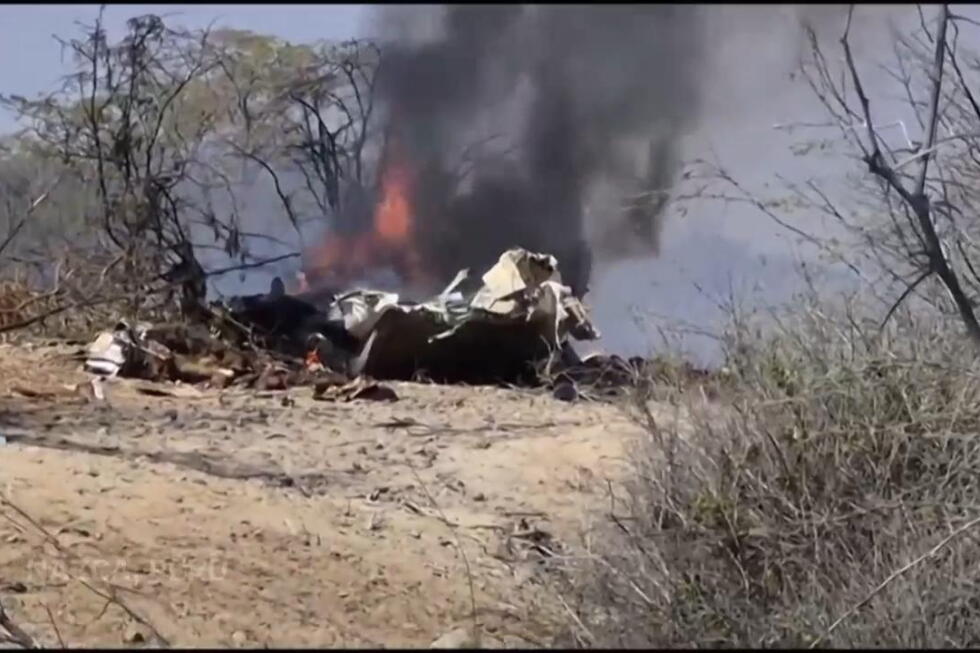
    The flight was operating a routine domestic route from Kunming, a major city in southwest China, to Guangzhou, a commercial hub near Hong Kong. Before losing contact with air traffic control, the crew did not report any in-flight emergencies. The jet entered a rapid nosedive from 29,000 feet, briefly showed signs of partial recovery before crashing into a mountainside, leaving a 20-meter crater and igniting a large wildfire in the area.

    The revelations from the declassified NTSB report have reignited longstanding debates across the global aviation industry over pilot mental health protocols. Currently, many commercial pilots around the world avoid seeking professional help for mental health concerns out of fear that a diagnosis will lead to the immediate revocation of their flight medical certification, grounding them without pay for months or longer while they navigate a lengthy, arduous recertification process. Many nations also ban commercial pilots from taking common psychiatric medications such as antidepressants, even when the medication effectively manages symptoms and does not impair flight ability.

    Recent high-profile incidents have underscored the ongoing risks of this approach: in 2023, an off-duty Horizon Air pilot who had used psychedelic mushrooms days prior attempted to shut off the engines of the commercial flight he was riding in the jumpseat of, an incident that only failed because other crew members intervened to stop him.

    The 2022 China Eastern crash was a devastating outlier for China’s commercial aviation industry, which has achieved a strong modern safety record following a string of deadly accidents in the 1990s that spurred widespread regulatory overhauls. China Eastern Airlines is one of China’s four large state-owned major air carriers.

  • How operation to disembark passengers on virus-hit cruise will work

    How operation to disembark passengers on virus-hit cruise will work

    A high-stakes operation to get passengers off a cruise ship struck by a viral outbreak is moving forward off the coast of Tenerife, where local communities have already raised alarm over potential public health dangers posed by the vessel’s arrival. The BBC’s Guy Hedgecoe has filed on-the-ground reporting from the Spanish island, shedding light on both the logistical intricacies of the disembarkation process and the growing anxiety among residents who worry the infected ship could introduce new transmission risks to the island.

    The unusual situation has required coordinated planning across public health agencies, port authorities and cruise line operators to put in place a protocol that balances the needs of passengers trapped on board with the need to protect the local population. Every step of the process, from initial health screenings to the movement of passengers off the vessel and into either quarantine facilities or onward travel, has been mapped out to minimize the chance of viral spread. Even with these rigorous preparations in place, however, many people who call Tenerife home remain unconvinced that the risks are fully mitigated. For these locals, the presence of a virus-hit ship so close to shore represents an unwelcome threat to public health that could upend daily life and put local communities at risk of new outbreaks.

    The situation highlights the unique challenges that global tourism and cruise travel faced during viral outbreaks, when the closed environment of a passenger ship can turn a vacation voyage into a public health emergency. It also underscores the tension that often emerges between the need to assist stranded passengers and the responsibility of local officials to protect the communities they serve, as Tenerife works through one of the first major test cases of cruise ship disembarkation during a public health crisis.

  • William, Catherine and children name baby kangaroo at Australia Zoo

    William, Catherine and children name baby kangaroo at Australia Zoo

    A charming new chapter in global wildlife conservation has emerged from Queensland’s Australia Zoo, where the Prince and Princess of Wales and their three children have bestowed a heartfelt Welsh name on a young eastern grey kangaroo: Cwtch, which translates to “cuddle” in the Celtic language. The announcement was made in a joint Instagram post from the Wales family and third-generation conservationist Robert Irwin, son of the late legendary crocodile hunter Steve Irwin, who has carried on his family’s legacy of wildlife protection at the iconic Queensland zoo.

    Standing surrounded by a mob of gentle kangaroos in a video message shared to mark the occasion, Irwin expressed gratitude to Prince George, Princess Charlotte and Prince Louis for picking the affectionate name that fits the tiny joey perfectly. “It’s the absolute perfect name for a joey kangaroo, because at this age, they love a cuddle and they spend most of their time inside that pouch with their mum,” Irwin explained in the clip. “Cwtch is now proudly part of our family here at Australia Zoo.”

    Pronounced “kutch”, the name carries both personal and conservation purpose: Irwin extended the naming invitation to the British royal household specifically to draw global attention to the critical role kangaroos play in Australia’s native ecosystems, and the growing threats they face. Eastern grey kangaroos, one of Australia’s most recognizable native species, act as ecosystem engineers that maintain balanced habitats for countless other native plants, insects and animals across the Australian bush. Yet despite their cultural and ecological importance, the species continues to face mounting pressure from habitat destruction, accelerating climate change and unregulated human activity.

    “Thank you for your support with our wildlife conservation efforts. It is so important that we conserve all of our animals, including the icons, the kangaroos,” Irwin said. “These guys play a very important role in the Australian bush, and out there in the ecosystem, they are just crucial. With all of the animals that we support and all of the wildlife conservation efforts that we have around the world, it is all about making sure we give back to the wildlife and the wild places where they live.”

    The collaboration between Irwin and the Prince of Wales is far from a one-off gesture: Prince William has long been one of the world’s most high-profile advocates for global conservation, most notably as the founder of The Earthshot Prize, a landmark global initiative that funds and scales innovative solutions to the planet’s most urgent environmental challenges. Irwin has partnered with the prince on multiple nature protection and restoration projects, work that aligns closely with the mission of his global conservation nonprofit Wildlife Warriors, which carries on the Irwin family’s decades-long work to protect endangered species and wild habitats across the globe.