分类: world

  • Russia’s WWII victory celebrations are muted this year as Ukraine war weighs on Putin

    Russia’s WWII victory celebrations are muted this year as Ukraine war weighs on Putin

    As Russia prepares to mark its most consequential secular national holiday on Saturday, simmering security risks from the ongoing war in Ukraine and growing undercurrents of domestic discontent have cast a long shadow over the traditional commemorations held in Moscow’s iconic Red Square. This year’s Victory Day, which honors the Soviet Union’s 1945 defeat of Nazi Germany, has been fundamentally reshaped by the unresolved conflict that has stretched more than four years beyond Russia’s full-scale 2022 invasion of Ukraine. The day, once a showcase of national pride and military grandeur, is unfolding against a backdrop of failed ceasefire efforts, escalating cross-border attacks, and unprecedented cutbacks to the iconic military parade.

    The unilateral 48-hour ceasefire that Russia declared for Friday and Saturday fell apart within hours of taking effect, mirroring the rapid collapse of a separate unilateral ceasefire announced by Ukraine just days earlier. Almost immediately after the ceasefire went into effect at midnight Friday, both Moscow and Kyiv traded blame for continued hostilities, a public exchange that lays bare the profound, years-long lack of trust between the two warring parties that has derailed all U.S.-led diplomatic initiatives aimed at reaching a lasting peace settlement.

    Russia’s Defense Ministry claimed its forces strictly adhered to the ceasefire, holding their positions and halting all offensive operations, but accused Ukraine of launching sustained strikes on Russian military positions and civilian infrastructure across the border regions of Belgorod and Kursk. The ministry added that Russian air defense systems had intercepted and downed 390 Ukrainian drones and six Neptune long-range guided missiles launched at Russian territory since midnight. A separate statement from Russia’s Transport Ministry confirmed that a Ukrainian drone strike targeted the administrative headquarters of the Southern Russia Air Navigation branch in Rostov-on-Don, forcing a temporary suspension of operations at 13 airports across southern Russia.

    Ukrainian President Volodymyr Zelenskyy offered a sharply conflicting account of the ceasefire’s first day. Zelenskyy said Russian forces continued offensive attacks along the entire front line overnight, while Ukrainian air defenses intercepted and destroyed 56 Russian drones launched at Ukrainian targets. “All this clearly shows that there was not even a pretense of a ceasefire attempt from the Russian side,” Zelenskyy told reporters Friday. He also confirmed that Ukrainian forces carried out another long-range strike on a Russian oil facility in the Yaroslavl region, located more than 700 kilometers (400 miles) from the Ukrainian border, though he did not provide a specific timeline for the attack. In recent months, Ukraine’s advancements in drone and missile technology have allowed it to carry out increasingly frequent and accurate strikes deep inside Russian territory, with key energy infrastructure, particularly major oil production facilities, emerging as a primary target.

    Russian officials have issued stark warnings of severe retaliation – including the possibility of a large-scale missile strike on Kyiv – if any Ukrainian attack disrupts Saturday’s official Victory Day events. “We have strengthened our focus on the possibility of retaliatory measures,” presidential aide Yuri Ushakov told reporters Thursday. Russia’s Foreign Ministry has urged foreign embassies and international organizations based in Kyiv to evacuate their offices ahead of any potential strike, and the Defense Ministry has called on Ukrainian civilians to leave targeted areas.

    The guest list for this year’s commemorations has also drawn international attention, with Zelenskyy expressing surprise that several foreign leaders have traveled to Moscow for the events. Attendees include Malaysia’s King Sultan Ibrahim Iskandar, Laos President Thongloun Sisoulith, and Belarus’s authoritarian leader Alexander Lukashenko. Notably, Slovakia’s Prime Minister Robert Fico – the leader of an EU member state – is scheduled to hold a meeting with Putin and lay flowers at the Tomb of the Unknown Soldier outside the Kremlin walls, but will not attend the Red Square parade.

    For decades, Russian President Vladimir Putin, who has held power for more than 25 years, has leveraged the symbolic legacy of the World War II victory to rally domestic support for his administration and justify the war in Ukraine, while also projecting Russia’s influence on the global stage. That makes this year’s scaled-back parade all the more notable: for the first time in nearly 20 years, the iconic procession will not feature tanks, missiles, or other heavy military equipment, with only the traditional flyover of military aircraft remaining. Russian officials have only cited the “current operational situation” as justification for the change, offering no further details.

    Beyond security threats from Ukraine, the Kremlin also faces growing rumblings of domestic discontent over its wartime policies. Many Russians have expressed frustration over escalating internet censorship and state control of online activity, including recent restrictions on the widely used messaging app Telegram. To bolster security for Saturday’s events, Russia’s Ministry of Digital Development, Communications and Mass Media has announced sweeping restrictions on mobile internet access and text messaging services across Moscow. Only state-approved websites and services included on the government’s official “white list” will remain accessible to mobile users, though home internet and Wi-Fi connections will not be affected. The restrictions have been framed as a necessary measure to protect public safety, but they underscore the Kremlin’s growing anxiety about potential unrest or security breaches during the national holiday.

    The current state of the war has further compounded pressures on the Kremlin. Russia’s far larger and better-equipped military has been locked in a slow, costly grinding campaign in Ukraine, a far cry from the quick victory the Kremlin expected when it launched its full-scale invasion in February 2022. Ukraine’s steady campaign of long-range strikes deep into Russian territory has shaken the Kremlin, with attacks targeting critical oil infrastructure, military manufacturing plants, and weapons depots, eroding confidence in the government’s ability to secure the country’s rear areas as the war drags on.

  • A government critic dies in custody in Rwanda, drawing calls for an independent probe

    A government critic dies in custody in Rwanda, drawing calls for an independent probe

    KAMPALA, UGANDA – The death of prominent Rwandan academic and government critic Aimable Karasira in custody, just days before he was set to be released from prison, has triggered urgent calls for an independent international investigation from leading human rights advocates, who are questioning the official account of his death.

    Rwandan authorities confirm Karasira died Wednesday at Kigali’s Nyarugenge District Hospital following what they describe as an overdose of prescription medication for a preexisting chronic condition. In a statement provided to local Rwandan newspaper The New Times, prison system spokesperson Hillary Sengabo claimed Karasira consumed a large excess dose of medication that had been issued to him by prison health services.

    But Human Rights Watch has openly challenged this official narrative, calling on the global community to prioritize this case and pushing for a committee of independent international experts to conduct a full, unfiltered probe into the circumstances of Karasira’s death.

    “There are countless grounds to question the circumstances surrounding Aimable Karasira’s death in custody, not least the years of targeted harassment and systematic persecution he faced at the hands of Rwandan authorities,” explained Clémentineine de Montjoye, a researcher for Human Rights Watch. “The Rwandan government carries the legal and moral burden of proving Karasira was not unlawfully killed while in their custody.”

    Karasira’s path to arrest began in 2020, when he published a YouTube video discussing the loss of his relatives both during the 1994 Rwandan genocide and in its aftermath, following the rise to power of the rebel front that ended the mass killings. Human Rights Watch documentation shows that after the video’s release, Karasira faced sustained pressure from Rwandan intelligence services and anonymous threats from unknown actors.

    He was taken into custody in 2021, facing multiple charges including genocide denial and inciting ethnic division. He was convicted on some counts and acquitted on others, but prosecutors launched an appeal of the acquittals, demanding a 30-year prison sentence that was still pending at the time of his death. Because Karasira had already served four years of a five-year total sentence while awaiting trial proceedings, his release was scheduled for May 6, just days after his death was announced.

    Michela Wrong, a British historian who has extensively documented alleged human rights abuses under the current Rwandan government, said Karasira’s death reveals deep-rooted issues within the country’s criminal justice and political system. “He told multiple visitors he was being beaten and tortured while in custody,” Wrong wrote on social platform X. “Prison eventually proved a fatal experience, as it has for so many dissidents in Rwanda. Now officials claim he died of an overdose of his own prescription medicine.”

    Human Rights Watch has drawn parallels between Karasira’s death and the 2020 in-custody death of Kizito Mihigo, a popular Rwandan singer and fellow government critic. The organization noted both figures held significant moral authority that resonated widely with the Rwandan public, presenting a unique challenge to the ruling government.

    President Paul Kagame’s political party has controlled Rwandan governance since the end of the 1994 genocide. The government has enacted sweeping policy measures to heal ethnic divides, including removing ethnic identifiers from national ID cards and integrating genocide education into national school curricula. Every April, the country holds nationwide solemn commemorations to honor genocide victims, and hundreds of community initiatives led by government and civic groups work to promote national unity. Kagame is widely credited by international supporters with establishing decades of relative stability and economic growth after the genocide.

    However, critics have long accused Kagame’s administration of systematically eliminating all political dissent. Detractors characterize his rule as an authoritarian regime that has erased nearly all organized opposition, with opponents regularly imprisoned, forced into exile, disappeared, or dying under suspicious circumstances while in state custody.

  • Russia and Ukraine accuse each other of breaching Victory Day ceasefire

    Russia and Ukraine accuse each other of breaching Victory Day ceasefire

    As Russia prepared to mark its annual Victory Day holiday commemorating the Soviet Union’s defeat of Nazi Germany over the weekend, planned ceasefires on both sides of the Russia-Ukraine conflict unraveled within hours, with Kyiv and Moscow trading accusations of widespread violations that have pushed tensions to new highs.

    Russian President Vladimir Putin first announced a 48-hour unilateral ceasefire set to run from 8 to 9 May, timed to align with the country’s main Victory Day celebrations scheduled for Saturday. Ukraine had previously proposed its own indefinite truce starting 6 May, which Russian forces never acknowledged. By early Friday, just hours after Putin’s ceasefire entered into force at local midnight, both militaries were reporting hundreds of breaches across the front line and deep strikes into each other’s territory.

    The Russian Ministry of Defence released an update via Telegram Friday morning claiming it had documented 1,365 ceasefire violations across the conflict zone, including 153 separate artillery barrages and 887 drone incursions and strikes. The ministry added that Ukrainian forces continued targeting civilian infrastructure in Russia’s border regions of Kursk and Belgorod, which lie adjacent to the main front line, and that Russian troops had launched a proportional “mirror response” to the breaches.

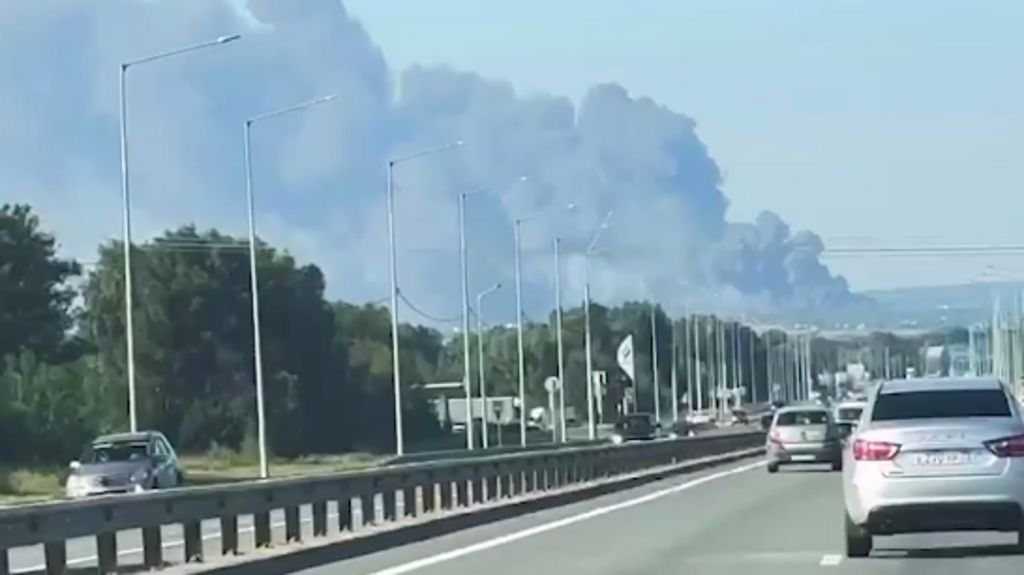
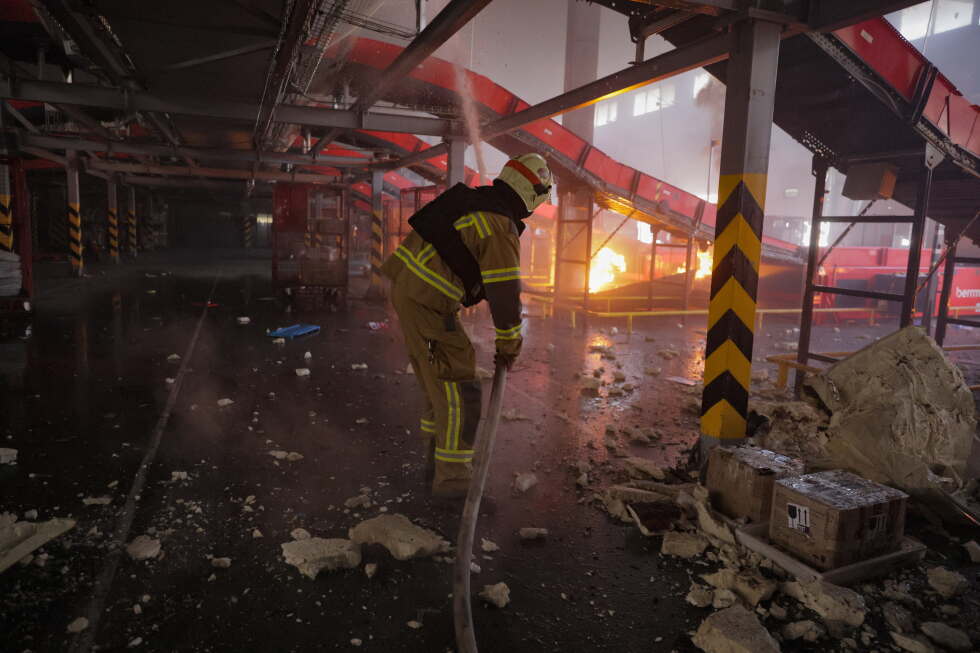
    Moscow Mayor Sergey Sobyanin confirmed that roughly 20 drones had been intercepted and downed in areas surrounding the Russian capital within the first two hours of the ceasefire, marking one of the largest concentrated drone attempts on Moscow in recent weeks. Additional Ukrainian drone strikes were reported across a wide swath of Russian territory, hitting industrial sites in Perm and Yaroslavl regions, military-related infrastructure in Rostov region, and locations in Grozny, the capital of Russia’s Chechen Republic. Thirteen commercial airports across southern Russia were forced to temporarily suspend all flight operations following the wave of attacks, disrupting holiday travel for thousands of passengers.

    On the Ukrainian side, President Volodymyr Zelenskyy echoed the accusations in his own Telegram post, stating that Russian forces had carried out more than 140 separate attacks on Ukrainian positions and launched over 850 drone strikes in the opening hours of the truce. “All of this clearly indicates that there was not even a simulated attempt from the Russian side to cease fire at the front,” Zelenskyy wrote, adding that Ukraine would “act in kind” to Russian breaches, matching its offensive operations.

    A day earlier, on Thursday, Ukraine had already accused Russia of violating its own earlier unilateral ceasefire, pointing to a drone strike on a kindergarten in Sumy region that killed two civilians. No children were present at the facility at the time of the attack, Ukrainian officials confirmed.

    Amid widespread fears that Ukraine will attempt to disrupt the high-profile Victory Day parade on Moscow’s Red Square, Russian security officials have implemented unprecedented security measures across the capital. In a break from tradition that marks the first shift in nearly 20 years, no heavy military hardware will be displayed during the parade, only marching infantry units. Russian authorities have also issued direct threats in response to any potential attack on the parade: the defence ministry warned it would launch a “retaliatory, massive missile strike” against central Kyiv if Moscow is targeted, and urged foreign diplomatic staff to evacuate the Ukrainian capital before 9 May.

    Russian authorities have also issued formal warnings to residents of Moscow and St. Petersburg that mobile internet connectivity will be intentionally limited across large areas of both cities during the celebrations, a step officials say is necessary for security purposes. Many Russians have been advised to prepare for temporary full internet outages over the holiday period.

    Unlike pre-war Victory Day celebrations, which regularly drew thousands of foreign guests and high-level dignitaries to Moscow, this year’s event will have an extremely limited international attendance. Only the leaders of Belarus, Malaysia, Laos, and a small number of other low-level foreign dignitaries are scheduled to participate in this year’s events.

  • Former Botswana President Festus Mogae dies aged 86

    Former Botswana President Festus Mogae dies aged 86

    Botswana’s former president Festus Mogae, a towering figure of African governance whose decade-long leadership guided the southern African nation through an era of transformative growth and public health progress, has died at the age of 86. Current Botswana President Duma Boko confirmed the passing in an official public announcement, noting that Mogae died early Friday following an extended period of ill health.

    Last month, the Botswana government confirmed that the former head of state was receiving ongoing medical care at a facility in Gaborone, the national capital, but declined to share details about the specific nature of his condition.

    As the third president of Botswana, Mogae held office from 1998 to 2008, capping a decades-long career in public service that saw him rise through senior government roles including finance minister and vice president before ascending to the country’s highest office. His tenure is widely remembered for two landmark contributions that shaped modern Botswana: strengthening the nation’s economic governance frameworks amid a diamond-fueled period of rapid economic expansion, and leading a bold, life-saving response to one of the world’s worst HIV/AIDS epidemics at the time.

    At the height of the crisis, when Botswana recorded one of the highest global HIV infection rates, Mogae’s administration rolled out an ambitious national antiretroviral treatment program that drove dramatic reductions in both new infections and mortality from the disease. Even after leaving office in 2008, Mogae remained a prominent regional advocate for expanded HIV/AIDS care, pushing for universal access to free antiretroviral therapy and evidence-based policies to prevent mother-to-child transmission of the virus.

    In recognition of his exceptional leadership, Mogae was awarded the 2008 Ibrahim Prize for Achievement in African Leadership, one of the continent’s most prestigious honors for good governance, which cited his commitment to democratic rule and the orderly, peaceful transfer of power to his successor Ian Khama. Following his presidency, Mogae continued to contribute to African stability and development, taking on a range of international advisory roles and leading peace mediation initiatives across the continent.

    Botswana, where Mogae built his legacy, stands out as one of Africa’s most consistently politically stable nations. Since gaining independence from colonial rule in 1966, the country has never experienced a coup d’état and has held regular, competitive multi-party elections, a track record of democratic governance that Mogae helped cement during his time in office.

  • At least 3 hikers killed by volcano eruption on Indonesian island

    At least 3 hikers killed by volcano eruption on Indonesian island

    JAKARTA, Indonesia – A powerful explosive eruption at Mount Dukono, one of Indonesia’s most continuously active volcanoes located on the remote island of Halmahera, has left three hikers dead and sparked an urgent ongoing rescue operation, Indonesian authorities confirmed Friday.

    A group of approximately 20 hikers departed on their ascent of the 1,355-meter (4,445-foot) peak Thursday, openly defying strict public safety restrictions that have long closed the mountain to recreational climbing amid its ongoing high volcanic activity, according to North Halmahera Police Chief Erlichson Pasaribu. The group was caught off guard when the volcano erupted at 7:41 a.m. local time, sending a dense ash plume billowing roughly 10 kilometers (6.2 miles) above the crater. Indonesia’s Geological Agency recorded seismic activity from the eruption that lasted more than 16 minutes.

    In a national television interview, Pasaribu confirmed the hikers were fully aware of the ban: Mount Dukono has been maintained as a restricted zone under its second-highest government alert level for volcanic risk, but the group proceeded with their climb regardless. When the eruption hit, all 20 hikers became stranded within the dangerous restricted area. Rescue teams were rapidly deployed after an emergency distress signal was detected from the mountain slopes.

    As of Friday afternoon, 14 members of the group, including seven foreign nationals, have been successfully evacuated to safety, with five of those rescued sustaining non-life-threatening injuries. Three hikers – two Singaporean citizens and one Indonesian national – were pronounced dead at the scene. Search operations are still underway for the remaining missing hikers, who authorities believe are attempting to make their way down the mountain on their own.

    Recovery of the three fatalities has been delayed, as recurrent after-eruptions and unstable volcanic conditions have kept rescue teams from safely reaching the impact zone. For years, Indonesia’s Center for Volcanology and Geological Hazard Mitigation has prohibited all human activity within a 4-kilometer (2.5-mile) radius of Dukono’s crater, due to constant risks of flying volcanic bombs, heavy ashfall, and lethal toxic gas emissions. Officials confirmed all members of the hiking group were inside this prohibited zone when the major eruption occurred.

    Pasaribu noted that despite multiple warnings posted on hiking trails and shared widely across social media platforms about the active dangers, many outdoor enthusiasts continue to sneak onto the mountain. The main driver of this risky behavior, he explained, is the growing desire among social media users to capture unique content to share online.

    Indonesia, which lies along the geologically active Pacific Ring of Fire, is home to more than 120 active volcanoes across its archipelago of thousands of islands. Mount Dukono is among its most active, having experienced near-constant low-level eruptive activity since 1933. In recent months, volcanic activity at the peak has intensified significantly. According to Lana Saria, head of the Geological Agency under Indonesia’s Ministry of Energy and Mineral Resources, explosive magmatic eruptions have increased sharply since late March. Between March 30 and the day of the fatal eruption, officials recorded nearly 200 separate eruptions, averaging around 95 eruptive events per day. Friday’s deadly blast ranks among the most powerful of this recent uptick in activity, Saria confirmed.

    Ash clouds from the latest eruption, which range in color from pale gray to deep black, are being carried northward by regional winds, Saria said. Authorities have issued warnings that widespread ashfall could impact nearby populated areas, including the larger town of Tobelo. Ashfall poses acute respiratory health risks to local residents, and can also disrupt ground and air transportation as well as normal daily routines. Secondary hazards, including fast-moving volcanic mudflows that can travel down river channels from the volcano’s slopes during heavy rain, are also a major ongoing risk, officials added.

    With volcanic activity remaining at elevated levels, government agencies have ramped up continuous monitoring of Mount Dukono. Officials have issued a renewed plea to local residents, tourists, and hiking enthusiasts to remain calm, strictly follow all official safety guidance, and avoid all restricted areas near the volcano while monitoring continues.

  • Three dead after volcano erupts on Indonesian island

    Three dead after volcano erupts on Indonesian island

    On a Friday morning in Indonesia, a sudden eruption of the active Mount Dukono volcano claimed three lives, turning a routine early morning hike into a fatal tragedy that has sparked new debates about public risk perception and enforcement of volcanic safety regulations.

    The 1,335-meter volcano, located on Indonesia’s North Maluku island, erupted at 07:41 local time, sending a towering column of volcanic ash 10 kilometers into the sky. Footage captured from the scene shows thick plumes of ash and rocky debris continuing to spew from the volcano’s crater long after the initial blast. Among the hikers on the mountain that morning were 20 people who had ignored repeated official warnings against climbing the volcano: 18 Singaporean and Indonesian hikers, and two local porters. Three members of that group — two Singaporean citizens and one local resident from nearby Ternate — were killed by the eruption.

    Search and rescue teams were deployed immediately to extract the remaining hikers. Most of the surviving group members were safely evacuated and transported to local hospitals to receive treatment for eruption-related injuries. The two porters from the original group stayed behind on the mountain to help rescuers navigate the terrain and locate the victims’ remains, which are trapped at higher elevations. As of Friday afternoon, body recovery efforts have been blocked by ongoing volcanic activity, rough, uneven terrain, and repeated explosive blasts from the crater. Aldy Salabia, a local resident assisting with rescue operations, told BBC Indonesian that from the team’s staging shelter, continuous ejection of ash and rock material was clearly visible.

    Eyewitness accounts from other hikers on the mountain that morning have added context to the tragedy. A local guide who escaped unscathed with his two clients told reporters he had detected warning signs of an impending eruption days earlier. “When Dukono hasn’t erupted for a few days, you have to be careful,” he explained, noting that he spotted deep tremors just before the blast and immediately fled downslope with his guests. As he descended, he said, he saw dozens of other hikers still lingering at the summit — including one group at the edge of the crater itself, and another 50 meters away filming footage with a drone.

    Mount Dukono has had more than 200 recorded eruptive events since March 2025, and has maintained a Level 2 alert status on Indonesia’s four-tier volcanic warning system for an extended period, a classification that signals elevated activity and requires strict caution. Since December 2024, Indonesian volcanic authorities have officially banned all tourism and climbing activity within a 4-kilometer radius of the main crater, citing constant risks of flying rock, ash fall, lava flows and sudden explosive eruptions. Officials say these warnings were widely shared across social media platforms and posted on large banners at all trail entrances, but many climbers continue to disregard the restrictions.

    Indonesia’s national search and rescue agency, Barsanas, has launched an investigation into the incident, noting that initial reviews suggest possible negligence by tourism operators or individual guides who led groups up the mountain despite the known risks. “The government is continuing to gather information to establish a complete account of the incident,” a Barsanas spokesperson said.

    Disaster experts say the tragedy exposes a growing, dangerous misperception of volcanic risk among tourists fueled by social media content. Dr Daryono, a member of the Indonesian Association of Disaster Experts, told the BBC that active volcanoes should never be treated as routine tourist destinations. “Dukono is a mountain with almost continuous eruptive activity, so any violation of the danger zone carries a fatal risk,” he said. He added that social media has warped public understanding of the danger: users only see content from influencers and climbers who successfully summit and return unharmed, while the constant, lethal risks of volcanic activity are pushed out of public view. “The real danger remains and could emerge at any time in the form of ejections of incandescent material, thick ashfall, volcanic gas, or sudden explosive eruptions,” he warned.

  • Islamic militants attack Congo villages near Uganda, killing 40 people, local group says

    Islamic militants attack Congo villages near Uganda, killing 40 people, local group says

    KINSHASA, DRC – A series of coordinated overnight attacks carried out by the Allied Democratic Forces (ADF), an insurgent group with ties to the Islamic State, has left at least 40 civilians dead in eastern Democratic Republic of the Congo’s border region adjacent to Uganda, local civil society representatives confirmed Friday. The violent incursion unfolded between Wednesday night and Thursday afternoon, striking multiple rural communities across two of eastern Congo’s conflict-torn provinces. According to Charité Banza, head of the Ituri civil society collective, and Kinos Katua, an on-the-ground group member, 25 civilians were killed in border villages within Beni territory, North Kivu, while an additional 15 fatalities were recorded in neighboring Ituri province. Local activists warn the final death toll is expected to climb, as dozens of residents remain unaccounted for following the attacks, which also saw insurgents burn down residential structures and loot civilian property. The ADF, a rebel movement originally formed in Uganda that pledged formal allegiance to the Islamic State network in 2019, has waged a low-intensity insurgency in the shared border region of the two countries for decades, with frequent attacks targeting unarmed civilian populations. The latest bloodshed comes just weeks after Amnesty International released a damning report this week accusing the ADF of systematic war crimes and crimes against humanity against civilian communities in eastern DRC. This attack is one of the deadliest claimed by the group since July 2025, when an ADF assault left 66 civilians dead in eastern Congo—a massacre the United Nations labeled a deliberate “bloodbath.” The DRC is already grappling with one of Africa’s most complex and protracted conflict crises, with roughly 120 active rebel and insurgent groups operating across its eastern territory. The most significant threat to state control currently comes from the M23 rebel movement, which is backed by Rwanda and has seized control of multiple major strategic cities and large swathes of territory in North Kivu over the past two years, forcing hundreds of thousands of people to flee their homes.

  • Dozens killed in jihadist attacks on villages in central Mali

    Dozens killed in jihadist attacks on villages in central Mali

    More than a decade of rolling insurgency has reached a new brutal peak in central Mali, after coordinated simultaneous attacks on two rural villages left dozens of civilians and militiamen dead this week — marking the deadliest single assault since jihadist and separatist groups launched a nationwide coordinated offensive last month.

    The al-Qaeda-affiliated militant group Jama’at Nusrat al-Islam wal-Muslimin (JNIM) has officially claimed responsibility for the Wednesday night raids on the villages of Korikori and Gomossogou, located in Mali’s volatile central Mopti Region. Initial casualty counts from sources quoted by Agence France-Presse (AFP) put the death toll at 30, but separate accounts from diplomatic and humanitarian sources speaking to Reuters and regional security journalism collective West African Network for Peace and Security (WAMAPS) have revised the provisional number of fatalities to at least 50. Multiple residents and local sources confirm that while most victims were members of local self-defense militias, the death toll also includes teenage civilians and young children, with an unknown number of residents still unaccounted for in the wake of the assault.

    Local witnesses describe attackers entering the villages under cover of night, opening indiscriminate fire on residents, ransacking and looting residential and community structures, and setting multiple properties ablaze. A security source told AFP the attacks were carried out in retaliation for recent operations by Dan Na Ambassagou, a community-organized self-defense militia formed to counter years of persistent militant violence in central Mali.

    Mali’s military junta, led by General Assimi Goïta — who seized power in a 2020 coup — has responded to the assault with immediate counteroperations. Military officials confirmed that a “targeted strike” was launched in the attack area, with roughly a dozen jihadist fighters “neutralized” in the operation. Bandiagara Region Governor condemned the violence in an official Thursday statement, labeling the coordinated assaults “despicable and inhumane acts.” A subsequent military update clarified that nearly 10 additional “terrorist” fighters were killed and an insurgent logistical base was destroyed during further counteroffensive actions.

    The latest attack comes against a backdrop of rapidly escalating instability that has gripped Mali since April, when an alliance of jihadist militants and separatist rebels from the Azawad Liberation Front (FLA) launched a coordinated nationwide offensive aimed at ousting Goïta’s military regime. That opening wave of attacks included a suicide truck bombing targeting the residence of Malian Defense Minister Sadio Camara near the capital Bamako that killed the top security official. Just this week, Goïta announced he would fill the vacant defense minister post, with support from army chief of staff General Oumar Diarra.

    Speaking at a Wednesday press briefing in the capital, Malian army commander Djibrilla Maiga acknowledged that insurgent groups have been working to regroup and rearm in the weeks following the April offensive, warning that “the threat is still present” and confirming that military forces are working to disrupt further militant advances.

    Unlike previous deployments, when Mali relied on United Nations peacekeepers and French counterinsurgency forces, Goïta’s junta has partnered with the Russia-linked Africa Corps, a paramilitary force that grew out of the now-fractured Wagner Group, to combat the insurgency. Even with this support, the FLA-led offensive has forced Russian fighters to withdraw from the key northern city of Kidal, which is now fully under separatist control. The FLA has since announced plans to advance on other northern population centers and issued an explicit demand for the full withdrawal of Africa Corps forces from all Malian territory. Beyond territorial gains, insurgents have also tightened a blockade on Bamako, establishing a network of checkpoints on all major road arteries leading into the capital to cut off supply lines.

    Mali’s ongoing crisis traces its roots back to 2012, when a Tuareg separatist rebellion in northern Mali evolved into a full-scale Islamist insurgency that has since spread to central and eastern regions of the country. Today, large swathes of northern and eastern Mali remain completely outside of government control. When Goïta’s junta first seized power, it held broad popular support on a promise to end the decade-long security crisis. Following the coup, however, the new regime expelled UN peacekeeping forces and French counterinsurgency troops that had been deployed to stem the insurgency, clearing the way for the current surge in violence that has pushed the country to the brink of state collapse.

  • Inside the jails where Russia breaks Ukraine prisoners ‘like dogs’

    Inside the jails where Russia breaks Ukraine prisoners ‘like dogs’

    A bombshell investigation by Agence France-Presse (AFP), built on first-hand testimonies from three former Russian prison staff, surviving Ukrainian detainees and family members of the missing, has pulled back the curtain on a widespread, state-backed system of brutality inflicted on thousands of Ukrainian prisoners of war and civilian detainees held in Russian-controlled detention facilities.

    The harrowing accounts paint a picture of routine, unpunished abuse that senior Russian leadership explicitly authorized, with detainees describing even the most physically and psychologically resilient men being “broken like dogs” under relentless violence and dehumanization. AFP has verified the identities of the former prison officers, who have all fled Russia since speaking out, and changed their names in reporting to protect their safety.

    Multiple sources confirm that the scale of abuse exploded after Russia’s full-scale invasion of Ukraine in February 2022, following years of mistreatment that began when conflict broke out in eastern Ukraine in 2014. As of early 2024, Ukrainian data puts the number of Ukrainian prisoners of war held by Russia at roughly 7,000, with an additional 15,378 civilians illegally detained across Russian territory and occupied Ukrainian lands. The Ukrainian Prosecutor General’s Office has recorded at least 143 Ukrainian detainee deaths in Russian custody over the past four years.

    One anonymous former Russian special forces prison officer, Sergei, who resigned and left Russia after refusing to participate in the violence, told AFP that senior commanders explicitly stripped away all operational rules for guards interacting with Ukrainian detainees ahead of the invasion. “Before the first mission, the head of our territorial group gathered the staff and said that the existing rules would no longer apply when dealing with prisoners of war,” he recalled. “In other words, he gave us carte blanche to use physical force without restriction. And no one would be held responsible. The boss told us: ‘Be severe, fear nothing anymore.’” Sergei added that many of his colleagues embraced the open permission for brutality, acting on unchecked sadistic impulses without any documentation of violence. To hide the abuse, unit members did not wear identification tags or use body cameras when interacting with Ukrainian detainees, and no incident reports were ever filed after violent crackdowns.

    Alexei, a former medic at a Russian prison infirmary, described one particularly horrific case: a young Ukrainian lieutenant who was beaten nearly to death for talking back to his captors, left with extensive festering bruises across his lower body, and denied any meaningful medical care. He died of gangrene in October 2022, likely buried in an unmarked grave, and Alexei never even learned his name. Alexei confirmed that Ukrainian prisoners who resisted breaking under abuse were regularly beaten with rigid polypropylene heating pipes, and even medical staff were complicit in the mistreatment. Survivors are only given superficial wound care after beatings, and are required to publicly thank the Russian Federation for the treatment, he said. Independent investigations have documented even more extreme medical complicity: during a surgery on a Ukrainian prisoner, Russian medical staff carved the slogan “Glory to Russia” into his abdomen; the text had to be surgically removed after he was released in a prisoner exchange.

    Surviving detainee Yaroslav Rumyantsev, a 30-year-old former Ukrainian marine who surrendered at the besieged Azovstal plant in Mariupol in May 2022, shared his own first-hand experience of the systematic campaign to break detainees. After surviving a deadly explosion at Olenivka prison that killed at least 50 Ukrainian detainees, Rumyantsev was transferred to Remand Centre Number 2 in Taganrog, southwestern Russia, widely known as one of the harshest torture facilities for Ukrainian prisoners. Upon arrival, he and 250 other new detainees were bound and blindfolded, then beaten on all sides by a “reception committee” of guards with batons — a brutal tactic first used in Chechnya’s filtration camps during the Second Chechen War.

    Abuse was constant, Rumyantsev said, leaving even the strongest men cowering like beaten animals. “Men who defended their land, who went to the gym — strong men — were broken like dogs. They destroy them,” he explained. Brutal torture methods documented by the Organization for Security and Co-operation in Europe (OSCE) include rape, mock executions, simulated hangings, electric shocks (including to genitalia), forced prolonged standing in painful positions, and punitive group torture: Rumyantsev described being forced to hold hands with other prisoners while guards ran electricity through the line to test how many people would feel the pain.

    Food deprivation is used as a tool of dehumanization. Rumyantsev said he was often given just two minutes to eat a meal under threat of additional beating, and other former detainees told rights groups that extreme hunger forced them to eat caught cockroaches and raw mice found in their cells. Additional arbitrary rules strip away any remaining dignity: prisoners are banned from looking guards in the eye, and Rumyantsev recalled being forced to stand in a group for 16 consecutive hours without access to a toilet, leaving many detainees to urinate on themselves.

    Beyond physical violence, the system is designed to psychologically break detainees through forced re-education and total isolation from the outside world. Detainees are regularly forced to sing Soviet songs, with punishment for singing too softly or off-key. Most are cut off from all contact with family, mirroring the isolation of Stalin-era gulags. Rumyantsev received only one letter from home shortly before his 2024 release, and said it was the only time he allowed himself to cry in captivity. “I saw those first warm words… and my eyes filled with tears. I was shaking and my friend put his hand on my shoulder and said, ‘That means you’re still a human being,’” he recalled.

    Vladimir Osechkin, director of the Russian rights group Gulagu.net (which documents abuse in Russia’s prison system and helped share two of the former officers’ testimonies with AFP), explained that the torture regime is jointly run by Russia’s FSB security service and federal prison authorities, with the complicity of the Russian judicial system. To hide the abuse, Osechkin said, Ukrainian detainees are deliberately made “invisible” within the penal system: their names are sometimes changed, they are held in segregated facilities — including entire prisons emptied of other inmates to eliminate witnesses — and their whereabouts are kept hidden from international monitors and family members.

    This isolation leaves thousands of families in agonizing limbo, waiting for any word of missing loved ones. Natalia Kravtsova’s son Artem, an Azov brigade fighter captured in Mariupol in 2022, was confirmed to be in Russian custody by the Red Cross a year after his capture, but she has had no contact with him since. She is not even sure he is still alive, and every prisoner exchange announcement brings a burst of hope that quickly shatters. “Even if you’re calm on the outside, inside you’re burning,” she said.

    Civilians are not spared the systematic brutality. In occupied Melitopol, 62-year-old schoolteacher Olga Baranevska was abducted in May 2024 for refusing to cooperate with Russian occupation authorities, and sentenced to six years in prison on fabricated explosives charges that her family calls completely baseless. Her daughter Aksinia Bobruiko, a refugee in Germany, only learned two months after her arrest that she was alive, and has almost no additional information. Bobruiko now works with the grassroots NGO “Numo, Sestry!” (“Come on, my sisters!”) founded by former detainee Liudmyla Guseynova, who spent three years in pro-Russian detention after being arrested for supporting Ukraine in 2019. Guseynova described being held in 50 days of isolated confinement in a dungeon, forced to stand all day with a bag over her head, and held in a cramped, filthy cell shared with 20 other detainees that had only a hole in the floor for a toilet and insect-infested mattresses. She recalled investigators refusing to approach her because of the stench and bedbugs covering her body.

    Official data from an October 2023 OSCE report, drawing on Ukrainian official records, found that 9 out of 10 Ukrainian detainees report being ill-treated, with 42% reporting sexual violence. Most released detainees are severely emaciated after months or years of mistreatment. Russian President Vladimir Putin has repeatedly claimed that Russia treats detainees humanely, and Russia’s federal prison administration did not respond to AFP’s requests for comment on the investigation.

    Rights campaigners are calling for all those responsible for the systematic abuse to be held accountable before an international court. “We will find them and punish them all,” vowed Sergei, the former Russian prison special forces officer who blew the whistle on the system.

  • Indonesia volcanic eruption kills three hikers: officials

    Indonesia volcanic eruption kills three hikers: officials

    A devastating volcanic eruption on Indonesia’s Halmahera Island has claimed three lives and left 10 hikers unaccounted for, local authorities confirmed Friday. Mount Dukono, one of the Southeast Asian nation’s nearly 130 active volcanoes, burst into activity early Friday, blasting a dense column of ash 10 kilometers into the sky.

    Among the three fatalities are two foreign hikers and one local resident from the nearby island of Ternate, North Halmahera Police Chief Erlichson Pasaribu told Indonesia’s Kompas TV. Seven hikers managed to descend the mountain safely, while five others suffered injuries in the blast, according to Indonesia’s National Disaster Mitigation Agency (BNPB).

    What makes this incident particularly sobering is that the entire area surrounding the volcano was officially designated off-limits to visitors last month, after vulcanologists detected a sharp uptick in volcanic activity. Pasaribu confirmed that the group of hikers deliberately ignored multiple warnings, including public appeals on social media and physical barricades posted at the trailhead. “Local residents understand the risk and avoid climbing,” he said. “Many of these hikers are foreign tourists looking to create social media content.”

    Joint rescue teams from the regional disaster management agency BPBD and the National Search and Rescue Agency Basarnas have been deployed to conduct search operations and evacuate stranded climbers, but the mission has faced significant challenges. The mountain’s rugged terrain is only accessible by vehicle for the lower portion of the climb, forcing rescuers to carry stretchers the rest of the way. Persistent volcanic rumbling and ongoing unstable activity have further slowed progress, Pasaribu added.

    Lana Saria, head of Indonesia’s government Geology Agency, noted that the early-morning eruption was accompanied by loud booming explosions, with ash drifting predominantly northward. She warned that nearby residential areas and the city of Tobelo must remain on high alert for falling volcanic ash, which poses risks to public health and can disrupt local air and ground transportation.

    Indonesia, an archipelagic nation spanning thousands of islands across Southeast Asia, sits on the Pacific “Ring of Fire”, a geologically active zone where frequent collisions between tectonic plates create regular seismic and volcanic activity. Mount Dukono currently stands at level two on Indonesia’s four-tiered volcanic alert system. Since December, the Center for Volcanology and Geological Hazard Mitigation (PVMBG) has maintained a mandatory exclusion zone banning all visitors within four kilometers of the volcano’s active Malupang Warirang Crater.