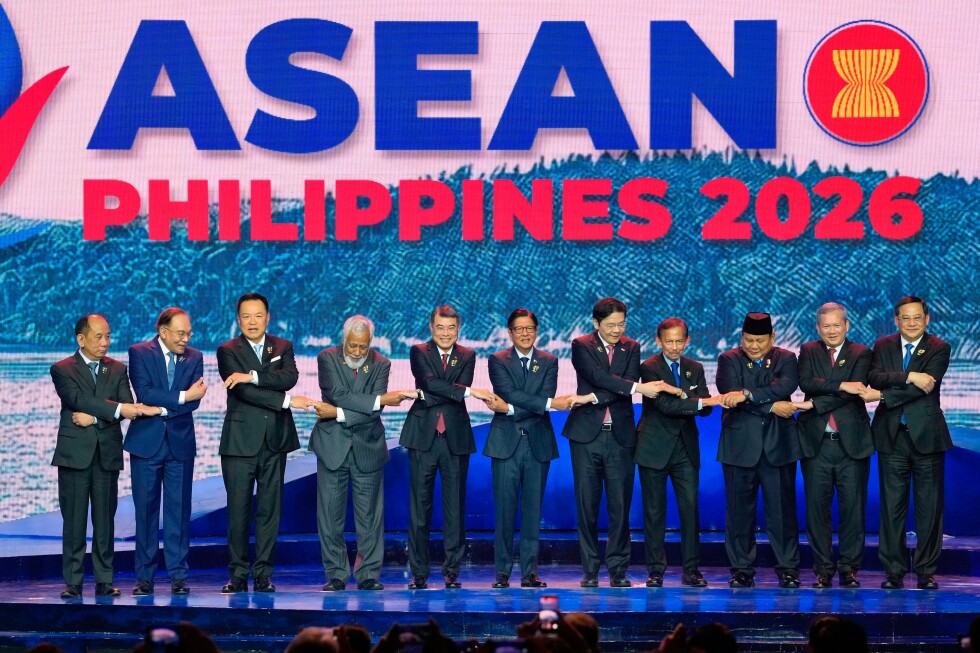
Association of Southeast Asian Nations (ASEAN) leaders gathered Friday for their annual summit in Cebu, the central island province of the Philippines, facing mounting urgency to shield the bloc’s 600+ million people and interconnected economies from cascading spillover risks stemming from the ongoing conflict between the U.S.-Israel coalition and Iran. From the opening of the gathering, the shadow of the Middle East hostilities dominated the agenda, with top officials openly voicing deep alarm over the conflict that one senior minister says should never have been initiated.
Ahead of the summit, Philippine President Ferdinand Marcos Jr. made the unusual decision to scrap the traditional ceremonial fanfare and lavish pageantry that typically mark the annual gathering, a choice aligned with growing global economic headwinds that have squeezed budgets and raised cost-of-living pressures across the region. The shift in tone reflects the gravity of the challenges that leaders have gathered to address.
Unlike past summits that balance multiple regional priorities, this year’s meeting is anchored by urgent contingency planning tailored to the bloc’s unique vulnerabilities. ASEAN’s fast-growing economies rely heavily on imported oil and natural gas from the Middle East, with nearly all seaborne energy shipments passing through the Strait of Hormuz, the strategic chokepoint where sporadic hostilities have continued even after a ceasefire took hold a month ago. Existing related coverage has already documented regional market volatility: Asian stocks have dropped while global oil prices climbed following recent attacks that threatened to collapse the ceasefire, just one example of the immediate economic spillover the bloc is working to mitigate.
One of the most pressing humanitarian dilemmas facing ASEAN leaders is mapping out protocols for large-scale evacuation of ASEAN citizens from the Middle East, where more than one million Southeast Asian nationals reside and work. Already, multiple Southeast Asian citizens have been killed in military strikes launched by the U.S. and Israel starting February 28, and widespread escalation of hostilities would put the entire community at severe risk.
A draft joint declaration obtained by the Associated Press outlines a coordinated regional response framework, calling on all 11 ASEAN member states to share real-time information and strengthen collaborative ties with global multilateral organizations to protect the safety and well-being of ASEAN nationals in conflict-affected zones. The contingency plan also lays out a suite of long-term and immediate energy security measures, including potential ratification this year of a cross-regional emergency fuel-sharing agreement, development of an integrated regional power grid, diversification of crude oil import sources, expanded adoption of electric vehicles, and exploratory research into emerging energy technologies including civilian nuclear power.
While most senior ASEAN delegates stuck to the bloc’s characteristic cautious, restrained rhetoric in public remarks, Thailand’s Foreign Minister Sihasak Phuangketkeow broke ranks to issue a blunt call for action, demanding that the current ceasefire be extended indefinitely and that unimpeded safe passage for commercial shipping through the Strait of Hormuz be guaranteed. “This war should not have occurred in the first place,” Sihasak told the AP in an interview, noting that all ASEAN member states share deep alarm over the conflict. “We don’t know what the objectives are right? The peace talks seem to be moving but we want the war to end.”
Even with the Iran conflict dominating the summit’s urgent priorities, leaders still scheduled time to address long-simmering regional flashpoints that have destabilized Southeast Asia for years. These include the ongoing territorial disputes in the South China Sea involving China, the five-year-long civil conflict in Myanmar, and the recent cross-border armed clash between Thailand and Cambodia.
In a forthcoming separate statement on maritime issues set to be released after the summit concludes, leaders have pledged to work toward finalizing negotiations for an effective and substantive Code of Conduct (CoC) for the South China Sea. Negotiations for the proposed non-aggression agreement between ASEAN and China have dragged on for more than a decade, and tensions have escalated sharply in recent years, particularly between Chinese and Philippine maritime forces in contested waters.
The slow progress on the CoC has fueled longstanding criticism that ASEAN functions as little more than an ineffective “talk shop,” where leaders gather annually for photo opportunities and symbolic displays of unity despite deep internal divisions over core geopolitical issues. Four ASEAN member states — Brunei, Malaysia, Vietnam, and the Philippines — are directly involved in the decades-long territorial standoffs in the South China Sea, alongside China. The bloc’s other members include Cambodia, East Timor, Indonesia, Laos, Myanmar, Singapore, and Thailand.