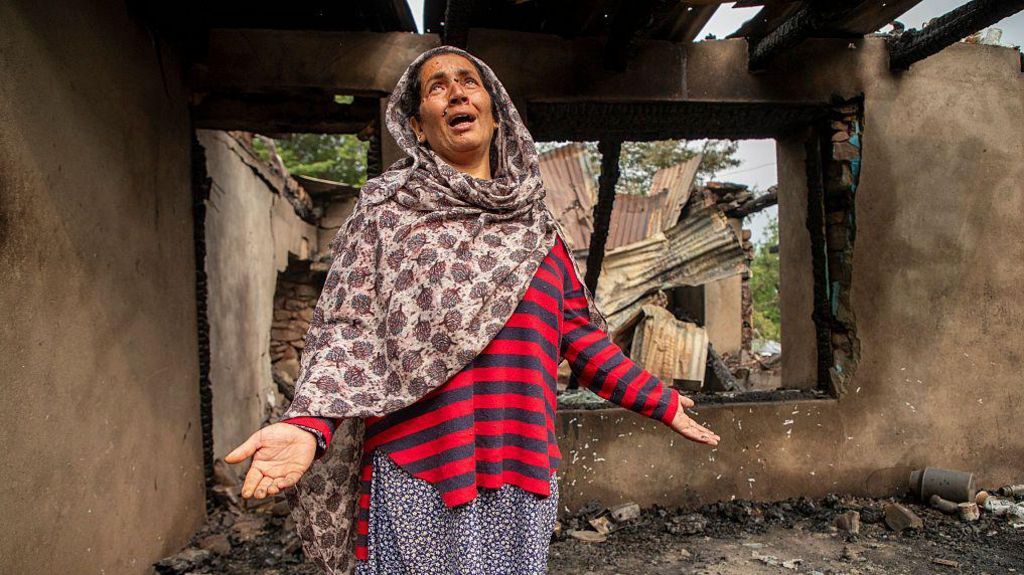
Twelve months have passed since a four-day military confrontation between India and Pakistan pushed South Asia to the brink of a catastrophic, full-scale escalation, and the nuclear-armed neighbors now find themselves stuck in a brittle, deeply unsettled status quo. What began as a deadly militant attack targeting tourists in Indian-administered Kashmir rapidly spiraled into open conflict: India launched cross-border military strikes, and Pakistan responded with coordinated retaliatory action. Though the entire crisis unfolded in just 90 hours, it cemented years of growing political and diplomatic estrangement, eliminating nearly all space for even incremental steps toward normalization.
Today, formal diplomatic engagement between the two nations is all but nonexistent. The shared border remains fully shuttered, cross-border trade has been indefinitely suspended, long-stalled cultural and sporting ties (including cricket exchanges) remain severed, and the decades-old Indus Waters Treaty, once a pillar of bilateral cooperation, is held in abeyance. “Relations remain in deep freeze,” explained Husain Haqqani, a former Pakistani diplomat now serving as a senior fellow at the Anwar Gargash Diplomatic Academy and the Hudson Institute, in an interview with the BBC. “Neither side sees domestic or international incentive to reach out to the other. While we have seen strained ties in past peacetime eras, this ranks among the longest stretches of completely frozen relations we have ever seen.”
The aftershocks of the brief 2025 conflict have rippled far beyond the Line of Control (LoC), the de facto border that divides the two nations, reshaping external perceptions of regional power dynamics. “Before May 2025, most outside analysts, and much of the Indian public, believed India held an overwhelming strategic advantage over Pakistan,” noted Daniel Markey, a senior expert at the Johns Hopkins School of Advanced International Studies. “Pakistan’s ability to effectively withstand India’s initial offensive shifted that narrative to its strategic benefit, even though it remains unclear how a prolonged conflict would have ended.”
Most notably, the conflict helped Pakistan regain a geopolitical relevance it had not held in decades, a shift further accelerated by its unexpected emergence as a key intermediary in the Iran war, a development that caught many global observers off guard. “Pakistan has purposefully rebuilt its geopolitical standing,” explained Christopher Clary, a security affairs scholar at the University at Albany. “Pakistani leaders are now conducting regular shuttle diplomacy across the Middle East. The key open question is whether this new prominence is permanent, or merely a temporary product of idiosyncratic policy preferences from the U.S. president.”
Pakistan’s diplomatic revival has unfolded against a backdrop of broader global geopolitical upheaval, with U.S. policy playing a central role in shaping the post-conflict landscape. Then-U.S. President Donald Trump repeatedly claimed credit for brokering the 2025 ceasefire and offered to mediate the long-running Kashmir dispute, a core territorial claim held by both nations. The offer deeply irritated Indian officials, who have long rejected third-party mediation over Kashmir, and exacerbated existing trade tensions between Washington and Delhi.
Clary noted that Trump’s well-documented personal affinity for Pakistan’s army chief, now Field Marshal Asim Munir, has significantly reshaped post-conflict bilateral dynamics across South Asia. “The U.S. president’s policy impulses are not always easily explained by traditional grand strategic frameworks,” Clary explained. “His desire to be publicly recognized as a global peacemaker directly shaped how he engaged with the May 2025 conflict.”
Michael Kugelman, a senior South Asia expert at the Atlantic Council think tank, added that Trump frames Pakistan’s performance during the 2025 conflict as a modern “David-versus-Goliath story” against larger India, a narrative that at least partially explains his public admiration for Munir. At the same time, Pakistan strategically leveraged the ongoing Iran crisis and rising Gulf tensions to position itself as a critical go-between for Washington, Tehran, and key Arab capitals.
Even so, leading analysts warn against overstating the long-term strategic gains Pakistan has secured. Much of Islamabad’s new global prominence remains contingent on Trump’s highly personalized style of diplomacy and the temporary strategic priority of the Iran crisis, meaning it could fade rapidly as global issues shift. “This is a high-stakes gamble for Munir,” Markey noted. “The constantly shifting landscape of Middle Eastern politics is inherently dangerous, and aligning closely with the Trump administration almost always brings unanticipated consequences.”
For India, the 2025 conflict upended long-held diplomatic assumptions. For years, Delhi operated under the belief that its deepening strategic partnership with Washington had permanently shifted the regional balance of power in its favor. But Trump’s public embrace of Pakistan, repeated mediation offers, and escalating trade frictions with India introduced a new layer of unpredictability to the bilateral U.S.-India relationship.
“The credibility the U.S. built since the 1999 Kargil conflict as a reliable crisis interlocutor has declined considerably,” said Ajay Bisaria, India’s former high commissioner to Pakistan. Clary added that the post-conflict erosion of U.S.-India ties accelerated a broader strategic recalibration that was already underway in Delhi. “Since May 2025, reinforced by the subsequent U.S.-India mini-trade war, India has rebalanced its global diplomatic and economic portfolio to reduce its dependence on the U.S.,” he explained. This shift has included growing closer to the European Union, accelerating diplomatic rapprochement with China, and pushing back against U.S. pressure to sever defense and economic ties with Russia. Even so, Clary noted that India’s broader long-term trajectory of global rise remains intact: “As a major power, temporary regional disequilibrium does not threaten India’s continued growth and influence.”
While the diplomatic consequences of the 2025 conflict remain contested, military analysts on both sides agree on clearer takeaways. Experts frame the 90-hour confrontation as South Asia’s first fully networked, drone-centric, high-technology military clash. “We saw a fundamentally technologically different battlefield,” Bisaria explained. “No manned aircraft from either side crossed the international border.” In the year since the conflict, both nations have sharply increased defense spending, accelerated military modernization programs, and deepened defense cooperation with external partners.
Even so, Clary cautions against claims that the conflict fundamentally rewrote the regional balance of power. “It triggered important organizational, doctrinal, and technological shifts in both militaries,” he said. “But I do not believe either side has substantially altered its core assessment of the relative balance of power between the two neighbors.”
What has shifted, however, is the threshold for future escalation. Bisaria describes the current post-conflict environment as “a new normal defined by deliberate strategic ambiguity.” “That ambiguity sends a clear message: any act of terrorism above a certain threshold will be treated as an act of war,” he said. (Delhi blames the 2025 tourist attack that triggered the conflict on Pakistan-based militant groups, a claim Islamabad has repeatedly denied.)
In the wake of the conflict, New Delhi has signaled that future retaliation could extend beyond militant groups to target the Pakistani military establishment directly. “Terrorists and their state backers will be held to the same standard,” Bisaria said, echoing the official position of the Indian government. The ongoing suspension of the Indus Waters Treaty stands as a permanent marker of this harder Indian posture, with Bisaria adding, “Blood and water cannot coexist. There is no path for the treaty to return to force in the current environment.”
From Islamabad’s perspective, the conflict reinforced confidence in its longstanding escalation strategy. Haqqani argues that the brief duration of the 2025 confrontation worked to Pakistan’s strategic benefit. “Pakistan’s strategy has long been to rapidly climb the escalation ladder, so that the threat of nuclear conflict forces international community intervention,” he explained. This belief is now widespread across Pakistan’s strategic community.
Umer Farooq, an Islamabad-based defense analyst and former correspondent for Jane’s Defence Weekly, says Pakistani leaders are increasingly confident that Washington and key Gulf states will intervene rapidly to de-escalate any future crisis. “In Pakistan, there is a widespread belief that the U.S. has forced both sides to the negotiating table in past crises, and it can do so again,” he told the BBC. At the same time, Farooq noted that Pakistan’s military and political elite are acutely aware of the country’s deep internal fragilities. “Our economy is in chaos, our society is deeply divided, and we are confronting two active insurgencies,” he said. “There is a broad consensus among the political and military elite that Pakistan cannot afford another open conflict with India.”
This tension – between growing confidence in Pakistan’s deterrence strategy and crippling domestic economic vulnerability – explains the carefully calibrated public messaging emerging from Rawalpindi in recent months. Without naming India directly, Pakistan’s corps commanders recently emphasized the need for “restraint and avoidance of escalation,” noting that regional stability depends on “collective restraint, responsibility, and respect for national sovereignty.” Farooq frames this statement as a continuation of longstanding military policy that favors quiet dialogue over open confrontation.
Even with relations at a standstill, few analysts believe the two nations can sustain a complete diplomatic freeze indefinitely. “The two countries have a long history of productive backchannel dialogues,” Markey noted. “These talks have often proven effective at mitigating hostility and laying the groundwork for formal diplomatic engagement.”
Bisaria also sees a narrow path to de-escalation if the region avoids another large-scale militant attack. He argues that Pakistan may eventually recognize the strategic benefit of stabilizing, if not fully normalizing, its front with India. For now, Kugelman argues, “the best achievable outcome is that the situation does not deteriorate further.”
Ultimately, the future of bilateral relations may depend less on broader global geopolitics and more on the strategic calculations of the two leaders holding the most power in each capital: Indian Prime Minister Narendra Modi and Field Marshal Asim Munir. “Munir and Modi wield extraordinary influence over policy in their respective countries,” Clary said. “If either leader chooses to pursue renewed diplomatic engagement, they have the power to make it happen. For the moment, however, neither side has signaled a willingness to take that step.”