A devastating explosion at a Moscow restaurant has claimed at least three lives and left 15 other people wounded, regional law enforcement authorities have confirmed.
The incident unfolded shortly after 8:00 p.m. local time, which corresponds to 17:00 GMT, at a dining establishment located on Kudrinskaya Square, just a short distance from Moscow’s bustling city center. As of the latest updates, officials have not yet confirmed the exact cause of the blast. However, the independent Russian Telegram channel Baza has cited early on-site indications that the explosion originated in the restaurant’s kitchen area.
A witness who spoke to Baza shared chilling details of the aftermath, noting that the venue was hosting a wedding reception when the explosion occurred. Around 50 guests were in attendance at the event, the witness added, describing horrific scenes of bloodied victims being carried out of the damaged building by first responders.
In the immediate aftermath of the incident, local authorities moved quickly to close all vehicle access to roads surrounding Kudrinskaya Square. The disruption also extended to a planned community cycling event: dozens of cyclists had been assembling nearby for a scheduled evening group ride through the capital, which organizers called off following the blast.
Footage captured and released by Russian state-owned news agency RIA shows a heavy law enforcement presence at the cordoned-off site, with heavily armed officers deployed to secure the area and bar unauthorized public access. Investigations into the cause and circumstances of the explosion are ongoing.
分类: world
-
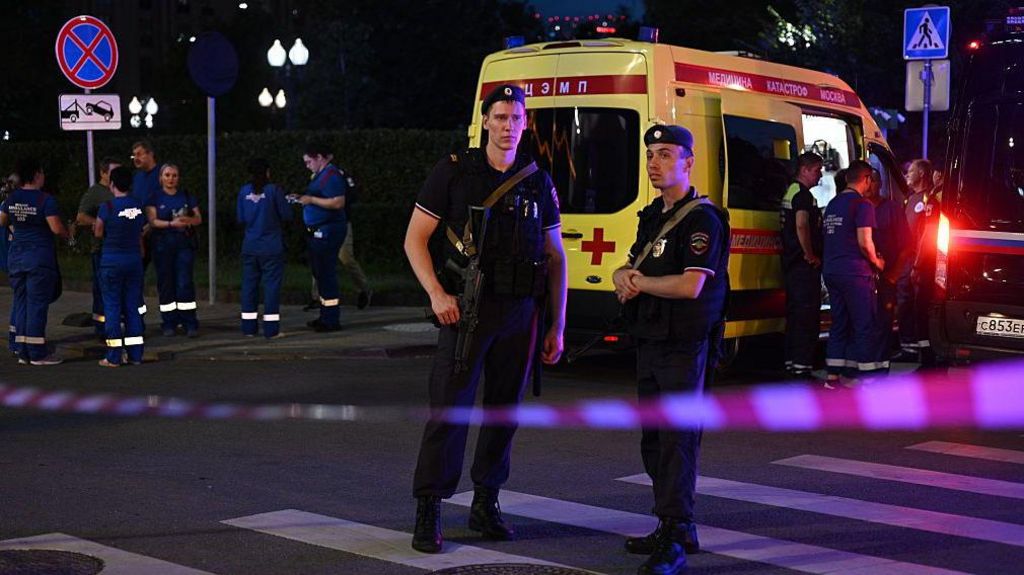
Three killed in Moscow restaurant explosion
-
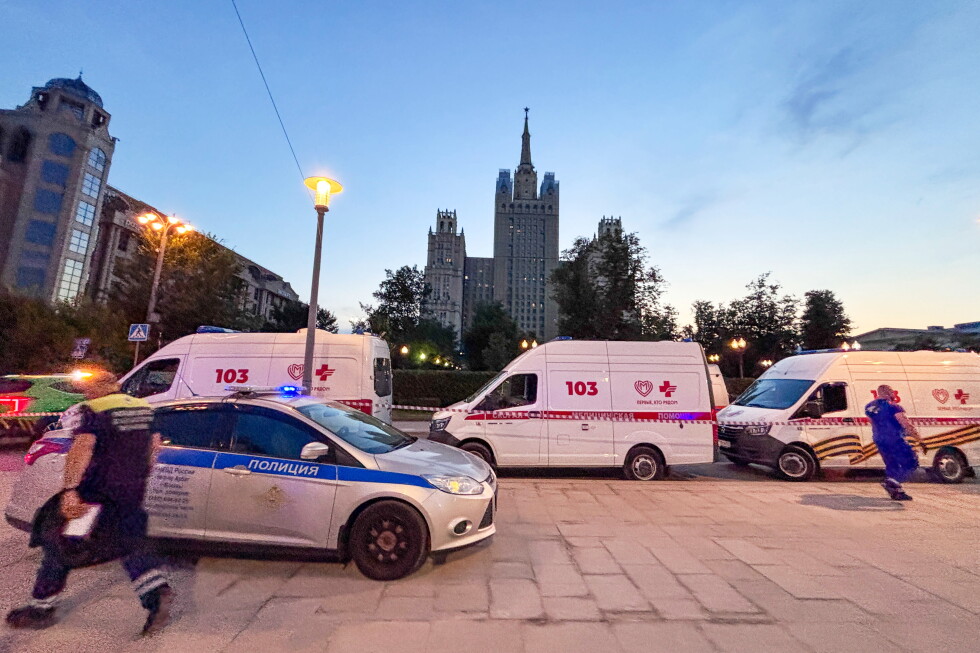
3 people killed, 15 wounded in Moscow restaurant explosion
A devastating explosion ripped through a restaurant located in the heart of Moscow on Saturday, leaving at least three people dead and triggering an immediate emergency response, according to Russian state media reporting citing local government authorities. Beyond the fatalities, at least 15 people were wounded in the blast, with the extent of their injuries currently being clarified by medical and law enforcement teams. Multiple response teams, including specialist investigators, forensic evidence collection experts, and emergency service personnel, have deployed to the incident site on Kudrinskaya Square in central Moscow to secure the area and conduct a full probe, RIA Novosti, Russia’s state-run news agency, confirmed. The Moscow Investigative Committee, the body overseeing the official inquiry into the incident, told the outlet that authorities are still working to confirm multiple key details, including a final, definitive count of the dead and injured, and what exactly caused the explosion to occur.
-
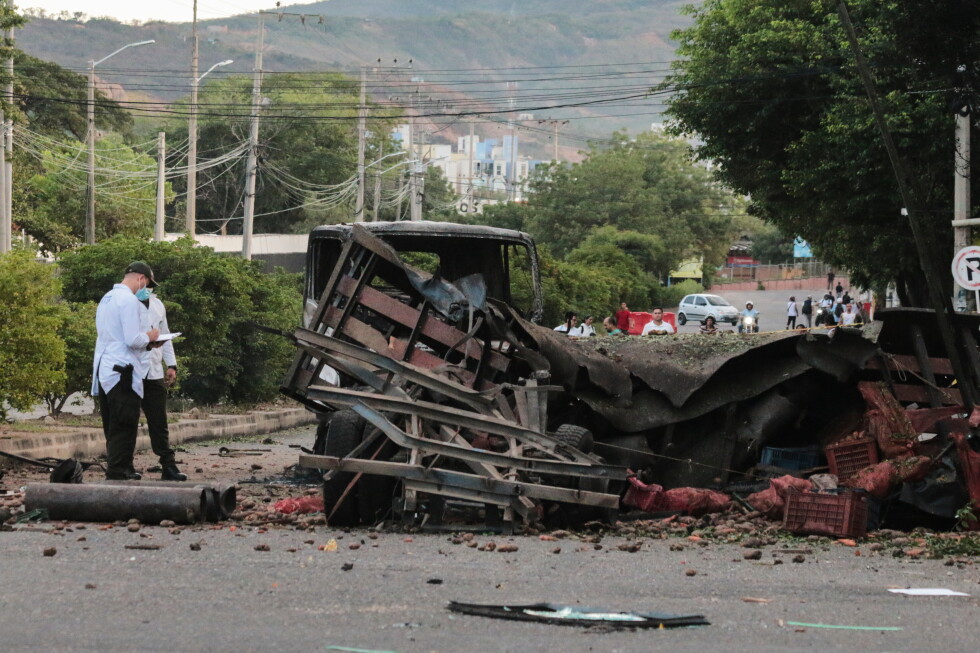
Truck explodes outside Colombia police base, injuring 11 officers and killing a dog
BOGOTÁ, Colombia – A pre-dawn explosive attack targeting a provincial police headquarters along Colombia’s volatile border with Venezuela has left 11 police officers injured and killed a working police dog, with the Colombian government placing blame squarely on the country’s last remaining major insurgent group, the National Liberation Army (ELN).
The blast unfolded Saturday morning in Cúcuta, a strategic border city that has long been a battleground for competing drug trafficking organizations and rebel factions fighting to control lucrative cross-border smuggling corridors. According to General William Rincon, director of the Colombian National Police, the explosive device was hidden in an unoccupied truck parked directly outside the Norte de Santander Provincial Police Headquarters. The powerful detonation destroyed most of the building’s roof and shattered glass across the structure.
Rincon condemned the assault in blunt terms, calling it “a vile terrorist attack” and affirming that law enforcement would not pause operations until all responsible parties are apprehended and held accountable through the judicial system.
Colombian Defense Minister Pedro Sanchez echoed the accusation against the ELN in a post on social platform X, announcing a $60,000 reward for any information that leads to the capture of the bombing’s planners and perpetrators.
The attack comes at a critical political juncture for Colombia, just one week before the inauguration of incoming president Abelardo de la Espriella, an ultra-conservative leader who has campaigned on an explicit promise to end all ongoing peace negotiations with the country’s remaining armed insurgent groups. De la Espriella will be sworn in next Friday in Cali, a city that has also seen recent rebel attacks in recent months.
Founded in the 1960s by a coalition of union leaders, student activists and peasant organizers fighting for structural social change, the ELN has waged a low-intensity insurgency against successive Colombian governments for nearly 60 years. Today, Colombian authorities estimate the group has roughly 6,000 active fighters operating across Colombia and in neighboring Venezuela, and has evolved far from its founding ideological roots. Outgoing President Gustavo Petro, a left-wing leader who made peace talks a core priority of his administration, has repeatedly accused ELN leadership of operating as “drug lords dressed up as guerrilla fighters,” as the group now derives most of its revenue from illegal activities including unregulated gold mining and cocaine trafficking.
Petro, who was elected in 2022, centered his security strategy on a policy called Total Peace, which launched parallel negotiation processes with multiple armed groups across the country. Talks with the ELN collapsed early last year, however, after the group launched a series of attacks in rural areas north of Cúcuta that killed an estimated 78 people and forced more than 56,000 residents to flee their homes.
Critics of Petro’s peace strategy argue that ceasefires granted to armed groups during negotiations allowed many factions to regroup, rearm, and expand their control over illegal smuggling routes and rural territories. The current security landscape was shaped in part by the 2016 peace deal between the Colombian government and the Revolutionary Armed Forces of Colombia (FARC), which led to the disarmament of more than 13,000 FARC guerrillas. While the deal ended decades of large-scale conflict, it also left a power vacuum in many remote rural regions that smaller groups including the ELN have moved aggressively to fill.
De la Espriella, the incoming president, has already laid out a starkly different approach to the ELN and other criminal groups, promising a massive increase in military pressure to counter insurgent activity. He has also pledged to resume the controversial aerial fumigation of coca crops, the raw material used to produce cocaine, a policy that was paused under Petro’s administration out of concern for environmental and public health impacts.
-
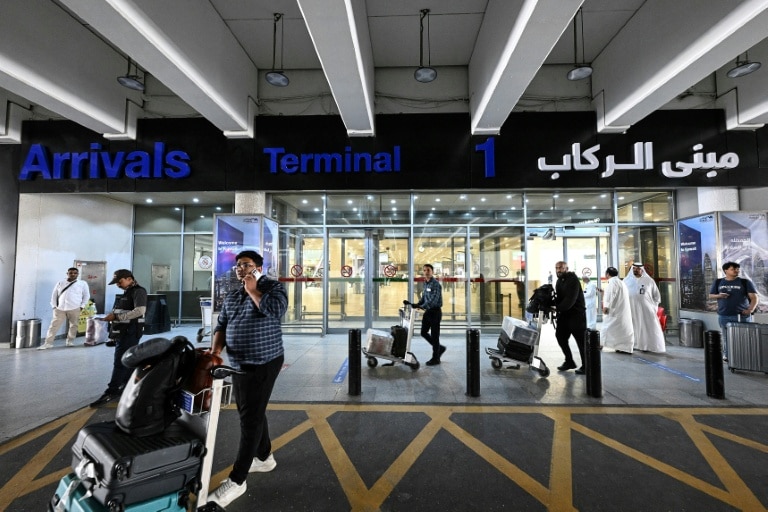
US embassies urge citizens to consider departing Middle East
On Saturday, diplomatic missions of the United States across multiple Middle Eastern capitals issued a rare, sweeping security alert urging American citizens currently residing or traveling in the region to prepare for potential evacuation amid growing fears of unanticipated regional conflict escalation. The public warning, published simultaneously on official online channels of US embassies in Bahrain, Iraq, Israel, Jordan, Kuwait, Lebanon, Oman, Qatar, Saudi Arabia, and the United Arab Emirates, came just 24 hours after former US President Donald Trump threatened that Iran would face “very hard” retaliation for recent escalatory actions.
Open hostilities between the United States and Iran have been ongoing since February 28 this year. While a temporary ceasefire brought a brief period of reduced violence to the region, that truce collapsed in recent weeks as both sides resumed targeted strikes. For months, the open conflict has upended daily life for civilian populations across the Middle East and sent shockwaves through global energy markets, with no clear diplomatic offramp to de-escalation in sight.
“Americans in the region should consider departing, or be prepared to depart should there be escalation,” the joint security alert stated. Beyond the general call for evacuation preparedness, embassies urged citizens to confirm the status of commercial flight bookings continuously and comply with all safety guidance issued by local host government authorities. The warning also noted that travelers should anticipate widespread travel disruptions, including sudden flight cancellations, temporary airspace closures, and unplanned interruptions to ground transit networks.
Targeted guidance was issued for citizens in specific hotspots: Americans in Jordan were instructed to avoid all US military bases in the country, which have recently come under Iranian missile attack, while those in Israel were told to locate and familiarize themselves with the nearest bomb shelter. In a post on its official platform, the US Embassy in Jerusalem highlighted the unpredictability of the Iranian government, pointing to recent unprompted attacks on regional targets and the expansion of strikes to previously unaffected areas such as Egypt. The US Embassy in Beirut added that Lebanon remains under “ordered departure status” for US mission personnel, meaning non-emergency diplomatic staff have already been relocated outside the country.
Iran swiftly pushed back against the US warnings Saturday, accusing Washington of intentionally inflaming regional tensions. In a statement carried by Iranian state television, Ali Abdollahi, head of Iran’s military central command, warned that any nation that offers itself as a defensive shield for what he called “criminal and aggressive America” will be consumed by the conflict. Mohammad Mokhber, an adviser to Iran’s supreme leader, issued an additional warning against any US strikes on Iranian critical infrastructure.
“You calculate through military equations, but we respond with the logic of history,” Mokhber wrote on the social platform X. “Attacking Iran’s infrastructure directly awakens the fault lines on which 250 years of your hegemonic architecture have been built.”
Overnight exchanges of fire between US and Iranian forces resumed last month following a days-long lull in fighting, though no strikes were reported between Friday night and Saturday morning. The rising tension comes on the heels of two recent maritime incidents that have further raised alarm: On Wednesday, a drone attack hit a US-owned gas tanker moored in an Egyptian port, sparking a large fire. Egyptian authorities are still investigating the attack and have not yet publicly named a perpetrator. Separately, a British maritime agency reported Saturday that an “unknown projectile” struck an oil tanker off the coast of Oman, as the US and Iran remain locked in a standoff over control of the Strait of Hormuz, one of the world’s most critical chokepoints for global energy trade.
Since the outbreak of hostilities on February 28, Iran has asserted de facto control over commercial navigation through the Strait of Hormuz, requiring all transiting vessels to secure official permission and pay mandatory transit fees to access the waterway. Data from maritime trade analytics firm Kpler, published Friday, shows that commercial traffic through the strait has dropped “sharply” amid the heightened risk. “With US and Iranian public positions still at odds, operators are closely monitoring traffic volumes, routing behaviour and any diplomatic developments that could reshape risk across regional shipping lanes in the days ahead,” the firm noted in a post on X.
The broader regional conflict erupted when the United States and Israel launched joint opening strikes against Iran, which responded with widespread missile and drone attacks targeting positions across the Middle East. On the Lebanese front Saturday, the Israeli military announced it had killed three Hezbollah fighters in southern Lebanon during an operation, while one Israeli soldier sustained moderate injuries in a close-quarters engagement with Hezbollah militants.
-
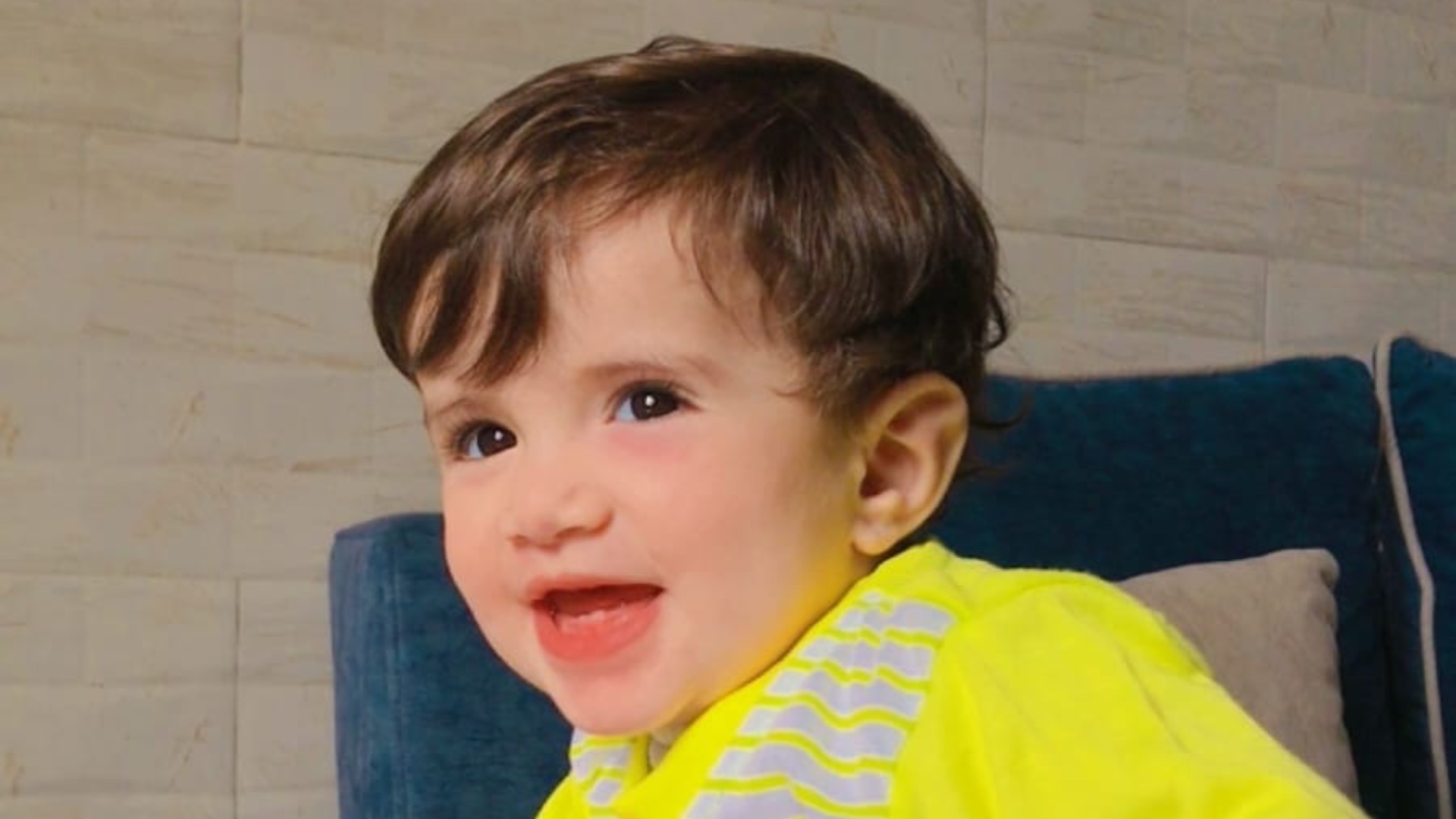
After Israel killed her three sons, she found hope in a newborn. Then he was killed too
Deep in the al-Bureij refugee camp in central Gaza, 15-month-old Zaid Nofal lay sleeping in the sweltering pre-dawn darkness of a Gaza summer. Without a blanket to combat the oppressive heat, the toddler had been left by an open window to catch what little breeze stirred the humid air at 3 a.m. That quiet, ordinary moment was shattered in an instant when an Israeli airstrike slammed into the family’s home, burying Zaid beneath the crumbled concrete of what had just been a place of refuge.
Just meters from the collapsed rubble, Zaid’s 38-year-old mother Fatima Nofal stood frozen in disbelief, her clothes stained with blood and dust as neighbors screamed around her. For the Palestinian mother, this was not an entirely new horror. Zaid was the fourth son she had lost to Israeli violence, three older boys having been killed in a separate attack just two years prior. This home, partially destroyed in earlier conflict, had only just been rebuilt after a ceasefire was announced in October 2025.
“I still haven’t processed what happened. I remain in a state of profound shock,” Nofal told Middle East Eye in an interview from hospital, where she is recovering from burns to her feet. “All I remember is waking up just minutes before the strike. I moved to another spot because of the severe heat, leaving my little Zaid by the window so the breeze could help him sleep.”
Wounded in the blast, Nofal refused to evacuate before rescuers found her son. Neighbors poured in to help, slowly shifting piles of concrete and debris to reach the trapped toddler. When they finally pulled Zaid out, wrapped in a thin blanket, he was already dead. The attack reopened old wounds that had barely begun to scab over: the trauma of October 13, 2023, when an earlier Israeli airstrike took the lives of her three other sons.
That strike came early in the war that has ravaged Gaza since October 2023. Back then, Nofal and her family had fled their original home in al-Bureij, convinced they would find safety in the al-Sawarha area of the coastal town al-Zawaida, far from the border. “We realised the gravity of the situation and decided to flee because we thought it would be safer than staying near the border,” she recalled. “But we never imagined that the place we went to for safety would become where I’d witness the killing of my three sons and most of my husband’s family.”
That attack killed 16-year-old Amin, 11-year-old Hamza, and Ahmed, her newborn son who was just 22 days old. Nofal and her two young daughters were wounded, their home destroyed, forcing them into the cycle of repeated displacement that has defined life for nearly every Palestinian in Gaza over the past two years.
Ten months after she buried her three older boys, a glimmer of hope cut through the darkness: Nofal discovered she was pregnant. When she learned she was carrying another boy, her quiet hope grew into profound joy. Zaid was born on April 16, 2025, born into a war that never ended, but for his family he was more than a baby — he was a chance to fill the gaping hole left by the children they had lost.
“Zaid’s birth was the most significant event in our lives during the war,” Nofal said. “His arrival brought immense joy to the whole family; everyone celebrated him as a small miracle that came to light up our lives after long months and nights of pain and tears.” When relatives suggested naming him after one of his late brothers, Nofal refused. “I wanted him to have his own name and his own destiny,” she explained.
In the 15 months of his short life, Zaid became the beating heart of the home. His two sisters adored him, never wanting to be apart. “Whenever I took him to the clinic for vaccinations or check-ups, his sisters would wait for him on the stairs. They could not bear being away from him, even for a few hours,” Nofal said.
The latest airstrike that killed Zaid also left Nofal’s family fractured once more. Her eldest daughter Baraa suffered minor injuries, but 15-month-old Lina, her youngest daughter, is still hospitalized with head trauma. “When I visited her, the first thing she asked about was Zaid. I could not bring myself to tell her the truth while she was still wounded. I told her he was fine and waiting for her,” Nofal said, her voice heavy with unspoken grief. “I don’t know how I will tell her the truth when she is discharged.”
Nofal’s grief is compounded by the stolen childhood Zaid never got to live. “On the day he was killed, he was restless in the afternoon and wanted to go outside. I told his sisters how much I wished I could take him out, but there are no places left for children to play,” she said. “He spent his whole life indoors. Even his cousins had been killed in Israeli air strikes, so he had no one to play with.”
Zaid’s death is far from an isolated tragedy. Despite a ceasefire agreement reached in October 2025 that was meant to end the two-year war in Gaza, Israel has continued to carry out near-daily airstrikes across the besieged enclave. Official counts put the death toll from Israeli strikes at more than 1,200 people since the ceasefire took effect 10 months ago, with a total of more than 73,000 Palestinians killed since the war began in October 2023.
Children have borne the brunt of this ongoing violence. The United Nations Children’s Fund (UNICEF) reported in June that roughly 260 children have been killed in Gaza since the ceasefire began — an average of one child killed every day. UNICEF spokesperson James Elder called the situation a “cruel and deadly illusion of a ceasefire.”
On the same day Zaid was killed, another child lost her life in a separate Israeli strike: nine-year-old Ratil al-Abadla died when a bomb hit her uncle’s tent in al-Mawasi, where she had traveled just two days earlier for a brief break from the horrors of war. A video of her father, Abdullah al-Abadla, holding her small body and asking what his daughter had done to deserve such a fate spread rapidly across social media, a searing reminder of the pain shared by thousands of Gaza families.
The United Nations’ independent commission of inquiry has already confirmed it found clear evidence that Israeli forces have deliberately targeted Palestinian children, noting that these actions form part of the pattern of conduct that led the commission to conclude Israel has committed acts of genocide in Gaza.
For Nofal, however, no official report or global condemnation can bring back her four sons. As she divides her time between recovering from her own injuries and sitting by her injured daughter’s hospital bed, she now faces two new overwhelming struggles: finding a new place to call home after her house was destroyed once more, and finding the words to tell Lina that her baby brother will never come home.
“Israel is intent on killing us, and it needs no justification to do so,” Nofal said. “The fire is burning in my chest, and I do not know who will extinguish it.”
-
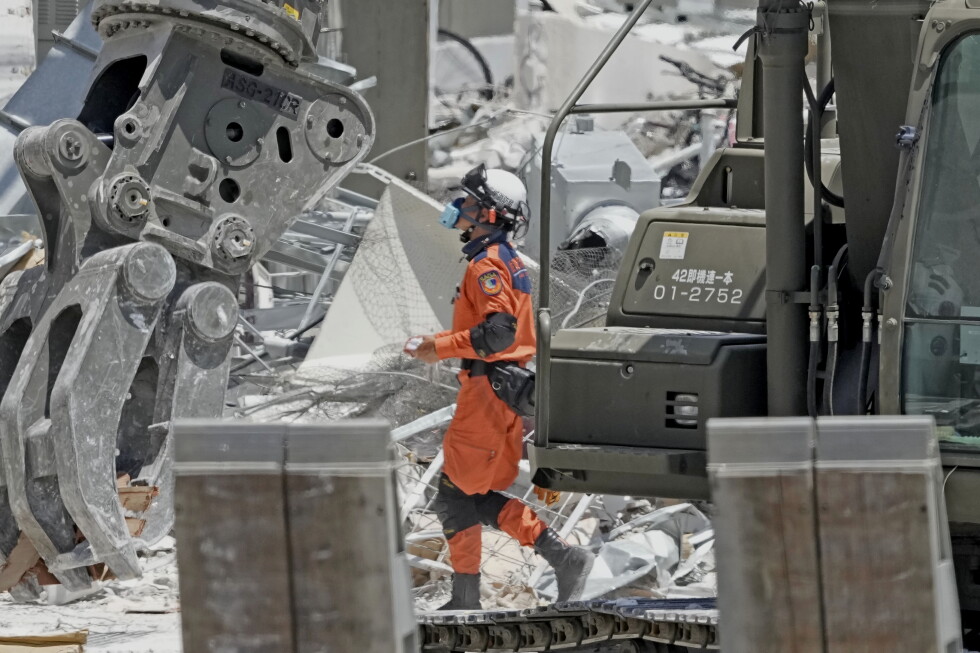
Japan ends rescue operation at a mall that collapsed after a strong quake
On Saturday, Japanese emergency authorities concluded a five-day large-scale search-and-rescue mission at the site of a collapsed regional shopping mall in Kumamoto Prefecture, four days after a powerful 7.1 magnitude earthquake struck Japan’s southern main island of Kyushu, leaving at least 34 people dead across the affected region. The Aeon Mall in the town of Kashima was counted among the disaster’s most heavily damaged locations: a post-quake explosion, which mall operator Aeon suspects was triggered by a gas leak, caused the structure’s second floor and multiple exterior walls to collapse. In the immediate aftermath of the tremor, roughly 3,000 visiting shoppers were safely evacuated to an adjacent parking lot, but a number of staff members remained inside the building to secure the facility, leaving them trapped when the structure gave way.
Over the course of the five-day operation, rescue teams pulled five survivors from the tangled rubble of the mall and recovered the remains of seven employees who did not survive the collapse. With all unaccounted-for people at the site now identified and located, officials called off active search efforts at the mall on Saturday. However, search operations across the wider Kumamoto Prefecture remain ongoing, as the total number of missing people across the region has not yet been confirmed. More than 5,000 personnel, including Japan Self-Defense Force troops, local police officers, specialized rescue workers and canine search teams, have been deployed to the affected area to continue looking for survivors.
At a separate high-impact site in Yatsushiro City, a large industrial chimney at the Nippon Paper Industries factory collapsed during the quake, trapping 11 on-site workers. Local officials confirmed Saturday that nine of those trapped workers have been found dead, while the remaining two were rescued and are receiving medical care. Across Kumamoto Prefecture, the earthquake has left 103 people with documented injuries, and authorities are currently investigating whether two additional deaths can be linked to the seismic event.
In addition to the human toll and structural damage, the prefecture is now facing a growing public health crisis driven by two overlapping crises: widespread disruptions to critical infrastructure and a record-breaking heatwave. As of Saturday, nearly 70,000 households across Kumamoto remain without access to clean potable water, and supplies of vehicle and generator fuel are running critically low, even as temperatures in Kumamoto City hit an extreme 36.6 degrees Celsius (97.8 degrees Fahrenheit) on Saturday. The sweltering conditions have raised urgent concerns about heat exhaustion and other heat-related illnesses among displaced residents.
More than 9,000 people are currently staying in overcrowded emergency evacuation shelters, which have been set up in repurposed community centers, school gymnasiums and public school classrooms. Many other displaced residents have chosen to sleep in their vehicles parked at municipal parking lots and public parks, or camp outside their damaged homes, in order to access greater privacy than crowded shelters can offer.
Longstanding criticism from disaster response experts has highlighted the dangers of overcrowded shelter conditions in Japan, noting that insufficient sanitation and a lack of personal space increase psychological stress for survivors and raise the risk of secondary public health outbreaks after a disaster. In response to these ongoing challenges, Prime Minister Sanae Takaichi reaffirmed the national government’s commitment to supporting response and recovery efforts during a Saturday meeting of the government’s disaster task force, urging rescue teams to leave no one unaccounted for across the affected region.
Takaichi added that relief supplies including bottled water, non-perishable food, portable toilets, mobile air conditioning units and privacy partitions are already being distributed to evacuation centers across the prefecture to improve living conditions for displaced residents. “The government is determined to do everything we can to support affected communities,” she stated.
As of Saturday, Kumamoto Prefecture has recorded more than 1,500 reports of power outages across the region, though the local Kyushu Electric Power Company said it had no immediate confirmation of widespread ongoing outages. Preliminary structural assessments from the Kumamoto prefectural government confirm that at least 180 homes have been completely destroyed by the quake, and nearly 3,500 additional buildings have sustained damage — a figure that has nearly doubled since Friday’s update — with 20 of those structures classified as severely damaged.
-
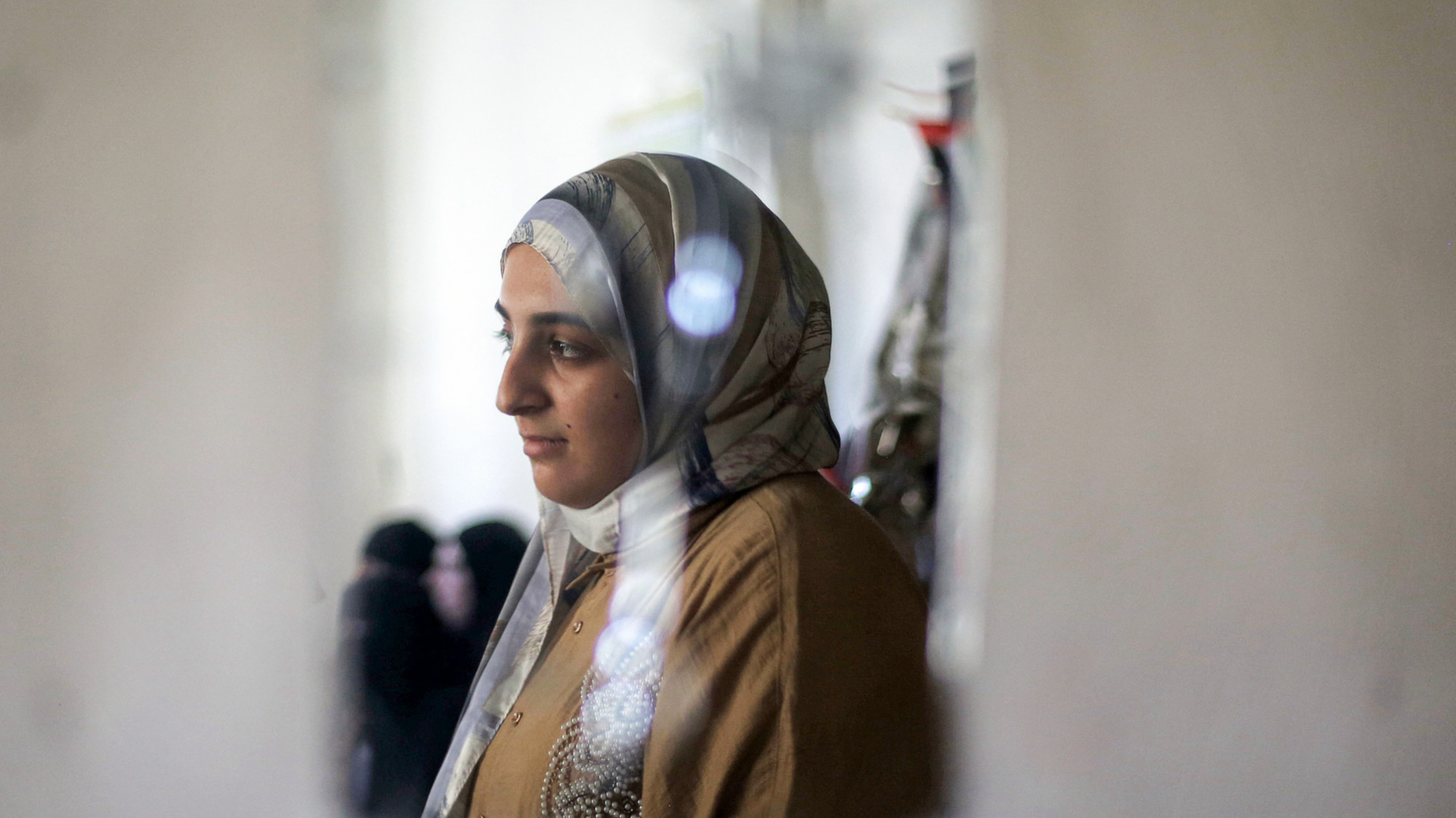
‘We cried instead of celebrating’: War and loss shadow Gaza’s top students
For generations of Palestinian students, the General Secondary Education Certificate exam – widely known as Tawjihi – stands as a defining milestone. Traditionally, it brings closure to 12 years of schooling, opens the door to university, and is marked by joyous celebrations of hard-won achievement and hopeful plans for the future. But nearly three years into Israel’s military campaign in Gaza, this pivotal academic moment carries a drastically different weight for thousands of young Gazans. For these students, just surviving long enough to sit the exams and receive their results has become an extraordinary accomplishment.
One story that has captured widespread attention is that of Saba Rabah, a 2024 Tawjihi graduate who claimed the top score across Palestine’s scientific stream, with a nearly perfect 99.9 percent average. The result fulfilled a childhood dream Rabah had nurtured for years – but the celebratory moment was deeply shadowed by the loss of her father, killed in an Israeli airstrike on the al-Maghazi refugee camp in central Gaza earlier this year. The final selfie the pair shared, taken during Eid al-Fitr in April 2024, remains one of Rabah’s most cherished possessions.
From childhood, Rabah’s parents pushed her to excel academically and supported her ambition to attend medical school. “In my last conversation with my father, he told me he dreamed I would rank among the top students in the scientific stream and study medicine, just as I had always hoped,” Rabah told Middle East Eye. “He said he wanted to spend his retirement in my future clinic.”
Rabah’s path to the top score was littered with obstacles no student should ever face. Like thousands of Tawjihi candidates across Gaza, she pursued her studies in conditions that turned the most basic educational tasks into daily battles for survival. Just days before her final exams, an Israeli strike damaged her family’s rented displacement shelter, leaving only one room intact. That small space served as kitchen, bedroom, living area, and study space all at once.
“No words can describe the suffering of studying while starving or while fleeing,” Rabah said. She recalled repeated episodes of displacement, where she was forced to choose between carrying her textbooks, her mother’s life-saving heart and blood pressure medication, or assisting her 25-year-old quadriplegic brother Saeed. Basic educational supplies have become unattainable luxuries in blockaded Gaza: no new textbooks have entered the territory in three years, making even second-hand copies rare, and a pack of 200 A4 sheets now costs roughly $150, out of reach for most families. Unreliable electricity and spotty internet access have further complicated efforts to study remotely.
Through the hardest moments, Rabah held onto her father’s dream, with her mother and siblings reminding her of what he had wanted for her. “Every family in Gaza has experienced grief. We have lost fathers, mothers, siblings and sometimes entire families,” she said. “We didn’t choose to live through this violence, but we keep trying to live and hold on to the small moments because that is our right. The only solution is for the Israeli war to stop. We don’t want to lose any more of our loved ones. We want to study like everyone else. We want to live in dignity.”
Rabah’s story is far from unique. Thousands of Tawjihi students across Gaza navigated repeated bombardment, displacement, injury, and grief to sit for their exams this year. Among them is Maram Muqit, a northern Gaza student who took her exams just four months after an Israeli bullet became lodged in her spinal cord, leaving her partially paralyzed.
Muqit was injured while walking back to her family’s displacement tent from a math class, her mother Naheel explained. “Doctors told us she might never walk again if she remains in Gaza because of the lack of medical supplies,” Naheel said. Before she was wounded, Muqit had attended two makeshift schools, despite the constant danger of traveling across northern Gaza. Her parents begged her to stay home for safety, but she refused to miss any chance to learn. When internet was available, she downloaded YouTube lessons and studied materials shared by her teachers on WhatsApp.
Before the current conflict, Muqit and her family lived in Beit Lahia, but their home was destroyed in the first month of Israeli attacks. They have been displaced multiple times since, and now live in a tent in the al-Atatra neighborhood in northern Gaza. Muqit is currently undergoing rehabilitation at al-Wafa Hospital, where she balanced intensive therapy with exam preparation. Despite the exhaustion of balancing treatment and studying, she earned an outstanding 96.6 percent on her Tawjihi exams.
“When the results came out, we cried instead of celebrating. Her father and I tried to help her stand, but she still couldn’t keep her balance,” Naheel said. The hospital later allowed Muqit to spend a day with her family at the displacement camp, where relatives and friends held a small celebration. When she returned to the hospital, staff and fellow patients celebrated her achievement, bringing her small gifts to mark the milestone.
Even with her strong score, Muqit’s future remains uncertain. She has long dreamed of studying dentistry, but fears her injury and disability will block her from pursuing the career she has wanted since childhood. “I am happy I achieved the grades I needed. But I am sad that I may never walk again,” she said. “I hope I can get an electric wheelchair, travel abroad for treatment and go to university.”
For other high-achieving students, the joy of a strong Tawjihi result never came at all. Among the nearly 19,000 Palestinian students killed by Israeli forces since October 2023, per Palestinian Ministry of Education data, is Yahya Nasman. Nasman scored a 96.6 percent on his 2024 Tawjihi exams – but he and five members of his family were killed in an Israeli airstrike on their Gaza City home just one week before results were announced in July.
Two days before the attack, Nasman’s uncle Waleed hosted Yahya and another family member for a small post-exam meal. Waleed said his nephew had spent the year balancing studying with the daily work of helping his family survive the war: fetching clean water, collecting firewood, and securing basic supplies. Over pizza, Yahya spoke confidently about his plans: he was sure he would earn high marks, he told his uncle, and he wanted to study architectural engineering so he could help rebuild the thousands of homes destroyed across Gaza.
Waleed remembered his nephew as the most caring member of the family, always the first to step in to help anyone in need before returning straight to his studies. The day before the strike, Yahya brought his six-year-old sister Arwa to play with Waleed’s daughters – a meeting Waleed never imagined would be their last. The next day, 12-year-old Ayham, Yahya’s brother, returned to the family home to find it reduced to rubble. He ran to alert relatives, who rushed to the site hoping to find survivors.
“My brother, his wife and their three children, including Yahya, were killed instantly,” Waleed said. “The force of the explosion threw parts of their bodies hundreds of metres down the street. I collected the remains of my nephews and nieces from the road and the displacement camps before burying them.” Five days after the attack, the family learned Yahya had earned one of the highest Tawjihi scores in Gaza. What should have been a joyous celebration became one more moment of grief. “Yahya was one of thousands of students who tried to build a future despite everything happening around them,” Waleed said. “We want people around the world to help stop the attacks on Gaza. Every day more people are killed.”
Official data from the Palestinian Ministry of Education underscores the catastrophic toll the conflict has taken on Gaza’s education sector. Since October 2023, Israeli forces have wounded at least 28,293 students, killed nearly 19,000 students and roughly 800 teachers and education workers, and damaged or destroyed 279 schools, leaving Gaza’s entire education system in ruins. Even after a tentative ceasefire agreement was reached in October, Israel has continued near-daily airstrikes across the strip, killing at least 1,200 people since the truce took effect. Total Palestinian fatalities from Israeli attacks since October 2023 now exceed 73,000, according to local officials.
-

Hamburg Pride underway with increased security a week after a fatal attack in Berlin
Just seven days after a deadly extremist attack shook the LGBTQ+ community near Berlin’s annual Pride celebration, one of Germany’s largest annual LGBTQ+ advocacy events — Hamburg’s Christopher Street Day (CSD) Pride parade — kicked off on Saturday with a dramatically expanded security presence to protect attendees.
Organizers projected that roughly 250,000 participants and spectators would line the route through the center of Germany’s second-largest city, where dozens of parade floats made their way through downtown streets. Ahead of the event, Hamburg’s police chief confirmed that the number of officers deployed to secure the parade would be double the staffing level that was used for the 2024 event, a direct response to last week’s violence in the capital.
This year’s Hamburg Pride carries the unifying rallying motto: “Queer in solidarity. Take a stand — for a future without fear.” In a moving show of solidarity with the Berlin community, organizers added a last-minute parade float representing Berlin Pride to the procession. Attendees on the Berlin float were asked to wear dark clothing as a quiet mark of respect for the victims of last week’s attack.
Speaking to German broadcaster RTL television, Hamburg’s Deputy Mayor Katharina Fegebank addressed widespread anxiety that has rippled through both Germany’s queer community and broader society following the violence. “After the brutal attack on the CSD in Berlin, many are unsure in the queer community but also in society whether here and today is the right place,” Fegebank said. “I say, now more than ever.”
The attack that prompted the heightened security unfolded on the evening of July 25, just hundreds of meters from the closing party of Berlin’s Pride celebration. A driver drove a rented van into a crowd of people before attacking additional bystanders with a machete-style weapon. The violence left one woman dead and multiple others injured, several of them critically. The 21-year-old identified as suspect Abdul Ballout, who was born in Germany to a family of Lebanese descent, was shot and killed during a confrontation with responding police officers the following day.
Investigators later recovered a pre-recorded video in which a man matching Ballout’s description claims responsibility for the attack and pledges allegiance to the extremist group Islamic State. Prosecutors confirmed that Ballout traveled to Lebanon in 2025, with the explicit intention of crossing into Syria to join Islamic State ranks, and had already made contact with multiple individuals suspected of being members of the group before he returned to Germany to carry out the attack.
-
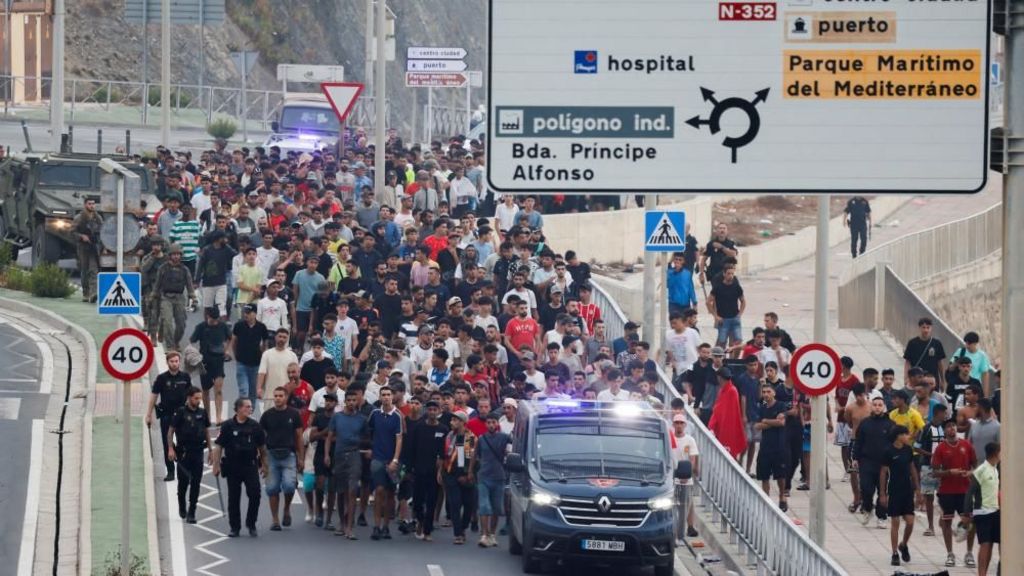
Spain attacks ‘selfish’ response of some EU countries to Ceuta migrant crossings
A sudden mass influx of roughly 60,000 migrants into the Spanish North African enclave of Ceuta has sparked deep political rifts across the European Union, with Madrid publicly condemning the harsh, unilateral actions of several member states as selfish, polarizing and unlawful. The crisis, which unfolded on July 30 when thousands of migrants crossed into Ceuta from Morocco, has already claimed at least 67 lives, Spain’s Interior Minister Fernando Grande-Marlaska confirmed Saturday. By the time of his announcement, local authorities had nearly resolved the on-the-ground emergency, with almost all of the migrants escorted back across the border and daily life in Ceuta resuming, including the reopening of local businesses. In response to the crisis, Spain has also begun deploying an inflatable maritime barrier to block future unauthorized crossings and reinforced security at its second North African enclave, Melilla, which saw smaller-scale crossing attempts.
Within 48 hours of the initial surge, the Spanish government announced it had fully resecured the Ceuta border and prevented any unapproved movement of migrants toward continental Europe, a fact later confirmed by EU officials who noted no irregular arrivals had reached mainland EU territory. Despite this rapid containment, several EU member states moved quickly to implement punitive measures against Spain. Italy, led by Prime Minister Giorgia Meloni, announced a 30-day temporary suspension of its participation in the EU’s Schengen open border arrangement with Spain, labeling the scenes of the migrant influx “shocking” and framing uncontrolled migration as a threat to European national security. Finland and Denmark quickly threw their support behind Italy’s action, with Czech Prime Minister Andrej Babiš going a step further to call for a full temporary suspension of Spain’s Schengen membership. Other states, including France and Portugal, moved to tighten internal border checks with Spain in response to the crisis.
Spanish Prime Minister Pedro Sánchez has pushed back fiercely against these actions in an open letter to European Commission President Ursula von der Leyen, pointing out that Ceuta has never been part of the Schengen open border area, making the unilateral border suspensions legally unfounded. Sánchez accused the dissenting governments of acting out of prejudice, misinformation, domestic political opportunism and ignorance, rather than a commitment to European collective responsibility. “While most member states have extended support and solidarity to Spain during this crisis, others have chosen to launch unprovoked attacks,” he wrote, adding that “the European Union cannot afford this kind of selfish, polarising and unlawful reaction.” The Spanish prime minister called for an urgent meeting of EU interior ministers to reaffirm a core principle of the bloc: security of the EU’s external borders is a shared responsibility of all member states, not just the frontline states that share direct land or sea borders with third countries.
The call for coordinated talks has gained broad traction across the bloc, with 22 of the EU’s 27 member states signing an open letter calling for emergency video conference talks to address the crisis. The group welcomed the ongoing cooperation between Spain and Morocco to facilitate the swift return of migrants, and argued that coordinated action is needed to mobilize existing EU funding and support instruments to help Spain maintain full border control and prevent future uncontrolled crossings. Von der Leyen has echoed criticism of the crisis, stating publicly that images from Ceuta were “unacceptable” and that “we cannot allow anyone to come to our Union without abiding by our rules.” German Chancellor Friedrich Merz also supported Spain’s border security efforts while demanding Morocco immediately take responsibility for accepting returned irregular migrants.
Outside the EU, the crisis drew sharp comment from the United States, where the State Department framed the incident as a direct consequence of Spain’s liberal immigration policies. Former President Donald Trump labeled the situation a “catastrophe”, falsely claiming it amounted to an “invasion” of hundreds of thousands of people, even though the actual number of arrivals was roughly 60,000, almost all of whom have been returned.
Spanish authorities have laid blame for the crisis on human trafficking gangs, who exploited a recent Spanish Supreme Court ruling to encourage mass crossings. In June 2026, the court ruled that migrants intercepted at sea attempting to reach Ceuta and Melilla could not be summarily returned to Morocco without full due process. Traffickers spread misleading interpretations of this ruling across social media, sparking the coordinated mass surge, Sánchez explained. He added that Moroccan authorities have been cooperating closely with Spain to resolve the crisis, despite longstanding diplomatic tensions over the two enclaves.
Ceuta and Melilla, Spain’s two North African enclaves, form the only land border between the EU and Africa, making them a persistent flashpoint for irregular migration attempts by people seeking entry to the bloc. Migrants often cross by swimming several kilometers from Moroccan territory into Ceuta, and surges are common during the summer months, with crossings frequently organized via social media. The 2026 surge is by far the largest on record, dwarfing the 8,000 arrivals that sparked a 2021 diplomatic crisis between Spain and Morocco.
Underlying demographic and economic pressures in Morocco have also contributed to the continued push for migration: the country faces persistent high youth unemployment, and saw widespread anti-government protests led by Gen Z activists in 2025, with demonstrators demanding better economic opportunities and improved public services. The current crisis also comes amid longstanding tensions over Spanish migration policy: earlier in 2026, the Spanish government approved a major regularization program granting legal status to 500,000 undocumented migrants already residing in Spain, allowing them to integrate into the formal workforce. Meloni, the right-wing Italian prime minister, criticized the policy at the time, claiming it would create spillover impacts for Spain’s neighboring countries. Just one month before the Ceuta crisis, the European Parliament approved a new set of stricter EU-wide migration rules granting broader powers to authorities to return irregular arrivals to their origin countries.
-
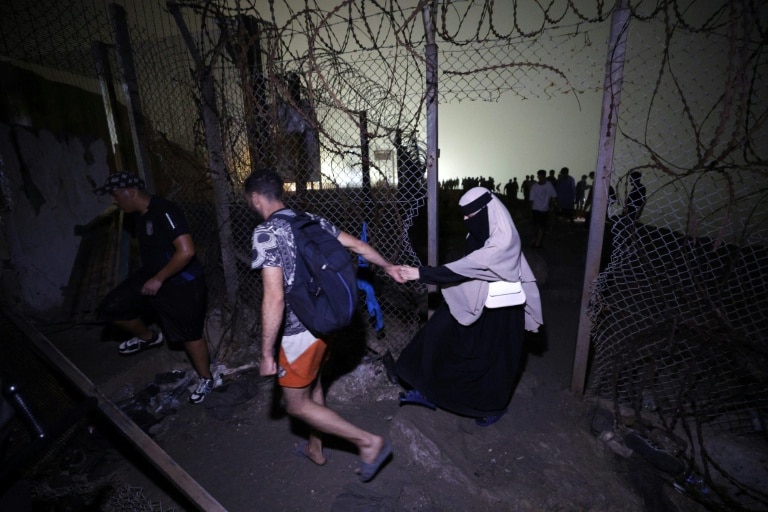
Migrants depart Spain’s N. Africa enclave as EU tightens borders
A sudden, unprecedented wave of migration into Spain’s North African territory of Ceuta has sparked political upheaval across the European Union, with most of the 60,000 new arrivals having returned to neighboring Morocco by the end of the first week of the crisis. The mass crossing, which unfolded over just a few days, has reignited long-simmering divisions over EU border policy and exposed rifts between member states over how to handle irregular migration. By Friday evening, Spanish interior ministry data confirmed that more than 48,000 migrants had already crossed back into Morocco, with remaining arrivals steadily escorted out by Spanish security forces over the following day. AFP correspondents on the ground observed Spanish soldiers and police monitoring the border crossings closely, guiding any migrants who lingered on coastal paths back across the boundary without incident. To enter Ceuta, the vast majority of migrants swam around a small, partially submerged border barrier that extends into the Mediterranean Sea. The dangerous crossing claimed at least 34 lives, according to official tallies. For many of the migrants, the journey was driven by a desperate search for opportunity or family reunion. Nineteen-year-old Senegalese migrant Souleil Boyan told AFP that his only goal was to reach mainland Europe to find work and build a stable life. “We all know that in Africa there isn’t much opportunity,” Boyan explained as he waited for processing at a Ceuta migrant center alongside dozens of other sub-Saharan African arrivals. Forty-two-year-old Moroccan migrant Soufian, who works 12-hour daily shifts as a security guard for just 10 euros ($12) a day, said he crossed to see his ill mother who lives in Madrid. “Even though there’s no food, nothing at all, I’ll endure anything to see my mother,” he said, adding that for most migrants, the draw of a better future that is unavailable in their home countries is motivation enough to attempt the dangerous crossing. Soufian added that crossing took mere minutes after he learned the border had become passable from a friend, as his coastal hometown of Martil sits less than 40 kilometers from Ceuta. The unexpected mass influx triggered immediate political panic across the EU, with several member states moving quickly to tighten their own border controls with Spain. France ramped up checks along its shared border with Spain, announcing it would increase its police and gendarme presence fivefold to 334 officers by Saturday. Italy went further, suspending its participation in the Schengen Area’s visa-free free movement agreement with Spain for a period of one month. Multiple EU governments have even floated proposals to suspend Spain’s full membership in the Schengen zone in response to the crisis, though Spanish Foreign Minister Arancha González Laya has insisted the integrity of the border-free zone remains fully guaranteed. Spanish Prime Minister Pedro Sánchez blasted what he called the “selfish” response from some EU member states in a formal letter sent to the leaders of the European Commission and European Council, and called for an emergency video summit of the bloc’s interior ministers to address the crisis. Spain had already deployed hundreds of additional troops, police officers, drones, patrol boats, and divers to the centuries-old Spanish outpost to manage the surge. In the overnight hours leading into Saturday, AFP journalists saw dozens of migrants sleeping on Ceuta’s beaches and wandering the city’s coastal streets after crossing. At the border crossing, many departing migrants bid casual “adios” to Spanish officers before crossing back into Morocco. Scattered buoys and flippers left behind by migrants who swam the border still littered the shoreline and floated in shallow water near the fence, while security personnel patrolled the fog-shrouded coastal waters in rigid inflatable boats. To prevent future unauthorized crossings, Spanish authorities have already installed a new 500-meter pneumatic barrier near the main border post to reinforce perimeter security. The root cause of the sudden mass migration surge remains unclear, as Moroccan authorities have yet to release an official statement on the event. Ceuta, which spans just 18.5 square kilometers, and the nearby Spanish enclave of Melilla make up the EU’s only two land borders with the African continent. Past mass migration surges into Ceuta have coincided with diplomatic tensions between Spain and Morocco, including a 2021 incident that saw more than 10,000 migrants cross into the enclave over just 48 hours.