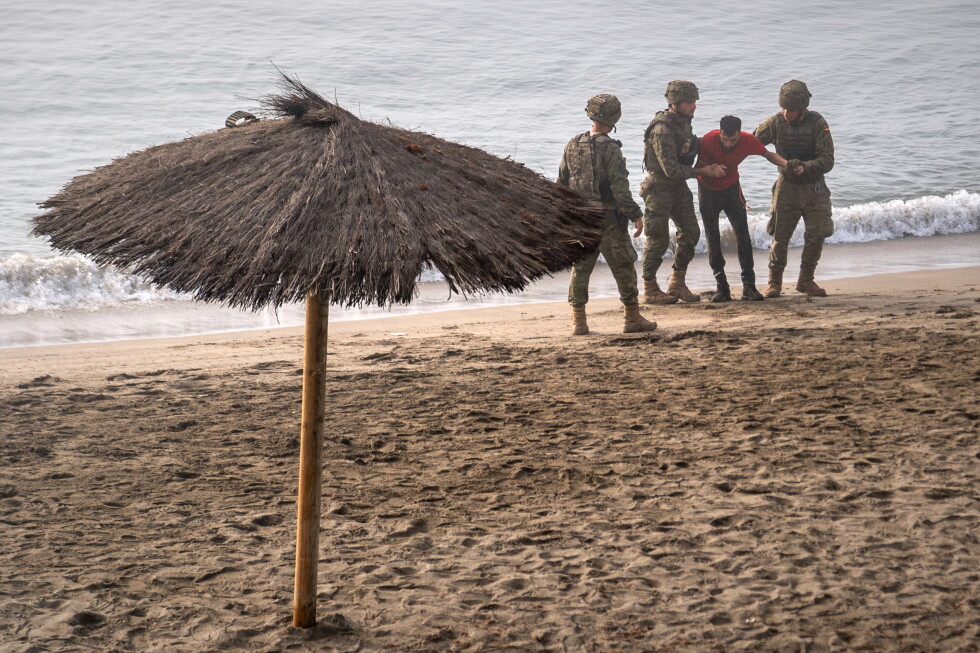
CEUTA, Spain – A devastating cross-border migration crisis between Spain and Morocco has entered a deadlier phase, with Spanish authorities confirming Saturday that the total number of fatalities has climbed to 67. The crisis unfolded earlier this week when tens of thousands of irregular migrants successfully breached the border defenses of Ceuta, a small Spanish autonomous territory located on the North African coast. In response to the unprecedented influx that has strained local resources and security capabilities, the Spanish government has announced urgent defensive measures: the construction of a new containment barrier along the breakwater fence that extends out into the adjacent sea. This barrier is designed to prevent additional unauthorized entries into the territory, as regional officials work to manage the ongoing humanitarian and security fallout from one of the most significant border events in the region in recent years.
分类: world
-
Search resumes for missing climbers after avalanche on Pakistan’s Broad Peak
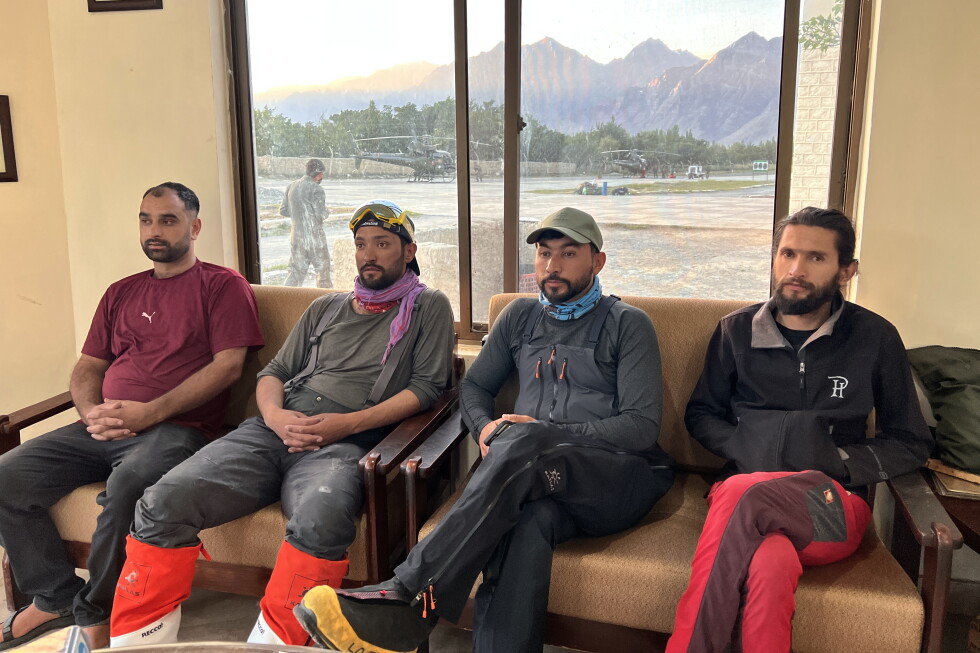
ISLAMABAD, Pakistan – Rescue teams supported by military aviation assets have restarted search operations for six missing mountaineers who were swept away in a sudden avalanche on Pakistan’s Broad Peak, officials confirmed Saturday. The recovery effort comes one day after three of the four fatalities located so far were extracted from the disaster site, deepening a tragedy that has hit the global mountaineering community.
Local law enforcement official Tahir Khan outlined the status of victim identification and transport Saturday. The remains of Omani climber Nathira Ahmed are being airlifted to Pakistan’s capital, Islamabad, for final processing and repatriation. Meanwhile, the bodies of American climber Mallory Geis and Nepalese climber Bahadur Gurung are currently held at a medical facility in Skardu, the primary urban hub for expeditions in Pakistan’s northern Gilgit-Baltistan region.
Despite the continuation of ground and air search efforts, officials have acknowledged that optimism for finding the missing climbers alive is rapidly diminishing. Karrar Haidri, vice president of the Alpine Club of Pakistan, shared that the entire 10-member expedition lost all contact with its base camp on Thursday, moments after the avalanche hit the team as they were ascending the 8,051-meter mountain, one of the world’s 14 peaks over 8,000 meters.
The full expedition roster, released by the Alpine Club, includes five Nepalese climbers, the Omani and American climbers, Pakistani climber Sohail Sakhi, a Chinese climber identified publicly only by the surname Wang, and a sixth foreign member whose identity has not yet been released to the public. The expedition was organized under the leadership of famed high-altitude mountaineer Nirmal Purja, a Nepal-born former British Army soldier known widely to the climbing community as Nims Dai. Purja earned global acclaim in 2019 when he completed ascents of all 14 of the world’s 8,000-meter peaks in a groundbreaking 189 days, a feat that was later chronicled in the popular Netflix documentary *14 Peaks: Nothing Is Impossible*. Purja’s record was ultimately broken in 2023 by another climber.
Pakistan-based adventure travel firm Moving Mountains announced the expedition’s departure in late April, sharing that the team had departed for the remote starting town of Askole and extending well wishes for a safe summit bid. According to the company’s public profile of the team, the Broad Peak attempt marked Geis’ first effort to summit an 8,000-meter peak in Pakistan. For Sakhi, the expedition was planned to be his final major climb before retirement. A veteran guide for Moving Mountains, Sakhi is also an accomplished geographer and high-altitude photographer who has already summited many of the world’s most iconic high peaks.
High-altitude climbing in northern Pakistan carries inherent and persistent risk: avalanches, falling rock and ice, extreme altitude sickness, and rapidly shifting weather patterns make accidents a regular occurrence for expedition teams operating in the region. Multiple experienced climbing teams are assisting military personnel in the ongoing search for the six missing climbers, with army helicopters conducting regular aerial scans of the avalanche path to locate any signs of the missing team members.
-
Russian attacks on Kyiv kill 9, wound more than two dozen
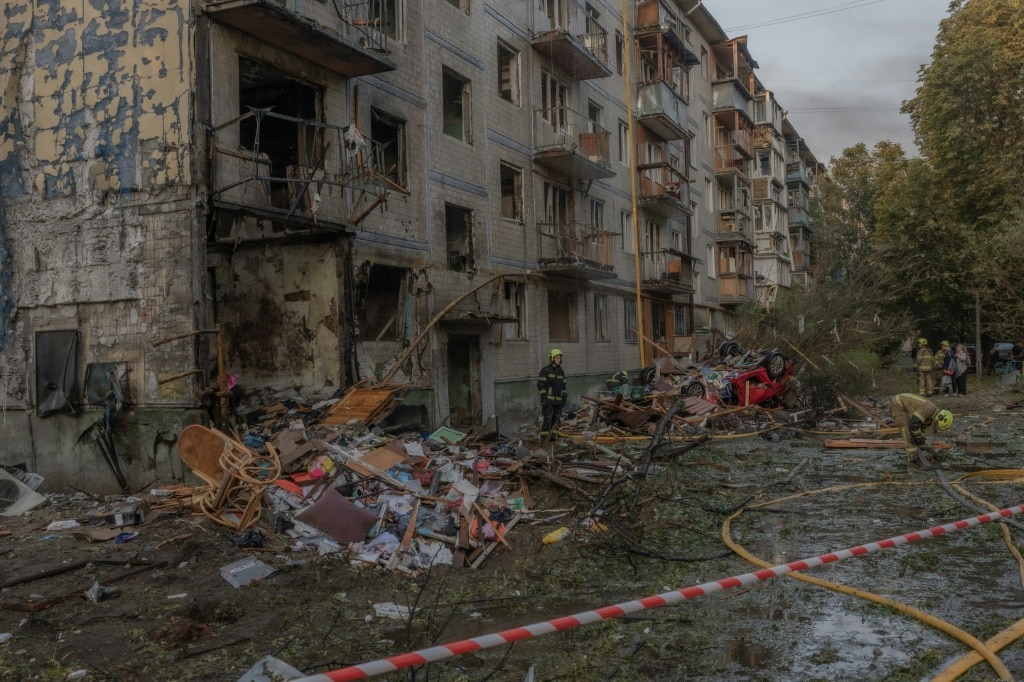
Fresh Russian ballistic missile strikes on Ukraine’s capital Kyiv have left at least nine civilians dead and 28 others injured, including four children, in one of the deadliest single attacks on the city in recent weeks, Ukrainian emergency authorities confirmed Saturday. The assault, which Russia’s defense ministry confirmed was a “massive strike” targeting military infrastructure, spread damage and chaos across five districts of Kyiv, leaving residential buildings destroyed, vehicles incinerated, and residents displaced just months into an escalating cycle of cross-border attacks that has intensified since the start of 2025.
Kyiv Mayor Vitali Klitschko issued an immediate public warning via Telegram early Saturday, writing, “Explosions in the city. Kyiv is under ballistic missile attack. Stay in shelters!” Reporters from Agence France-Presse on the ground recorded more than 10 consecutive explosions that echoed across the city, triggering blaring car alarms across residential streets and sending residents scrambling for underground safety.
The toll was heaviest in Kyiv’s Darnytsky district, where seven civilians were killed and 14 more wounded. In Solomiansky district, two additional civilians died and eight were injured after a strike directly hit a five-story residential apartment block, reducing units to rubble and blowing out windows across the entire neighborhood. Seventy-five-year-old Kateryna Kravchenko, a lifelong resident of the damaged building, described the shock of the attack to AFP. “Everything was smashed, the windows, everything,” she said. “I can barely stand. I don’t know how I’m going to get through all this.” Forty-six-year-old Oksana, another resident whose home was damaged, told reporters she planned to flee Kyiv immediately. “You can’t stay here after something like this,” she said. “What guarantee is there that it won’t happen again?”
Russian defense officials stated the strike was aimed exclusively at “military-industrial complex enterprises and logistics centers” supporting Ukraine’s war effort, but the damage overwhelmingly impacted civilian residential infrastructure. By Saturday morning, Ukraine’s State Emergency Service announced it had pulled 105 survivors from rubble and damaged buildings across the attack zones, with search and rescue operations continuing into the afternoon.
The latest assault comes amid a sharp escalation of hostilities between Moscow and Kyiv that has stretched across the past four months, after nearly four and a half years of full-scale war. As Russia has stepped up long-range missile and drone strikes across Ukrainian population centers, Ukraine has pushed its Western allies to deliver more advanced air defense systems to shield civilian infrastructure. Data from the United Nations confirms June 2025 was the deadliest month for Ukrainian civilians since April 2022, when Russian forces were pushed back from northern Ukraine early in the full-scale invasion.
Ukraine has matched Russia’s escalation with its own series of deep strikes inside Russian territory, targeting military infrastructure and key economic sites in an effort to increase pressure on Moscow to enter substantive peace negotiations. Overnight Saturday, Russia’s defense ministry claimed its air defense systems intercepted and destroyed 275 Ukrainian drones launched across multiple regions of Russia. One of the highest-profile recent Ukrainian strikes hit a logistics warehouse owned by Wildberries, Russia’s largest online retail giant, in the southern city of Volgograd, which caught fire Friday after an overnight attack. Kyiv has long accused Wildberries of storing drone components for the Russian military and supporting Moscow’s war effort, a charge the company has repeatedly denied.
The attack on Kyiv comes just days after Ukrainian President Volodymyr Zelensky held high-stakes talks with U.S. President Donald Trump in Washington. Following the meeting, Zelensky announced Trump had agreed to license domestic production of Patriot air defense missiles in Ukraine—a critical capability that would allow Kyiv to replenish its interceptor stockpiles independently. But Trump walked back that commitment Friday, telling reporters Washington would have to be “very careful” before approving the production license.
Speaking Saturday following the Kyiv strikes, Ukrainian Foreign Minister Andrii Sybiha reiterated the country’s urgent plea for additional defense support. “Russia’s attacks show that Ukraine urgently needs additional air and missile defense systems and interceptors,” he said. “It is the battle for the skies that will define the trajectory of this war. The stronger the air shield over Ukraine, the closer peace becomes.”
-
‘I just want a chance’: Moroccans sought better future in collective crossing to Spain territory
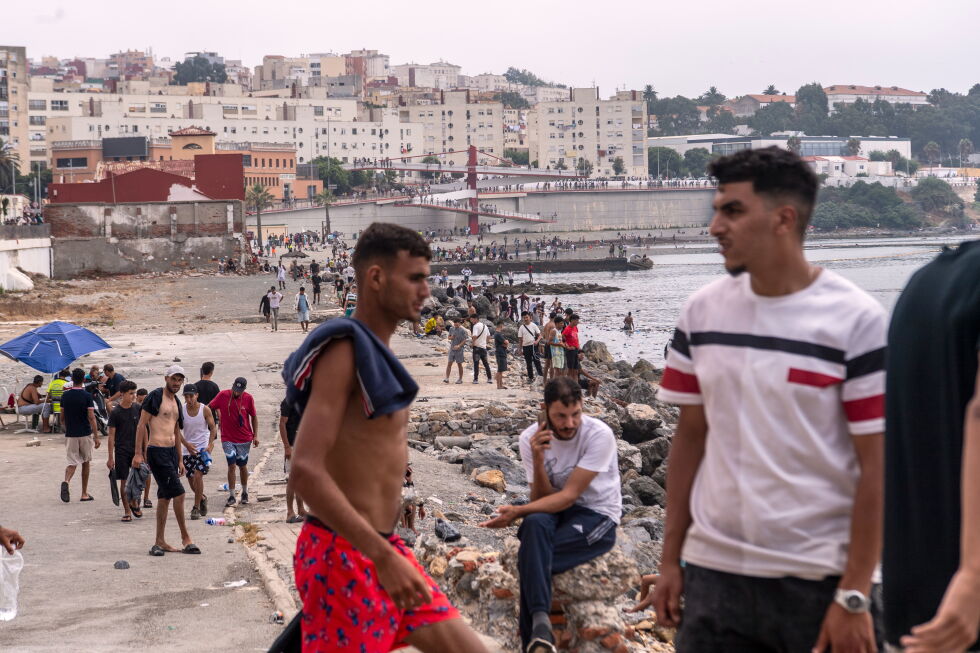
The Spanish North African enclave of Ceuta was recently overwhelmed by an unprecedented surge of migrant crossings, an event that has laid bare the deep economic desperation driving many Moroccans to risk everything for a chance at a new life in the European Union. What unfolded over 24 hours between Thursday and Friday was one of the largest mass border movements the territory has ever seen, with more than 60,000 people crossing into the small territory that is home to just around 85,000 permanent residents.
For many migrants, the journey was rooted in years of unmet hope and limited economic opportunity at home. Twenty-one-year-old aspiring teacher Abdulah Buji was among the first to rush toward the border after word spread that fence lines had been breached. Riding his motorbike from his home in northern Morocco, Buji joined thousands of other people who swam across the water into Ceuta, clinging to the belief that reaching Spanish soil would open the door to a better future than what Morocco could offer. “I am a talented boy. I just want a chance,” Buji told reporters, explaining that after 14 years of education, the only work available in his home country would force him to work 12-hour days for extremely low pay. But his optimism quickly faded once he arrived. Spanish authorities had already moved to seal off any onward travel to mainland Spain, and ordered all new arrivals to return to Morocco or face forced expulsion and detention. Having already lost all his belongings and savings during the crossing, Buji ultimately chose to head back to Morocco, disappointed that the opportunity he sought was nowhere to be found. He is far from alone: more than 50 migrants died while attempting the swim around Ceuta’s border fence during this mass crossing event.
By the end of the first full day after the surge began, roughly 45,000 of the 60,000 arrivals had returned to Moroccan territory. The remaining thousands spent the night sleeping on Ceuta’s streets, surrounded by armed Spanish police and military personnel deployed to restore order, as shocked local residents adjusted to the sudden influx that equaled 70% of the enclave’s entire population. Local officials urgently called for additional security personnel to manage the crisis, and residents expressed growing unease as thousands of mostly young migrant men wandered the streets with no clear destination. This event marks a far larger humanitarian emergency than a similar 2021 incident, when Moroccan authorities temporarily lifted border controls and allowed several thousand migrants to enter Ceuta over two days.
As word of the initial crossings spread across social media, thousands more people across Morocco headed toward the Ceuta border, crowding train stations in major cities including the capital Rabat and Casablanca, Morocco’s largest urban center. Local media footage showed Moroccan police blocking many would-be migrants from boarding trains and buses bound for the northern border region. Researchers note that the mass movement was heavily amplified by social media, where posts encouraging crossings and sharing practical tips for entering Ceuta circulated widely in the days before the surge. “It isn’t clear what triggered the influx, but social media was awash with posts encouraging Moroccans to try to enter Ceuta days before it began,” explained Myriam Cherti, a senior migration researcher at the University of Oxford’s Centre on Migration, Policy and Society. Cherti added that many of the migrants she has interviewed have attempted to cross the border dozens of times, driven not by recklessness but by deep desperation. “They’re doing it out of despair, they’re doing it because they’ve tried other ways to build a life and failed, they’re doing it because they feel the obligation that they want to help their families and support them,” she said. “And that’s possible if they make it to Spain and not necessarily possible if they stay” in Morocco.
Thirty-three-year-old Ahmed Karim, who successfully crossed into Ceuta, echoed that sentiment, noting that widespread unemployment and strict border restrictions leave most Moroccans with no legal path to travel to Europe or North America. “They don’t have the opportunity,” he said.
Not all of those who crossed into Ceuta came to stay; many arrived searching for missing loved ones who had attempted the crossing and had not been heard from. Ikrra Khai, a 33-year-old who regularly holds a temporary work permit to harvest crops on Spanish farms, was in Ceuta searching for the brother of a close friend. “I don’t know if he is dead or alive,” she said. “I have his residency card. But I don’t know where he is. I’m searching.”
The reporting for this story was led by Joseph Wilson from Barcelona, Spain, with additional contributions from Danica Kirka in London and Akram Oubachir in Fnideq, Morocco.
-
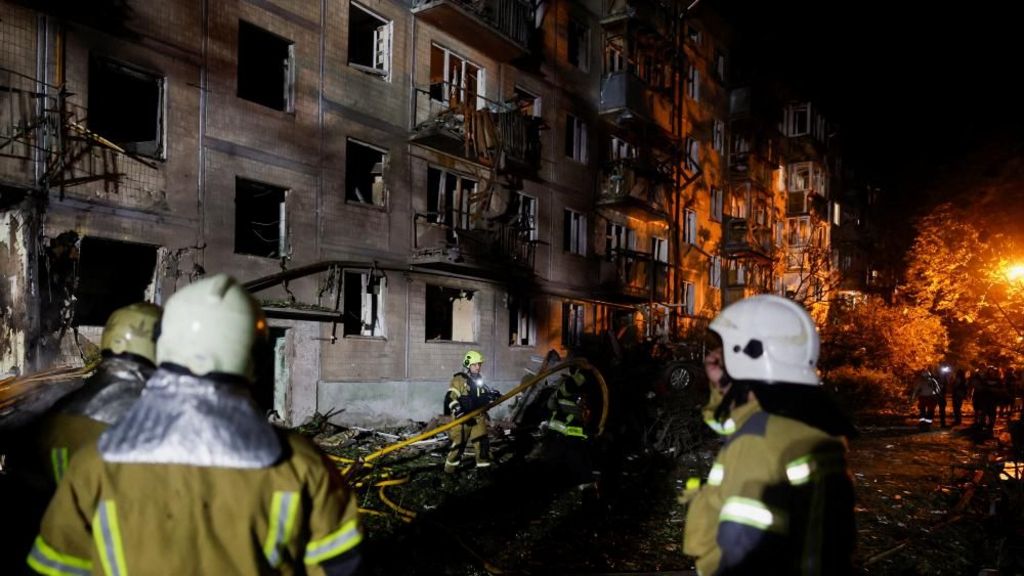
Russian strikes on Kyiv kill at least four, Ukraine officials say
Early Saturday morning, emergency response teams raced across Kyiv after a Russian ballistic missile strike tore through residential areas of the Ukrainian capital, leaving at least four people dead and 15 others injured, city officials confirmed. Among those wounded were two teenage boys, aged 13 and 17, adding a tragic personal dimension to the latest escalation of Russian airstrikes on urban centers in Ukraine. Kyiv Mayor Vitali Klitschko confirmed the casualties, while the Kyiv City Military Administration formally verified the four fatalities. According to Agence France-Presse, more than 10 separate explosions echoed across the city in the early hours of the attack. Blazes broke out at multiple locations, with local power grids knocked offline in several districts. A multi-story apartment building in Kyiv’s Shevchenkivskyi neighborhood suffered partial structural collapse, leaving an unknown number of residents trapped under rubble as firefighters worked frantically to reach them. Separately, a large commercial warehouse in the Darnytskyi district was fully engulfed in flames by the time first responders arrived.
This strike marks the latest in a sharp uptick of deadly Russian ballistic missile assaults targeting Kyiv, a surge that has pushed Ukrainian air defenses to their breaking point and left President Volodymyr Zelensky pleading for urgent supplies of air defense interceptors. The Saturday attack came just 48 hours after a suspected Russian cruise missile, fired during another nationwide wave of strikes that killed eight people across Ukraine, crashed across the border into Poland. That earlier attack on Ukraine claimed the lives of six members of a single family in a village near Kryvyi Rih, underscoring the growing civilian toll of the ongoing air campaign.
The urgency of Ukraine’s interceptor shortage comes as Zelensky met recently with U.S. President Donald Trump in Washington D.C. to lobby for a U.S. license that would allow Ukraine to manufacture its own Patriot interceptor missiles, the only weapon system currently in Ukraine’s arsenal that can successfully intercept incoming Russian ballistic missiles. During a cabinet meeting held at the Camp David presidential retreat on Friday, Trump addressed the ongoing negotiations, telling reporters that the U.S. had not yet approved Ukraine’s request to produce Patriots, though discussions remain active. “We have to be very careful about letting somebody build them,” Trump said, framing the decision to share the advanced U.S. missile technology as a high-stakes step that requires cautious consideration. Trump’s current stance marks a shift from his position just weeks earlier, when he indicated he was open to granting Ukraine the production rights.
As Russia ramps up its airstrike campaign to overwhelm Ukrainian air defenses, stockpiles of the critical Patriot interceptors have dwindled rapidly, leaving large swathes of Ukrainian territory vulnerable to attack. In recent months, Ukraine has responded with escalating retaliatory strikes targeting Russian logistics infrastructure. Recent attacks have targeted multiple retail warehouses operated by Wildberries, Russia’s largest e-commerce platform. Ukrainian officials have confirmed these strikes are intended to disrupt Russian military supply chains, noting that the logistics hubs are used to source and distribute equipment for frontline Russian troops.
-
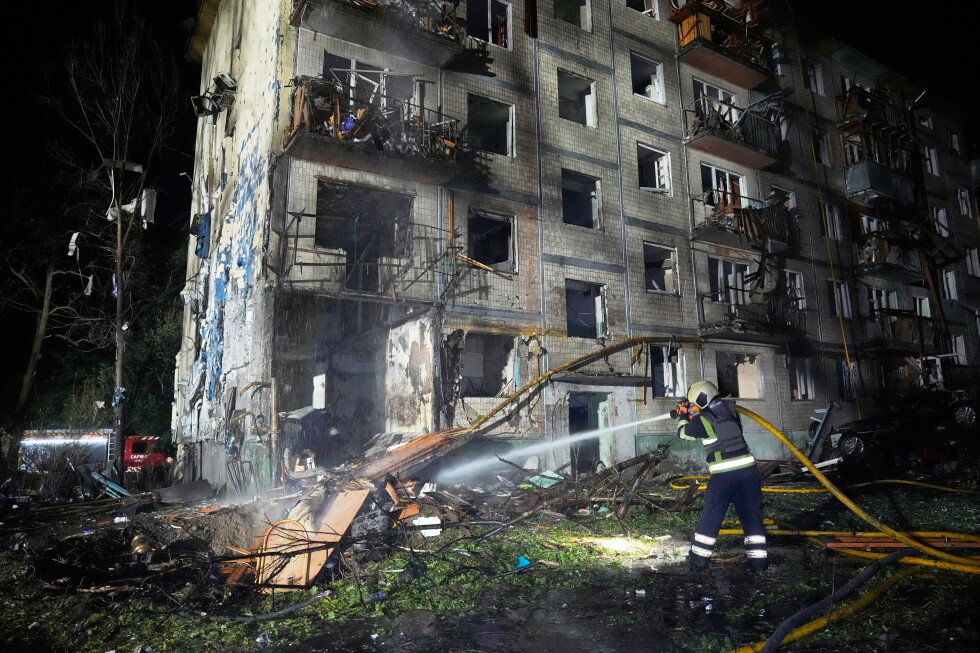
Russia hits Ukrainian capital with ballistic missiles and drones killing 3 and wounding over a dozen
A new devastating Russian assault targeting Ukraine’s capital Kyiv has left at least three civilians dead and more than a dozen wounded, marking the second large-scale attack on the country in less than 72 hours, local Ukrainian officials confirmed Saturday. The overnight barrage, which combined multiple ballistic missiles and attack drones, sowed destruction across multiple residential and industrial districts of the capital.
Kyiv Mayor Vitalii Klitschko shared details of the damage in an update posted to Telegram early Saturday. In the city’s Solomianskyi District, falling missile debris slammed into a five-story residential apartment building, sparking a blaze in the building’s courtyard and leaving an unconfirmed number of residents trapped beneath rubble. A second residential building in Kyiv’s Shevchenkivskyi District suffered partial collapse of its first and second floors, with additional people reported trapped inside, Klitschko added. In the eastern Darnytskyi district, the attack ignited large fires at multiple warehouse facilities, with emergency response teams rushing to contain the blazes as of Saturday morning.
This latest attack comes just 48 hours after a broader Russian wave of ballistic missile and drone strikes across multiple regions of Ukraine left 10 civilians dead and more than 50 others injured. That earlier assault also sparked international alarm after a stray Russian missile inadvertently crossed into NATO member Poland’s airspace before falling on Polish territory, prompting NATO to scramble response jets and ratcheting up tensions over the conflict’s potential spillover.
For weeks, Ukrainian President Volodymyr Zelenskyy has repeatedly lobbied U.S. and Western allies to deploy additional Patriot anti-ballistic missile defense systems to Ukraine, a capability Kyiv says is critical to blocking Russia’s persistent long-range attacks on civilian and infrastructure targets. In a Telegram update released late Friday, just hours before the latest assault on Kyiv, Zelenskyy reaffirmed that air defense — and specifically interceptor munitions for Patriot systems to counter Russian ballistic missiles — remains Kyiv’s top priority.
Late Friday, Zelenskyy also announced he had held a conversation with U.S. Vice President JD Vance, where the pair discussed Zelenskyy’s earlier this week meeting with U.S. President Donald Trump in Washington, which the Ukrainian leader described as “positive and productive.” The meeting came as Trump has shifted his public position on Ukrainian production of Patriot defense systems: during a NATO summit held in Ankara back in July, Trump stated the U.S. would grant Ukraine a license to produce its own Patriot systems, but during a Friday Cabinet meeting at the Camp David presidential retreat, he walked back that commitment, noting no final decision on the matter has been reached.
The latest deadly attack on Kyiv comes as the conflict enters a new phase of intensified Russian long-range airstrikes, and as Ukraine waits for clarity on future Western security support, particularly for critical air defense capabilities that Kyiv says can save thousands of civilian lives.
-

Death row inmates desperate to escape execution in Saudi Arabia call the BBC
Against a backdrop of rising execution rates for foreign nationals in Saudi Arabia, seven Ethiopian death row inmates have risked retaliation to share their harrowing stories directly with the BBC’s Tigrinya language service, smuggled out through a prison phone line to expose the harsh realities of their incarceration and flawed judicial process.
All of the men interviewed are originally from Ethiopia’s Tigray region, where a devastating two-year civil war that ended in 2022 left communities destroyed and economies shattered. Like thousands of other Tigrayans, they fled conflict and poverty, undertaking dangerous cross-border journeys through Djibouti and Yemen in search of work and safety in Saudi Arabia — only to face death sentences for drug-related charges they say they did not fully understand, and were never given a fair chance to challenge.
Habtom, a pseudonym used to protect his identity from retaliation, has spent more than three years on death row in a southern Saudi prison in Khamis Mushait. In a shaky, desperate call made over the hum of shouting cellmates, he described the constant uncertainty that haunts every inmate waiting for execution. “One prisoner cannot comfort another. We have no choice but to cry. We are waiting for our turn, even though we do not know when it will happen,” he said.
He says he was lured into carrying a package by his employers, who promised extra money on top of his low-paid goatherding job. He had no idea what the package contained; he only learned later it was khat, a mild stimulant widely consumed in the Horn of Africa, though Saudi authorities officially list the charges as hashish smuggling. Like most of the inmates interviewed, Habtom says he was denied access to a lawyer, forced to sign an Arabic-language document he could not read, and never got the chance to defend himself in court.
Rights groups say Habtom’s experience is far from unique. Data collected by Amnesty International shows a sharp, alarming rise in executions of Ethiopian nationals in Saudi Arabia: just two were executed in 2023, 35 were put to death in 2025, and 17 have already been executed in the first seven months of 2026 — five of those on a single Monday in 2026. That makes Ethiopians the nationality with the highest number of executions among non-Saudi citizens held in the kingdom.
Dana Ahmed, a researcher with Amnesty International, told the BBC two key factors are likely driving the surge. First, the end of the Tigray war pushed thousands of displaced, desperate migrants to seek refuge and work in Saudi Arabia, increasing the pool of detainees. Second, Saudi Arabia has expanded the use of the death penalty for drug-related offences in recent years. Ahmed added that systemic due process failures are baked into these cases: defendants almost never get access to legal counsel or court documents, translation services (when provided) are inadequate, and the theoretical right to appeal is effectively unobtainable without legal support, meaning death sentences are almost always automatically upheld. “There is a near-total lack of transparency throughout the entire judicial process, from sentencing to Supreme Court review and ratification by the King,” Ahmed said. “People on death row and their families are left in the dark about their fate.”
Nadia Hardman, senior adviser on refugee and migrant rights at Human Rights Watch (HRW), confirmed these accounts, telling the BBC the organization has documented mass trials with no adherence to basic due process, where detainees are sentenced en masse and then left waiting for execution with no information on when their sentence will be carried out.
Saudi authorities have not responded to specific BBC requests for comment on the allegations of unfair judicial processes. The kingdom’s official policy, outlined in public statements released after each execution, maintains all cases follow a clear, formal process: investigation, trial, appeal, Supreme Court review, and final royal decree. Statements add that the death penalty for drug offences reflects the government’s commitment to protecting Saudi citizens from the harm of drug trafficking.
Beyond the injustice of their convictions, inmates described brutal, dehumanizing conditions inside the overcrowded prison. Another inmate, identified only by the pseudonym Desta, said 200 men are crammed into a single cell built to hold just 90. During the day, inmates squeeze together on the floor in sweltering heat; at night, when temperatures drop, they use discarded rubbish bags as blankets because they are not provided with sheets. Guards only open the cell door once a day to drop off food, and inmates who ask questions face severe beatings, he said.
Desta, a former brick-maker who fled Tigray when the civil war reached his hometown, said he was also tricked into carrying a khat package by a smuggler who promised him safe passage across the border from Yemen. When police intercepted the group, the Yemeni smuggler escaped, leaving Desta and the other Ethiopians to face charges. He described the same broken judicial process: forced to sign Arabic paperwork he could not understand, no lawyer, no chance to argue his innocence, and a death sentence handed down after just two court appearances.
For these men, diplomatic intervention so far has produced little tangible change. After 17 Ethiopians were executed in April 2026, there was widespread international outcry: Ethiopia’s influential Orthodox Church Patriarch Abune Mathias called the inmates “voiceless children” living “under the shadow of death” and urged the Ethiopian government to intervene. HRW called on Saudi Arabia to suspend all executions of Ethiopian migrants immediately, and asked Ethiopia to provide urgent consular support.
The issue was raised at a high-level diplomatic meeting between Ethiopian and Saudi foreign ministry officials in Addis Ababa in May 2026, followed by a visit from Ethiopia’s ambassador to Saudi Arabia to the Khamis Mushait prison in June. But inmates told the BBC the visit was rushed, and they did not get enough time to share their cases with the envoy. Within a week of the visit, more executions were carried out. The African Union’s human rights commission has also called on Ethiopia to intervene, but the BBC has not received a response to requests for comment from Ethiopian officials in either Riyadh or Addis Ababa.
In a July 13 statement, Ethiopia’s foreign ministry said it maintains regular contact with Saudi authorities to “pursue appropriate remedies for Ethiopian citizens facing difficult circumstances,” and noted that nearly 2,000 Ethiopian detainees have benefited from royal amnesties to date — though it did not mention death penalty cases specifically.
For the dozens of Ethiopian inmates still waiting on death row, that official progress offers little comfort. Habtom has not even told his family back in Ethiopia he is sentenced to die. “I would rather they be told after I die than now,” he said. His childhood dream of finishing high school, attending college, and supporting his parents was destroyed by the Tigray war, and now he waits each day for the sound of guards opening his cell door to call his name. “We are living in deep fear and cannot even eat the food we are given,” he said. Desta, Habtom and dozens of other death row inmates are now publicly pleading for the international community to intervene to halt their executions.
-

What we know about the Pakistan avalanche and missing climbers
A devastating avalanche in Pakistan has left the mountaineering community in mourning, as rescue operations press forward to locate seven missing climbers three bodies have already been pulled from the snow and debris by emergency response teams. The disaster, which struck in one of the country’s popular high-altitude climbing regions, triggered an immediate large-scale search and recovery effort amid challenging conditions. Himalayan climbing expeditions have long carried inherent risks, but unpredictable weather patterns and shifting snowpack in recent years have amplified the danger for adventurers exploring the region’s iconic peaks. Local emergency services have been working around the clock, navigating treacherous terrain and residual avalanche risk to reach the site of the incident and locate the remaining unaccounted-for climbers. As of the latest update, no additional survivors or bodies have been extracted from the avalanche path, leaving families of the missing in a state of anxious waiting. Authorities have not yet released full details about the nationalities of the climbers or the exact location where the avalanche occurred, but confirm that search operations will continue as weather conditions allow.
-
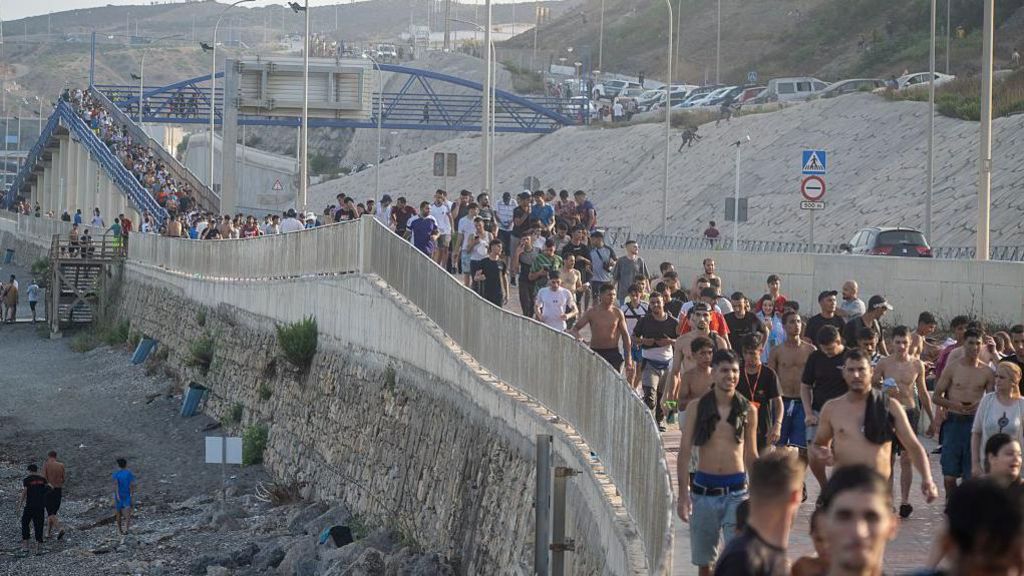
Influx of migrants to Ceuta gives Spain diplomatic headache
In the days following an unprecedented mass crossing of 60,000 migrants into the Spanish North African enclave of Ceuta, the immediate crisis has started to ease as most arrivals gradually trickle back across the border into Morocco. The surge, which saw six times more people breach Ceuta’s boundary barriers in less than 24 hours than the last major incursion in 2021, has left Spanish Prime Minister Pedro Sánchez facing intense political and diplomatic pressure, though that pressure is expected to soften as reinforced military and police deployments secure the border and authorities process and return migrants who do not qualify for the right to remain and do not leave voluntarily.
Unlike the sub-Saharan migrants who undertake dangerous cross-Sahara treks or risky sea crossings to reach Spain’s Canary Islands, most of those who crossed into Ceuta in this latest event were local Moroccan residents with no preparation for long-distance migration. At least 57 people lost their lives during the crossing attempt, with many confirmed drowned, underscoring the extreme risks migrants took to reach the EU territory.
Sánchez traveled to Ceuta within hours of the surge, accusing human traffickers of exploiting a recent Spanish Supreme Court ruling that limits the government’s authority to immediately deport newly arrived sea migrants. But observers and diplomatic analysts point to a far larger geopolitical trigger for the event: Morocco’s deliberate decision to allow its border forces to step aside and permit the mass crossing, a tactic the kingdom has used before to retaliate against Spanish diplomatic moves tied to the long-running Western Sahara dispute.
The Western Sahara conflict has shaped Maghreb diplomacy for more than 50 years, ever since Spain ceded control of Spanish Sahara to then-Moroccan King Hassan II, while Algeria threw its support behind the indigenous Polisario Front, which claims independence for the territory. The dispute has left Morocco and Algeria locked in a bitter diplomatic cold war, with a UN peacekeeping force still deployed to monitor the fragile ceasefire between Moroccan forces and Polisario guerrillas.
For decades, European governments attempted to maintain neutrality on the issue to avoid angering either Rabat or Algiers. But in 2022, Spain broke with longstanding policy to back Morocco’s plan for Western Sahara autonomy, rejecting independence for the territory—a move that infuriated Algeria. Sánchez’s recent diplomatic trip to Algiers, intended to repair strained ties with Algeria, preceded this latest migrant surge, leading analysts to connect the event to Moroccan retaliation for Spanish diplomatic outreach to its regional rival. This is not the first time Morocco has used migration pressure against Spain: the 2021 Ceuta incursion followed Spain’s decision to allow Polisario leader Brahim Ghali to receive COVID-19 treatment on Spanish soil.
Geographically, Ceuta and its sister enclave Melilla are millennia-old settlements that have been Spanish territory since the 16th century, making them the only EU territory with a direct land border on the North African coast. This unique position leaves Spain uniquely vulnerable to migration pressure leverage from Morocco.
Domestically, Sánchez has faced fierce criticism from Spain’s mainstream conservative Partido Popular and far-right Vox party over the surge. Internationally, several European governments have raised alarms, with Italy even floating the idea of suspending Spain’s Schengen Area membership. However, analysts note that concerns over unrestricted access to the rest of the Schengen zone are overblown: Spain already operates strict internal border controls for all flights and ferries traveling from Ceuta and Melilla to the Spanish mainland, limiting movement into the wider open borders area.
Beyond the immediate geopolitical context, the event has also highlighted a policy divide between Spain and much of the rest of the EU. Sánchez has pursued a notably pro-immigration agenda that stands in stark contrast to the restrictive policies adopted by most other EU member states and the UK, including launching a seasonal worker program that brings thousands of Senegalese laborers to Spain’s horticultural sector each year. The long-term political and economic sustainability of this approach remains untested, but it has already created unease among other European governments, which helps explain their sharp reaction to the Ceuta crisis, notes Chatham House Africa Programme consulting fellow Paul Melly.
-
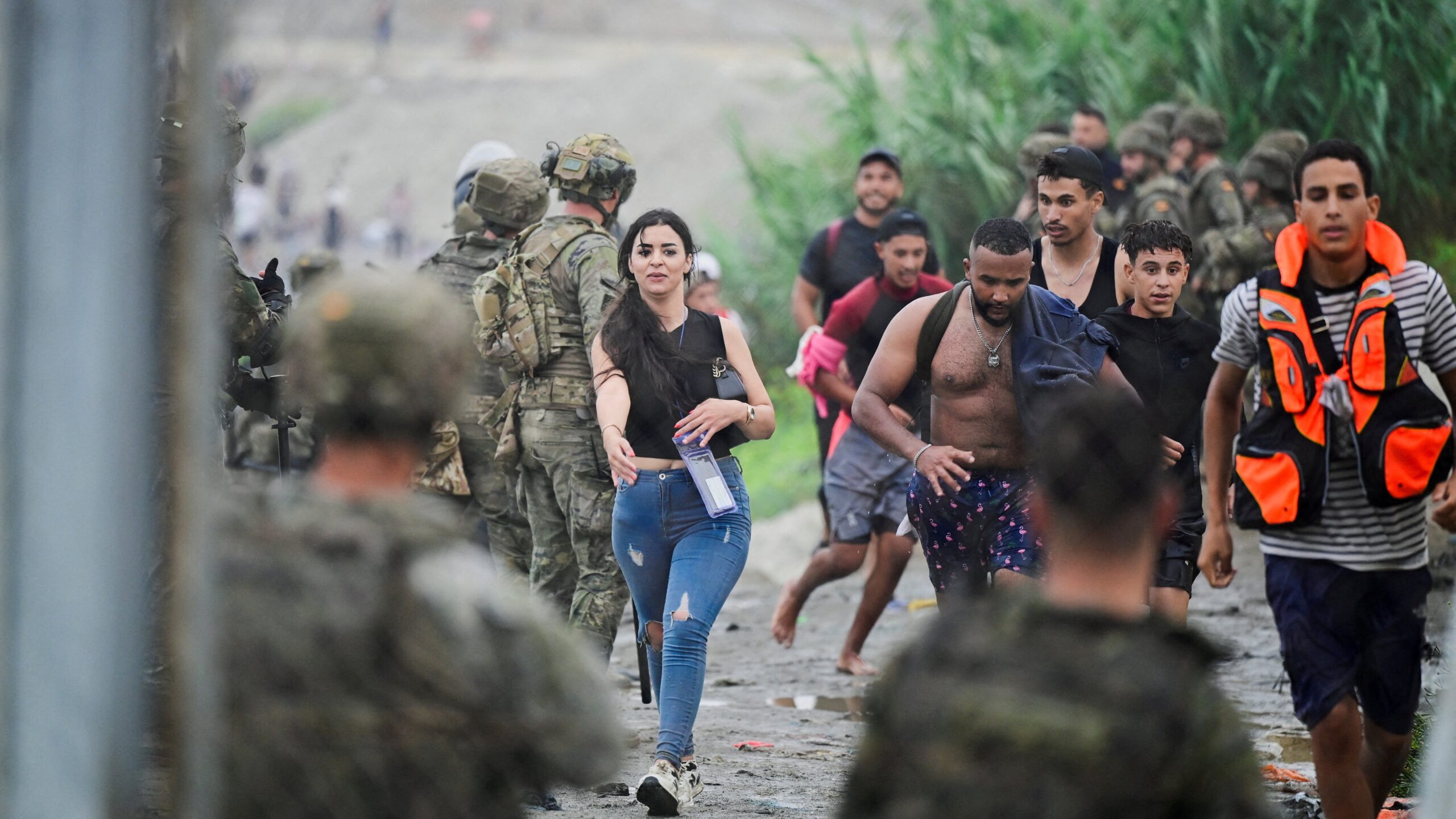
Thousands make dramatic sea crossing into Ceuta from Morocco
A sudden, unprecedented wave of mass migration has pushed Spain into urgent action to secure its North African enclave Ceuta, after tens of thousands of people crossed into the territory from Morocco in one of the largest border breaches in recent decades. Local authorities in Ceuta confirm that roughly 60,000 people successfully entered the Spanish territory, with around 8,000 of the arrivals recorded as children, according to estimates from Spain’s central government in Madrid. By Friday, Spain’s interior ministry announced that approximately 13,000 of the new arrivals had already been repatriated to Morocco.
Videos shared across social media platforms captured the risky crossing: migrants swam around the reinforced border barrier separating Ceuta from Morocco, many wearing only swimsuits and relying on simple flotation rings to complete the dangerous aquatic journey. For many who completed the crossing, the arrival brought overwhelming relief. “We’re really happy to be here,” shared Jadid Zacaria, one of the migrants who entered Ceuta. “It’s been a very tough experience to go from the ocean. The [Moroccan] police officers tried to stop us, but through our will and determination, we could [make it] here.” Many migrants were filmed chanting “viva Espana” — long live Spain — immediately after setting foot on Spanish soil.
Ceuta and the neighboring Spanish enclave of Melilla, both located on Morocco’s Mediterranean and northern coasts respectively, hold unique geographic significance: they are the only land borders connecting the European Union to the African continent. Both territories, each with a permanent population of roughly 85,000, have long faced periodic surges in attempted crossings by people seeking access to Europe and better opportunities. But the scale of this week’s influx is almost unprecedented, marking the largest single arrival of migrants in Ceuta since May 2021, when thousands crossed amid a heated diplomatic dispute between Madrid and Rabat over the contested Western Sahara territory.
The mass crossing has already sent shockwaves through the European Union, sparking division and immediate policy shifts among member states. France has announced it will ramp up security checks along its own border with Spain, while Italy has issued a formal threat to suspend Spain from the EU’s Schengen Area, the bloc’s internal open-border scheme that allows unrestricted movement between participating countries.
On the Moroccan side of the border, security forces have moved aggressively to stem the flow of new arrivals. Moroccan authorities deployed water cannon to push back crowds gathered at the Ceuta border gates, and clashes between security forces and migrants left a bus and seven cars burned in the area nearby, according to Reuters reporting.
Spanish officials have committed to expelling all migrants who entered the territory illegally as quickly as possible, even amid a legal barrier: a recent court ruling has imposed new restrictions on the special “border rejection” rules that previously allowed for immediate expulsions directly from the enclave.
Unlike most crossing attempts, which see migrants travel several kilometers along the coast to avoid heavily fortified sections of the fence, this wave of migrants faced surprisingly little resistance when approaching the border barrier. Many initially walked along the rocky sea wall to bypass the fence, while the majority swam around the barrier to reach Ceuta’s beaches on the Spanish side.
To date, no definitive explanation has emerged for what prompted this sudden, large-scale wave of attempted crossings. Spain’s Territorial Policy Minister Angel Victor Torres has suggested the surge may be linked to a recent ruling from the Spanish Supreme Court issued earlier this month, which barred authorities from summarily returning migrants intercepted at sea attempting to reach Ceuta or Melilla under the previous special border rules. Jamila El Abboudi, an activist with the Moroccan Association for Human Rights (AMDH), echoed this analysis in comments to French outlet Le Monde, noting that the court decision directly encouraged migrants to travel to Ceuta by sea.
Other political analysts have pointed to a separate diplomatic context: growing tension between Morocco and Spain following Spanish Prime Minister Pedro Sanchez’s recent visit to Algeria, Morocco’s long-standing rival and Spain’s largest natural gas supplier. The Sanchez visit was part of an effort by Madrid to de-escalate tensions that emerged after Spain backed Morocco’s 2022 autonomy plan for Western Sahara, a disputed territory claimed by the Algeria-backed pro-independence Polisario Front.
Even after the initial mass crossing, thousands of prospective migrants have gathered in the Moroccan border town of Fnideq, despite heavy reinforced security deployments that have blocked most new crossing attempts. Though the main border access points are now effectively sealed, small groups continue to move along the coastline searching for unfortified gaps in the barrier, with many already preparing to attempt the dangerous swim. “I was late,” 32-year-old Brahim, who only provided his first name, told Reuters after traveling from Tangier to attempt the crossing, only to find the border fully blocked. Among those still waiting to cross are women and children from both Morocco and multiple sub-Saharan African nations.