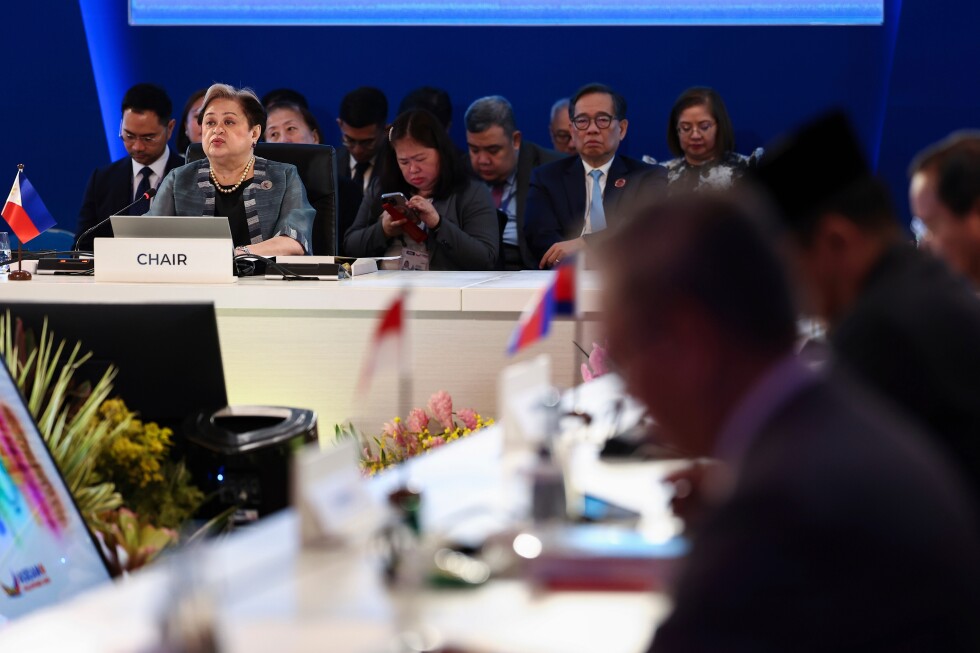
As Southeast Asian heads of state prepare to gather for their annual regional summit in Cebu, the Philippines on Friday, a leaked draft declaration obtained by the Associated Press shows the bloc is set to adopt a sweeping contingency plan that prioritizes international law, national sovereignty, and unobstructed navigation – a move widely interpreted as a quiet pushback against the escalating Middle East conflict that has sent ripple effects across the globe.
The 11-nation bloc, which admitted East Timor as its 11th full member in October 2024, will formally approve the plan during the gathering hosted by Philippine President Ferdinand Marcos Jr., this year’s ASEAN chair. Marcos has already scrapped the lavish ceremonial traditions that typically accompany the summit, a choice made to acknowledge the harsh global economic headwinds hitting regional communities.
Beyond upholding core international principles, the plan outlines concrete crisis mitigation measures to address energy shortages and other cross-border disruptions triggered by the ongoing Middle East war. The summit’s core agenda centers on three critical priorities: shoring up regional energy security, stabilizing food supply chains, and protecting the more than 1 million Southeast Asian workers and seafarers currently based in the conflict zone. Already, two Filipino workers and an uncounted number of other Southeast Asian nationals have been killed in the fighting, forcing thousands of migrant workers to evacuate back to their home countries with government assistance.
Southeast Asia, a dynamic 680 million-person region with robust economic growth, already grapples with a host of persistent security flash points: decades-old territorial disputes in the South China Sea, a five-year devastating civil war in Myanmar, and a recent deadly border clash between Thailand and Cambodia. Even so, regional leaders have singled out the Middle East conflict as an urgent outsized threat, due to its far-reaching global economic fallout and direct risk to regional citizens.
The Asian Development Bank sounded an early alarm in March, roughly one month after hostilities broke out in the Middle East, warning that prolonged disruption to regional energy supplies could curb economic growth and drive up inflation across Asia and the Pacific. The bloc relies heavily on Middle Eastern oil and gas exports to power its industrial and consumer economies, leaving it extremely vulnerable to supply chain disruptions and shipping lane blockages.
The draft declaration reaffirms ASEAN’s commitment to upholding foundational rules-based order, stating: “We emphasized the importance of upholding international law and ensuring that regional cooperation remains anchored in dialogue, trust and respect for sovereignty.” It goes on to commit the bloc to maintaining “open, transparent and predictable markets as well as secure and open sea lanes, and ensure freedom of navigation, the safe, unimpeded and continuous transit passage of vessels and aircraft in straits used for international navigation.”
All these measures are framed as a way to “preserve the unimpeded flow of essential goods, including food, energy and key inputs, in accordance with international law, particularly the 1982 United Nations Convention on the Law of the Sea,” the draft reads. ASEAN leaders will formally affirm their shared commitment to strengthening regional resilience through coordinated action.
Key actionable steps in the contingency plan include the potential ratification this year of a regional agreement enabling coordinated emergency fuel sharing, advancing development of an integrated regional power grid, diversifying crude oil import sources across the bloc, accelerating adoption of electric vehicles, and exploring new energy technologies including civilian nuclear power. The bloc is also drafting a dedicated ASEAN crisis communication and coordination protocol to ensure a cohesive, rapid, and unified regional response to future global and regional shocks.