For Russian opposition activist Vladimir Osechkin, even routine daily tasks like dropping his children at school or picking up groceries require a call to local law enforcement. Since 2022, he has lived under constant French police protection after authorities concluded the Kremlin was plotting to kill him, and new unsealed court documents obtained exclusively by the Associated Press reveal how close that plot came to execution.
In April 2025, a four-man team of Russian nationals staked out Osechkin’s home in the southwestern French seaside resort of Biarritz for hours, capturing detailed photos and video of the property as pre-operational surveillance for a planned assassination, the documents confirm. This is not an isolated incident: Osechkin recalls years earlier, a telltale red dot, consistent with a firearm’s laser sight, appeared on the interior wall of his residence, an early warning of the danger closing in.
Osechkin’s case is just one thread in a far broader pattern of targeted violence and plots stretching across the European continent. Over the past two years alone, European security officials have disrupted multiple planned attacks: Lithuanian authorities foiled two separate assassination plots last year targeting a pro-Ukraine Lithuanian citizen and a Russian opposition activist; German security services broke up two plots, one aimed at the chief executive of a German arms manufacturer supplying Kyiv and another targeting a senior Ukrainian military official; Polish authorities arrested a suspect in 2024 over a plan to assassinate Ukrainian President Volodymyr Zelenskyy during a visit to the country; and that same year, a defected Russian helicopter pilot was shot and killed in Spain, with Russian intelligence operatives identified as the prime suspects.
Three senior Western intelligence officials from separate countries confirmed to AP that what was once a sporadic program to eliminate Kremlin opponents abroad has exploded into a systematic, widely expanded campaign of targeted killings following Vladimir Putin’s full-scale invasion of Ukraine in 2022. Speaking on condition of anonymity to discuss sensitive intelligence matters, all three officials agreed that Russian security services have grown dramatically bolder in their selection of targets, expanding beyond the traditional list of defectors and double agents to include opposition activists, independent regional campaigners, and even foreign citizens who openly support Ukraine’s war effort. One senior European intelligence official stressed that the campaign is not random: “There is political authorization.”
Intelligence analysts, senior counterterrorism officials, and Lithuanian prosecutors link this stepped-up campaign to Russia’s broader asymmetric war against European nations that back Ukraine. Since the invasion began, AP has mapped more than 191 confirmed acts of sabotage, arson, and disruptive attacks across Europe that Western officials attribute to Russian actors. In most of these incidents, Russian intelligence relies on low-cost local proxies rather than deploying its own trained officers — a model Moscow has now adapted for its assassination campaign, according to court documents and official briefings.
When contacted by AP for comment on the reports, Putin’s spokesperson Dmitry Peskov declined to comment, saying he saw “no need” to address the claims. Russian officials have consistently denied any involvement in targeted killings of opponents abroad.
Digging into the details of the plot against Osechkin, court records show three of the four detained suspects traveled to Biarritz specifically to surveil the activist, with the explicit goal of killing Osechkin to intimidate all anti-Kremlin opponents residing in France. All four suspects were born in Russia’s Dagestan region; one has a long record of violent criminal convictions, while another told investigators he fled Russia after being arrested by the Federal Security Service (FSB) to avoid being forcibly conscripted and deployed to fight in Ukraine. Osechkin, who founded a prominent human rights organization focused on exposing abuse in Russia’s prison system, said threats against him escalated sharply after he expanded his work to document Russian war crimes in Ukraine and help Russian soldiers defect to avoid combat. He relocated to France in 2015 and entered police protection in 2022 after intelligence confirmed his life was in immediate danger. “If it weren’t for them, I probably would have been killed,” Osechkin told AP.
Half a continent away in Lithuania, another target, Ruslan Gabbasov, an activist campaigning for independence for Russia’s Bashkortostan region, survived a 2025 plot after a lucky discovery. Gabbasov found an Apple AirTag tracking device hidden on the undercarriage of his car in February 2025. Lithuanian police left the device in place and tracked the surveillance team back to their network. Weeks later, as Gabbasov attended a national independence day celebration with his wife and five-year-old son, police called and warned him not to return home. The next day, investigators told him a gunman had been waiting outside his residence overnight, ready to kill him on his return. Lithuanian authorities offered Gabbasov a chance to enter witness protection: to change his name, relocate, and abandon his political activism entirely. He refused, noting that he is seen as a leading voice for independence aspirations in his resource-rich home region, which has sent thousands of men to fight in Ukraine. “I can’t betray them all by simply disappearing, especially out of fear,” Gabbasov said. “If I stop my work or hide, that’s exactly what the Kremlin wants — that’s their win.”
Lithuanian pro-Ukraine activist Valdas Bartkevičius was also offered the same deal after authorities uncovered a plot to plant a bomb in his home mailbox in March 2025. He also rejected going into hiding, saying that withdrawing from public life would amount to “social death.” Bartkevičius, who has gained attention for his high-profile anti-Russia actions, including a protest at a Soviet war memorial, said he will not stop his work fundraising for Ukraine’s military.
To date, Lithuanian prosecutors have charged 13 people from at least seven countries in connection with the two plots against Gabbasov and Bartkevičius, part of a group of at least 20 suspects detained, charged, or identified across Europe in assassination-linked cases over the past 12 months. Prosecutors confirm the suspects were acting on direct orders from Russian military intelligence, and many have ties to Russian organized crime networks that have also been linked to arson and espionage plots across the European Union.
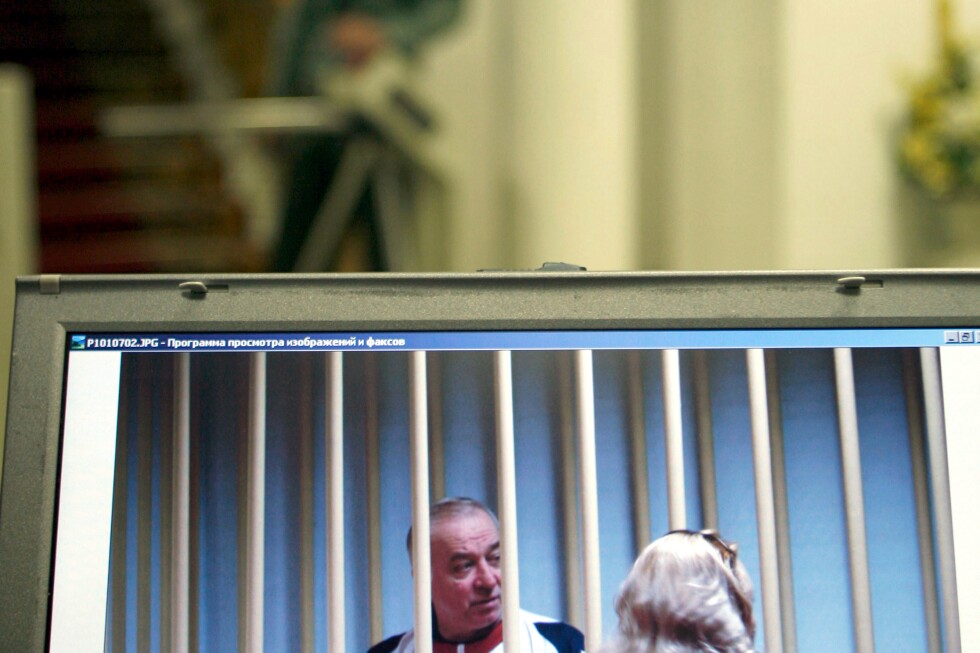
Security analysts say the shift to using proxies stems from a major change after the 2018 poisoning of former Russian spy Sergei Skripal in Salisbury, England. That attack, which the UK government proved was carried out by Russian military intelligence officers, prompted Western nations to expel more than 300 Russian diplomats, most of whom were covert intelligence officers operating under diplomatic cover. That mass expulsion made it far riskier and more difficult for Russian intelligence officers to operate openly on European territory, according to Cmdr. Dominic Murphy, former head of counterterrorism at London’s Metropolitan Police and lead investigator on the Skripal case.
While most publicly reported plots since 2022 have been foiled by European security services, one senior Western intelligence official noted that proxy operatives are generally less skilled and less resourced than trained Russian intelligence officers, which contributes to the higher rate of failed attacks. Even so, the official explained, the plots achieve key Russian goals even when they fail: they intimidate opponents into self-censorship, force European law enforcement to devote massive ongoing resources to protecting potential targets, and signal the Kremlin’s willingness to punish dissent anywhere in the world.
Pointing to the 2024 killing of defector Maxim Kuzminov in Spain, who was publicly threatened by masked Russian servicemen on state-controlled television before his death, the official said it is clear that when the Kremlin prioritizes a target, it can still carry out an assassination in Europe despite the increased security pressure. For this reason, potential targets will never be fully safe, the official warned: “Even if you thwart an operation once, you still need to be ready in case they strike again.”