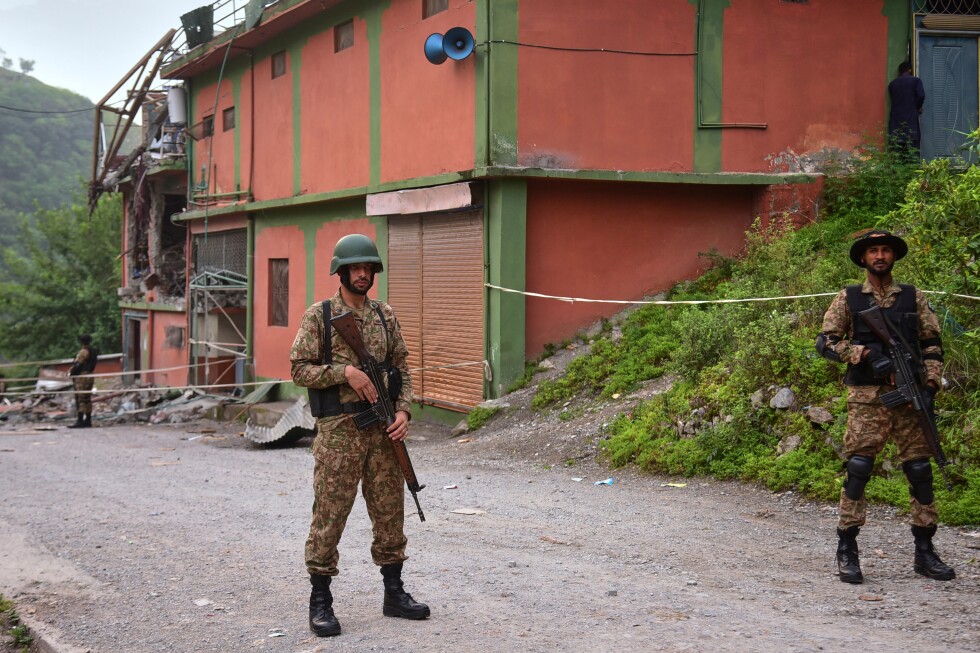
On the first anniversary of the 2025 four-day border conflict that pushed nuclear-armed neighbors Pakistan and India to the edge of full-scale war, Pakistan’s armed forces issued a stern warning Thursday: any future hostile action from India will be met with a far sharper, more precise response than it witnessed last year.
The 2025 clash, which Pakistan officially labels *Marka-e-Haq* or “Battle of Truth,” was triggered by a deadly militant attack in Pahalgam, a tourist town in India-administered Kashmir. The assault left 26 people dead, most of them Hindu visitors. New Delhi immediately placed blame on Pakistan-backed militant groups, an accusation Islamabad has repeatedly rejected while calling for an independent international probe into the incident. Speaking at a joint televised press briefing featuring senior leaders from all three branches of Pakistan’s military, army spokesperson Lieutenant General Ahmad Sharif Chaudhry pointed out that one year after the Pahalgam attack, the key questions Pakistan raised about the incident still have not been addressed. He added that India rushed to assign blame to Pakistan within minutes of the shooting, without presenting any concrete evidence to back up its claim.
In the days following the attack, India launched cross-border strikes into Pakistani territory on May 7, 2025. Pakistan responded with coordinated retaliatory action, including drone incursions, missile barrages, and artillery exchanges across the disputed Kashmir border. Dozens of civilians and military personnel were killed on both sides before a US-brokered ceasefire took effect on May 10, halting the escalation that had raised global fears of a full conflict between the two nuclear-armed states. US President Donald Trump has repeatedly claimed credit for negotiating the truce that prevented a wider war.
Since the ceasefire, conflicting accounts have emerged over the scale of losses during the clash. Pakistan initially said its forces downed at least seven Indian military aircraft, including a French-built Rafale fighter jet. On Thursday, Air Vice Marshal Tariq Ghazi, Pakistan’s Deputy Chief of Air Staff (Projects), updated that figure to eight downed Indian fighter jets. Ghazi emphasized that Pakistan deliberately exercised restraint during the conflict, even though its air force held the capability to inflict far more severe damage on Indian targets. India has acknowledged unspecified military losses but has never released an official detailed account.
Senior military leaders also outlined new details of Pakistani operations across multiple domains during the 2025 conflict. Rear Admiral Shifaat Ali, Deputy Chief of the Pakistan Naval Staff, said the Indian Navy attempted to deploy warships in the northern Arabian Sea during the fighting to target Pakistani naval infrastructure and disrupt key maritime trade routes passing through Pakistani waters. “But due to the effective strategy of the Pakistan Navy, maritime traffic in all our waterways remained uninterrupted,” Ali stated.
Chaudhry made clear that while Pakistan does not seek out conflict or full-scale war with India, it is fully prepared to defend its territorial integrity against any future aggression. “We do not underestimate India’s military capability, but we are fully prepared to respond to any misadventure,” he said. “We are prepared; if anyone wishes to test us, they are more than welcome.” He added, “We are not seeking conflict, we are not seeking war. But we know how to defend ourselves with honor and dignity.”
The anniversary statement comes amid decades of strained relations between India and Pakistan. The two South Asian nations have fought three full wars since gaining independence from British rule in 1947, and two of those conflicts were fought over the disputed Himalayan region of Kashmir, which both countries claim in its entirety.