分类: world

  • World Central Kitchen halves Gaza meal aid as Iran war drives up costs

    World Central Kitchen halves Gaza meal aid as Iran war drives up costs

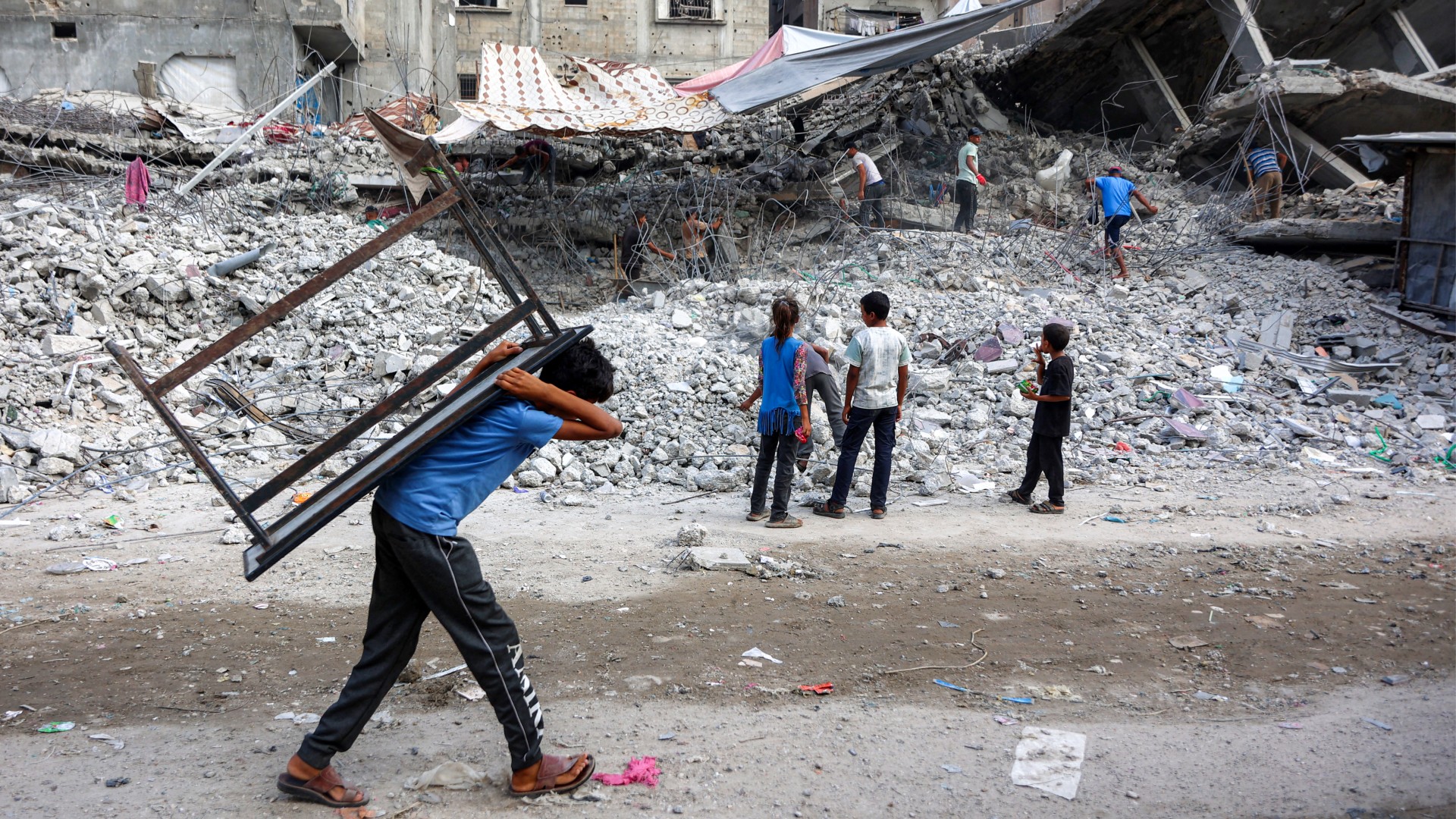
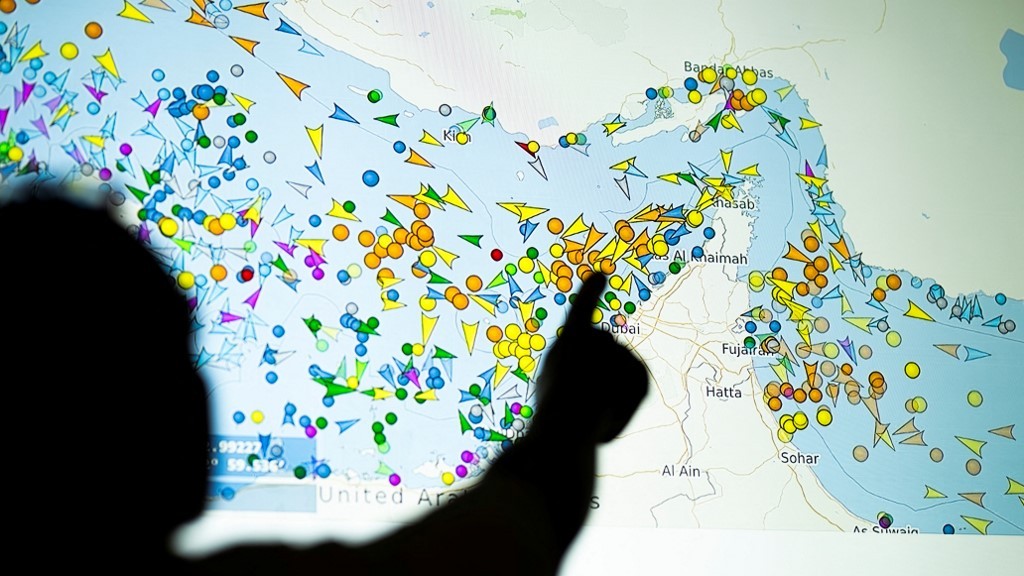
    The largest hot meal provider in the besieged Palestinian enclave of Gaza, World Central Kitchen (WCK), has been forced to slash its daily hot meal distribution by 50 percent, a decision driven by skyrocketing food and fuel prices that stem from regional spillover effects of the US-Israeli military campaign against Iran launched in February. The non-profit made the announcement this week, with NPR first reporting the development Thursday, and warned that ballooning operational expenses have eliminated any possibility of sustaining the organization’s previous high levels of humanitarian aid.

    Prior to the cut, WCK was producing roughly 1 million hot meals daily for hungry Gaza residents. That number has now dropped to 500,000 meals per day. The scaling back of aid comes at a moment when nearly the entire population of Gaza is already dependent on external humanitarian assistance, after more than two years of Israeli military attacks and a crippling air, land and sea blockade that have completely destroyed the enclave’s local food production systems and collapsed its already fragile economy. This is not the first sign of strain for the organization: earlier this month, WCK publicly noted that growing financial pressure was already pushing it to reduce the scope of its operations.

    In an official statement, the organization clarified that it would continue to deliver hundreds of thousands of hot meals each day to vulnerable families across Gaza, and maintain one of the largest food relief operations currently active anywhere in the world. But the group emphasized that its 1 million daily meal peak, reached at the height of emergency response efforts, was never a sustainable output for the organization to maintain long term.

    “Our core mission is emergency food relief, not solving long-term food insecurity for an entire besieged population,” the statement read. “The long-term responsibility of feeding Gaza cannot rest on the shoulders of one organization alone. The people of Gaza have lost their homes, their livelihoods, and their entire economy. The world must step up – not just issue empty statements about the plight of the Palestinian people. Governments, global institutions, and international partners need to commit the sustained, reliable funding that this catastrophic crisis demands.”

    To date, it remains uncertain whether other aid groups operating in the enclave will be able to cover the gap left by WCK’s cuts. The United Nations has already issued repeated warnings that its own agencies working in Gaza are also grappling with severe funding shortfalls and rising operational costs, even as data shows one in every five people in Gaza currently survives on just a single meal per day.

    Since Israel launched its large-scale military campaign in October 2023, Gaza has been pushed into a state of extreme food insecurity and full-blown humanitarian catastrophe. A US-brokered ceasefire announced in October 2025 was meant to halt active hostilities, lift the years-long blockade, and allow unimpeded flows of aid, food, and life-saving medicine into the territory. To date, however, Israel has systematically violated the terms of the ceasefire agreement, largely maintained the blockade, and kept critical supplies of fuel, food, and medicine at severely depleted levels. Active military operations including air strikes and artillery shelling have also continued across the enclave: more than 800 Palestinians have been killed since the ceasefire was announced, bringing the total death toll from Israeli operations since October 2023 to more than 72,700, with over 172,000 more people wounded, many of whom lack access to adequate medical care.

  • ‘No Eid’ in Gaza for third year as livestock crisis erases holiday rituals

    ‘No Eid’ in Gaza for third year as livestock crisis erases holiday rituals

    For generations, the weeks leading up to Eid al-Adha in Gaza have been defined by the bustle of livestock markets, where breeders showcase healthy herds for families preparing to fulfill one of Islam’s most sacred religious obligations. This year, that familiar rhythm is gone entirely – reduced to a distant memory by the ongoing destruction of Gaza’s agricultural sector under Israeli military operations and a crippling, long-running blockade.

    Mazen al-Jerjawi, once one of Gaza City’s most prominent commercial livestock breeders, now operates a small café, scraping by on sales of frozen meat that trickles into the besieged enclave under strict Israeli entry limits. Where he once sold upwards of 200 head of cattle and sheep ahead of each Eid, his pastures and barns now sit empty. “No live animals are being allowed into Gaza at all,” he explained in an interview with Middle East Eye. “Israel treats the people of Gaza as if they are living here temporarily, and what is allowed is merely to ‘keep things going’ at a minimal level.”

    Eid al-Adha, one of Islam’s holiest annual celebrations, centers on the ritual sacrifice of an animal for Muslims who can afford the practice, with the meat distributed equally among family members, neighbors, and low-income community members. Before the outbreak of full-scale war in October 2023, Gaza typically imported 40,000 to 60,000 sheep and calves annually in advance of the holiday to meet consumer demand. 2025 marks the third consecutive year that Gazan Palestinians have been barred from observing this central tradition, as Israeli military actions and the ongoing blockade continue to dismantle the enclave’s basic infrastructure and economy.

    Official data from Gaza’s Chamber of Commerce and Industry confirms that more than 90 percent of the enclave’s entire livestock sector has been destroyed or rendered inoperable since the war began, a toll that has rippled across every layer of Gazan society. Along with the annihilation of local herds, Israel’s total ban on live animal imports has snapped already fragile supply chains, pushing what remains of the industry to the brink of total collapse.

    The impact on pricing has been catastrophic. Before the war, a single sacrificial sheep cost between $500 and $600. Today, the handful of surviving private animals that reach the market can fetch as much as $7,000 – a sum out of reach for nearly all Gazan families grappling with widespread unemployment and runaway inflation. Jerjawi says he has ceased selling livestock entirely, and often advises Palestinians living abroad who reach out to buy a sacrifice for relatives in Gaza to reconsider. “I tell them it’s better to buy 50 kilograms of frozen meat instead of spending all that money on one sheep,” he said. “The 20,000 shekels [$7,000] for a sheep could even help pay for a couple to get married.”

    The destruction of herds has come on multiple fronts: many animals were killed directly in Israeli airstrikes, while repeated forced displacement left breeders with no option but to abandon or hastily offload their animals. “Many of my sheep died after a nearby house was bombed,” Jerjawi recalled. “This was the case for most livestock owners; we lost them because of the strikes.” When evacuation orders forced him to flee his home, he was forced to slaughter or sell his remaining flock for a fraction of their value just to afford basic food for his own family. “We did everything we could to keep the animals alive, even feeding them pasta and whatever we could find,” he said. “In the end, how can someone care for livestock while trying to protect your wife and children?”

    Figures from the United Nations Food and Agriculture Organization (FAO) underscore the scale of the loss: by November 2024, at least 80 percent of Gaza’s sheep and 70 percent of its goats had been killed during the war. Gaza’s Ministry of Agriculture reports that the total population of sheep and goats in the enclave has plummeted from roughly 60,000 before the war to just 3,000 today, while cattle and calves have almost entirely disappeared. Most of the surviving animals are held by nomadic herders and are not available for commercial sale during the Eid season, according to ministry spokesperson Raafat Assaliya.

    The crisis extends far beyond the loss of animals themselves: nearly all of Gaza’s livestock-related infrastructure – from barns and grazing lands to feed warehouses and veterinary clinics – has been damaged or destroyed in repeated airstrikes. Compounding this, the inability to operate water wells has eliminated any realistic path for the sector to recover, even in the short term. “This has prevented thousands of families from carrying out the Eid sacrifice, in an unprecedented situation,” Assaliya said.

    For Gazan residents, the loss of the sacrificial tradition has transformed the holiday into a muted, unrecognizable event stripped of its core meaning. Muhammed Aburiyala, a Gaza City schoolteacher who has participated in the annual sacrifice for most of his life, says it has been three years since his community experienced a true Eid celebration. “The ritual itself, and the feeling of sharing it with others, has disappeared. Without sacrifices and the ability to share, there is no Eid,” he said.

    The absence of available livestock is just one layer of a far broader food security crisis that has left most of Gaza’s population struggling to access enough food for daily survival. Even frozen meat is out of reach for many: “Many can barely secure daily meals, and some have not eaten frozen meat for more than a year,” Aburiyala said. “What enters Gaza is limited and depends entirely on the status of the crossings, which means prices remain extremely high.”

    A 2025 assessment from the UN-backed Integrated Food Security Phase Classification (IPC) estimates that roughly 1.6 million people – 77 percent of Gaza’s total population – are currently facing acute food insecurity. The crisis has been exacerbated by erratic and restrictive Israeli policies on humanitarian aid and commercial imports, even during ceasefire periods, with repeated border closures that leave basic goods regularly disappearing from market shelves.

    Aburiyala argues that the blockade on livestock is a deliberate effort to dismantle Gaza’s local economy and prevent the enclave from achieving self-sufficiency. “If livestock were allowed into Gaza, it would sustain many professions – veterinarians, livestock breeders, farmers who rely on manure, butchers and restaurant owners,” he said. “This is not what Israel wants. They want to paralyze society and prevent it from becoming self-sufficient.”

    Reporting for this article was published by Middle East Eye, an independent outlet covering the Middle East and North Africa region.

  • Dread and denial at heart of deadly DR Congo Ebola outbreak

    Dread and denial at heart of deadly DR Congo Ebola outbreak

    Deep in the mineral-rich hills of Ituri province in eastern Democratic Republic of the Congo, the town of Mongbwalu sits at the epicenter of a devastating Ebola outbreak that has already crossed international borders and triggered a global public health emergency. For many residents here, fear of the deadly virus is tangled up in decades of deep-seated distrust of the distant, corruption-plagued central government in Kinshasa, leaving communities split between open denial of the disease’s existence and angry criticism of an inadequate official response.

    Unlike many of her neighbors, 26-year-old Laureine Sakiya does not doubt Ebola is real—she has watched the virus kill people living near her home. Located just 100 kilometers from the Ugandan border and 200 kilometers from the unstable South Sudanese frontier, Mongbwalu is a bustling transit hub for gold miners, itinerant street vendors, and motorbike travelers navigating the region’s rutted, muddy roads, making disease surveillance and containment far more challenging.

    Within weeks of the first recorded case, the outbreak has spread to multiple neighboring provinces and reached Ugandan territory, prompting the World Health Organization to declare the epidemic a Public Health Emergency of International Concern. Official data counts 322 suspected infections in Mongbwalu alone, with 86 confirmed deaths, and a national toll of more than 200 fatalities across the DRC’s 17th recorded Ebola outbreak. A critical gap in response remains: there are currently no approved vaccines or targeted treatments for the Bundibugyo strain of Ebola driving this current epidemic, leaving medics scrambling to contain transmission with limited tools.

    At Mongbwalu’s modest local hospital, tucked into a hillside surrounded by tall grass and trees, healthcare workers in full head-to-toe hazard suits, goggles and face masks scrub down floors and walls with chlorine solution, the only standard decontamination measure available. Even basic infection control infrastructure is lacking: workers rely on plastic buckets for handwashing, a stark indicator of how under-resourced the response remains. Medical humanitarian organization Doctors Without Borders (MSF) has stepped in to provide isolation tents for suspected cases, alongside local aid groups operating on the ground.

    “This epidemic is out of the ordinary,” explained Florent Uzzeni, MSF’s coordinator based in the regional capital of Bunia. Uzzeni warned that official caseload and death tolls are almost certainly significant undercounts, as testing capacity across the outbreak zone remains extremely limited.

    Previous Ebola outbreaks in the DRC’s remote regions have been fueled by community resistance, and this event is no exception. Many locals reject the existence of Ebola entirely, with some framing the outbreak as a “mystical malady” rooted in local spiritual beliefs. Early on, the spread was worsened by a misinformation chain that became known locally as the “coffin affair.”

    The first suspected case emerged in Bunia, Ituri’s provincial capital. After the patient died, his family transported his body 80 kilometers back to Mongbwalu for burial. The region’s notoriously rough, potholed roads damaged the casket during the trip, exposing the Ebola-contaminated corpse to the people transporting it. Initial tests conducted at a provincial laboratory failed to confirm Ebola as the cause of death, allowing the virus to spread silently through the community while panic grew unchecked. It was only when samples were flown 1,800 kilometers to the national biomedical research laboratory in Kinshasa that the outbreak was officially confirmed—by which point transmission was already widespread.

    Even traditional leaders and faith healers, who hold enormous sway in remote communities like Mongbwalu, have grown alarmed by the level of denial. “I worry about those who say that this disease is invented,” said Adam Hussein, 35, a representative for local traditional faith healers, who has urged all residents to follow public health precautions to slow transmission.

    As the outbreak continues to expand across borders, public health officials warn that deep community distrust and systemic gaps in the government’s response capacity could turn this into one of the worst Ebola outbreaks in recorded history.

  • Guide Kenton Cool scales Everest for the 20th time and says not ready to quit yet

    Guide Kenton Cool scales Everest for the 20th time and says not ready to quit yet

    Nestled in the Himalayas between Nepal and the Tibetan Autonomous Region of China, the 8,849-meter summit of Mount Everest has long stood as the ultimate pinnacle for mountaineers around the globe. This week, one of the climbing world’s most decorated guides added another chapter to his legendary career on the world’s highest peak.

    Kenton Cool, a 52-year-old mountaineer hailing from southwest England, has successfully reached Everest’s summit for the 20th time, breaking his own existing record for the highest number of ascents by a non-Sherpa guide. Contrary to his 2023 announcement that he would retire from major Everest expeditions after one more climb to focus on smaller peaks, the veteran climber now says he has no plans to step away from the mountain any time soon.

    After flying back to Nepal’s capital Kathmandu following his successful summit push on Sunday, Cool told reporters he is already planning future ascents. “Maybe another two or three more times,” he said of his expected future trips to the peak.

    Cool’s 20th ascent came amid a chaotic 2024 spring climbing season on Nepal’s southern Everest route, marked by unexpected delays and historic crowds. A unstable, dangerously positioned serac along the standard climbing path forced expedition teams to hold their summit pushes for days, leaving only a narrow window of favorable weather for all permitted climbers to attempt the peak. When the window opened, the sector saw unprecedented traffic: on Wednesday alone, 274 climbers successfully summited via the southern route, setting a new single-day record for the Nepali side of the mountain. China closed its northern Everest route for 2024, leaving the southern Nepali path as the only accessible route for climbers this year, amplifying congestion on the mountain.

    Despite the reported overcrowding, Cool said his team encountered no major issues during their attempt, which he completed on Friday. “We had no issues. We had no crowds, we had a great summit,” he noted.

    This year’s surge in summits has reignited long-running debates over crowd management and regulation on Everest. Fellow record-holding Everest veteran Kami Rita Sherpa, a Nepali Sherpa guide who holds the all-time record for most Everest ascents, has called for official caps on the number of annual climbing permits, warning that overcrowding creates unnecessary safety risks for everyone on the mountain. Nepali authorities issued 494 individual climbing permits for this season, with each permitted climber accompanied by one Sherpa guide resulting in nearly 1,000 people attempting the peak from the southern side.

    Cool, however, pushed back on calls for hard permit limits, arguing that the solution lies not in restricting overall numbers but in enforcing higher standards for climber experience. Currently, Nepal’s only core requirement for obtaining an Everest permit is payment of the $15,000 permit fee, with no mandatory check of a climber’s prior high-altitude experience. While Nepali officials have discussed introducing new regulations that would require climbers to demonstrate proven high-altitude mountaineering experience before gaining a permit, those rules have not yet taken effect.

    Cool argued that permit caps are unnecessary, and that climbing companies should take more responsibility to vet the experience of the clients they accept, while adjusting summit push timing to spread out traffic more effectively. “It is the various companies being a little more diligent on who they take, so they are making sure there is the experience of the climbers and then just being a little more careful with when they want to climb,” he explained.

  • The shrinking snowfall on Greece’s mountains is provoking anxiety and altering the economy

    The shrinking snowfall on Greece’s mountains is provoking anxiety and altering the economy

    Nestled beneath Greece’s iconic Mount Parnassos, the mountain village of Arachova has long held a reputation as one of the country’s most beloved winter destinations, drawing skiers and winter holidaymakers from across the nation. For local residents who grew up here, the dramatic shift in regional snow patterns over recent decades is impossible to ignore.

    Giannis Stathas, now mayor of Arachova and its surrounding communities, recalls frequent winter snowstorms that trapped entire neighborhoods indoors for days at a time during his childhood. “We couldn’t go to school because of the snow,” Stathas says of those mid-20th century winters, noting that families would often remain stuck in their homes for 48 hours or more, unable to venture outside. Today, those extended deep snow events are a thing of the past. Stathas points out that the consistent snowfall that once dusted lower elevations of just 300 meters (984 feet) above sea level now only occurs 2,100 meters higher up, near Mount Parnassos’ 2,400-meter (7,874-foot) peak.

    Stathas’ on-the-ground observations are now backed by rigorous new research from the University of Cambridge’s Scott Polar Research Institute. The study, which analyzed 10 mountain ranges across mainland Greece, confirms that snow cover in the region is declining at an alarming rate. Lead researcher Konstantis Alexopoulos, a snow hydrologist affiliated with Cambridge, the National Observatory of Athens, and the Hellenic Mountain Observatory, reports that more than 50% of Greece’s total mountain snow cover has vanished since the mid-1980s.

    To build this comprehensive long-term dataset, the research team leveraged 40 years of satellite imagery collected by NASA and the European Space Agency. Machine learning techniques were used to fill gaps in the data caused by cloud cover and infrequent satellite passes, allowing the team to produce one of the most complete analyses of Greek snow cover ever conducted.

    The rapid loss of snow is far more than a shift in local weather — it poses a major threat to Greece’s water security, researchers emphasize. Alexopoulos compares mountain snowpack to a natural, interest-bearing savings account for fresh water. Unlike rain, which rapidly drains into rivers and the ocean immediately after falling, snow is stored gradually in mountain peaks, melting slowly throughout the warm, dry summer months when water is most needed for human consumption, agriculture, and ecosystems. This seasonal release is especially critical in the Mediterranean basin, where summer rainfall is extremely limited. According to Alexopoulos, rising global temperatures driven by greenhouse gas emissions are the primary driver of the snow loss, affecting both total annual snowfall and how long snow remains on mountain slopes after storms.

    “The snow cover decline that we’re observing on the Greek mountains is not connected to the natural climate variability that does exist,” Alexopoulos explains. “The current rate of climate change globally and specifically in hotspots like the Mediterranean is much faster than what the earth has experienced previously.”

    The research team expected to record some snow loss, but were caught off guard by the sheer scale of the decline. Even major mountain systems like the Andes and Himalayas, which have also seen steep snow cover reduction in recent decades, have not experienced losses at the same rapid rate seen in Greece. Prior to this study, long-term analysis of Greek mountain snow patterns was rare: mountain environments are inherently difficult to study due to limited access, making it challenging to install and maintain long-term weather monitoring stations. For many years, the role of snow in supporting Greece’s water supply was also underappreciated by local researchers and policymakers, Alexopoulos notes. Today, as droughts become increasingly common across the country, understanding this vital water resource has become a pressing priority. While Mount Parnassos itself was not included in the 10-mountain study, Alexopoulos notes its conditions mirror those recorded across the rest of the country.

    In Arachova, the impacts of declining snow are already being felt by local residents and business owners. The entire village relies on snowmelt for 100% of its drinking and household water supply, says Aktida Koritou, a local restaurant owner who has lived in the area since the Mount Parnassos ski center opened in the early 1980s. Locals have grown far more conscious of water scarcity in recent years, taking extra steps to avoid waste, especially during the peak summer months when shortages are most severe.

    Mayor Stathas confirms that Arachova’s natural springs are drying up, and regional reservoirs are no longer refilling to their historic levels. The most critical water shortages run from late August through early October, he says. A surprise April snowfall last year was a welcome boost for the region, but did little to refill empty reservoirs. Regional authorities are already working to adapt to the new normal: the municipality is exploring construction of small retention dams to capture more melting snow, while the local ski center has implemented new snow retention measures to extend the lifespan of natural snow on slopes.

    Beyond water scarcity, reduced snow cover has also increased the risk of catastrophic wildfires. Drier vegetation across mountain slopes has turned once fire-resistant fir forests into tinder. Stathas notes that large mountain fires were virtually unheard of in the region 30 to 40 years ago, but today the risk of widespread burning is a constant concern during the dry season.

    The decline of consistent early-winter snow has also hit Arachova’s core economy: winter ski tourism. When the ski center first opened, the season traditionally launched in December, drawing crowds of holidaymakers over the Christmas period. Today, the season does not start until January. Without reliable snow in December, travelers are choosing to head to alpine resorts in Switzerland and other destinations with guaranteed snow, cutting into local business revenue. Koritou says her own restaurant saw a 30% drop in customers over the 2025 Christmas holiday compared to historic levels.

    To offset these losses, the municipality is working to diversify Arachova’s tourism economy, rebranding the cool mountain village as a summer getaway. Visitors can enjoy swimming in nearby lower-elevation lakes and beaches, then retreat to Arachova’s cool mountain air in just 20 minutes’ travel, Stathas explains. But even this summer tourism strategy depends on consistent access to water, a resource that is growing increasingly scarce.

    For long-time local residents, the loss of snow is not just an economic and environmental challenge — it is a cultural shift. Koritou recalls how farmers would rush to harvest grapes in late October before the first heavy snowfall, how every household kept a shovel behind their front door, and how entire neighborhoods would come together to clear blocked roads. She also remembers sections of Mount Parnassos where snow would linger all year, never fully melting before the next winter’s snow arrived.

    “There are some years when despair grips you,” Koritou says. “For those of us who know winter well, it’s disappointing not to see snow. You want it in the winter. The change is enormous.”

  • Blast targeting train kills at least 20 in Pakistan

    Blast targeting train kills at least 20 in Pakistan

    On a Sunday morning in Quetta, the capital of Pakistan’s restive western province of Balochistan, a powerful explosion targeted a shuttle train carrying military personnel and their families, leaving at least 20 people dead and 70 more injured, according to official and witness accounts. The blast struck as the train passed through Chaman Phatak station, triggering significant structural damage to the rail cars: railway sources confirmed to BBC Urdu that three passenger coaches and the train’s engine derailed, while two additional cars overturned completely.

    Most of the passengers on the service were service members and their relatives traveling home for the Eid holiday, making the attack an even deadlier disruption to long-awaited family gatherings. The Balochistan Liberation Army (BLA), a separatist militant group active in the region, has claimed responsibility for the incident, stating it was carried out as a suicide bombing. Pakistani government officials have not yet verified the militant group’s claim as of the latest updates.

    Graphic photos from the attack site show charred, twisted remains of train carriages, damaged nearby civilian vehicles, and visible structural damage to a neighboring building from the force of the blast. Local resident Naseer Ahmed described the shock of the explosion to the BBC, noting that his entire family was asleep at the time of the Sunday morning blast, and the force was powerful enough to shatter all the glass windows in his home.

    Both a senior Balochistan police officer and a civil administration official confirmed the current death toll of 20 to BBC Urdu, and warned that the number of fatalities could climb as first responders continue to clear debris and assess the extent of casualties. Emergency protocols have been activated at all local hospitals treating victims, to speed up care and mobilize additional medical resources for the injured.

    Additional official details clarify that the shuttle had been traveling from a nearby military encampment toward Quetta’s main railway station, where passengers were set to board a connecting train to Peshawar before heading to their hometowns across the country for the holiday. This attack is not an isolated incident: the BLA has a documented history of targeting rail infrastructure in Balochistan, having carried out multiple attacks on the Jaffar Express, a major intercity train route, over the past two years. Most recently, in March 2025, BLA militants hijacked the same train and held multiple passengers hostage while it traveled toward Peshawar.

    The separatist group has long framed its armed campaign around claims that the Pakistani federal government extracts and exploits Balochistan’s rich natural mineral resources without sharing economic benefits with the local population. Geopolitically, Balochistan is Pakistan’s largest province by area, covering roughly 44% of the country’s total landmass, with a population of just 5% of Pakistan’s 240 million total residents. It shares unstable border regions with both Iran and Afghanistan, and also holds a portion of Pakistan’s Arabian Sea coastline, giving it significant strategic importance for the country.

    Tensions and violent clashes between BLA fighters and Pakistani security forces have surged in recent months: in early February 2026, coordinated attacks across Quetta and other areas of the province left 31 civilians dead. Following Sunday’s attack, Pakistani Prime Minister Shehbaz Sharif issued a strong condemnation of the bombing, saying that “such cowardly acts of terrorism cannot weaken the resolve of the people of Pakistan.” He added that “the entire nation stands in solidarity with the people of Balochistan in this hour of grief.”

  • A powerful bomb has exploded near railway track in southwest Pakistan, killing at least 19 people

    A powerful bomb has exploded near railway track in southwest Pakistan, killing at least 19 people

    On Sunday, a devastating suicide vehicle bombing targeting a passing passenger train near a railway track in Quetta, a southwestern city of Pakistan, has left at least 19 people dead and more than 70 others injured, official sources confirmed to the Associated Press.

    Online footage of the incident shows the extreme force of the detonation flipped two train carriages off the track and ignited a large blaze, with plumes of thick black smoke billowing into the sky over the area. According to witnesses and social media imagery circulating after the attack, the explosion went off in a zone routinely used by Pakistani security forces for deployments. The blast inflicted severe structural damage on multiple nearby buildings and wrecked more than 10 civilian vehicles parked along adjacent roads.

    Local medical facilities confirmed they have received all wounded casualties, with 20 patients currently listed in critical condition. Three anonymous security officials, granted anonymity to speak freely to press, told AP that all remains of the deceased have been transferred to city hospitals for identification and processing.

    The Baloch Liberation Army (BLA), an outlawed separatist militant group fighting to secede from Pakistan’s federal government, released a statement to journalists claiming credit for the attack. The organization stated the train was targeted because it was carrying Pakistani security personnel.

    Quetta is the capital of Pakistan’s restive Balochistan province, a resource-rich region holding large reserves of oil and critical minerals that has dealt with a persistent low-level separatist insurgency for decades. Militant groups operating in the province have repeatedly carried out attacks targeting security personnel, government infrastructure, and civilian populations both within Balochistan and across other parts of Pakistan.

    Provincial and national leaders across Pakistan have issued unanimous condemnations of the attack. “We strongly condemn the targeting of innocent civilians and are deeply saddened by the loss of precious human lives. Terrorist elements deserve no leniency,” said Shahid Rind, spokesperson for the Balochistan provincial government. Rind added that a full medical emergency has been activated across all Quetta hospitals to respond to the mass casualty event, and a formal investigation into the attack is already underway.

    Pakistan’s Prime Minister Shehbaz Sharif labeled the bombing a “cowardly act of terrorism” in a public post on X, extending his official condolences to the families of those killed. Balochistan Chief Minister Sarfraz Bugti also issued a condemnation, noting that the attack killed and injured innocent civilians including women and children, and vowed counter-terrorism forces would hunt down all perpetrators responsible.

    Bugti and Pakistan’s federal government in Islamabad regularly refer to the BLA using the term “Fitna al-Hindustan”, claiming the group receives material backing from the Indian government. India has consistently denied all such allegations. Long-running bilateral tensions have defined relations between Pakistan and India, with the two countries having fought two of their three full wars over the disputed Kashmir region, which both nations claim as sovereign territory in its entirety.

    While Pakistani federal authorities have repeatedly stated they have largely suppressed the separatist insurgency in Balochistan, violent attacks continue to occur on a regular basis. Earlier in 2024, a separate suicide bombing at a Balochistan train station killed 26 people, including 10 active-duty soldiers.

  • One dead, multiple injured after Russia launches wave of strikes on Ukraine

    One dead, multiple injured after Russia launches wave of strikes on Ukraine

    A devastating large-scale assault combining missile and drone attacks launched by Russia against Ukraine’s capital city Kyiv has left one civilian dead and 21 other people wounded, according to local officials. Blasts echoed across every district of the city early Sunday, leaving widespread destruction that damaged civilian infrastructure including private residential buildings and a local school.

    Kyiv Mayor Vitali Klitschko announced via the messaging platform Telegram that a 15-year-old boy was counted among the injured, with 13 patients transferred to local medical facilities. Three of those hospitalized remain in critical condition as of Sunday morning. The overnight assault, which targeted more than 40 separate locations across Kyiv, sent debris crashing into populated areas that ignited destructive blazes at apartment blocks, storage warehouses, a neighborhood supermarket and a large shopping center, Klitschko added.

    The attack comes directly after Russian President Vladimir Putin publicly promised retaliation for what he called a deadly Ukrainian strike on a student dormitory in the occupied eastern Ukrainian town of Starobilsk last Friday, an incident that Russia claims killed 18 people. Ukraine’s General Staff has confirmed it conducted a military strike in the Starobilsk area overnight Friday, but explicitly states the target was a deployed Russian military unit, not civilian student housing.

    Tymur Tkachenko, head of Kyiv’s military administration, confirmed in an early post-strike Telegram update that the capital had sustained a massive ballistic missile attack, warning that additional Russian launches could still be imminent. The single confirmed fatality occurred when a nine-story residential building in Kyiv’s central Shevchenko district was directly hit, sparking an uncontrolled blaze that broke out across the building’s top floors. In the same district, a strike near a school’s air raid shelter blocked the entrance with fallen rubble, trapping multiple people inside the facility.

    Emergency response teams have been deployed across the capital to respond to dozens of damaged sites, working to extinguish ongoing fires, clear blocked routes and debris, and provide emergency medical care to those wounded. “Cleanup operations to remediate the aftermath of the shelling are still underway,” Tkachenko said, noting that official details on temporary aid distribution centers would be released shortly. The attack did not come as a complete surprise: one day prior, on Saturday, Ukrainian President Volodymyr Zelenskyy warned that intelligence shared from Ukrainian, European and U.S. sources indicated Russia was preparing to launch a major combined strike across Ukrainian territory, with Kyiv as a primary target.

    In his warning, Zelenskyy specifically highlighted that Russia could potentially deploy the new Oreshnik missile in the assault, a weapon that is reported to travel at over 10 times the speed of sound and is currently believed to be impossible for existing Ukrainian air defense systems to intercept.

  • Russia pounds Kyiv with missiles and drones, shaking city center and injuring 10

    Russia pounds Kyiv with missiles and drones, shaking city center and injuring 10

    Overnight Sunday, the Ukrainian capital Kyiv came under a sustained, large-scale Russian attack combining cruise missiles and attack drones, triggering widespread panic and damaging multiple civilian and state sites across the city center, local Ukrainian officials confirmed on the record. Based on preliminary casualty counts released by municipal authorities, at least 10 people were wounded in the strikes, which sent plumes of smoke rising over multiple districts and kept the entire city on high alert through the pre-dawn hours.

    Reporters with the Associated Press, who were on the ground in Kyiv, documented multiple powerful detonations concentrated near central Kyiv, in close proximity to key government administrative buildings. As of sunrise on Sunday, the assault was still ongoing, with Ukrainian air defense officials warning that additional incoming projectiles were expected to reach the capital imminently.

    Tymur Tkachenko, head of Kyiv’s military administration, announced via a Telegram public post that visible damage to infrastructure had been confirmed across at least nine of the capital’s districts, with multiple residential apartment buildings among the impacted sites. Kyiv Mayor Vitalii Klitschko added that a school building in the city’s central Shevchenko district suffered structural damage during the attack, at a time when local civilians were sheltering inside the facility to avoid incoming strikes. Beyond public and residential sites, local officials also confirmed that multiple supermarkets and logistics warehouses scattered across Kyiv suffered damage from shrapnel, blast waves, and direct hits.

    Mykola Kalashnyk, governor of Kyiv Oblast, added that residential and civilian communities across the wider regional area outside the capital city limits also recorded damage from the overnight assault.

    The attack comes just after Ukrainian leadership issued explicit warnings about a potential new Russian strike using the advanced hypersonic Oreshnik ballistic missile. Ukrainian President Volodymyr Zelenskyy noted that he based the warning on intelligence shared by the United States and other Western allied partners, and Ukraine’s Air Force followed the president’s statement with an official advisory of a possible Oreshnik launch. As of Sunday morning, it remains unconfirmed whether the Oreshnik system was actually deployed in the overnight attack on Kyiv.

    Russia first deployed the multiple-warhead Oreshnik missile against Ukrainian infrastructure in the city of Dnipro in November 2024, with a second strike using the weapon carried out in Ukraine’s western Lviv region this past January. Russian President Vladimir Putin has publicly emphasized the capabilities of the new system, whose name translates to “hazelnut tree” in Russian. He claims the missile travels at Mach 10—10 times the speed of sound— and can penetrate reinforced underground bunkers three, four, or more levels below the surface. Putin has described the weapon as moving like a meteorite, noting that it is impervious to all existing Western and Ukrainian missile defense systems. He added that even a small number of Oreshnik missiles armed with conventional warheads can generate destructive power on par with a nuclear strike, according to his public comments on the weapons system.

  • Missile strikes pound Kyiv after Russia vows retaliation

    Missile strikes pound Kyiv after Russia vows retaliation

    In an early Sunday attack that followed explicit Russian threats of retaliation for a deadly Ukrainian drone strike on Russian-occupied eastern Ukraine, a large-scale ballistic missile barrage slammed into Ukraine’s capital Kyiv, leaving at least five people wounded, local officials confirmed.

    AFP correspondents on the ground reported hearing multiple loud explosions across the city, which rattled a residential structure located close to Kyiv’s government district. Dozens of panicked residents rushed to take shelter in underground metro stations in the city’s central core as the attack unfolded.

    Tymur Tkachenko, head of the Kyiv City Military Administration, announced the mass attack via his official Telegram channel, confirming that blasts had impacted at least four districts across the capital: Shevchenkivsky, Dniprovsky, and Podilsky. Initial assessments documented multiple blazes and structural damage to civilian residential buildings. As the attack continued, Tkachenko warned that additional drone strikes were still ongoing and the threat of more ballistic missile launches remained active, urging all residents to remain in secured shelters.

    Kyiv Mayor Vitali Klitschko later confirmed the casualty count, noting that five people had been hurt, with one person admitted to a local hospital for treatment. Klitschko added that response teams had been deployed to Podilsky district in northwest Kyiv, where missile debris fell on a non-residential plot of land, while a separate fire broke out adjacent to a residential building in Shevchenkivsky district.

    The Sunday strike came as no surprise to Ukrainian and international authorities, who had explicitly warned of imminent large-scale Russian retaliation in the 24 hours leading up to the attack. The escalation followed a major Ukrainian drone barrage launched overnight between Thursday and Friday against Starobilsk, a city held by Russian forces in the occupied Lugansk region. Russian officials claimed the strike hit a college dormitory, pushing the confirmed death toll to 18 with an additional 42 people wounded after rescuers pulled two more bodies from the rubble on Saturday. Leonid Pasechnik, the Moscow-appointed governor of occupied Lugansk, reported that most of the fatalities were young women born between 2003 and 2008.

    Ukrainian officials have rejected Russia’s claims of targeting civilians, asserting that the strike was focused exclusively on a Russian military drone unit based in the Starobilsk area.

    Within days of the strike, the Russian Ministry of Foreign Affairs vowed that those responsible would face “inevitable and severe punishment”, setting off warnings from Ukrainian leadership. On Saturday, Ukrainian President Volodymyr Zelenskyy posted a public alert on social media noting that intelligence showed clear preparations for a combined large-scale strike across Ukrainian territory, with a specific focus on Kyiv that could include deployment of the Oreshnik, Russia’s nuclear-capable hypersonic missile. The United States Embassy in Kyiv echoed the warning hours later, confirming it had received credible intelligence of a potentially major air attack that could strike at any point within the following 24 hours.

    The United Nations issued a statement Friday condemning all attacks on civilians and civilian infrastructure regardless of location, though the organization added it could not independently verify casualty and targeting details due to restricted access to occupied Ukrainian territories.

    This latest exchange of heavy strikes fits within a broader pattern of escalating cross-border attacks that has defined the 4-year full-scale Russian invasion of Ukraine. Kyiv has significantly expanded its domestic drone production capabilities in recent months, allowing it to step up strikes against both Russian-occupied Ukrainian territory and undisputed Russian soil, targeting military positions, energy infrastructure, and logistics hubs. For its part, Russia has launched near-daily mass missile and drone barrages across Ukraine since it launched its full-scale invasion in 2022, causing widespread damage to civilian infrastructure and thousands of civilian casualties. Like Ukraine, Russia denies intentionally targeting civilian populations.

    Starobilsk, the site of last week’s fatal drone strike, sits roughly 40 miles from the active front line in eastern Ukraine and was captured by Russian forces in the early weeks of the 2022 full-scale invasion.

    International diplomatic efforts to end the conflict, led by the United States, have stalled in recent months as U.S. political and military attention has been diverted to the ongoing conflict in the Middle East, leaving little momentum for new peace negotiations.