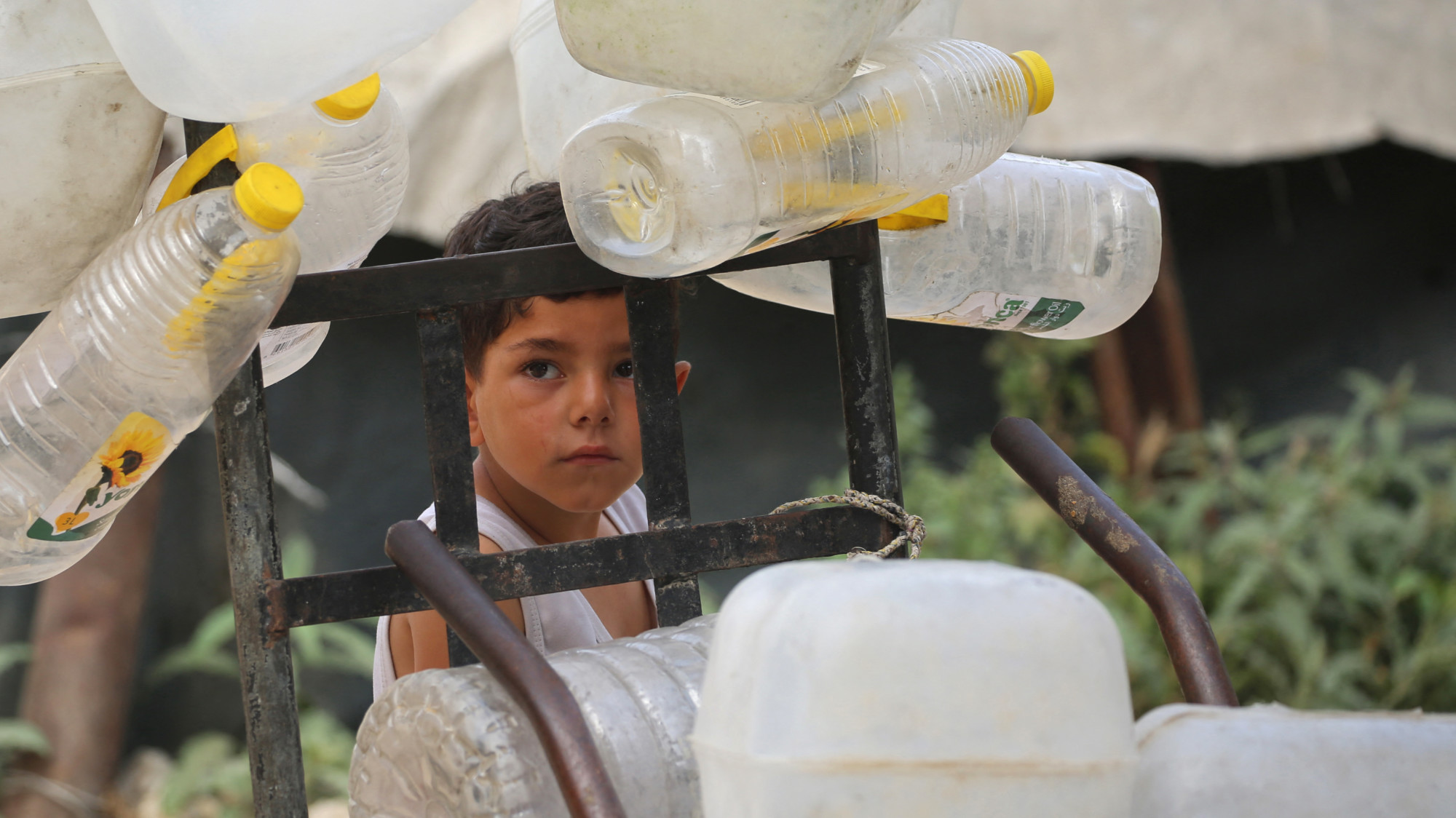
For generations, the weeks leading up to Eid al-Adha in Gaza have been defined by the bustle of livestock markets, where breeders showcase healthy herds for families preparing to fulfill one of Islam’s most sacred religious obligations. This year, that familiar rhythm is gone entirely – reduced to a distant memory by the ongoing destruction of Gaza’s agricultural sector under Israeli military operations and a crippling, long-running blockade.
Mazen al-Jerjawi, once one of Gaza City’s most prominent commercial livestock breeders, now operates a small café, scraping by on sales of frozen meat that trickles into the besieged enclave under strict Israeli entry limits. Where he once sold upwards of 200 head of cattle and sheep ahead of each Eid, his pastures and barns now sit empty. “No live animals are being allowed into Gaza at all,” he explained in an interview with Middle East Eye. “Israel treats the people of Gaza as if they are living here temporarily, and what is allowed is merely to ‘keep things going’ at a minimal level.”
Eid al-Adha, one of Islam’s holiest annual celebrations, centers on the ritual sacrifice of an animal for Muslims who can afford the practice, with the meat distributed equally among family members, neighbors, and low-income community members. Before the outbreak of full-scale war in October 2023, Gaza typically imported 40,000 to 60,000 sheep and calves annually in advance of the holiday to meet consumer demand. 2025 marks the third consecutive year that Gazan Palestinians have been barred from observing this central tradition, as Israeli military actions and the ongoing blockade continue to dismantle the enclave’s basic infrastructure and economy.
Official data from Gaza’s Chamber of Commerce and Industry confirms that more than 90 percent of the enclave’s entire livestock sector has been destroyed or rendered inoperable since the war began, a toll that has rippled across every layer of Gazan society. Along with the annihilation of local herds, Israel’s total ban on live animal imports has snapped already fragile supply chains, pushing what remains of the industry to the brink of total collapse.
The impact on pricing has been catastrophic. Before the war, a single sacrificial sheep cost between $500 and $600. Today, the handful of surviving private animals that reach the market can fetch as much as $7,000 – a sum out of reach for nearly all Gazan families grappling with widespread unemployment and runaway inflation. Jerjawi says he has ceased selling livestock entirely, and often advises Palestinians living abroad who reach out to buy a sacrifice for relatives in Gaza to reconsider. “I tell them it’s better to buy 50 kilograms of frozen meat instead of spending all that money on one sheep,” he said. “The 20,000 shekels [$7,000] for a sheep could even help pay for a couple to get married.”
The destruction of herds has come on multiple fronts: many animals were killed directly in Israeli airstrikes, while repeated forced displacement left breeders with no option but to abandon or hastily offload their animals. “Many of my sheep died after a nearby house was bombed,” Jerjawi recalled. “This was the case for most livestock owners; we lost them because of the strikes.” When evacuation orders forced him to flee his home, he was forced to slaughter or sell his remaining flock for a fraction of their value just to afford basic food for his own family. “We did everything we could to keep the animals alive, even feeding them pasta and whatever we could find,” he said. “In the end, how can someone care for livestock while trying to protect your wife and children?”
Figures from the United Nations Food and Agriculture Organization (FAO) underscore the scale of the loss: by November 2024, at least 80 percent of Gaza’s sheep and 70 percent of its goats had been killed during the war. Gaza’s Ministry of Agriculture reports that the total population of sheep and goats in the enclave has plummeted from roughly 60,000 before the war to just 3,000 today, while cattle and calves have almost entirely disappeared. Most of the surviving animals are held by nomadic herders and are not available for commercial sale during the Eid season, according to ministry spokesperson Raafat Assaliya.
The crisis extends far beyond the loss of animals themselves: nearly all of Gaza’s livestock-related infrastructure – from barns and grazing lands to feed warehouses and veterinary clinics – has been damaged or destroyed in repeated airstrikes. Compounding this, the inability to operate water wells has eliminated any realistic path for the sector to recover, even in the short term. “This has prevented thousands of families from carrying out the Eid sacrifice, in an unprecedented situation,” Assaliya said.
For Gazan residents, the loss of the sacrificial tradition has transformed the holiday into a muted, unrecognizable event stripped of its core meaning. Muhammed Aburiyala, a Gaza City schoolteacher who has participated in the annual sacrifice for most of his life, says it has been three years since his community experienced a true Eid celebration. “The ritual itself, and the feeling of sharing it with others, has disappeared. Without sacrifices and the ability to share, there is no Eid,” he said.
The absence of available livestock is just one layer of a far broader food security crisis that has left most of Gaza’s population struggling to access enough food for daily survival. Even frozen meat is out of reach for many: “Many can barely secure daily meals, and some have not eaten frozen meat for more than a year,” Aburiyala said. “What enters Gaza is limited and depends entirely on the status of the crossings, which means prices remain extremely high.”
A 2025 assessment from the UN-backed Integrated Food Security Phase Classification (IPC) estimates that roughly 1.6 million people – 77 percent of Gaza’s total population – are currently facing acute food insecurity. The crisis has been exacerbated by erratic and restrictive Israeli policies on humanitarian aid and commercial imports, even during ceasefire periods, with repeated border closures that leave basic goods regularly disappearing from market shelves.
Aburiyala argues that the blockade on livestock is a deliberate effort to dismantle Gaza’s local economy and prevent the enclave from achieving self-sufficiency. “If livestock were allowed into Gaza, it would sustain many professions – veterinarians, livestock breeders, farmers who rely on manure, butchers and restaurant owners,” he said. “This is not what Israel wants. They want to paralyze society and prevent it from becoming self-sufficient.”
Reporting for this article was published by Middle East Eye, an independent outlet covering the Middle East and North Africa region.