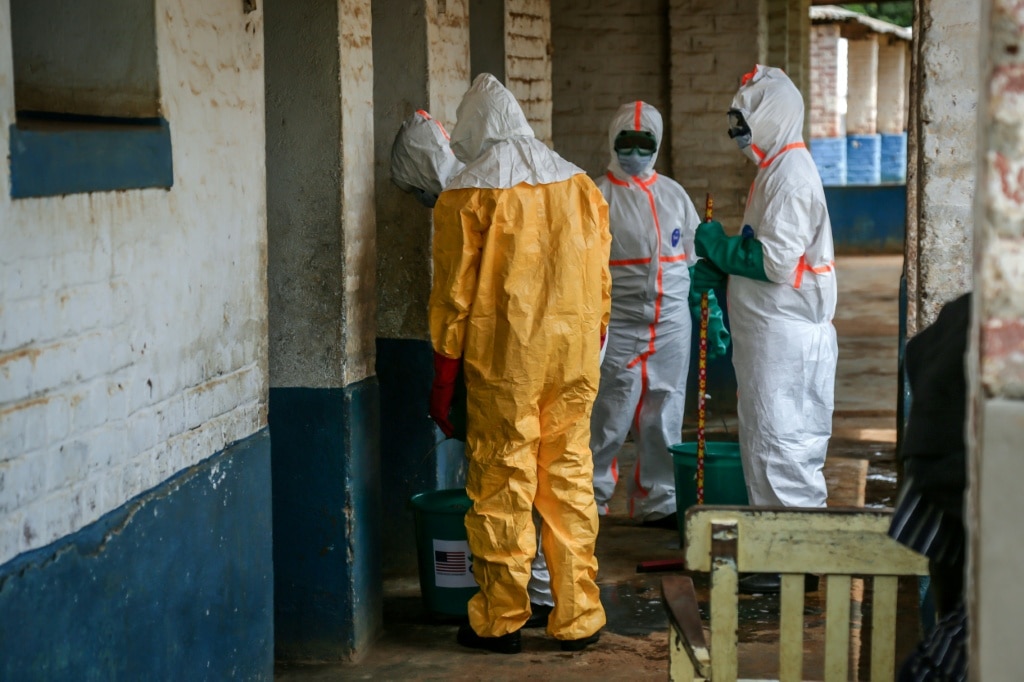
Deep in the mineral-rich hills of Ituri province in eastern Democratic Republic of the Congo, the town of Mongbwalu sits at the epicenter of a devastating Ebola outbreak that has already crossed international borders and triggered a global public health emergency. For many residents here, fear of the deadly virus is tangled up in decades of deep-seated distrust of the distant, corruption-plagued central government in Kinshasa, leaving communities split between open denial of the disease’s existence and angry criticism of an inadequate official response.
Unlike many of her neighbors, 26-year-old Laureine Sakiya does not doubt Ebola is real—she has watched the virus kill people living near her home. Located just 100 kilometers from the Ugandan border and 200 kilometers from the unstable South Sudanese frontier, Mongbwalu is a bustling transit hub for gold miners, itinerant street vendors, and motorbike travelers navigating the region’s rutted, muddy roads, making disease surveillance and containment far more challenging.
Within weeks of the first recorded case, the outbreak has spread to multiple neighboring provinces and reached Ugandan territory, prompting the World Health Organization to declare the epidemic a Public Health Emergency of International Concern. Official data counts 322 suspected infections in Mongbwalu alone, with 86 confirmed deaths, and a national toll of more than 200 fatalities across the DRC’s 17th recorded Ebola outbreak. A critical gap in response remains: there are currently no approved vaccines or targeted treatments for the Bundibugyo strain of Ebola driving this current epidemic, leaving medics scrambling to contain transmission with limited tools.
At Mongbwalu’s modest local hospital, tucked into a hillside surrounded by tall grass and trees, healthcare workers in full head-to-toe hazard suits, goggles and face masks scrub down floors and walls with chlorine solution, the only standard decontamination measure available. Even basic infection control infrastructure is lacking: workers rely on plastic buckets for handwashing, a stark indicator of how under-resourced the response remains. Medical humanitarian organization Doctors Without Borders (MSF) has stepped in to provide isolation tents for suspected cases, alongside local aid groups operating on the ground.
“This epidemic is out of the ordinary,” explained Florent Uzzeni, MSF’s coordinator based in the regional capital of Bunia. Uzzeni warned that official caseload and death tolls are almost certainly significant undercounts, as testing capacity across the outbreak zone remains extremely limited.
Previous Ebola outbreaks in the DRC’s remote regions have been fueled by community resistance, and this event is no exception. Many locals reject the existence of Ebola entirely, with some framing the outbreak as a “mystical malady” rooted in local spiritual beliefs. Early on, the spread was worsened by a misinformation chain that became known locally as the “coffin affair.”
The first suspected case emerged in Bunia, Ituri’s provincial capital. After the patient died, his family transported his body 80 kilometers back to Mongbwalu for burial. The region’s notoriously rough, potholed roads damaged the casket during the trip, exposing the Ebola-contaminated corpse to the people transporting it. Initial tests conducted at a provincial laboratory failed to confirm Ebola as the cause of death, allowing the virus to spread silently through the community while panic grew unchecked. It was only when samples were flown 1,800 kilometers to the national biomedical research laboratory in Kinshasa that the outbreak was officially confirmed—by which point transmission was already widespread.
Even traditional leaders and faith healers, who hold enormous sway in remote communities like Mongbwalu, have grown alarmed by the level of denial. “I worry about those who say that this disease is invented,” said Adam Hussein, 35, a representative for local traditional faith healers, who has urged all residents to follow public health precautions to slow transmission.
As the outbreak continues to expand across borders, public health officials warn that deep community distrust and systemic gaps in the government’s response capacity could turn this into one of the worst Ebola outbreaks in recorded history.