分类: world

  • Russia pounds Kyiv with missiles and drones, shaking city center and injuring 10

    Russia pounds Kyiv with missiles and drones, shaking city center and injuring 10

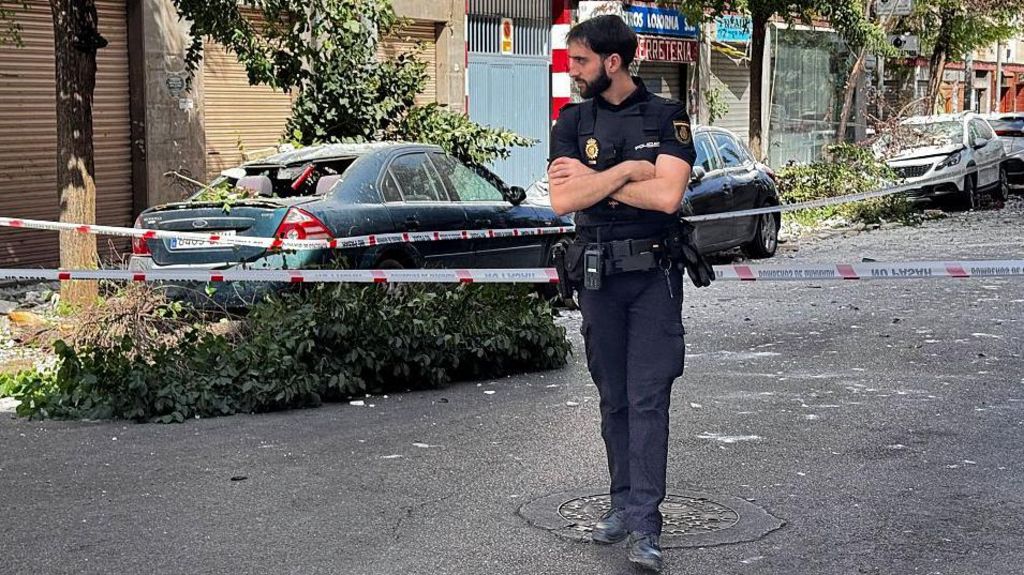
    Overnight Sunday, the Ukrainian capital Kyiv came under a sustained, large-scale Russian attack combining cruise missiles and attack drones, triggering widespread panic and damaging multiple civilian and state sites across the city center, local Ukrainian officials confirmed on the record. Based on preliminary casualty counts released by municipal authorities, at least 10 people were wounded in the strikes, which sent plumes of smoke rising over multiple districts and kept the entire city on high alert through the pre-dawn hours.

    Reporters with the Associated Press, who were on the ground in Kyiv, documented multiple powerful detonations concentrated near central Kyiv, in close proximity to key government administrative buildings. As of sunrise on Sunday, the assault was still ongoing, with Ukrainian air defense officials warning that additional incoming projectiles were expected to reach the capital imminently.

    Tymur Tkachenko, head of Kyiv’s military administration, announced via a Telegram public post that visible damage to infrastructure had been confirmed across at least nine of the capital’s districts, with multiple residential apartment buildings among the impacted sites. Kyiv Mayor Vitalii Klitschko added that a school building in the city’s central Shevchenko district suffered structural damage during the attack, at a time when local civilians were sheltering inside the facility to avoid incoming strikes. Beyond public and residential sites, local officials also confirmed that multiple supermarkets and logistics warehouses scattered across Kyiv suffered damage from shrapnel, blast waves, and direct hits.

    Mykola Kalashnyk, governor of Kyiv Oblast, added that residential and civilian communities across the wider regional area outside the capital city limits also recorded damage from the overnight assault.

    The attack comes just after Ukrainian leadership issued explicit warnings about a potential new Russian strike using the advanced hypersonic Oreshnik ballistic missile. Ukrainian President Volodymyr Zelenskyy noted that he based the warning on intelligence shared by the United States and other Western allied partners, and Ukraine’s Air Force followed the president’s statement with an official advisory of a possible Oreshnik launch. As of Sunday morning, it remains unconfirmed whether the Oreshnik system was actually deployed in the overnight attack on Kyiv.

    Russia first deployed the multiple-warhead Oreshnik missile against Ukrainian infrastructure in the city of Dnipro in November 2024, with a second strike using the weapon carried out in Ukraine’s western Lviv region this past January. Russian President Vladimir Putin has publicly emphasized the capabilities of the new system, whose name translates to “hazelnut tree” in Russian. He claims the missile travels at Mach 10—10 times the speed of sound— and can penetrate reinforced underground bunkers three, four, or more levels below the surface. Putin has described the weapon as moving like a meteorite, noting that it is impervious to all existing Western and Ukrainian missile defense systems. He added that even a small number of Oreshnik missiles armed with conventional warheads can generate destructive power on par with a nuclear strike, according to his public comments on the weapons system.

  • Missile strikes pound Kyiv after Russia vows retaliation

    Missile strikes pound Kyiv after Russia vows retaliation

    In an early Sunday attack that followed explicit Russian threats of retaliation for a deadly Ukrainian drone strike on Russian-occupied eastern Ukraine, a large-scale ballistic missile barrage slammed into Ukraine’s capital Kyiv, leaving at least five people wounded, local officials confirmed.

    AFP correspondents on the ground reported hearing multiple loud explosions across the city, which rattled a residential structure located close to Kyiv’s government district. Dozens of panicked residents rushed to take shelter in underground metro stations in the city’s central core as the attack unfolded.

    Tymur Tkachenko, head of the Kyiv City Military Administration, announced the mass attack via his official Telegram channel, confirming that blasts had impacted at least four districts across the capital: Shevchenkivsky, Dniprovsky, and Podilsky. Initial assessments documented multiple blazes and structural damage to civilian residential buildings. As the attack continued, Tkachenko warned that additional drone strikes were still ongoing and the threat of more ballistic missile launches remained active, urging all residents to remain in secured shelters.

    Kyiv Mayor Vitali Klitschko later confirmed the casualty count, noting that five people had been hurt, with one person admitted to a local hospital for treatment. Klitschko added that response teams had been deployed to Podilsky district in northwest Kyiv, where missile debris fell on a non-residential plot of land, while a separate fire broke out adjacent to a residential building in Shevchenkivsky district.

    The Sunday strike came as no surprise to Ukrainian and international authorities, who had explicitly warned of imminent large-scale Russian retaliation in the 24 hours leading up to the attack. The escalation followed a major Ukrainian drone barrage launched overnight between Thursday and Friday against Starobilsk, a city held by Russian forces in the occupied Lugansk region. Russian officials claimed the strike hit a college dormitory, pushing the confirmed death toll to 18 with an additional 42 people wounded after rescuers pulled two more bodies from the rubble on Saturday. Leonid Pasechnik, the Moscow-appointed governor of occupied Lugansk, reported that most of the fatalities were young women born between 2003 and 2008.

    Ukrainian officials have rejected Russia’s claims of targeting civilians, asserting that the strike was focused exclusively on a Russian military drone unit based in the Starobilsk area.

    Within days of the strike, the Russian Ministry of Foreign Affairs vowed that those responsible would face “inevitable and severe punishment”, setting off warnings from Ukrainian leadership. On Saturday, Ukrainian President Volodymyr Zelenskyy posted a public alert on social media noting that intelligence showed clear preparations for a combined large-scale strike across Ukrainian territory, with a specific focus on Kyiv that could include deployment of the Oreshnik, Russia’s nuclear-capable hypersonic missile. The United States Embassy in Kyiv echoed the warning hours later, confirming it had received credible intelligence of a potentially major air attack that could strike at any point within the following 24 hours.

    The United Nations issued a statement Friday condemning all attacks on civilians and civilian infrastructure regardless of location, though the organization added it could not independently verify casualty and targeting details due to restricted access to occupied Ukrainian territories.

    This latest exchange of heavy strikes fits within a broader pattern of escalating cross-border attacks that has defined the 4-year full-scale Russian invasion of Ukraine. Kyiv has significantly expanded its domestic drone production capabilities in recent months, allowing it to step up strikes against both Russian-occupied Ukrainian territory and undisputed Russian soil, targeting military positions, energy infrastructure, and logistics hubs. For its part, Russia has launched near-daily mass missile and drone barrages across Ukraine since it launched its full-scale invasion in 2022, causing widespread damage to civilian infrastructure and thousands of civilian casualties. Like Ukraine, Russia denies intentionally targeting civilian populations.

    Starobilsk, the site of last week’s fatal drone strike, sits roughly 40 miles from the active front line in eastern Ukraine and was captured by Russian forces in the early weeks of the 2022 full-scale invasion.

    International diplomatic efforts to end the conflict, led by the United States, have stalled in recent months as U.S. political and military attention has been diverted to the ongoing conflict in the Middle East, leaving little momentum for new peace negotiations.

  • Rosenberg: Luhansk strike sparks Russian accusations and vow to retaliate

    Rosenberg: Luhansk strike sparks Russian accusations and vow to retaliate

    A devastating incident that reduced a five-story college building in Starobilsk to mounds of rubble has plunged the ongoing Russia-Ukraine conflict into a new phase of escalating tensions, triggering mutual accusations between Moscow and Kyiv, an urgent emergency gathering of the UN Security Council, and open threats of harsh retaliation from the Kremlin.

    Starobilsk sits within the Luhansk region of eastern Ukraine, an area that has been under Russian military occupation since Moscow launched its full-scale incursion in 2022, and that Russia controversially claims to have formally annexed. Early Friday, the structure that collapsed housed the Starobilsk Professional College, a branch of Luhansk Pedagogical University, leaving a scene of widespread destruction visible in footage broadcast on Russian state television. Rescue crews could be seen working methodically through piles of concrete and twisted metal to pull survivors and victims from the wreckage.

    Russian authorities have publicly blamed Ukraine for the carnage, framing the event as a deliberate drone strike targeting the college’s student dormitory. As of the latest official updates from Moscow, the death toll has climbed to 21, with 42 additional people sustaining injuries of varying severity. Russian state media has shared firsthand accounts from survivors, including 21-year-old Olga Kovaleva, who was trapped under fallen debris for hours before being pulled out alive and transported to a local hospital for treatment. The outlet also published a full list of the deceased students, alongside their dates of birth, to confirm the identities of those killed.

    Russian President Vladimir Putin has labeled the incident a “terrorist strike”, rejecting any suggestion that the building was hit accidentally by Russian air defense or electronic warfare systems. “There had been no military facilities, intelligence service facilities or related services in the vicinity,” Putin stated, arguing this eliminates any plausible defense of unintended collateral damage from Russian operations. He has since formally ordered Russia’s Ministry of Defence to draft a comprehensive set of retaliatory measures in response to what Moscow calls an unacceptable attack on civilian targets.

    Kyiv has pushed back entirely against Russia’s narrative. In an official statement released by the General Staff of Ukraine’s Armed Forces, the military confirmed it did conduct a targeted strike near Starobilsk overnight between May 21 and 22, but clarified that the attack hit a Russian military unit stationed in the area, not a civilian college dormitory. To date, Ukraine has not acknowledged any civilian casualties from the strike.

    Within hours of the incident, Russia submitted an official request to the United Nations for an emergency meeting of the Security Council to address the attack. At the session, Russian Ambassador to the UN Vasily Nebenyza presented graphic photos of the destroyed college to council members, arguing that the strike “constitutes a war crime” under the standards of international humanitarian law.

    Not all council members backed Russia’s framing of the event, however. Denmark’s representative to the UN pushed back against Russia’s call for condemnation, pointing to the widespread destruction and civilian casualties that Russia’s own military campaign has inflicted across Ukraine since 2022. “If we were to apply the same logic behind Russia’s call for today’s meeting, we would need twice-daily emergency Security Council meetings — including on the weekends — to only scratch the surface of the terror, death and destruction inflicted across Ukraine by Russia,” the Danish representative noted.

    The incident has also emboldened hawkish, pro-Kremlin voices to push for aggressive retaliation that extends beyond Ukrainian territory. Sergey Karaganov, honorary chairman of the presidium of the Council on Foreign and Defence Policy, told Russian state outlet Vesti that Moscow should not limit its response to targets inside Ukraine. “We need to start punishing Europe for things like this, including with strikes,” Karaganov said. “Symbolic [strikes] to start with. Then, perhaps, less symbolic ones.”

    By late Saturday, Russian emergency officials confirmed that search and rescue operations at the site had been fully completed, bringing an official end to efforts to recover additional victims or survivors from the rubble.

  • France bans Ben Gvir after flotilla activists abuse video

    France bans Ben Gvir after flotilla activists abuse video

    A diplomatic storm has erupted across Europe after a widely circulated video exposed Israeli National Security Minister Itamar Ben Gvir overseeing the mistreatment of detained activists from a Gaza-bound humanitarian flotilla, prompting France to issue an entry ban on the senior official and throw its support behind EU-level sanctions.\n\nFrench Foreign Minister Jean-Noel Barrot announced the measure Saturday in a post on X, framing the entry ban as a direct response to Ben Gvir’s “unacceptable conduct towards French and European citizens” during last week’s Israeli raid on the aid flotilla, which took place in international waters. Barrot clarified that while Paris does not endorse the activists’ mission to deliver humanitarian aid to blockaded Gaza, the harsh treatment the detainees received crosses a fundamental line. “We cannot tolerate French nationals being threatened, intimidated or subjected to violence in this way, especially by a public official,” he wrote. He added that Ben Gvir’s actions during the raid are only the latest in “a long series of shocking statements and actions, as well as incitement to hatred and violence against Palestinians.” Barrot also confirmed France backs an Italian call for the European Union to impose formal sanctions on the minister.\n\nThe incident that triggered the international backlash stems from last week’s Israeli naval intercept of the flotilla, which was carrying hundreds of activists attempting to deliver much-needed humanitarian aid to Gaza. Ben Gvir personally released a video of his presence during the detention of the activists, a move that made the incident unavoidable on the global diplomatic stage. The footage shows Ben Gvir waving an Israeli flag and taunting the detainees while Israeli security forces force hundreds of handcuffed activists to kneel with their faces to the ground.\n\nThe video has sparked widespread global condemnation, with multiple European governments summoning Israeli ambassadors to protest the treatment of their citizens. British Foreign Secretary Yvette Cooper called the captured scenes “totally disgraceful,” while Turkish officials accused Israel of demonstrating a “violent and barbaric mindset.”\n\nIn the aftermath of the raid, Israeli authorities detained more than 430 activists before deporting nearly all of them by Thursday, with only one Israeli citizen held. Multiple released activists have since come forward with detailed allegations of severe abuse, including torture and sexual assault, while in Israeli custody.\n\nItalian journalist Alessandro Mantovani, one of the deported activists, described his experience to reporters at Rome’s Fiumicino Airport: “We were taken to Ben Gurion airport in handcuffs and with chains on our feet and put on a flight to Athens.” He added that Israeli soldiers “beat us up… They kicked us and punched us and shouted ‘Welcome to Israel’.”\n\nMiriam Azem, a representative of the Israeli human rights organization Adalah, reported that one detainee “was forced to strip naked and run while guards were laughing.” Another female activist described being bound so tightly with handcuffs that she lost feeling in her hands, and recalled that Israeli soldiers “laughed all the time. Super sadistic. They took off my shirt, took pictures. Mistreated us all night long.”\n\nDr. Margaret Connolly, sister of Irish President Catherine Connolly and one of the detained activists, drew a sharp parallel while speaking to Ireland’s RTE Radio, saying the experience gave activists “a feeling of what the Jews felt like during the Second World War,” and that Israel was “now acting like a Nazi state.”

  • ‘I feel like I lost my life’: Gaza amputees fight for mobility amid shortages

    ‘I feel like I lost my life’: Gaza amputees fight for mobility amid shortages

    It was just after 10 p.m. on November 19, 2023, when 24-year-old Rozan Kheira was jolted awake from sleep by the roar of explosions, frantic screams, and widespread panic that tore through her family’s Gaza City home. An Israeli air strike had reduced the building around her to rubble before she could even register what was happening.

    When Kheira tried to scramble out of bed, her legs gave out immediately. She pushed herself up a second time, only to collapse again. Glancing down, she discovered a pool of blood spreading across the floor beneath her; her foot had been severed in the blast, held to her leg only by a thin strip of skin.

    “I had just woken up and couldn’t comprehend what was happening,” Kheira recalled in an interview with Middle East Eye. “At that moment, I forgot we were even at war.” Stuck frozen in shock, she waited helpless until her brother carried her out of the destroyed home. That single night would forever alter the trajectory of her life.

    In the wake of Israel’s military campaign that has destroyed Gaza’s hospitals, killed thousands of medical workers, and enforced a total blockade on fuel and life-saving medicine entering the enclave, injuries that would be easily treatable in any other context have become permanent, life-altering disabilities — and in thousands of cases, fatal. Kheira was rushed to Gaza’s Indonesian Hospital, where after hours of uncontrolled bleeding, surgeons were forced to fully amputate her leg.

    In the two years since the strike, Kheira has lived her life confined to a wheelchair, repeatedly displaced by advancing ground operations and unable to access even the most basic medical care. “I was in excruciating pain, and painkillers were unavailable in northern Gaza because of the Israeli siege,” she said. Even after the October ceasefire, which the international community heralded as a step toward easing humanitarian conditions for Gaza’s 2.2 million residents, little has changed for injured civilians like Kheira.

    Desperate to regain even a measure of independence, Kheira began a months-long search for a properly fitted prosthetic limb. When her family was forced to flee to Khan Younis in southern Gaza last June, she received her first prosthetic — but the device quickly proved unusable. “The prosthetic leg was extremely heavy, weighing five kilograms. It didn’t match my body and made my suffering worse instead of easing it,” she explained. After the ceasefire allowed her to return to Gaza City, the Artificial Limbs and Polio Centre fitted her with a second device, which was also far too heavy for her to use.

    Undeterred, Kheira set out on foot to Hamad Hospital for Rehabilitation and Prosthetics in northern Gaza’s Sudaniya district, a journey of more than six kilometers she completed on a single leg because no transport was available to her. After multiple medical assessments, she finally received a third prosthetic. Still, her struggles are far from over: the device only meets 30 percent of her medical needs, but it is the only option available to her amid Gaza’s catastrophic shortage of medical equipment. Doctors have warned her against walking on the ill-fitted limb, but Kheira has no other choice.

    Even the ongoing rehabilitation and maintenance she requires to use the prosthetic adds to her daily hardship. “I need weekly maintenance at Hamad Hospital, which means long walks on one leg just to get there,” she said. “There are no vehicles, not even donkey carts. Transport is scarce and extremely expensive.” This mobility crisis is not unique to Kheira: ongoing Israeli restrictions on fuel entering Gaza — a direct violation of the ceasefire agreement — combined with the destruction of 70 percent of Gaza’s civilian transport infrastructure, have left the entire enclave unable to move freely, cutting injured civilians off from life-saving care.

    The U.S.-backed October ceasefire was intended to end Israel’s military campaign and blockade, and allow unimpeded access for aid, medicine, and rehabilitation supplies to enter Gaza. But in practice, Israel has largely maintained its total blockade, permitting only a tiny fraction of the required aid into the territory, leaving fuel, food, and medical supplies at critically low levels. Air strikes and artillery shelling have also continued across the enclave, killing more than 800 people since the ceasefire was announced. In total, Israeli forces have killed more than 72,700 Palestinians in Gaza since October 2023, and wounded more than 172,000 others.

    According to data from the World Health Organization, roughly 43,000 Palestinians have sustained permanent, life-altering injuries during the current conflict, including around 10,000 children. While a small fraction of these injured people, like Kheira, have managed to secure basic, ill-fitted prosthetics, thousands more with upper-limb injuries have been left with no access to any assistive device at all.

    One of those people is 32-year-old Abdelsalam al-Bardawil, who lost his left hand in an Israeli strike that destroyed his Gaza City home, killing his mother and brother and injuring the rest of his family. “My hand could have been saved, but because hospitals were out of service, it was amputated,” al-Bardawil told Middle East Eye. “I didn’t receive physical therapy, and painkillers weren’t available. I remember jumping from the intense pain.”

    After being displaced to Deir al-Balah in southern Gaza, al-Bardawil traveled to the Jordanian Field Hospital in Khan Younis, where he was fitted with a prosthetic hand. But he was forced to remove it shortly after, because the device was heavy, rigid, and purely cosmetic, completely unable to assist him with daily tasks. He later reached out to the Red Crescent in Deir al-Balah and other humanitarian organizations, but received the same answer every time: no upper-limb prosthetics are available in Gaza.

    Unable to work or provide for himself, al-Bardawil now relies entirely on humanitarian aid to survive. “What saddens me most is my inability to work,” he said. “It forces me to depend on assistance.” He also struggles to access mental health care and pain treatment, with transport shortages making even routine clinic visits nearly impossible. “The problem isn’t just therapy,” he said. “I can’t reach clinics for medication or depression treatment.” The loss of his mother, who he turned to for help without shame, has left even small daily tasks a source of embarrassment and struggle. “The only person I could ask for help without shame was my mother,” he said. “Now I feel embarrassed asking my sister or relatives.”

    Al-Bardawil has received an official referral for life-saving treatment outside of Gaza, but like thousands of other injured Palestinians, he remains trapped on a waiting list, blocked by frequent closures and strict Israeli restrictions at Gaza’s border crossings. According to the Palestinian Ministry of Health, more than 20,000 patients are currently waiting for approval to leave Gaza for treatment abroad, with access repeatedly delayed or blocked entirely by Israeli officials.

    While Gaza’s local hospitals and rehabilitation centers have attempted to ramp up domestic production of prosthetics to meet the growing need, officials say they are completely overwhelmed by the unprecedented scale of casualties. Hosni Muhanna, media officer at the Gaza Municipality’s Artificial Limbs and Polio Centre, told Middle East Eye that registered amputations have reached roughly 6,000 since the start of the war, per joint data from the Palestinian Ministry of Health and the International Committee of the Red Cross.

    “This unprecedented figure reflects the massive scale of the humanitarian and health catastrophe,” Muhanna said. The centre relies on a small local workshop to produce prosthetics in-house, but a total ban on essential raw materials entering Gaza has crippled production capacity, particularly for upper-limb devices. “The ban on essential supplies since the start of the war has crippled production, particularly for upper-limb prosthetics, as raw materials have not been allowed in,” he explained.

    The blockade has created acute shortages of every type of prosthetic component and assistive device, leaving long waiting lists that grow longer every day as new amputations are recorded amid ongoing attacks. “Fitting a limb requires medical assessment, physiotherapy to prepare the muscles, and a full rehabilitation programme to train patients and restore independence,” Muhanna said. But many patients cannot complete these critical steps due to repeated displacement, transport shortages, and the total destruction of Gaza’s health infrastructure.

    Back at his displacement camp in Deir al-Balah, al-Bardawil continues to wait for a call that will allow him to leave Gaza for the treatment he needs to rebuild his life. “I feel like my life is completely on hold,” he said. “I didn’t just lose my hand. I feel like I lost my life.”

  • Ukrainian strike on college in Russian-occupied town kills 18: officials

    Ukrainian strike on college in Russian-occupied town kills 18: officials

    A deadly Ukrainian strike on a college campus in the Russian-occupied eastern Ukrainian town of Starobilsk has driven the conflict to a new peak of tension, with the death toll rising to 18 and Moscow promising a sharp military response even as Kyiv warned of an imminent large-scale Russian missile attack across Ukrainian territory.

    The overnight assault between Thursday and Friday, one of the deadliest Ukrainian drone barrages launched against Russian-held territory in months, left 42 others injured and multiple people still trapped beneath the rubble of the building, Russian emergency officials confirmed Saturday. In an update Saturday, the ministry announced that two additional bodies had been recovered from the collapsed structure, bringing total casualties to 60, with 18 fatalities.

    Footage released by the Russian emergency services shows dozens of rescue workers combing through mounds of concrete and twisted steel that was once a section of the five-story college dormitory building, now reduced to a pile of rubble. According to Leonid Pasechnik, the Moscow-appointed governor of the occupied Lugansk region, the vast majority of those killed or listed as missing are young women born between 2003 and 2008. In a statement posted to Telegram, Pasechnik expressed collective grief, saying “The region and the entire country share the fate of these people and the pain of their families.” In the post-Soviet space, a college refers to a vocational education institution that typically serves students between the ages of 15 and 22.

    Starobilsk sits roughly 65 kilometers from the active front line in eastern Ukraine, and was seized by Russian forces in the early weeks of Moscow’s full-scale invasion in 2022. Today, nearly the entire Lugansk region falls under Russian occupation, with Moscow formally claiming the territory as part of the Russian Federation.

    Ukrainian officials have repeatedly denied intentionally targeting civilian sites, asserting that the strike hit a Russian military drone unit that was stationed in the Starobilsk area. Despite this denial, Russian President Vladimir Putin has ordered the country’s armed forces to prepare a formal response to the attack. Russia’s foreign ministry has also declared that those responsible for the strike will face “inevitable and severe punishment.”

    The United Nations issued a formal response to the strike Friday, stating it “strongly condemns any attacks against civilians and civilian infrastructure, wherever they occur,” while noting that it cannot independently verify casualty details due to restricted access to the occupied territory.

    As tensions escalated Saturday, both Ukrainian President Volodymyr Zelensky and the United States Embassy in Kyiv issued urgent warnings of an impending large-scale Russian air attack in the coming 24 hours. “We are seeing signs of preparation for a combined strike on Ukrainian territory, including Kyiv, involving various types of weaponry,” Zelensky wrote in a social media post, specifically naming the Oreshnik, Russia’s new nuclear-capable medium-range missile, as a potential weapon to be used in the assault. The US Embassy confirmed the warning in a public notice on its website, noting that it had received intelligence of a “potentially significant air attack that may occur at any time over the next 24 hours.” In an appeal to the international community, Zelensky called for increased diplomatic pressure on Moscow, saying “Pressure must be put on Moscow so that it does not expand the war.”

    The fatal college strike comes amid a steady escalation of cross-border drone warfare between the two nations. Ukraine regularly carries out drone strikes on Russian-controlled areas of its territory, framing the attacks as retaliation for ongoing Russian bombardments of Ukrainian civilian and infrastructure sites. In recent months, Kyiv has expanded its drone capabilities and increased the frequency of strikes deep within conventional Russian territory, targeting residential areas as well as critical oil export infrastructure.

    For its part, Moscow has launched mass missile and drone barrages across Ukraine almost every day since the full-scale invasion began in 2022. These strikes have repeatedly hit civilian infrastructure and caused widespread civilian casualties. Both sides have consistently denied intentionally targeting civilian populations.

    Since the full-scale conflict began in 2022, the United Nations Human Rights Monitoring Mission in Ukraine has recorded more than 60,000 total civilian casualties across the country. The conflict, the bloodiest in Europe since World War II, has devastated large swathes of eastern and southern Ukraine and forced more than 14 million people to flee their homes, according to UN data. Recent US-led diplomatic efforts to broker a negotiated end to the war through trilateral talks have stalled in recent months, as international attention and diplomatic resources have shifted to the ongoing conflict in the Middle East.

  • South African Gaza flotilla activists allege they were shocked with electricity in Israeli detention

    South African Gaza flotilla activists allege they were shocked with electricity in Israeli detention

    JOHANNESBURG — After returning to their home countries over the weekend, dozens of international activists who participated in the Global Sumud Flotilla, a mission to break Israel’s years-long blockade on the Gaza Strip and deliver humanitarian aid to Palestinian civilians, have come forward with detailed, harrowing allegations of systemic abuse, beatings and torture at the hands of Israeli soldiers during their detention.

    The 50-vessel flotilla was intercepted by Israeli forces this past Monday while sailing in international waters, approximately 400 kilometers off Israel’s Mediterranean coast. All activists on board were taken into custody and transferred to Israel’s K’tziot Prison, where they were held for several days before being released.

    Multiple activists have shared consistent accounts of cruel treatment behind bars. Several detainees reported being subjected to electric shock during interrogations focused on their roles in the aid mission. Faizel Moosa, a South African activist and a former anti-apartheid campaigner who endured state detention during the fight against white minority rule, said the abuse he experienced at the hands of Israeli soldiers was far worse than any mistreatment he faced under apartheid.

    “We were denied access to clean water for extended periods. The food we were given was unfit for human consumption. We were blocked from using toilets for many hours, and when we protested the inhumane conditions, Israeli forces opened fire on us with rubber bullets,” Moosa explained. “Having lived through detention under the apartheid regime, this treatment was far worse. That tells you everything about what Palestinians endure at the hands of Israel every single day.”

    Moosa added that abuse was harsher for activists confirmed to be South African, a reference to South Africa’s landmark case against Israel at the International Court of Justice, where Pretoria has accused Israel of committing acts of genocide in Gaza. The South African delegation’s legal arguments have drawn global attention and broad support from the international community.

    Dr. Margaret Connolly, a member of the flotilla’s 15-person Irish contingent and sister of Irish President Catherine Connolly, described conditions in the detention facility as openly dehumanizing, saying she had never experienced fear like it in her life. She told reporters after arriving home to a cheering welcome in Dublin Saturday that some detainees were beaten with rifle butts, while dozens of detainees had their clothing seized and were denied blankets in cold cells, forcing them to huddle together to avoid hypothermia.

    Connolly added that Israeli forces confiscated her full medical kit upon intake, preventing her from providing necessary care to injured detainees. When makeshift bandages crafted from bread bags and torn shirt sleeves were created to treat wounds, those were also confiscated by guards. “They intentionally wanted us to suffer,” she said, noting that many of the shouting guards carried American accents and repeatedly taunted detainees, saying “You should have thought of this before you came.”

    Connolly also criticized her own government’s policy toward Israel, calling out Dublin’s refusal to implement economic sanctions against the country over its military campaign in Gaza.

    Three Chilean activists from the flotilla also returned home Saturday, and they echoed the allegations of abuse while also condemning their own government for failing to act to secure their timely release. Víctor Chanfreau, Claudio Caiozzi and Carolina Eltit were greeted by hundreds of pro-Palestinian supporters waving Palestinian flags at Santiago’s international airport. Eltit described being beaten and held in catastrophic conditions: “We had no toilet paper, one single bathroom for 190 detained people, we were left lying tied hand and foot directly in the burning sun.”

    Chanfreau accused the Chilean Foreign Ministry of “negligence” in its diplomatic efforts to secure the group’s release, saying “The Chilean government acted terribly, and this is no surprise.”

    South African activist Qutb Hendricks called on Pretoria to ramp up diplomatic and economic pressure on Israel, urging the government to ban all coal exports and other commercial trade with the country in response to the abuse.

    Israeli officials have forcefully rejected all allegations of mistreatment, calling the claims “false and entirely without factual basis.” As of Saturday evening, the Israeli government had not issued any further response to the detailed accusations released by the returning activists.

  • Iran chief negotiator vows ‘crushing’ response if US returns to war

    Iran chief negotiator vows ‘crushing’ response if US returns to war

    Rising tensions across the Middle East have reached a new flashpoint this weekend, as Iran’s top nuclear and security negotiator has issued a stark warning of devastating retaliation should the United States choose to resume open hostilities, while parallel violence on the Lebanon-Israel border continues to escalate despite tentative ceasefire efforts.

    The warning came Saturday from Mohammad Bagher Ghalibaf, Iran’s chief negotiator, following recent American media reports that the White House is actively considering launching new military strikes against Iran amid stalled negotiations over a permanent end to the conflict that began when U.S. and Israeli forces launched attacks on the Islamic republic on February 28. Writing on his social media channels, Ghalibaf emphasized that Iran’s armed forces have used the current ceasefire, implemented on April 8, to rebuild and reposition their capabilities. “If Trump commits another act of folly and restarts the war, it will certainly be more crushing and bitter for the United States than on the first day of the war,” he wrote.

    The statement came just after Pakistan’s influential army chief, Field Marshal Syed Asim Munir — who has served as a key international mediator in efforts to turn the temporary ceasefire into a long-term diplomatic settlement — concluded two days of talks with senior Iranian officials in Tehran and departed the capital Saturday. Iran’s leadership has repeatedly accused Washington of making unreasonable excessive demands that have stalled negotiations, leaving the region in a tense limbo between open conflict and formal peace.

    Multiple U.S. media outlets, including Axios and CBS News, have recently cited anonymous sources confirming that the Trump administration is weighing the option of renewed military action if no breakthrough is reached in talks. U.S. Secretary of State Marco Rubio reinforced that posture last week, telling reporters on the sidelines of a NATO conference in Sweden that while there had been “some progress” toward a peaceful resolution, “things were not there yet.

    Weeks of negotiations, including landmark direct talks hosted by the Pakistani government in Islamabad, have so far failed to produce a permanent ceasefire agreement or reopen full access to the Strait of Hormuz, the critical global oil chokepoint whose closure has disrupted millions of barrels of daily energy trade and roiled international markets. The ongoing impasse has left ordinary Iranian citizens facing profound uncertainty about their futures. Speaking to Agence France-Presse, 39-year-old Tehran resident Shahrzad summed up the widespread anxiety: “The state of ‘neither war nor peace’ is far filthier than war itself. You can’t even plan something as simple as signing up for a gym, let alone bigger things… I’m about to start a new job, and I’m scared war might break out again — that I’ll end up leaving the job like before, running off to another city out of fear.”

    Diplomatic activity accelerated across the region over the weekend as global powers scrambled to de-escalate. Iranian Foreign Minister Abbas Araghchi spoke by phone with United Nations Secretary-General Antonio Guterres, emphasizing that Tehran remains committed to diplomatic efforts despite what he called Washington’s “repeated betrayals of diplomacy and military aggression against Iran, along with contradictory positions and repeated excessive demands.” Araghchi also held separate diplomatic calls with his counterparts from Turkey, Iraq, Qatar, and Oman, according to Iran’s official IRNA news agency. On the U.S. side, President Donald Trump spoke Saturday with Qatari Emir Sheikh Tamim bin Hamad Al Thani, whose office confirmed the Emir voiced support for “all initiatives aimed at containing the crisis through dialogue and diplomacy.”

    Beyond the Iran-U.S. standoff, violence continues to escalate on the Lebanese front of the broader regional conflict. On Saturday, the Israeli military ordered residents of 10 southern Lebanese villages to evacuate their homes immediately ahead of planned airstrikes targeting alleged Hezbollah positions. Since a fragile April 17 ceasefire, Israel has maintained a steady campaign of strikes, infrastructure demolitions, and evacuation orders in southern Lebanon, framing the operations as necessary to counter Hezbollah, which has also continued to launch regular attacks on Israeli military positions.

    Hezbollah entered the broader conflict on March 2, firing a barrage of rockets into Israel just days after U.S.-Israeli strikes killed Iran’s supreme leader. Lebanon’s state-run National News Agency (NNA) reported that Israeli warplanes hit roughly a dozen locations across southern Lebanon on Saturday, including an agricultural area where several Syrian workers were wounded. One overnight strike targeted a site adjacent to a hospital in the southern Lebanese city of Tyre, causing severe damage to the medical facility that currently cares for 40 patients. Hospital CEO Dr. Salman Aydibi told AFP that this marked the third Israeli strike near the facility since the outbreak of the war.

  • Pope condemns environmental harm in Italy’s ‘Land of Fires’

    Pope condemns environmental harm in Italy’s ‘Land of Fires’

    On a historic Saturday visit to one of Europe’s most devastating environmental disaster zones, Pope Leo XIV delivered a blistering rebuke of the criminal networks and systemic negligence that have turned southern Italy’s Campania region’s ‘Land of Fires’ into a public health crisis that has plagued local communities for nearly 40 years.

    Known alternately as the ‘Triangle of Death’, the territory stretching around the city of Acerra, roughly 15 kilometers northeast of Naples, has been exploited since the late 1980s as an illegal dumping and incineration ground for hazardous industrial waste. Most of the toxic material originates from wealthy industrial regions in northern Italy, where corporate entities avoid the steep costs of compliant waste disposal by paying off the local Camorra mafia to eliminate the waste illegally. The illicit operation has buried or burned everything from asbestos panels and used vehicle tires to barrels of concentrated industrial chemicals, leaching heavy metals, dioxins, and asbestos into local soil, groundwater, and air across decades.

    Today, the region is home to roughly three million residents, and public health data has consistently recorded cancer rates far above the Italian national average, alongside elevated rates of fetal and neonatal developmental malformations. Multiple Italian parliamentary inquiries launched since 2013 have confirmed widespread official negligence, and in some cases, direct political complicity with the criminal waste racket. A 2018 Senate report formally labeled the crisis an ecological catastrophe driven by organized crime and years of government inaction. Most recently, Europe’s highest human rights court ruled in 2025 that the Italian state had failed in its legal duty to protect local residents, ordering the national government to implement comprehensive remediation measures within a two-year deadline.

    Arriving in Acerra’s Piazza Nicola Calipari via popemobile, Pope Leo drew thousands of excited local worshippers and onlookers. For many residents, the pontiff’s visit marked a rare high-profile moment of global attention for a crisis that has long been overlooked by national and international leaders. ‘The pope is maybe the only person who can awaken the conscience a little bit of all the people who have harmed this territory,’ 60-year-old local worshipper Giuseppina De Francesco told Agence France-Presse during the visit.

    Speaking to clergy and family members of pollution victims at Acerra’s cathedral, the U.S.-born pontiff condemned what he called ‘a deadly mix of obscure interests and indifference toward the common good, which has poisoned the natural and social environment.’ He noted that the contaminated land ‘has paid a heavy price. It has seen many of its children buried. It has borne witness to the suffering of children and innocents.’ Pope Leo also extended recognition to local environmental activists, honoring their ‘courageous commitment’ that he described as pioneering work to raise public awareness of the ongoing poisoning of the region.

    The pontiff’s trip was deliberately timed to coincide with the 11th anniversary of *Laudato Si’*, the landmark climate change encyclical released by his predecessor Pope Francis. That 2014 document, which denounced humanity’s unbridled and exploitative treatment of the natural world, was widely praised by climate scientists for its commitment to evidence-based environmental advocacy. Echoing the core message of his predecessor’s manifesto, Pope Leo emphasized that ‘In life, we understand that the more fragile beauty is, the more it requires care and responsibility.’

  • Ukrainian drone attack triggers fire at a Russian oil terminal

    Ukrainian drone attack triggers fire at a Russian oil terminal

    As Russia’s full-scale invasion of Ukraine enters its fourth year, a wave of cross-border drone attacks has intensified over recent days, hitting two key targets in 24 hours: critical Russian energy infrastructure and a college dormitory in Russian-occupied eastern Ukraine, leaving multiple casualties and prompting sharp rhetoric from Moscow.

    On Saturday, regional authorities in Russia’s southern Krasnodar Krai confirmed that a Ukrainian drone assault sparked an overnight blaze at an oil terminal near the Black Sea port of Novorossiysk. According to local officials, falling wreckage from the downed drone ignited the fire, which also left two people injured. Officials did not immediately release the official name or exact location of the affected facility, but independent Russian news outlet Astra identified the terminal as Sheskharis, a major storage and export hub operated by Transneft, Russia’s state-run pipeline monopoly. The site serves as the final terminus for Transneft’s primary oil export pipelines running through southern Russia. Photographs shared by Astra show thick plumes of smoke rising above the terminal grounds, though the authenticity of the footage has not been independently verified. Ukraine has not yet issued an official statement confirming or denying responsibility for the Novorossiysk attack.

    This drone strike is part of a growing pattern of sustained attacks on Russian energy infrastructure, which analysts note is a core source of funding for Moscow’s ongoing invasion. In recent months, Kyiv has ramped up strikes on Russian oil and gas assets, a shift that comes as Ukraine has expanded its domestic development and deployment of mid- and long-range drone and missile systems to target Russian military and economic assets deep behind front lines. Attacks on key energy facilities linked to the Kremlin’s war budget have become a near-daily occurrence, according to open-source conflict tracking.

    In a separate development, pro-Moscow administrators in occupied Luhansk Oblast announced Saturday that the death toll from a Ukrainian drone strike on a college dormitory in Starobilsk, carried out overnight Friday, has risen to 11. Russian President Vladimir Putin condemned the attack during comments Friday, labeling it a deliberate “crime” against civilians and claiming that no military or law enforcement installations were located near the college building. Putin also ordered Russia’s top military leadership to draft a package of retaliatory measures in response to the strike.

    Russia requested an emergency session of the United Nations Security Council to address the Starobilsk attack, where the two countries traded sharp accusations over the incident. Ukrainian Ambassador to the U.N. Melnyk Andrii rejected Russian claims that Kyiv committed a war crime, dismissing the accusations as a “pure propaganda show.” He reaffirmed that Ukraine’s May 22 cross-border operations exclusively target infrastructure that supports Russia’s occupation and war effort.

    This escalation in drone operations on both sides comes amid ongoing international diplomatic wrangling over military and political support for Ukraine, with multiple Western powers debating new aid packages and potential pathways for peace talks. The Associated Press continues to cover all developments in the Russia-Ukraine war at its dedicated hub.