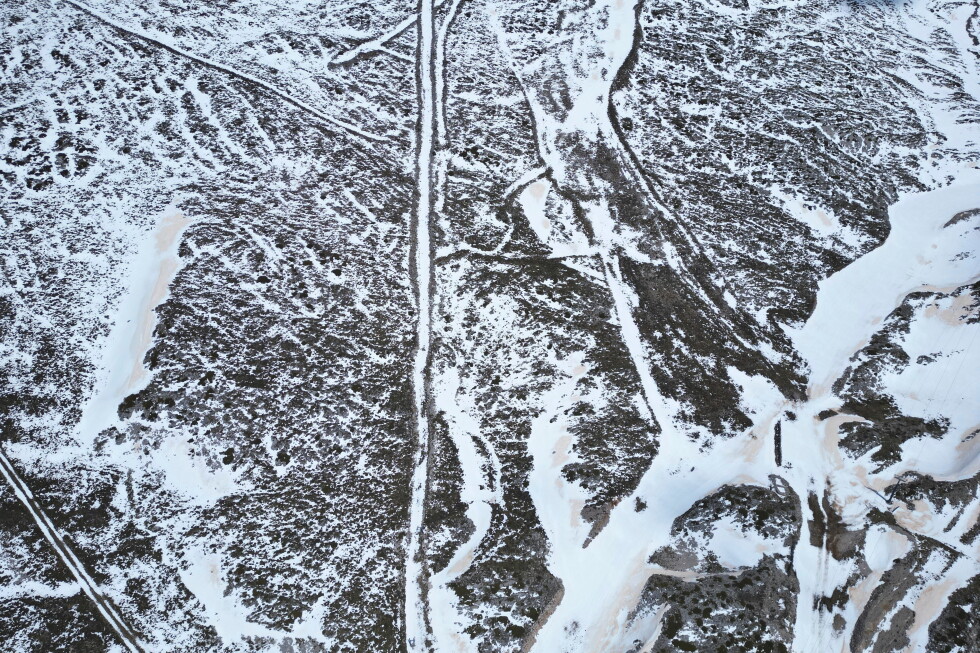
Nestled beneath Greece’s iconic Mount Parnassos, the mountain village of Arachova has long held a reputation as one of the country’s most beloved winter destinations, drawing skiers and winter holidaymakers from across the nation. For local residents who grew up here, the dramatic shift in regional snow patterns over recent decades is impossible to ignore.
Giannis Stathas, now mayor of Arachova and its surrounding communities, recalls frequent winter snowstorms that trapped entire neighborhoods indoors for days at a time during his childhood. “We couldn’t go to school because of the snow,” Stathas says of those mid-20th century winters, noting that families would often remain stuck in their homes for 48 hours or more, unable to venture outside. Today, those extended deep snow events are a thing of the past. Stathas points out that the consistent snowfall that once dusted lower elevations of just 300 meters (984 feet) above sea level now only occurs 2,100 meters higher up, near Mount Parnassos’ 2,400-meter (7,874-foot) peak.
Stathas’ on-the-ground observations are now backed by rigorous new research from the University of Cambridge’s Scott Polar Research Institute. The study, which analyzed 10 mountain ranges across mainland Greece, confirms that snow cover in the region is declining at an alarming rate. Lead researcher Konstantis Alexopoulos, a snow hydrologist affiliated with Cambridge, the National Observatory of Athens, and the Hellenic Mountain Observatory, reports that more than 50% of Greece’s total mountain snow cover has vanished since the mid-1980s.
To build this comprehensive long-term dataset, the research team leveraged 40 years of satellite imagery collected by NASA and the European Space Agency. Machine learning techniques were used to fill gaps in the data caused by cloud cover and infrequent satellite passes, allowing the team to produce one of the most complete analyses of Greek snow cover ever conducted.
The rapid loss of snow is far more than a shift in local weather — it poses a major threat to Greece’s water security, researchers emphasize. Alexopoulos compares mountain snowpack to a natural, interest-bearing savings account for fresh water. Unlike rain, which rapidly drains into rivers and the ocean immediately after falling, snow is stored gradually in mountain peaks, melting slowly throughout the warm, dry summer months when water is most needed for human consumption, agriculture, and ecosystems. This seasonal release is especially critical in the Mediterranean basin, where summer rainfall is extremely limited. According to Alexopoulos, rising global temperatures driven by greenhouse gas emissions are the primary driver of the snow loss, affecting both total annual snowfall and how long snow remains on mountain slopes after storms.
“The snow cover decline that we’re observing on the Greek mountains is not connected to the natural climate variability that does exist,” Alexopoulos explains. “The current rate of climate change globally and specifically in hotspots like the Mediterranean is much faster than what the earth has experienced previously.”
The research team expected to record some snow loss, but were caught off guard by the sheer scale of the decline. Even major mountain systems like the Andes and Himalayas, which have also seen steep snow cover reduction in recent decades, have not experienced losses at the same rapid rate seen in Greece. Prior to this study, long-term analysis of Greek mountain snow patterns was rare: mountain environments are inherently difficult to study due to limited access, making it challenging to install and maintain long-term weather monitoring stations. For many years, the role of snow in supporting Greece’s water supply was also underappreciated by local researchers and policymakers, Alexopoulos notes. Today, as droughts become increasingly common across the country, understanding this vital water resource has become a pressing priority. While Mount Parnassos itself was not included in the 10-mountain study, Alexopoulos notes its conditions mirror those recorded across the rest of the country.
In Arachova, the impacts of declining snow are already being felt by local residents and business owners. The entire village relies on snowmelt for 100% of its drinking and household water supply, says Aktida Koritou, a local restaurant owner who has lived in the area since the Mount Parnassos ski center opened in the early 1980s. Locals have grown far more conscious of water scarcity in recent years, taking extra steps to avoid waste, especially during the peak summer months when shortages are most severe.
Mayor Stathas confirms that Arachova’s natural springs are drying up, and regional reservoirs are no longer refilling to their historic levels. The most critical water shortages run from late August through early October, he says. A surprise April snowfall last year was a welcome boost for the region, but did little to refill empty reservoirs. Regional authorities are already working to adapt to the new normal: the municipality is exploring construction of small retention dams to capture more melting snow, while the local ski center has implemented new snow retention measures to extend the lifespan of natural snow on slopes.
Beyond water scarcity, reduced snow cover has also increased the risk of catastrophic wildfires. Drier vegetation across mountain slopes has turned once fire-resistant fir forests into tinder. Stathas notes that large mountain fires were virtually unheard of in the region 30 to 40 years ago, but today the risk of widespread burning is a constant concern during the dry season.
The decline of consistent early-winter snow has also hit Arachova’s core economy: winter ski tourism. When the ski center first opened, the season traditionally launched in December, drawing crowds of holidaymakers over the Christmas period. Today, the season does not start until January. Without reliable snow in December, travelers are choosing to head to alpine resorts in Switzerland and other destinations with guaranteed snow, cutting into local business revenue. Koritou says her own restaurant saw a 30% drop in customers over the 2025 Christmas holiday compared to historic levels.
To offset these losses, the municipality is working to diversify Arachova’s tourism economy, rebranding the cool mountain village as a summer getaway. Visitors can enjoy swimming in nearby lower-elevation lakes and beaches, then retreat to Arachova’s cool mountain air in just 20 minutes’ travel, Stathas explains. But even this summer tourism strategy depends on consistent access to water, a resource that is growing increasingly scarce.
For long-time local residents, the loss of snow is not just an economic and environmental challenge — it is a cultural shift. Koritou recalls how farmers would rush to harvest grapes in late October before the first heavy snowfall, how every household kept a shovel behind their front door, and how entire neighborhoods would come together to clear blocked roads. She also remembers sections of Mount Parnassos where snow would linger all year, never fully melting before the next winter’s snow arrived.
“There are some years when despair grips you,” Koritou says. “For those of us who know winter well, it’s disappointing not to see snow. You want it in the winter. The change is enormous.”