分类: politics

  • US used more missile interceptors defending Israel than its own forces did: Report

    US used more missile interceptors defending Israel than its own forces did: Report

    New data published by The Washington Post in a Thursday report has laid bare the starkly uneven burden of missile defense operations against Iran, showing the United States has expended far more advanced interceptor assets shielding Israel than Israel itself has deployed to protect its own territory.

    According to the report, the unprecedented scale of US interceptor usage is the root cause of the critical stock shortages previously documented by Middle East Eye and other regional news outlets. The gap in available munitions has already had ripple effects across the region: during the peak of active conflict, Gulf US allies saw their requests for emergency interceptor resupplies rejected, despite Israel stepping in to deploy Iron Dome batteries and personnel to defend the United Arab Emirates, a key regional partner.

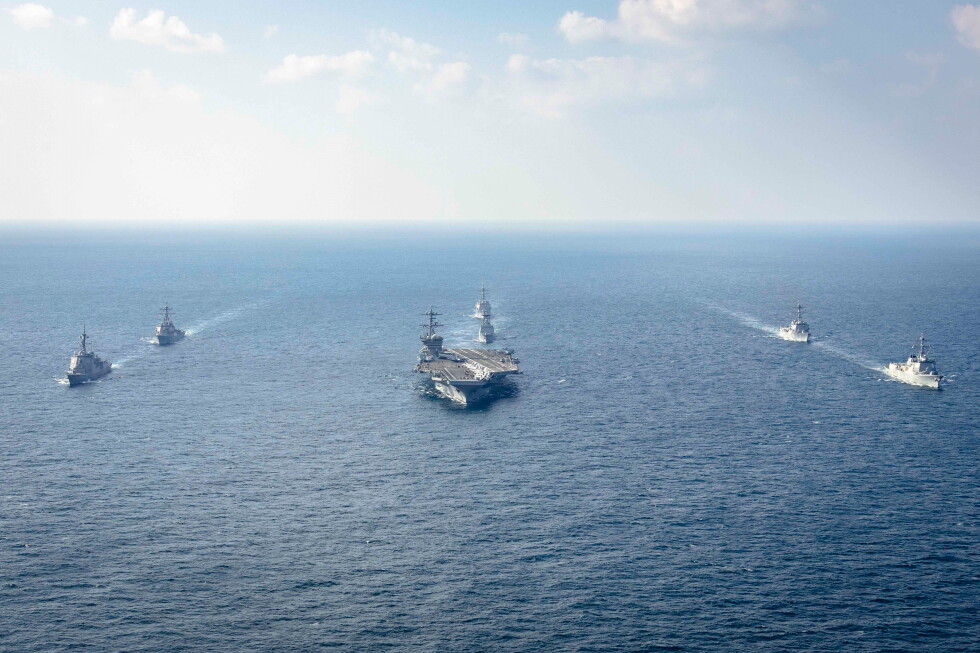
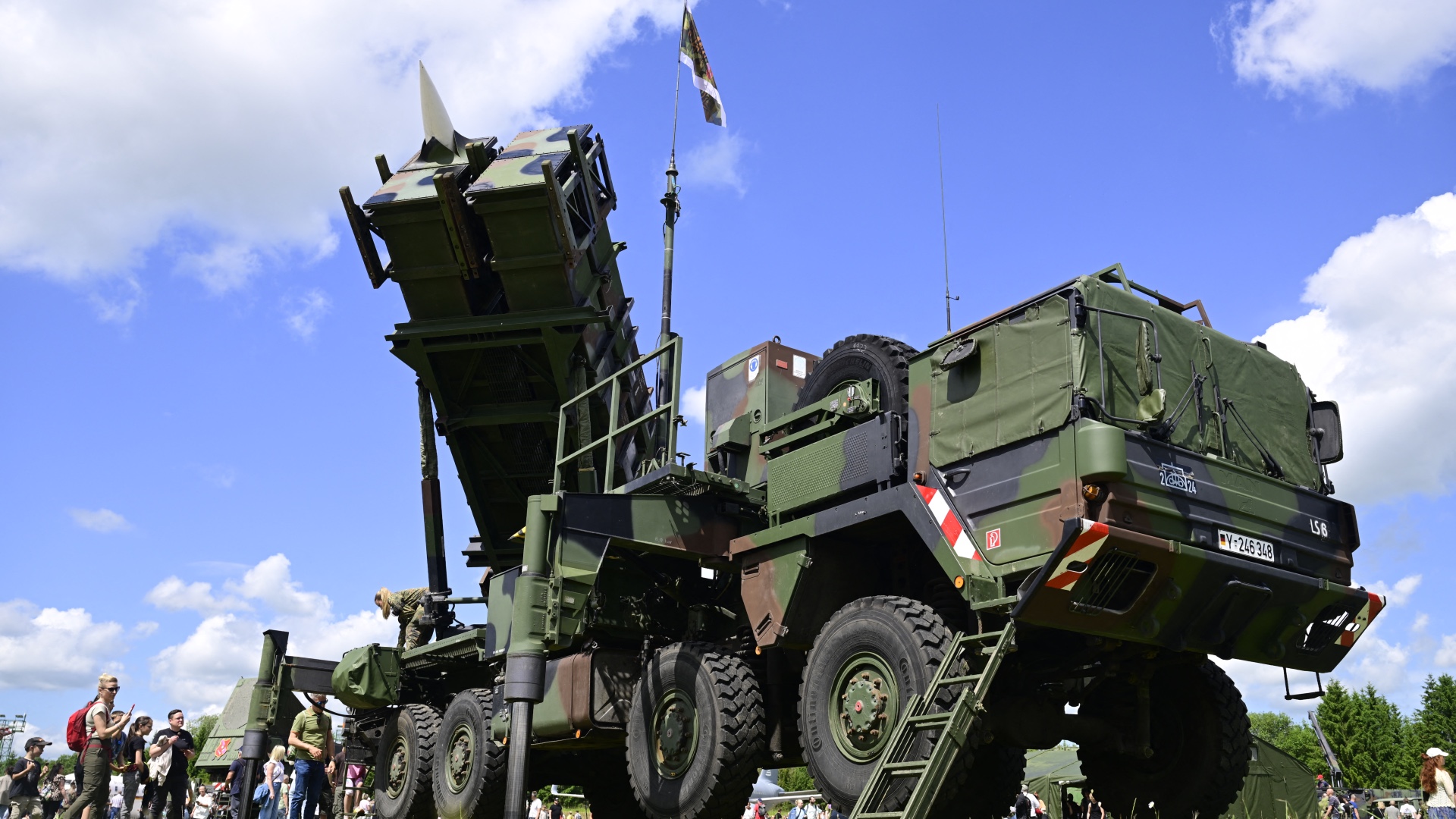
    Breaking down the volume of deployments, The Washington Post confirmed the US launched more than 200 Terminal High Altitude Area Defence (THAAD) interceptors to counter Iranian attacks — a figure equal to roughly 50 percent of the Pentagon’s entire global stock of the advanced defense system. In addition to the THAAD deployments, US Navy vessels operating in the Eastern Mediterranean fired more than 100 Standard Missile-3 and Standard Missile-6 interceptors to down incoming threats.

    By comparison, Israel’s own interceptor usage was far lower. Israeli defense forces launched fewer than 100 Arrow interceptors and approximately 90 David’s Sling interceptors. Notably, the David’s Sling systems were also diverted to counter projectiles launched by Yemen’s Houthi movement and Lebanon’s Hezbollah, groups whose missile and drone arsenal is far less sophisticated than that of Iran.

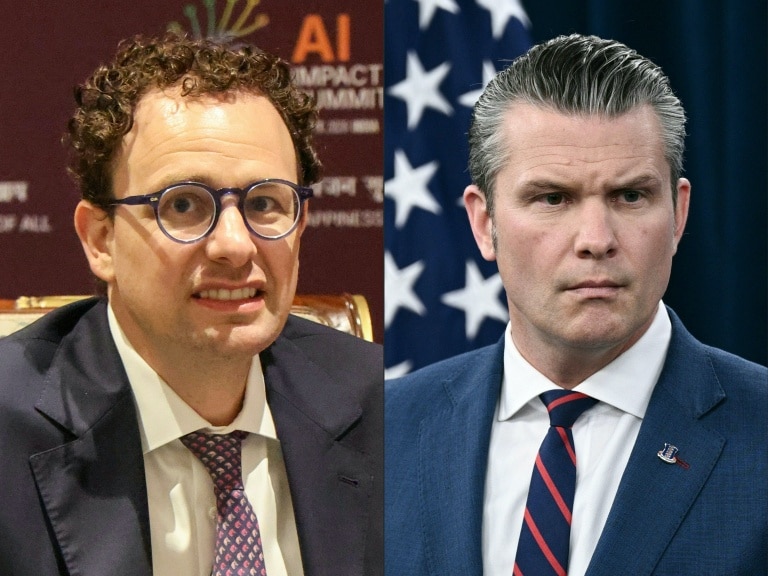
    These numbers paint a clear picture of a “lopsided dynamic” at the heart of the US-Israel military alliance, the Post concluded. The revelation has sparked pushback from foreign policy analysts, with Trita Parsi, executive vice president of the Quincy Institute, describing the data as “stunning” in a post on the social platform X. “Very understandable that many view the Iran war as ‘Israel first’ when you see these statistics,” Parsi added. “The US depleted far more of its advanced missile defense interceptors inventory to defend Israel than Israel itself did.”

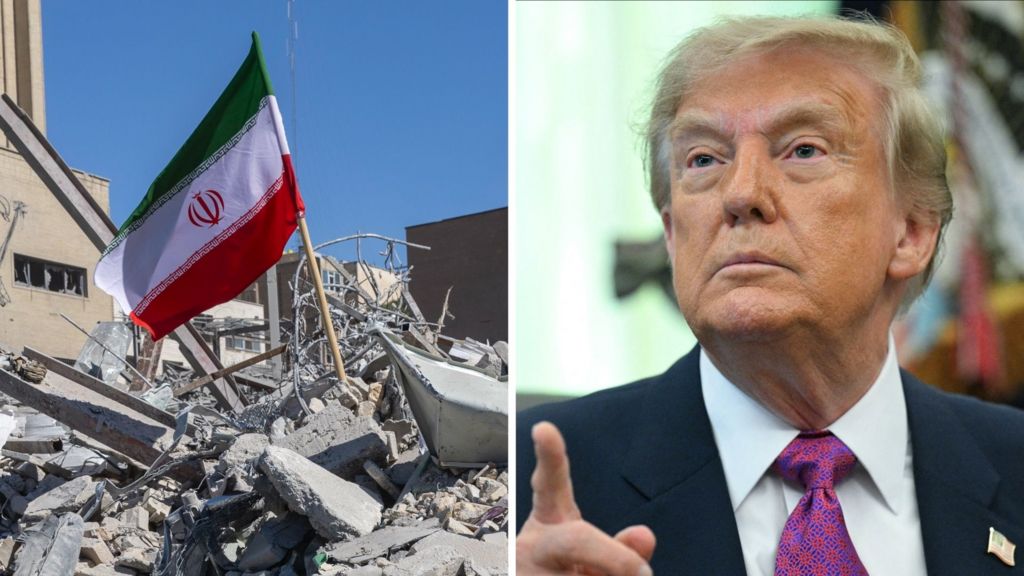
    The disclosure comes as Washington and Tehran hold indirect talks to finalize a proposal to end the conflict, with a fragile ceasefire currently holding across active front lines. Former US President Donald Trump has publicly threatened to resume full-scale attacks on Iran if the country does not accept his administration’s terms for a permanent ceasefire.

    But the depleted interceptor stockpiles leave the US in a strategically vulnerable position. Even before the conflict escalated, defense officials had publicly acknowledged that US interceptor inventories were already stretched thin, and the massive deployment for Israel leaves just 200 THAAD interceptors remaining in US stockpiles globally.

    The military dynamic of the conflict has centered on a race between two sides: the US and Israel have sought to destroy as many of Iran’s ballistic missiles and mobile launchers as possible inside Iranian territory, while Iran has aimed to exhaust the stockpiles of defense munitions held by the US, Israel, and their regional Gulf partners. A recent New York Times report corroborated that Iran has retained roughly 70 percent of its pre-war mobile missile launchers and 70 percent of its total ballistic missile stockpile, leaving it with substantial remaining strike capacity if conflict resumes.

    Compounding the strategic vulnerability, The Washington Post notes that if hostilities restart, the US will almost certainly be forced to take on an even larger share of missile defense duties for Israel. This additional burden stems from a recent decision by the Israeli military to take several of its own domestic missile defense batteries offline to conduct scheduled maintenance. One unnamed senior US official told the outlet that “the imbalance will likely be exacerbated if fighting restarts.”

  • Rubio embarks on another mission to ease tensions with allies during NATO meeting

    Rubio embarks on another mission to ease tensions with allies during NATO meeting

    As U.S. Secretary of State Marco Rubio departs for a critical NATO foreign ministers’ gathering in Helsingborg, Sweden, his core mission is clear: calm rising unease among Washington’s European allies over the Trump administration’s inconsistent approach to the transatlantic alliance and unclear plans for American troop levels across the continent.

    Friday’s gathering will coincide with separate briefings at NATO’s Brussels headquarters, where senior Pentagon leaders are set to outline the U.S. military’s long-term defense commitment to the 32-nation bloc. The meeting comes as a precursor to July’s NATO leaders’ summit in Istanbul, unfolding against a backdrop of sweeping global security uncertainty: the unresolved trajectory of the ongoing war in Iran, and stalled U.S. efforts to restart peace negotiations to end the two-year Russia-Ukraine conflict. Lingering friction also remains from President Donald Trump’s repeated public criticism of underfunding by European allies, and his controversial public interest in acquiring the autonomous Danish territory of Greenland, a NATO member asset.

    Rubio has emerged as the Trump administration’s go-to diplomat for de-escalating tensions at high-stakes allied gatherings, tasked with projecting a more measured, less confrontational tone than the president often delivers. This already marks his third such outreach mission in 2025, following February’s Munich Security Conference and a recent trip to Rome, where he met with Italian government leaders and Pope Leo XIV. That meeting came after Trump publicly attacked the American-born pontiff over his positions on street crime and U.S. policy in the Iran war.

    A major source of confusion for allies right now centers on contradictory signals about U.S. troop deployments in Europe. Ahead of his departure for Sweden, Rubio declined to answer questions about potential adjustments to the number of U.S. troops assigned to the NATO Force Model, the alliance’s core contingency defense plan for major European security crises. Just days before the meeting, the Trump administration first announced it would cancel planned deployments of thousands of troops to Poland and Germany. Then on Thursday, Trump posted a surprise reversal on social media, declaring the U.S. would deploy an additional 5,000 troops to Poland. To date, no clarification has emerged: it remains unclear whether the previously canceled deployment is being reinstated, whether the 5,000 troops represent an additive increase to rotational presence, or whether an overall drawdown of U.S. forces in Europe will still proceed from other theater locations. The Pentagon redirected all press queries to the White House, which has not issued an immediate response to requests for clarity.

    While Rubio reaffirmed his position as a self-described “strong supporter” of the transatlantic alliance, he did not soften the Trump administration’s core criticism of NATO’s response to the Iran war. He told reporters ahead of his flight from Miami that the entire administration, including the president, is “very disappointed” in the alliance’s inaction, a sentiment Rubio said should come as no surprise to any participating ally.

    In pointed remarks, Rubio called out NATO member Spain specifically for refusing to grant the U.S. access to its Spanish-based military bases for operations related to the Iran conflict. He also noted that many other allies have rejected calls to join a U.S.-led coalition to re-open and secure the Strait of Hormuz, the critical global oil shipping chokepoint that Iran has effectively closed to commercial traffic in recent months. “I know why NATO is good for Europe, but why is NATO good for America?” Rubio asked rhetorically during his pre-departure press briefing, answering his own question by pointing to the value of European bases for global U.S. power projection. “So, when that is the key rationale for why you’re in NATO, and then you have countries like Spain denying us the use of these bases, well, then, why are you in NATO?”

    Rubio added that while nearly all NATO allies formally back the U.S. position that Iran must not be permitted to develop a nuclear weapon, almost none have stepped up to back Trump’s preventive military action. “He’s not asking them to commit troops. He’s not asking them to send their fighter jets in. But they refuse to do anything, and so I think the president looks at that and says, ‘Hold on a second,’” Rubio said. “I think we were very upset about that. The president has made that very clear.”

    Top NATO officials have attempted to downplay the chaos around shifting U.S. troop plans, framing adjustments as part of long-planned reorientation that allies were notified of well in advance. NATO Secretary-General Mark Rutte told reporters Wednesday that European allies have been aware for a full year that the Trump administration planned to withdraw some U.S. troops from the continent. Rutte said it is reasonable to expect European and Canadian members to take on greater responsibility for conventional defense of the alliance, particularly in Europe. While Rutte affirmed the U.S. will remain engaged in transatlantic security, he acknowledged that over time Washington may reallocate military resources to other global hotspots.

    U.S. General Alexus Grynkewich, the commander of both U.S. and NATO forces in Europe, echoed that message this week, saying current security commitments will not leave Europe with a defense gap, but warned allies to prepare for additional incremental U.S. troop drawdowns over the coming years. The Trump administration has repeatedly made clear to European allies that in the long term, the continent will need to take full ownership of its own security, including defense support for Ukraine against Russian aggression.

  • Tanya Plibersek defends PM after on-air dismissal of national femicide inquiry

    Tanya Plibersek defends PM after on-air dismissal of national femicide inquiry

    A heated political debate has erupted in Australia over Prime Minister Anthony Albanese’s comments rejecting calls for a national royal commission into femicide, with the government’s top minister for domestic violence issues stepping forward to defend his position amid widespread public anger.

    The controversy began during a Monday radio interview on Hobart’s HIT 100.9FM, where host Christie Hayes—herself a prominent domestic violence advocate—pressed the Prime Minister on growing public demands for a national inquiry, coming off a grim week that saw four women killed in four consecutive days. When Hayes directly asked whether the government would commit to establishing a royal commission, Albanese pushed back on the utility of the formal inquiry.

    “There’s calls for a royal commission about everything,” the Prime Minister initially responded. After Hayes interjected to argue that the deaths of women at the hands of intimate partners qualified as a uniquely urgent issue, Albanese agreed on the severity of the crisis but questioned the value of a formal commission, asking, “But you’ve got to work out, what does a royal commission do besides fund lawyers?” He added that policymakers already know what solutions are needed to address the crisis, and argued the nation should prioritize immediate action over prolonged inquiry processes.

    Two days after the exchange, Hayes went public with her fierce criticism of the Prime Minister’s response, telling *The Mercury* she left the interview “shaking with anger” and accused Albanese of mansplaining the violence against women crisis to a survivor advocate.

    On Friday, Social Services Minister Tanya Plibersek—whose portfolio explicitly covers family, domestic and sexual violence policy—came to Albanese’s defense in an interview with ABC Radio National, pushing back against claims that the Prime Minister is disrespectful or unconcerned about the issue, calling that characterisation “unfair.”

    Plibersek drew on Albanese’s personal history to underscore his commitment to tackling the crisis, noting that the Prime Minister witnessed domestic abuse against his own mother during childhood, a trauma he has spoken of publicly on rare occasions. “It is something that we take seriously, from the Prime Minister, right through our government,” she said.

    The minister did acknowledge the devastating severity of the national crisis, conceding that many members of the public still fail to grasp the full lifelong harm that family violence inflicts on survivors and bereaved families. Speaking from her own experience engaging daily with people impacted by abuse, Plibersek said, “I don’t think you can overstate the toll this takes, the gap that’s left when we lose someone and the lifelong impact of experiencing violence. I don’t think you can overstate how important this is. The statistics are overwhelming.”

    Plibersek added that addressing femicide and domestic violence requires more than just government policy—it demands collective cultural change across all sectors of Australian society. “Violence is learnt as respect is learnt … We need to make sure that our schools, all of our sporting clubs, all of us work together with the same message, that violence and control in relationships is never OK,” she said. The minister also has personal proximity to the issue: her own daughter Anna Coutts-Trotter survived an abusive relationship as a teenager.

  • US to send 5,000 more troops to Poland, Trump says

    US to send 5,000 more troops to Poland, Trump says

    In a sudden reversal of a recent Pentagon decision, U.S. President Donald Trump announced Thursday that the United States will deploy an extra 5,000 troops to Poland. The announcement comes just seven days after the Department of Defense scrapped a planned deployment of 4,000 troops to the Eastern European nation, leaving defense analysts and European allies scrambling to interpret the shift in U.S. military posture on the continent.

    Breaking the news via his social platform Truth Social, Trump framed the new deployment as a gesture rooted in his close personal and political alignment with Polish President Karol Nawrocki. Trump endorsed Nawrocki during Poland’s 2025 presidential election, and the Polish leader has repeatedly positioned himself as one of Trump’s most vocal European supporters. The U.S. president offered no additional clarity on whether the 5,000 additional troops represent an expansion of the original canceled deployment, a revised iteration of that plan, or an entirely separate military operation.

    The revised troop plan arrives amid a broader restructuring of U.S. military presence across Europe, driven by the Trump administration’s signature “America First” policy agenda that has prioritized reducing overall U.S. defense commitments overseas. Earlier this month, Trump followed through on a threat to withdraw 5,000 U.S. troops from Germany amid a heated public dispute with German Chancellor Friedrich Merz over Washington’s approach to the ongoing conflict with Iran. Trump lashed out at Merz after the German leader suggested that U.S. negotiators had been “humiliated” during talks with Iranian officials, and the withdrawal moved forward quickly despite bipartisan pushback in Washington.

    To date, it remains unconfirmed whether the troops bound for Poland are the same forces being drawn down from Germany, or an entirely new contingent. Beyond tensions with Germany, Trump has openly criticized fellow NATO allies for refusing to back the U.S. in escalating pressure on Iran over shipping access through the Strait of Hormuz, a critical global energy chokepoint.

    The announcement comes ahead of a high-stakes NATO foreign ministers summit kicking off Friday in Stockholm, where U.S. Secretary of State Marco Rubio will lead the American delegation. Top of the agenda for Rubio is expected to be renewed demands for NATO member states to increase their own defense spending and share more of the alliance’s collective defense burden, a longstanding priority for the Trump administration.

    Ahead of the summit, BBC reporters pressed Rubio on unconfirmed intelligence reports suggesting the U.S. plans to reduce its total available troop commitments for collective defense in the event of an attack on any NATO member. Rubio would not confirm the reports, but confirmed that “some of those issues” would be on the summit’s negotiating table, adding that Trump remains “very upset and disappointed” with the alliance over its failure to meet U.S. demands for greater burden sharing.

    The U.S. Defense Department’s initial cancellation of the 4,000-troop deployment to Poland last week sparked widespread confusion across European capitals about U.S. security commitments. Defense Secretary Pete Hegseth later sought to calm those fears, framing the cancellation as nothing more than “a temporary delay” and reaffirming that the U.S. remains committed to maintaining a robust and credible military posture across Eastern Europe.

    Nawrocki, who secured Poland’s presidency with Trump’s public backing, has long positioned himself as a staunch ally of both Trump and U.S. security goals in Europe. In a January interview with BBC Radio 4’s *Today* programme, Nawrocki argued that Trump is the only global leader with the ability to confront Russian President Vladimir Putin and negotiate an end to the ongoing war in Ukraine. Despite Trump’s repeated public criticism of the NATO alliance and his fractious relationships with other European leaders, Nawrocki has consistently maintained that the United States remains the primary guarantor of collective security across Europe.

    Even within Trump’s own party, the administration’s shift on European troop deployments has drawn criticism. Multiple congressional Republicans have already spoken out against the planned withdrawal of 5,000 troops from Germany, warning that the drawdown risks sending a dangerous signal of weakened U.S. resolve to the Kremlin, which continues to maintain aggressive military posturing along NATO’s eastern border.

    Currently, the United States maintains its largest European military footprint in Germany, hosting more than 36,000 active-duty troops across the country. By comparison, the U.S. has roughly 12,000 troops deployed in Italy and an additional 10,000 across the United Kingdom.

  • Alberta to hold referendum on whether to remain in Canada

    Alberta to hold referendum on whether to remain in Canada

    Canada’s national unity faces its most significant test in nearly 30 years after Alberta Premier Danielle Smith announced plans for an October referendum on the province’s future within the Canadian federation, capping months of growing public pressure from separatist activists and long-simmering regional grievances against the federal government in Ottawa.

    The vote, scheduled for October 19, will ask Albertans a straightforward, constitutionally framed question: whether the province should remain part of Canada, or whether the provincial government should launch the formal legal process required under Canada’s constitution to hold a subsequent binding referendum on full separation. The announcement comes after two competing citizen-led petitions gathered massive grassroots support earlier this year: a pro-separation petition collected more than 300,000 signatures, while a counter-petition advocating for Alberta to stay in Canada drew more than 400,000 signatures.

    The independence movement in Alberta, Canada’s oil-rich western province, has gained steady traction over the past decade rooted in a widespread, long-held belief among many residents that the province’s economic interests and political priorities are consistently sidelined by federal policymakers in Ottawa. Grievances center on federal climate policies that many Albertans argue have obstructed growth of the province’s critical oil and gas sector, as well as a persistent perception that Alberta contributes more to national federal revenue than it receives in public spending and infrastructure investments.

    In a surprising twist, Premier Smith confirmed in her nationally televised announcement that she personally will vote to keep Alberta within Canada, a position shared by her governing United Conservative Party caucus and provincial cabinet. “That is how I would vote on separation in a provincial referendum,” Smith said. “It is also the position of my government and my caucus.”

    Smith justified the referendum by pointing to a recent court ruling that threw the citizen petition process into legal limbo. After Indigenous First Nations groups argued they had not been properly consulted on the pro-separation petition — a failure that they said infringed on their constitutionally protected rights — an Alberta judge dismissed the petition, halting signature verification and leaving the initiative dead in the water. Smith argued that allowing that ruling to stand would silence the voices of hundreds of thousands of engaged Albertans, a move incompatible with Canadian democratic values.

    “As Premier, I will not have a legal mistake by a single judge silence the voices of hundreds of thousands of Albertans,” Smith said Thursday. “Alberta’s future will be decided by Albertans, not the courts. Kicking the can down the road only prolongs a very emotional and important debate, and muzzling the voices of hundreds of thousands of Albertans wanting to be heard is unjustifiable in a free and democratic society.”

    The premier has faced intense pressure from separatist leaders for months, with Jeffrey Rath, a separatist lawyer, warning earlier this week that Smith’s choice on the referendum would amount to an existential decision for her premiership. Despite the growing momentum behind the separation movement, recent public opinion polling consistently shows a majority of Albertans oppose splitting from Canada.

    This referendum marks the most serious challenge to Canadian unity since two independence referendums in Quebec, the last of which in 1995 ended with a razor-thin 50.58% to 49.42% majority voting to remain in Canada. In the wake of that near-miss, the federal government passed the Clarity Act, a law that sets binding ground rules for any future provincial separation efforts. Prime Minister Mark Carney reaffirmed earlier this month that any Alberta separation process would have to comply with the law, which requires a clear referendum question approved by the federal House of Commons and a “clear majority” of voter support before federal government would enter separation negotiations.

    Even if the pro-independence side prevails in the planned final binding referendum, the path to full separation would be long, fraught with uncertainty, and marked by tense negotiations with the federal government over issues including national debt division, resource rights, border arrangements, and Indigenous land claims.

    Smith also used Thursday’s announcement to echo widespread regional frustration with federal overreach, arguing that the Liberal government in Ottawa has pushed to centralize power at the expense of provincial jurisdiction, echoing a core grievance shared by many Alberta politicians regardless of their stance on separation. “I categorically reject Ottawa’s attempts to move towards a more centralised American-style system and infringe on provincial jurisdiction,” Smith said. “I call on all provincial leaders and MPs to undo the extensive damage that centralisation of power in Ottawa has done to our country economically and with respect to national unity.”

    Federal political leaders across party lines have pushed back in favor of preserving national unity. Dominic Leblanc, Canada’s Minister of Internal Trade and a senior Liberal cabinet member, said in a social media statement that the government “strongly believes that the interests of Albertans and all Canadians are best served when we work together.”

    “As we take note of Premier Smith’s address this evening, we remain focused on building a stronger Canada for all, in full partnership with Alberta and to the benefit of all Albertans and all Canadians,” he added. Pierre Poilievre, leader of the federal Conservative Party and an Alberta native, confirmed Thursday that he supports a united Canada and will campaign across the country to unify Canadians around a shared vision of hope.

  • US air losses over Iran may grimly foreshadow China war risks

    US air losses over Iran may grimly foreshadow China war risks

    Recent steep losses of U.S. military aircraft during joint U.S.-Israeli operations in the Middle East have ignited urgent new debate over whether American air power can endure sustained high attrition in a potential future great-power conflict against China in the Indo-Pacific.

    In May 2026, the nonpartisan U.S. Congressional Research Service (CRS) published a detailed report documenting that at least 42 U.S. aircraft have been lost or damaged beyond field repair since the launch of Operation Epic Fury, the February 2026 U.S.-Israeli military campaign targeting Iranian military and infrastructure assets. The toll cuts across every major segment of U.S. air power: fighter jets, refueling tankers, special operations aircraft, helicopters, and uncrewed surveillance and strike drones, painting a stark picture of the campaign’s high intensity.

    A breakdown of the confirmed losses includes four F-15E Strike Eagle fighters—three destroyed in friendly fire incidents over Kuwait in March, and a fourth shot down over Iranian airspace in April—plus one damaged F-35A stealth fighter, one A-10 Thunderbolt II destroyed by enemy fire, seven KC-135 refueling tankers, one E-3 Sentry AWACS early warning aircraft, two MC-130J special operations transport aircraft, one HH-60W combat rescue helicopter, 24 MQ-9 Reaper strike drones, and one MQ-4C Triton surveillance drone. Several additional aircraft were damaged on the ground at Saudi Arabia’s Prince Sultan Air Base during Iranian missile and drone counterattacks, while the two stranded MC-130Js inside Iranian territory were deliberately destroyed by U.S. forces to prevent capture.

    The CRS notes that the U.S. Department of Defense has not publicly released a full official damage assessment, but Capitol Hill lawmakers are already preparing to investigate the wide-ranging operational, budgetary, and defense industrial base implications of replacing these high-value military aircraft. Analysts have attributed the heavy losses to a mix of overlapping factors: tactical mistakes on the battlefield, surprisingly resilient Iranian air defense networks, long-unaddressed vulnerabilities in U.S. operational doctrine, and improved Iranian strike capabilities backed by technical and intelligence support from China and Russia.

    Writing for Forbes in March 2026, defense analyst Peter Suciu argued that common fog-of-war challenges contributed heavily to avoidable losses. These include ground crew and pilot errors caused by turned-off emitters or transponders during covert operations, widespread communications overload from constant radio traffic, disruptive enemy electronic warfare, rapidly shifting operational plans, failures in data linking and digital command systems, and human factors such as stress, fatigue, and inadequate training for high-intensity combat. Dense multinational operating environments, conflicting radar readings, unrecognized identification friend-or-foe (IFF) system failures, and pilots forgetting critical combat procedures have also amplified avoidable losses, Suciu added.

    Beyond tactical missteps, analysts emphasize that even after months of preliminary strikes, Iran’s integrated air defense network has retained enough operational capacity to impose heavy costs on U.S. air operations. Ahead of Operation Rising Lion—Israel’s June 2025 pre-emptive strikes on Iran’s nuclear program, widely seen as the precursor to February 2026’s Operation Epic Fury—defense journalist Arie Egozi documented that Iran operated a layered, multinational air defense architecture including Russian TOR-M1, SA-5, SA-6, and S-300PMU systems, Chinese-designed HQ-2 and FM-80 batteries, upgraded legacy HAWK missiles, British Rapier systems, and Swedish RBS-70 short-range weapons.

    Per Egozi’s analysis, the Russian-built TOR-M1 is capable of engaging fixed-wing aircraft, helicopters, drones, guided missiles, and precision-guided ordnance even in heavily contested electronic warfare environments, while the S-300PMU forms the backbone of Iran’s long-range defense capability, with advanced multi-missile compatibility, extended range, and improved lethality. Iran has also integrated Chinese-built YJ-14 search radars, modernized air surveillance systems, and a unified command-and-control network to protect key national assets including Tehran, military sites, port facilities, and oil infrastructure.

    While U.S. and Israeli strikes did degrade Iran’s largest fixed-site air defense systems such as the S-300PMU, hundreds of mobile, concealed, and dispersed short-range systems survived pre-emptive attacks and continue to pose a major threat to coalition aircraft. Lower-cost, highly portable systems have proven particularly difficult to suppress. The Robert Lansing Institute (RLI) reported in February 2026 that under a €500 million contract signed in December 2025, Russia agreed to supply Iran with 500 Verba man-portable air defense systems (MANPADS) and 2,500 9M336 missiles for delivery between 2027 and 2029. The RLI notes that Verba MANPADS are optimized to engage low-flying aircraft, helicopters, cruise missiles, and drones, and their widespread deployment across Iran has already significantly complicated U.S. air operations, increased attrition risk for low-altitude airframes, and forced coalition aircraft to alter flight routes, cruising altitudes, and mission timelines. MANPADS deployed around high-value Iranian sites also create localized no-fly zones that hinder intelligence, surveillance, and reconnaissance (ISR) operations, combat search and rescue (CSAR) missions, and rapid strike sorties.

    The heavy attrition experienced during Operation Epic Fury has also exposed critical gaps in the U.S. military’s core operating doctrine for high-intensity conflict, the Agile Combat Employment (ACE) framework. As analyst Michael Blaser outlined in a 2024 Proceedings article, ACE is designed to increase aircraft survivability by dispersing airframes across multiple small bases and relocating them frequently to outpace enemy targeting cycles. However, Blaser argues that this strategy relies on two unrealistic assumptions: that adversaries lack the long-range strike capacity to hit dozens of dispersed airfields simultaneously, and that enemy kill chains—the sequential process of identifying, tracking, and attacking targets—will remain slower than the U.S. military’s ability to generate sorties and relocate aircraft.

    The CRS report’s documentation of six U.S. aircraft destroyed on the ground at Prince Sultan Air Base by Iranian counterstrikes—five KC-135 tankers and one E-3 AWACS—directly illustrates this vulnerability. Blaser adds that modern artificial intelligence, machine learning, and persistent space-based surveillance have cut adversary kill chains to less than 24 hours, allowing peer competitors to identify and target dispersed U.S. aircraft faster than U.S. crews can relocate them to new positions.

    These doctrinal and operational vulnerabilities have been further exacerbated by alleged intelligence and targeting support provided to Iran by China and Russia. The report notes that China has supplied Iran with commercial satellite imagery, access to ground receiving stations, and AI-powered intelligence tools that can process satellite data, flight tracking, and commercial shipping information to identify U.S. deployments. Chinese private firms have also used AI-enabled open-source intelligence (OSINT) to map U.S. force positions and reconstruct coalition flight patterns. Russia, meanwhile, has reportedly provided Iran with its own satellite imagery, real-time targeting data, and ISR support tracking U.S. troops, warships, and aircraft, enabling far more precise Iranian strikes on U.S. radar sites, command infrastructure, and forward positions. Together, this support has helped Iran build a distributed, plausibly deniable intelligence network that underpins its most effective counterstrikes.

    The strategic implications of these losses extend far beyond the Middle East, directly shaping U.S. military planning for a potential future conflict with China in the Pacific. Unlike Iran, China fields a far larger, more capable missile arsenal, has a much deeper defense industrial base, and operates a far denser integrated strike network across the Indo-Pacific.

    A 2023 report from the Center for Strategic and International Studies (CSIS) led by analyst Mark Cancian already warned that the U.S. and its regional allies could lose hundreds of aircraft in a conflict over Taiwan, with 90% of those losses occurring on the ground to pre-emptive Chinese missile strikes. The report attributed these projected losses to China’s large, sophisticated arsenal of ballistic and cruise missiles, which can target the small number of fixed air bases available to U.S. forces across the Western Pacific.

    If the heavy attrition seen in Operation Epic Fury is any indication, future conflicts against peer great-power competitors will not be decided by which side fields the most technologically advanced stealth fighters. Instead, victory will likely go to the power that can keep enough of its air fleet dispersed, survivable, and operational through weeks of sustained missile and drone attacks.

  • Trump’s big arch approved by ally-controlled board

    Trump’s big arch approved by ally-controlled board

    A U.S. federal arts advisory body, now entirely staffed by appointees loyal to President Donald Trump, has given preliminary approval this Thursday to plans for the commander-in-chief’s proposed massive triumphal arch — a project already mired in legal battles and fierce public controversy. The U.S. Commission of Fine Arts, whose entire sitting board was dismissed by the administration last year to make way for White House-aligned replacements, approved the design in a unanimous 4-0 vote. The proposed structure stands planned at 250 feet, or 76 meters, tall, and will feature gilded statues of an angel and American eagles at its peak. If built as currently designed, it will surpass Paris’ iconic Arc de Triomphe, which stands 164 feet tall, to claim the title of the world’s largest arch, per Trump’s own remarks. The proposed site for the monument sits just outside the boundaries of Arlington National Cemetery, one of the most sacred public lands in the United States, where hundreds of thousands of U.S. military veterans and service members are laid to rest. The arch project is one of several high-profile construction initiatives Trump has pushed forward in Washington D.C., part of his broader push to leave a lasting physical legacy on the U.S. capital before the end of his term. Created by an act of Congress in 1910, the Commission of Fine Arts is composed of professional architects and urban planners tasked with advising on design and historic preservation for federal buildings and monuments in Washington’s highly regulated core public spaces. Unlike most major public monument projects in the capital, the Trump arch initiative has moved forward without any consultation or approval from Congress, a choice that has sparked sharp criticism from opponents. When pressed by reporters on Thursday about the lack of congressional oversight, Trump pushed back firmly, telling journalists “We’re doing it… we don’t need anything from Congress.” The push for the arch follows a similar pattern to Trump’s ongoing renovation of the White House ballroom, which has already seen the historic East Wing gutted to make way for the changes. Multiple advocacy groups, including organizations representing Vietnam War veterans, have already filed lawsuits seeking to block the project entirely. Plaintiffs argue that the development violates federal procedural requirements for changes to land near Arlington National Cemetery, and would permanently disrupt the protected scenic viewshed around the hallowed burial ground. A second oversight panel, also controlled by Trump appointees, is scheduled to hold its own review of the arch proposal on June 4, which will mark the next key step for the controversial project moving forward.

  • Trump says he’s sending 5,000 more troops to Poland, stirring confusion about US presence in Europe

    Trump says he’s sending 5,000 more troops to Poland, stirring confusion about US presence in Europe

    For weeks, the Trump administration has sent conflicting, shifting signals about its planned military posture in Europe, and a sudden announcement from former President Donald Trump on Thursday has only deepened the confusion among U.S. policymakers and European allies alike. In a post on his social media platform Truth Social, Trump revealed that the United States would deploy an extra 5,000 American troops to Poland, a complete reversal of the administration’s weeks of public comments committing to reduce — not expand — the U.S. military footprint across the continent.

    The policy whiplash comes against a backdrop of growing transatlantic tension over defense burden-sharing and U.S. strategy amid the ongoing Ukraine war. For weeks, the Trump administration has openly stated it planned to cut approximately 5,000 troops from its European force levels. U.S. officials had already confirmed that roughly 4,000 service members slated for a rotational deployment to Poland had their orders canceled, as part of this broader drawdown plan. A planned deployment of long-range missile personnel to Germany was also halted, aligning with Trump’s earlier order to shrink the U.S. military presence in Europe. Earlier this month, Trump even told reporters that planned cuts would go “a lot further than 5,000,” reinforcing expectations of a significant drawdown.

    Trump’s new announcement directly upends that trajectory, leaving NATO allies already caught off guard by previous policy shifts facing even more uncertainty. For months, the Trump administration has publicly pressured NATO member states to increase their own defense spending, criticizing many allies for failing to carry a sufficient share of collective defense costs and not doing enough to support U.S. policy amid tensions with Iran. These tensions grew after German Chancellor Friedrich Merz publicly criticized the administration’s lack of a clear strategy for the Iran conflict, saying the U.S. had been “humiliated” by Iranian leadership. In response, the administration moved forward with plans to draw down at least 5,000 troops from Germany.

    In his Truth Social post, Trump framed the new troop deployment as a gesture of support for Poland’s newly elected President Karol Nawrocki, whom he had publicly endorsed during the country’s election. “Based on the successful Election of the now President of Poland, Karol Nawrocki, who I was proud to Endorse, and our relationship with him, I am pleased to announce that the United States will be sending an additional 5,000 Troops to Poland,” Trump wrote.

    The conflicting announcements have sparked sharp criticism from lawmakers on both sides of the U.S. political aisle, who argue that erratic policy on European troop deployments sends a dangerous message to U.S. allies and to Russian President Vladimir Putin amid the four-year-long full-scale war in Ukraine. Republican Rep. Don Bacon of Nebraska told a congressional hearing that Polish officials had been “blindsided” by the earlier canceled deployment, calling the initial drawdown decision “reprehensible” and “an embarrassment to our country what we just did to Poland.”

    Pentagon officials have attempted to clarify the situation in recent days, but their statements have done little to resolve the ambiguity. Chief Pentagon spokesman Sean Parnell said Tuesday that the canceled deployment was only a “temporary delay,” not a permanent reversal, and described Poland as a “model U.S. ally.” He explained that the delay stems from the administration’s plan to reduce the number of brigade combat teams stationed in Europe from four to three, and said the Pentagon has not yet made final decisions about which units will be assigned to which forward positions.

    To date, it remains unclear what Trump’s new announcement means for existing plans: it is unknown whether the previously delayed 4,000-strong brigade will now deploy to Poland, whether the extra 5,000 troops will be added on top of existing rotational deployments, or whether the planned overall drawdown of 5,000 troops from Europe will still proceed, only taking cuts from locations other than Poland. When reached for comment to clarify the policy, the Pentagon directed all inquiries to the White House, which has not yet issued a formal response to requests for clarity. This week, Defense Secretary Pete Hegseth and Defense Undersecretary Elbridge Colby have both held calls with their Polish counterparts, and Polish Prime Minister Donald Tusk said Wednesday that he was “happy to hear Washington’s declaration that Poland will be treated as it deserves.”

    As of last week, U.S. Gen. Alexus Grynkewich, commander of U.S. and NATO forces in Europe, confirmed to reporters in Brussels that the administration’s plan remained for 5,000 troops to withdraw from Europe. Trump’s announcement comes as Secretary of State Marco Rubio travels to Sweden for meetings with NATO foreign ministers, who have already raised repeated questions about the Trump administration’s inconsistent troop policy.

    Retired career diplomat Ian Kelly, who served as U.S. ambassador to Georgia during the Obama administration and first Trump term and now teaches international relations at Northwestern University, said the conflicting announcements point to a lack of deliberate policy process at the highest levels of the administration. “There seems to be no process to deliberating policies like troop withdrawals and deployments at the top,” Kelly said. He noted that Rubio will likely face a difficult task explaining the sudden policy shifts to European allies, who have repeatedly called for consistent, predictable U.S. security policy even when they disagree with specific administration decisions. “These are not well thought out decisions,” Kelly said. “These are impulsive decisions based on Trump’s whims or what his advisors think are Trump’s whims.”

    Associated Press writer Michelle L. Price contributed reporting to this article.

  • Turkish court rules to remove leadership of main opposition party

    Turkish court rules to remove leadership of main opposition party

    A landmark and deeply controversial court ruling in Turkey has upended the leadership of the country’s main opposition bloc, the Republican People’s Party (CHP), triggering immediate outrage from the party’s current leadership and laying bare escalating tensions between the ruling establishment and Turkey’s oldest political force.

    The Ankara court’s judgment ordered the temporary removal of sitting CHP Chairman Ozgur Ozel and his entire executive team, installing former party leader Kemal Kilicdaroglu and his political allies to take over their roles in an interim capacity. The ruling, issued by Turkey’s Court of Appeals, stems from claims of electoral fraud that nullified the CHP’s 38th Ordinary Elective Congress held in November 2023, the party meeting where Ozel secured his victory to replace Kilicdaroglu. Under the terms of the ruling, all subsequent party congresses held after the 2023 extraordinary gathering are also legally invalidated.

    Founded by iconic Turkish statesman Mustafa Kemal Ataturk, the CHP has secured historic electoral gains against the long-ruling Justice and Development Party (AKP) in recent national contests. Most notably, imprisoned CHP presidential candidate Ekrem Imamoglu – the former popular mayor of Istanbul – has consistently led in opinion polling, with results showing he would defeat incumbent President Recep Tayyip Erdogan in a head-to-head general election. It remains uncertain whether the latest court ruling will also invalidate Imamoglu’s 2025 party primary victory, which secured his place as the CHP’s presidential nominee.

    Imamoglu was taken into custody in March 2025 on a sweeping array of charges including corruption, extortion, bribery, money laundering, espionage, and ties to terrorism – all allegations he has forcefully denied. Dozens of CHP local officials and grassroots party workers have also been arrested in what the opposition has decried as a coordinated campaign of political repression. Prior to Imamoglu’s arrest, the CHP had largely escaped the heavy-handed state interference that has targeted smaller left-leaning and pro-Kurdish political parties in Turkey for years, a pattern that shifted dramatically after the party won major gains in 2024 local elections.

    Kilicdaroglu, who led the CHP from 2010 to 2023, was credited with expanding the party’s electoral base and broadening its public appeal, but growing criticism from the party’s younger generation of politicians and his 2023 presidential election loss to Erdogan led to his departure from the leadership role. Following the court ruling, Kilicdaroglu signaled he was prepared to reassume his former post, telling TGRT News: “May this decision be beneficial to Turkey and CHP.”

    The current CHP leadership has rejected the ruling as politically motivated and has pledged to contest it. Per Turkish law, the party has a 14-day window to file an appeal with the country’s Court of Cassation. “All decisions taken by courts acting on instructions [from the government] are null and void as far as we are concerned,” CHP Deputy Chairman Gokan Zeybek stated, according to reports from independent Turkish outlet Medyascope. “Now we are going to Ankara. We are going to stand up for our headquarters, the headquarters entrusted to us by the nation, entrusted to us by the organisation.”

    The ruling marks the most significant escalation in a months-long crackdown on the CHP, deepening political uncertainty in Turkey ahead of upcoming national presidential elections.

  • Labour Party group accused of faking independent candidates in local election

    Labour Party group accused of faking independent candidates in local election

    A growing electoral fraud scandal has shaken UK politics, centered on a local Labour Party faction in Tameside, Greater Manchester, where party members are alleged to have planted non-existent independent candidates to siphon votes away from opposition contenders in May’s local elections. Greater Manchester Police have confirmed that five individuals — four men and one woman, ranging in age from 23 to 47 — were taken into custody on suspicion of conspiracy to defraud, as investigators probe claims of deliberate electoral rule-breaking.

    Local independent outlet the Manchester Mill first broke the story, reporting that fake independents Muhammad Ali and Marie Fairhurst were listed on the St Peter’s Ward ballot paper as part of the alleged scheme. Together, the two fake entries collected 291 votes in the 7 May poll. In a striking confirmation of the fraud allegations, a real local woman named Marie Fairhurst told reporters she had never consented to run for office and had no idea her name appeared on the ward’s ballot.

    In the end, the Labour Party candidate for the ward, Attar Ul-Rasool, secured a narrow victory, beating legitimate independent candidate Ahmed Mehmood by just 177 votes — a margin smaller than the total votes collected by the two alleged fake candidates. This controversy carries national political weight: the Tameside council region overlaps with Ashton-under-Lyne, the parliamentary seat of Angela Rayner, deputy leader of the national UK Labour Party.

    The arrests come at a highly sensitive moment for UK Labour, coming less than four weeks ahead of a critical by-election in the Greater Manchester constituency of Makerfield. Greater Manchester Mayor Andy Burnham is widely expected to win the Makerfield seat, a result that would put him in position to launch a challenge to current Labour Party leader Keir Starmer for the top job. Any proven electoral fraud linked to the party could have major reputational ramifications ahead of the upcoming by-election and the next general UK election.

    Outlining the scope of the investigation in an official statement, a Greater Manchester Police spokesperson said: “This morning, officers in Tameside arrested five people on suspicion of conspiracy to defraud, as part of an investigation into alleged offences committed leading up to the local elections. In the days leading up to and following the election on May 7, we received reports surrounding concerns about candidates within the St Peter’s ward. Following initial enquiries last week, we have launched a full investigation into the allegations.”

    “The work is specifically investigating the process of how candidates were put forward and represented in the ward, and if this adhered to the relevant legislation and electoral procedures,” the spokesperson added. “The five people … were arrested at addresses in Tameside this morning. They remain in custody for questioning. We are working closely with the Electoral Commission and local partners as part of our enquiries. We will provide further updates as we progress our investigation further.”