Fresh large-scale military clashes have erupted across the Middle East just one month after a preliminary ceasefire agreement was reached, plunging the region back into escalating conflict following the deaths of two United States service members in a cross-border attack.
The cycle of violence reignited Friday, when US Central Command (CENTCOM) confirmed that two American troops were killed and a third remains missing during Iranian drone and ballistic missile strikes targeting US positions in Jordan. These fatalities push the total number of confirmed US military deaths to 16 since the United States and Israel launched open hostilities against Iranian targets on February 28.
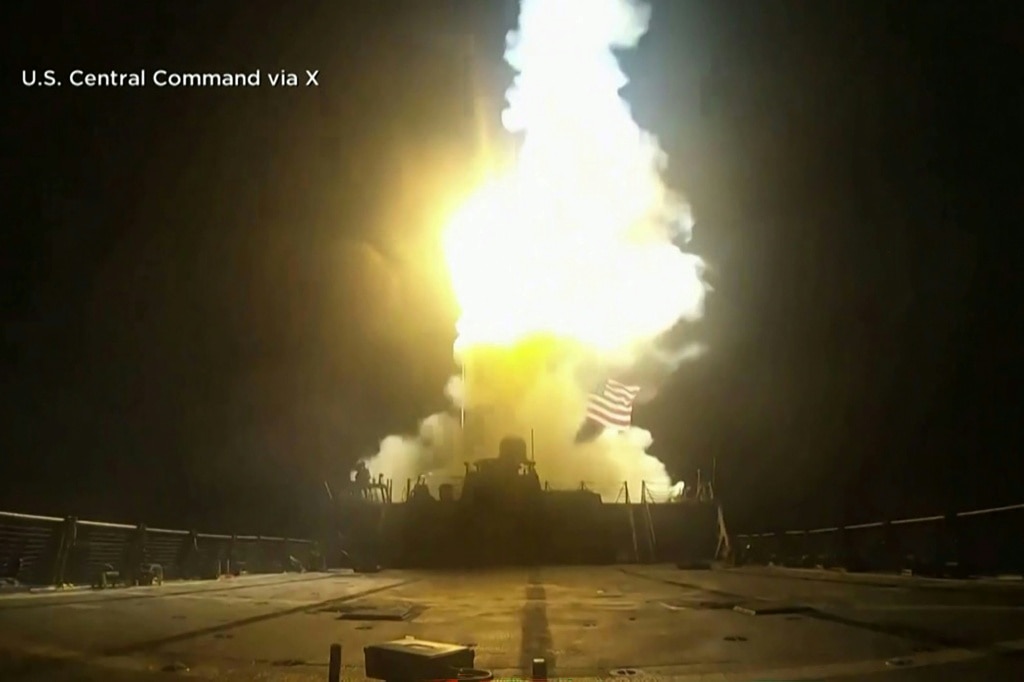
In response to the Jordan attack, the US launched its eighth consecutive night of airstrikes against Iranian positions on Sunday, with operations explicitly targeting units of the Islamic Revolutionary Guard Corps (IRGC) that Washington blames for the troop deaths. A US Central Command statement confirmed the strikes were ordered to “swiftly punish” IRGC forces for the attack on American personnel.
Tensions escalated further on Sunday when Iran’s Atomic Energy Organization accused the US of launching an illegal attack on an under-construction nuclear power plant in southwestern Iran. The agency said American forces struck the Darkhovin facility with multiple projectiles, marking an unprecedented escalation that puts critical Iranian nuclear infrastructure in the crosshairs.
Tehran moved quickly to retaliate for the US airstrikes, confirming it launched drone attacks against two US military bases stationed in Kuwait. Iranian military officials said the strikes hit an ammunition depot at Camp Udairi and damaged Patriot radar and air surveillance systems at Ali Al Salem Air Base. The retaliatory action came in response to more than a week of intensifying US-led strikes that Tehran says have hit civilian and military infrastructure across Iran, including airports, railway stations and critical bridges.
Clashes spilled over into neighboring countries over the weekend. Air raid sirens sounded across Jordan, where Israeli and Jordanian defense forces intercepted an Iranian missile bound for the Red Sea port city of Aqaba. The US embassy in Amman had previously issued an urgent warning to American citizens of a specific, credible threat targeting Aqaba’s port and airport infrastructure. In Kuwait, the national electricity ministry reported a second consecutive day of attacks on a combined power and desalination plant, which sparked a large blaze at the facility. Bahrain’s military also announced it had intercepted and destroyed a wave of Iranian drones, accusing Tehran of deliberately targeting civilian population centers.
The current round of hostilities is centered on the Strait of Hormuz, the strategic global chokepoint through which roughly 20% of the world’s oil supplies pass. Fighting first reignited after Iran launched attacks on commercial shipping transiting the waterway, before Tehran closed the strait entirely following the outbreak of open war. Control of the strait has become Tehran’s key leverage in negotiations with Washington, which reimposed a full blockade of Iranian ports earlier this week. On Sunday, IRGC forces announced they had intercepted two of four commercial ships that attempted to violate the closure of the strait, claiming the vessels were acting with American support to disrupt Iranian control of the waterway. The other two ships abandoned their transit attempt after the interception, per IRGC statements.
The rising violence has officially killed the preliminary ceasefire deal signed just one month ago, which was designed to end the open hostilities between the two sides. International mediation efforts have so far failed to pull Tehran and Washington back from the brink of full-scale war.
Iran’s top leadership has issued firm vows to escalate retaliation in the coming days if US strikes continue. Supreme Leader Mojtaba Khamenei, who assumed power after his father was killed in the opening US-Israeli strikes in February, pledged Saturday to deliver an “unforgettable lesson” to American forces. Senior military advisor Major General Mohsen Rezaei warned Tehran would resume full-scale offensive operations if US attacks continue, while top Iranian military commander Ali Abdollahi reiterated Sunday that any further American aggression will be met with a “decisive and devastating response.”
Local populations across Gulf states are already bracing for prolonged conflict. Kuwaiti authorities confirmed Iranian strikes have hit critical civilian infrastructure, and residents have begun stockpiling essential goods amid fears of disrupted supply chains. “The demand for water and canned goods has increased since this morning amid fears that services or supply chains will be affected,” 61-year-old Kuwait City resident Hassan Rayan told reporters.
As of Sunday, Iranian health officials confirmed 50 civilians and combatants have been killed and more than 500 injured since the latest round of fighting broke out, with casualty numbers expected to rise as airstrikes continue across the region.