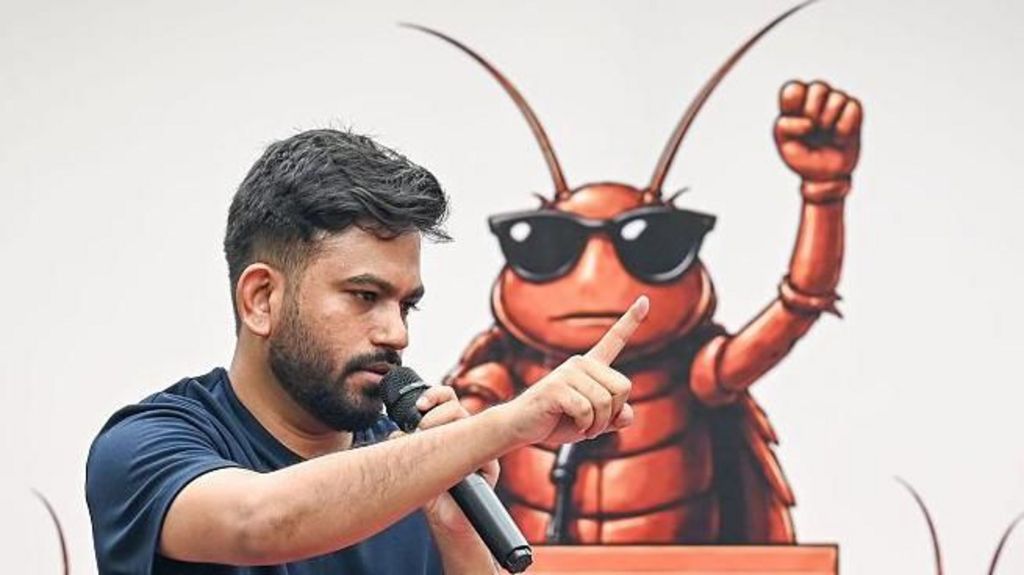
A mass protest movement demanding sweeping education reforms in India is moving forward with a scheduled march to the country’s parliament on Monday, after authorities forcibly removed a prominent hunger-striking activist from the demonstration site over the weekend, spurring escalating tensions between protesters and the ruling government.
The movement is led by the Cockroach Janta Party (CJP), a grassroots group that first launched as a satirical online movement in May to push back against widespread exam paper leaks and systemic irregularities in India’s education system. Founded by Abhijeet Dipke, the group has rapidly gained a massive national following, with thousands of protesters – who refer to themselves as “cockroaches” – having maintained a continuous month-long sit-in at Delhi’s historic Jantar Mantar observatory.
The demonstration gained national attention after well-known activist and educator Sonam Wangchuk joined the cause, launching a 21-day hunger strike in solidarity with the CJP. Through the scorching Delhi summer heat, Wangchuk sustained himself only on salt and water, losing more than 9 kilograms and suffering severe physical pain. Despite his declining health, he vowed to join the planned parliament march, even joking to supporters that if he died during the fast, his ghost would still join the protest.
That vow was cut short on Saturday morning, when dozens of local police and paramilitary forces raided Wangchuk’s stage at the protest site. Officers covered the activist with bedsheets to shield the removal from public view, pushed back crowd members who attempted to intervene, and transported him via ambulance to Delhi’s government-run Safdarjung Hospital for medical care. Wangchuk has refused to end his hunger strike even in hospital care, according to his wife Gitanjali Angmo. In an update Sunday, Angmo outlined a clear condition for ending the fast: sitting political leaders must meet with Wangchuk at the hospital and commit to making education accountability a top priority during the upcoming parliamentary session.
The forced removal did not derail the protest, however. CJP founder Dipke reaffirmed Sunday that the planned march to parliament will proceed as scheduled on July 20, and launched an indefinite hunger strike of his own Saturday to replace Wangchuk at the protest site. “If they think that taking Wangchuk away will end this movement, they are mistaken,” Dipke said in a statement. “We will remain here, and will march to parliament on 20 July.” Thousands of people from across the country have already confirmed they will join the march in solidarity with the reform movement.
The CJP’s protests were sparked by a string of high-profile exam cancellations tied to confirmed paper leaks. In May, a critical national medical entrance exam – taken by nearly 2.28 million aspirants – was scrapped after a leak was confirmed. A retest was held June 21, but according to family reports, more than 20 affected candidates have died by suicide in the wake of the disruption to their academic and career plans.
Protesters initially put forward two core demands: the cancellation of compromised exams and the resignation of India’s Education Minister Dharmendra Pradhan, who they argue must take moral accountability for the systemic failures that allowed the leaks to occur. Pradhan has previously dismissed the CJP and its supporters as “the B-team of disruptive elements,” and Prime Minister Narendra Modi’s central government has refused to open any dialogue with the movement. Following Saturday’s forced removal of Wangchuk, the CJP escalated its demands, now calling for Prime Minister Modi’s resignation. Dipke called the government’s action a “despicable act” that merits the prime minister stepping down.
Opposition political parties have widely condemned the government’s handling of the protest, describing the forced removal of Wangchuk as “shocking coercive state violence” and “an assault on democracy.” In recent days, growing pressure from opposition leaders and civil society groups has pushed the government to engage with the protest, with many public figures visiting the Jantar Mantar sit-in to affirm that the protesters’ demands for education reform are legitimate and require a government response.
Heavy security deployments, including scores of police and paramilitary personnel, are already in place across central Delhi ahead of Monday’s planned march, as the country braces for a major showdown between the reform movement and the ruling government.