分类: politics

  • Tulsi Gabbard resigns as US director of national intelligence

    Tulsi Gabbard resigns as US director of national intelligence

    In a sudden announcement that has rippled through U.S. political and intelligence circles, former U.S. Director of National Intelligence Tulsi Gabbard has confirmed she will resign her post in the second Trump administration, citing an urgent personal crisis: her husband Abraham has recently been diagnosed with bone cancer.

    The resignation, which will take full effect on June 30, was revealed through a resignation letter obtained by CBS News, a U.S. partner of the BBC. In the heartfelt correspondence, Gabbard emphasized the foundational role her husband has played in her public life. “His strength and love have sustained me through every challenge,” she wrote, adding that she could not in good conscience leave him to navigate his cancer treatment alone while fulfilling the relentless, time-intensive demands of leading the U.S. intelligence community. “I cannot ask him to face this fight alone while I continue in this demanding and time-consuming position,” Gabbard stated.

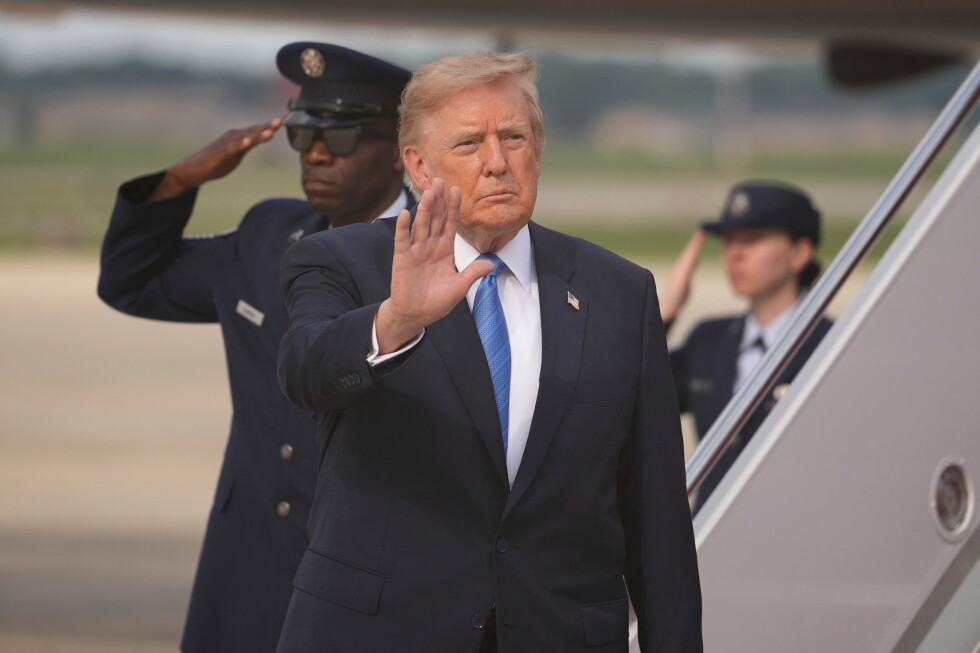
    Following the official confirmation of the resignation, former President Donald Trump took to social media to publicly praise Gabbard’s service. The departing intelligence chief “has done an incredible job, and we will miss her,” Trump wrote, noting that Gabbard’s choice to prioritize her family’s health is both understandable and honorable. “She rightfully, wants to be with him, bringing him back to good health as they currently fight a tough battle together. I have no doubt he will soon be better than ever,” Trump added. To ensure a smooth transition, Trump announced that Aaron Lukas, the current principal deputy director of national intelligence, will assume the role of acting director once Gabbard departs at the end of June.

    Gabbard’s tenure at the helm of U.S. intelligence was relatively short but marked by its place in a shifting U.S. foreign policy landscape. A steadfast supporter of Trump during his successful 2024 presidential comeback campaign, Gabbard was confirmed to the top intelligence post just weeks after Trump reclaimed the White House in 2025. As Director of National Intelligence, her core responsibilities included coordinating operations across 18 separate U.S. intelligence agencies and serving as the president’s primary advisor on all national security and intelligence matters, making her one of the most powerful figures in the U.S. national security apparatus.

    Notably, Gabbard has remained largely out of the public eye in recent months, even as the Trump administration oversaw a series of high-stakes foreign policy actions: expanded military operations against Iran, increased diplomatic and economic pressure on Cuba, and the controversial removal of Venezuela’s sitting president. Her sudden departure from the role adds a new layer of uncertainty to the administration’s intelligence leadership as it continues to advance its aggressive global policy agenda.

  • Right-wing Slovenian politician confirmed as prime minister in shift from liberal government

    Right-wing Slovenian politician confirmed as prime minister in shift from liberal government

    After two months of political gridlock following a tightly contested parliamentary election, Slovenia’s national assembly has appointed veteran right-wing populist leader Janez Jansa to the post of prime minister, marking a sharp ideological shift for the small Alpine European Union member state previously led by a liberal administration.

    The 90-member legislative body cast 51 votes in favor of Jansa’s appointment, with 36 lawmakers voting against the nomination. The new prime minister-designate now has a 15-day window to put forward his proposed cabinet lineup, which will require a second confirmatory vote in parliament before the government can officially take office.

    The political stalemate that followed April’s election followed an almost evenly split result. Former liberal prime minister Robert Golob’s Freedom Movement secured a razor-thin plurality in the vote, but failed to cobble together a workable parliamentary majority to form a new government. This week, Jansa’s Slovenian Democratic Party broke the impasse by signing a formal coalition agreement with multiple aligned right-wing factions. The incoming government also secures outside support from the non-establishment Truth party, a group that originated as an anti-vaccination movement during the height of the COVID-19 pandemic.

    Friday’s appointment marks the fourth term as prime minister for the 67-year-old veteran politician, who is known for his open admiration of former U.S. President Donald Trump and long-standing close political alliance with Hungary’s populist former prime minister Viktor Orbán — who suffered a landslide election defeat just one month prior.

    In his post-appointment address to parliament, Jansa outlined his administration’s core priorities: revitalizing the national economy, cracking down on systemic corruption and bureaucratic red tape, and decentralizing state power to regional and local authorities. He has pledged to cut taxes for high-income earners and expand state support for private education and private healthcare providers. Jansa sharply criticized the outgoing liberal government for what he called widespread inefficiency, promising his leadership would transform Slovenia into “a country of opportunity, prosperity and justice, where each responsible citizen will feel safe and accepted.”

    Like his political ally Orbán, Jansa adopted a hardline anti-immigration stance during the 2015 European migrant crisis, and during his 2020-2022 previous term as prime minister, he faced repeated accusations of undermining independent democratic institutions and restricting press freedom. Those allegations sparked large-scale public protests across Slovenia at the time, and triggered formal oversight scrutiny from EU institutional bodies.

    Outgoing prime minister Golob used his address to parliament to issue a stark warning about Jansa’s leadership, framing the right-wing leader as “the greatest threat to Slovenia’s sovereignty and democracy.” Golob also claimed Jansa had previously threatened to have him arrested, arguing that Jansa’s vision of democracy “is that anyone who dares speak a word against you deserves only the worst.”

    Beyond domestic policy, Jansa is a vocal supporter of Israel, and has been a prominent critic of the outgoing Golob administration’s 2024 decision to formally recognize a Palestinian state. The April parliamentary election that set this political process in motion was marred by widespread allegations of foreign interference and campaign corruption, leaving the nation of roughly 2 million people deeply ideologically divided between liberal and conservative political blocs.

  • Castro backers rally in front of US embassy in Havana

    Castro backers rally in front of US embassy in Havana

    In a powerful display of national solidarity, thousands of Cubans gathered Friday outside the U.S. Embassy in Havana to rally behind 94-year-old former president Raul Castro, who was recently indicted on criminal charges by a U.S. federal court. The gathering, which included current Cuban president Miguel Díaz-Canel and other senior government officials dressed in military-style fatigues, echoed with the unified chant of “Long live Raul!” as attendees waved large Cuban flags and held up printed portraits of the former leader. The 94-year-old, younger brother of iconic Cuban revolutionary Fidel Castro, was formally charged with murder and additional felony counts this Wednesday. The charges stem from the 1996 downing of two civilian aircraft operated by a U.S.-based anti-Castro group, a move widely framed as the latest escalation in the Trump administration’s escalating pressure campaign targeting Cuba’s communist leadership. The aging former leader, whose health has declined in recent years, did not attend the demonstration, which was held at the “Anti-Imperialist Platform” public park located directly across the street from the U.S. diplomatic mission. However, two of his children were on hand to represent the family: Mariela Castro, a prominent national legislator and LGBTQ+ rights advocate, and Alejandro Castro, a key architect of the 2015 historic rapprochement between Cuba and the U.S. negotiated during the Raul Castro administration and former U.S. president Barack Obama’s term. Raul Castro led Cuba for 15 years after assuming the presidency from his ailing brother Fidel in 2006, stepping down from the top post in 2018. His unexpected indictment has amplified widespread anxiety across Cuba that the U.S. could pursue further aggressive action to destabilize the island’s government, capping months of mounting pressure that includes a devastating oil embargo that has strained the country’s economy and critical infrastructure. These fears were amplified by the January arrest of Venezuelan socialist leader Nicolas Maduro, who was taken into custody by U.S. agents at his Caracas residence on drug trafficking charges and extradited to the U.S. to face trial. In her first public remarks from the Castro family since the indictment was announced, Mariela Castro pushed back on speculation that the U.S. would attempt to abduct her father, telling reporters she had no fear of such an outcome. “I am not afraid because I know they will not do it,” she stated, adding that when the former president is asked about the charges, “he smiles like an old guerrilla fighter who knows he’s safe, with one foot in the stirrup, and that no one is going to kidnap him.” The vast majority of attendees were public sector and state enterprise employees, who said their participation was driven by a sense of patriotic duty. Gilberto Gonzalez, a 59-year-old worker at a state-run flour mill, told reporters he joined the rally to stand in solidarity with the former leader. “We are reaffirming the conviction we have to continue fighting and support our General Raul Castro, who has been unjustly accused in the United States,” Gonzalez said. Gerardo Hernandez, a former Cuban intelligence officer who was released from a U.S. prison as part of the 2015 normalization deal, delivered a personal message from Raul Castro to the assembled crowd. The former president “says he thanks our people from the bottom of his heart for their solidarity” and “that as long as he lives, he will continue to lead our people and defend our revolution,” Hernandez told the gathering.

  • Lebanon’s talks with Israel test fragile relationship with Syria

    Lebanon’s talks with Israel test fragile relationship with Syria

    In the months following the collapse of Bashar al-Assad’s Syrian government, bilateral relations between Lebanon and neighboring Syria have hovered in a tense limbo, caught between shared strategic necessity and decades of accumulated mutual mistrust. Tied together by shared geography, intertwined history, overlapping security interests, and a sprawling backlog of unresolved bilateral disputes, neither nation has managed to shake off the heavy legacy of their fraught past.

    Lebanon has remained deeply wary of any return to the era of Syrian political dominance over its domestic affairs, while Syria’s new leadership under President Ahmed al-Sharaa is keenly alert to the risk that unilateral policy moves by Beirut could spill across their shared border and undermine Damascus at a critical transitional moment for the war-torn state. That underlying tension has now flared anew around one of the region’s most sensitive diplomatic topics: direct bilateral negotiations with Israel.

    According to a senior Lebanese official with direct knowledge of recent diplomatic exchanges between Beirut and Damascus, Syria has raised clear concerns that Lebanon’s rapidly advancing negotiation track with Israel is proceeding without sufficient coordination with the Syrian government, even as Damascus’s own talks with Tel Aviv remain stalled. The Syrian position was laid out explicitly during Lebanese Prime Minister Nawaf Salam’s recent official visit to Damascus, where he held talks with al-Sharaa.

    “The Syrian leader spoke in a diplomatic, non-confrontational tone, but made clear that coordination between the two countries on issues of vital national interest was essential to strengthening the negotiating hand of both sides,” the Lebanese official shared.

    Damascus’s unease extends beyond the simple breach of diplomatic protocol: Syrian leaders worry that Beirut’s separate negotiation path could set a precedent that international powers will later pressure Syria to follow. For months, United States officials have cited ongoing Syrian-Israeli diplomatic contacts to push Lebanon to launch its own direct talks with Israel. But with the Syrian negotiation track now largely deadlocked – in large part because Damascus judges Israel unwilling to make meaningful territorial or security concessions – the regional diplomatic dynamic has shifted dramatically. What began as a tool to pressure Lebanon to align with Syria’s approach could now become a mechanism to force Syria to adopt Lebanon’s framework.

    Lebanon’s negotiation process carries additional sensitivity given the conditions under which it has unfolded. Lebanese President Joseph Aoun previously pledged that Beirut would not enter talks until a permanent ceasefire with Israel was implemented. Yet diplomatic contacts have continued even as Israeli military strikes on Lebanese territory persist, despite a nominal ceasefire agreement reached in mid-April.

    For Damascus, this creates a core strategic threat: if Lebanon advances negotiations amid ongoing violence and makes early concessions to Israel, Syria could face mounting pressure from Washington and other global actors to accept an identical unfavorable framework. The dispute over negotiations has added a new layer of friction to an already deeply fragile bilateral relationship.

    The two neighbors are still working through a host of long-simmering unresolved issues: the status of Syrian detainees held in Lebanese prisons, unresolved land and maritime border demarcation, the future of Hezbollah’s role in regional security, the presence of former Assad regime officials in Lebanese territory, and the fundamental question of how to restructure their security relationship after decades of domination, open hostility, and mutual suspicion. Syrian unease over Beirut’s unilateral moves has already emerged across multiple of these files.

    Back in December, Damascus raised formal objections to Assad-linked military officers residing in Lebanon, with Syrian security officials sharing name lists with their Lebanese counterparts and warning that some of these figures could use Lebanese territory as a base to plot against Syria’s new government. Damascus has also framed the resolution of the Syrian detainee issue as a non-negotiable prerequisite for any meaningful improvement in bilateral ties.

    The Israel negotiation file is now the latest addition to this complex web of competing interests. For Syria, the dispute is not merely a matter of diplomatic etiquette – it is a question of strategic leverage. Damascus argues that despite their bitter shared history, Lebanon and Syria face overlapping regional vulnerabilities, meaning any concession Lebanon makes to Israel – particularly on security arrangements, border demarcation, or post-war security guarantees – will indirectly erode Syria’s own future negotiating position.

    “This is why Sharaa stressed that coordination on vital issues was not an optional courtesy, but a strategic necessity,” the Lebanese official said. “If Syria takes one step in favour of Lebanon, Lebanon should understand that its own vital interests require it to take many steps in favour of Syria.”

    That comment underscores the core asymmetry in how the two sides view their relationship: while Lebanon fears a return to Syrian dominance, Syria believes that Lebanese policy decisions can still expose it to severe strategic risk.

    The dispute over maritime energy rights adds further complexity to the dynamic. Turkey has already raised sharp objections to Lebanon’s 2025 exclusive economic zone agreement with Cyprus, arguing that the deal was reached without sufficient consideration of Syrian and Turkish economic and security interests in the Eastern Mediterranean. The incident has reinforced a widespread regional perception that Beirut often pushes ahead on sensitive cross-border issues without adequate consultation with neighboring stakeholders.

    Against this backdrop, Damascus does not view Lebanon’s separate talks with Israel as an isolated domestic decision by Beirut. Instead, it frames the move as part of a broader pattern of unilateral action by Lebanon on issues that carry implications far beyond its own borders.

    A senior Syrian official noted that Damascus has repeatedly emphasized to Arab regional states the need for coordinated diplomatic strategy and the risk of separate negotiation tracks that weaken the broader Arab position in talks with Israel. “There is a positive atmosphere, but there are realities on the ground that cannot be ignored,” the official said. “Cooperation with Lebanon is growing, but it has not yet reached the required level. The issue is less about disagreement and more about poor coordination.”

    The official added that Syria has a clear stake in a stable, prosperous neighbor: “The Syrian state wants Lebanon to be strong and capable of standing on its own feet,” he said, noting that al-Sharaa has stressed in meetings that Lebanon is navigating an unusually sensitive period and requires more innovative solutions than the outdated frameworks it has relied on in the past. Damascus believes Lebanon needs “precise tools” to navigate this transitional phase, and that Syria’s role is to support Beirut rather than add to existing pressure, the official added.

    For Lebanon, the core risk is that what appears to be an effort to expand diplomatic room for maneuver could end up narrowing its long-term options. A unilateral negotiation track with Israel could deepen Syrian mistrust, alienate Turkey, complicate Beirut’s own domestic political relationship with Hezbollah, and leave Lebanon exposed to pressure from international actors pushing for a quick, superficial deal rather than a durable, sustainable peace settlement.

    For Syria, the risk follows a different logic. Having inherited a fractured state, a weakened regional position, and already difficult talks with Israel, Damascus fears that Lebanon’s acceptance of a US- and Israeli-backed negotiation framework could create a regional precedent that Western powers will later use to pressure Syria into accepting identical terms.

    That said, the current tension does not signal an imminent slide into open confrontation between the two neighbors. On the whole, diplomatic exchanges between the two sides remain cautious and pragmatic. Both states still depend on one another: Syria needs Lebanon to prevent its territory from becoming a staging ground for anti-Damascus opposition activity, while Lebanon relies on Syria for border management, progress on the detainee file, refugee repatriation, anti-smuggling oversight, security coordination, and any credible regional peace settlement.

    For Lebanon, the central question now is whether it can advance negotiations with Israel while maintaining a coherent, aligned regional posture. For Syria, the key challenge is whether it can prevent Lebanese policy decisions from becoming a precedent that undermines its own negotiating position.

    The latest developments make clear that the post-Assad bilateral relationship has not yet evolved into an institutionalized, trust-based strategic partnership. It remains largely transactional, reactive, and still shaped by the lingering suspicions of the past. Caught between the legacy of the old order and the demands of a new regional landscape, the two neighbors face a familiar dilemma: they are no longer bound by the old hegemonic relationship, but neither can afford to ignore one another’s core strategic interests.

  • An all-women Senate delegation is heading to the Arctic to reassure US allies

    An all-women Senate delegation is heading to the Arctic to reassure US allies

    In a historic departure from traditional congressional diplomatic missions, an all-woman, evenly split bipartisan delegation of U.S. senators is set to leave Washington this week for a multi-stop tour of Arctic nations, aimed at shoring up confidence among American allies at a moment of shifting regional policy under the Trump administration.

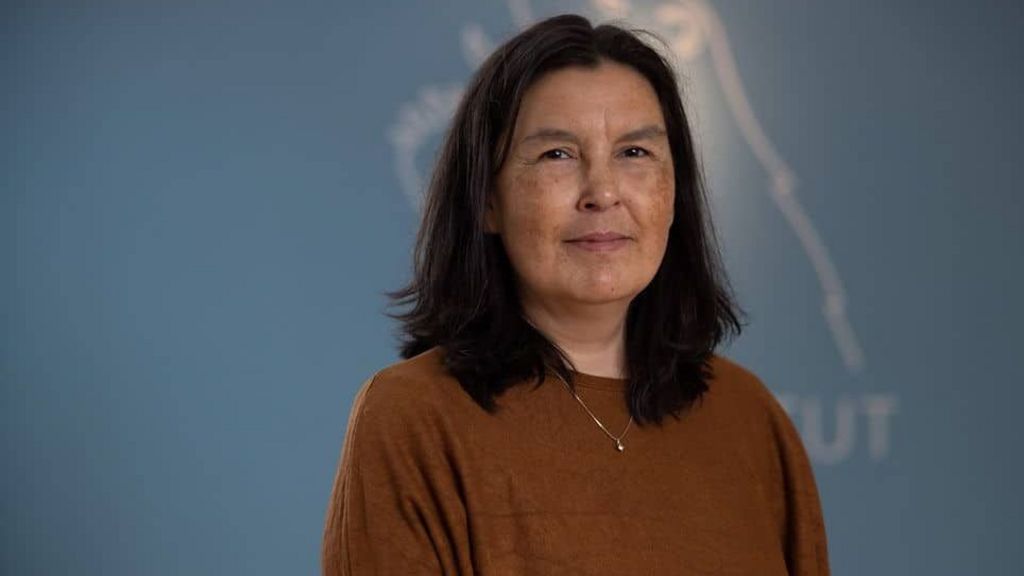
    Led by Alaska’s Republican Senator Lisa Murkowski and Democratic Senator Jeanne Shaheen, the top Democratic member of the Senate Foreign Relations Committee, every member of the delegation—from the eight sitting senators to supporting staff and military liaison officers—will be women. The rare composition of the trip sets it apart from past congressional diplomatic visits, and the leaders say it brings unique advantages to diplomatic outreach in the strategically vital region.

    Over the course of the tour, the group will conduct official diplomatic meetings with government leaders across four Arctic and sub-Arctic jurisdictions: Canada, Greenland (an autonomous Danish territory), Norway’s remote Svalbard archipelago, and Iceland. On Svalbard, one of the northernmost permanently inhabited regions on the planet, the delegation will require armed escorts to avoid dangerous encounters with polar bears during their visit.

    The trip emerged directly from the two leaders’ longstanding work to stabilize U.S. alliance networks in northern Europe and North America, after the Trump administration adopted an aggressive, unilateral approach to Arctic policy that has raised anxiety among regional partners. Just this week, the Pentagon announced it would pause U.S. participation in a joint U.S.-Canada continental defense board that has operated continuously since World War II—a move Murkowski and Shaheen have criticized as misaligned with U.S. strategic interests in the fast-changing Arctic.

    Murkowski and Shaheen argue that the Arctic has grown dramatically in strategic importance in recent years, presenting both unique security and environmental challenges that demand close collaboration with regional allies. “We will reassure our allies that we recognize and appreciate the importance of our allies and partners in the Arctic as in so many other areas,” Shaheen told the Associated Press ahead of the trip, noting that the delegation will also explore new avenues for Congress to deepen bilateral and multilateral cooperation in the region after the visit.

    Alongside diplomatic talks, the delegation has planned a series of site visits designed to give members first-hand insight into the region’s most pressing challenges. The senators will meet with Indigenous communities that have inhabited Arctic lands for millennia, gaining on-the-ground perspective of how accelerating climate change is reshaping daily life and ecosystems. They will also observe military operations in the harsh Arctic climate, learning why remote Arctic outposts require specialized infrastructure—from climate-controlled airplane hangars to overwinter supply drops—that differs dramatically from military facilities in lower latitudes.

    Geopolitical competition in the Arctic has intensified in recent years, as climate change melts the region’s thick sea ice, opening up new international shipping lanes including the long-sought Northwest Passage, and unlocking access to trillions of dollars in untapped mineral resources. China and Russia have both expanded their military and economic activity in the region in recent years, prompting NATO to launch a series of joint military exercises to strengthen collective cooperation in the High North. The region also hosts a network of undersea communications cables that carry global data traffic, adding another layer of strategic importance to Arctic security.

    Beyond the core strategic goals of the trip, Murkowski says she hopes the first-hand exposure to the Arctic’s unique landscape and communities will leave the delegation inspired to prioritize Arctic policy on Capitol Hill. This is not the first time Murkowski and Shaheen have collaborated to defend Arctic alliances: when Trump publicly suggested the U.S. could purchase Greenland earlier the same year, the pair introduced legislation to block any U.S. military action against the NATO-aligned territory, and have pushed to add language to annual defense policy bills that would prevent the Trump administration from withdrawing security commitments to NATO allies.

    The delegation’s all-woman composition is not a gimmick, Shaheen argues, but a deliberate choice that brings tangible benefits to diplomatic engagement. Research consistently shows that agreements negotiated with women at the table have higher rates of long-term implementation, and that greater female representation in government correlates with more stable societies and greater public investment in community infrastructure, she noted. For many of the nations the delegation will visit, high female political representation is already the norm: Iceland’s parliament, for example, counts women among 46% of its members, ranking it among the top countries globally for gender parity in legislative politics. “There are very real reasons why we need to make sure that women are at the table,” Shaheen added.

  • French commission advises against deporting Egyptian-Palestinian activist

    French commission advises against deporting Egyptian-Palestinian activist

    A prominent Egyptian-Palestinian activist and academic has secured a landmark provisional legal victory over the French government, after an administrative commission ruled that his planned deportation over pro-Palestine advocacy violates fundamental European rights to privacy and free expression.

    Ramy Shaath, a veteran organizer of the 2011 Arab Spring uprisings in Egypt, had been targeted for expulsion by French authorities, who labeled him a “serious threat to public order” stemming from his participation in pro-Palestine demonstrations and leadership in Palestinian solidarity groups. But the Hauts-de-Seine departmental deportation commission determined Thursday that removing Shaath would run counter to France’s commitments to protecting fundamental civil liberties.

    Shaath’s case carries unique layers of complexity that the commission weighed heavily in its ruling. The activist spent 900 days in Egyptian state detention between 2019 and 2022, and he has since been stripped of his Egyptian citizenship. Compounding this, he cannot be transferred to his ancestral home in Gaza, where Israel’s ongoing military campaign has created an uninhabitable, war-ravaged environment. The commission also found that deporting Shaath to an alternate third country would amount to an unacceptable, disproportionate violation of his right to private and family life; Shaath resides in France with a French spouse and child.

    While the commission’s ruling is only advisory, and the French government retains the authority to move forward with a final deportation order regardless of the decision, Shaath framed the outcome as a significant embarrassment to state authorities and a turning point for pro-Palestinian advocacy in France.

    “It’s a very important win – the ruling was absolutely decisive, saying that Ramy is not a danger to public order or to France in any way,” Shaath told Middle East Eye in an interview Friday. “Nevertheless, based on the French oppressive system, their decision is advisory, so the ministry can tomorrow, or the day after, issue a final deportation order for me.”

    Shaath comes from a leading Palestinian political family: he is the son of Nabil Shaath, a veteran Palestinian chief negotiator and former Palestinian Authority prime minister, and previously advised late PLO leader Yasser Arafat as part of the PA’s peace negotiation team. Beyond his Palestinian political work, Shaath rose to prominence in Egypt as a leading organizer during the 2011 Arab Spring protests that ousted longtime autocratic leader Hosni Mobarak, and later served as coordinator of the Egyptian chapter of the Boycott, Divestment and Sanctions (BDS) movement pushing for accountability for Israeli occupation.

    After his release from Egyptian prison in 2022, following a high-profile international pressure campaign that included intervention from French President Emmanuel Macron, Shaath settled in France on a one-year residence visa. His conflict with French authorities escalated in late 2023, when he co-founded the Urgence Palestine collective. Then-Interior Minister Bruno Retailleau moved to dissolve the group, accusing it of “glorifying a terrorist organisation such as Hamas, calling for an Intifada on national territory, and inciting hatred, violence or discrimination against Jews.” The dissolution attempt drew international pushback, with a group of United Nations experts warning that the move would represent an unnecessary and disproportionate restriction on fundamental civil freedoms.

    Shaath applied to renew his French residence visa in September 2023, but never received a formal response from authorities. He filed 10 separate urgent appeals for renewal without success, despite his legal family ties to the country. On 30 April, he received formal notice at his Paris-area home that deportation proceedings had been opened against him.

    A formal document from the Nanterre prefecture outlining the deportation order cited Shaath’s public speeches, lectures, and activist appearances as core justifications. It specifically called out his connections to leading pro-Palestine organizers in France, his public descriptions of Israel’s military campaign in Gaza as a criminal occupation, his public anti-Zionist stance, and his support for a one-state solution to the Israeli-Palestinian conflict.

    Shaath has denounced what he calls a deliberate, extrajudicial administrative campaign against him. “We are facing an administrative maze that is beyond the law and every time they try to go to court they lost – but they’re still increasing those tactical games just like Third World fascist regimes and systems,” he told Middle East Eye.

    Even as the case remains unresolved, Shaath emphasized that the commission’s ruling marks a critical victory for free speech for pro-Palestinian organizers in France, who have faced growing criminalization of their advocacy since the outbreak of the latest Israel-Gaza war in October 2023.

    “It asserts that the language of Palestine and the language of calling for an end to Zionism, the right of the Palestinian people to resist even with arms…all are today cleared under the rule of freedom of expression,” he said. “We will win – they are losing the fight and that is why they are panicking.”

  • France’s youngest PM Attal to run for president

    France’s youngest PM Attal to run for president

    France’s political landscape has been upended by a historic announcement: 37-year-old Gabriel Attal, the youngest person to ever hold the post of French Prime Minister, officially declared his candidacy for the 2025 presidential election on Friday. The centrist contender made his announcement against a backdrop of clear blue skies in the small rural village of Mur-de-Barrez, a strategic choice aimed at addressing longstanding criticism that centrist parties lack deep roots in France’s countryside ahead of a contest that will likely be defined by the battle against the rising far-right National Rally (RN).

    In his opening remarks to supporters, Attal pushed back against the stagnation that has come to define mainstream French politics in recent years. “I can’t take this kind of French politics anymore, where it’s just 50 shades of managing decline,” he told the crowd, positioning himself as a fresh alternative to both establishment gridlock and far-right populism. When he took office as Prime Minister in 2024 at age 34, Attal made history as France’s youngest head of government, and his rapid ascent through the political ranks has already drawn widespread comparisons to current President Emmanuel Macron, who won the Elysee Palace at 39 in 2017, becoming France’s youngest head of state since Napoleon. Attal will turn 38 in March, just one month before the scheduled April presidential vote, which Macron will not contest as he steps down after two terms.

    Attal’s entry into the race creates a crowded field of high-profile candidates from across the political spectrum. He joins former center-right Prime Minister Edouard Philippe, 55, who now leads his own Horizons party, and 74-year-old hard-left leader Jean-Luc Melenchon as major declared contenders. For the far-right RN, the 2025 election represents the party’s strongest chance to seize the presidency in its history, with either party leader Jordan Bardella, 30, or former candidate Marine Le Pen expected to stand as the party’s nominee.

    A product of France’s elite education system and an openly gay politician raised in Paris, Attal has opened up about his personal identity in recent months as he lays groundwork for his campaign. In a book published last month, the candidate dedicated an entire chapter to his partner, Stephane Sejourne, a European Commissioner and former French minister whom Attal describes as “the man of my life.” Attal has also spoken publicly about his mixed cultural background and experiences of prejudice: his father is Jewish, his mother follows Russian Orthodox Christianity, and he has said he has faced both anti-Semitism and homophobia throughout his life and career.

    Attal’s short tenure as Prime Minister came to an abrupt end last year when President Macron dissolved the lower house of parliament and called snap legislative elections, a risky political gambit designed to halt the RN’s growing momentum that ultimately backfired spectacularly. The result was months of crippling political deadlock and a hung parliament, where the RN emerged as the largest single party in the legislature. Shortly after the dissolution, Attal formally distanced himself from Macron’s government, clearing the way for his independent presidential bid.

    On the campaign trail, Attal already faces stiff competition from within the centrist and center-right space, most notably from Philippe, who led Macron’s first government as Prime Minister and has built a strong independent political base. Current polling consistently shows Philippe performing better than other centrist candidates in a hypothetical runoff against the RN nominee. Still, Attal has wasted no time in positioning himself as a candidate connected to working and rural French voters, a contrast to the common critique that Macron’s Renaissance party is too rooted in Parisian elite circles. “The day we stay locked in Parisian offices, in ministries, is the day politics stops,” Attal said in his launch speech. After entering politics in his early 20s, Attal climbed the ranks quickly: he won a seat in the National Assembly in 2017, the same year Macron was first elected, before going on to serve as government spokesperson, budget minister, and education minister between 2023 and 2024. During his time as education minister, he gained national attention for his work addressing school bullying and his controversial ban on the abaya, a loose full-length garment worn by Muslim women, in public schools.

    Closing his launch speech, Attal struck an optimistic tone about France’s future, pushing back against narratives of inevitable national decline. “Having travelled a lot in France and met many French people, I’ve come to a conviction — a very strong one — that our finest chapters are still ahead of us,” he said.

  • Palestinian UN ambassador withdraws General Assembly vice presidency bid after US pressure

    Palestinian UN ambassador withdraws General Assembly vice presidency bid after US pressure

    In a move that underscores deep diplomatic pressure on the Palestinian mission at the United Nations, Palestinian UN Ambassador Riyad Mansour has formally pulled his name from contention for the vice presidency of the UN General Assembly, following explicit threats from the United States to revoke the entire Palestinian delegation’s entry visas if he refused to abandon the race, National Public Radio has reported.

    Citing an anonymous source with direct knowledge of the internal developments, the outlet confirmed that Lebanon’s ambassador will now take Mansour’s place on the ballot. The Palestinian UN delegation communicated through a third Arab nation that Mansour would not seek the vice presidential position for the 2024-2026 term, according to the report. La Neice Collins, spokesperson for the sitting UN General Assembly president, later issued a public statement confirming the withdrawal, cementing the outcome of the behind-the-scenes pressure campaign.

    Documents show that internal communications from the US State Department, dated Tuesday, had explicitly instructed American diplomatic staff based in Jerusalem to ramp up pressure on Palestinian leadership to force Mansour out of the race. The cable argued that Mansour’s candidacy ran counter to former US President Donald Trump’s ongoing policy proposals for the post-conflict future of the Gaza Strip. The department’s message was uncompromising: “We will hold the Palestinian Authority responsible if the Palestinian delegation does not withdraw its VPGA candidacy.”

    The cable also carried a veiled reference to past punitive visa actions, reminding recipients that Washington had already denied entry visas to Palestinian Authority President Mahmoud Abbas and 80 other senior Palestinian officials ahead of last year’s UN General Assembly gathering in New York. It noted that “it would be unfortunate to have to revisit any available options” — a clear signal that the US was prepared to enact new restrictions if its demands were not met.

    As of press time, the Palestinian UN mission has not issued an immediate response to requests for comment from Middle East Eye, the independent outlet that first expanded on the reporting of the incident.

    This latest withdrawal marks the second time in 2024 that a senior Palestinian candidate has stepped back from a top UN leadership post amid foreign pressure. Back in February, Mansour withdrew his candidacy for the presidency of the UN General Assembly after coordinated lobbying campaigns from both the United States and Israel. At that time, the Palestinian mission framed the decision as a response to “the prevailing conditions in Palestine.”

    The election for UN General Assembly president and the 21 vice presidential seats from regional groups across the world is scheduled to take place on June 2. The current controversy comes on the heels of a landmark May 2024 vote in the General Assembly that delivered expanded participation rights for the Palestinian Authority. In an unprecedented outcome, delegates overwhelmingly approved a measure granting Palestine enhanced standing beyond its current status as a non-member observer state, including the right to speak on all General Assembly agenda items, co-sponsor resolutions, and propose amendments to draft UN texts. The assembly also voted by a wide margin to back Palestine’s bid for full UN membership, marking a major diplomatic breakthrough for Palestinian statehood efforts that has drawn sharp pushback from the US and Israel.

  • ‘Hard to win’: Taiwanese react to uncertainty over US arms sales

    ‘Hard to win’: Taiwanese react to uncertainty over US arms sales

    When former U.S. President Donald Trump recently suggested that longstanding American arms sales to Taiwan could be used as a bargaining chip in negotiations with Beijing, it sent shockwaves through global diplomatic circles. For ordinary residents of Taipei, however, the moment has underscored a bleak reality: the island’s security trajectory is ultimately out of their hands.

    One week has passed since Trump made the controversial remarks during interviews with Fox News and on Air Force One, and intense speculation continues to swirl over whether decades of consistent U.S. policy toward the democratically governed island could be fundamentally upended. The context of this uncertainty stretches back nearly 50 years, when the United States officially shifted its diplomatic recognition from Taipei to Beijing. Even without formal diplomatic ties, Washington has remained Taiwan’s most critical international security partner and primary arms supplier, a commitment codified in the 1979 Taiwan Relations Act passed by U.S. Congress, which legally requires Washington to provide defensive arms to the island.

    Despite widespread anxiety among Taiwanese government officials, who have spent weeks anxiously awaiting Trump’s final decision on a new pending arms package, public reaction on the streets of Taipei has been marked by a quiet, fatalistic calm. Many residents have long held deep reservations about the practical value of additional U.S. weaponry in the face of China’s persistent claims that Taiwan is an inalienable part of its territory, and Beijing’s repeated threats to use force to assert control if necessary.

    Nicole Lee, a 46-year-old nurse in Taipei, said she does not believe advanced military hardware would shift the balance of power significantly if a conflict were to break out. “Even if they give us weapons, if we really had to use force against China, I don’t think there would be much we could do,” she explained.

    Ben Wu, a 41-year-old delivery driver, echoed Lee’s sentiment, framing U.S. arms sales as little more than a costly “protection fee” for the island. Even with the most advanced weaponry the U.S. can offer, he noted, “it would still be very hard to win” against China’s far larger military force.

    To date, Taipei has poured tens of billions of dollars into purchasing advanced U.S. military equipment, including fifth-generation fighter jets, precision high-tech missiles, and reconnaissance drones, all to bolster its defensive capabilities against a potential cross-strait attack. Taiwanese officials have repeatedly reminded the Trump administration of Washington’s binding legal commitments under the Taiwan Relations Act, while top U.S. officials including Secretary of State Marco Rubio and Trade Representative Jamieson Greer have publicly insisted that no shift in longstanding U.S. policy toward Taiwan is underway.

    Still, many ordinary Taiwanese remain deeply skeptical of Trump’s approach to the issue, with many arguing that the former president prioritizes U.S. interests above all other considerations, with little regard for longstanding alliances or commitments. Cynthia Kuo, a 29-year-old elementary school teacher in Taipei, described Trump as the “kind of person who just says whatever pops into his head.” “So I feel like whatever decisions he makes, he only makes them if he thinks they’re good for the United States,” she said. “He’s not going to take other countries into account.”

    A 78-year-old retiree, who requested anonymity to speak freely, said the only certain takeaway from the current situation is that Trump cannot be counted on as a reliable partner for Taiwan. “He’s totally untrustworthy,” she said. “I often feel that Trump is a hooligan in international politics.”

    Across age groups, residents of Taipei echoed a shared sense of powerlessness in the face of the current uncertainty. No matter the outcome, the final decisions on the pending arms package will be made in Washington, and any subsequent response from Beijing will be shaped thousands of kilometers away from Taipei. For 22-year-old university student Matt Lin, that reality makes personal anxiety feel pointless. “I’m not that worried,” he told AFP. “Whether we worry or not doesn’t really change anything.”

  • Turkish opposition fights court ousting of leaders in ruling boosting Erdogan

    Turkish opposition fights court ousting of leaders in ruling boosting Erdogan

    A controversial court ruling that nullifies the 2023 leadership election of Turkey’s main opposition Republican People’s Party (CHP) has plunged the country into a new political crisis, with opposition chief Özgür Özel slamming the decision as a carefully orchestrated “judicial coup” against democracy.

    On Thursday, Ankara’s appellate court overturned a 2025 lower court ruling that had dismissed claims of vote rigging during the CHP primary that elevated Özel to the party’s top position. The appellate court’s judgment not only removes Özel and the entire CHP executive board from their posts, but also orders the reinstatement of 77-year-old Kemal Kilicdaroğlu, the long-time party leader who lost the 2023 presidential election to incumbent President Recep Tayyip Erdogan and was later voted out of his leadership role by CHP members. All policy and administrative decisions made by the current CHP executive are also expected to be invalidated following the ruling.

    The decision triggered immediate shock and outrage across the CHP. BBC Turkey correspondent Ayşe Sayin reported that many CHP staffers at party headquarters were reduced to tears, and internal tensions boiled over when some members removed a portrait of Kilicdaroğlu from the building’s walls while labeling him a traitor. Thousands of supporters flocked to CHP headquarters in Ankara to protest the ruling within hours of its announcement.

    Özel, who has positioned himself as one of Erdogan’s most vocal critics, has pledged an all-out fight against the court’s decision. “We are living through a dark day for Turkish democracy,” Özel told supporters. “These coup plotters do not arrive with tanks, cannons, rifles or camouflage; they come wearing the robes of judges and prosecutors.” The CHP leader has formally submitted an objection to the ruling to Turkey’s supreme election council (YSK), which began deliberations on the challenge on Friday. He also moved to dismiss widespread speculation of a party split, saying, “Tenants leave, homeowners stay.”

    Critics argue the ruling is the latest in a years-long campaign by Erdogan and his ruling Justice and Development Party (AKP) to sideline political opponents and consolidate power. Özel has explicitly accused the AKP of pursuing a deliberate strategy to “eliminate its rivals.” A key red flag for opponents is the role of current Justice Minister Akin Gürlek, a hardline prosecutor who was hand-picked for the cabinet post by Erdogan earlier this year. Before his appointment, Gürlek served as chief prosecutor in Istanbul, where he led high-profile investigations targeting opposition figures—most notably Ekrem Imamoğlu, the popular CHP mayor of Istanbul who remains Erdogan’s most formidable potential challenger. Imamoğlu has been held in prison for more than a year on corruption charges brought by Gürlek that carry a combined potential sentence of more than 2,000 years behind bars.

    Defending the court’s decision, Gürlek claimed the ruling “reinforces our citizens’ trust in democracy.”

    Senior CHP figures have echoed Özel’s condemnation. Jailed and suspended Istanbul mayor Imamoğlu released a social media statement calling on all Turkish citizens to “stand together for their country.” Ankara Mayor Mansur Yavaş, another high-profile CHP leader, warned the ruling’s core goal is to split Turkey’s largest opposition bloc and neutralize it as a political force ahead of potential early elections. With Turkey’s economy already struggling, Yavaş argued that ruling-party leaders are likely to call snap elections before the 2028 scheduled date to capitalize on the opposition’s disarray.

    The ruling has already rippled through Turkish financial markets: the country’s benchmark stock index plummeted 6% in late trading Thursday, though it clawed back some losses on Friday morning. While Özel plans to appeal the decision all the way to Turkey’s Court of Cassation, legal analysts warn the process will likely drag on for months or even years, leaving the opposition in limbo. Many political observers now suggest that if Özel cannot reverse the ruling through the courts, he and his supporters may be forced to form a new breakaway party to contest future elections.

    In a separate, concurrent development that has drawn further criticism of the Erdogan administration, the president on Friday ordered the permanent closure of Istanbul Bilgi University, a respected independent higher education institution that enrolls roughly 22,000 domestic and international students. The 30-year-old university was effectively shut down overnight, according to Yaman Akdeniz, a law professor who has taught at the institution for 15 years. “An institution where I’ve taught for 15 years, one we’ve nurtured alongside thousands of young people, is being completely disregarded,” Akdeniz said. Turkey’s Council of Higher Education has stated it is putting measures in place to minimize disruption for current students and ensure they can continue their studies at other institutions.