分类: politics

  • Bahrain expels three MPs after they voted against royal decree on citizenship oversight

    Bahrain expels three MPs after they voted against royal decree on citizenship oversight

    In a sweeping move that has drawn sharp condemnation from human rights advocates, Bahrain’s lower parliamentary body has stripped three elected lawmakers of their seats over a single dissenting vote against a royal order that erodes judicial checks on citizenship revocation decisions. The expulsion comes amid a sweeping domestic security crackdown tied to recent cross-border hostilities linked to the US-Israeli war in the region.

    The unanimous vote to revoke the parliamentary memberships of Abdulnabi Salman, Mamdooh al-Saleh and Mahdi al-Shuwaik passed during a Thursday morning sitting of the Council of Representatives. The three legislators were targeted specifically for their opposition votes during an April 28 debate over the two-year-old royal decree, which reclassifies all citizenship-related matters as “sovereign issues” and removes all existing judicial oversight over such decisions. Under the new framework, individuals who have their citizenship revoked lose all right to file legal challenges or appeals against the ruling.

    During the initial parliamentary vote on the decree, 33 legislators backed the measure, three were absent, and three abstained, leaving the three dissenters isolated as targets for retaliation. Over the week leading up to the expulsion vote, the three lawmakers faced mounting public criticism, even from King Hamad bin Isa Al Khalifa, who directly addressed their dissent in rare public remarks that included a veiled threat of deportation. The king accused the trio of siding with “traitors” and demanded they issue a public apology “or to join those they chose to align with, who have left the country or been expelled.”

    The king’s reference was to a mass citizenship revocation carried out last month, when Bahraini authorities stripped 69 people of their nationality over unproven allegations of sympathizing with Iran amid regional tensions. The list of those affected includes not only people accused of threatening national security, but also their dependent family members – including minor children – a policy that the expelled lawmakers openly condemned during the April 28 debate.

    Speaking in opposition to the royal decree, Abdulnabi Salman argued that independent judicial oversight was a non-negotiable requirement to “achieve justice and a sense of fairness and trust.” He rejected the policy of collective punishment that has accompanied the recent mass revocations, noting “It is true that whoever harms this country must be punished, but punishments must not be collective, God forbid, or be taken as reactions, because the matter relates to the fate, future, and trust of the people in the system and the judiciary.” Mamdooh al-Saleh echoed these concerns, questioning why innocent family members should suffer for the alleged actions of a single relative: “What is the fault of the children and the grandchildren? They may have no guilt; they did not participate in their father’s crime or mistake.”

    Human rights campaigners warn the expulsion of the three lawmakers sets a dangerous precedent for political dissent in the kingdom. Sayed Ahmed Alwadaei, a researcher with the London-based Bahrain Institute for Rights and Democracy (BIRD), called the development deeply worrying. “It sets a dangerous precedent that if you cast a vote in a way perceived by the Bahraini king or government as upsetting, then the consequences on you will be quite harrowing,” Alwadaei told Middle East Eye. “You could even face losing your nationality and being deported.”

    Andrew McIntosh, a policy advisor with Salam for Democracy and Human Rights, added that the purge will have devastating long-term impacts on incremental reform efforts in Bahrain. “We’ve seen political movements boycotting elections since 2014, claiming the Council of Representatives has no real power. That sentiment is now growing,” McIntosh explained. “Discontent and deprived of democratic channels to express their grievances and advocate for change, Bahrain is likely to become more polarised and militant. This is the opposite of what the government hopes to achieve.”

    The mass citizenship revocation and parliamentary expulsion come against a backdrop of heightened regional tensions, after Iran launched a massive drone and missile attack on Gulf states including Bahrain in retaliation for the US-Israeli war that began in late February. The attack left at least three Bahrainis dead and dozens more wounded, from both direct impacts and falling interception debris. In response to the attack, Bahraini authorities launched a sweeping domestic crackdown on suspected dissidents. BIRD has documented more than 200 arrests since the crackdown began, though researchers note the actual number of detentions is likely higher due to unreported enforced disappearances. Arrests have targeted both peaceful protesters and social media users who shared footage of the Iranian attack.

    The crackdown has already resulted in one death in custody: 32-year-old Mohamed al-Mosawi, who disappeared along with several friends in the wake of the attack. Photographs of al-Mosawi’s corpse obtained by Middle East Eye show extensive bruising across his face and body, sparking widespread public anger and allegations that he was tortured to death during interrogation. In response to public outcry, Bahraini investigators have charged one intelligence officer with assault in connection with al-Mosawi’s death.

    Campaigners also note that many of the 69 people stripped of citizenship last month were never arrested, interrogated, or formally notified of the specific allegations against them, leaving them with no path to contest the decision even before the royal decree stripped judicial oversight. Last week, six regional Arab governments including Kuwait, Morocco, Saudi Arabia, Syria, Jordan and the United Arab Emirates released joint statements expressing solidarity with Bahrain and backing the kingdom’s recent domestic security measures.

  • Mandelson: How decades of influence secured role as Starmer’s man in Washington

    Mandelson: How decades of influence secured role as Starmer’s man in Washington

    What began as a controversial diplomatic appointment has erupted into one of the most damaging political scandals to hit the United Kingdom’s new Labour government, exposing decades of factional infighting, opaque corporate ties, and institutional failure at the highest levels of the party.

    At the center of the crisis is Peter Mandelson, a veteran Labour strategist hand-picked by Keir Starmer’s inner circle to serve as the UK’s ambassador to the United States — the first political appointee to the role in nearly 50 years. The appointment quickly collapsed after the unsealed Epstein files confirmed long-rumored close, long-standing ties between Mandelson and the late convicted paedophile financier Jeffrey Epstein. Mandelson resigned from his ambassadorship in February, and was later arrested on suspicion of misconduct in public office over allegations he leaked confidential market-sensitive government information to Epstein.

    Multiple senior figures have already stepped down or been ousted in the wake of the scandal. Morgan McSweeney, Starmer’s former chief of staff and widely recognized as the architect of his rise from Labour leader to prime minister, resigned in February after acknowledging he made a “serious mistake” in pushing for Mandelson’s appointment. Senior Foreign Office civil servant Olly Robbins was fired after he was blamed for failing to alert Starmer that Mandelson had failed his mandatory security vetting. Further down the chain, Josh Simons, a former leader of the centre-left think tank Labour Together and a newly appointed Cabinet Office minister, resigned amid claims he paid a public relations firm to surveil investigative journalists probing the scandal.

    Both McSweeney and Robbins have appeared before parliament’s Foreign Affairs Select Committee to answer questions about the broken due diligence process that allowed Mandelson to take office without proper screening. Revelations from the hearing have deepened public anger: while Robbins confirmed Starmer was never told about the failed vetting, records show Mandelson was named as ambassador before the vetting process even began. What is more, his close relationship with Epstein was already widely reported in public, and Mandelson had previously been forced to resign from two different cabinet posts over separate misconduct incidents — all information that was available to party leadership before the appointment.

    Testimony and new reporting have also pulled back the curtain on the long-running project that brought Starmer to power, with Mandelson and McSweeney at its core. Labour Together, the think tank once led by McSweeney, was the driving force behind a campaign to oust former left-wing Labour leader Jeremy Corbyn, install Starmer as party leader, and permanently marginalize the party’s left wing. Between 2017 and 2020, the campaign received roughly £730,000 in undeclared donations, resulting in a £14,000 fine for the Labour Party from the Electoral Commission.

    Long before that campaign, Mandelson had already shaped decades of Labour’s modern history. He served as the party’s communications director under Neil Kinnock in the 1980s, where he led the party’s “modernization” shift away from traditional socialist policies toward a pro-corporate agenda aligned with global capitalism. He was a key behind-the-scenes architect of Tony Blair’s successful 1994 leadership campaign, working secretly to rally support for Blair against other candidates. In 2017, he openly admitted he worked “every day” to undermine Corbyn’s leadership of the party.

    Insiders close to the process have confirmed that Mandelson’s appointment was entirely McSweeney’s initiative, with Starmer barely involved. One anonymous civil service source told Middle East Eye that Starmer cannot publicly admit this reality “because it shows him to be impotent.” McSweeney himself testified that he viewed Mandelson as a trusted “confidante” on political strategy, and just days before Mandelson was forced to resign as ambassador, he was spotted inside Downing Street advising on Starmer’s first major cabinet reshuffle, which removed dozens of soft-left figures from senior roles. McSweeney claimed Mandelson’s recommendations for the reshuffle were not ultimately adopted, however.

    The scandal has also shone a harsh light on Labour’s close ties to controversial corporate interests. In 2010, Mandelson co-founded the global lobbying firm Global Counsel, which counts U.S. spy-tech giant Palantir among its major clients. Palantir currently provides the technology that Israel uses to carry out military operations in Gaza, and already holds a £480 million contract to manage sensitive National Health Service patient data in the UK. Just weeks before Mandelson’s resignation, he accompanied Starmer on a visit to Palantir’s Washington headquarters. Shortly after that visit, the UK Ministry of Defence awarded Palantir a new £240 million contract without any open competition. No meeting minutes have been published, and full unredacted copies of the contract have not been released despite repeated Freedom of Information requests.

    The controversy has expanded further in recent days: last week, a man was arrested on suspicion of stealing and selling McSweeney’s personal phone, raising fears that critical text messages related to Mandelson’s appointment could be destroyed or lost. Another of Starmer’s close aides, Matthew Doyle, who was connected to Mandelson and McSweeney, was suspended from the Labour whip in the House of Lords after it emerged he had campaigned on behalf of a friend charged with possessing child indecent images. Just last month, four Labour activists were charged with vote rigging in Croydon, adding to a string of allegations of internal party corruption.

    Critics across the party are now demanding a full independent public inquiry into the entire affair, arguing the scope of the scandal extends far beyond Mandelson’s ties to Epstein. Former Labour leader Jeremy Corbyn, who was ousted by the Starmer-aligned faction, told Middle East Eye that “the scandal is bigger than Mandelson.” He noted that most of Labour Together’s donors and backers have no connection to the labour movement’s traditional socialist mission, and sought to redirect Labour toward a model of corporate interests, privatization, and patronage that Mandelson long embodied.

    Left-wing Labour MP Apsana Begum, who has herself been targeted by the Starmer leadership and suspended from the party whip for over a year for opposing the two-child benefit cap, echoed the call for inquiry. She said that the no-bid Palantir contract and lack of transparency around the Starmer-Mandelson meeting raise fundamental questions about accountability in the new government, and argued that the prime minister will ultimately be forced to step down. “Regardless of when this happens, there does need to be a full and independent investigation into the actions of Labour Together,” she said.

    Investigative journalist Paul Holden, whose book *The Fraud* details the origins of the Labour Together project, has condemned the parliamentary inquiry into the scandal as deeply flawed. He told Middle East Eye that the select committee was “plainly unprepared” for the hearings, committed basic errors in questioning, failed to follow up on obvious lines of enquiry, and allowed McSweeney to avoid accountability for omissions and misleading testimony. Holden argues this failure exposes a broader institutional breakdown, where no one has been held responsible for actions that reshaped the entire Labour Party.

    Holden added that McSweeney “built his political career on misdirection and dishonesty,” a pattern that has defined Starmer’s leadership. He noted that Starmer ran for leader positioning himself as “Corbynism without Corbyn,” but abandoned all 10 of his progressive campaign pledges once he took control of the party. “Labour puts way more effort into investigating a left-wing person on social media than on Peter Mandelson’s entire political career,” Holden said.

    That pattern of targeting left-wing figures has been widely documented. Jamie Driscoll, the former left-wing mayor of North of Tyne, was barred from standing for re-election after he appeared at an event with pro-Palestinian filmmaker Ken Loach, who was expelled from the party after Starmer took office. Driscoll told MEE that the party admitted he had not been accused of wrongdoing and had done a good job as mayor, but changed party rules to allow the National Executive Committee to block his candidacy anyway. He said the right-wing faction that installed Starmer “smeared and lied to undermine people who were socialists and social democrats as opposed to red Tories and neoliberals” because it was politically useful.

    Driscoll recalled Mandelson openly saying he opposed giving party members control of the party, and wanted to end Labour’s reliance on member and trade union donations — because those groups generally oppose serving the interests of private corporations like Palantir. That shift toward corporate influence has been evident since Starmer took power: during the 2023 Labour conference, businesses could pay £2,500 for a private meal and direct access to Starmer, who has already declared more free gifts and hospitality than any other major UK party leader in recent years. Just months into the new government, major Labour donor Ian Corfield was forced to resign from his civil service role as an adviser to Chancellor Rachel Reeves amid widespread accusations of cronyism.

    In response to the scandal, Mandelson has called his long friendship with Epstein a “terrible mistake” and apologized to the victims of Epstein’s abuse, claiming he had “no exposure to the criminal aspects” of Epstein’s activities. Neither Starmer, McSweeney, nor Labour Together have responded to requests for comment on the full scope of the revelations.

  • Queensland urged to back-pedal on 10km/hr e-bike speed limit

    Queensland urged to back-pedal on 10km/hr e-bike speed limit

    Plans to enforce a uniform 10km/h speed limit across all regions of Queensland for electric bikes and electric scooters are set to be softened after a state parliamentary inquiry delivered a series of amended recommendations on the controversial safety legislation.

    Originally, the Queensland government tabled a new safety bill that would implement a blanket 10km/h speed restriction for all e-mobility riders across the entire state, a policy that immediately drew fierce public pushback. Opponents of the original proposal argued that the overly restrictive limit would force many commuters to shift from low-traffic shared paths onto crowded, high-speed main roads, while also adding significant unnecessary time to daily work and errand commutes across the region.

    After reviewing thousands of submissions and hearing testimony from stakeholders, the bipartisan parliamentary committee tasked with examining the bill tabled its final report Friday, calling for major revisions to the speed limit provision. Instead of applying the 10km/h cap across all public paths and roads, the committee recommends the restriction only be enforced in zones with heavy foot traffic — such as central business districts, shopping strips, and parklands — as well as within 10 meters of any pedestrians on shared footpaths. The panel also proposed that multi-use shared paths remain exempt from the 10km/h rule unless local authorities install dedicated signage indicating the limit, and suggested officials consider raising the cap to 15km/h in cases where riders are passing within 10 meters of pedestrians.

    Beyond speed regulations, the original legislation includes two other key provisions that have proven contentious: a full ban on e-bike and e-scooter use for anyone under the age of 16, and a requirement that all riders hold at minimum a learner driver’s license. Disability advocacy groups raised urgent alarms over the licensing rule, noting that many people living with permanent disabilities or chronic medical conditions are ineligible for driver licenses, and the requirement would create an insurmountable barrier to accessing these affordable, lightweight mobility devices that many rely on for daily transportation.

    In response to those concerns, the committee added a recommendation for targeted exemptions to the licensing rule, covering people who cannot obtain a license due to disability, medical impairment, or age-related eligibility restrictions. Despite the proposed changes to the speed limit, the committee has endorsed the overall passage of the bill, meaning new targeted regulations for e-mobility users are almost certain to take effect in Queensland in the coming months.

    Committee chair Jim McDonald emphasized in the foreword to the final report that the entire inquiry was centered on balancing public safety for all vulnerable road and path users, including riders, pedestrians, and people in motor vehicles. “The evidence presented to the committee was confronting and enlightening, and we acknowledge the heartbreaking experiences of those who have lost loved ones in e-mobility incidents,” McDonald wrote.

    He added that the combination of the original bill and the committee’s revised recommendations will deliver a clear, practical regulatory framework that improves safety for everyone sharing Queensland’s roads, pathways, and public spaces. The framework, he said, is designed to cut down on preventable injuries and save lives, while still maintaining accessible riding opportunities through targeted, proportionate restrictions rather than a one-size-fits-all statewide rule.

  • South Africa court rules impeachment proceedings against president should not have been blocked

    South Africa court rules impeachment proceedings against president should not have been blocked

    In a landmark judicial decision that has upended South Africa’s political landscape, the country’s Constitutional Court has ruled that parliament acted unconstitutionally when it blocked efforts to initiate impeachment proceedings against sitting President Cyril Ramaphosa back in 2022. The ruling directly responds to a legal challenge launched by opposition parties, who argued that the 2022 parliamentary vote to halt impeachment violated the core separation of powers enshrined in South Africa’s constitution.

    The entire controversy traces back to a 2020 burglary at Ramaphosa’s private farm in rural South Africa, where intruders stole more than $500,000 in undeclared cash that had been stashed inside a sofa at the property. Following the incident, an independent panel of senior legal experts assembled by parliament concluded that there was sufficient credible evidence to open an impeachment inquiry, finding that Ramaphosa may need to answer to allegations of misconduct related to the unreported cash.

    Critics of the president have raised persistent questions about the origin of the large sum of hidden money, demanding full transparency over how the funds were acquired and why they were not properly disclosed per South African ethics rules for public officials. Ramaphosa has repeatedly and forcefully denied any wrongdoing, maintaining that he has violated no laws or ethical codes during his time in office.

    In 2022, when impeachment proceedings were first brought to a parliamentary vote, Ramaphosa’s long-governing party, the African National Congress (ANC), held an absolute majority in the chamber. That majority allowed the ANC to block the impeachment push from moving forward. However, the political calculus shifted dramatically following South Africa’s 2024 general election, where the ANC lost its parliamentary majority for the first time since the end of apartheid, leaving it reliant on fragile coalition agreements to retain power.

    With the Constitutional Court’s latest ruling clearing the legal path for a new impeachment vote, the coming parliamentary vote will be a critical test for Ramaphosa’s presidency, with the outcome potentially reshaping the future of South African politics.

  • Rubio set to meet Italy’s Meloni as both sides seek to ease frictions over Iran war

    Rubio set to meet Italy’s Meloni as both sides seek to ease frictions over Iran war

    ROME — U.S. Secretary of State Marco Rubio launched a high-stakes diplomatic push on Friday for his second day of damage-control talks, kicking off the day’s schedule with a meeting with Italian Prime Minister Giorgia Meloni. The negotiations center on defusing mounting tensions between the two longstanding NATO allies over the ongoing U.S.-led conflict with Iran, alongside simmering disagreements over trade policy.

  • Family of imprisoned Chinese journalist pleads for his release over health concerns

    Family of imprisoned Chinese journalist pleads for his release over health concerns

    BANGKOK, Associated Press – In a desperate new appeal, family members of Chinese journalist Dong Yuyu and international press freedom advocates are calling for the immediate release of the 7-year-sentenced editor, whose rapidly deteriorating health has put his life at imminent risk.

    Dong, a veteran editor at Beijing-based state-owned Guangming Daily who also contributed commentary to Chinese independent outlets and The New York Times’ Chinese-language platform, was detained in 2022 during a routine lunch meeting with a Japanese diplomat in Beijing. In 2024, Chinese courts convicted him of espionage charges and handed down a seven-year prison term.

    In a public statement released Thursday, Dong’s family warned that the journalist’s current condition amounts to a de facto death sentence. According to the family’s account, Dong was admitted to a prison-run hospital in Tianjin on April 27, where medical practitioners diagnosed him with heart arrhythmia and detected a lung tumor that the family suspects is cancerous. The family added that Dong has been forced to work long hours on garment production tasks during his incarceration, with no access to adequate rest to manage his worsening health.

    Speaking from the United States, where he has waged a sustained advocacy campaign for his father’s release, Dong Yuyu’s son Dong Yifu shared that he and his grandmother are overwhelmed by grief and anxiety over the rapidly unfolding situation.

    International press freedom organization Reporters Without Borders has joined the call for action, with Aleksandra Bielakowska, an activist with the group, urging the global community to ramp up diplomatic pressure on Beijing. The organization is pushing for Beijing to grant Dong medical parole, approve his travel to an overseas medical facility for urgent treatment, and allow him to reunite with his waiting family.

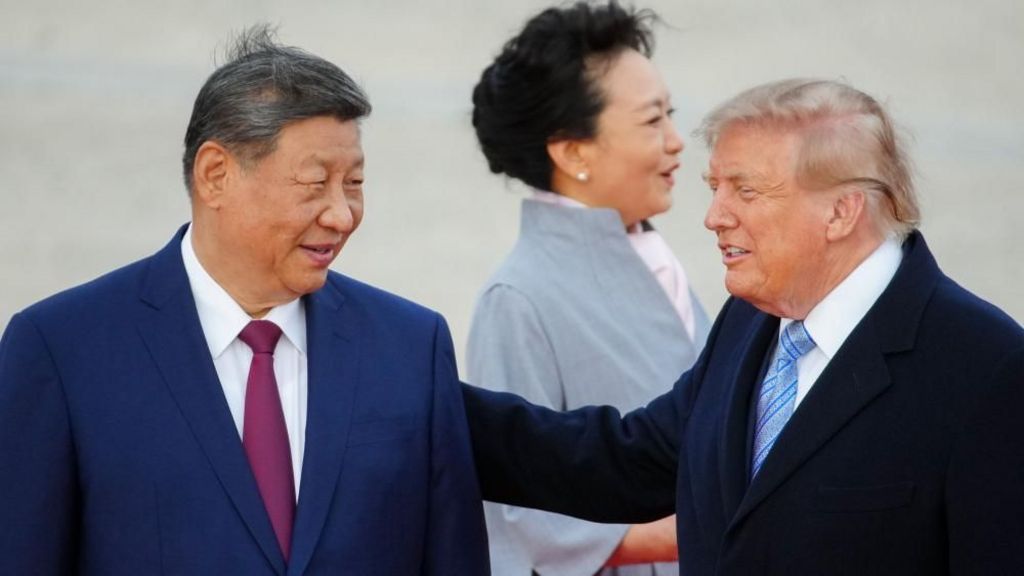
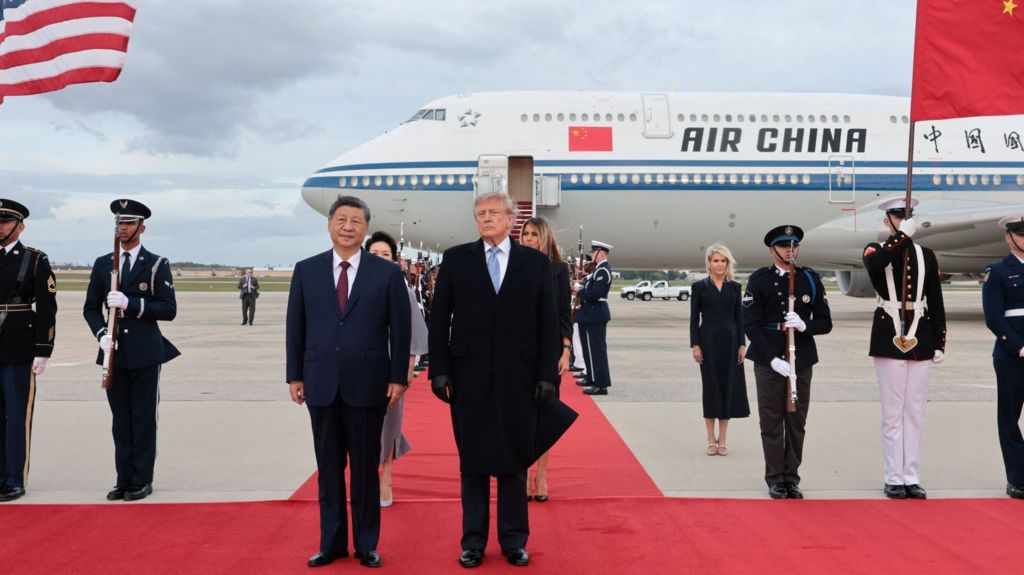
    Dong’s family has pinned additional hopes on the upcoming bilateral summit between U.S. President Donald Trump and Chinese President Xi Jinping next week, expressing optimism that world leaders will raise Dong’s case during high-level talks.

    Prior to his detention, Dong published commentary advocating for constitutional democracy, political liberalization, and greater government transparency – reform-minded positions that were once permitted for public discussion in Chinese media circles but have become heavily restricted and taboo in recent years under Beijing’s tightening ideological control.

  • Political uncertainty in India state as film star winner falls short of majority

    Political uncertainty in India state as film star winner falls short of majority

    In a political upheaval that has rewritten decades of electoral history in the southern Indian state of Tamil Nadu, film superstar-turned-politician C. Joseph Vijay’s newly launched Tamilaga Vettri Kazhagam (TVK) has emerged as the single largest party in the 234-member state legislative assembly, shattering the long-standing duopoly of the Dravida Munnetra Kazhagam (DMK) and All India Anna Dravida Munnetra Kazhagam (AIADMK). But five days after vote counting concluded, the state remains mired in political uncertainty, with no clear timeline for the formation of a new government and competing constitutional debates over who should get the first chance to take power.

    Vijay, a 51-year-old megastar popularly known by his fan nickname ‘Thalapathy’, led his fledgling party to a stunning 108 seats in the election, defeating the incumbent DMK government led by Chief Minister MK Stalin. The result leaves TVK just 10 seats short of the 118-seat majority required to form a government on its own. So far, India’s main national opposition party, the Congress, has pledged its five seats to Vijay’s bloc, leaving the celebrity politician just five legislators short of the required threshold.

    Two days after the vote count, Vijay met with Tamil Nadu Governor Rajendra Vishwanath Arlekar twice to formally stake his claim as the leader of the single largest party to form the next administration. Following the second meeting on Thursday, however, the Governor’s office released a statement rejecting the claim, noting that Vijay had not yet demonstrated he holds the requisite majority support to form a stable government. The Governor has insisted that Vijay submit documented proof of the 118 committed legislators before being invited to form government, a move that has drawn sharp criticism from TVK leaders and their backers.

    Constitutional experts are divided over the Governor’s decision. Many point to well-established constitutional precedent that grants the leader of the single largest party the first opportunity to form government, with a floor test of majority held after the government takes office. They argue that denying Vijay this opportunity is procedurally unfair. Analysts defending the Governor’s position note that his primary mandate is to ensure the formation of a stable administration that can survive a confidence vote, rather than inviting a minority government that could collapse shortly after taking office.

    Vijay’s rapid rise to the top of Tamil Nadu politics has drawn widespread comparisons to MG Ramachandran, another iconic matinee idol who split from the DMK in 1977 to form the AIADMK and went on to become the state’s Chief Minister. For nearly half a century, Tamil Nadu’s politics have been dominated by a two-party system between the DMK and AIADMK, a status quo that TVK has already overturned with its election performance. Unlike Ramachandran and his successor J Jayalalithaa — another film star who led the state for decades — Vijay enters politics with no prior elected experience, though he followed the traditional path of celebrity-turned-politician by retiring from his 69-film acting career full-time after launching TVK in 2024.

    As political uncertainty drags on, Indian media outlets have floated a range of hypothetical coalition scenarios, including a shocking power-sharing agreement between the bitter long-time rivals DMK and AIADMK to block TVK from power. Still, many analysts remain optimistic that Vijay can cobble together the required support from smaller regional parties and independent candidates to hit the 118-seat magic number and form the next government, closing out one of the most dramatic political upsets in recent Indian electoral history.

  • Paraguay and Taiwan reaffirm ties after China sought to lure away another Taipei ally

    Paraguay and Taiwan reaffirm ties after China sought to lure away another Taipei ally

    TAIPEI, Taiwan — On a high-profile visit to the self-ruled island democracy of Taiwan, Paraguayan President Santiago Peña delivered a clear message of diplomatic solidarity Friday, one day after China issued a formal demand that the South American nation cut its official ties with Taipei. Currently, Paraguay stands as the only remaining South American country that recognizes Taiwan, making it one of just 13 UN-unrecognized states worldwide that maintain full diplomatic relations with the island. For decades, Beijing has claimed Taiwan as an inalienable part of its sovereign territory, and in recent years, it has intensified two parallel campaigns to isolate Taipei: ramping up military pressure through frequent air and sea incursions around the island, and actively courting Taiwan’s remaining diplomatic allies to switch recognition to Beijing.

    Speaking at a military honors reception outside Taiwan’s presidential office, Peña framed the event as a tangible symbol of the unshakable commitment between Taipei and Asunción to deepen their long-standing bilateral partnership. Through an interpreter, he noted that the two sides share core foundational values including democracy, personal freedom, and universal human rights, and reiterated that Paraguay would remain a steadfast international advocate for Taiwan. “Paraguay highly values this relationship,” Peña stated, later expanding on that commitment during closed bilateral talks with Taiwanese President Lai Ching-te. In that meeting, Peña issued a formal call to the global community: the people of Taiwan deserve the right to determine their own future in line with democratic and equitable principles. He also pushed back against Taipei’s exclusion from global bodies, arguing that barring Taiwan from the United Nations system is not only a fundamental injustice but also erodes the legitimacy of the UN as an institution that claims to represent democratic nations globally.

    Lai thanked Peña and the Paraguayan government for their public, unflinching support for Taiwan and its bid for meaningful international participation. “I believe the friendship between Taiwan and Paraguay will further deepen, and our cooperation will grow closer through this visit,” Lai said in his public remarks. Following their meeting, the two leaders oversaw the signing of several new bilateral agreements, highlighted by a memorandum of understanding focused on investment in an artificial intelligence computing center on Taiwan.

    This public reaffirmation of ties came just 24 hours after Chinese foreign ministry spokesperson Lin Jian urged Paraguayan officials to “come to the right side of history as soon as possible” and sever all diplomatic relations with Taiwan. Lin emphasized that the one-China principle is a widely accepted norm of international relations, noting that 183 countries around the world currently maintain official diplomatic ties with the People’s Republic of China.

    In comments to Taiwan’s Central News Agency ahead of his four-day visit, Peña revealed that he had met with Honduran President Nasry Asfura on the sidelines of a regional event earlier this year. While the pair did not directly discuss whether Honduras would reverse its 2023 decision to cut ties with Taiwan and establish relations with Beijing, Peña told Asfura that Paraguay has built a strong, mutually beneficial relationship with Taipei. Asfura, who was elected with open backing from former U.S. President Donald Trump, has already ordered a full review of all existing bilateral agreements between Honduras and China, stoking widespread speculation that Honduras could distance itself from Beijing as part of a broader Trump administration push to reduce Chinese economic and political influence across Latin America.

    Peña’s visit is the latest high-profile diplomatic engagement for Lai, who just completed a trip last week to Eswatini, Taiwan’s last remaining diplomatic ally in Africa. Lai was forced to postpone that trip earlier after multiple regional countries denied his aircraft overflight permission, a move widely attributed to diplomatic pressure from Beijing. Beijing never publicly confirmed or denied that it pressured those countries, but did express “high appreciation” for their adherence to the one-China principle.

    The cross-strait split dates back to 1949, when the Chinese Communist Party defeated the Nationalist Party in a brutal civil war and established the People’s Republic of China on the mainland. The defeated Nationalist forces retreated to Taiwan, which has since evolved from decades of martial law to a fully functional multi-party democracy. Today, the island maintains its own governance, military, and foreign policy, while Beijing continues to claim it as part of its territory.

  • Pope Leo XIV sought a pastoral role in his first year, but verbal sparring with Trump intervened

    Pope Leo XIV sought a pastoral role in his first year, but verbal sparring with Trump intervened

    As Pope Leo XIV marked the first anniversary of his election to the papacy on Friday, the milestone was overshadowed by an escalating public feud with former president and current U.S. leader Donald Trump – a conflict that has dragged the soft-spoken, pastorally focused pontiff into the center of global geopolitical tensions.

    When Leo took office one year ago, he framed his papacy as centered on walking alongside the global Catholic flock, prioritizing pastoral care over high-profile political confrontation. The 70-year-old pontiff, a former Midwestern U.S. missionary and Augustinian priest, has always been known for his reserved, mild-mannered demeanor: he prefers solitary tennis matches, can quote 5th-century St. Augustine from memory, and frames his calls for global peace as simple, faithful readings of Christian scripture, not political posturing.

    But repeated public criticisms from Trump have forced Leo into the public fray, with the pontiff delivering increasingly sharp responses to the U.S. president’s attacks. The back-and-forth, which centers on competing stances on the ongoing Iran war, has strained diplomatic ties between the U.S. and the Holy See. On the eve of his anniversary, Leo hosted U.S. Secretary of State Marco Rubio, who traveled to Vatican City for a fence-mending meeting aimed at repairing bilateral relations. While both the Vatican and U.S. State Department reaffirmed their longstanding strong ties after the meeting, the conflict has nonetheless pushed Leo far outside his expected comfort zone on the global stage.

    Most recently, after Trump misrepresented the pontiff’s positions, Leo hit back: “If someone wants to criticize me for announcing the Gospel, let him do it with the truth.”

    Beyond the high-profile conflict with Trump, Leo’s first year in office has been defined by his promise to heal deep rifts within the Catholic Church and a polarized global community, a mission he has advanced steadily after 12 years of Pope Francis’ revolutionary, often divisive papacy. The pontiff has worked to calm tensions across the church, even amid rising threats of schism, as he navigates thorny challenges including friction between traditionalist and progressive factions, longstanding financial instability at the Holy See, and the geopolitical rift opened by his clashes with the Trump administration.

    Cardinal Wilton Gregory, a retired Washington archbishop and fellow Chicago native, noted that social media has amplified existing divisions within the church, creating a unique test for any sitting pope. “He has to call us to our better angels,” Gregory said of Leo’s approach, which has focused on de-escalating tensions rather than leaning into partisan friction. This approach was on display during Leo’s recent trip to Africa, where he sought to downplay the feud with Trump, saying that entering a public debate with the U.S. president “is not in my interest at all.” “I primarily come to Africa as a pastor, as the head of the Catholic Church to be with, to celebrate with, to encourage and accompany all the Catholics throughout Africa,” he said, repeating his stance that the political trappings of his role as a head of state and global moral figure are not his primary focus.

    For many observers, the novelty of having the first-ever U.S. pope, a development that breaks the longstanding unwritten norm that the papacy would not be held by a citizen of the world’s dominant superpower, has yet to fade. Unlike his predecessor Pope Francis, who frequently clashed with U.S. conservatives over his criticism of American-style capitalism and was often dismissed as out of touch with U.S. Catholic life, Leo speaks fluent English as a native speaker and has a deep, firsthand understanding of U.S. culture and institutions.

    Anthea Butler, a senior fellow at the Koch Institute at the University of Oxford, noted that Leo’s criticism of current U.S. policy differs sharply from Francis’ confrontational style. “He’s doing it not coming full-on like Francis would,” Butler explained, “but approaching issues from the side. He’s not naming names, he’s merely preaching the Gospel.”

    This approach has already yielded notable shifts in relations between the Holy See and U.S. Catholic institutions. During Francis’ papacy, tensions ran high between the Argentine pontiff and U.S. conservative Catholics, with unrelenting coverage of mismanagement and scandal at the Vatican leading many U.S. donors to stop contributing to the Holy See. Today, with a native-born U.S. leader in St. Peter’s, many U.S. Catholic leaders report newfound unity among American bishops, particularly around shared commitments to advocating for migrants and people living in poverty – a cohesion that leaders attribute in part to Leo’s unifying, accessible message.

    “It’s very different when you are hearing the message without it being mediated through translation,” said Kerry Alys Robinson, chief executive of Catholic Charities USA. Robinson noted that U.S. Catholic bishops are more united today than they have been in decades, a shift she credits in part to Leo’s consistent call for collective action around issues of shared concern to the church.

    Ward Fitzgerald, president of The Papal Foundation, which funds the pontiff’s global charity work, said the “Leo effect” has already translated to tangible growth in support from U.S. donors and new conversions to Catholicism across the U.S. and Europe. “I think there’s lots of reasons for it, but I certainly think that having a pope who speaks English helps young people understand the messages of the Holy Father,” Fitzgerald said. For U.S. donors, hearing the pontiff’s appeals directly in English resonates far more than translated remarks, Fitzgerald added, leading to increased giving. The Papal Foundation has already added 25 new donor families since Leo’s election – a significant gain, as membership requires a minimum pledge of $1.25 million.

    Cardinal Timothy Dolan, the influential U.S. prelate who was a key power broker in the 2025 conclave that elected Leo and who has close ties to Trump, celebrated a special anniversary Mass for foundation donors last week in St. Peter’s Basilica. In his homily, Dolan compared Leo to St. Joseph, the patron saint of the universal church, describing the pope as matching St. Joseph’s quiet, steady character. “A man who exuded a sense of depth and substance,” Dolan said. “A man who is shy, all right, a man who is focused on his mission. A man, always attentive to God’s plan. I can think of no one who fits that description better than Pope Leo.”

  • Partial results show losses for Starmer’s Labour and wins for Reform UK in local elections

    Partial results show losses for Starmer’s Labour and wins for Reform UK in local elections

    LONDON – Early partial outcomes from England’s 2025 local elections have delivered a sharp early warning to Prime Minister Keir Starmer and his governing Labour Party, with the party facing significant electoral setbacks and the hard-right Reform UK party, under the leadership of veteran populist politician Nigel Farage, recording major vote gains.

    Counting for the nationwide local contests, alongside separate elections for the devolved legislatures of Scotland and Wales, kicked off overnight Thursday, with results continuing to roll in across the full day of Friday. Early counts were concentrated in smaller regional authorities, with full results from major population centers including London, a long-time Labour stronghold, still pending by early Friday.

    In the working-class regions of northern England that have historically leaned Labour, Reform UK’s early performance has shaken British political observers: the party has already secured hundreds of local council seats in constituencies including Hartlepool, a result that underscores its growing traction among disillusioned working voters. Farage’s party has positioned itself as a radical right alternative to both major parties in recent years, capitalizing on public frustration over post-Brexit economic stagnation and migration policy to build support.

    Political analysts across the UK have framed these local elections as an informal midterm referendum on Starmer’s leadership, less than two years after he won the 2024 general election that brought Labour back to power after 14 years in opposition. Early signs of a heavy Labour defeat have already fueled speculation of internal unrest within the party, with restive backbench lawmakers reportedly preparing to push for a leadership challenge if the final overall result proves catastrophic for Labour.

    Even if Starmer manages to fend off an immediate challenge to his leadership, multiple senior political analysts have cast serious doubt on whether he will remain in post to lead the party into the next required national general election, scheduled to take place no later than 2029. The growing speculation has prompted a public intervention from Starmer’s own deputy, Deputy Prime Minister David Lammy, who has urged party factions to stand behind the current leadership, warning that “you don’t change the pilot during the flight.”

    As counting continues through Friday, political leaders and observers across the country are waiting to see whether the early grim trends for Labour hold in results from larger, more heavily populated areas, a final outcome that could reshape the trajectory of British politics for the rest of the decade.