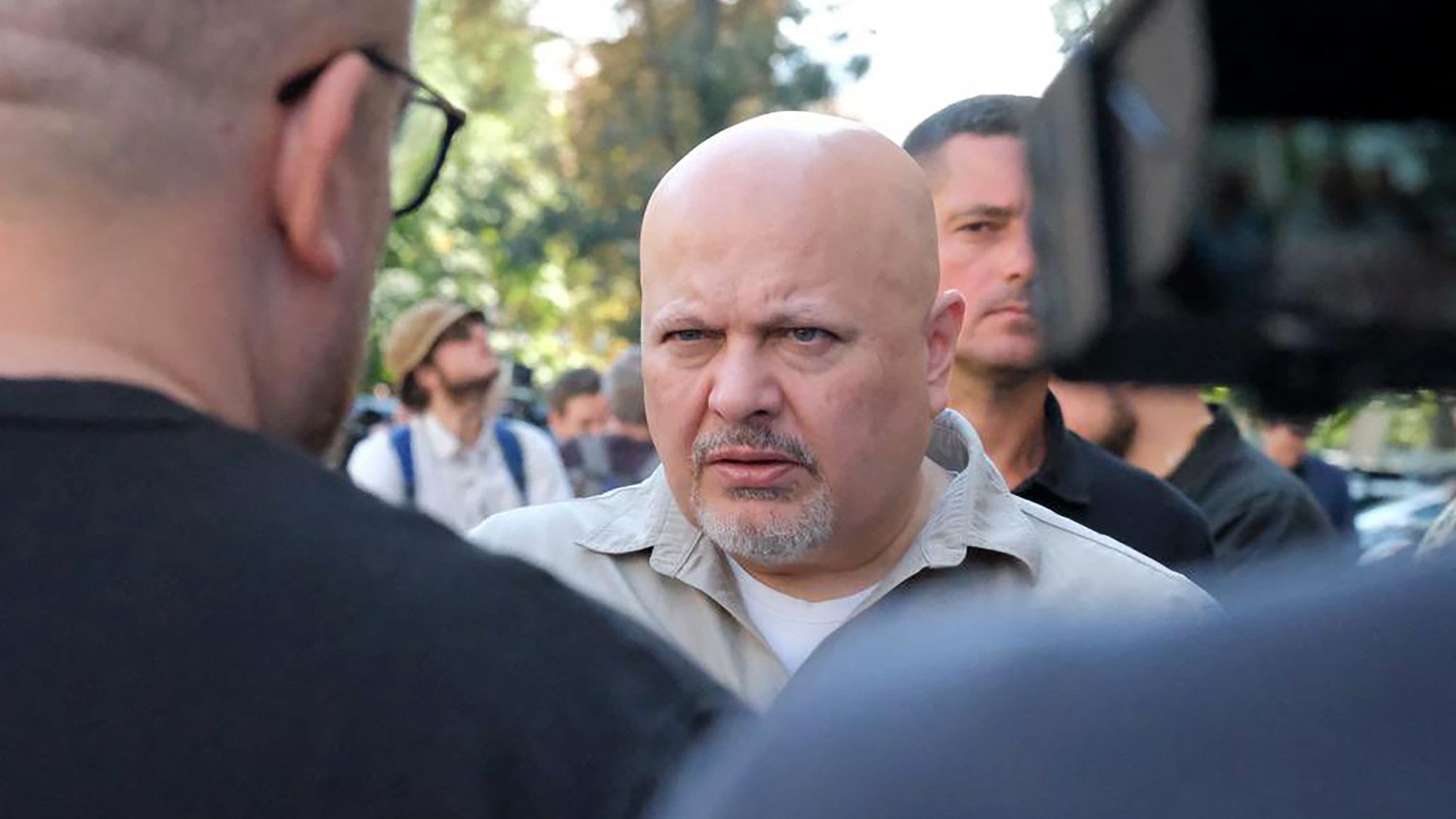
A coalition of leading Palestinian human rights organizations has issued a stark warning about deep procedural flaws and growing political interference in the disciplinary process against suspended International Criminal Court (ICC) Chief Prosecutor Karim Khan, just days before the court’s 125-member Assembly of States Parties (ASP) votes on whether to remove him from office. In a joint public statement released Friday by the Palestinian Human Rights Organizations Council (PHROC) — an umbrella group counting Al-Haq, Al Mezan Center for Human Rights, the Palestinian Centre for Human Rights and Addameer among its members — the coalition stressed it is not taking sides on the merits of the misconduct allegations against Khan or the prosecutor’s defense. Instead, it is sounding the alarm that systemic failures in the proceeding violate fundamental human rights protections and mark a dangerous departure from the rule of law that threatens the ICC’s core institutional independence.
The coalition argues the disciplinary process has devolved into a political referendum driven by the competing national interests of individual ASP member states. “It is impossible to extricate such national interests from the political impact of the Chief Prosecutor’s decisions made in the various situations currently before the ICC,” the statement reads, noting that this political capture opens the door to widespread overreach that risks eroding the court’s credibility as an impartial arbiter of international justice.
The controversial proceeding stems from unproven allegations of sexual misconduct leveled against Khan in April 2024, a claim Khan has repeatedly and vehemently denied. The ASP’s executive governing body, the Bureau, suspended Khan from his post on June 8 after a majority of its 21 members voted to label his actions “serious misconduct.” PHROC’s criticism centers heavily on the Bureau’s rejection of the findings of an independent three-judge panel the Bureau itself appointed to review a United Nations investigation into the claims. In a unanimous March ruling, the panel concluded the evidence presented did not meet the ICC’s strict “beyond a reasonable doubt” standard to prove misconduct, noting the probe produced only conflicting testimonies and largely hearsay-based evidence. No independent legal body, PHROC emphasizes, has formally found the facts of the investigation amount to serious misconduct or a major breach of the prosecutor’s official duties — yet the Bureau’s contrary finding deliberately side-stepped the panel’s binding legal conclusions.
PHROC also pushes back against the Bureau’s unsubstantiated claim that Khan engaged in an inappropriate sexual relationship with the complainant, enabled by an asymmetric power dynamic. The coalition notes that neither Khan nor the accuser has ever corroborated this framing, and the Bureau’s ruling failed to establish the non-consensual sexual misconduct that formed the core of the original complaint. “The Bureau, as a political body composed of diplomats, does not have the independence, impartiality or legal expertise to make assessments on the legal characterisation of conduct, nor did it enjoy the same timeframe as the ad hoc Panel to independently examine the two reports and 5,000-pages of evidence,” the statement adds.
Further drawing condemnation is the Bureau’s last-minute rushed change to voting procedures, which PHROC says was designed to lower the bar for Khan’s removal. Previously, the process required a two-thirds majority vote to first confirm serious misconduct, followed by a separate vote requiring 63 member state votes to remove the prosecutor. The Bureau rewrote the rules to combine these steps into a single vote, eliminating the higher two-thirds threshold for a misconduct finding. According to PHROC, this procedural change dismantles critical checks and balances on the Bureau’s political decision-making, clearing a path for removal that would have otherwise been impossible to achieve.
The coalition directly ties the push to oust Khan to a broader, coordinated campaign by the United States, its allies, and Israel to undermine the ICC’s ongoing investigation into war crimes committed during Israel’s military campaign in Gaza. Following Khan’s May 2024 decision to request arrest warrants for Israeli Prime Minister Benjamin Netanyahu and former Defense Minister Yoav Gallant on war crimes charges, the U.S. imposed retaliatory sanctions on the prosecutor, later expanding the measures to target two ICC deputy prosecutors, eight ICC judges, the United Nations special rapporteur on Palestine, and multiple Palestinian rights groups that provided evidence for the Gaza investigation.
PHROC traces this pattern of interference back years, noting that several current Bureau member states challenged the ICC’s jurisdiction over the Palestinian territories in 2020, and the United Kingdom launched a formal legal challenge to Khan’s 2024 arrest warrants for Netanyahu and Gallant. Most recently, Israel cited leaked details from the misconduct investigation in a November 2025 court filing asking that Khan be disqualified from leading the Gaza war crimes probe.
The coalition warns there is a clear and present danger that Israel and its political allies have already compromised the disciplinary process through political interference in bodies like the Bureau. “There is a very serious risk that State Parties will again prioritise their national interests and support for Israeli impunity over any genuine care or concern for either the interests of the complainant, the Prosecutor, or for the integrity of the Court,” the statement reads. The ongoing process, which launched in late 2024, has failed all parties involved, PHROC concludes, and stands to cause irreversible, far-reaching damage to both the ICC and the global project of international criminal justice. The ASP is scheduled to hold its special vote on Khan’s removal at United Nations headquarters in New York on July 24.