分类: politics

  • Tennessee execution called off after failed lethal injection

    Tennessee execution called off after failed lethal injection

    A planned execution in Tennessee has been thrown into chaos and ultimately called off after medical staff failed to meet state protocol requirements for lethal injection, prompting the governor to issue a last-minute one-year reprieve for the death row inmate at the center of a growing national justice debate.

    Tony Carruthers, sentenced to death for the 1994 kidnapping and brutal murders of three people in Memphis, was scheduled to receive a lethal injection Thursday. But according to an official statement from the Tennessee Department of Correction, while the execution medical team successfully placed a primary intravenous line for the lethal drugs, they were unable to locate a second usable vein to serve as a required backup, a mandatory step under the state’s execution protocols. The team followed the established contingency plan and attempted to insert a central venous line, but that procedure also failed, forcing officials to call off the execution entirely.

    Within hours of the procedural failure, Governor Bill Lee issued the temporary 1-year reprieve halting the execution. The case has already drawn widespread national scrutiny from justice reform advocates who have spent weeks pushing to stop Carruthers’ execution, citing a litany of alleged flaws in his 1996 conviction.

    Carruthers was found guilty of killing Marcellos Anderson, his mother Delois Anderson, and Frederick Tucker, who were beaten, shot, and buried alive in a local Memphis cemetery. But for decades, Carruthers has maintained he had no involvement in the crimes. Leading civil rights organization the American Civil Liberties Union (ACLU) has emerged as one of the most prominent voices opposing the execution, arguing that Carruthers’ trial was fundamentally unfair: he was forced to represent himself without adequate legal counsel, no physical evidence linking him to the crime was ever presented, and all witness testimony from the trial came from informants who have since recanted their statements or been proven unreliable.

    In the weeks leading up to the scheduled execution, advocacy groups collected more than 130,000 signatures on a petition demanding that untested fingerprint and DNA evidence from the crime scene be analyzed before any execution proceeds. The petition was formally delivered to Governor Lee’s office at the Tennessee State Capitol earlier this week, but Lee rejected the request the following day and confirmed the execution would move forward as planned. High-profile celebrity Kim Kardashian also joined the effort last week, sharing the campaign with her millions of social media followers and urging them to contact the governor’s office to demand DNA testing before the sentence was carried out.

    Just one day before the scheduled execution, Carruthers’ legal team filed a formal clemency petition arguing that the inmate is ineligible for execution due to severe mental impairment. The petition states that Carruthers lives with schizoaffective disorder, bipolar disorder, and permanent brain damage, which leave him trapped in persistent, complex delusions that prevent him from rationally understanding why he is scheduled to be executed.

    In response to Thursday’s temporary reprieve, ACLU Capital Punishment Project Senior Counsel Maria DeLiberato reaffirmed the organization’s commitment to continuing the fight for Carruthers. “Tennessee cannot continue torturing a man while refusing to answer serious questions about his innocence,” DeLiberato said.

    The botched execution attempt adds Tennessee to a growing list of U.S. states that have faced procedural challenges carrying out lethal injections in recent years, as supply chain issues, medical staff shortages, and evolving legal standards have disrupted long-standing execution protocols.

  • Rubio says Cuba is threat to US as Havana accuses him of ‘lies’

    Rubio says Cuba is threat to US as Havana accuses him of ‘lies’

    Diplomatic tensions between the United States and Cuba have reached a new boiling point, after top US officials have ramped up aggressive rhetoric against the island nation and brought formal criminal charges against its former leader. One day after the US Department of Justice indicted ex-Cuban President Raúl Castro on murder charges linked to the 1996 shooting down of two private aircraft that killed four US citizens, Secretary of State Marco Rubio publicly labeled Cuba a persistent national security threat to the US, and downplayed the chances of any peaceful diplomatic breakthrough between the two nations.

    Rubio told reporters this week that while Washington officially still prefers a negotiated diplomatic resolution to decades of bilateral tensions, the probability of reaching such an agreement under the current Cuban leadership is extremely low. He further amplified US accusations, labeling Cuba as one of the primary state sponsors of terrorist activity across the Latin American and Caribbean region. The top US diplomat also declined to comment on potential plans to take former President Castro into custody to face trial in the US, noting that any operational details would remain confidential. Acting US Attorney General Todd Blanche, who announced the indictment in Miami, the heart of the US-based Cuban exile community, said Wednesday that Washington expects Castro to face justice in the US “by his own will or another way.”

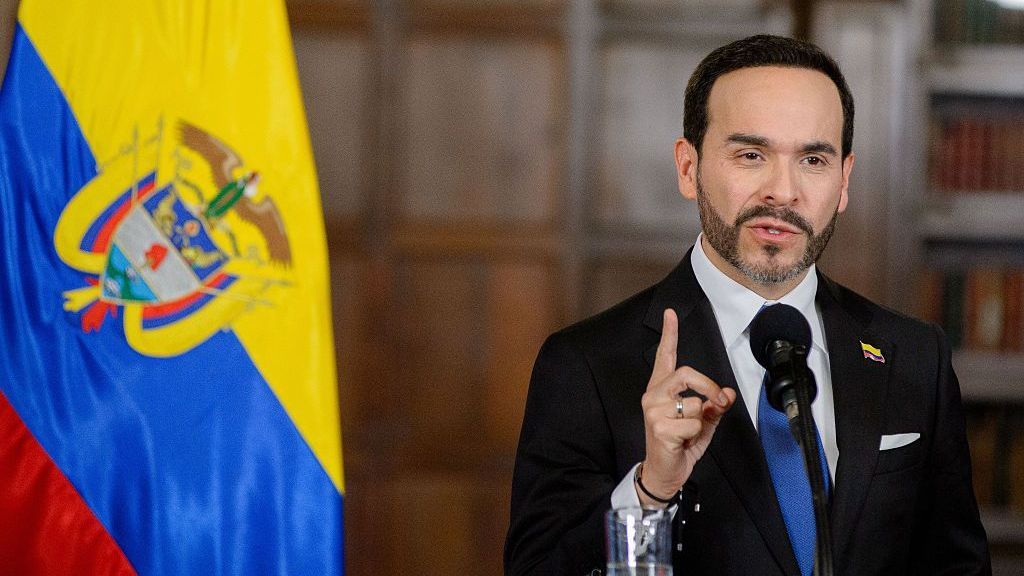
    Cuban officials have pushed back forcefully against all US claims. Cuban Foreign Minister Bruno Rodríguez denied the accusations in an official post on the social platform X, calling Rubio’s comments outright lies. Rodríguez emphasized that Cuba has never posed any threat to the United States, and accused the Trump administration of deliberately stoking tensions to justify military aggression against the island. He also condemned what he called Washington’s systematic, ruthless campaign of pressure against the Cuban people.

    The escalating confrontation comes as Cuba already grapples with a severe humanitarian and economic crisis, worsened by a longstanding US oil embargo that has created acute fuel shortages across the country. For months, Cuban residents have faced extended, rolling power blackouts and widespread shortages of basic food goods. Rubio confirmed that Cuba has accepted a $100 million US humanitarian aid package, though the gesture has done little to ease the broader political standoff.

    President Donald Trump, who has made aggressive opposition to Cuba’s communist government a central part of his foreign policy agenda, has repeatedly leveraged economic and diplomatic pressure to push for regime change on the island. Speaking from the Oval Office, Trump characterized Cuba as a “failed country” and framed his administration’s actions as a humanitarian effort to support the Cuban people. He noted that decades of previous US presidential administrations failed to resolve the long-running conflict, and positioned himself as the leader who will finally address the issue. Many political analysts have drawn parallels between Wednesday’s indictment of Castro and the Trump administration’s 2025 arrest of Venezuelan President Nicolás Maduro, seeing the move as part of a broader pattern of aggressive action against left-leaning Latin American governments that are opposed by Washington.

  • Israelis slam Ben Gvir for ‘damaging country’s image’ with flotilla abuse video

    Israelis slam Ben Gvir for ‘damaging country’s image’ with flotilla abuse video

    A leaked video showing Israeli National Security Minister Itamar Ben Gvir overseeing the mistreatment of detained activists from the Gaza-bound Global Sumud Flotilla has triggered widespread condemnation both inside Israel and across the global community, exposing deep rifts within the country’s political establishment over the incident and its international fallout. The footage, which went public in late May 2026, captures Ben Gvir waving an Israeli flag while confronting detained activists, who are seen being manhandled and forced to kneel face-down on the ground by officers from the Israel Prison Service (IPS).

    The controversy unfolded days after Israeli naval forces intercepted the flotilla—made up of 77 vessels carrying hundreds of activists seeking to break Israel’s long-running blockade of Gaza—while it was still in international waters. More than 30 activists on board were taken into Israeli custody following the raid, with the vast majority deported by Thursday, with only Israeli citizens remaining in detention. According to Israeli public broadcaster Kan 11, Israeli officials had originally planned to process the detainees quietly, deport them via the southern port of Ashdod, and avoid public provocation. Multiple branches of Israel’s security and diplomatic apparatus, including the foreign ministry, top security establishment leaders, and the Israel Defense Forces (IDF) spokesperson unit, had even opposed the publication of any official footage from the raid, to align with this low-profile approach.

    Internal planning shows the IDF spokesperson unit had intended to release curated footage showing activists being treated respectfully, to shape global public perception of the operation. But the foreign ministry vetoed that plan, opting instead to hand-select what imagery would be made public. That carefully managed narrative collapsed after Ben Gvir published the video of his presence at the detention facility, a move that senior Israeli security sources have described as causing “enormous damage” to the country’s international standing.

    Already, the incident has drawn sharp condemnation from world leaders, particularly from nations whose citizens were among the detained activists. Activist testimonies collected by Adalah, an Israeli legal center representing Palestinian and minority rights, confirm that detainees faced systemic abuse in custody. Suhad Bishara, Adalah’s legal director, says activists reported severe violence at the hands of Israeli forces, with at least two people hospitalized after being struck by rubber bullets during the raid. Additional allegations from Ynet, an Israeli mainstream news outlet, add that naval forces fired rubber bullets at approaching flotilla vessels and blasted loud, disruptive music through the ships’ communication systems during the interception. Adalah’s account further alleges that detainees endured extreme violence, sexual humiliation, and serious injuries both during the naval raid and after being brought to Ashdod port. An IPS spokesperson defended the operation in a statement to Haaretz, claiming all treatment of detainees followed official standard operating procedures, and noting that any footage showing abuse was captured in areas controlled by the IDF and national police, not the IPS.

    Within Israel, criticism of Ben Gvir has been widespread—even from the minister’s own political allies—though most internal condemnation has focused on the damage the video caused to Israel’s global reputation, rather than the abuse of the activists documented in the footage. Prime Minister Benjamin Netanyahu, who appointed Ben Gvir to his national security post, acknowledged that the minister’s handling of the confrontation “is not in line with Israel’s values and norms” amid mounting international pressure. Foreign Minister Gideon Sa’ar went further, saying Ben Gvir’s “disgraceful display” had caused tangible harm to the state, and that the far-right minister “is not the face of Israel.”

    Opposition leaders have gone a step further, placing blame squarely on Netanyahu for allowing Ben Gvir to hold a senior government post. Yesh Atid party leader and opposition head Yair Lapid said Netanyahu bears ultimate responsibility for the damage done to Israel’s international public diplomacy, known locally as hasbara. Yair Golan, leader of the opposition Democrats party, called Ben Gvir “a criminal and a strategic liability” to the state, while fellow Democrat Gilad Kariv added that the minister “does not represent Israel” or Israeli values, calling him “a disgrace to Judaism and Zionism.”

    Not all Israeli political figures have criticized Ben Gvir, however. Transport Minister Miri Regev, a member of Netanyahu’s ruling Likud party, was also present at the detention facility and published her own footage from the site. She defended the operation in a social media post, writing “This is what should be done to terror supporters who came to break the siege on Gaza,” and falsely claiming the activists had been under the influence of drugs and alcohol. On Channel 14, a pro-Netanyahu Israeli outlet, panelists openly defended Ben Gvir’s actions, with one commentator stating “We want to show the world that we treat these people like cockroaches here.” Even some critics of Ben Gvir’s messaging have defended his core position: Amichai Stein, diplomatic correspondent for i24NEWS, wrote that Ben Gvir had every right to label the activists as anti-Israel terrorists, but argued he should not be in charge of shaping the country’s international messaging.

    Ahmed Tibi, a Palestinian member of the Israeli Knesset, pushed back on claims that Ben Gvir does not represent Israeli values, arguing that the far-right minister’s actions, and the widespread support they have received within the ruling establishment, accurately reflect the current attitudes of Israel’s government and its core political positions. The controversy has already created significant friction between Israeli security and diplomatic institutions, and has reinforced global criticism of Israel’s ongoing blockade of Gaza and treatment of pro-Palestinian activists seeking to challenge it.

  • Legal groups file complaint against barristers over role in UK Lawyers for Israel

    Legal groups file complaint against barristers over role in UK Lawyers for Israel

    Two London-based legal advocacy organizations have launched a formal complaint with Britain’s top legal regulator, accusing three of the country’s most high-profile King’s Counsel barristers of abusing their professional seniority to silence pro-Palestine advocacy. The complaint, submitted Thursday by the European Legal Support Centre (ELSC) and the Public Interest Law Centre (PILC), names Lord David Pannick, Lord Anthony Grabiner, and Stephen Hockman, all three of whom serve as patrons for UK Lawyers for Israel (UKLFI), a pro-Israel advocacy group.

    At the core of the complaint is the allegation that UKLFI routinely highlights the elite legal standing of its patrons in formal correspondence sent to individuals and groups engaged in lawful Palestine solidarity work. The complainants argue that prominently displaying the barristers’ senior titles and reputations intentionally inflates the perceived threat of legal action, creating disproportionate pressure on recipients who often lack the resources or access to legal representation to push back against complex legal claims.

    Founded in 2011, UKLFI frames its core mission as countering efforts to “delegitimize Israel” and opposing the global Boycott, Divestment and Sanctions (BDS) movement targeting Israel over its policies toward Palestinians. Structured as a guarantee-limited company with an affiliated registered charitable trust, UKLFI is not regulated by the Solicitors’ Regulation Authority (SRA), meaning its activities do not face the same strict oversight required of licensed law firms. The group has a well-documented history of sending legal warnings and formal complaints to individuals and institutions that organize or participate in pro-Palestine activity, and has publicly described its patrons as “some of the most distinguished members of the legal profession in the United Kingdom.”

    Under UKLFI’s standard practice, the names of its high-profile patrons, including the three barristers named in the complaint, are listed at the bottom of every legal threat sent to groups suspected of violating equality or terror legislation. The complainants argue that this practice leads pro-Palestine campaigners, teachers, healthcare workers, students, and artists to overestimate the severity and credibility of the legal threats they receive, because the barristers’ senior standing lends unearned authority to the correspondence.

    The complaint was filed on behalf of a broad coalition of individuals and organizations working across education, healthcare, migrant advocacy, trade unions, and the arts, many of whom provided formal impact statements detailing how receiving UKLFI’s correspondence disrupted or chilled their Palestine-related work. ELSC data shows UKLFI appears 128 times in its Britain Index of Repression, a database tracking what the organization calls systematic efforts to suppress Palestine solidarity activism across the United Kingdom. The cumulative impact of these tactics, the complainants argue, has created a “chilling environment” that pushes groups and individuals to abandon or alter completely lawful pro-Palestine activity out of fear of costly, drawn-out legal action.

    ELSC and PILC are calling on the Bar Standards Board (BSB), the independent regulator for barristers practicing in England and Wales, to open a full investigation into whether the three barristers’ conduct violates the BSB’s Code of Conduct, specifically provisions requiring barristers to uphold integrity, maintain professional independence, and preserve public trust in the legal profession. Beyond a formal investigation and compliance assessment, the groups are also pushing the BSB to issue new formal guidance governing how senior legal titles can be used in communications directed at non-lawyers and civil society organizations.

    An ELSC spokesperson emphasized that the complaint exposes a clear pattern of weaponizing professional legal status to intimidate people engaged in protected, lawful advocacy. “The effect is a chilling environment that deters lawful public support for Palestine, particularly amid a mass global movement in response to the situation in Gaza,” the spokesperson said. “As our report On All Fronts sets out, these mechanisms are deliberate attempts to erase Palestine from public consciousness. This narrows democratic space, threatens freedom of expression, and must be examined by the regulator to protect public confidence in the legal profession.”

    A PILC spokesperson echoed that sentiment, noting that the prestige associated with senior barrister titles should never be deployed to silence legitimate public debate. “For small charities and grassroots campaign groups showing solidarity with Palestine, receiving legal correspondence that appears to carry the backing of some of the most senior figures at the Bar can be deeply intimidating,” the spokesperson said. “At the heart of this complaint is the public interest – protecting democratic participation, safeguarding freedom of expression, and ensuring that people are not discouraged from speaking out or organising lawfully because of the fear of legal intimidation.”

    This is not the first time the two advocacy groups have taken legal action against UKLFI. Last year, ELSC and PILC filed a separate complaint with the SRA against Caroline Turner, a UKLFI director, accusing her of violating the SRA’s professional conduct rules through the use of strategic lawsuits against public participation, commonly known as SLAPPs—legal tactics designed explicitly to deter and silence free speech on matters of public interest. The groups claim that between January 2022 and May 2025, UKLFI sent at least eight threatening legal letters to pro-Palestine groups and individuals, a pattern of “vexatious and legally baseless” correspondence aimed at silencing campaigners, academics, and civil society organizations.

    At the time of that earlier complaint, a UKLFI spokesperson denied all allegations, stating that the group “seeks to promote respect for the law in matters relating to Israel and the Jewish people by drawing attention to conduct which is or may be illegal and explaining the relevant facts and law. This sometimes upsets people who are not complying with the law and their supporters. They may seek to disrupt our work by making misinformed complaints to various bodies.”

    The spokesperson added that UKLFI is a non-profit membership organization, not a law firm, and is not required to register or be authorized under UK law for the activities it conducts. “Nevertheless, its work is carried out to the highest professional standards. Many of its members and supporters are practising lawyers who are regulated by the applicable professional regulators. UKLFI has not conducted any activity that can be described as a SLAPP,” they said.

    As of press time, neither the BSB nor UKLFI had issued a public response to the new complaint, and Middle East Eye had not received a reply to its requests for comment from either organization.

  • Top Democrats decry Trump ‘taxpayer shakedown’ and ‘super-pardon’

    Top Democrats decry Trump ‘taxpayer shakedown’ and ‘super-pardon’

    Leading Democratic lawmakers on two key U.S. House of Representatives committees have launched a new push to force senior leaders from the Department of Justice and Treasury Department to explain the controversial settlement of President Donald Trump’s $10 billion civil suit against the Internal Revenue Service, a deal Democrats deride as an orchestrated “sham” designed for political self-dealing.

    In a formal letter sent Wednesday to acting Attorney General Todd Blanche, Treasury Secretary Scott Bessent, and IRS CEO Frank Bisignano, the top Democratic members of the House Judiciary Committee and Ways and Means Committee—Jamie Raskin of Maryland and Richard Neal of Massachusetts, respectively—leveled harsh condemnation against the agreement, calling it “one of the most brazen acts of public corruption and self-dealing in American history.”

    The lawmakers argue that the current leadership at the DOJ and IRS chose to capitulate rather than protect public funds from what they call a clear grab for private political gain. Central to their criticism is the establishment of a $1.776 billion “Anti-Weaponization Fund” created as part of the settlement, which Raskin and Neal label a taxpayer shakedown meant to direct public money to the president’s political allies—including the pro-Trump rioters who stormed the U.S. Capitol on January 6, 2021.

    The pair added that the massive, unaccountable fund will be overseen by a handpicked commission made up entirely of Trump’s political cronies, and the terms of the original settlement block both Congress and the general public from ever learning which individuals receive payments from the pool of public money. According to prior reporting from CNN, the first known claim to the fund was already filed this week by Michael Caputo, a long-time Trump advisor and former White House official. Caputo describes his family as “survivors of the illegal Russiagate investigations” and is seeking $2.7 million in compensation from the fund.

    House Democrats emphasized that the U.S. Constitution grants Congress alone the power of the purse through its appropriations clause, and congressional leaders never approved or allocated taxpayer funds for the $1.776 billion political fund. “This settlement is a transparent attempt to circumvent the separation of powers and use the judgment fund for a scam Congress never contemplated: rewarding the president’s political allies at the expense of American taxpayers,” the letter reads.

    Beyond the creation of the controversial fund, the settlement permanently bars the IRS from pursuing any further legal or administrative action against Trump and his immediate family members. Lawmakers say the deal effectively grants a sweeping, unofficial “super-pardon” to the president, his family, and all connected business entities. This immunity releases them from any potential accountability for unpaid taxes, as well as from other ongoing federal civil and criminal probes into allegations including insider trading, antitrust violations, false statements, and sexual harassment.

    Raskin and Neal have ordered the federal agencies to preserve all records tied to the settlement and fund creation, including both physical documents and electronically stored information—covering communications sent via private emails, text messages, encrypted apps like Signal, and all other non-official communication channels. They have also given agency leaders a deadline of next week to turn over the IRS internal memorandum on the settlement, all related supporting records, and formal responses to a list of probing questions. The deadline comes ahead of Bessent’s scheduled public appearance before the Ways and Means Committee.

    The controversy has already drawn scrutiny on Capitol Hill from both chambers. Blanche appeared before the Senate on Tuesday to testify on the DOJ’s annual budget request, where he faced a wave of questions from Democratic lawmakers pushing back on the deal. He attempted to push back against the framing put forward by Senate Appropriations Committee Vice Chair Patty Murray of Washington, who has argued the fund amounts to Trump using tax dollars to enrich his own political circle. Democratic Sen. Chris Coons of Delaware questioned Blanche about requirements for public disclosure of payouts and safeguards to prevent Trump family members from accessing the fund, while Sen. Chris Van Hollen of Maryland raised questions about whether January 6 rioters—including those who attacked Capitol police and even those convicted of child sex crimes—would qualify for payments.

    Hours after the House Democrats released their letter on Wednesday morning, two Capitol Police officers who defended the building during the 2021 attack filed a separate federal lawsuit seeking to dissolve the fund entirely. Their legal argument argues that no federal statute authorizes the fund’s creation, the underlying settlement is a corrupt sham, and the fund’s design violates both the U.S. Constitution and federal law.

    Separately, Raskin introduced new standalone legislation Wednesday, the No Taxpayer-Funded Settlement Slush Funds Act of 2026, designed to explicitly block Trump’s fund from operating. He also submitted a motion to issue formal subpoenas for Blanche, Bisignano, Bessent, and two other officials directly involved in the deal: Associate Attorney General Stanley Woodward and Treasury Department General Counsel Brian Morrissey. Morrissey notably resigned from his post as the deal was publicly announced.

    “Mr. Blanche orchestrated this outrageous slush fund as part of the settlement with Donald Trump, which was also signed by Mr. Woodward, and Mr. Bessent will oversee the payout of these funds,” Raskin said in a public statement. “Mr. Bisignano signed off on this settlement for the IRS, and Brian Morrissey remarkably resigned as this deal was being announced. These individuals all possess critical insights into Trump’s self-dealing scheme with his own agencies to create this fund and reward his supporters and friends.”

    The Republican-controlled House Judiciary Committee voted to reject the proposed subpoenas along a strict party-line vote, ending the immediate push for congressional testimony from the involved officials.

  • Three ways Cuba crisis could play out  after US indictment of Raúl Castro

    Three ways Cuba crisis could play out after US indictment of Raúl Castro

    The long-strained relationship between the United States and Cuba has entered a new, highly unpredictable phase after US authorities brought murder charges against 94-year-old former Cuban president Raúl Castro. This unprecedented legal action has ignited widespread global speculation that the Caribbean island could be the next target of Washington’s regime change agenda, coming on the heels of a years-long US maximum pressure campaign that has pushed Cuba into its worst fuel and energy crisis in decades. For 66 years, Cuba has been governed by a Communist system, and a growing bloc of US officials have publicly pushed for that government to be removed from power.

    While sitting US President Donald Trump has stated publicly that he does not believe any military escalation will be needed to achieve US goals, the White House has simultaneously doubled down on its vow to not tolerate what it labels a “rogue state” located just 90 miles (144 kilometers) off the US coast. Analysts and policymakers are now examining three distinct scenarios that could unfold as tensions escalate.

    The first, and most immediately dramatic pathway, is a US military operation to capture Castro to stand trial in an American courtroom. The charges against Castro stem from the 1996 downing of two civilian aircraft by Cuban fighter jets, and the indictment has stoked fears of a repeat of previous US capture missions. This kind of operation is not without precedent: earlier this year, US special operations forces carried out a rapid raid in Venezuela to capture then-President Nicolás Maduro, a long-time close ally of Cuba, to face US drug and weapons charges in New York. Going back further, the 1989 Operation Just Cause saw 20,000 US troops invade Panama to overthrow and detain then-leader Manuel Noriega.

    While Trump has declined to confirm or deny whether a similar mission is being planned for Cuba, a number of sitting US lawmakers have openly called for exactly that approach. “We shouldn’t take anything off the table,” Florida Senator Rick Scott told reporters, adding that “the same thing that happened to Maduro should happen to Raúl Castro.”

    Regional security experts note that from a purely military perspective, a capture mission is logistically feasible, but it carries significant risks and unforeseen complications. One key factor is Castro’s advanced age, and analysts also anticipate fierce resistance from Cuban security forces. Adam Isacson, a regional specialist at the Washington Office on Latin America, a non-governmental organization, explained that while Castro’s age might simplify extraction, his iconic status means he is under extremely heavy security protection. “It’s certainly possible,” Isacson noted, but added that removing Castro would likely do little to shift Cuba’s existing power structure. Castro stepped down from the presidency in 2018, and has since functioned primarily as an influential symbolic figurehead rather than holding direct day-to-day governing power. “He’s 94. I don’t think it would affect the power structure in Cuba very much anymore,” Isacson said. “The Castro dynasty retains influence, but it is no longer central to the system the revolution built.” Still, he acknowledged that a capture would carry major domestic political benefits for the Trump administration, which has long courted the anti-Castro Cuban exile community in Florida. “They’d love to humiliate the Castros and lock up one of the original 1959 revolutionaries,” Isacson said. “But the strategic value of that move is really questionable.”

    The second scenario being pushed by senior Trump administration officials is a negotiated transition to a new, US-aligned leadership structure that leaves most of Cuba’s existing governing institutions intact. This approach, experts point out, would mirror the recent transition in Venezuela that saw Nicolás Maduro replaced by Delcy Rodriguez, who has since governed the country while working directly with the Trump administration. Trump has repeatedly stated that his administration is already in contact with dissident figures inside Cuba who are seeking US support amid the island’s deepening economic crisis. “Cuba is asking for help, and we are going to talk,” Trump wrote on his social platform Truth Social on May 12.

    Just days after that post, CIA Director John Ratcliffe held a closed-door meeting with multiple senior Cuban officials, including Castro’s grandson Raúl Guillermo Rodríguez Castro and Interior Minister Lázaro Álvarez Casas. Secretary of State Marco Rubio told reporters during a Florida appearance that “We’ll engage with the Cubans… at the end of the day they need to make a decision. Their system just doesn’t work.” Rubio added that the administration’s top preference is reaching “a negotiated agreement” that would leave core government structures in place. The changes Washington is demanding include commitments to liberalize Cuba’s state-controlled economy, open the country to increased foreign investment, grant greater political power to US-based Cuban exile groups, and expel all Russian and Chinese intelligence operations from the island.

    Georgetown University Latin American studies professor Michael Shifter, former president of the Washington-based think tank Inter-American Dialogue, explained that this approach aligns with US strategic goals: “Just like they wanted to avoid instability in Venezuela, they want to avoid instability in Cuba. Forcing a full regime collapse would be too risky for that.” The biggest challenge to this plan, multiple experts note, is that there is no clear, pre-vetted alternative leader waiting in the wings inside Cuba, unlike the situation in Venezuela. “I don’t think there’s an obvious Delcy Rodriguez in Cuba, and power works differently in Cuba than it does in Venezuela,” Shifter said. “It’s hard for them to find the kind of figure they’re looking for, but that doesn’t mean they aren’t actively searching for a cooperative governing structure.”

    The third and most passive scenario is that Cuba’s government will eventually collapse entirely under the weight of ongoing US economic pressure, which has already left most Cuban residents coping with hours-long daily blackouts and widespread shortages of basic food and consumer goods. President Trump has argued that this outcome is already well underway, saying “There will be no escalation. I don’t think it’s necessary. The place is falling apart. It’s a disaster, and they have lost control to some extent.”

    But experts warn that this narrative overlooks key strengths of the Cuban state, noting that even amid a catastrophic economic downturn, government and security institutions still maintain firm control over daily life across the island. “You have to distinguish between the Cuban economy and the Cuban state and government,” Shifter explained. “The Cuban economy can collapse, and is collapsing… but the state still functions, especially on the security side.”

    A full state collapse would also create major new problems for the Trump administration, as it would likely trigger a massive wave of Cuban migration, primarily toward the US southern border. The Trump administration has already imposed harsh new immigration restrictions that have blocked most recent Cuban arrivals from accessing political asylum and other legal pathways to resettlement. “If there’s a collapse, you’re going to see a big portion of the Cuban population do everything they can to get away, the same way they have from Haiti over the years,” Isacson said. He added that while Florida would be the primary destination for most migrants, many would also likely travel through Mexico to reach the US. Isacson noted that he has been surprised a mass exodus has not already begun, given the extreme conditions many Cubans are facing: “People are probably subsisting on 1,000 or 1,500 calories a day, and are not able to get basic healthcare. You’d think that people would already be building their boats.”

    For the hundreds of thousands of Cuban exiles living in the US, many of whom have spent decades advocating for the overthrow of the Havana government, the current moment brings long-awaited hopes that their goal may finally be within reach. But for Cuban residents on the island, the uncertainty of what comes next brings new hardship and anxiety after decades of economic isolation and political tension.

  • Oxford Union’s Palestinian president on why she invited Tommy Robinson to debate Islam

    Oxford Union’s Palestinian president on why she invited Tommy Robinson to debate Islam

    The Oxford Union, one of the world’s most famous and storied collegiate debating societies, finds itself at the center of yet another firestorm, this time over a decision that cuts straight to the heart of global conversations about free speech, religious scrutiny, and the line between hate speech and open debate. The flashpoint? A planned debate titled “This House believes the West is right to be suspicious of Islam”, featuring an invitation to far-right anti-Islam activist Tommy Robinson, whose real name is Stephen Yaxley-Lennon, a man with multiple criminal convictions including for assault, fraud, and contempt of court. What makes the controversy even more unexpected is that the invitation came from the union’s current president, 20-year-old Arwa Elrayess — a Muslim student of Palestinian origin.

    Middle East Eye traveled to the University of Oxford this week to meet Elrayess in the union’s historic wood-panelled Gladstone Room, a space steeped in British political legacy. Named for former British prime minister and one-time union president William Gladstone, the room features soaring painted ceilings, shelves lined with centuries of national newspaper archives, and plush leather armchairs that once served as seating for the society’s smoking room in a more permissive era. The semi-circular cabinet table by the window, where Gladstone once met his ministers, is said to have been designed specifically so the former leader could look every minister directly in the eye to spot dishonesty — a detail Elrayess shared with a nod to the confrontational conversation ahead.

    Robinson, a polarizing figure who has built his public profile on anti-Islam activism, recently drew 60,000 attendees to a London rally where he declared he would “stop Islam” if he gained power, called on supporters to “prepare for the Battle of Britain”, and demanded that many Muslims leave the United Kingdom. When asked if these comments qualified as hate speech, Elrayess did not mince words: “I think everything that was said was abhorrent.” But she remains unwavering in her commitment to holding the debate, a stance shaped directly by her own experience as a Muslim and Palestinian student at Oxford.

    In her first year at the university, during the Israeli military campaign in Gaza that Elrayess refers to as genocide, she debated an Israeli soldier on the union floor. At the time, she had family still living in Gaza, making her one of the most personally invested participants in that room. She recalled that experience as deeply empowering: “I could not have thought of anything more vindicating than to be able to stand up there and be given equal weight, and to be able to give my views. People came up to me from all different backgrounds and said, ‘thank you so much for getting to say the things that I wanted to say, but I don’t think we ever had the opportunity.’”

    That experience shaped Elrayess’s core philosophy on inviting controversial figures: inviting a speaker does not grant them moral legitimacy, it simply acknowledges that their views hold enough public influence to require direct scrutiny. “What we are saying is that their views are influential and consequential enough that they deserve to be scrutinized,” she explained. She added that she wants to challenge the harmful perception that Muslims seek to avoid scrutiny of their faith: “I wanted to prove that it is within a Muslim’s term, that I was willing to have this conversation. I’m not afraid to have my faith scrutinised because I know I can defend it. I’m not afraid to hear this rhetoric because I know what I think about it, and I want to be able to give other Muslim speakers or other Muslim students the same opportunity I had when I first came to Oxford, to be able to look someone in the eye who’s done so much harm to your communities and tell them exactly why they’re wrong.”

    Elrayess also pushed back against claims of hypocrisy leveled by Roshan Salih, editor of British Muslim news site 5 Pillars, who has called for her resignation over the unresolved 2024 controversy surrounding Palestinian writer Susan Abulhawa. Last year, Abulhawa’s speech criticizing Israel was deleted and edited from the Oxford Union’s YouTube channel, a decision Elrayess — who was not president at the time — has openly condemned as censorship. She told Middle East Eye that she is working behind the scenes to restore the unedited full speech to the platform before her term ends: “I cannot imagine leaving my term without that video going back up.”

    The decision to invite Robinson has drawn fierce condemnation from across the British political and religious establishment. Labour MP and former cabinet minister Anneliese Dodds, whose constituency covers Oxford East, said this week that “The hatred promoted by Stephen Yaxley-Lennon, also known as Tommy Robinson, has no place in our great city.” The Bishop of Oxford Dr Steven Croft and Imam Monawar Hussain released a joint statement saying they were “disturbed and saddened by the event”, arguing that union leadership “have a duty of care to the many thousands of Muslims, Jews and others of different faiths in the city.”

    Robinson is already persona non grata across most major British institutions: the National Union of Students maintains an official de-platforming policy for him, right-wing media outlet GB News has never extended an invitation for him to appear, and the right-wing Reform UK party has stated he is not welcome within its ranks. Large-scale protests are planned for the day of the debate, scheduled just over a week from now, and security concerns have led many to predict the event will be cancelled entirely. Multiple scheduled speakers have already withdrawn from the debate, with independent MP Adnan Hussain confirming his withdrawal last week over Robinson’s involvement. Some speakers have even threatened to pull out of all future union events in protest.

    Contrary to widespread claims of Muslim opposition to the invitation, however, Elrayess says many Muslim students have privately expressed their support. A poll conducted by 5 Pillars — the same outlet whose editor called for her resignation — found that a majority of its readers also backed holding the debate. Elrayess argues that hiding controversial views from public debate does not make them disappear: “It’s not that these issues will go away if Robinson can’t speak at the union. The real danger is when these conversations are having nobody there to confront them or scrutinise them.” If Robinson attempts to violate British free speech laws during the event, she added, the debate will be immediately halted and he will be removed from the chamber, under the union’s strict existing rules.

    This controversy is only the latest in a 200-year history of the Oxford Union sparking national and global outcry over its commitment to open debate. Founded in 1823 by a group of students rebelling against university censorship, the society has long served as a training ground for future British political leaders and a magnet for contentious conversations. In 1933, it passed a motion declaring “This House would not in any circumstances fight for King and Country”, drawing fierce condemnation from Winston Churchill, who called the resolution “abject, squalid, shameless” and “nauseating”. In 1964, civil rights leader Malcolm X spoke on the union floor in defense of extremism in the name of liberty; former U.S. president Richard Nixon spoke there four years after his resignation over the Watergate scandal; O.J. Simpson drew global headlines when he addressed the union shortly after his acquittal on murder charges; and the British government once banned broadcasts of a speech by Sinn Fein leader Gerry Adams. Just last year, the union drew widespread condemnation from conservative media after members voted overwhelmingly to declare Israel an “apartheid state responsible for genocide”.

    The core question at the heart of this debate is not new: when does a view become so dangerous that it deserves to be de-platformed entirely? The argument for barring extreme voices was famously laid out by philosopher Bertrand Russell in 1962, when he rebuffed an invitation to debate British fascist leader Oswald Mosley. “It is always difficult to decide on how to respond to people whose ethos is so alien and, in fact, repellent to one’s own,” Russell wrote. “Nothing fruitful or sincere could ever emerge from association between us.”

    But the Oxford Union has long stood by the opposite principle, a legacy that former British Prime Minister Harold Macmillan once summed up by calling the institution “the last bastion of free speech in the western world.” Whether the Robinson debate goes ahead as planned or is cancelled due to pressure and security concerns, the controversy itself carries on the union’s long tradition of forcing the world to confront the hardest questions about free speech, power, and the price of open dialogue. It is a debate that will continue to rage, both inside the union’s historic chambers and far beyond the walls of Oxford’s university.

  • Iranian press review: State TV airs weapons training

    Iranian press review: State TV airs weapons training

    Against a backdrop of escalating regional tensions tied to the U.S.-Israeli conflict, Iran’s state-controlled public broadcaster has introduced a dramatic shift in programming, rolling out weapons training segments that mark a new escalation of militarized messaging on national airwaves. The Islamic Republic of Iran Broadcasting (IRIB), the country’s sole television network, remains firmly under the control of hardline political factions, with its top leadership directly appointed by Iran’s Supreme Leader. The new training content walks viewers through step-by-step demonstrations of assembling, disassembling, and operating standard military firearms including Kalashnikov rifles and PK machine guns.

    One particularly striking live segment on IRIB’s Channel 3 featured a masked instructor in an Islamic Revolutionary Guard Corps (IRGC) uniform walking audiences through Kalashnikov handling. After the host prepared the weapon, he received formal permission from the IRGC officer to open fire on a United Arab Emirates flag displayed inside the studio, carrying out the provocative act live on air. In a separate live outdoor segment, a male presenter joined pro-establishment crowds gathered in central Tehran’s main public squares, firing a shot into the sky directly in front of rolling cameras. He framed the action as a warning to potential foreign adversaries, noting, “This was just a shot for fun, but if necessary, each of us will take up arms and cut off the ear of those who want to invade this land.”

    Militarized messaging on state television has not been limited to male on-air personalities. Prominent pro-establishment presenter Mobina Nasiri appeared on live broadcast holding a Kalashnikov, stating that she had recently been issued the weapon and stands ready to join combat against Israel and the United States if called upon.

    Alongside this shift in state broadcasting, a new report from U.S.-based Iranian human rights monitoring agency HRANA documents a sharp deterioration in Iran’s human rights climate since the escalation of the U.S.-Israeli conflict. Between February 28 and April 8 alone, HRANA records more than 4,000 arrests on broadly defined security-related charges, ranging from espionage and threatening national security to spreading unapproved war-related information and cooperating with what Iranian authorities label hostile foreign states. The same period saw 50 people executed across the country, 32 of whom were charged with political or security-linked offenses, according to the report. Prison conditions have deteriorated dramatically, while Iranian authorities have expanded security checkpoints across urban centers and tightened restrictions on civilian movement. Most notably, HRANA confirms that child as young as 12 years old are being deployed to staff these checkpoints, a practice that has drawn widespread international condemnation.

    The new hardline direction of IRIB programming has also sparked public controversy over a recent inflammatory remark targeting the Iranian Red Crescent Society. During a live on-site segment with pro-establishment demonstrators in Tehran, a host asked a gathered participant, “Who is more despicable than the Red Crescent rescue dogs?” The comment drew swift backlash from Red Crescent rescue personnel, who spoke out publicly against the remark in an interview with independent Iranian outlet Khabar Online. Omid Barzegari, a rescue dog trainer with the organization, pushed back sharply on the insult, emphasizing the critical work these animals do to locate survivors trapped under rubble following U.S. and Israeli strikes. “These dogs are rescue angels,” Barzegari said. “Each of us and these dogs works as a team. These dogs are not despicable. They are trained to serve the people.”

    The interview went viral across Iranian media platforms, sparking widespread public criticism of both the remark and IRIB’s leadership. One Iranian viewer wrote online, “There is not a single person with common sense among the policymakers of this gigantic [IRIB] organisation, this has nothing but terrible costs for the people.” The public friction around the comment ties into long-standing restrictions on dog ownership in Iran, where conservative authorities have enforced bans on public dog walking based on strict interpretations of Islamic law.

    Beyond Iran’s borders, controversy has erupted over recent demonstrations by exiled Iranian monarchist supporters that have drawn condemnation from Iranians both inside the country and in the diaspora. In recent weeks, groups backing Reza Pahlavi, the son of Iran’s deposed last shah, have held military-style parades in European cities including London, Copenhagen, and Regensburg, Germany, while carrying flags associated with Savak — the shah-era intelligence agency notorious for systemic human rights abuses and political repression. Critics have compared the aesthetic and organizational structure of the parades to fascist rallies that preceded World War II, and the displays sparked fierce backlash across Persian-language social media.

    Many social media users have mocked and condemned the events, with one creating a viral edited version of the Savak logo that replaces the iconic lion with a ketchup bottle to satirize what many see as the movement’s hollow posturing. Another Iranian user criticized the exclusionary nationalist rhetoric used during the parades, posting an ethnic map of Iran to the platform X and writing, “I don’t want to hear Iran shouted like this from these people. Their Iran is nothing like our Iran.”

    In recent months, growing numbers of Iranians have publicly criticized exiled monarchist factions, which receive open backing from Israel, for supporting foreign military strikes on Iran. Despite this widespread domestic criticism, many major international media outlets continue to frame monarchist leaders as the primary face of the Iranian opposition to the Islamic Republic. That disconnect has drawn frustration from many Iranian social media users, who note the contrast between the exiled faction’s public displays and the risks faced by dissidents inside Iran. “In the bitter days when the brave children of Iran are being led to the gallows, part of the diaspora is putting on ridiculous shows,” one Persian-speaking user wrote on X. “They have turned the real struggle and the price people pay inside the country into vulgarity abroad, and unfortunately, the world only sees this picture.”

    This report is compiled as an Iranian press digest, and its content has not been independently verified by Middle East Eye.

  • UN gravely concerned by an Afghan Taliban law that has provisions on child marriage

    UN gravely concerned by an Afghan Taliban law that has provisions on child marriage

    On Thursday, the United Nations raised sharp, grave alarm over a newly enacted family law from Afghanistan’s ruling Taliban government, warning that the legislation’s provisions on underage marriage further cement systemic discrimination against the country’s women and girls. The Taliban administration has rejected the international body’s criticism, framing the new regulatory decree as fully aligned with Islamic law and noting that it already enforces a nationwide ban on forced child marriage.

    Last week, Afghanistan’s Ministry of Justice formally published Decree No. 18, officially titled “on judicial separation of spouses”, which lays out new formal regulations for marital separation between married couples. In an official statement, the United Nations Assistance Mission in Afghanistan (UNAMA) flagged that one of the decree’s most contentious provisions explicitly allows a girl’s silence once she reaches puberty to be interpreted as legal consent to marriage. The mission added that the document’s framing of marital separation for girls who are married after reaching puberty implicitly codifies permission for child marriage, directly undermining the core principle of free, full and informed consent to marriage and failing to protect the best interests of minor children.

    The new law does outline narrow circumstances under which a child marriage arranged by a father or paternal grandfather can be ruled invalid: if the marriage was arranged without a dowry, with an insufficient dowry, or involved corrupt misappropriation of funds. It also grants a minor girl married off by her father or grandfather the right to petition a court to void her marriage contract after reaching puberty, if her husband has failed to treat her with kindness or is known for harmful conduct. However, the legislation introduces steep procedural inequalities for women seeking divorce: if a woman requests a divorce that her husband denies, and she has no witnesses to support her claim, her husband’s testimony will be treated as legally valid. The only exception to this rule is if the woman submits her divorce request directly before a judge.

    Long before this new decree was introduced, women and girls across Afghanistan already endured sweeping, systemic discrimination enforced by Taliban law. Taliban regulations impose strict mandatory dress codes, restrict acceptable public behavior, bar girls and women from secondary education, university attendance, most formal employment, and nearly all public leisure activities ranging from gyms and beauty salons to public city parks.

    Georgette Gagnon, UN Deputy Special Representative of the Secretary-General and head of UNAMA, emphasized that Decree No. 18 is part of a broader deeply worrying trend of incremental erosion of women and girls’ rights across Afghanistan. While the decree does formally create pathways for women to pursue marital separation, it creates a drastically unequal playing field: men retain an automatic unilateral right to divorce, while women are forced to navigate a complex, restrictive judicial process to end a marriage. UNAMA’s statement noted that this unequal framework reinforces structural gender discrimination and severely limits women’s autonomy over matters that are fundamental to their dignity, personal safety, and overall well-being.

    When the Taliban retook control of Afghanistan in 2021 following the chaotic withdrawal of U.S.-backed NATO forces, the administration initially announced a small set of nominal limited rights for women, including a decree that acknowledged women’s right to inheritance and the right to refuse unwanted marriage. UNAMA pointed out that successive regulatory decrees from the Taliban have steadily undermined these limited protections over time. The cumulative effect of the dozens of restrictions imposed by the Taliban has left millions of Afghan women and girls stripped of their right to education, weakened women’s economic participation, and deepened widespread poverty across the country, impacts UNAMA says will carry long-term consequences for Afghanistan’s overall national development.

    Speaking in an interview with Afghanistan’s state-owned RTA broadcaster, Taliban government spokesperson Zabihullah Mujahid dismissed international criticism, arguing that objections to the decree from what he called “those who contradict the religion of Islam” are not a new development and do not deserve attention. Mujahid reaffirmed that Afghan Supreme Leader Hibatullah Akhundzada has already issued a separate standing decree banning forced child marriage, adding that Afghan courts and the Ministry of Vice and Virtue have investigated thousands of suspected forced marriage cases over the past year alone, which he claims demonstrates the Islamic Emirate’s commitment to protecting women’s rights.

  • US threatens to revoke Palestinian UN ambassador’s visa, report says

    US threatens to revoke Palestinian UN ambassador’s visa, report says

    In a stark escalation of diplomatic pressure on the Palestinian Authority, the United States has issued an ultimatum: revoke Riyad Mansour’s candidacy for vice-president of the UN General Assembly, or face the revocation of visas for the entire Palestinian delegation to the United Nations, National Public Radio reported Thursday.

    The threat is laid out in a confidential US State Department cable obtained by NPR, dated May 19, which instructed American diplomatic personnel based in Jerusalem to formally press Palestinian leadership to pull Mansour’s name from the race ahead of the June 2 election. Twenty-one candidates are vying for the vice-presidential posts in this vote.

    The cable frames Mansour as a problematic candidate, pointing to his long record of public accusations that Israel is committing genocide in Gaza. It argues that his elevation to the vice-presidential role would inflame regional tensions and directly undermine the Gaza peace plans advanced by former US President Donald Trump.

    “A bully pulpit for Mansour would not improve the lives of Palestinians and would significantly damage U.S. relations with the PA [Palestinian Authority]. Congress will take it extremely seriously,” the cable reads. It also reminds Palestinian officials of a 2025 decision by the State Department to waive existing visa sanctions and entry restrictions for Palestinian officials assigned to the Palestine Liberation Organization’s UN Observer Mission in New York, adding that “it would be unfortunate to have to revisit any available options.”

    This is not the first time US lobbying has derailed Mansour’s bid for a top UN leadership role. The cable confirms that Mansour was forced to withdraw his candidacy for UN General Assembly president back in February after intensive US pressure. The Trump administration has a long history of using visa restrictions to push back against Palestinian diplomatic efforts at the UN: last year, Washington refused to grant entry visas to Palestinian Authority President Mahmoud Abbas and more than 80 other senior Palestinian officials who planned to attend the annual UN General Assembly gathering in New York.

    That 2024 visa ban came on the heels of announcements from multiple Western nations that they planned to recognize Palestinian statehood during the high-level assembly meeting. US officials justified the move at the time by citing the Palestinian Authority’s support for ongoing war crimes and genocide investigations against Israel and its senior leaders at the International Court of Justice and International Criminal Court. The Abbas’ office pushed back against the ban, arguing it violated the UN Headquarters Agreement, which legally requires the US, as the host nation of the UN’s New York headquarters, to grant unimpeded entry visas for official UN business.

    The new ultimatum has drawn immediate criticism from foreign policy experts and former US diplomatic officials. Hady Amr, who served as a senior State Department official covering Palestinian affairs during both the Obama and Biden administrations, called the threat of visa revocation counterproductive to long-term diplomatic efforts.

    “It’s counterproductive because you need diplomats to work out problems between countries and by expelling diplomats, you’re undermining not only their ability to solve problems, but the abilities of the United States as well,” Amr said.