分类: politics

  • Former prime minister Tony Abbott set to be elected unopposed as federal president of the Liberal Party

    Former prime minister Tony Abbott set to be elected unopposed as federal president of the Liberal Party

    Nearly five years after losing his parliamentary seat in a federal election, one of Australia’s most recognizable conservative political figures is set to make a high-profile return to the forefront of national politics. Former Australian Prime Minister Tony Abbott has secured a spot as the only nominee for the federal presidency of the Liberal Party, putting him on track to take the senior party role without any contest.

    Details of the nomination were made public after party delegates received a full list of candidates for all internal Liberal Party positions via email on Friday afternoon. With no other candidates put forward for the top administrative role, Abbott is all but guaranteed to win the position when the Liberal Federal Council holds its formal endorsement vote during a scheduled meeting in Melbourne next week.

    The road to the presidency saw a last-minute shift earlier in the nomination process: former foreign minister Alexander Downer, who had initially launched a bid for the top job, ultimately withdrew his candidacy to run instead for a vice presidential position on the party’s federal executive.

    Abbott will take over the role from outgoing federal president John Olsen, a former South Australian senator who has held the position in recent years.

    A veteran of Australian conservative politics, Abbott served as the country’s 28th prime minister from 2013 to 2015. His tenure ended abruptly when he was removed from office via a leadership spill orchestrated by his then-colleague Malcolm Turnbull, who went on to replace him as prime minister and Liberal Party leader. Abbott retained his northern Sydney seat of Warringah until the 2019 federal election, when he was unseated by independent candidate Zali Steggall, ending his decades-long run as a sitting member of parliament.

    The Liberal Party’s governing structure places the federal presidency at the heart of the party’s national administrative leadership. The Liberal Federal Council, which will formally confirm Abbott’s appointment, is made up of 14 delegates from every Australian state and the Australian Capital Territory. These delegates include the federal president, the parliamentary party leader, the head of the Young Liberal Movement, the president of the party’s national Women’s Council, and 10 additional appointed representatives.

    The party’s federal executive, which includes the federal office bearers, divisional presidents from across the country, and the federal parliamentary leadership team, is required to hold at least four formal meetings each year per the party’s official governing charter. While policy positions adopted by the Federal Council are not legally binding on the Liberal Party’s parliamentary wing, the body’s stances carry significant ideological and political weight that shapes the party’s public policy agenda.

    As of Friday, media outlets have not received an official statement from the Liberal Party’s federal branch regarding Abbott’s nomination. Political observers widely view the appointment as cementing Abbott’s return to the front lines of Australian conservative politics four years after his exit from parliament.

  • Shoot-and-scoot: Mobile missile launchers play key role in US Pacific deterrence strategy

    Shoot-and-scoot: Mobile missile launchers play key role in US Pacific deterrence strategy

    GOTEMBA, Japan — In a dramatic display of military capability against the quiet backdrop of training grounds tucked into the foothills of Japan’s iconic Mount Fuji, the first rocket launched by U.S. Marines from a mobile launcher tore across the clear blue sky. A burst of flame preceded a thunderous roar that shattered the area’s pastoral calm, the engine’s bright orange glow leaving a sharp, visible trail in its wake. Five additional rockets followed in rapid sequence, before a second High Mobility Artillery Rocket System (HIMARS) truck emerged from its concealed position in a grove of evergreen trees, launched its own six-rocket salvo, and immediately withdrew back into cover.

    This week’s brief live-fire drill at the U.S. military’s Camp Fuji East Maneuver Area, which lasted only a matter of minutes, carries outsize strategic weight. As Washington works to deter potential Chinese military action against Taiwan — the self-governing democracy that Beijing claims as its own territory and has not ruled out seizing by force — the exercise serves as a clear signal of American military credibility to regional allies.

    The drill also lays bare a deliberate shift in U.S. military tactics across the Indo-Pacific, a change driven by the rapid modernization and expansion of China’s military capabilities over the past decade.

    “The United States’ core goal is preventing a Chinese invasion of Taiwan, but it is no longer banking on the traditional large-scale carrier-based attack air wings that defined past conflicts,” explained Euan Graham, senior defense analyst at the Australian Strategic Policy Institute. “During U.S. tensions with Iran, more than 40 American manned and unmanned aircraft were destroyed or damaged by a far less capable adversary. Against China, that vulnerability would be exponentially greater. That is why the U.S. is now prioritizing smaller, dispersed, mobile units.”

    According to the Pentagon’s most recent annual report to Congress, the new strategic framework aims to “deny any nation in the Indo-Pacific the ability to dominate the region or overpower our allies,” with a core focus on strengthening deterrence “through strength, not confrontation.”

    The core value of the HIMARS system is written into its name. Mounted on a standard military truck, the rocket pod can be easily hidden from drone or satellite surveillance, driven to a firing position to launch its precision GPS-guided missiles, then relocate to a new hidden position almost immediately — a tactic military officials call “shoot-and-scoot.”

    “Depending on the crew, we can be in and out in as little as two to four minutes,” said Sergeant Kevin Alvarez, section chief for one of the two HIMARS units from Fox Battery, 3rd Battalion, 12th Marines, 3rd Marine Division that took part in the Camp Fuji exercise.

    First introduced roughly 20 years ago, HIMARS saw combat service in Iraq and Afghanistan, but it rose to global public prominence only after Ukrainian forces deployed it to devastating effect against Russian invasion forces. Recent conflicts, marked by the widespread proliferation of surveillance drones that can quickly spot and target static artillery positions, have only underscored the critical advantage of mobile systems like HIMARS.

    “Compared to traditional cannon artillery, HIMARS is far quicker, far more maneuverable, and much easier to conceal,” noted Lieutenant Colonel Ryan Anness, commander of the 3rd Battalion. “Combine that with precision strike capability, and it’s easy to see why this system is a priority for so many nations, and for the U.S. military in the Pacific.”

    HIMARS is compatible with a range of missile types. Initially, the U.S. only supplied Ukraine with shorter-range munitions, but it later approved the delivery of Army Tactical Missile Systems (ATACMS), which can strike targets roughly 180 miles away. More recently, the U.S. has deployed the even longer-range Precision Strike Missile (PrSM), built by manufacturer Lockheed Martin, which can hit targets more than 310 miles away. According to Air Force General Dan Caine, chairman of the Joint Chiefs of Staff, PrSM saw its first combat use in February during operations against Iran, where HIMARS sank multiple Iranian surface ships and a submarine while docked in port.

    Graham explained that when paired with the Army’s Typhon system — another truck-based launcher that fires longer-range Tomahawk missiles, though it is less maneuverable than HIMARS — the two systems can fully cover the Taiwan Strait and the strategically critical Luzon Strait between the Philippines and Taiwan if deployed on Taiwan and nearby Japanese and Philippine islands. Both waterways are central to any potential Chinese invasion or blockade of Taiwan.

    “Ahead of any conflict over Taiwan, most large U.S. military assets would likely move outside the range of China’s coastal missile capabilities,” Graham said. “What would remain are highly survivable submarines, and small, dispersed units built around rugged, mobile systems like HIMARS.”

    The Wednesday drill at Camp Fuji incorporated strict safety protocols: Japanese military observers oversaw the exercise, and a local road was closed as a precaution against stray projectiles, with some launches using inert, concrete-filled dummy rockets to meet safety requirements. Though the precautions slowed the drill compared to real combat operations, Anness emphasized that the exercise delivered tangible value both for troop readiness and for strengthening alliances in the region.

    “Fielding long-range precision strike weapons directly bolsters deterrence here in the Pacific,” Anness said. “Training alongside our Japanese partners as often as we can ensures we are ready to respond if needed.”

  • Irish PM to discuss Middle East conflict with Pope

    Irish PM to discuss Middle East conflict with Pope

    On Friday morning, Irish Taoiseach Micheál Martin touched down in Vatican City to begin a scheduled private audience with Pope Leo XIV, marking a significant high-level diplomatic and faith-based engagement between Ireland and the Holy See. Martin and his spouse Mary were formally welcomed in Vatican’s iconic San Damaso Courtyard by Petar Rajic, Prefect of the Papal Household, alongside members of the papal gentlemen’s delegation.

    Ahead of the closed-door meeting, which is scheduled to run for a maximum of 35 minutes, Martin outlined the key priorities he intends to raise during the discussion. Top of the agenda are the ongoing armed conflicts tearing through the Middle East, Ukraine, and Sudan, with the Taoiseach emphasizing a shared commitment between Ireland and the Holy See to advancing peace through dialogue. Martin also noted that Pope Leo XIV has centered his papacy on peace as a defining mission, aligning closely with Ireland’s long-held diplomatic priorities.

    “We share many core values: a deep commitment to a rules-based international order, and a belief that dialogue and diplomacy are the only path to lasting peace,” Martin told reporters ahead of the audience. “I look forward to exchanging views with him on how we can collaborate to advance effective multilateralism as the most effective tool to tackle our shared global challenges and bring an end to ongoing conflicts.”

    Domestically, Martin plans to update the Pope on the continuing reconciliation process across the island of Ireland, including the sensitive, critical work of addressing the violent legacy of decades of conflict known as the Troubles. The Taoiseach highlighted that faith leaders and clergy from all Christian denominations have played an indispensable role in advancing peace and reconciliation across Ireland, and that this input will be a core focus of the conversation.

    The meeting will also create space for a frank reflection on the historical relationship between the Irish government and the Catholic Church, including the ongoing harms and unmet needs of survivors of clerical abuse. Martin confirmed this difficult but necessary topic will not be avoided during the discussion.

    Beyond his audience with the Pope, Martin has a full schedule of diplomatic and institutional engagements during his trip. He will hold a separate bilateral meeting with Cardinal Secretary of State Pietro Parolin, the top diplomat of the Holy See, before traveling to the Pontifical Irish College in Rome. During his stop at the college, Martin will meet with members of its community, tour the institution’s historic archives, and announce new Irish government funding to support the cataloguing, digitization, and long-term preservation of the archive collection. This investment is part of a broader project to improve conservation, expand public access, and boost outreach for the college’s historical holdings.

    The Vatican visit comes at a key juncture for Irish foreign policy: ahead of Ireland’s assumption of the rotating Presidency of the Council of the European Union, which begins on 1 July. Martin confirmed he will outline Ireland’s policy priorities and planned agenda for the six-month presidency during his discussions at the Vatican.

    Following the conclusion of his engagements in Vatican City, Martin will travel to Rome for a meeting with Italian Prime Minister Giorgia Meloni later on Friday. This stop follows a bilateral meeting Martin held with French President Emmanuel Macron at the Élysée Palace in Paris on Thursday, as part of a broader European diplomatic tour ahead of Ireland’s EU presidency.

    The meeting marks the latest high-level engagement between Irish leaders and the Vatican. In 2018, then-Taoiseach Leo Varadkar met with Pope Francis during the Pope’s historic visit to Ireland, the first papal visit to the country in 39 years. Speaking in 2025, Varadkar noted that the 2018 meeting took place at a time when relations between the Irish state and the Catholic Church were already strained, amid ongoing reckoning with the clerical abuse crisis.

  • NATO ministers sound out US on Trump’s ‘confusing’ troop moves

    NATO ministers sound out US on Trump’s ‘confusing’ troop moves

    As senior diplomats from across NATO gathered in the southern Swedish city of Helsingborg for a critical pre-summit meeting on Friday, European member states moved quickly to press U.S. Secretary of State Marco Rubio for clear answers on the Trump administration’s rapidly shifting plans for troop deployments across the continent. The talks were framed by a urgent goal: defusing growing tensions with President Donald Trump over Washington’s Iran policy, and smoothing over rifts before the alliance’s high-stakes July leaders’ summit scheduled for Ankara, Turkey.

    The confusion that dominated the meeting was sparked by Trump himself. Just as foreign ministers convened, the U.S. president announced he would deploy 5,000 additional troops to Poland, a sudden reversal of an earlier plan that had been scrapped by the White House. While the sudden shift drew public praise from NATO Secretary General Mark Rutte and Poland’s foreign minister, it stoked quiet but widespread concern among allies about a growing lack of strategic coordination between Washington and its European partners.

    “It is confusing indeed, and not always easy to navigate,” Swedish Foreign Minister Maria Malmer Stenergard told reporters on the sidelines of the gathering. The latest about-face came only weeks after Trump abruptly announced he would withdraw 5,000 U.S. troops from Germany, amid a high-profile public dispute with German Chancellor Friedrich Merz.

    Speaking to his NATO counterparts, Rubio pushed back against suggestions that the troop adjustments were intended to punish European allies, framing the moves as routine strategic planning. “All decisions on force posture are not punitive,” Rubio said. “We constantly need to reexamine our deployments to meet our evolving global security needs.”

    Many NATO ministers acknowledged that gradual U.S. force drawdowns in Europe were expected, as Washington reorients its military focus to other global threat hotspots and European allies have pledged to take on greater responsibility for their own territorial defense. But leaders stressed that any changes need to follow a predictable, structured framework to give European governments time to build up their own military capacity. “What is important is that it happens in a structured manner, so that Europe is able to build up when the US reduces its presence,” Norwegian Foreign Minister Espen Barth Eide noted.

    The Helsingborg meeting was called specifically to address Trump’s repeated public criticism of European allies over their response to his ongoing conflict with Iran, which has included open threats from the president that he could consider pulling the United States out of the 75-year-old alliance entirely. Diplomats told reporters the core goal of the pre-summit talks was to move past current disagreements and set a unified tone for the Ankara gathering, where allies plan to highlight their progress in meeting increased defense spending pledges they made to Trump last year.

    “The president’s views, frankly disappointment, at some of our NATO allies and their response to our operations in the Middle East — they’re well documented — that will have to be addressed,” Rubio told reporters. He added that the upcoming Ankara summit would be “probably one of the more important leaders’ summits in the history of NATO.”

    In a bid to ease tensions with Washington, a number of European allies have already repositioned naval vessels closer to the Middle East, with plans to assist security operations in the Strait of Hormuz once the Iran conflict concludes. “Europeans have heard the message,” Rutte affirmed. German Foreign Minister Johann Wadephul also clarified that Berlin does not expect NATO to launch an independent alliance-led military mission in the region.

    Trump’s second term in office has already brought a string of unexpected crises for the transatlantic alliance, including a tense standoff last year when the president openly mused about seizing Greenland from Denmark. Now, the ongoing fallout from the Iran war threatens to overshadow the entire Ankara summit, which NATO leaders had hoped would focus on demonstrating progress toward the commitment European allies made last year: increasing collective defense spending to 5% of GDP by 2030. Diplomats confirmed that a wave of major new arms purchases are being finalized in time for the summit, to show Trump that allies are following through on their promises with tangible action.

    Beneath the public scramble to accommodate Trump’s demands, there is a growing quiet consensus among European capitals that the bloc must take increasing responsibility for its own security. Led by Germany, which has ramped up military spending dramatically in recent years, European allies are taking a more assertive stance, though current discussions center on integrating greater European leadership into the existing NATO framework rather than building a separate independent defense alliance.

    “As the US reevaluates its level of engagement and presence in Europe within the alliance, it is exactly the opportunity… to Europeanise NATO,” French Foreign Minister Jean-Noel Barrot said.

    One area where Europe has already begun to take greater independent action is in its long-term support for Ukraine, which remains a core unifying priority for the alliance. Rutte is currently pushing allies to increase commitments to supply weapons to Kyiv, and recently floated a plan that would require all European NATO members and Canada to commit 0.25% of their annual GDP to arms purchases for Ukraine. However, the NATO chief acknowledged that the proposal was quickly rejected by a number of key allies, including major European economies like France, Spain, and Italy, which have already been criticized for contributing less than their fair share to the Ukraine effort.

    “What I want to achieve is that the burden is more evenly spread, that there is more burden sharing here,” Rutte said. “At the moment it is only six or seven allies who are doing the heavy lifting.”

  • NATO allies bewildered by Trump’s about face on US troop moves in Europe

    NATO allies bewildered by Trump’s about face on US troop moves in Europe

    Helsingborg, Sweden – Just weeks after announcing a drawdown of 5,000 U.S. troops from Europe, U.S. President Donald Trump has reversed course with a new order to deploy an additional 5,000 American service members to Poland – a sudden policy shift that has left NATO allies and senior U.S. defense officials confused and scrambling to adjust.

    Speaking to reporters Friday on the sidelines of a NATO foreign ministers meeting she hosted in southern Sweden, Swedish Foreign Minister Maria Malmer Stenergard acknowledged the widespread uncertainty, noting that the abrupt reversal had created a complex, unclear landscape for alliance coordination. The gathering included U.S. Secretary of State Marco Rubio, along with top diplomatic representatives from across the 32-nation bloc.

    The confusion extends across the Atlantic, even within U.S. defense circles. Two senior U.S. defense officials, speaking on condition of anonymity to discuss sensitive internal military planning, confirmed that uniformed and civilian defense leaders have been left just as puzzled as alliance partners. “We just spent the better part of two weeks reacting to the first announcement. We don’t know what this means either,” one official said.

    Trump broke the news of his new policy in a post on his Truth Social platform, framing the deployment as a gesture of goodwill rooted in his close personal relationship with Polish President Karol Nawrocki, whom Trump publicly endorsed during Poland’s 2024 presidential election. “I am pleased to announce that the United States will be sending an additional 5,000 Troops to Poland,” Trump wrote.

    This latest announcement marks a stark about-face after weeks of inconsistent messaging from Trump and his administration, all of which previously centered on plans to shrink – not expand – the U.S. military footprint across the European continent. Earlier this month, the White House confirmed it would cut U.S. troop levels in Europe by roughly 5,000 personnel, with U.S. officials confirming that around 4,000 scheduled rotational deployments to Poland would be canceled.

    That initial drawdown announcement came after Trump publicly took umbrage at comments from German Chancellor Friedrich Merz, who criticized the U.S. approach to the ongoing conflict with Iran, saying Washington had been “humiliated” by Iranian leadership and lacked a coherent strategy for the war. In response, Trump told reporters the U.S. would cut troop levels “a lot further than 5,000” and unveiled new punitive tariffs on European passenger vehicles – a move that directly targeted Germany, the European Union’s largest and most economically influential automaker.

    NATO leadership was caught off guard by the sudden policy reversal, despite prior public pledges from U.S. officials that all changes to European force posture would be fully coordinated with alliance partners. As recently as Wednesday, NATO’s top military officer, U.S. Lt. Gen. Alex Grynkewich, publicly reaffirmed that the U.S. would “stay well-synchronized with our allies moving forward.”

    Current U.S. military posture in Europe places roughly 80,000 American troops across the continent, under existing Pentagon rules that require a minimum of 76,000 troops and key military equipment to be permanently stationed in Europe – unless NATO allies are consulted first, and a full review confirms a drawdown serves core U.S. national security interests. The initial planned withdrawal of 5,000 troops would have pushed total force levels below this legal mandated threshold.

    For Poland, Trump’s reversal has been met with cautious approval. Polish Foreign Minister Radek Sikorski welcomed the new deployment, noting that it will keep overall U.S. troop presence in Poland “more or less at previous levels,” preserving the security reassurance that has anchored Polish defense policy for decades.

    This report was compiled from contributions by Cook in Brussels and Emma Burrows in London.

  • US sanctions Tanzanian police chief over human rights violations

    US sanctions Tanzanian police chief over human rights violations

    NAIROBI, KENYA – The United States has implemented targeted economic sanctions and a permanent entry ban against Faustine Jackson Mafwele, a senior assistant commissioner of Tanzania’s national police force, over well-documented allegations of human rights violations tied to his leadership, U.S. officials announced Thursday.

    The new punitive measures come nearly six months after Tanzania’s October general election, a contest that saw incumbent President Samia Suluhu Hassan secure a full five-year term with a landslide 97% of the popular vote. The election was marred by widespread accusations of electoral misconduct, a widespread government crackdown on opposition politicians and independent activists, and multiple outbreaks of election-related violence that shook the East African nation.

    Back in December, U.S. Secretary of State Marco Rubio announced that the U.S. government was launching a full review of its bilateral diplomatic and economic ties with Tanzania over the regime’s reported repression and post-election violence. This week’s sanctions mark the first concrete policy action to come out of that review process.

    Rubio confirmed Thursday that the sanctioning of Mafwele was grounded in credible, verified intelligence linking the senior police official directly to serious human rights violations against civil society activists. “One year ago, members of the Tanzanian police detained, tortured, and sexually assaulted Ugandan activist Agather Atuhaire and Kenyan activist Boniface Mwangi, who had traveled to Dar es Salaam to observe the high-profile trial of opposition leader Tundu Lissu,” Rubio explained in an official statement released following the announcement.

    The two cross-border activists were taken into custody by Tanzanian authorities in May 2023. Following their arrest, both Atuhaire and Mwangi have repeatedly stated that Mafwele personally oversaw their abuse while they were in detention. After the mistreatment, the pair were abandoned by police in a remote, unpopulated area near the Tanzania-Kenya border, according to their official accounts.

    The scope of post-election violence in Tanzania has been brought into sharp focus by an independent inquiry commission appointed by President Hassan herself to probe unrest following the October vote. The commission’s final report, published to the public in April, confirmed that at least 518 people were killed and thousands more suffered injuries during widespread protests and crackdowns in the weeks after the election. These fatalities mark the deadliest period of political unrest in Tanzania in several decades. Opposition leaders have pushed back against the official count, arguing that the actual number of casualties is far higher than the commission’s estimate.

    Among the key findings of the inquiry was a formal recommendation that law enforcement officials, including senior commanders, face further criminal investigation over their actions during the protests. Eyewitness accounts and verified social media content have documented multiple cases of uniformed police shooting unarmed civilian civilians inside their private homes during the unrest. The national government also shut down internet access across the entire country for multiple days in the immediate aftermath of voting. Once connectivity was restored, police issued formal public warnings ordering citizens not to share video footage of the violence on social media platforms, though hundreds of clips still circulated widely online.

  • US pauses $14bn weapons sale to Taiwan due to Iran war

    US pauses $14bn weapons sale to Taiwan due to Iran war

    In a significant announcement during a Senate hearing Thursday, acting U.S. Secretary of the Navy Hung Cao confirmed that the Biden administration has put a planned $14 billion arms sales package to Taiwan on hold, a move driven by the need to ensure sufficient ammunition stockpiles for ongoing U.S. military operations tied to the conflict with Iran. Cao, who has held the acting Navy post since April, explained that the pause is intended to align U.S. foreign military sales priorities with the demands of Epic Fury, the codename for joint U.S.-Israel military operations targeting Iran. He emphasized that the U.S. maintains adequate stockpiles for current operational needs, and that the arms sale to Taiwan will proceed once the administration determines it is appropriate to move forward.

    The confirmation comes just days after former President and current U.S. President Donald Trump signaled uncertainty over his final approval of the package, framing the proposed sale as a “very good negotiating chip” in dealings with China and stating he planned to hold direct talks with Taiwan’s President Lai Ching-te on the issue. A potential direct conversation between the U.S. and Taiwanese heads of state would mark a sharp break with decades of diplomatic protocol: no formal direct dialogue between the two leaders has occurred in decades, though Trump did speak with Lai’s predecessor, Tsai Ing-wen, during his 2016 presidential transition period.

    As of Friday, Taiwan’s presidential office has stated that it has received no formal notification from Washington about any adjustments to the planned arms sale, leaving Taipei in a holding pattern as the situation unfolds. For its part, Beijing has long viewed U.S. arms sales to Taiwan as a blatant violation of Chinese territorial claims. China insists Taiwan is an inalienable part of its territory, has repeatedly condemned American military support for the self-governing island, and has never ruled out the use of force to bring Taiwan under Beijing’s control.

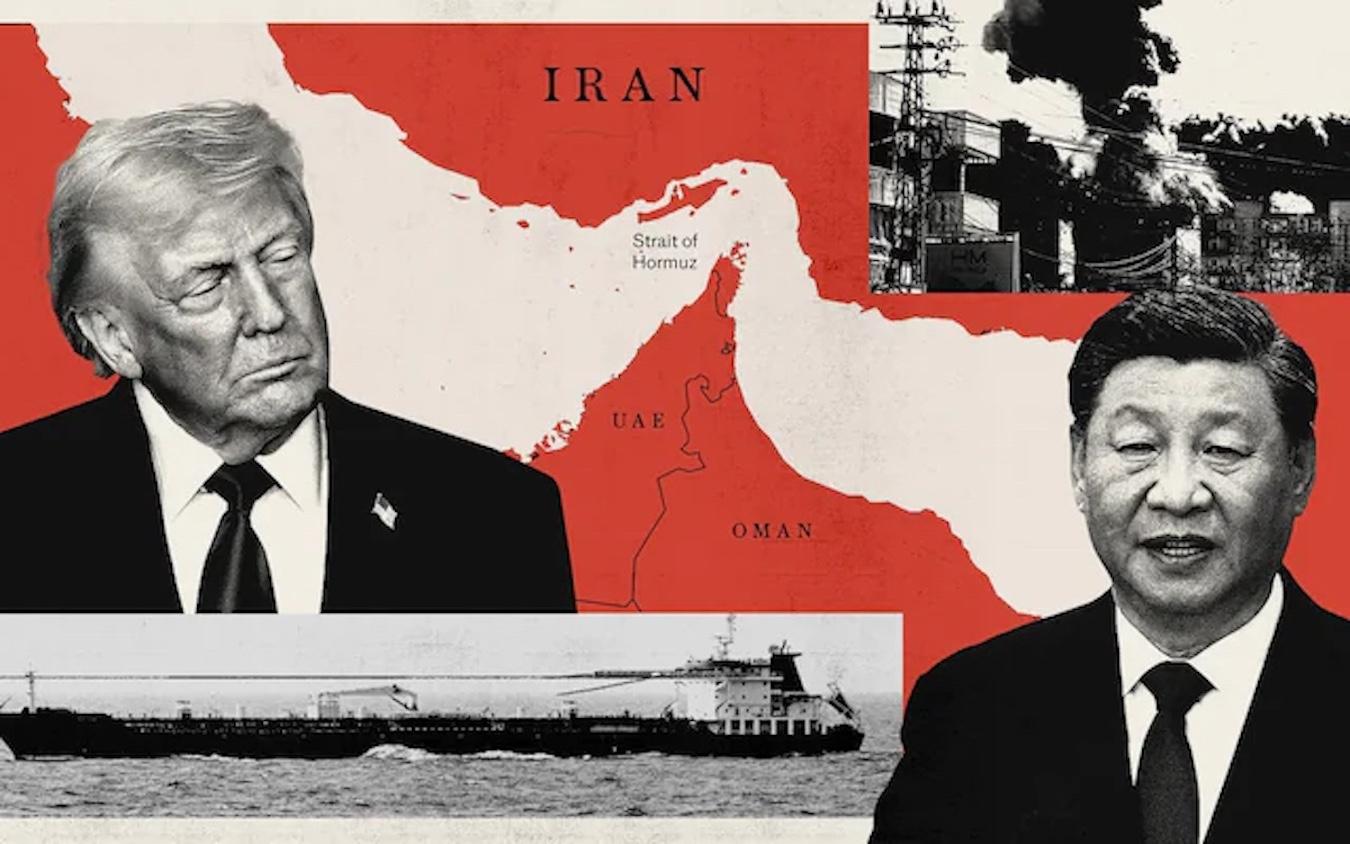
    The pause in the sale follows high-stakes talks between Trump and Chinese President Xi Jinping during a recent presidential summit in Beijing, where Xi identified the Taiwan issue as the most sensitive and important matter framing bilateral relations between the two world powers. Trump later acknowledged that he discussed U.S. arms sales to Taiwan with Xi in great detail, a choice that breaks a 1982 U.S. commitment to Taiwan that Washington would not consult Beijing on arms sales to the island.

    This latest development builds on already heightened tensions across the Taiwan Strait. In December of last year, Washington approved an $11 billion arms package for Taiwan, one of the largest such sales in history, prompting fierce pushback from Beijing. At the time, China’s foreign ministry warned that the sale would “accelerate the push towards a dangerous and violent situation across the Taiwan Strait.” In response to growing Chinese military pressure, Lai’s administration has significantly increased Taiwan’s defense budget in recent months, with Lai framing consistent U.S. arms support as a critical pillar of maintaining cross-strait peace and regional stability.

  • US sanctions Tanzanian police official over ‘torture’ of rights activists

    US sanctions Tanzanian police official over ‘torture’ of rights activists

    In a landmark move that marks the first foreign sanctions targeting a senior official under Tanzanian President Samia Suluhu Hassan’s administration, the United States has imposed entry bans on senior assistant police commissioner Faustin Jackson Mafwele over credible allegations of his involvement in gross human rights violations against two East African human rights activists.

    The allegations center on an incident from May last year, when Kenyan activist Boniface Mwangi and Ugandan activist Agather Atuhaire traveled to Tanzania to monitor the high-profile trial of prominent opposition leader Tundu Lissu. The pair were detained by Tanzanian authorities for multiple days before being released, and both have since detailed brutal abuse they endured in custody. Mwangi claims he was stripped naked, suspended upside down, beaten repeatedly on his feet, and subjected to sexual assault, while Atuhaire has alleged she was raped during her detention.

    In a formal statement released late Thursday, U.S. Secretary of State Marco Rubio confirmed the designation of Mafwele, affirming that credible evidence ties the senior police official to the detention, torture, and sexual assault of the two activists. While the statement does not explicitly outline Mafwele’s direct role in the incident, Riley Barnes, U.S. Assistant Secretary of State for Democracy, Human Rights, and Labor, emphasized that the action is a critical step toward holding perpetrators of this heinous abuse accountable. The designation formally bars Mafwele from entering the United States.

    Tanzania’s Foreign Affairs Minister Mahmoud Thabit Kombo told the BBC that the Tanzanian government has not yet received formal notification of the sanctions. Tanzanian police previously dismissed the activists’ abuse allegations as unfounded hearsay and personal opinion, and the BBC’s request for additional comment following the U.S. announcement has not yet garnered a response.

    The sanctions come amid growing international scrutiny of Tanzania’s human rights record, which has deteriorated in recent years despite early hopes of reform under President Samia. Samia took office in 2021 following the death of hardline former President John Magufuli, and initially earned international praise for rolling back some of Maguufi’s most restrictive political policies. In recent years, however, political space has narrowed sharply, with documented crackdowns on opposition voices, civil society organizers, and independent freedom of expression.

    Tensions escalated further following Tanzania’s disputed October general election last year, which saw Samia re-elected with 98% of the vote after all major opposition challengers were barred from running. The opposition dismissed the result as a blatant mockery of democratic process, and widespread post-election protests left hundreds dead. A government-appointed commission of inquiry announced last month that 518 people were killed during the unrest, including 191 shot to death, though the report refused to name the parties responsible for the killings. It instead blamed foreign-backed groups for inciting the violence, a claim rejected by opposition leaders and international human rights groups, who put the actual death toll even higher and accuse state security forces of gunning down unarmed protesters.

    Tanzanian authorities have acknowledged using force against protesters, justifying the action by claiming groups were plotting a violent coup to overthrow the elected government. Samia has repeatedly defended the election as free and fair, echoing the commission’s claim that foreign actors orchestrated the unrest to destabilize her administration.

    Global human rights organizations have long pushed for accountability over the activists’ 2024 detention. Amnesty International called for an urgent investigation immediately after the incident, labeling the arrest, incommunicado detention, torture, and forced deportation of the two activists a blatant violation of international human rights law. Human Rights Watch also highlighted the case in its 2025 country report on Tanzania, framing it as part of a broader systemic crackdown on dissent.

    Just days before the sanctions were announced, a group of U.S. lawmakers publicly called for harsher punitive measures against Tanzania to push back against what they describe as accelerating democratic backsliding in the East African nation. Last December, the U.S. government already accused Tanzania’s government of systemic repression of religious freedom and free speech, noting that these actions have put U.S. citizens, tourists, and American commercial and strategic interests at risk, while threatening decades of productive security and development cooperation between the two nations. Tanzania has not yet issued a formal response to that December accusation.

  • Serbia’s protesting students renew pressure on Vucic with a big weekend rally

    Serbia’s protesting students renew pressure on Vucic with a big weekend rally

    BELGRADE, Serbia — As a new year of political opposition unfolds in the Balkan nation, Serbia’s dissident university student movement is preparing to stage its first major mass gathering this weekend, reigniting a grassroots campaign for sweeping systemic change under the long-ruling authoritarian administration of President Aleksandar Vucic.

    Organizers expect thousands of participants to travel from across the country to converge on Belgrade’s iconic Slavija Square on Saturday, a location already etched into the nation’s recent protest history. This site hosted a massive anti-government demonstration last March, a gathering that ended abruptly amid contested claims that state forces deployed a sonic weapon against peaceful attendees — an allegation Vucic’s government has repeatedly denied.

    This student-led movement first emerged as a formidable political force in late 2024, galvanized by public outrage over the Novi Sad train station collapse that killed 16 people. The tragedy struck a deep chord across Serbian society, with widespread public belief that the disaster stemmed from endemic corruption and systemic negligence in state-funded infrastructure projects. What began as a call for accountability quickly ballooned into a months-long nationwide movement: students blocked university faculties across the country throughout 2025, successfully forcing the resignation of former Prime Minister Milos Vucevic and his entire cabinet. Protesters argued this step was insufficient, however, and have continued to demand early national elections — a call Vucic has so far refused to answer.

    Last year, the movement anchored a sweeping wave of anti-corruption street protests that posed one of the most significant threats to Vucic’s power in years. Today, student leaders say their efforts are now focused on upcoming national elections, expected to take place either later this year or in 2027, which they aim to use to remove Vucic’s right-wing populist government from power.

    “We hope a great many people will join us, spend the day with our movement, and continue standing with students as we prepare for these elections,” youth movement representative Isidora Jovanovic told the Associated Press. “Serbia is long overdue for change, and students are the ones who will deliver that change.”

    Tensions have already been building in the capital in the lead-up to Saturday’s rally. On Tuesday, police were forced to intervene to separate pro-Vucic loyalists from students printing “Students win” protest materials. Just days before that confrontation, an elderly man was injured when a driver rammed through a student-organized traffic blockade in central Belgrade. These incidents are not isolated: political violence has marred opposition gatherings for months, including clashes that disrupted local elections last March.

    Jovanovic emphasized that event organizers have taken extensive steps to prevent unrest at Saturday’s gathering, noting that many attendees will be traveling from out of town. “We do not want any of our fellow citizens to leave with a bad experience or injuries,” she said.

    Political analysts note that the once-reactive student movement has matured into a cohesive political force capable of challenging Vucic’s long-dominant Serbian Progressive Party. Dusan Vucicevic, a professor at Belgrade’s Faculty of Political Sciences, told the AP that the movement commands broad cross-public support and is positioned to deliver strong results in any future election.

    “We finally have a legitimate political group that can effectively challenge the Serbian Progressive Party and Aleksandar Vucic himself,” Vucicevic said.

    Vucic has not remained passive in the face of this growing opposition. Pro-government media outlets have repeatedly labeled student protesters and other critics as foreign-backed terrorists and agents seeking to destabilize Serbia, a rhetoric that has deepened the country’s already stark political divisions. For Saturday’s rally, Vucic’s loyalists are expected to occupy a pro-government park camp outside the presidency building that Vucic established last March, widely seen as a deliberate buffer against opposition demonstrations. Multiple attacks on protesters and journalists have been reported near the camp since its establishment.

    Allegations of excessive force by police and arbitrary detentions of opposition activists have drawn sharp international scrutiny of Vucic’s government. The European Union has warned that Serbia’s ongoing democratic backsliding could result in the loss of roughly 1.5 billion euros ($1.8 billion) in accession funding allocated to the country as a candidate for EU membership.

    Despite rising tensions and the threat of confrontation, a new generation of young Serbs is stepping up to join the movement, expressing unshakable optimism that political change is within reach. Branislav Vasic and Filip Novakovic, both 19-year-old freshmen at the Faculty of Political Sciences, confirmed they will be among the attendees at Saturday’s rally, saying standing with older opposition leaders is a matter of principle.

    “Everyone has an obligation to join this rally, given the state of our country,” Vasic said. “I’m convinced that as long as people want change, we have the strength to deliver it.”

    Novakovic echoed that sentiment, framing the moment as a historic opportunity for his generation to finish the work past generations could not complete. “We are all in this together, and we are one step away from a better future,” he said. “This is a long struggle, and I will keep fighting for it as long as I live.”

  • US used more missile interceptors defending Israel than its own forces did: Report

    US used more missile interceptors defending Israel than its own forces did: Report

    New data published by The Washington Post in a Thursday report has laid bare the starkly uneven burden of missile defense operations against Iran, showing the United States has expended far more advanced interceptor assets shielding Israel than Israel itself has deployed to protect its own territory.

    According to the report, the unprecedented scale of US interceptor usage is the root cause of the critical stock shortages previously documented by Middle East Eye and other regional news outlets. The gap in available munitions has already had ripple effects across the region: during the peak of active conflict, Gulf US allies saw their requests for emergency interceptor resupplies rejected, despite Israel stepping in to deploy Iron Dome batteries and personnel to defend the United Arab Emirates, a key regional partner.

    Breaking down the volume of deployments, The Washington Post confirmed the US launched more than 200 Terminal High Altitude Area Defence (THAAD) interceptors to counter Iranian attacks — a figure equal to roughly 50 percent of the Pentagon’s entire global stock of the advanced defense system. In addition to the THAAD deployments, US Navy vessels operating in the Eastern Mediterranean fired more than 100 Standard Missile-3 and Standard Missile-6 interceptors to down incoming threats.

    By comparison, Israel’s own interceptor usage was far lower. Israeli defense forces launched fewer than 100 Arrow interceptors and approximately 90 David’s Sling interceptors. Notably, the David’s Sling systems were also diverted to counter projectiles launched by Yemen’s Houthi movement and Lebanon’s Hezbollah, groups whose missile and drone arsenal is far less sophisticated than that of Iran.

    These numbers paint a clear picture of a “lopsided dynamic” at the heart of the US-Israel military alliance, the Post concluded. The revelation has sparked pushback from foreign policy analysts, with Trita Parsi, executive vice president of the Quincy Institute, describing the data as “stunning” in a post on the social platform X. “Very understandable that many view the Iran war as ‘Israel first’ when you see these statistics,” Parsi added. “The US depleted far more of its advanced missile defense interceptors inventory to defend Israel than Israel itself did.”

    The disclosure comes as Washington and Tehran hold indirect talks to finalize a proposal to end the conflict, with a fragile ceasefire currently holding across active front lines. Former US President Donald Trump has publicly threatened to resume full-scale attacks on Iran if the country does not accept his administration’s terms for a permanent ceasefire.

    But the depleted interceptor stockpiles leave the US in a strategically vulnerable position. Even before the conflict escalated, defense officials had publicly acknowledged that US interceptor inventories were already stretched thin, and the massive deployment for Israel leaves just 200 THAAD interceptors remaining in US stockpiles globally.

    The military dynamic of the conflict has centered on a race between two sides: the US and Israel have sought to destroy as many of Iran’s ballistic missiles and mobile launchers as possible inside Iranian territory, while Iran has aimed to exhaust the stockpiles of defense munitions held by the US, Israel, and their regional Gulf partners. A recent New York Times report corroborated that Iran has retained roughly 70 percent of its pre-war mobile missile launchers and 70 percent of its total ballistic missile stockpile, leaving it with substantial remaining strike capacity if conflict resumes.

    Compounding the strategic vulnerability, The Washington Post notes that if hostilities restart, the US will almost certainly be forced to take on an even larger share of missile defense duties for Israel. This additional burden stems from a recent decision by the Israeli military to take several of its own domestic missile defense batteries offline to conduct scheduled maintenance. One unnamed senior US official told the outlet that “the imbalance will likely be exacerbated if fighting restarts.”