分类: politics

  • China announces suspended death sentences for former defence ministers

    China announces suspended death sentences for former defence ministers

    In a landmark ruling that underscores China’s sweeping anti-corruption campaign targeting high-ranking military officials, two former national defense ministers have received suspended death sentences for conviction on corruption charges, according to Chinese state media reports.

    A military tribunal handed down the sentence on Thursday: both Wei Fenghe and Li Shangfu, who held the defense minister portfolio in succession, were sentenced to death with a two-year reprieve. As outlined by China’s official news agency Xinhua, this sentence structure mandates that the capital punishment will automatically be converted to life imprisonment after the two-year probation period, with no eligibility for future sentence reduction or parole for either man.

    Court documents confirmed that both former top military officials were found guilty of accepting bribes. In addition to the prison sentence, the ruling ordered the full confiscation of all personal assets belonging to the two men.

    Li Shangfu, the most recent of the two to hold the defense minister post, served in the role from March 2023 to October 2023, before stepping down as part of a broader reshuffle that removed several senior military leaders from their positions. This latest verdict comes in the wake of a series of high-profile ousters of top military figures, all part of a wide-ranging anti-corruption crackdown that has reshuffled senior ranks of China’s armed forces in recent months.

    The case marks one of the most high-profile anti-corruption actions against former top national security officials in recent Chinese history, sending a clear signal of the ruling Communist Party’s commitment to rooting out graft within the military establishment.

  • DR Congo president hints at extending his term and delaying polls

    DR Congo president hints at extending his term and delaying polls

    In a rare, wide-ranging press conference in Kinshasa this week, Democratic Republic of Congo President Félix Tshisekedi has broken his public silence on two of the most contentious issues facing the Central African nation: his political future beyond 2028 and the years-long conflict destabilizing its eastern territories.

    Held at State House overlooking the Congo River and drawing more than 200 journalists and supporters, the three-hour briefing marked only Tshisekedi’s second press conference in the capital since he won re-election to a second five-year term in 2023. Addressing long-swirling opposition accusations that he has been plotting to extend his hold on power beyond the country’s constitutionally mandated two-term limit, the president confirmed he would be open to serving a third term – but only if the Congolese people express their support for the change through a national referendum.

    “I have not asked for a third term, but I’m telling you – if the people want me to have a third term, I will accept,” Tshisekedi told attendees on Wednesday.

    Current Congolese law caps presidential service at two consecutive terms, but a bill outlining procedures for a national referendum was tabled in parliament back in March. While supporters of the legislation frame it as a measure to strengthen democratic processes, critics argue it is a calculated step toward revising the constitutional term limit that would clear the way for Tshisekedi to run again. Opposition groups have already warned that any effort to amend the term limit provision would constitute a “constitutional coup.”

    Beyond his political future, Tshisekedi tied the timing of the 2028 presidential election directly to progress ending the ongoing M23 rebel conflict that has displaced millions and seized large swathes of the resource-rich North and South Kivu provinces in eastern DR Congo, including the major regional hubs of Goma and Bukavu. He stressed that free and fair voting cannot be conducted without full state control over the two Kivu regions, meaning the entire election schedule hinges on how quickly the conflict can be resolved.

    “If we cannot end this war, unfortunately, we will not be able to hold the elections in 2028,” he said.

    For nearly a decade, Congolese government forces have battled M23 and dozens of other armed factions in the eastern part of the country. Multiple independent investigations and international assessments have found overwhelming evidence that neighboring Rwanda provides military and logistical support to the M23 rebel group – a claim Rwanda has repeatedly denied, framing its cross-border military presence as a defensive measure to counter anti-Rwandan armed groups operating from Congolese territory.

    Tshisekedi used Wednesday’s briefing to double down on his accusations against Kigali, arguing that Rwanda has dragged its feet on implementing a U.S.-brokered peace deal signed in Washington last December because it profits from the illegal extraction of DR Congo’s rich mineral reserves. “It’s going to take time, because Rwanda has long profited by looting resources, and that’s why the negotiations are dragging on,” he said. Fighting has continued through 2025 despite the ceasefire agreement, and the U.S. imposed sanctions on multiple senior Rwandan military commanders in March this year for their role in fueling the ongoing conflict.

    The president also addressed a separate recent development: the U.S. decision to impose sanctions on his predecessor Joseph Kabila, over allegations that Kabila has backed anti-government rebel groups. Describing the situation as “a real mess,” Tshisekedi lamented that figures once celebrated as architects of democratic transition in DR Congo have now become “gravediggers” of that progress.

    Tshisekedi’s comments mark the first time he has publicly confirmed his willingness to pursue a third term, ending months of speculation and heightening political tensions across the country as the government continues its struggle to stabilize the volatile east.

  • Russia says Ukraine launched a major drone attack after Moscow shunned ceasefire offer

    Russia says Ukraine launched a major drone attack after Moscow shunned ceasefire offer

    In a sharp escalation of hostilities following a collapsed unilateral ceasefire bid from Kyiv, Ukraine launched one of its largest aerial assaults of the full-scale invasion overnight, with Russian defense officials confirming Thursday that air defense systems intercepted and destroyed 347 Ukrainian drones across more than 20 Russian regions, including the Moscow area.

    This drone wave marks the second-largest Ukrainian aerial attack since Russia launched its full-scale incursion more than two years ago, falling just short of a record 389-drone assault carried out in March of 2024. The strike comes just days ahead of Russia’s annual Victory Day holiday on May 9, the country’s most important secular celebration marking the 1945 defeat of Nazi Germany in World War II, which has been shrouded in heightened security threats this year.

    The cycle of escalating attacks followed a series of overlapping ceasefire announcements that quickly fell apart. Earlier this week, Russia declared a unilateral two-day ceasefire for Victory Day on Friday and Saturday. In response, Ukraine announced it would suspend its own offensive operations starting at midnight Tuesday, framing the move as a goodwill gesture. But Ukrainian President Volodymyr Zelenskyy said Russia immediately ignored the gesture, continuing strikes across Ukrainian territory, and Kyiv would respond in kind.

    “Russia has not stopped any type of its military activity. Unfortunately, it has not stopped. Ukraine will act symmetrically,” Zelenskyy stated in his regular Wednesday evening video address to the nation.

    Tensions have built steadily in the lead-up to this year’s Victory Day, with U.S.-led international peace efforts remaining stalled and Kyiv expanding its long-range strike capabilities against targets inside Russia. In response to growing security risks, Russian authorities have implemented sweeping restrictions and scaled back traditional holiday festivities in the capital.

    On Thursday, Russian state media confirmed that all mobile internet and text messaging services will be shut down across Moscow on May 9, per an announcement from the country’s Ministry of Digital Development, Communications and Mass Media. The blackout will only exempt a small pre-approved “white list” of state-run online services, while home wired internet and public Wi-Fi networks will remain operational, officials clarified.

    In a break from nearly 20 years of tradition, Moscow’s iconic annual Victory Day parade will also exclude the display of tanks, ballistic missiles, and other heavy military equipment for the first time this year. Russian defense officials cited the “current operational situation” as justification for the change, while Kremlin spokesman Dmitry Peskov directly placed blame on Kyiv for the scaled-back celebrations and heightened security measures, accusing Ukraine of engaging in “terrorist activity” in reference to repeated cross-border drone strikes.

    As Ukrainian forces launched their massive overnight drone assault, Russia retaliated with its own wave of drone strikes on Ukrainian territory. Ukraine’s military reported early Thursday that its air defense systems had successfully downed 92 of the 102 Russian drones launched overnight. Russia retains a substantial numerical advantage in drone production, and regularly carries out mass attacks involving hundreds of unmanned aerial vehicles against Ukrainian infrastructure and military targets.

    The latest escalation comes as both sides continue trading large-scale cross-border strikes amid a grinding frontline conflict, with no near-term prospect of a negotiated end to the war.

  • Top BJP leader’s aide shot dead in violence after Indian state election

    Top BJP leader’s aide shot dead in violence after Indian state election

    Fresh violence has rattled the eastern Indian state of West Bengal just days after the Bharatiya Janata Party (BJP), led by Prime Minister Narendra Modi, secured a historic, first-ever election victory ending 15 years of Trinamool Congress (TMC) rule, with the fatal shooting of a top BJP leader’s aide amplifying already soaring political tensions.

    Chandranath Rath, personal assistant to Suvendu Adhikari — the former TMC leader turned BJP heavyweight widely tipped to become West Bengal’s next chief minister — was gunned down Wednesday night while traveling home by car. Law enforcement agencies have launched a full homicide investigation, though no arrests have been announced as of the latest updates. West Bengal Police Chief Siddh Nath Gupta confirmed that investigators have recovered the getaway vehicle used by the attackers, as well as live ammunition and spent bullet casings from the crime scene. The vehicle’s license plate was found to be falsified, complicating initial tracking efforts. Eyewitness accounts have pointed to a shooter operating from a motorcycle, but police have not yet confirmed details of the attacker count or any potential suspects.

    Rath’s killing is the third confirmed fatality recorded in the state since election results were officially announced on Monday, marking an escalation of unrest that has followed the historic poll outcome. Even before the shooting, police had already taken more than 400 people into custody in connection with widespread reports of post-poll violence and voter intimidation across the state.

    Political violence in the wake of state elections is not a new phenomenon in West Bengal, where violent clashes between workers of rival political parties have become a recurring pattern. This cycle of violence is rooted in the state’s long-entrenched “party society” system, a concept first coined by political scientist Dwaipayan Bhattacharyya to describe how political affiliation became embedded in every aspect of daily life and livelihood during decades of Communist rule. Zaad Mahmood, a political science professor at Kolkata’s Presidency University, explained to the BBC that in recent decades, political identity has replaced caste and religion as the primary axis of conflict in many rural areas. For local residents, survival is often tied directly to loyalty to the ruling party, meaning a shift in political power feels like an existential threat to many. While the total number of fatalities in this election cycle is lower than in previous polls, Mahmood noted that violence extends far beyond reported deaths, creating a pervasive climate of fear that persists before, during and after voting.

    Tensions have been building in West Bengal for weeks, with the election held against the backdrop of a controversial voter roll update that left millions of eligible voters removed from electoral registers. Outgoing TMC chief Mamata Banerjee, who was defeated by Adhikari in her own long-held stronghold constituency of Bhabanipur, has alleged the exercise deliberately targeted non-BJP voters to clear a path for the BJP’s landslide win, which delivered the party 207 of the state assembly’s 294 seats. Both the BJP and India’s national Election Commission have repeatedly denied these allegations.

    Both major political parties have condemned Rath’s murder and traded blame over the ongoing wave of post-poll violence. Adhikari called the killing “heartwrenching” and labeled it a premeditated “cold-blooded murder.” The TMC issued a formal statement rejecting political violence as incompatible with democratic governance, demanding an immediate, court-monitored investigation to hold the perpetrators accountable. Both parties claim their workers have been targeted: the BJP says two of its members have been killed, while the TMC puts its death toll at three. Police have only confirmed Rath’s BJP affiliation, with no verification of other victims’ party ties.
    BJP leaders have seized on the violence to criticize the outgoing TMC government, arguing that law and order collapsed during Banerjee’s 15-year tenure. Sukanta Majumdar, a junior federal minister from the BJP, told reporters that once the new BJP government is sworn in this Saturday, the party will work to restore public safety, though he acknowledged stabilizing the state will take time. Adhikari is still widely expected to be named chief minister when the new administration takes office this weekend, though the BJP has not officially confirmed his appointment.

    In addition to fatal clashes, widespread reports of arson, vandalism and intimidation have emerged from districts across the state, including Kolkata, Murshidabad, Birbhum and Howrah. The TMC has alleged that BJP workers have targeted TMC party offices, vandalizing properties and setting some ablaze — claims the BJP has repeatedly denied. The TMC also accused BJP supporters of using a bulldozer to demolish meat shops in a popular Kolkata market, an incident that takes on heightened political weight given that food choice was a core campaign issue in the election. The TMC framed the incident as part of a deliberate pattern of intimidation that sets a dangerous precedent for law and order under a BJP government. State BJP chief Samik Bhattacharya rejected the claims, saying the party does not endorse any form of violence, and a senior police officer noted that a victory rally was held in the market but no “untoward incident” occurred.

    The national Election Commission has already directed state police and district administrations to step up law and order monitoring across West Bengal, with orders to take immediate action against any acts of violence or vandalism. Rath’s assassination has amplified fears among observers and residents alike that post-poll unrest will grow in scale in the coming days, as the state transitions to its first ever BJP-led government.

  • Massive GST windfall fuels Western Australia’s $3.5bn budget surplus, new spending

    Massive GST windfall fuels Western Australia’s $3.5bn budget surplus, new spending

    Western Australia’s state Labor government has delivered its eighth consecutive annual budget surplus, marking the third surplus under Premier Roger Cook and Treasurer Rita Saffioti, alongside a suite of new spending measures designed to address soaring household costs, expand housing supply, and upgrade public health infrastructure. Bolstered by an expected $9.3 billion in goods and services tax (GST) revenue set to flow into state coffers in the coming fiscal year, the 2024-25 budget posts a $3.5 billion surplus, with state debt projected to hit $34.5 billion by the end of June 2024 — $4 billion lower than earlier forecasts, earning the state the title of Australia’s lowest-cost jurisdiction for public debt.

    State officials credit the private sector for driving Western Australia’s standout economic performance, noting that private activity accounts for 86% of the state’s domestic economic growth, which has expanded by 27% over the past five years. Cook emphasized that the budget is built on two core priorities: sustaining the state’s position as Australia’s strongest economy and delivering tangible support for households in key areas including jobs, healthcare, housing, and cost-of-living relief.

    “This is a responsible budget designed to keep Western Australia strong,” Cook said in remarks following the budget announcement. “We are delivering on our commitments to keep Western Australia the strongest economy in the nation and the best place to live, work and raise a family.”

    The centerpiece of the budget is a $1 billion cost-of-living support package, though the targeted structure of the aid means many households will not qualify for direct financial relief. Unlike in previous years following the COVID-19 pandemic, the state will not offer broad state-funded energy rebates for households this year, and motorists will face a 2.5% increase in driver license and vehicle registration fees, with no fee freeze in place. Instead, the largest share of relief is directed to drivers, with a one-time $100 fuel credit available to all licensed driver holders, part of a $198 million package to offset rising petrol prices.

    Additional support is targeted at families with school-aged children, with $90 million allocated for student assistance payments. Eligible families will receive $150 per child enrolled in kindergarten or primary school, and $250 per high school student. A further $70 million funds expanded free public transport initiatives: students will receive free travel to and from school, all passengers will access free rides on Sundays, and senior citizens will pay no fares for off-peak and weekend travel. State officials estimate that a two-child family can receive more than $2000 in combined assistance from the full suite of cost-of-living measures.

    Housing affordability and supply, one of the most pressing issues facing Western Australian households, received a $4.7 billion total investment to unlock new land and deliver thousands of new dwellings across Perth and regional areas. More than $1 billion of that funding will go toward developing core infrastructure including roads, water networks and power connections for new residential areas. A joint federal-state $2 billion commitment will build 34,000 new homes, 11,000 of which will be allocated to first home buyers in areas close to metro train stations, new greenfield residential developments and regional hubs.

    Frontline workers in seven major regional centers — Bunbury, Kalgoorlie, Karratha, Port Hedland, Broome, Geraldton and Albany — will benefit from a $692 million regional housing program that will deliver 500 new dwellings over four years, alongside additional funding for local infrastructure, job creation, healthcare and essential services. The state also expanded tax concessions for first home buyers: the stamp duty exemption threshold has been raised from $500,000 to $600,000 for completed homes, and from $400,000 to $450,000 for vacant land, with partial concessions available for homes valued up to $800,000. The property cap for the $10,000 First Home Owner Grant has also been increased from $750,000 to $800,000. While fewer than 320 homes under $600,000 and just 52 vacant lots under $450,000 are currently listed for sale in Perth, the government projects the changes will support roughly 25,000 first home buyers over time. An additional $1.5 billion will boost social and affordable housing, delivering thousands of new affordable rental units and public housing dwellings, including 1,426 new social dwellings delivered through the federal Housing Australia Future Fund partnership.

    Public health also received a historic $9 billion investment over the next four years, with funding allocated for new hospital construction, hundreds of additional hospital beds, and expanded capacity across the public health system. A key project is a new state-of-the-art cancer center in Perth, modeled on integrated treatment-research facilities already operating in Sydney and Melbourne that combine clinical care, cutting-edge research and clinical trials. The state’s Building Hospitals Fund will receive an extra $500 million, bringing total investment in hospital infrastructure to $2 billion by 2026-27 and $5.5 billion over the four-year funding period.

    To rebalance state spending and redirect funds to frontline services, the government will cut 1,500 back-office public sector roles, a move Treasurer Saffioti framed as a necessary adjustment to shifting policy priorities. “We considered all factors and tried to get the balance right,” Saffioti said. “You can always do more, and there are people who want more, but we’ve done our best to support families.”

    The budget has drawn sharp criticism from the state opposition, led by Opposition Leader Basil Zempilas, who argued the $100 fuel credit is a superficial distraction that fails to address the core crises facing Western Australian households. “The people of Western Australia are hurting, and nothing that we’ve seen in today’s budget has changed that,” Zempilas said. “To the people of Western Australia in the middle of this cost of living and housing crisis, the $100 fuel smoke screen will do nothing to help the people camped in their cars or on the side of road. It will do nothing to alleviate the stress and pressure that comes on families.”

    Zempilas added that the small one-time fuel credit pales in comparison to recent increases in water, electricity and vehicle registration costs, and argued the government has failed to address the root causes of household financial stress. “This is a government that has forgotten the here and now, and for all of those people in our community, for all of those people hurting, what changes today? And the answer is very, very little,” he said. “This is not a budget that addresses the absolute fundamental concerns of West Australians who are hurting and buckling under the pressures of our housing crisis and this cost of living and household stress crisis.”

  • Iran reviewing US proposal as Trump pressures Tehran for agreement on deal to end war

    Iran reviewing US proposal as Trump pressures Tehran for agreement on deal to end war

    Nearly two months after the United States and Israel launched military strikes against Iran, a fragile ceasefire has held for more than a month, but intense diplomatic wrangling and lingering military tensions are keeping the global community on edge. As U.S. President Donald Trump issued a stark ultimatum that new, intensified bombing would resume unless Tehran agrees to a deal that reopens the strategically critical Strait of Hormuz, Iran confirmed it is reviewing Washington’s latest proposal, injecting cautious optimism into markets even as a fresh military confrontation took place just hours before.

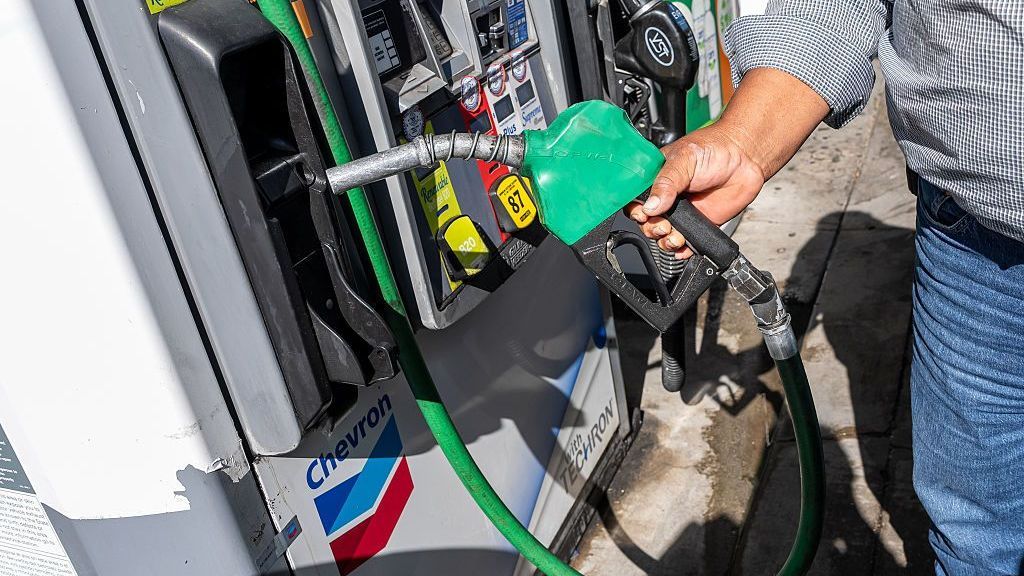
    The conflict, which began on February 28, has upended global energy markets and disrupted critical supply chains: Iran effectively closed the Strait of Hormuz, the chokepoint through which roughly 20% of the world’s traded oil flows, while the U.S. imposed a full naval blockade on Iranian ports. This standoff sent fuel prices soaring, roiled the global economy, and imposed heavy costs on international businesses: major shipping giant Hapag-Lloyd estimates the closure is costing the firm approximately $60 million per week, driven by spiking fuel and insurance premiums. By Thursday, Brent crude prices stabilized around $100 per barrel as traders bet on a diplomatic breakthrough, lifting sentiment across international markets.

    Hours before markets reacted to the prospect of a deal, the U.S. military struck an Iranian oil tanker attempting to breach the American blockade in the Gulf of Oman, damaging the vessel’s rudder, according to U.S. Central Command. The clash follows the Trump administration’s messy, contradictory messaging on its Iran strategy in recent days, with shifting narratives that have left both allies and markets uncertain about Washington’s end goals.

    Pakistan, which hosted in-person talks between U.S. and Iranian delegations last month that ultimately failed to produce an agreement, has emerged as a key mediator in the negotiations. On Thursday, Pakistani Foreign Ministry spokesperson Tahir Andrabi told reporters that Islamabad expects a peaceful settlement “sooner rather than later,” adding that a durable agreement would benefit not just the region, but global peace and security. He declined to share specific timelines or details of ongoing diplomatic backchannels, however, noting that Pakistan would keep sensitive negotiations confidential. “We remain positive, we remain optimistic, and we hope the settlement will be soon rather than later,” Andrabi said.

    In a series of social media posts, Trump laid out his stark terms for ending the conflict. “The two-month war could soon end and oil and natural gas shipments disrupted by the conflict could restart,” he wrote, adding that the entire process hinges on Iran accepting an agreement that he did not publicly detail. “If they don’t agree, the bombing starts… and it will be, sadly, at a much higher level and intensity than it was before.”

    According to Axios reporting, the White House believes it is close to finalizing a one-page memorandum of understanding with Tehran that would end the conflict. Key reported provisions include a moratorium on Iranian uranium enrichment, the lifting of U.S. economic sanctions on Iran, the release of billions of dollars in frozen Iranian assets, and the mandatory reopening of the Strait of Hormuz to international commercial shipping. The White House has not officially confirmed the details of the proposed agreement. For its part, Iran pushed back on earlier reporting of the draft deal: Iranian Foreign Ministry spokesman Esmaeil Baghaei told state television that Tehran “strongly rejected” the terms outlined by Axios, but confirmed that it is still reviewing the newest U.S. proposal delivered through diplomatic channels.

    Just this week, Trump called off a short-lived U.S. military operation dubbed Project Freedom, which aimed to forcibly open a protected corridor for commercial shipping through the strait. The operation lasted less than 48 hours: only two U.S.-flagged commercial vessels traversed the U.S.-guarded route, and the U.S. military sank six small Iranian boats it said threatened civilian shipping during the operation. Hundreds of commercial ships remain stranded in the Persian Gulf, unable to exit to open waters without passing through the closed strait.

    Major global powers have begun positioning themselves to respond to the ongoing crisis. On Wednesday, French President Emmanuel Macron announced that a French aircraft carrier strike group is moving toward the Red Sea to prepare for a potential joint Franco-British mission to restore maritime security in the Strait of Hormuz once conditions allow. China, which maintains close economic and political ties with Iran and holds unique influence in Tehran, has also stepped into the diplomatic fray. Ahead of a scheduled high-profile summit between Trump and Chinese President Xi Jinping in Beijing on May 14-15, Iranian Foreign Minister Abbas Araghchi traveled to Beijing to meet with Chinese Foreign Minister Wang Yi. During the talks, Wang called for an immediate comprehensive ceasefire, noting that China is “deeply distressed” by the ongoing conflict. The Trump administration has publicly pressured Beijing to use its influence to push Iran to agree to reopen the strait and roll back its nuclear program, a core U.S. demand in the negotiations. Araghchi confirmed to Iranian state media that the talks covered all key sticking points, including the Strait of Hormuz, Iran’s nuclear program, and ongoing U.S. sanctions.

  • Kenyan politicians trade accusations of ‘goonism’ as political violence rises ahead of 2027 election

    Kenyan politicians trade accusations of ‘goonism’ as political violence rises ahead of 2027 election

    In the East African nation of Kenya, political tensions are hitting a fever pitch 12 months out from the 2025 general election, and a new term has come to dominate public discourse: ‘goonism.’ Coined by national leaders to criticize the growing trend of violent, intimidating gangs targeting opposing political groups, the phrase has revealed deep divides between President William Ruto’s administration and the country’s opposition, as the competition for power grows increasingly hostile and dangerous.

    Ruto, who first swept into office in a tight 2022 race after campaigning as a devout born-again Christian promising to build a pious, peaceful nation centered on working-class Kenyans, now faces widespread accusations of breaking the values he once championed. Once nicknamed ‘Nabii’ – the Swahili word for prophet – for his public piety, Ruto framed his 2022 campaign as a rebellion against long-standing political dynasties, arguing his rise to power came solely through God’s grace rather than elite privilege. But many of his one-time supporters say a dramatic shift occurred immediately after his inauguration.

    While Ruto still attends Sunday church services, critics note he no longer carries a Bible or quotes scripture regularly. Controversial decisions, from demolishing a small chapel on the Statehouse compound to build a newer facility to rolling out aggressive income tax hikes just months after taking office, have reinforced claims of betrayal. The tax proposals sparked mass protests by thousands of young Kenyans across the capital Nairobi that forced partial rollbacks, but failed to ease public anger. Later, additional unrest erupted after a popular blogger died in police custody, and a 2024 protest that saw demonstrators storm the parliamentary building left Ruto’s political standing damaged – and the president increasingly determined to project hardline strength. In a fiery response to anti-government protests where demonstrators carried signs demanding his resignation, Ruto infamously instructed police to ‘break’ protesters’ limbs, drawing widespread condemnation that framed the comment as a veiled threat against political dissent.

    Today, both ruling and opposition figures decry goonism, but each side blames the other for the surge in political violence. Opposition leaders claim the gangs that disrupt their rallies and intimidate their supporters are directly state-sponsored. ‘We must say no, collectively, to the new specter, the new norm, of goonism,’ prominent opposition leader Kalonzo Musyoka told local media, rejecting government claims that opposition groups are behind the violence. Even ruling party allies have acknowledged the threat the trend poses to Kenya’s democracy: National Assembly Speaker Moses Wetang’ula, a close Ruto ally, recently stated that ‘the culture of goonism has no place in a democratic society.’ Interior Secretary Kipchumba Murkomen has also pledged to crack down on unauthorized armed gang activity targeting political gatherings.

    The violence has already spilled into everyday public life: Last month, opposition Senator Godfrey Osotsi was violently assaulted by a group of men at a western Kenyan restaurant over his political views, leaving him with injuries serious enough to require hospitalization. The attack sparked local protests and drew widespread condemnation from religious leaders across the country.

    Religious leaders have emerged as some of the most vocal critics of Ruto’s shift away from his stated Christian values, with one prominent megachurch pastor delivering a viral sermon that implicitly condemned the president’s ties to political violence. ‘Everyone who wants to rule this country by that kind of thing, I speak as a prophet of God: You shall fall,’ megachurch pastor Wilfred Lai, based in the coastal city of Mombasa, told his congregation during a recent Sunday service. ‘You can’t use goons and you are telling us that you are taking us into a better place. You are a liar and the truth is not in you.’ Though Lai never mentioned Ruto by name, the widely shared clip of the sermon left little doubt among Kenyans who he was targeting. Lai was one of multiple evangelical leaders who publicly supported Ruto during his 2022 campaign, making his rebuke all the more significant.

    Public anger has been further stoked by a bitter, venomous public feud between Ruto and his former deputy Rigathi Gachagua, who was impeached earlier this year after falling out with the president. Gachagua now leads the ‘Wantam’ movement, which is pushing to limit Ruto to a single term. The pair have traded increasingly vulgar insults: In March, Gachagua called Ruto a thief who would ‘steal a funeral home,’ prompting Ruto to label Gachagua a ‘cold-blooded pig’ who stole from his own brother. The public spectacle drew a rare rebuke from Kenya’s top Catholic leadership. ‘Disagreement is OK, but insulting each other in public is a disgrace,’ said Archbishop Maurice Muhatia, head of the local Catholic bishops conference, at a recent gathering. ‘Give us a break.’

    Political scholars and analysts warn that if both sides do not de-escalate tensions immediately, the 2025 election could be one of the most violent in Kenya’s modern history. Kenya has a long history of fractious, election-related violence – most notably the deadly 2007 post-election unrest that saw the criminal gang Mungiki play a major role in targeted attacks. Analysts say the current context is far more volatile than past elections, with Ruto’s uncompromising leadership style stoking fears of a shift toward authoritarianism, a break from past Kenyan presidents who were more open to accommodating opposition. ‘Goonism’ is ‘a product of gangster theology’ of which Ruto is the high priest, said Nairobi-based independent writer Christine Mungai, arguing the president has mastered ‘how to perform public piety’ while working ‘to make life harder for everyone.’

    Karuti Kanyinga, a Kenyan development scholar and visiting professor at South Africa’s Stellenbosch Institute for Advanced Study, warned that if hostile rhetoric and gang activity continue, the 2025 election will devolve into widespread bloodshed. ‘If Ruto and opposition figures don’t tone down the rhetoric the election is going to be very bloody,’ Kanyinga said, adding that by next year, ‘everyone will have their own protection gangs.’

    As the election draws closer, Ruto continues to court influential church leaders, who hold massive social and political sway across Kenyan communities. But with growing numbers of religious leaders turning against him, and opposition groups gaining traction amid widespread public anger, Ruto’s path to a second term remains uncertain. Though his position is precarious, adversaries acknowledge the president remains a cunning, formidable opponent who will be difficult to unseat in next year’s vote.

  • Britons set to punish Starmer’s Labour in local polls

    Britons set to punish Starmer’s Labour in local polls

    Polling stations opened across England, Scotland and Wales at 7 a.m. GMT on Thursday for what is poised to be the most high-stakes electoral test for Prime Minister Keir Starmer’s Labour government since the party’s landslide 2024 general election victory that ended 14 years of Conservative rule.

    Nearly two years into Starmer’s premiership, pre-election opinion polls point to a grim outcome for the ruling party, with losses large enough to reignite long-simmering tensions over his leadership and amplify growing calls for his resignation or an official leadership challenge. Widespread public disillusionment with the traditional major parties has created a power vacuum that two populist factions — Nigel Farage’s right-wing anti-immigration Reform UK and the left-wing Green Party led by self-described eco-populist Zack Polanski — are projected to fill as their main beneficiaries.

    Around 5,000 of the UK’s 16,000 local council seats in England are up for grabs in this vote, while voters in Scotland and Wales are also choosing new members for their respective devolved legislatures. Polls will close at 10 p.m. Thursday, with partial results expected overnight and the full bulk of vote counts set to be released Friday.

    Starmer campaigned on a platform of transformative national change after 14 years of Conservative governance marked by austerity measures, Brexit-driven political chaos, and the 2022 economic crash under former Prime Minister Liz Truss. But critics argue his tenure has been defined by a string of unforced policy missteps and controversies, most notably a high-profile scandal tied to his former close ally Peter Mandelson, the ex-UK envoy to the U.S. who was fired over his ties to late convicted sex offender Jeffrey Epstein.

    Most damaging for Starmer’s approval ratings has been the government’s failure to deliver on its core campaign promise of jumpstarting sustained economic growth. British households continue to grapple with a prolonged cost-of-living crisis driven by soaring energy prices and stagnant wages, leaving many voters frustrated that the change they voted for has yet to materialize. As University College London associate politics professor Melanie Garson put it: “The change hasn’t been delivered, or change that has been delivered has been negative.”

    Garson noted that this election marks an unprecedented turning point for UK politics, noting “for the first time, significant pressure on the main political parties across every single council.” She described the vote as “a huge barometer for how the country is feeling about this political establishment.”

    Ahead of voting, Starmer framed the election as a binary choice between national unity and division, “progress versus the politics of anger.” Labour has also sought to stem losses by highlighting problematic comments from opposition candidates, unearthing racist remarks from some Reform contenders and antisemitic statements from several Green candidates.

    Pre-election projections paint a dire picture for Labour across all regions. Polling suggests the party will lose control of the devolved Welsh government for the first time since the Welsh parliament was established 27 years ago, with a recent More in Common poll placing Reform neck-and-neck with pro-independence Plaid Cymru in Labour’s traditional Welsh heartlands.

    In Scotland, the Scottish National Party (SNP) is projected to extend its 19-year hold on the Edinburgh devolved parliament, with YouGov data forecasting that Reform could even push Labour into third place in the region. In London, the Greens are on track to seize seats from Labour by courting disaffected left-wing voters with a pro-Gaza policy platform.

    Leading pollster Robert Hayward projects that Labour could lose as many as 1,850 of the roughly 2,550 local council seats it is currently defending. Hayward predicts Reform will gain 1,550 seats from both Labour and the Conservatives, mostly in majority white working-class communities that have long been traditional strongholds for the major parties. The Conservatives, who have been out of national power since 2024, are also bracing for heavy losses of their own traditional heartland seats.

    Conservative leader Kemi Badenoch framed the shift as a definitive end to the UK’s traditional two-party system, telling PA Media: “The two-party era has moved into a multi-party era. But the fact is none of these new parties or Labour have a plan for the country.”

    Farage, for his part, expressed confidence in Reform’s prospects Thursday: “The message is clear: if you want real change, you’d better vote for it, and we go into tomorrow feeling pretty optimistic about our prospects.”

    Following the expected poor results, UK media is rife with speculation that senior Labour figures could move to oust Starmer. Names frequently cited as potential challengers include former deputy prime minister Angela Rayner and current Health Secretary Wes Streeting. However, neither contender commands universal support within the parliamentary Labour party, and a leadership challenge requires the backing of at least 20 percent of Labour MPs to move forward. Some backbench lawmakers are also reportedly planning to demand that Starmer announce a timeline for stepping down, despite his repeated public commitments to leading the party into the next general election scheduled for 2029.

  • China says ties with US remain stable ahead of Trump visit despite ‘disruptions’

    China says ties with US remain stable ahead of Trump visit despite ‘disruptions’

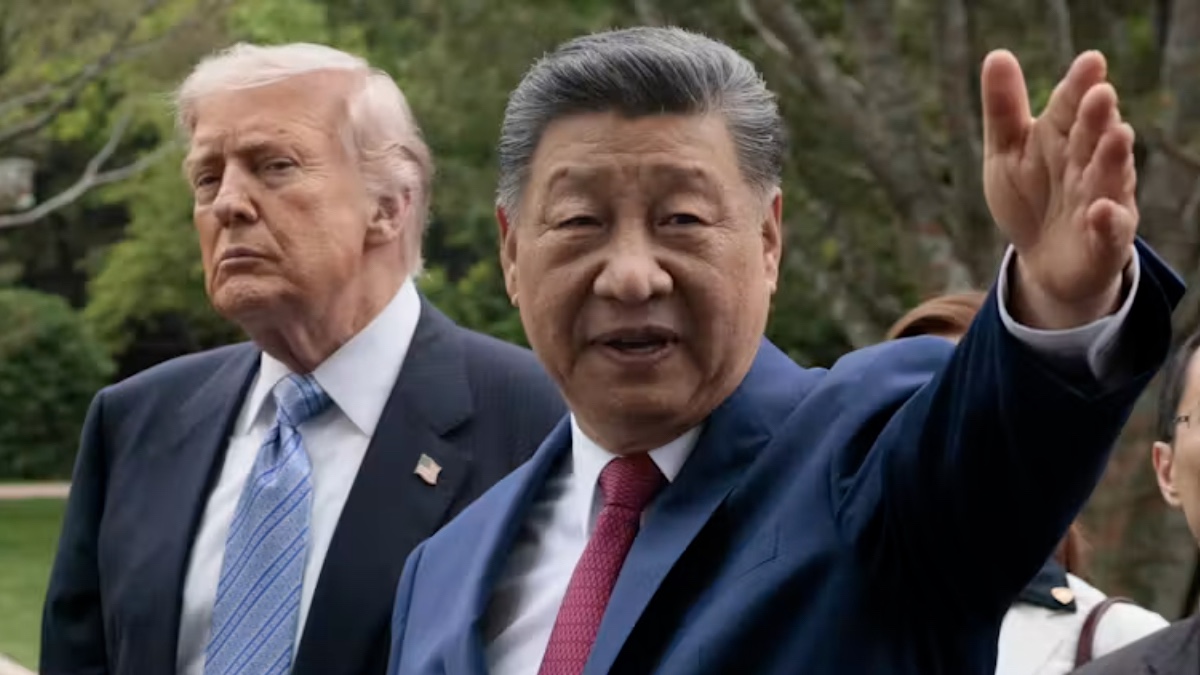
    BEIJING – One week ahead of a highly anticipated bilateral summit between U.S. President Donald Trump and Chinese President Xi Jinping, senior diplomatic and political leaders from both nations have issued public statements emphasizing a commitment to preserving overall stable bilateral relations, even amid acknowledged ongoing disruptions. On Thursday, Chinese Foreign Minister Wang Yi, China’s highest-ranking diplomatic official, addressed a visiting bipartisan U.S. congressional delegation led by Senate Foreign Relations Committee member Steve Daines, a Montana Republican and prominent ally of President Trump.

    Wang opened the discussion by framing the trajectory of China-U.S. ties over the preceding year, noting that while the relationship has navigated significant twists and unplanned disruptions, it has remained anchored in overall stability. He specifically credited both President Xi Jinping and President Trump for providing critical directional guidance to the bilateral relationship at key inflection points, and called on both nations to collaborate on a shared path forward that advances global peace and security.

    Senator Daines echoed Wang’s call for stability, reiterating that Washington’s priority lies in de-escalating existing tensions rather than pursuing full economic decoupling from the world’s second-largest economy. “I strongly believe that we want to de-escalate, not decouple. We want stability, we want mutual respect,” Daines stated during the meeting.

    The Republican senator also highlighted economic opportunities that could emerge from next week’s summit, suggesting that a successful meeting could clear the way for additional Chinese purchases of Boeing commercial aircraft, a outcome that would benefit the U.S. aviation manufacturing sector. Beyond trade and economic cooperation, Daines praised China’s recent diplomatic efforts to ease rising tensions in the Middle East, particularly its work to facilitate the reopening of the Strait of Hormuz — a strategic chokepoint through which 20% of the world’s global oil supplies transits. He pointed to Wang Yi’s Wednesday meeting with Iranian Foreign Minister Abbas Araghchi as tangible evidence of China’s constructive diplomatic engagement in the region. This aligns with longstanding U.S. pressure on Beijing to leverage its economic and political influence with Iran to keep the critical waterway open, ahead of Trump’s scheduled May 14-15 visit to China.

    This trip marks Daines’ second visit to China since President Trump took office, following an earlier trip in March 2025. That earlier visit took place at a moment of heightened bilateral friction, with both sides locked in disagreements over trade tariffs and cooperation to curb the illegal cross-border fentanyl trade.

  • Polls open in UK local elections seen as a verdict on Keir Starmer’s leadership

    Polls open in UK local elections seen as a verdict on Keir Starmer’s leadership

    Polling stations have opened across England, Scotland and Wales on Thursday for critical midterm local and regional elections, a vote that is widely seen as a potential knockout blow for British Prime Minister Keir Starmer and his embattled Labour government.

    Voters are casting ballots to fill roughly 5,000 local council seats, multiple mayoral positions, and all seats in the devolved legislatures of Scotland and Wales. Polls began welcoming voters at 7 a.m. UK time and will close at 10 p.m. While a small number of local authorities will complete vote counting overnight, the vast majority of full results are not expected to be made public until Friday afternoon.

    Though local elections in the UK traditionally center on hyper-local issues such as waste collection, neighborhood graffiti, and road maintenance, Starmer’s political opponents have successfully framed Thursday’s contest as a public referendum on his premiership less than two years after he led Labour to victory in national elections.

    A severe defeat for Labour in this vote is widely expected to spark immediate moves from discontented backbench Labour lawmakers to remove Starmer from office. Even if the prime minister manages to weather the immediate political storm, most independent political analysts question whether he will still lead the party into the next mandatory general election, scheduled to take place no later than 2029.

    Starmer’s public approval ratings have plummeted sharply since he took office as prime minister in July 2024, dragged down by a string of high-profile policy and political missteps. His government has failed to deliver on key campaign promises, including boosting sustained economic growth, repairing chronically underfunded and strained public services, and easing the ongoing cost-of-living crisis that has hit working- and middle-class households across the UK. These domestic challenges have been compounded by escalating geopolitical tensions in the Middle East, as the conflict between the U.S.-Israeli bloc and Iran has disrupted global oil supplies via the Strait of Hormuz, driving up energy prices for UK consumers.

    Starmer’s political standing has suffered further damage from his widely criticized decision to appoint Peter Mandelson, a veteran party figure with longstanding ties to disgraced financier Jeffrey Epstein, as the UK’s ambassador to the United States. The appointment already triggered a major party crisis in February, when multiple Labour lawmakers — including the party’s leader in Scotland — publicly called on Starmer to resign over the controversy. He survived that challenge, but internal party discontent has not abated.

    Currently, Labour holds roughly 2,500 seats on English local councils that are up for re-election this cycle, and rank-and-file party members have openly expressed anxiety that the party could lose a large share of these seats. Political analysts warn a landslide loss could force an immediate leadership contest or intensify behind-the-scenes pressure on Starmer to step down voluntarily.

    Luke Tryl, a senior analyst at leading UK pollster More in Common, argues that this election cycle could mark a historic turning point for British politics, saying the contest is on track to trigger the “total collapse of the traditional two-party system” that dominated UK politics for generations, which previously centered on Labour and the Conservative Party.

    The biggest beneficiary of this political shift is projected to be Reform UK, the hard-right populist party led by veteran nationalist campaigner Nigel Farage. Reform UK has targeted working-class communities that were once traditional Labour strongholds in northern England and outer London, running on an anti-establishment, anti-immigration platform that has resonated with disaffected voters. The left-leaning Green Party is also expected to make major gains, picking up hundreds of council seats across urban centers and university towns.

    The main opposition Conservative Party, which lost national power to Starmer in 2024, is also projected to lose seats in this election, while the centrist Liberal Democrats are expected to pick up a smaller number of seats in suburban and southern English constituencies.

    In his final pre-election message to voters, Starmer notably did not even mention the Conservatives, framing the election instead as a clear choice between “progress and a better future” under a Labour government, and what he described as “the anger and division offered up by Reform or empty promises from the Greens.”

    On the eve of the vote, Farage struck a confident tone, saying that a strong showing for Reform would mean Starmer is “gone by the middle of summer.”

    Reform UK is also targeting potential breakthroughs in Scotland and Wales, though polling still indicates that pro-independence nationalist parties the Scottish National Party (SNP) and Plaid Cymru are on track to retain enough support to form the next devolved governments in Edinburgh and Cardiff respectively.

    Tony Travers, a professor of government at the London School of Economics and one of the UK’s leading experts on local elections, summed up Labour’s difficult position: “Labour’s going to lose to Reform in some places, Greens in others, and here and there they’ll lose one or two seats to the Liberal Democrats and the Conservatives as well. They’re fighting on four fronts in England — five in Wales and Scotland.”