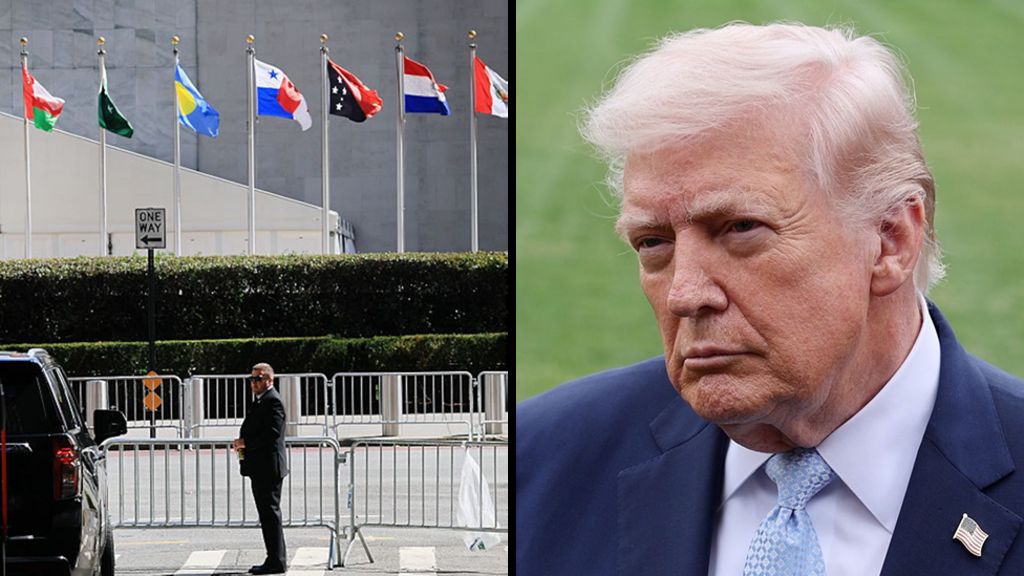
As the annual high-level week of the United Nations General Assembly kicks off in New York, hundreds of heads of state and government will gather at the UN headquarters to tackle a growing list of pressing global challenges that have dominated international affairs in 2024. This year’s gathering comes at a moment of heightened geopolitical tension, ongoing humanitarian crises, and stalled climate action, making every bilateral meeting and public address closely watched by policymakers and communities around the world.
分类: politics
-

Hegseth slammed for ‘blasphemous’ use of bible passage in military recruitment drive
A growing controversy has engulfed United States Secretary of War Pete Hegseth over his newly launched military recruitment initiative, the “Send Me Tour,” which draws heavily on Christian biblical scripture to frame military service and attract new young soldiers. The initiative centers its messaging on a iconic verse from the Old Testament’s Book of Isaiah Chapter 6 Verse 8, in which the prophet Isaiah responds to God’s question of “Who shall I send?” with the declaration: “Lord, I am here. Send me.”
Over the weekend, Hegseth brought the tour to Texas A&M University, where he was filmed leading a group of college-age students in a war chant that wove the biblical verse into calls for military service. “For 250 years of this country, there have been men and women who raised their right hand and said, ‘Send me,’” Hegseth shouted to the crowd. “Send me to go fight the Redcoats. Send me to go fight the Communists. Send me to go fight the Islamists.”
The blending of religious rhetoric with military recruitment has drawn sharp condemnation from a wide range of groups, including prominent American Christian leaders, religious freedom advocates, and social media observers. Methodist reverend Benjamin Cremer was among the most vocal critics, arguing that the initiative represents both a clear violation of the First Amendment’s prohibition on government establishment of religion and a blasphemous misappropriation of sacred text. “He is using scripture to frame military service as a kind of Christian religious crusade,” Cremer wrote. He also pointed out the stark double standard at play, noting that if a radical Muslim military leader in another nation used Quranic verses to incite holy war among new recruits, American Christian leaders would issue immediate and severe condemnation. “The hypocrisy is astounding,” Cremer added.
Social media commentators have echoed this criticism, accusing Hegseth of deliberately twisting the original meaning of the Isaiah verse for military ends. One commentator wrote on the platform X that “Pete Hegseth twists Bible quote to justify US wars!” They further explained that the prophet’s original “Send me!” cry was a call to preach repentance and divine judgment to the ancient Israelite people, not an endorsement of large-scale global military conflict.
This incident is far from the first time Hegseth has faced public scrutiny for blending conservative Christianity with US military policy. In April, he drew widespread criticism for reading a fake verse taken from Quentin Tarantino’s 1994 cult film *Pulp Fiction* during one of the regular Christian prayer and worship services he hosts at the Pentagon. He has also previously sparked outrage for framing US military actions, including the ongoing February 2024 war on Iran, as a religious obligation. During one Pentagon prayer service, Hegseth called for “overwhelming violence of action against those who deserve no mercy,” adding: “Let every round find its mark against the enemies of righteousness and our great nation.”
The use of religious rhetoric around the war on Iran extends beyond Hegseth’s public comments. When the US and Israel launched the conflict in February, top US commanders across all military branches told their troops that the war was “anointed by Jesus” and would trigger his second coming as part of the biblical Armageddon. This messaging prompted hundreds of complaints from active-duty military personnel. The Military Religious Freedom Foundation, an organization that defends religious freedom for all service members regardless of faith, confirmed to Middle East Eye that it received more than 200 formal complaints from service members across the Army, Navy, Air Force, Marine Corps, and Space Force in the wake of those comments.
Hegseth has become one of the most prominent and vocal public advocates for the US war on Iran, and has repeatedly adopted a combative stance when pressed by journalists on issues including ammunition shortages and rising US casualty numbers. He is a member of the Communion of Reformed Evangelical Churches, a denomination founded in 1998 by evangelical pastor Douglas Wilson, who has a well-documented history of using Islamophobic rhetoric when commenting on Muslim immigration to the United States.
-
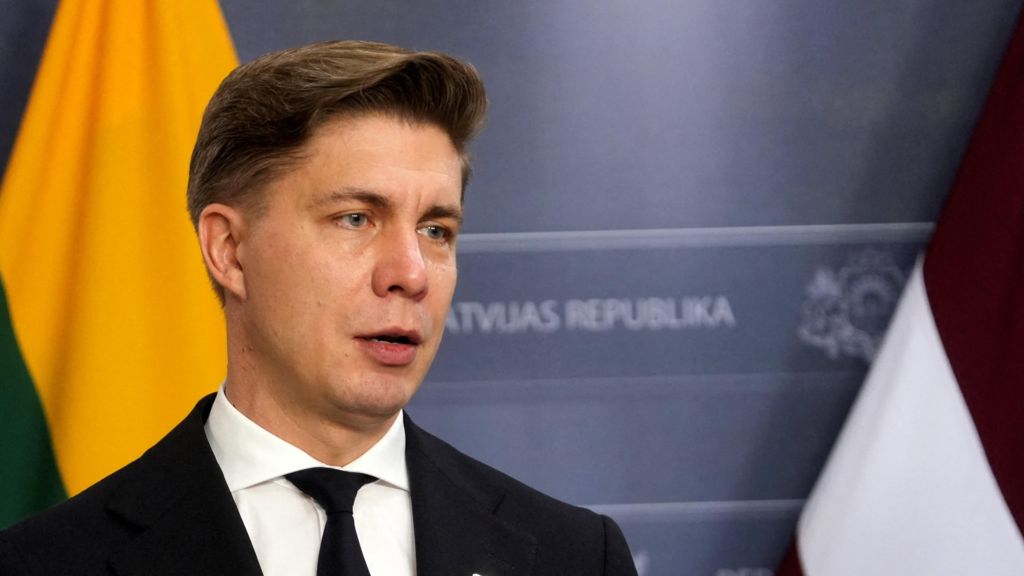
Lithuania ready to ‘fight back’ but has evacuation plans in face of Russia threats, PM tells BBC
As tensions along NATO’s eastern flank continue to escalate following a recent drone incursion into its airspace, Lithuania’s prime minister has publicly confirmed the Baltic nation has prepped emergency evacuation protocols for high-risk scenarios, while issuing a firm pledge that the country will never surrender to any Russian aggression.
In an exclusive interview with the BBC’s Newsnight program, Prime Minister Mindaugas Sinkevičius outlined the persistent sense of insecurity that shapes daily life in Lithuania, a NATO member state that shares a direct land border with Russia’s Kaliningrad enclave. He explained that repeated unauthorized airspace intrusions, including multiple drone sightings over Lithuanian territory, have left the public feeling constantly under threat from Moscow.
“If Russia chooses to attack our country, we will fight back without hesitation — we will engage and defend every inch of our sovereign territory,” Sinkevičius stated. He added that Lithuanian officials have drafted contingency plans for a wide range of potential security scenarios, with detailed preparations to evacuate vulnerable populations such as elderly citizens from major population centers in an orderly manner, free of the gridlock and chaos that often accompanies emergency evacuations.
Sinkevičius noted that most contingency planning remains behind closed doors, out of public discussion, to preserve operational security. “We face concrete, tangible threats. They do not emerge every single day, but they are a consistent part of our reality that we cannot ignore,” he added. The prime minister also called for a fundamental shift in the United Kingdom’s strategic approach to defense, acknowledging that Lithuania’s geographic proximity to Russia puts it on the frontline of heightened threat that not all NATO allies experience directly.
The prime minister’s comments come just one week after NATO fighter jets intercepted and shot down an unidentified drone that had entered Lithuanian airspace. While the drone’s origin has not been formally confirmed, Lithuanian Defense Minister Robertas Kaunas told the BBC’s Newshour that the unmanned vehicle entered from the direction of Belarus, a close military and political ally of Russia that has supported Moscow’s full-scale invasion of Ukraine since it launched in 2022. Moscow has so far declined to issue any comment on the recent drone incident.
UK Defense Secretary Wes Streeting reaffirmed the alliance’s collective commitment to territorial defense in response to the incident. “Thanks to the swift, professional actions of Lithuanian and Italian forces, NATO once again demonstrated that we maintain constant readiness to protect all of our allied airspace,” Streeting said. “We stand united 24 hours a day, seven days a week, in defense of every inch of NATO territory.”
This incident is part of a growing trend of military drone incursions across European airspace that has accelerated since Russia launched its full-scale invasion of Ukraine. Back in May, a drone alert forced residents of Lithuania’s capital city Vilnius to take emergency shelter, disrupting both air and rail travel for several hours. This year, NATO fighter jets have also scrambled multiple times to intercept and down stray drones that crossed into the other Baltic NATO members, Estonia and Latvia.
Ukraine has repeatedly pushed back against suggestions that the stray drones are Ukrainian, instead blaming Russian electronic warfare systems designed to hijack and redirect Ukrainian drones off their intended flight paths. As Baltic NATO members, Lithuania, Estonia and Latvia all joined the alliance in 2004, and are fully protected by Article 5 of NATO’s founding treaty — the cornerstone collective defense provision that states any armed attack against one member is considered an attack against the entire alliance.
-

Why a Bollywood celebrity manager’s 2020 death case has been reopened
In early June 2020, as India grappled with its first devastating wave of the Covid-19 pandemic, 28-year-old celebrity talent manager Disha Salian made final plans to leave her family home for an upcoming advertising shoot. Excited for the new project, she showed her parents an advance payment cheque she had received, told them she would return in just two days, and walked out the door. That would be the last time Satish and his wife would see their only daughter alive.
Four days later, in the early hours of June 9, Satish Salian was summoned by Mumbai police to a local hospital, where he was informed Disha was dead. Police initially claimed Disha had fallen accidentally from the 12th floor of a Mumbai residential building, with friends at the hospital attributing the fall to alcohol consumption. Months later, local investigators closed the case, officially ruling Disha’s death a suicide. But Satish Salian never accepted that conclusion.
For six years, the father waged a relentless campaign for justice, arguing his daughter was gang-raped and murdered as part of a cover-up to silence her. He has alleged that senior police officials destroyed evidence and fabricated the suicide narrative to protect powerful politicians and connected figures allegedly involved in the crime. His claims gained new traction earlier this month, when the Bombay High Court delivered a bombshell ruling ordering India’s federal investigation agency, the Central Bureau of Investigation (CBI), to open a full reinvestigation into Disha’s death.
In their September 2 order, Justices Sarang V Kotwal and Ranjitsinha Raja Bhonsale issued scathing criticism of the original local police investigation, which unfolded in two phases over six years. The judges noted a litany of procedural failures and inconsistencies: unexplained delays in official documentation, the complete absence of blood at the site where Disha’s body landed, and post-mortem injuries that do not align with a fall from a great height. The court wrote that the flawed original probe “raises more questions than it answers”, adding that “we find this difficult to accept” as a complete, credible investigation. One of the court’s most serious objections was that local police never filed a mandatory First Information Report (FIR) – the required official documentation of a potential crime – and only treated the death as suspicious, not as a potential homicide.
Following the court order, the CBI last week formally registered an FIR based on Satish Salian’s full complaint. The BBC has reviewed both the FIR and the full court order, which lays out the full scope of the father’s allegations.
At the time of her death, Disha worked for Mumbai-based celebrity management firm Kwan Entertainment, and was the official manager of popular Bollywood actor Sushant Singh Rajput. According to the allegations outlined in the court order, Disha uncovered evidence of illegal activity by powerful public figures, and shared that information with Rajput. When that information was inadvertently leaked back to the figures involved, Disha was killed to prevent her from speaking publicly. Less than a week after Disha’s death, Rajput was found dead in his Mumbai home. Local police also ruled Rajput’s death a suicide, citing pre-existing mental health conditions – a claim the actor’s family has repeatedly denied. After widespread public outrage, Rajput’s case was also transferred to the CBI, which closed the investigation last year, confirming the original suicide ruling and clearing Rajput’s then-girlfriend actress Rhea Chakraborty and her family of any involvement.
In his new FIR, Satish Salian directly links the two high-profile deaths, alleging Disha had shared evidence of “incriminating and objectionable information concerning alleged drug trafficking, child abuse and other unlawful activities” involving a former Maharashtra state minister and other connected figures. Salian claims Disha and Rajput planned to hold a public press conference to expose the wrongdoing, prompting a coordinated criminal conspiracy to silence both. “In order to prevent that and protect the persons involved, a well-orchestrated criminal conspiracy was hatched. The victim was gang raped and murdered, and thereafter evidence was suppressed/fabricated and a false story of suicide was created to cover up the crimes and shield the accused,” the FIR states.
The Bombay High Court stressed in its order that the filing of the new FIR “does not imply any finding of guilt against anyone”, and that no individual will be treated as a suspect unless investigators find sufficient reasonable suspicion. Even so, the case has sent shockwaves across Indian politics and entertainment: the FIR names several senior Maharashtra state politicians, high-ranking police officers, and prominent Bollywood figures. The development has dominated national headlines, with allegations of political power abuse, widespread denials from named individuals, and counter-accusations of political vendetta.
For Satish Salian, the court order has brought a small measure of peace after six years of campaigning. Speaking to the BBC, he described Disha as a bright, kind, well-read young woman who was the center of his and his wife’s life. “She was very bright, she did well in her studies and read a lot. She had a heart of gold and was very helpful. She was our only child and she loved us very much,” he said. His wife has never recovered from the loss, he added, and has battled deep depression since Disha’s death. For the father, justice is clear: “I want the death penalty for those who hurt my daughter. Those who inflicted pain on her must die a painful death too. That is what justice for Disha would look like to me.”
-
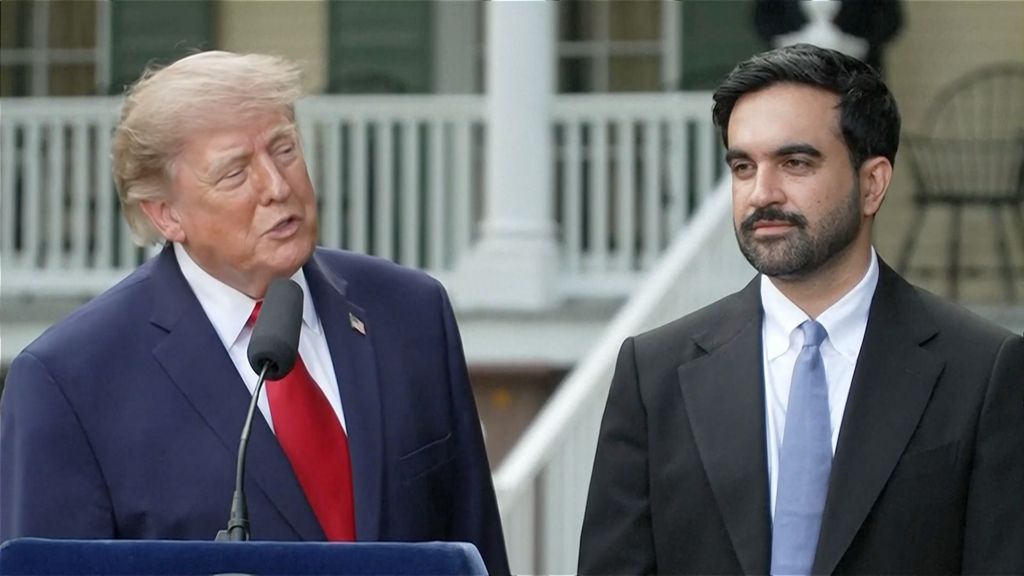
Watch: Mamdani says press allowed at event with Trump regardless of ‘critique’
In a bold rebuke of the Trump White House’s restrictive media policies, New York Mayor Mamdani has publicly reaffirmed that all journalists will be granted full access to an upcoming event featuring former President Donald Trump at the city’s official mayoral residence, Gracie Mansion.
In an on-camera statement, the mayor confirmed that he personally communicated this commitment to Trump, making clear that even reporters who have been vocal critics of the former president will not be turned away from the event. This stance directly contrasts with Trump’s longstanding policy of barring specific media outlets that he has labeled as “fake news” from access to White House press briefings and official presidential events during his time in office.
Mamdani emphasized that his administration’s commitment to an open and free press outweighs any personal or political disagreements that may arise between event attendees and media covering the public gathering. The move has drawn attention for highlighting the stark divide between local governance practices around press freedom and the restrictive media policies implemented during the Trump presidential administration.
-
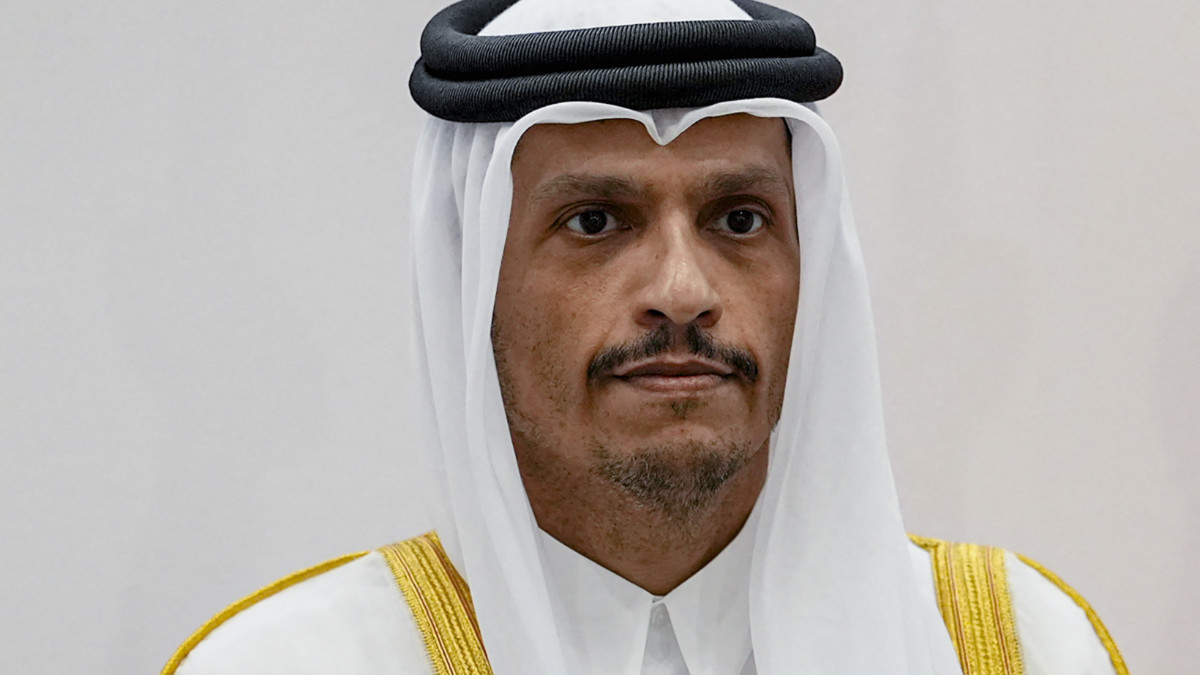
Gulf states need ‘good relations’ with Iran as part of new security framework, Qatar’s PM says
As six months of open conflict between the United States, Israel and Iran have thrown the Middle East into chaos and disrupted global energy supplies, Qatar’s top leader has issued a urgent call for a transformative, inclusive new regional security architecture that directly includes the Islamic Republic.
Speaking at the Qatar Economic Forum held in New York on Sunday, Qatari Prime Minister Mohammed bin Abdulrahman Al Thani framed the ongoing full-scale war as a critical wake-up call for all regional states to reset decades of fractured relations. “Iran is our neighbour,” Al Thani emphasized. “We have to act together responsibly as a region and to make sure that we are having good relations with Iran. We are hoping this war is a wake-up call for everyone.”
Al Thani’s landmark remarks came just hours after unconfirmed regional reports emerged that Washington was preparing to resume large-scale direct military strikes against Iran, ending months of relatively muted offensive action amid the ongoing conflict. The announcement coincided with a series of unusual developments in Washington: US President Donald Trump cut short a scheduled weekend retreat at Camp David with no formal public explanation, while the US State Department issued a urgent blanket security alert for all American citizens currently residing or traveling across the Middle East.
In comments to Fox News, Trump teased imminent major developments in the region, telling reporters that “very big things are going to be happening in the not-so-distant future.” The president laid out the three broad options his administration is currently weighing: “wiping Iran out, letting them rot economically or making a deal.”
The conflict, which began more than six months ago when the US and Israel launched open military action against Iran, has hit Gulf Arab states the hardest, as Iran has launched repeated retaliatory strikes across the region. Multiple Iranian attacks on US military bases stationed in Gulf nations have caused widespread infrastructure damage, photos obtained by Middle East Eye confirm, though the Trump administration has so far refused to publicly disclose the full scale of damage sustained.
Beyond the human and security costs, the war has inflicted severe damage on the global economy, particularly after Iran moved to close the Strait of Hormuz — the world’s most critical chokepoint for global energy trade. Preliminary ship-tracking data compiled by energy analytics firm Kpler shows that traffic through the strategic waterway has plummeted, with just 12 commercial commodity vessels making the crossing over the most recent weekend.
Al Thani’s call for inclusive dialogue was echoed earlier on Sunday by Anwar Gargash, senior diplomatic advisor to the President of the United Arab Emirates, who told a separate event that the region must adopt a “new mindset” to resolve the crisis. Gargash added that any negotiations to end the conflict must include a dedicated Iranian-Arab negotiating track to address longstanding regional grievances.
For Qatar and its Gulf neighbors, the ongoing closure of the strait has evolved from a regional crisis to an immediate existential threat to their national economies. Almost all Gulf states — including Qatar, Kuwait, Bahrain, Iraq and the UAE — rely almost exclusively on the Strait of Hormuz for energy exports and critical import shipments. For Qatar, the disruption is already derailing long-planned strategic expansion of its liquefied natural gas (LNG) sector, the backbone of the country’s economy. Earlier this month, Qatar extended a force majeure declaration for LNG shipments through early November, triggered by the effective maritime blockade of the strait.
Recent weeks have also laid bare the extreme vulnerability of any alternative routes that bypass the Strait of Hormuz. Saudi Arabia’s critical East-West Pipeline, which was designed to allow the kingdom to route oil exports around the strait to the Red Sea port of Yanbu, was disabled last month in a drone attack that Saudi officials blame on Iraqi militias. The attack came amid a sweeping territorial offensive by Yemen’s Houthi movement, which has now seized full control of Yemen’s entire Red Sea coastline. The Houthis have imposed their own blockade on commercial shipping bound for Saudi Arabia, and launched a fresh drone attack on Riyadh’s main international airport over the weekend.
Before the attack, the East-West Pipeline allowed Saudi Arabia to export roughly 4 million barrels of crude per day — around two-thirds of its pre-war production volume — around the strait. Last week, however, Saudi Arabia canceled all scheduled oil loadings at the Yanbu port and notified European refining customers that it would not be able to fulfill its contracted crude allocation commitments for October.
While the UAE has emerged as one of the most vocal supporters of accelerating investment in alternative bypass pipelines to render the Strait of Hormuz less strategically critical, many smaller Gulf producers have far fewer alternative options. Speaking alongside the prime minister at Sunday’s forum, Qatari Energy Minister Saad al-Kaabi pushed back against US claims that new pipeline investments could eliminate the strait’s strategic importance within just two years, calling the assertion “completely wrong.”
“I mean, maybe this is his view. I think this is completely wrong,” Kaabi said. “We have decided not to do pipelines, and I think the decision in Qatar was based on commercial and technical [reasons], and we are only going to be using the straits,” he added, ruling out any future investments in large-scale alternative gas pipeline projects.
-
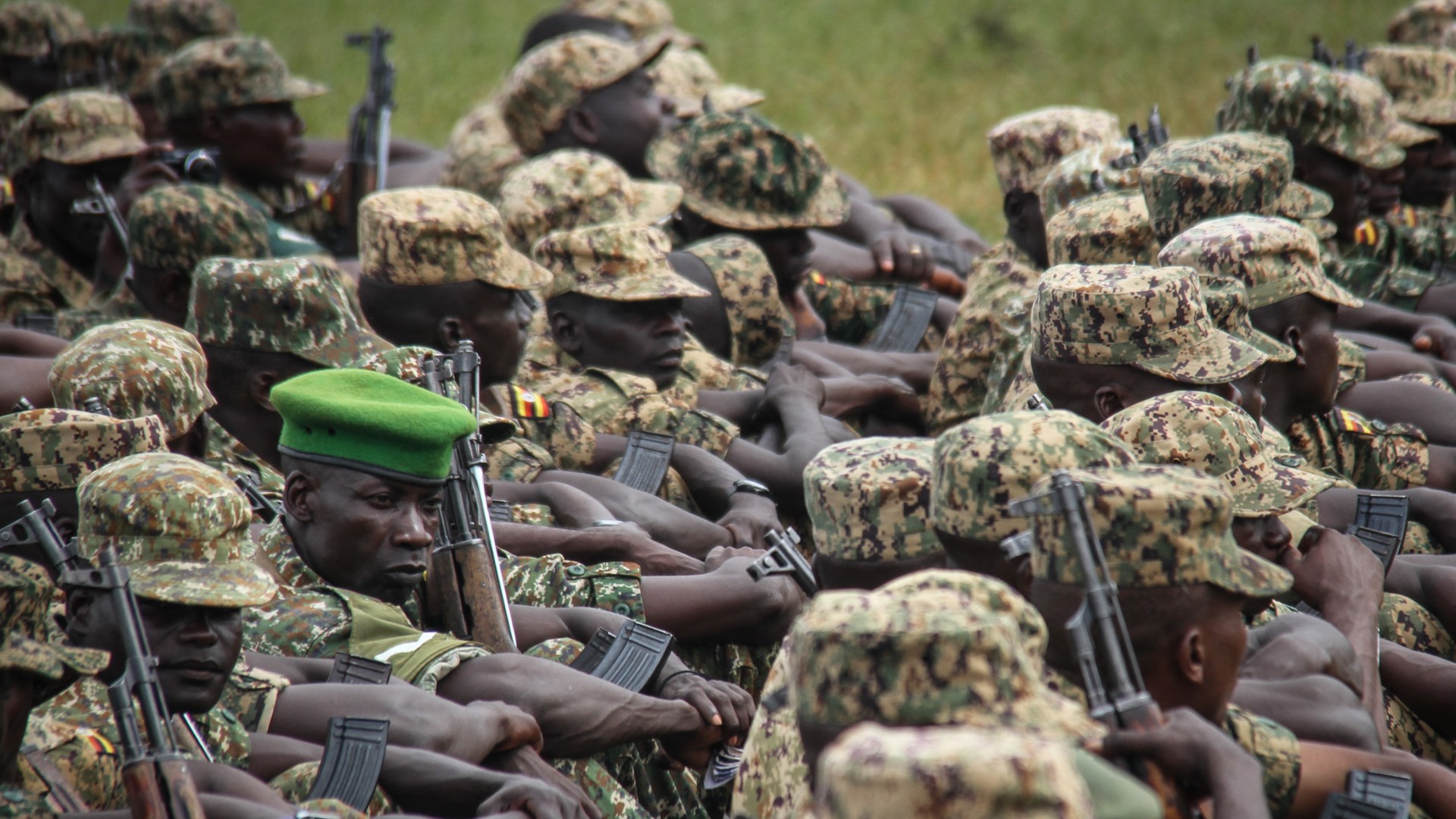
Uganda cuts defence ties with Turkey over Somalia dispute, sources say
In a sudden move that grabbed international headlines, the Uganda People’s Defence Forces (UPDF) announced Saturday an immediate suspension of all defense and military cooperation with Turkey. While Ugandan local media initially tied the decision to anti-Turkey demonstrations staged outside the Turkish embassy in Kampala by supporters of the Patriotic League of Uganda (PLU) – a group led by Uganda’s top military general Muhoozi Kainerugaba – multiple insiders close to the situation tell a different story to Middle East Eye.
The protests, which centered on a demand that Turkey extradite exiled Ugandan political commentator Fred Lumbuye (who has resided in Turkey since 2013), are nothing more than a convenient public pretext, according to sources. The real root of the rift lies in deep-seated disagreements over the future of Uganda’s long-standing military deployment in Somalia, and Ankara’s rapidly expanding influence over the East African nation’s security landscape.
Uganda currently deploys approximately 4,500 troops to Somalia as part of the African Union Support and Stabilisation Mission in Somalia (Aussom), the primary multinational security force backing the Somali national army. An additional 2,000 Ugandan troops are stationed in the country under a separate bilateral agreement, a military source confirmed to Agence France-Presse. For years, this deployment has generated steady, significant revenue for Kampala: insiders report Uganda receives at least $1,000 per deployed soldier each month, a payment stream that underpins a large portion of its military budget for overseas operations.
But that revenue stream is now at severe risk. The entire future of the Aussom mission was thrown into uncertainty back in July, when the United States notified the African Union that it would cut all funding to the UN Support Office in Somalia by the end of 2024. That office provides critical logistical backing for the entire AU mission, and its loss of funding has left the mission’s long-term viability and funding structure up in the air – and put pressure on troop-contributing countries like Uganda to reconsider their deployments.
Compounding this uncertainty, sources tell MEE that the Somali federal government has formally requested Uganda withdraw its military forces, pointing directly to the growing strength of Turkish-trained Somali security units. Over the past decade, Turkey has emerged as the primary external trainer for Somali military personnel: it has trained roughly 25,000 Somali soldiers at facilities in Mogadishu, and an additional 10,000 elite commandos at training bases within Turkey’s own borders. As these trained forces have matured, Somali authorities have increasingly argued they are capable of shouldering the burden of domestic security.
For Kampala, a full withdrawal from Somalia would carry a massive financial cost. Insiders estimate that Uganda stands to lose between $5 million and $6 million per month, or $60 million to $72 million annually, if the AU mission ends and all troops are pulled out. Facing this steep loss, Uganda has opted to pressure Turkey – which Kampala views as the main powerbroker shaping Somalia’s new security order – to intervene and resolve the looming crisis, sources explained.
Tunc Demirtas, a security researcher at the Ankara-based think tank Seta, confirmed that the shifting security landscape in Somalia makes a reduced international presence inevitable. “Somalia’s government is now capable of providing its own security for its capital and surrounding regions and as its state capacity is built up, it requires less support from abroad,” Demirtas told MEE, adding that the long-standing foreign military presence in Somalia has spawned a war economy that has benefited foreign troop contributors including Uganda.
For its part, Turkey is actively working behind the scenes to de-escalate the dispute, according to sources. Ankara is concerned that the breakdown in defense ties could spill over to impact major Turkish commercial projects in Uganda, including large-scale infrastructure and transport contracts. Agence France-Presse reports that Kampala is considering canceling a $3 billion railway contract awarded to leading Turkish construction firm Yapi Merkezi, and could even order the expulsion of Turkish nationals from Ugandan territory – moves that would cause significant economic and diplomatic damage to Ankara.
-
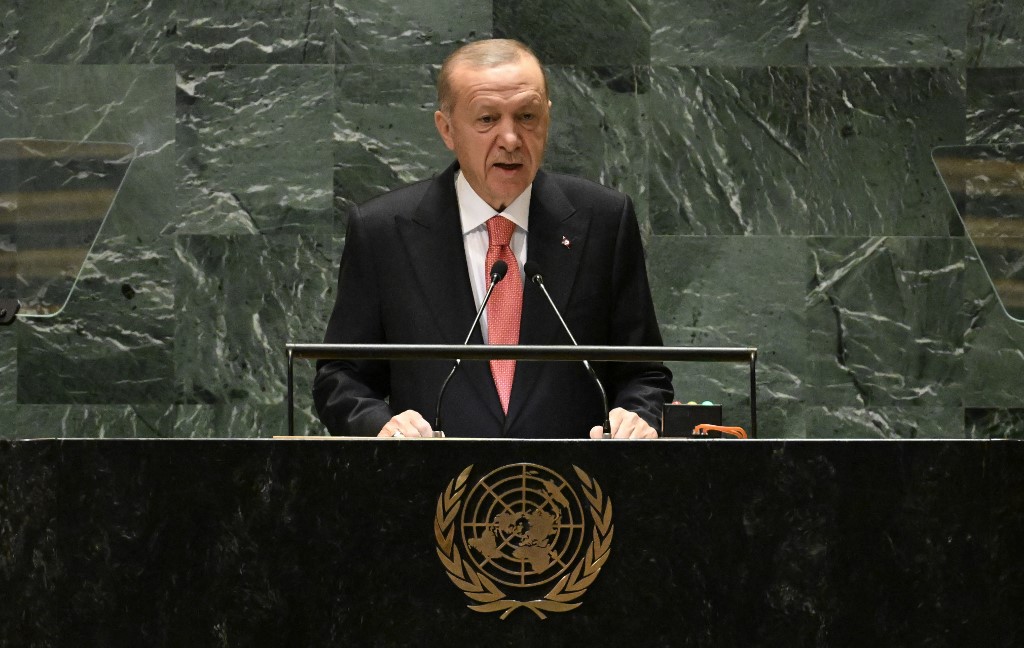
Erdogan and Burnham to meet for first time at UN General Assembly in New York
As world leaders gather in New York for the annual United Nations General Assembly (UNGA), a high-stakes bilateral meeting between Turkish President Recep Tayyip Erdogan and the United Kingdom’s new Prime Minister Andy Burnham is set to kick off on the first day of UNGA’s general debate this Tuesday. This encounter will mark the first face-to-face interaction between the two leaders since Burnham assumed office in July, coming at a moment of shifting global diplomatic dynamics, particularly in the Middle East.
The meeting takes place just weeks after the UK government implemented new economic sanctions targeting illegal Israeli settlements in the Israeli-occupied West Bank, an action that included a formal accusation that Israel’s current administration has intentionally overlooked what UK officials described as ongoing “ethnic cleansing” of Palestinian communities by extremist settler groups. This regional policy shift from the UK adds an unscripted layer of geopolitical context to the bilateral discussions, as Turkey has long maintained strong diplomatic and public support for Palestinian statehood.
Against this regional backdrop, bilateral relations between Ankara and London have warmed considerably over the past 18 months. Turkish and UK officials have repeatedly characterized the current bilateral relationship as “excellent,” a shift that followed Ankara’s landmark decision last year to finalize a multibillion-dollar purchase of Eurofighter Typhoon fighter jets from a UK-led consortium.
The deepening of cooperation has unfolded through a series of formal agreements this year. Back in April, the two countries signed a broad Strategic Partnership Framework, designed to formalize closer dialogue and collaborative action across sectors as NATO allies and committed strategic partners. This foundational agreement was followed by a dedicated security and defence partnership pact signed in July on the margins of the NATO summit hosted in Ankara. A senior Turkish official speaking to Middle East Eye at the time of the signing confirmed that the agreement binds both nations to mutual support across all defence-related priorities, including integrated defence industrial collaboration, counterterrorism coordination, collective response to hybrid threats, and joint cybersecurity initiatives.
Beyond the high-profile meeting with Burnham, Erdogan has packed his New York schedule with a series of key bilateral engagements with global and regional leaders. Erdogan arrived in New York on Sunday to prepare for the week of diplomacy. On Monday, he is scheduled to hold talks with Mohamed al-Menfi, chairman of Libya’s Presidential Council, as well as Kuwait’s Crown Prince Sheikh Sabah Khaled Al-Sabah. After his opening day meeting with Burnham on Tuesday, Erdogan will hold his first bilateral meeting with newly inaugurated Japanese Prime Minister Sanae Takaichi. Wednesday will bring meetings with Armenian Prime Minister Nikol Pashinyan and Iraqi Prime Minister Ali Zayid, respectively. Sources familiar with the internal planning of Erdogan’s trip note that additional bilateral meetings with other global heads of state could still be added to the itinerary, including a potential last-minute pull-aside encounter with former US President and current 2024 presidential candidate Donald Trump.
-
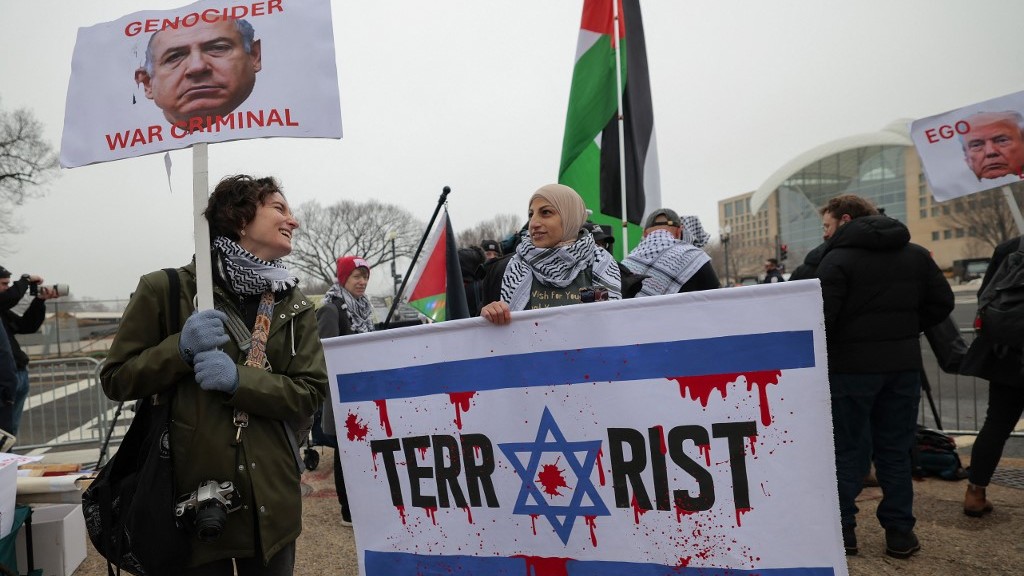
Pro-Israel think tank urges Israel to weaponise US interdependence amid falling support
Against a backdrop of plummeting public support for Israel across the United States and growing global backlash over its military campaign in Gaza, a prominent Washington-based pro-Israel think tank has laid out a controversial plan to protect Israel from potential international sanctions by weaving the country closer into the United States’ military, technological, intelligence, and economic frameworks. The Foundation for Defense of Democracies (FDD), founded in 2001 with the explicit goal of boosting Israel’s image in North America and funded by high-profile pro-Israel American donors, says deeper integration would make any future sanctions against Israel too costly for the U.S. to implement, effectively sanction-proofing the Israeli state.
FDD CEO Mark Dubowitz outlined the proposal earlier this month, warning that the same financial sanctions infrastructure the U.S. built over two decades to pressure Iran could eventually be turned against Israel as shifting public opinion erodes Israel’s long-held political protection in Washington. “For two decades, the United States built a formidable financial warfare machine designed to cripple Iran. Ironically, parts of that same machinery are now being assembled against Israel,” Dubowitz argued in his analysis.
He drew a direct parallel to the Iran sanctions model, noting that the campaign against Tehran worked not just because of official government restrictions, but because private financial institutions overcomplied with sanctions to avoid angering Washington. “The model used against Iran was devastating because it operated like a steadily tightening noose,” Dubowitz warned. “Sanctions set the process in motion, but the real damage was inflicted by banks and investors who, fearful of incurring Washington’s wrath, went far beyond what US law actually required.”
This warning comes amid a dramatic shift in U.S. public opinion toward Israel since the outbreak of the Gaza war in October 2023. Recent polling from Pew Research Center shows that six in 10 Americans now hold an unfavorable view of Israel, up from 53% in 2023 and just 42% in 2022. This decline in support crosses party lines: even among younger Republicans, 57% now view Israel unfavorably, and for the first time in decades, more Americans sympathize with Palestinians than Israelis.
Dubowitz acknowledged that this shift in public sentiment is already eroding Israel’s political capital in Washington. “Israel’s political shield is also eroding,” he wrote, noting that U.S. politicians increasingly feel free to take tougher stances on Israel than they have in previous generations. He outlined a worst-case scenario for Israel: a future U.S. president hostile to Israeli interests takes office, the U.S. ends its automatic diplomatic shield for Israel at the United Nations, and both European and American sanctions are imposed. In that scenario, Dubowitz argued, Wall Street’s overcompliance with sanctions would deliver the final blow to Israel’s economy, just as it did to Iran’s.
To prevent this outcome, Dubowitz is calling for a fundamental deepening of bilateral ties, binding the two countries’ core security and economic systems so closely together that any action targeting Israel would automatically impose significant costs on the United States itself. “If that bond is tight enough, no U.S. administration would be able to impose meaningful sanctions because the economic and political fallout for America would be too great,” he argued.
The FDD, which says its mission includes strengthening U.S. national security, was founded by wealthy pro-Israel donors Leonard Abramson, Michael Steinhardt, and Edgar Bronfman, with major past funding from other prominent pro-Israel philanthropists including Bernard Marcus, Paul Singer, and the late Sheldon Adelson, who collectively poured millions of dollars into the organization’s work.
-
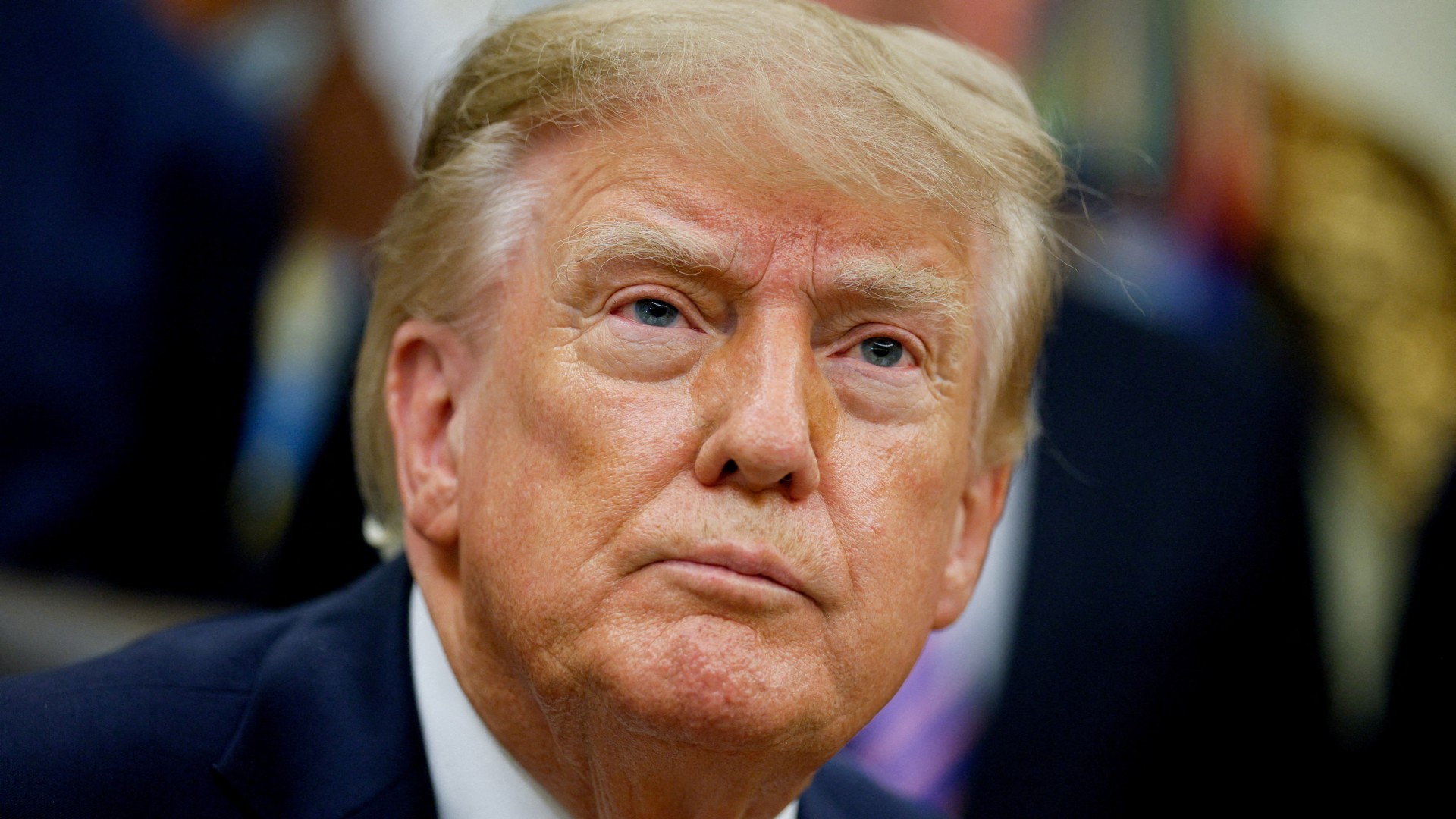
Trump’s ‘sweeping’ ICC sanctions over Netanyahu arrest warrant are imminent: Reports
Multiple major international news outlets have confirmed that the Trump administration is moving forward with unprecedented, full-institution sanctions against the International Criminal Court (ICC), with a formal announcement expected as early as this week on the sidelines of the United Nations General Assembly high-level meeting in New York. This escalatory step follows earlier US sanctions targeting individual ICC officials, imposed in retaliation for the court’s 2024 issuance of arrest warrants for senior Israeli leaders over alleged war crimes in Gaza.
According to reporting from The Wall Street Journal (WSJ), which based its account on internal administration documents and anonymous senior US officials, the proposed sanctions will ban nearly all commercial and financial transactions between US entities and the ICC after a six-to-seven-month grace period. The restrictions will cut the court off from US dollar-denominated financial operations, a move that experts and ICC officials warn could effectively cripple the tribunal’s daily activities. Because most global financial activity relies on the US-led financial system, banks typically over-comply with US sanctions to avoid regulatory penalty, amplifying the damage of the new measures.
Reuters later corroborated the WSJ’s reporting, confirming that full entity sanctions have been fully drafted by the US Treasury Department, though the exact timing of the announcement remains flexible. Under the framework of the sanctions, US citizens and companies will be barred from providing funds, goods, or services to the ICC without explicit approval from the Treasury’s Office of Foreign Assets Control, with only limited exemptions for communications-related transactions.
The ICC has long warned that full institutional sanctions would disrupt nearly every core function of the court: from procuring critical IT infrastructure and insurance coverage, to recruiting new investigative staff, to processing routine payroll for dozens of American employees working with the tribunal. These warnings echo longstanding concerns from international law experts that targeting the ICC as an institution rather than just individual officials would constitute a “doomsday scenario” for the court’s ability to operate.
In response to the looming sanctions, international observers and legal experts have repeatedly called on the European Union to activate its long-dormant Blocking Statute, a regulatory tool designed to shield EU-based entities from the extraterritorial impact of third-country sanctions. If activated, the statute would legally protect EU-based service providers that continue to transact with the ICC, preventing them from being forced to comply with US restrictions that conflict with EU policy. Despite multiple resolutions passed by the European Parliament calling for the statute’s activation in July and September of 2023, the European Commission has yet to trigger the mechanism and has offered no public explanation for the delay.
Sergey Vasiliev, an international law professor at the Open University of the Netherlands and a leading expert on the ICC, has criticized member states and EU institutions for failing to prepare for this escalation despite advance warning of the Trump administration’s intentions. “States Parties have had ample time to prepare for this and undertake contingency planning,” Vasiliev wrote in a post on X. “Everything must be ready to activate the EU Blocking Statute to shield the ICC from US sanctions targeting it as an institution. The EU Commission and all EU member states that considered this measure premature or too radical must now realise that it can no longer be postponed.”This latest round of planned sanctions is the culmination of a months-long campaign by the Trump administration to dismantle the ICC over its investigations into US and Israeli personnel. Washington first imposed sanctions on individual ICC officials last February, starting with then-chief prosecutor Karim Khan, before expanding penalties to two deputy prosecutors and nine judges leading investigations into Palestine and Afghanistan. In August of this year, sanctions were expanded to include ICC president Tomoko Akane and senior trial lawyer Abdoulaye Seye. These individual sanctions have been described as a “financial death penalty” for the affected officials, who have been completely cut off from access to basic global financial services.
In July, US Secretary of State Marco Rubio laid out the administration’s full agenda in a WSJ opinion piece, announcing a formal US campaign to isolate the ICC globally. Rubio urged all countries to withdraw their membership from the tribunal and warned that Washington would “dismantle it brick by brick” if the court did not alter its activities to align with US demands. Those demands, first revealed by Middle East Eye in December 2023, include requiring the ICC to drop its war crime investigations into Gaza and Afghanistan, and amending the court’s founding document, the Rome Statute, to grant permanent immunity from prosecution to nationals of non-member states such as the United States and Israel. At the ICC’s annual Assembly of States Parties meeting in The Hague last December, member states issued an unprecedented public declaration rejecting these demands and ruled out any amendments to the Rome Statute, without explicitly naming the US.
The ICC’s 2024 arrest warrants, which triggered the current escalation, targeted Israeli Prime Minister Benjamin Netanyahu, former Israeli defense minister Yoav Gallant, and three senior Hamas leaders over alleged war crimes and crimes against humanity committed during the ongoing conflict in Gaza. The warrants specifically cited the use of starvation as a deliberate method of warfare against Gaza’s civilian population; all three Hamas leaders named in the warrants have since been killed.
Established in 2002, the ICC is the world’s only permanent international criminal tribunal, mandated to investigate and prosecute the most severe international crimes: genocide, crimes against humanity, war crimes, and crimes of aggression. The court currently maintains more than a dozen active investigations into conflict zones across the globe, including Darfur, Libya, Myanmar, and Ukraine.
Multiple US-based human rights organizations have already taken legal action to block the Trump administration’s sanctions, arguing that the measures are blatantly unconstitutional and illegal under US law. Last month, four leading groups — the American Friends Service Committee, the Center for Constitutional Rights, Human Rights Watch, and the Open Society Institute — filed a lawsuit against the administration, arguing that the sanctions force the groups to curtail core human rights and legal work in violation of the First and Fifth Amendments of the US Constitution and the Religious Freedom Restoration Act. The groups note that any individual or organization even loosely associated with ICC cases or officials now faces potential legal repercussions for their work. In July, shortly after Rubio published his op-ed, two additional groups — Democracy for the Arab World Now and the Taxpayer Alliance Against Genocide — filed a separate suit in federal court in New York seeking an injunction to halt the enforcement of sanctions against entities and individuals that work with the ICC. Middle East Eye has reached out to the US State Department for official comment on the planned sanctions, but has not yet received a response.