分类: politics

  • Kawsar Ahmad, Zeinab Ahmad: Women charged after returning from Syrian camp appear in Australian courts

    Kawsar Ahmad, Zeinab Ahmad: Women charged after returning from Syrian camp appear in Australian courts

    A 53-year-old woman and her 31-year-old daughter made their first court appearance in Melbourne on Friday, just hours after being taken into custody upon their arrival back in Australia from Syria, with legal teams confirming plans to apply for bail for both defendants early next week.

    Kawsar Ahmad, who also goes by the name Kawsar Abbas, faces four separate charges linked to crimes against humanity: enslavement, possession of a slave, use of a slave, and participation in slave trafficking. Her daughter Zeinab Ahmad, alternatively recorded as Zeinab Ahmed, faces two counts of enslavement and use of a slave. Every charge carried by the pair carries a maximum 25-year prison sentence if convicted.

    The two women were among a group of 13 Australian citizens — four adult women and nine children — repatriated from northern Syria this week, landing on Australian soil on Thursday evening. They were taken into custody by authorities immediately after clearing customs at Melbourne Airport. A third daughter of Kawsar Ahmad, Zahra Ahmad, who is the widow of notorious killed Islamic State recruiter Muhammad Zahab, was allowed to leave the airport without arrest.

    Before the pair were taken into custody, chaotic confrontations broke out at the airport between supporters of the repatriated group and members of the media, as supporters escorted the group to a waiting minibus to leave the terminal.

    Investigative allegations from Australian police outline that the two women first traveled to Syria with their extended family back in 2014, and had been held by Kurdish-led forces at the Al Roj displacement camp in northern Syria since March 2019. Authorities allege that while the family was living in Syria, they held captive and enslaved multiple Yazidi women, members of an ethnic minority group native to northern Iraq who were targeted by the Islamic State for systematic enslavement and genocide.

    When the case was called at Melbourne Magistrates’ Court on Friday morning, the public gallery was filled to capacity with journalists, legal observers, and supporters of the two women. Around 10 additional attendees were forced to stand along the perimeter walls of the gallery due to the lack of available seating. Court observers noted that Kawsar Ahmad scanned the room after taking her place at the defense table, before locking eyes with her group of supporters and smiling. Both women remained in the clothing they wore when they were arrested on Thursday.

    Bill Doogue, legal counsel for Kawsar Ahmad, informed the court that the defense would formally submit a bail application on the coming Monday. Minutes later, Maya George, Zeinab Ahmad’s attorney, confirmed her team would also pursue bail for her client in line with the same timeline.

  • New York governor orders US immigration agents to unmask

    New York governor orders US immigration agents to unmask

    A high-stakes conflict over US immigration enforcement erupted this week after New York Governor Kathy Hochul announced sweeping new restrictions on Immigration and Customs Enforcement (ICE) operations across the state, including an unprecedented order requiring federal agents to stop concealing their identities during raids.

  • IS-linked Australian women charged with keeping slave in Syria

    IS-linked Australian women charged with keeping slave in Syria

    In a landmark counter-terrorism operation following the long-awaited repatriation of Australian citizens stranded in Syria, three women linked to the Islamic State (IS) terror group have been slapped with severe criminal charges, including allegations of crimes against humanity related to slavery.

    Australian Federal Police (AFP) confirmed Friday that two of the women — a 53-year-old mother and her 31-year-old daughter — were taken into custody immediately after their Qatar Airways flight touched down at Melbourne International Airport Thursday evening. This marked the pair’s first return to Australian soil in almost a decade, after they were captured and detained by Kurdish forces in 2019 when IS’s self-declared caliphate collapsed across northern Syria. Before their repatriation, the two were held at the overcrowded, notoriously harsh Roj detention camp, where thousands of people with suspected IS ties are still held.

    According to official police statements, the pair traveled to Syria in 2014 specifically to join and support the IS terror organization. The 53-year-old is accused of acting as an accomplice in the purchase of a female enslaved person for $10,000 USD, while her daughter is charged with knowingly holding that same woman as a slave in the IS-controlled household they shared. AFP counter-terrorism chief Stephen Nutt emphasized that the investigation into these grave allegations remains active and ongoing.

    A third woman, 32-year-old Janai Safar, was arrested separately after her arrival in Sydney. Safar, who traveled to Syria in 2015 to join her IS fighter husband, faces charges of entering a declared restricted area and becoming a member of a listed terrorist organization. A fourth woman who traveled back with the group was not taken into custody upon arrival. In total, four women and nine accompanying children were on Thursday’s repatriation flight from the Middle East, which transited through Doha before reaching Australia.

    The case has reignited long-running national debate over how Australia should handle citizens who left to join IS more than a decade ago. When IS seized large swathes of Syria and Iraq in the early 2010s, Australia criminalized travel to IS strongholds including Syria’s Raqqa province. Hundreds of Western women, many of whom followed partners who joined as jihadist fighters, migrated to the region during IS’s rise, and after the group’s territorial collapse, thousands of these citizens were left stranded in Syrian detention camps.

    Countries including Australia, Canada, and the United Kingdom have struggled for years to reach a consensus on how to manage these remaining citizens. In Australia, human rights groups including the Australian Human Rights Commission have repeatedly urged the government to repatriate the roughly 34 women and children still stuck in Roj camp, arguing that stranded civilians, especially children, deserve the right to return home and face due process under Australian law. But critics argue that the women made a deliberate choice to abandon Australia and align with a terrorist organization, and should not be allowed to return, instead being forced to face the consequences of their decisions in the region.

    Australian Home Affairs Minister Tony Burke echoed this critical stance following the arrests, saying all four returning women had made “a horrific choice to join a dangerous terrorist organisation”. Thursday’s repatriation is not the first time Australian citizens have returned from Syrian camps: small groups of women and children were repatriated in 2019, 2022, and earlier this year, with many of those returnees facing criminal prosecution upon arrival.

  • Exclusive: ICC prosecutor Karim Khan details ‘dangerous’ attempt by states to remove him

    Exclusive: ICC prosecutor Karim Khan details ‘dangerous’ attempt by states to remove him

    In an explosive exclusive interview with Middle East Eye, Karim Khan, the Chief Prosecutor of the International Criminal Court, has lifted the veil on what he calls a dangerous, politically motivated smear campaign to force him out of office. The unprecedented campaign, he alleges, is rooted in backlash over his office’s groundbreaking push for arrest warrants targeting Israeli Prime Minister Benjamin Netanyahu and former Israeli Defense Minister Yoav Gallant over alleged war crimes in Gaza, and it has twisted unfounded sexual misconduct allegations to sideline him.

    Khan’s investigation into Gaza war crimes led his office to request arrest warrants for the two Israeli leaders in May 2024, with the court officially issuing the warrants that November. Almost immediately, the pressure campaign escalated: Khan, his two deputy prosecutors, and multiple ICC judges have since been hit with United States sanctions, and prominent Western politicians have delivered direct threats to force the court to back down. Khan confirmed to MEE that U.S. Senator Lindsey Graham threatened consequences against him if he moved forward with the warrants, while then-U.K. Foreign Secretary David Cameron warned that the U.K. would withdraw from the court and cut off funding if the prosecutions proceeded. In a 2024 April phone call, Cameron told Khan he had “lost the plot” for advancing the warrants, and made clear that Western powers would create major political and financial difficulties for the ICC if he refused to back down.

    The internal campaign against Khan has centered on unsubstantiated sexual misconduct claims filed against him in 2024. The ICC’s Assembly of State Parties Bureau commissioned the United Nations Office of Internal Oversight Services to investigate the allegations, and a panel of independent ICC judges appointed to review the OIOS probe unanimously concluded in March 2025 that there was no evidence of misconduct or breach of duty by Khan. Despite this clear ruling, a bloc of mostly Western and European states on the 21-member ASP Bureau voted to ignore the judges’ finding, reopen the investigation, and keep Khan suspended from his post – a move Khan says violates core legal and procedural norms.

    Khan has repeatedly and strenuously denied all allegations against him, noting that he has always maintained professional and appropriate relationships with all ICC staff. What makes the ongoing process even more unfair, he argues, is the blatant bias and breach of confidentiality that has marked it from the start. Unlike previous ICC officials investigated for misconduct, who were granted full anonymity during proceedings, ASP Bureau President Paivi Kaukoranta, a Finnish diplomat, confirmed Khan’s name and the details of the allegations to the press in October 2024, a move he calls a clear breach of the body’s confidentiality obligations. He also accused one of the ASP’s two vice presidents of holding an off-process meeting with his accuser, a step that violates all standards of due process.

    Khan filed a motion to disqualify three biased Bureau members from participating in the decision on his future. While one member voluntarily recused themselves, the Bureau rejected his request to remove the other two, whose identities he has not publicly disclosed. Former U.N. OIOS Assistant Secretary-General Ben Swanson, who oversaw the original investigation before leaving his post in February 2025, has submitted new evidence backing Khan: Swanson confirmed that neither the final investigation report nor any underlying material meets the required standard of proof to support a finding of misconduct. Khan points out that the proof standard applied was set by the ASP Bureau itself, and has been used for all ICC staff and elected officials throughout the court’s history.

    The ICC prosecutor has been on indefinite leave for nearly a year while the investigation dragged on, and he chose to remain silent throughout the process to respect procedural confidentiality. Now that the U.N. investigation is complete, he has broken his silence to warn that the ongoing campaign has pushed the court into uncharted, dangerous territory. If political appointees and diplomats can subvert a clear, independent investigation to remove an elected ICC official based on unfounded claims, Khan argues, this will set a catastrophic precedent that allows any future elected leader at the court to be ousted for political reasons.

    “This is a template for getting rid of any elected official, now or in the future, on spurious or flimsy or fabricated or unfounded grounds,” Khan told MEE. He added that the bureau’s process “seems to be moving from legality to political considerations.” If the Bureau ultimately rules against him and the full ASP votes to remove him from office, Khan says he will immediately appeal the decision to the International Labour Organisation Appeals Tribunal to challenge the fairness of the process.

    Internal divisions have already emerged within the Bureau: the vote to reopen the investigation was the first non-consensus decision in the body’s recent history, with a number of member states arguing the case should be closed and the judges’ ruling honored. The states that voted to disregard the panel of judges include Belgium, Bolivia, Brazil, Chile, Cyprus, Ecuador, Finland, Italy, Japan, Latvia, New Zealand, Poland, Slovenia, South Korea, and Switzerland.

    Khan also revealed new details of the broader intimidation campaign against him: he has received intelligence that he is under close surveillance by both Russian and Israeli intelligence agencies, a claim he has passed to Dutch authorities. Last year, MEE reporting revealed that a Mossad surveillance team was operating in The Hague near ICC headquarters, raising fears for Khan’s safety, and that a parallel media campaign had been launched to destroy his reputation and split the ICC prosecutor’s office. Khan acknowledges that the campaign has already done significant harm to his reputation, but says he is confident its underlying goal – to derail the Gaza war crimes investigation – will not succeed.

    Against the backdrop of growing Western pressure on the ICC, particularly since the return of U.S. President Donald Trump to office in January 2025, Khan says the court is facing the most concerted attack on international judicial institutions in modern history. He was the first ICC official targeted with U.S. sanctions shortly after Trump took office, with his deputy prosecutors sanctioned later in 2025. This pattern of targeting ICC prosecutors is not new: during Trump’s first term, Khan’s predecessor Fatou Bensouda was also sanctioned over an investigation into U.S. war crimes in Afghanistan, before being delisted during the Biden administration. The ultimate goal of the pressure campaign, Khan says, is to force the ICC to abandon any investigation into crimes committed in Palestinian territories.

    Despite growing skepticism about the future of a rules-based international order, and longstanding criticism that the ICC has disproportionately focused on African cases while holding Western powers unaccountable, Khan argues that the court and multilateral judicial institutions remain irreplaceable. “There is a concerted attempt in some quarters to erode confidence in these structures, in these institutions, because they may, from one vantage point, be viewed as an impediment to power,” he said. “And that’s exactly why we need them.”

    Khan rejects the idea that these flaws mean the global community should abandon the pursuit of equal international justice. Instead, he says, they should inspire greater effort to build a fairer system. Humanity is a work in progress in law, just as it is in science, technology and every other field, he notes, and the future of international justice depends on the commitment of ordinary people around the world. “Do they want their children to live in a world governed by brute power or a world regulated by law?” Khan asked. “Justice is too important to leave to the lawyers. It’s too important to leave to the prosecutor of the ICC, or even to the judges of the ICC. Everybody should say they’ve got a stake in justice, whether they’re affected or they’re not.”

  • Australian women linked to Islamic State charged with offences over Syria travel

    Australian women linked to Islamic State charged with offences over Syria travel

    In a high-profile counter-terrorism development that unfolded across two Australian states on Thursday, three women with documented connections to the Islamic State terror group have been taken into federal custody and formally charged just hours after touching down on Australian soil following years of detention in a Syrian displacement camp.

    The first two suspects, 53-year-old Kawsar Abbas and her 31-year-old daughter Zeinab Ahmed, were apprehended immediately upon arrival at Melbourne’s international airport. They are scheduled to make their first court appearance at the Melbourne Magistrates Court this Friday, barely 24 hours after their arrest. According to official charging documents released by the Australian Federal Police (AFP), Abbas faces four separate counts of crimes against humanity. Investigators allege she relocated to Syria in 2014 alongside her husband and children, and directly participated in the $10,000 purchase of a female Yazidi slave whom she held captive in her household for years. Ahmed faces two matching charges of crimes against humanity, with police confirming she also accompanied her family to Syria in 2014 and knowingly assisted in holding the enslaved woman. Each of these charges carries a maximum possible sentence of 25 years behind bars if the pair are convicted.

    Across the country in New South Wales, a third defendant, 32-year-old Janai Safar, was arrested and charged shortly after landing in Sydney. She arrived in the country accompanied by her young son, and is also set to appear in a local Sydney court on Friday. The AFP alleges Safar travelled to Syria in 2015 to join her husband, who had previously left Australia to pledge allegiance to IS. She faces two charges: entering and remaining in a formally declared conflict zone, and being a member of a designated terrorist organisation. Both offences carry a maximum penalty of 10 years imprisonment each.

    Notably, another of Abbas’ adult children, Zahra Ahmed, also arrived in Melbourne on the same flight but was not taken into custody or charged by authorities.

    The three women are part of a larger group of 13 Australian citizens that touched down in Australia on Thursday, nine of whom are minor children. This group forms a fraction of a broader cohort of 34 Australian women and children who have been held at the al-Roj camp in northern Syria since IS lost control of the territory it occupied in 2019. The group first attempted to complete their repatriation to Australia in February of this year, but were forced to return to al-Roj camp due to unresolved administrative technical issues, after the former Australian government repeatedly refused to approve their official repatriation. Earlier this year, one member of the 34-person cohort was issued a temporary exclusion order by the federal government, barring that individual from returning to Australia for a period of up to two years.

  • Anti-war protests rock Japan as PM pushes for stronger defence

    Anti-war protests rock Japan as PM pushes for stronger defence

    Beneath pouring rain on a busy Tokyo street corner, a growing crowd of demonstrators huddled together, their protest placards and national peace flags soaked through by the downpour. Across one large sign, two bold Japanese kanji characters stood out clearly against the waterlogged background: “No War”.

    This simple, resolute slogan encapsulates a rapidly growing movement that has gripped Japan, as the nation sees its largest mass anti-war demonstrations in more than 70 years. The unrest comes in response to sweeping policy changes introduced by Prime Minister Sanae Takaichi, who has moved Japan sharply away from its decades-long post-WWII pacifist stance since taking office in October 2025. Under her administration, long-standing restrictions on lethal arms exports have been lifted, and the country’s military is being positioned to take on a much more active role in global security affairs.

    The Japanese government justifies these shifts by pointing to escalating regional tensions, framing the changes as a necessary response to an increasingly unstable security landscape. But for a large share of the Japanese public, the moves have sparked deep alarm, fueling fears that the country is on a path to becoming a full war-capable nation — and drawing thousands of citizens out into the rain to make their opposition heard.

    Mass public protest is an unusual occurrence in Japan, where cultural norms prioritize social harmony and avoid public disruption. When large numbers of people take to the streets, it almost always signals a profound, widespread unease with the direction of national policy. At the core of the current debate is nothing less than Japan’s core national identity, forged in the aftermath of the destruction of World War II.

    When Japan enacted its post-war constitution in 1947, it included the landmark Article 9, a constitutional clause that prohibits the country from maintaining standing armed forces and formally renounces war as a tool of sovereign policy. Over the decades, the clause has been reinterpreted to allow for a limited self-defense force, but its core pacifist principle has remained a cornerstone of Japanese governance for nearly 80 years.

    Takaichi argues that this post-war framework no longer matches modern geopolitical reality. Geographically, Japan is situated in one of the world’s most tense regions, facing an increasingly assertive China, an unpredictable nuclear-armed North Korea, and ongoing territorial tensions with Russia. Additionally, the United States — Japan’s closest security ally — has long pushed Tokyo to take on a larger security role in the Indo-Pacific.

    Takaichi is not the first Japanese conservative leader to push for revisions to the post-war security order. For decades, leaders from the ruling Liberal Democratic Party have campaigned to amend the 1947 constitution. Former Prime Minister Shinzo Abe was one of the most prominent advocates for revising Article 9 to formalize the legal status of Japan’s self-defense forces, and in 2015, his administration pushed through a controversial set of security bills that expanded the military’s scope to allow limited collective self-defense, enabling Japan to support allied nations that come under attack.

    But it was the April 21 decision to lift the decades-long ban on lethal arms exports that crossed a red line for many Japanese citizens, striking a raw national nerve and catalyzing the current wave of protests. After the passing of the rain, when sunlight broke through the clouds over Tokyo, the crowd of demonstrators outside the prime minister’s office only grew larger, their chants for peace growing louder with every new arrival.

    This movement is not limited to older generations who hold direct memories of war. A large share of protesters are people in their 20s and 30s, who will bear the long-term consequences of any shift in national security policy. “I’m angry that these changes could be made without properly listening to us, the public,” said Akari Maezono, a 30-something protester who carried brightly painted paper lanterns emblazoned with peace slogans. Nearby, an older demonstrator held a bright red banner, declaring, “The Japanese constitution, Article 9 in particular, must be protected at all costs. It kept Japan from being drawn into past conflicts like the US-Iran war. Without it, we surely would have entered the war by now.”

    Japan’s 1947 constitution was drafted just two years after the end of World War II, which ended with the United States dropping atomic bombs on Hiroshima and Nagasaki that killed an estimated 200,000 Japanese civilians by the end of 1945. For supporters, Article 9’s pacifist principle represented a critical moral break from Japan’s pre-war and wartime militarism, a commitment to never again repeat the devastation of aggressive conflict.

    Even from its earliest days, however, Article 9 was controversial. Critics have long argued that the clause was effectively imposed by the United States during the post-war occupation, rather than arising from domestic Japanese consensus. During the Cold War, security analysts also raised concerns that the clause left Japan vulnerable to Soviet expansion in Asia.

    But for millions of Japanese, especially survivors of the atomic bombings and their families, any move away from pacifism sparks deep-seated fear. Earlier this year, Hiroshima atomic bomb survivors (known locally as hibakusha) addressed the United Nations at the 2026 Nuclear Non-Proliferation Treaty review conference, calling for global nuclear abolition and a world free from war. “Nuclear weapons were used because we went to war,” said Jiro Hamasumi, a hibakusha who spoke at the event. “No more war, no more hibakusha,” he added.

    The wave of protests has spread far beyond Tokyo, with large rallies now organized in other major Japanese cities including Osaka, Kyoto, and Fukuoka. Attendance at demonstrations has grown week over week, with social media platforms like X playing a critical role in helping younger organizers spread information and bring new participants into the movement.

    Despite the large turnout for anti-war protests, public opinion across Japan remains deeply divided on the future of the country’s pacifist framework. Recent public opinion polls have produced conflicting results: some show growing support for a stronger Japanese military to address modern regional threats, while others record clear majority opposition to eroding Article 9.

    Proponents of constitutional and security change argue that Japan’s security environment has fundamentally shifted since 1947, and the old framework is no longer fit for purpose. They argue that Article 9 places unjustifiable limits on Japan’s sovereignty, and that the country must be able to deter potential aggression, support allied partners, and respond proactively to regional crises. For supporters, expanding the military’s role is not a rejection of pacifism, but a necessary adaptation to keep Japan safe in an increasingly volatile world.

    Opponents, however, warn that incremental policy changes are slowly hollowing out Article 9’s core pacifist commitment. They argue that loosening restrictions on arms exports and expanding the military’s overseas role will inevitably draw Japan into foreign conflicts that do not serve its national interest. For many opponents, Article 9 is far more than a legal regulation — it is a core moral commitment, forged from the ashes of World War II, that has kept Japan at peace for generations.

    The deep national divide is visible even in small, everyday interactions. During a recent protest in Tokyo, a convenience store cashier near the demonstration route summed up the split with a mixture of impatience and conviction: “They’re always here,” he said of the protesters, before adding, “It’s time for a new Japan.”

    That is exactly the choice now facing the Japanese people: whether to hold fast to the pacifist national identity shaped by the trauma of the past, or to remake the country’s security framework to adapt to an increasingly unstable global future. In a nation where political change has historically come gradually and cautiously, the question now is not just what path Japan will choose, but how quickly the country will make that fateful decision.

  • Exclusive: Karim Khan says he would cooperate with an inquiry into Cameron’s alleged ICC threat

    Exclusive: Karim Khan says he would cooperate with an inquiry into Cameron’s alleged ICC threat

    The top British prosecutor at the International Criminal Court has confirmed he will fully cooperate with any parliamentary inquiry into a high-stakes April 2024 phone call with then-UK Foreign Secretary David Cameron, during which Cameron allegedly threatened to cut British funding and withdraw the UK from the court over planned arrest warrants for senior Israeli officials.

    Karim Khan, the ICC’s chief prosecutor, shared new details of the conversation in an exclusive interview with Middle East Eye published this week. The news outlet first broke the story of the call in June 2024, revealing the conversation took place weeks before Khan formally applied for arrest warrants for Israeli Prime Minister Benjamin Netanyahu and former Israeli Defence Minister Yoav Gallant over alleged war crimes in Gaza. According to the original reporting, Cameron warned Khan that the UK would pull its funding and exit the ICC’s founding Rome Statute if the warrants were issued, framing the move as equivalent to detonating a “hydrogen bomb” for the court.

    Since the allegations first emerged, dozens of British parliamentarians have called for a formal investigation by the Foreign Office and a full inquiry by the House of Commons Foreign Affairs Select Committee. The UK Foreign Office has repeatedly declined to issue any public comment on the contents of the call, and has thus far stonewalled requests from opposition lawmakers for transparency and investigation.

    While Khan declined to take a public stance on whether a UK government-led probe is required, noting that “others must decide what, if anything, to do,” he made clear that he would not resist a parliamentary inquiry. “Of course I would consider it and cooperate,” he stated, describing the 2024 conversation as a deeply “difficult” exchange.

    Khan recalled that Cameron told him he “had lost the plot” and would be perceived as unfit for office if the court moved forward with the warrants as planned. “There were a number of questions that were posed, and consequences were, or likely consequences, were conveyed to me in what was a difficult conversation,” Khan said. He added that Cameron left no doubt that the UK, one of the ICC’s largest financial backers, along with the U.S. and the ruling Conservative Party at the time, would turn against the court over the move, a prediction Khan admitted “he was right” about.

    A number of leading international law experts have concluded that Cameron’s alleged actions could qualify as a criminal offense under Article 70 of the Rome Statute, which explicitly prohibits interference with the ICC’s administration of justice. Francesca Albanese, the United Nations Special Rapporteur on Palestine, called the alleged threat “incredibly serious” last year, noting that “a threat against the ICC, direct or indirect, is an obstruction of justice.”

    For Khan, a British barrister who says he owes his entire career to the UK’s legal system, the conversation was a particularly disappointing breach of the principles the country has long claimed to uphold. “I love this country and I’m a great admirer of the British legal system. I owe everything to it. I’m very proud to be a member of the bar. And I think the United Kingdom, if it stands for anything, it stands for the law,” he said.

    Khan argued that in a post-Brexit era where the UK no longer holds the global military influence it once did, upholding commitments to international law and treaty obligations is one of the country’s core remaining contributions to global order. “Because if your word is your bond, that’s exactly what applies at the international level. So I felt very sad when I had that conversation, because from somebody that was a former prime minister, I expected more. I thought he would know better,” he reflected.

    The prosecutor also drew a clear parallel to domestic UK politics, noting Cameron would never have dared speak to a British domestic prosecutor or attorney general in the same threatening manner, even during the high-profile Partygate scandal that brought down former Prime Minister Boris Johnson. “I don’t think he would have spoken to an attorney general or a director of public prosecutions in that manner, regarding Partygate or something on those lines. It wouldn’t be acceptable,” he said. “It was disappointing because we want the United Kingdom and every country, actually, of the world equally, to represent the best of itself, which includes compliance with international law and obligations, and respect to public servants that are seeking, with whatever limitations they have, to serve the public good or the international good. We need to protect judges and prosecutors domestically, and the same applies internationally.”

    A source close to Cameron, speaking to journalist Peter Oborne for his book *Complicit: Britain’s Role in the Destruction of Gaza*, acknowledged the call took place and admitted it was “robust,” but pushed back on the threat characterization, claiming Cameron only warned that hardline Conservative lawmakers would push for defunding and withdrawal, rather than issuing a direct threat himself. When asked about this alternative account, Khan noted that “can be differences of recollection,” but pointed out that witnesses were present on both sides of the call: while the Foreign Office has previously claimed Khan was the only person present, MEE reporting confirms Cameron’s special assistant Baroness Liz Sugg also listened in, alongside a member of Khan’s own office team.

    Political pressure for a full investigation has been building across the UK. Former Scottish First Minister Humza Yousaf called on the current Labour government to “come clean” earlier this year, arguing that “the more they try to obfuscate and obstruct, the clearer it becomes they have something to hide.” Yousaf urged current Foreign Secretary Yvette Cooper to release all correspondence related to the call and launch a full independent probe. Senior Labour MPs Richard Burgon and Imran Hussain wrote to the government in December 2025, arguing the severity of the allegations demands a “clear, transparent and independent examination” of whether political leaders attempted to improperly interfere with the ICC’s work.

    The previous Labour government, which took office in 2025, has so far refused to open an investigation. Responding to a July 2025 letter from Labour MP Andy Slaughter asking whether the allegations against Cameron would be probed, Middle East Minister Hamish Falconer wrote in November that “it is not the practice of this Government to comment on the actions of previous Governments on such matters,” adding that the UK “respects the role and independence of the International Criminal Court.”

    The phone call controversy comes amid ongoing external pressure on Khan over his Gaza war crimes investigation. The prosecutor stepped back for extended leave in May 2024 pending a UN investigation into unsubstantiated sexual misconduct allegations against him. In March 2026, a judicial panel appointed by the ICC’s Assembly of State Parties (ASP) bureau concluded the investigation found no evidence of “misconduct or breach of duty” by Khan. Despite the panel’s clear ruling, a bloc of Western and European states voted to disregard the findings and launch a second investigation, forcing Khan to remain out of office. Khan has publicly accused ASP bureau members of subverting basic legal principles by ignoring the outcome of the inquiry they themselves commissioned.

  • Trump says EU has until July 4 to approve last year’s trade deal or it will face higher tariffs

    Trump says EU has until July 4 to approve last year’s trade deal or it will face higher tariffs

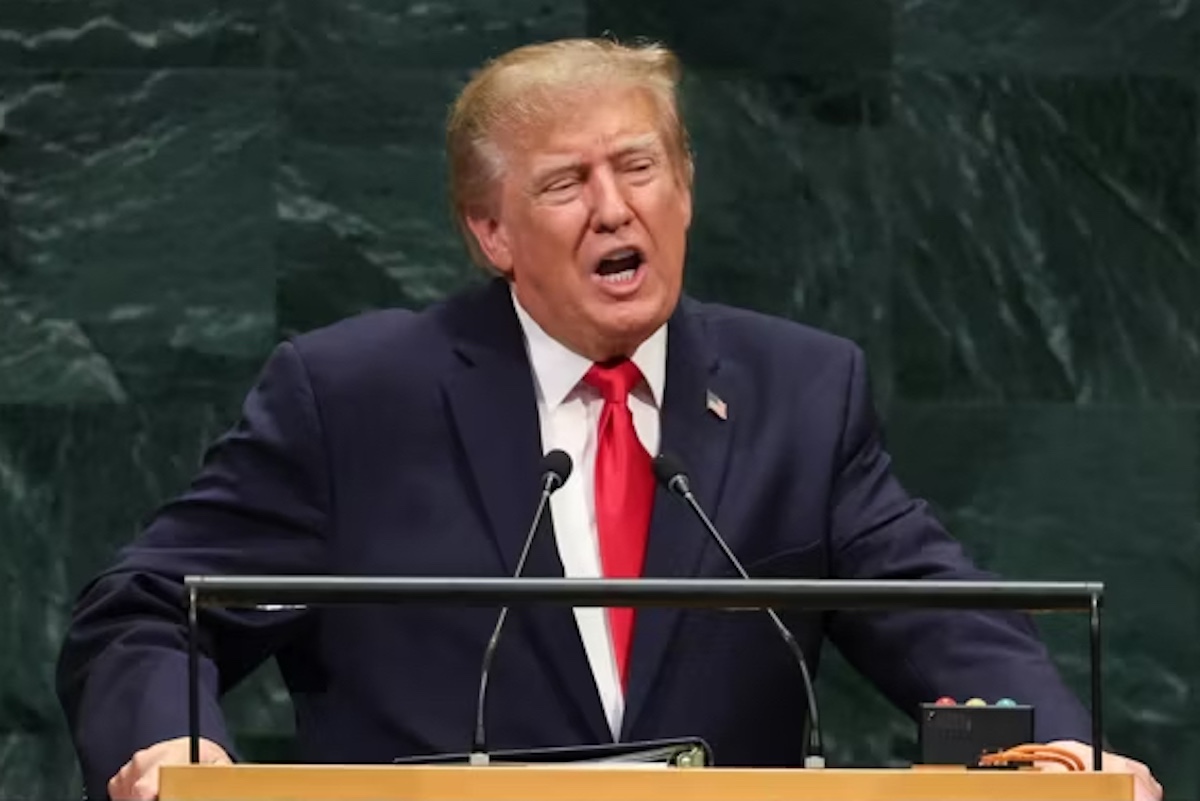
    WASHINGTON – In a Thursday post on social media, former U.S. President Donald Trump has issued a new ultimatum to the European Union, setting a July 4 deadline for the 27-nation bloc to formalize approval of a bilateral trade framework struck last year — or face steeply elevated tariff rates on goods imported into the United States.

    The new announcement marks a shift from Trump’s prior hardline position: just last Friday, he warned that a 25% punitive tariff on European automobiles would go into effect as early as this week. The revised timeline followed what Trump called a “great call” with European Commission President Ursula von der Leyen, prompting him to extend the negotiating window by roughly two months.

    Despite the extension, Trump made clear his frustration with the European Parliament’s slow progress in ratifying the agreement, which has already been upended by a U.S. Supreme Court ruling from February. In that decision, the high court found that Trump lacked legal authority to invoke a national economic emergency to put the initial pressure tariffs in place — the tariffs that launched the current round of negotiations in the first place.

    “A promise was made that the EU would deliver their side of the Deal and, as per Agreement, cut their Tariffs to ZERO!” Trump wrote in his social media post. “I agreed to give her until our Country’s 250th Birthday or, unfortunately, their Tariffs would immediately jump to much higher levels.” The U.S. will celebrate the 250th anniversary of its declaration of independence on July 4 this year.

    Trump’s post left a key detail ambiguous: it did not specify whether the tariff hike would apply to all EU exports to the U.S., or would be limited to the auto sector that has been the central focus of trade tensions in this round. Most policy analysts read the extension as a partial retreat from Trump’s earlier immediate threat, granting European legislators extra weeks to complete the ratification process.

    Under the original terms of the 2023 trade framework, the U.S. was set to impose a 15% tariff on the vast majority of imports from EU member states. But following the Supreme Court’s ruling stripping the administration of authority for the original emergency tariffs, the White House has currently levied a 10% tariff while it conducts new probes into bilateral trade imbalances and national security implications of EU imports. The administration plans to implement new, legally sound tariffs to recover the revenue lost from the lower current rate.

  • Spain’s leader Sanchez awards UN’s Francesca Albanese Order of Civil Merit

    Spain’s leader Sanchez awards UN’s Francesca Albanese Order of Civil Merit

    In a bold act of diplomatic defiance that underscores deep European divides over the Gaza conflict and international accountability, Spanish Prime Minister Pedro Sanchez bestowed one of his country’s highest civilian honors on Thursday upon Francesca Albanese, the United Nations Special Rapporteur for Occupied Palestine who has been targeted with unprecedented U.S. sanctions for her work documenting human rights abuses and potential genocide in Gaza.

    In an official statement announcing the award of the Order of Civil Merit, Sanchez emphasized that holding public office carries an inherent moral duty to confront injustice rather than ignore it. “It is an honour to award the Order of Civil Merit to a voice that upholds the conscience of the world: Francesca Albanese, United Nations Special Rapporteur in the Occupied Palestinian Territory,” he wrote.

    The ceremony and honor came just 24 hours after Sanchez took another high-profile stand against U.S. punitive measures targeting international justice bodies: he formally called on the European Commission to trigger the EU’s long-dormant Blocking Statute, a legal tool designed to protect European individuals and institutions from extraterritorial sanctions imposed by non-EU powers. Speaking a day ahead of the award, Sanchez rejected any tolerance for what he framed as a targeted campaign of intimidation. “The EU cannot stand idly by in the face of this persecution,” he said, adding that Brussels must defend the independence of both the International Criminal Court (ICC) and the United Nations, as well as their critical work “to end the genocide in Gaza.” “Sanctioning those who defend international justice puts the entire human rights system at risk,” he added.

    Albanese, the first and so far only UN special rapporteur to face U.S. sanctions over her official mandate, was targeted by the administration of former U.S. President Donald Trump last year. The restrictions, which include a visa ban that bars her from entering the United States and a freeze on any assets she holds in U.S. jurisdictions, were imposed over her documentation of human rights violations in the occupied Palestinian territories and her longstanding cooperation with the ICC’s investigations into potential atrocity crimes.

    The ICC, based in The Hague, Netherlands, is the world’s only permanent international court with a mandate to prosecute individuals for war crimes, crimes against humanity, and genocide. Relations between the U.S. and the court have collapsed entirely since ICC Prosecutor Karim Khan sought arrest warrants for Israeli Prime Minister Benjamin Netanyahu and former Israeli Defense Minister Yoav Gallant earlier this year, accusing the pair of overseeing systematic war crimes and atrocities in Gaza that began in October 2023. In addition to Albanese, the Trump administration has now imposed sanctions on 11 senior ICC officials, covering not only the court’s work on Gaza but also its long-running investigation into potential war crimes in Afghanistan connected to U.S. and Taliban forces.

    Albanese was specifically sanctioned in July 2024 for her ongoing investigation into allegations of genocide in Gaza and her work with the ICC as part of her UN-mandated role. In addition to the travel and asset restrictions, the sanctions have cut her off from core global financial infrastructure, preventing her from completing routine daily transactions, she told Middle East Eye earlier this year. In February 2025, Albanese and her family filed a legal challenge against the Trump administration over the punitive measures, arguing they violate U.S. law and fundamental due process rights.

    Since the outbreak of the current Israel-Gaza conflict in October 2023, Albanese has released four major official reports as special rapporteur, all of which have concluded that Israel’s military campaign in Gaza meets the legal definition of genocide. She has also repeatedly condemned what she frames as global economic and political powers that have enabled and supported Israel’s operation, providing diplomatic cover and military supplies despite mounting evidence of atrocity crimes. Her most recent report called on the ICC to expand its arrest warrant list to include three senior Israeli cabinet ministers, whom she accuses of overseeing systematic torture of Palestinian civilians that amounts to acts of genocide.

    Sanchez has emerged as the most outspoken critic among European Union leaders of what he frames as repeated violations of international law by Israel and the United States, not only in Gaza but across broader Middle East policy including tensions with Iran. He made history earlier this year as the first EU head of government to publicly label Israel’s military campaign in Gaza as genocide, a stance that has put him at sharp odds with Washington and several Western European allies.

  • Israeli army disables rocket-tracking system over Iran intelligence fears

    Israeli army disables rocket-tracking system over Iran intelligence fears

    Amid ongoing low-intensity hostilities along Israel’s northern border and growing national anxiety over Iranian intelligence infiltration, a controversial decision by the Israeli Home Front Command to cut access to a critical missile impact alert system has sparked fierce backlash from local leaders and security officials across northern Israeli communities, Israeli outlet Ynet reported Thursday.

    The disabled infrastructure, which once shared real-time data on potential missile strike impact zones with local first responders and municipal leadership, was taken offline by military authorities over explicit concerns that Iranian intelligence operatives could exploit the platform to harvest precise location data. Military officials argue that this information would allow Iran and its regional proxy militia Hezbollah to refine the accuracy and destructive power of future attacks against Israeli targets.

    Strict military censorship rules have governed all reporting of missile impact locations across Israel since the outbreak of open conflict between Israel and Iran in June 2025. International and domestic Israeli media outlets are already banned from disclosing the exact coordinates of strikes, particularly those targeting strategic and military infrastructure, and the military’s latest move extends this information control to frontline local response teams.

    For years, the restricted system served as a core operational tool for local authorities, enabling them to rapidly deploy emergency rescue and response teams directly to sites hit by rocket and missile fire. But today, the shutdown has left northern response teams operating without critical situational awareness, according to local leaders.

    Assaf Langleben, head of the Upper Galilee Regional Council, warned that the decision has created a state of “operational blindness” across the entire northern frontier. “It is absurd that Hezbollah knows where it is firing, so at least we should also know and be able to deal with the incidents and the responses we are required to provide,” Langleben said in an interview with Ynet.

    Avichai Stern, mayor of the key northern border city Kiryat Shmona, echoed this criticism, emphasizing that the alert system had a proven track record of saving lives amid repeated cross-border fire. “Leaving us without [the system] means abandoning even more lives in an area where most residents already lack protection,” Stern said, adding that “now we are also not being given the ability to go out, rescue and save them during fire.”

    Frontline civil security personnel in the region have described chaotic, dangerous working conditions in the wake of the shutdown. A civil security officer based in Kiryat Shmona told Ynet that in recent alarm events, response teams have “operated like blind mice.” The official added, “When I don’t have this tool, I don’t know where to run. We are ahead of another round, Hezbollah will again target our homes, and our residents will pay the price.”

    Another civil security officer from a local northern council criticized military leadership for choosing a blanket shutdown over targeted security reforms, saying “No one talks to us, explains, or thinks they owe us answers. They simply cut us off. In the army, instead of dealing with how to handle and prevent leaks, they chose the easiest solution and shut everyone out. They irresponsibly chose to punish us.”

    In an official statement to Ynet, an Israel Defense Forces spokesperson defended the order, noting that the platform “contains sensitive information, and during the war cases were identified that required adjustments to procedures and a reduction of access permissions in order to prevent harm to information security.”

    Military concerns over Iranian infiltration come against a backdrop of a sharp rise in domestic espionage cases linked to Tehran. Israeli outlet Ma’ariv has reported that more than 40 indictments have been filed against roughly 60 Israeli civilians on espionage charges since October 2023. Iranian intelligence is known to recruit Israeli operatives through large financial incentives, in exchange for documenting strategic locations and facilitating attacks inside Israeli territory.

    Just this week, Israeli leading outlet Haaretz exposed a major intelligence breach revealing that Iranian operatives have obtained secret sensitive data on researchers at the Institute for National Security Studies (INSS), Israel’s premier independent security think tank with formal ties to the Israeli military and Tel Aviv University. Over a six-year period, Iran collected personal identifiable information on dozens of INSS researchers — many of whom are retired senior Israeli security and military officials — alongside detailed records of closed-door meetings between INSS personnel and Israeli military leadership.