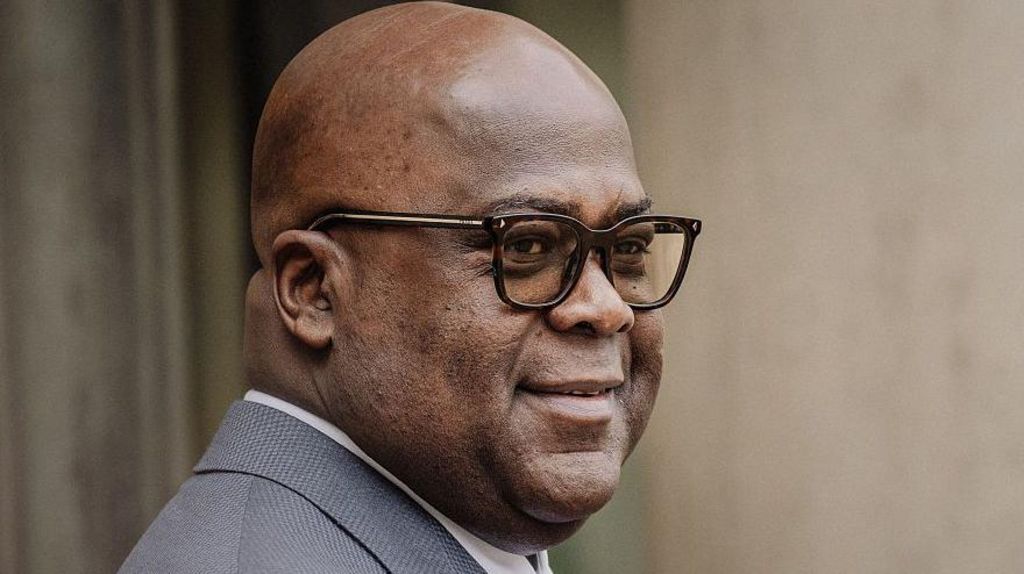
In a rare, wide-ranging press conference in Kinshasa this week, Democratic Republic of Congo President Félix Tshisekedi has broken his public silence on two of the most contentious issues facing the Central African nation: his political future beyond 2028 and the years-long conflict destabilizing its eastern territories.
Held at State House overlooking the Congo River and drawing more than 200 journalists and supporters, the three-hour briefing marked only Tshisekedi’s second press conference in the capital since he won re-election to a second five-year term in 2023. Addressing long-swirling opposition accusations that he has been plotting to extend his hold on power beyond the country’s constitutionally mandated two-term limit, the president confirmed he would be open to serving a third term – but only if the Congolese people express their support for the change through a national referendum.
“I have not asked for a third term, but I’m telling you – if the people want me to have a third term, I will accept,” Tshisekedi told attendees on Wednesday.
Current Congolese law caps presidential service at two consecutive terms, but a bill outlining procedures for a national referendum was tabled in parliament back in March. While supporters of the legislation frame it as a measure to strengthen democratic processes, critics argue it is a calculated step toward revising the constitutional term limit that would clear the way for Tshisekedi to run again. Opposition groups have already warned that any effort to amend the term limit provision would constitute a “constitutional coup.”
Beyond his political future, Tshisekedi tied the timing of the 2028 presidential election directly to progress ending the ongoing M23 rebel conflict that has displaced millions and seized large swathes of the resource-rich North and South Kivu provinces in eastern DR Congo, including the major regional hubs of Goma and Bukavu. He stressed that free and fair voting cannot be conducted without full state control over the two Kivu regions, meaning the entire election schedule hinges on how quickly the conflict can be resolved.
“If we cannot end this war, unfortunately, we will not be able to hold the elections in 2028,” he said.
For nearly a decade, Congolese government forces have battled M23 and dozens of other armed factions in the eastern part of the country. Multiple independent investigations and international assessments have found overwhelming evidence that neighboring Rwanda provides military and logistical support to the M23 rebel group – a claim Rwanda has repeatedly denied, framing its cross-border military presence as a defensive measure to counter anti-Rwandan armed groups operating from Congolese territory.
Tshisekedi used Wednesday’s briefing to double down on his accusations against Kigali, arguing that Rwanda has dragged its feet on implementing a U.S.-brokered peace deal signed in Washington last December because it profits from the illegal extraction of DR Congo’s rich mineral reserves. “It’s going to take time, because Rwanda has long profited by looting resources, and that’s why the negotiations are dragging on,” he said. Fighting has continued through 2025 despite the ceasefire agreement, and the U.S. imposed sanctions on multiple senior Rwandan military commanders in March this year for their role in fueling the ongoing conflict.
The president also addressed a separate recent development: the U.S. decision to impose sanctions on his predecessor Joseph Kabila, over allegations that Kabila has backed anti-government rebel groups. Describing the situation as “a real mess,” Tshisekedi lamented that figures once celebrated as architects of democratic transition in DR Congo have now become “gravediggers” of that progress.
Tshisekedi’s comments mark the first time he has publicly confirmed his willingness to pursue a third term, ending months of speculation and heightening political tensions across the country as the government continues its struggle to stabilize the volatile east.