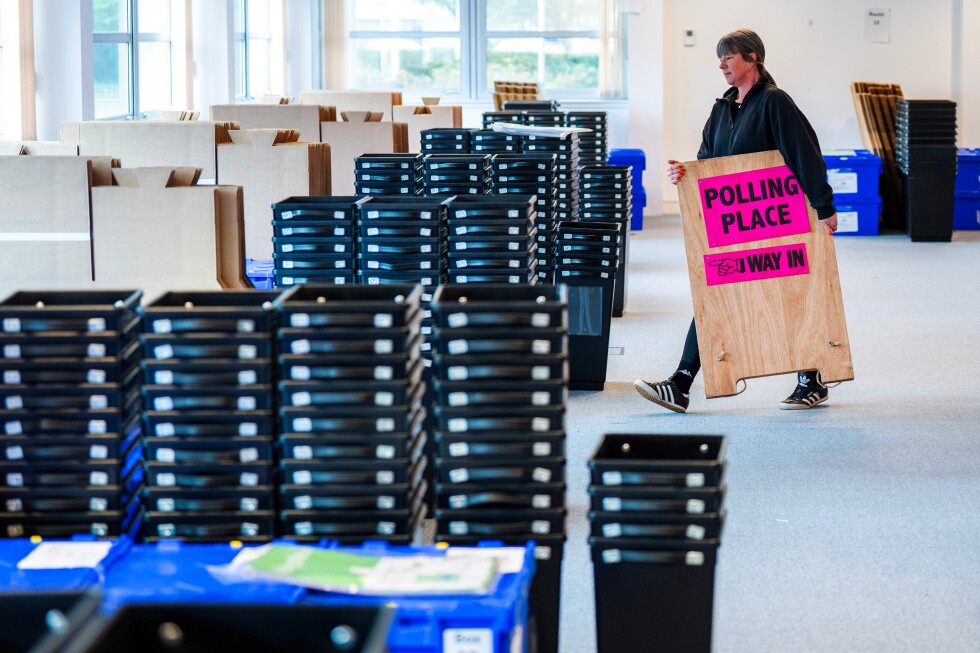
Polling stations have opened across England, Scotland and Wales on Thursday for critical midterm local and regional elections, a vote that is widely seen as a potential knockout blow for British Prime Minister Keir Starmer and his embattled Labour government.
Voters are casting ballots to fill roughly 5,000 local council seats, multiple mayoral positions, and all seats in the devolved legislatures of Scotland and Wales. Polls began welcoming voters at 7 a.m. UK time and will close at 10 p.m. While a small number of local authorities will complete vote counting overnight, the vast majority of full results are not expected to be made public until Friday afternoon.
Though local elections in the UK traditionally center on hyper-local issues such as waste collection, neighborhood graffiti, and road maintenance, Starmer’s political opponents have successfully framed Thursday’s contest as a public referendum on his premiership less than two years after he led Labour to victory in national elections.
A severe defeat for Labour in this vote is widely expected to spark immediate moves from discontented backbench Labour lawmakers to remove Starmer from office. Even if the prime minister manages to weather the immediate political storm, most independent political analysts question whether he will still lead the party into the next mandatory general election, scheduled to take place no later than 2029.
Starmer’s public approval ratings have plummeted sharply since he took office as prime minister in July 2024, dragged down by a string of high-profile policy and political missteps. His government has failed to deliver on key campaign promises, including boosting sustained economic growth, repairing chronically underfunded and strained public services, and easing the ongoing cost-of-living crisis that has hit working- and middle-class households across the UK. These domestic challenges have been compounded by escalating geopolitical tensions in the Middle East, as the conflict between the U.S.-Israeli bloc and Iran has disrupted global oil supplies via the Strait of Hormuz, driving up energy prices for UK consumers.
Starmer’s political standing has suffered further damage from his widely criticized decision to appoint Peter Mandelson, a veteran party figure with longstanding ties to disgraced financier Jeffrey Epstein, as the UK’s ambassador to the United States. The appointment already triggered a major party crisis in February, when multiple Labour lawmakers — including the party’s leader in Scotland — publicly called on Starmer to resign over the controversy. He survived that challenge, but internal party discontent has not abated.
Currently, Labour holds roughly 2,500 seats on English local councils that are up for re-election this cycle, and rank-and-file party members have openly expressed anxiety that the party could lose a large share of these seats. Political analysts warn a landslide loss could force an immediate leadership contest or intensify behind-the-scenes pressure on Starmer to step down voluntarily.
Luke Tryl, a senior analyst at leading UK pollster More in Common, argues that this election cycle could mark a historic turning point for British politics, saying the contest is on track to trigger the “total collapse of the traditional two-party system” that dominated UK politics for generations, which previously centered on Labour and the Conservative Party.
The biggest beneficiary of this political shift is projected to be Reform UK, the hard-right populist party led by veteran nationalist campaigner Nigel Farage. Reform UK has targeted working-class communities that were once traditional Labour strongholds in northern England and outer London, running on an anti-establishment, anti-immigration platform that has resonated with disaffected voters. The left-leaning Green Party is also expected to make major gains, picking up hundreds of council seats across urban centers and university towns.
The main opposition Conservative Party, which lost national power to Starmer in 2024, is also projected to lose seats in this election, while the centrist Liberal Democrats are expected to pick up a smaller number of seats in suburban and southern English constituencies.
In his final pre-election message to voters, Starmer notably did not even mention the Conservatives, framing the election instead as a clear choice between “progress and a better future” under a Labour government, and what he described as “the anger and division offered up by Reform or empty promises from the Greens.”
On the eve of the vote, Farage struck a confident tone, saying that a strong showing for Reform would mean Starmer is “gone by the middle of summer.”
Reform UK is also targeting potential breakthroughs in Scotland and Wales, though polling still indicates that pro-independence nationalist parties the Scottish National Party (SNP) and Plaid Cymru are on track to retain enough support to form the next devolved governments in Edinburgh and Cardiff respectively.
Tony Travers, a professor of government at the London School of Economics and one of the UK’s leading experts on local elections, summed up Labour’s difficult position: “Labour’s going to lose to Reform in some places, Greens in others, and here and there they’ll lose one or two seats to the Liberal Democrats and the Conservatives as well. They’re fighting on four fronts in England — five in Wales and Scotland.”