分类: politics

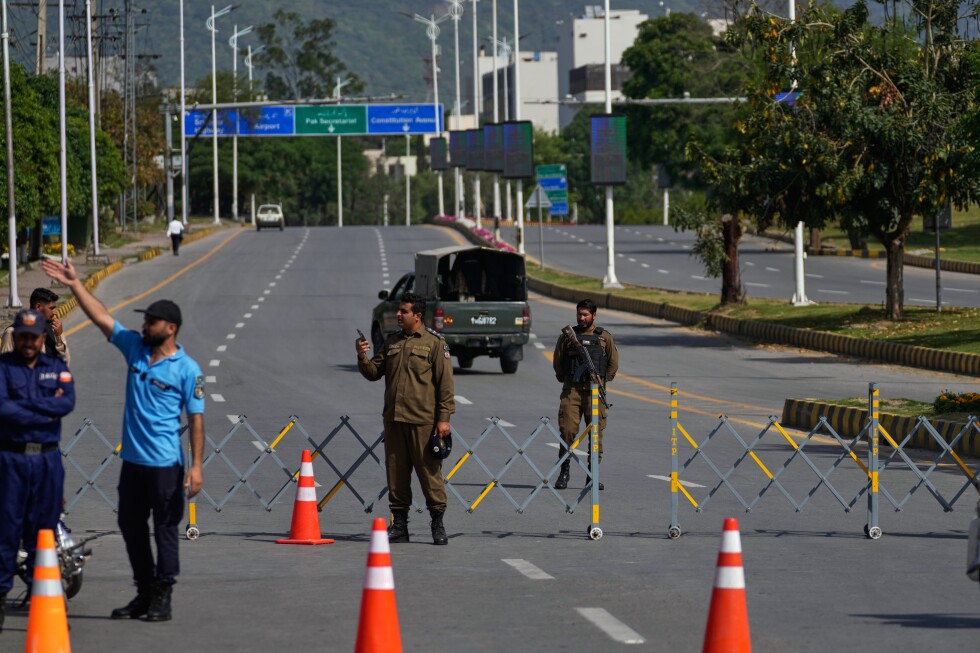
  • Up to 5,000 US marines and sailors dispatched to Middle East: Report

    Up to 5,000 US marines and sailors dispatched to Middle East: Report

    The United States is significantly escalating its military footprint in the Middle East with the deployment of an additional 5,000 marines and sailors, according to a Wall Street Journal report citing unnamed officials. This strategic reinforcement follows a formal request approved by US Secretary of War Pete Hegseth from US Central Command (Centcom).

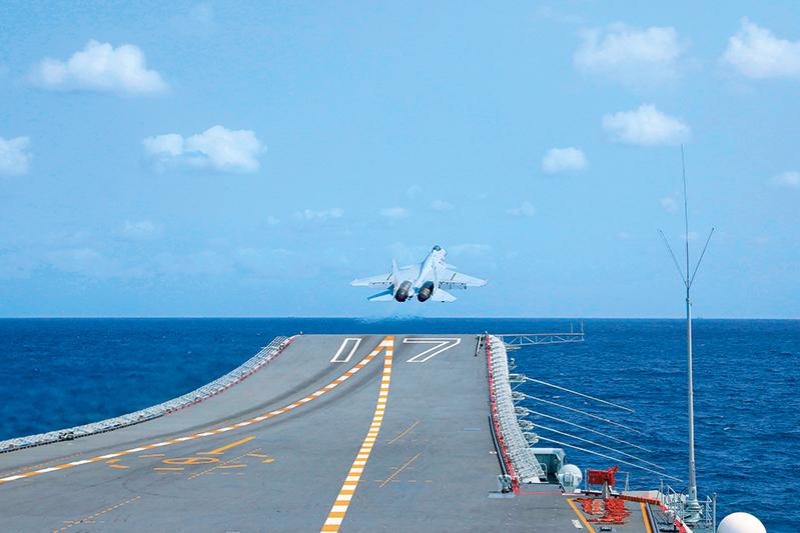
    The deployment includes a complete amphibious ready group and an attached Marine expeditionary unit, comprising three warships and approximately 2,500 US Marines. The unit is equipped with advanced F-35B Lightning II stealth jets and MV-22B Osprey tiltrotor aircraft. The USS Tripoli, previously stationed in Japan, is now en route to the region—a journey typically requiring two weeks.

    This military expansion signals Washington’s commitment to prolonging its offensive against Iran, despite previous claims of operational successes including the elimination of Supreme Leader Ayatollah Ali Khamenei and the destruction of 60 Iranian naval vessels. The conflict has resulted in substantial casualties, with over 1,400 Iranian fatalities reported since February 28.

    President Donald Trump reaffirmed the administration’s hardline stance on social media, declaring, “We are totally destroying the terrorist regime of Iran, militarily, economically, and otherwise.”

    The war has grown increasingly unpopular domestically, with public disapproval mounting well before US casualties reached double digits. Current reports indicate at least 150 American personnel wounded and 13 confirmed killed in action, including six service members who died in a KC-135 refueling aircraft crash in western Iraq on March 12. Centcom confirmed the incident occurred during Operation Epic Fury over friendly airspace, stating the crash was not caused by hostile or friendly fire while the investigation remains ongoing.

    At a Pentagon press briefing, Secretary Hegseth acknowledged the grim reality of combat, stating “War is hell, war is chaos.” When pressed for specific casualty figures and locations, officials provided conflicting information, with Chairman of the Joint Chiefs of Staff Dan Caine vaguely referencing casualties “in Kuwait, Jordan, down across the southern flank” without providing concrete numbers. The administration’s unclear messaging on casualties has further complicated public understanding of the conflict’s human cost.

  • Map reveals Australia defence presence in Middle East as Iran war rages

    Map reveals Australia defence presence in Middle East as Iran war rages

    The Australian government has authorized the deployment of advanced military assets to the Middle East following a formal request from the United Arab Emirates. Prime Minister Anthony Albanese confirmed on Tuesday that the Australian Defence Force will dispatch an E7A Wedgetail surveillance aircraft, defense personnel, and Medium Range Air-to-Air Missiles (AMRAAMs) to the Gulf region.

    This decision comes amid escalating regional tensions and represents a significant enhancement of Australia’s defensive military presence in the area. Foreign Affairs Minister Penny Wong emphasized that the deployment serves strictly defensive purposes, aimed at intercepting rockets and drones that have threatened civilian infrastructure, including Dubai International Airport.

    The deployment follows earlier aerial support operations where Australian aircraft assisted in repatriating approximately 115,000 Australians stranded in the conflict zone. Minister Wong revealed that initially, around 24,000 Australians were present in the UAE when hostilities intensified, with approximately 1,500 rockets and drones neutralized in the region’s airspace.

    Government officials have consistently maintained that Australian forces will not engage in offensive operations. “Australian Defence Force assets operate in accordance with Australian law, Australian policy, and Australian directives,” Minister Wong stated during an ABC Radio Sydney interview, explicitly ruling out any combat role for deployed personnel.

    Australia’s military involvement in the Middle East predates the current crisis, with ADF personnel previously engaged in seven distinct missions across the region. These include peacekeeping operations in Syria, maritime security missions against Houthi militia attacks, and deployments in Bahrain and Egypt’s Sinai Peninsula.

    The revelation that three ADF personnel were aboard a US submarine during recent naval engagements has raised questions about Australia’s evolving role. However, government officials have denied any participation in offensive actions against Iranian forces.

    International allies have similarly increased their military presence, with European nations expected to deploy warships to Cyprus following attacks on British installations. New Zealand has also prepared two C-130J Hercules aircraft for potential evacuation operations, indicating broader regional concern about the escalating situation.

  • Few easy ways out for US as war with Iran drags on

    Few easy ways out for US as war with Iran drags on

    The United States finds itself navigating an increasingly complex military stalemate as its conflict with Iran extends beyond initial expectations. Despite achieving a decapitation strike that eliminated Supreme Leader Ali Khamenei and numerous high-ranking officials in late April, Washington discovers that regime change remains elusive against Tehran’s strategically prepared defenses.

    Iran has demonstrated remarkable resilience through its implemented ‘mosaic defense’ doctrine—a decentralized military command structure developed precisely to withstand leadership decapitation. This strategic framework, formulated in 2005 following American interventions in Iraq and Afghanistan, has enabled continuous retaliatory capabilities despite significant leadership losses. The regime promptly installed a new supreme leader while maintaining operational coherence.

    The conflict has escalated into global economic warfare, with Iran leveraging its strategic position along the Strait of Hormuz—a vital maritime corridor handling approximately 20% of global crude oil traffic. Tehran’s campaign has effectively weaponized energy markets through targeted strikes on oil tankers, Dubai’s marina infrastructure, and near-complete closure of the critical waterway. Consequently, oil prices have skyrocketed worldwide, triggering fuel rationing from Bangladesh to Nigeria and prompting the release of 400 million barrels from strategic petroleum reserves.

    Regional stability has unraveled as Iran-activated proxies exchange missile fire with Israel through Hezbollah forces in Lebanon, while Huthi rebels disrupt Red Sea shipping lanes. The Gulf region witnesses fleeing expatriates and diminished air traffic as its business-friendly reputation deteriorates rapidly.

    Analysts question Washington’s strategic assumptions, noting the disparity between operational superiority and strategic understanding of Iranian resilience. The administration faces mounting domestic pressure as rising fuel prices influence upcoming congressional elections, with lawmakers expressing concerns about voter backlash.

    Iran executes a calculated three-phase strategy: ensuring regime survival, maintaining retaliatory capacity, and prolonging conflict to secure favorable terms. Though facing internal challenges including public salary payments and potential security force loyalty issues, Tehran continues leveraging economic warfare to pressure American leadership.

    With no clear exit strategy, the conflict potentially evolves toward ground operations, extended hostilities, or proxy ethnic conflicts—all representing increasingly perilous escalation pathways as missiles continue impacting targets within Iran and across the broader region.

  • US judge pauses termination of deportation protections for some Somali immigrants

    US judge pauses termination of deportation protections for some Somali immigrants

    A Massachusetts federal court has issued an administrative stay preventing the imminent termination of Temporary Protected Status (TPS) for Somali nationals residing in the United States. The ruling from U.S. District Judge Allison D. Burroughs temporarily blocks the Trump administration’s planned termination that was scheduled to take effect Tuesday.

    The court determined that allowing Somalia’s TPS designation to expire would produce “weighty” consequences, noting that over one thousand individuals would face “a myriad of grave risks” including potential detention, deportation, physical violence if returned to Somalia, and forced separation from family members. The emergency motion was filed by advocates following the administration’s announcement last month during an immigration enforcement operation in Minneapolis, which hosts a significant Somali community.

    Judge Burroughs’ order specifies that while the stay remains in effect, the termination is “null, void, and of no legal effect.” Somali nationals with TPS status or pending applications will retain their rights, including eligibility for work authorization and protection against deportation and detention.

    The U.S. Department of Homeland Security criticized the ruling, describing it as another example of judicial obstruction preventing President Trump from “restoring integrity” to the immigration system. In an official statement, DHS asserted that “Temporary means temporary,” arguing that improved conditions in Somalia no longer justify protected status and that allowing Somali nationals to remain contradicts national interests.

    Despite the temporary nature of the relief, representatives for the plaintiffs expressed encouragement, stating they are “heartened by the interim protection today’s order affords” while acknowledging that “many battles lie ahead” in the ongoing legal challenge.

  • Hegseth says Gulf states ‘going on offensive’ against Iran

    Hegseth says Gulf states ‘going on offensive’ against Iran

    Amid escalating tensions in the Persian Gulf, U.S. Secretary of War Pete Hegseth’s declaration that Washington’s campaign against Iran is progressing favorably has sparked diplomatic concerns. Speaking at a Friday press briefing, Hegseth asserted that Gulf Cooperation Council (GCC) nations were ‘going on the offensive’ while emphasizing America’s widening strategic advantage.

    These remarks have generated unease among Middle Eastern allies, particularly as GCC members have not formally announced participation in U.S. military operations against Iran. The situation intensified with Hegseth’s controversial statement regarding the Strait of Hormuz, claiming the vital waterway remained open despite Iranian attacks on commercial vessels.

    Regional dynamics reveal a complex landscape: Gulf states previously lobbied the Trump administration against military confrontation with Tehran, fearing retaliatory strikes. Such concerns have materialized with Iranian attacks already affecting Doha, Dubai, and Manama. The United Nations Security Council recently passed a GCC-sponsored resolution condemning Iran’s regional aggression, with UAE diplomatic adviser Anwar Gargash noting Tehran’s growing international isolation.

    According to Middle East Eye reports, Gulf nations express frustration toward both Iran for its attacks and the United States for disregarding their security considerations. Compounding these tensions, the U.S. has struggled to fulfill requests for replenishing air defense systems while its military bases—established primarily after the 1991 Gulf War—reportedly make host countries vulnerable to Iranian targeting.

    Iran’s unprecedented closure of the Strait of Hormuz has severely disrupted global energy markets, affecting approximately 20% of worldwide crude oil and natural gas shipments. Regional producers including Kuwait, Iraq, Bahrain, Qatar, the UAE, and Saudi Arabia have consequently slashed production and declared force majeure. Financial Times data from commodities analytics firm Kpler indicates approximately $15.1 billion in collective energy revenue losses for Gulf states since the conflict’s inception, with Qatar, Bahrain, the UAE, and Kuwait suffering particularly severe impacts.

    Analysts warn that Hegseth’s assertions could further endanger Gulf nations, as Iran has pledged forceful responses against any regional allies joining U.S.-Israeli operations. While Iranian strikes have predominantly targeted commercial infrastructure, Tehran has demonstrated sophisticated capabilities in attacking both military installations and energy facilities across the region.

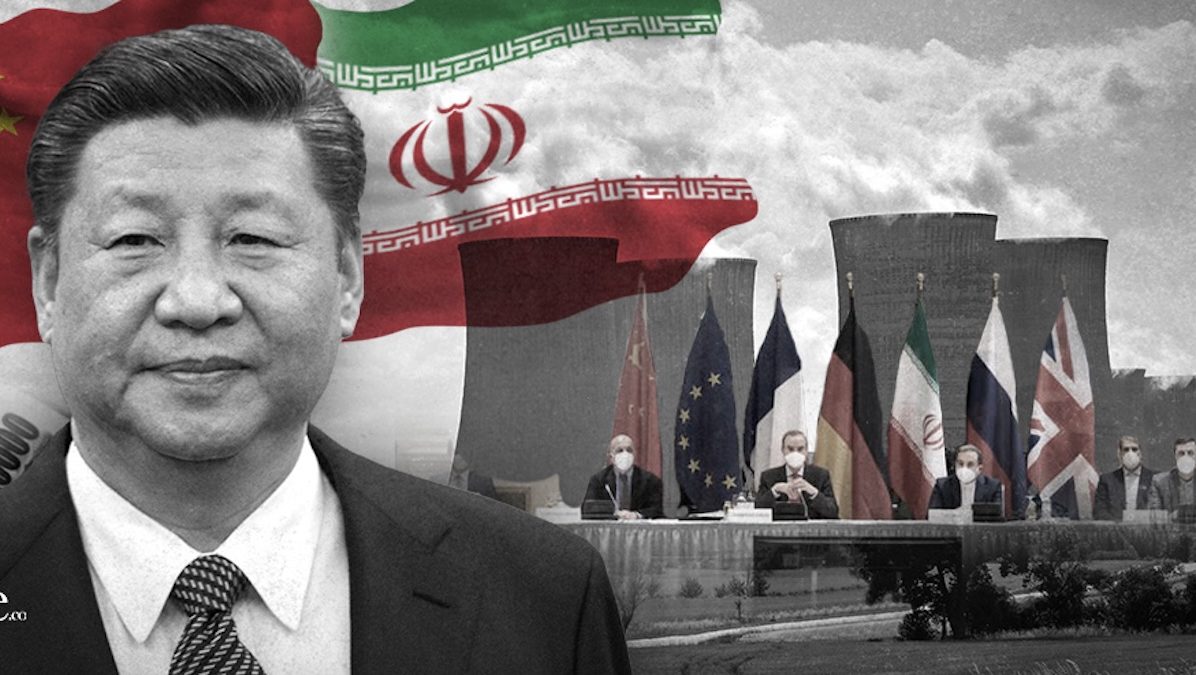
  • ‘Tigers and flies’: Millions of officials later, why is Xi’s corruption purge still going?

    ‘Tigers and flies’: Millions of officials later, why is Xi’s corruption purge still going?

    The recent National People’s Congress in Beijing revealed more through its absences than its attendances, with approximately 100 delegates missing from the meticulously orchestrated proceedings. These vacant seats represent the latest casualties in President Xi Jinping’s relentless anti-corruption campaign that has defined his leadership since 2012.

    This sweeping initiative emerged in response to what experts describe as endemic corruption within the Communist Party’s massive bureaucracy. Professor Kerry Brown of King’s College London notes that with over 100 million members and millions of officials, systemic corruption became inevitable in a system where underpaid officials wielded enormous power with minimal accountability.

    The campaign has produced staggering numbers: nearly one million individuals disciplined in 2025 alone, with ten high-ranking ‘tigers’ removed in January 2024. The purge has spanned all levels of governance, from village administrators to government ministers, demonstrating Xi’s commitment to his ‘tigers and flies’ approach targeting both elite and grassroots corruption.

    However, analysts suggest the campaign serves dual purposes. Neil Thomas of the Asia Society Policy Institute observes that while addressing genuine corruption, the initiative also functions as “a cudgel to remove political enemies” and consolidate control. This political dimension has become increasingly apparent in recent purges, particularly within military leadership where 52% of PLA leadership positions have been affected according to the Center for Strategic and International Studies.

    The recent dismissal of Generals Liu Zhenli and Zhang Youxia—despite Zhang being one of Xi’s closest military allies—signals that perceived disloyalty has become as punishable as financial corruption. Researchers at the Mercator Institute for China Studies note that these purges represent Xi’s effort to prevent the party fragmentation that contributed to the Soviet Union’s collapse, a historical lesson Xi frequently references.

    As China faces economic challenges and intensified competition with the United States, Xi’s anti-corruption drive has become existential rhetoric for national rejuvenation. With his historic third term concluding next year, the campaign continues to narrow Xi’s circle of trusted allies while reinforcing his control over the party and military apparatus that ensures his political longevity.

  • India’s Punjab state and farmers unions express solidarity with Iran amid government silence

    India’s Punjab state and farmers unions express solidarity with Iran amid government silence

    In an unprecedented move that diverges sharply from India’s federal stance, the Punjab state legislature observed a formal moment of silence last week honoring Iranian casualties of recent military strikes. This gesture establishes Punjab as the sole Indian state to officially denounce the US-Israeli offensive against Iran.

    The tribute occurred during Punjab’s budgetary session when MLA Sukhwinder Kumar Sukhi condemned the February 28th attacks that reportedly killed approximately 165 children in a school assault attributed to US forces. Sukhi characterized the incident as ‘inhuman’ and specifically referenced the deaths of medical personnel, patients, and Iran’s Supreme Leader Ayatollah Ali Khamenei according to translations by The Wire.

    Speaker Kultar Singh Sandhwan presided over the solemn observance, prompting the entire assembly to rise in silent tribute. Sukhi later clarified his intention was to ‘wake up other governments’ through this subnational demonstration of solidarity.

    This provincial action contrasts with Prime Minister Narendra Modi’s administration, which has maintained official silence regarding the Iran conflict despite the Indian foreign secretary’s meeting with Iran’s ambassador. The US-Israeli offensive commenced merely 48 hours after Modi’s high-profile state visit to Israel, where he embraced Prime Minister Benjamin Netanyahu and pledged enhanced bilateral cooperation.

    Modi’s Israel alignment has drawn criticism from opposition parties and international observers, particularly following his address to Israel’s parliament expressing support during ongoing operations in Gaza. The Indian government has significantly deepened military and economic ties with Israel under Modi, including participation in the I2U2 quadrilateral partnership with the UAE and US.

    Concurrently, thousands of Punjab farmers demonstrated against a recent US-India trade agreement while expressing solidarity with Iran. Bharatiya Kisan Union leader Jagmohan Singh denounced both the trade deal and military offensive as ‘anti-farmer’ initiatives. These protests follow earlier coordinated actions by the Samyukt Kisan Morcha farmers’ coalition against what they termed US-Israeli aggression against Iran.

    Parallel demonstrations have emerged in Indian-administered Kashmir, where security forces have reportedly suppressed protests against US-Israeli actions. Last Friday witnessed the closure of Srinagar’s Jamia Masjid and restrictions in Shia neighborhoods during Al-Quds Day observances, drawing comparisons from Kashmiri leadership to Israeli restrictions at Al-Aqsa Mosque.

  • Kenyan expert shares views on China’s two sessions

    Kenyan expert shares views on China’s two sessions

    NAIROBI – Gordon K’achola, founder of the Africa Center for Diplomatic Affairs, has publicly commended China’s distinctive governance approach following his observations of the recent Two Sessions in Beijing. The prominent Kenyan analyst characterized the annual political gatherings as exemplars of exceptional organizational efficiency, procedural precision, and structured orderliness.

    In his detailed assessment, K’achola emphasized how China’s methodical policymaking process presents valuable insights for African nations striving to enhance their developmental governance frameworks. The diplomatic affairs specialist suggested that African policymakers could benefit from examining specific aspects of China’s implementation mechanisms and strategic planning methodologies.

    The Two Sessions, comprising the National People’s Congress (NPC) and the Chinese People’s Political Consultative Conference (CPPCC), serve as China’s primary annual political conventions where critical national policies are formulated and developmental agendas are established. K’achola’s commentary emerges amid growing international attention on comparative governance models and their potential applications across different cultural and political contexts.

    His analysis contributes to an expanding discourse among African intellectuals and policy experts regarding sustainable development strategies and effective governance practices. The endorsement from a respected African diplomatic voice underscores the increasing global interest in understanding China’s political processes and their outcomes.

  • War on Iran: How Algeria and Morocco manoeuvre the fallout

    War on Iran: How Algeria and Morocco manoeuvre the fallout

    The escalating US-Israeli military campaign against Iran is sending strategic shockwaves across the Maghreb region, where North African powers Algeria and Morocco are pursuing fundamentally divergent approaches that reflect their deep-rooted regional rivalry and competing geopolitical ambitions.

    This geopolitical divergence manifests most clearly in their contrasting responses to the Middle Eastern conflict. Morocco has decisively aligned itself with Washington and Tel Aviv, swiftly condemning Iranian retaliatory actions while remaining conspicuously silent on the initial US-Israeli strikes. This posture reinforces Rabat’s strategic partnership with Israel formalized through the 2020 Abraham Accords, through which Morocco gained crucial US recognition of its claim to Western Sahara in exchange for normalization with Israel.

    Conversely, Algeria maintains a more nuanced diplomatic position, attempting to balance principle with pragmatism. While traditionally allied with Iran, Algiers has carefully avoided direct condemnation of the US-Israeli campaign while expressing solidarity with Arab nations targeted by Iranian strikes. This delicate balancing act reflects Algeria’s attempt to preserve relationships without compromising its traditional non-alignment principles.

    The Western Sahara dispute remains the central prism through which both nations view the regional crisis. Morocco perceives the conflict as an opportunity to strengthen its international position regarding the disputed territory, potentially seeking to have the Polisario Front designated as a terrorist organization. Algeria, which supports Sahrawi self-determination, views the situation with heightened caution, concerned that Rabat might exploit the crisis to advance its territorial claims, particularly during the remaining tenure of the Trump administration.

    Economic dimensions further highlight their divergent situations. Morocco faces immediate economic pressure from rising fuel prices and potential disruption to maritime trade, threatening its socio-economic stability. Algeria, as a major energy exporter, stands to benefit substantially from increased hydrocarbon prices, potentially strengthening its financial position and leverage in ongoing trade negotiations with the European Union.

    The crisis has also exposed the tension between official policies and public sentiment across the region. While both governments maintain firm control over their political landscapes, widespread public opposition to the US-Israeli campaign exists throughout North Africa, creating potential domestic challenges for regimes that have strongly aligned with Western powers.

    As the conflict continues with no clear resolution, the Maghreb finds itself not merely as a spectator but as an active arena where regional balances are being recalibrated. The outcome may accelerate existing geopolitical trends, potentially reshaping alliances, economic relationships, and the decades-old struggle over Western Sahara in ways that will long outlast the current Middle Eastern crisis.

  • Judge says ‘no evidence’ to justify Federal Reserve probe

    Judge says ‘no evidence’ to justify Federal Reserve probe

    A federal judge has delivered a significant judicial setback to the Department of Justice, blocking its investigation into the Federal Reserve in a ruling that intensifies tensions between judicial authority and executive branch prosecutors. The decision from Judge James Boasberg on Friday concluded that federal prosecutor Jeanine Pirro provided “no evidence” to substantiate her demands for confidential information from the central bank.

    The case has emerged as a focal point in ongoing debates about political influence over monetary policy institutions. Prosecutors sought documents related to cost overruns during renovations of Federal Reserve facilities, issuing subpoenas that the court has now invalidated. The ruling represents a substantial victory for Fed officials who had resisted the investigation.

    In response to the decision, Pirro announced her intention to appeal, characterizing the ruling as having “neutered” her office’s capacity to investigate potential misconduct. During a contentious press conference, she accused Judge Boasberg of “arbitrarily undermining” the investigative process through judicial activism.

    The legal confrontation has created complications for White House efforts to appoint a new Federal Reserve chair. Key Republican senators have declared they will block the nomination of Kevin Warsh to replace current chairman Jerome Powell until the investigation reaches resolution. Pirro dismissed concerns about her probe interfering with presidential appointments, labeling such considerations “white noise” compared to her pursuit of accountability.

    The case continues to develop as both sides prepare for appellate proceedings, with implications for the balance of power between federal law enforcement and independent government institutions.