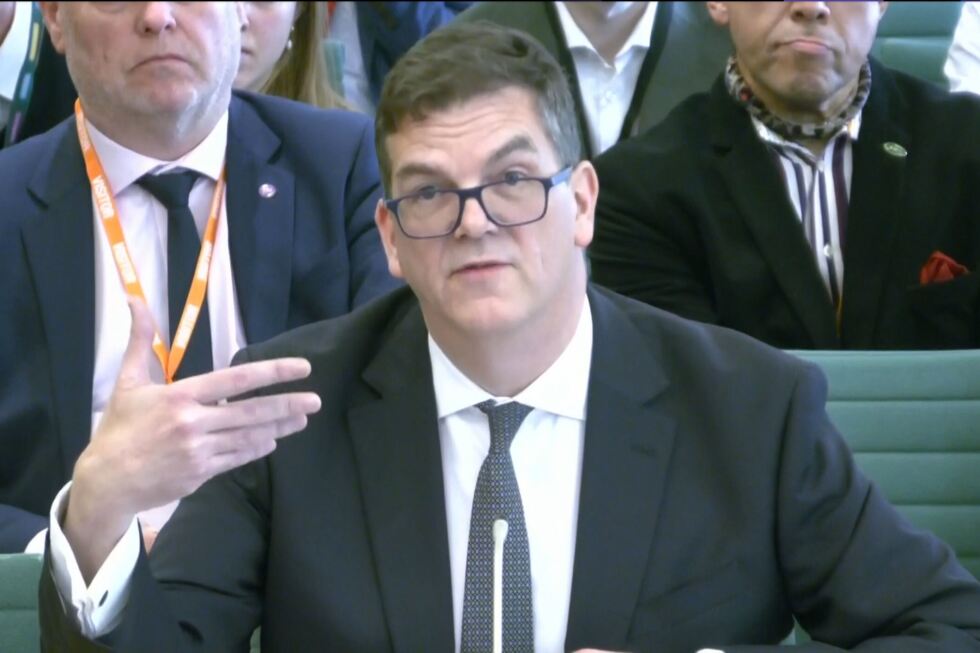
The escalating political scandal over former UK prime minister Keir Starmer’s appointment of Peter Mandelson as ambassador to the United States has entered a new phase, with the top former civil servant who oversaw the approval process telling lawmakers that his team was pushed to rush the selection despite formal security red flags.
In testimony delivered Tuesday to the House of Commons Foreign Affairs Committee, Olly Robbins, the former head of the UK Foreign Office who was fired by Starmer last week over the affair, clarified critical details: the initial security concerns that triggered vetting warnings were not connected to Mandelson’s long-documented friendship with convicted sex offender Jeffrey Epstein, who died in prison in 2019. When pressed by parliamentarians, Robbins declined to specify what issue led the government’s official vetting body to flag Mandelson as a risk.
Robbins told the committee that the UK’s vetting agency had classified Mandelson as a “borderline case” that leaned toward a recommendation against granting him high-level security clearance. Despite this formal assessment, the Foreign Office ultimately approved the clearance, a decision that has now cost Robbins his position.
Widening his account of the internal pressure that preceded the approval, Robbins said an “atmosphere of pressure” originated directly from Starmer’s Downing Street office, with a “very, very strong expectation” that Mandelson needed to be installed in the Washington post as quickly as possible. He added that there was a “generally dismissive attitude” toward the security vetting process among political officials back in January 2025, just before Mandelson traveled to the U.S. to take up the role.
Starmer has already publicly acknowledged he made a misjudgment in appointing Mandelson, but has pushed back against growing opposition calls to step down from the premiership. He claims that he was never informed by Foreign Office officials of the failed security vetting assessment, saying he only learned of the red flags last week. He has called the failure to disclose this information “frankly staggering”, placing full blame for the affair on career civil servants rather than his own political leadership.
Mandelson’s appointment was terminated by Starmer back in September 2025, nine months after he took up the ambassador post, when new details about his long-running ties to Epstein came to light. In response to the unfolding crisis, Starmer has ordered an official review to assess what security risks may have emerged from Mandelson’s nine months of access to top-secret UK government information while serving in Washington.
Critics argue the entire affair is just the latest example of poor decision-making from Starmer, who led the centre-left Labour Party to a landslide general election victory in July 2024, but has been plagued by repeated missteps in office. Records show Starmer went ahead with the appointment even after his own internal staff warned him that Mandelson’s friendship with Epstein created major “reputational risk” for the government. Additional concerns were also raised about Mandelson’s past business ties to both Russia and China, but political leaders ultimately pushed forward with the selection, citing his experience as a former European Union trade chief and his deep network of connections among global political and business elites as valuable assets for working with U.S. President Donald Trump’s administration.
The scandal has deepened unease within the parliamentary Labour Party, where lawmakers already faced anxiety over the party’s poor standing in national opinion polls. Starmer previously defused one wave of internal pressure back in February 2025, when multiple backbench Labour MPs called on him to resign over the unfolding controversy.
Separately, Mandelson is currently the subject of an active criminal investigation by UK police over suspected misconduct in public office. The probe was launched after the U.S. Department of Justice released a large trove of Epstein-related documents in January 2025, which included emails suggesting Mandelson passed sensitive, market-moving UK government information to Epstein back in 2009 in the wake of the global financial crisis. British law enforcement arrested Mandelson in February 2025 as part of the inquiry; he has repeatedly denied any wrongdoing, has not been formally charged with any criminal offense, and faces no allegations of sexual misconduct connected to the Epstein case.