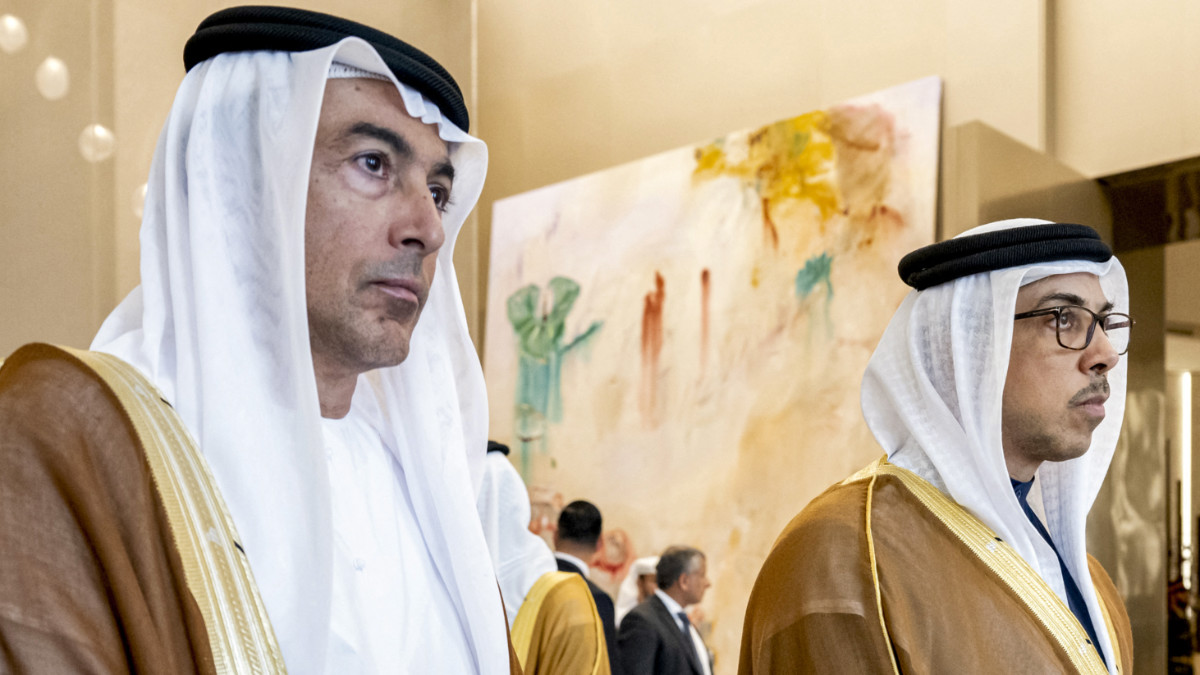
Amid ongoing financial volatility spurred by the US-Israeli war on Iran, a top White House economic advisor has confirmed that Washington stands ready to offer financial support to the United Arab Emirates should the Gulf ally require economic stabilization. National Economic Council Director Kevin Hassett made the commitment in comments to CNBC on Monday, noting that the UAE has served as a critical partner in the regional military campaign.”The UAE has been an incredibly valuable ally throughout this effort, and I’m sure the treasury secretary will make every effort to help them out, should that be necessary,” Hassett stated. He also added that former President Donald Trump had characterized diplomatic efforts to end the conflict as moving forward at a promising pace.Hassett’s comments came in direct response to a Wall Street Journal report revealing that UAE Central Bank Governor Khaled Mohamed Balama privately raised the prospect of a US dollar currency-swap line with Treasury Secretary Scott Bessent and Federal Reserve officials during a closed-door meeting the prior week. While Hassett noted that a currency-swap arrangement would likely not be necessary to stabilize the Emirati economy, he reaffirmed Washington’s willingness to extend support if conditions worsen.To contextualize the proposal, currency swaps are bilateral agreements between central banks that allow participating institutions to access foreign currency at more favorable rates during periods of market stress. For global central banks, access to US dollars via swaps is particularly critical, as the greenback remains the world’s primary reserve currency, used widely for international debt repayment and import purchases. The Emirati dirham has long been pegged to the US dollar at a fixed exchange rate, making stable access to greenbacks a core priority for Emirati monetary policy. Per the WSJ’s reporting, the UAE’s inquiry was framed as preliminary and precautionary, not an immediate request for aid.The remarks have already stirred internal backlash within pro-Trump conservative circles, with prominent right-wing commentator Steve Bannon lambasting the potential aid during an episode of his *War Room* podcast Monday. Bannon launched an angry tirade against the proposal, framing it as an unfair burden on working-class American citizens while wealthy Emirati elites and global influencers benefit from the arrangement. “What are you doing you stupid working American? Paying for it,” Bannon said. “You’re not in that club. You’re just a working stiff out there to defend these scum.”Behind the precautionary request lies a subtle signal from Abu Dhabi: if the US fails to buffer the UAE from the economic fallout of the war, the Gulf state could shift oil trading and other key international transactions away from the US dollar to the Chinese yuan or other alternative currencies. For decades, the UAE and other major Gulf oil producers have priced their crude exports exclusively in US dollars, creating the global petrodollar system that generates consistent demand for greenbacks and supports the dollar’s status as the world’s dominant reserve currency. Petrodollar revenues are routinely reinvested into US Treasury bonds, domestic stocks, and other dollar-denominated assets, cementing the currency’s global position.Some geopolitical analysts have warned that the war on Iran could accelerate a global shift away from the petrodollar system, as Gulf states increasingly distance themselves from Washington’s regional policy and Iran already encourages energy trade settled in yuan. Yet experts who spoke with Middle East Eye note that the US dollar will almost certainly remain the dominant currency for Gulf oil exports for the foreseeable future, even amid the instability caused by the ongoing conflict.The US has deployed currency swap lines as emergency economic lifelines multiple times in recent decades, most notably during the 2008 global financial crisis and the 2020 COVID-19 pandemic, when the Federal Reserve extended access to the program to central banks across Europe, Latin America, and other regions. Even so, the UAE’s inquiry has caught many independent analysts off guard: the country is one of the wealthiest nations in the Middle East, with massive sovereign reserves anchored by its consistent oil export revenues. The Abu Dhabi Investment Authority, the UAE’s largest sovereign wealth fund, holds approximately $1 trillion in global assets, while the country’s central bank holds an estimated $270 billion in foreign currency reserves.Brad Setser, a former US Treasury economist and current fellow at the Council on Foreign Relations, called the UAE’s request “slightly strange” given the country’s substantial existing financial buffers. Setser added that the Trump administration is unlikely to approve the swap line request, arguing that it runs counter to the administration’s signature “America First” policy framework. “There isn’t anything obviously ‘America first’ about a financial lifeline to one of the richest oil sheikdoms (if not the richest) just so it doesn’t have to borrow in the market [or] sell assets,” Setser explained. At the same time, he acknowledged that the request highlights a core tension: “[it is] clear that parts of the UAE aren’t happy about being asked to absorb the full financial costs of Trump’s bombing campaign.”As the closest Gulf ally to Israel, the UAE has faced sustained retaliation from Iran, including thousands of ballistic missile and drone attacks targeting Emirati infrastructure. The ongoing conflict has severely damaged Dubai’s core luxury tourism sector, once one of the emirate’s largest economic drivers, and slowed critical oil export volumes to a fraction of pre-war levels.While some neighboring Gulf states have pushed for diplomatic negotiation to de-escalate tensions with Iran, the UAE has taken a firmly hawkish stance, publicly supporting the continuation of US military action. Analysts attribute this position to the UAE’s heavy dependence on the Strait of Hormuz, the strategic chokepoint through which nearly a fifth of global oil supplies pass each day, as well as elite opposition to allowing Iran to expand its regional influence across the Gulf.
US will provide dollar loan to UAE if economy is jolted by war on Iran, US official says