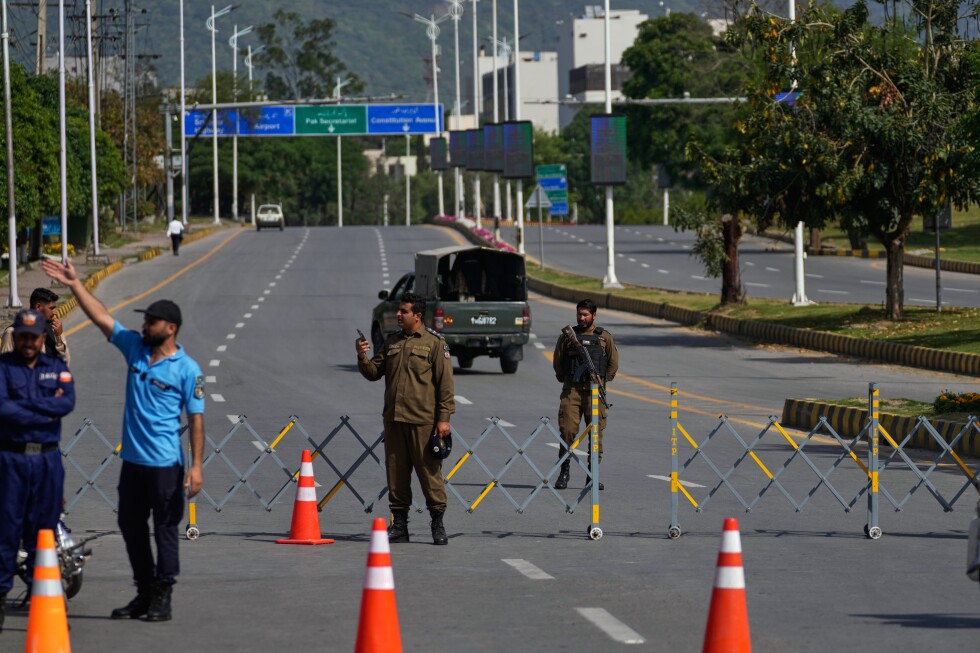
DUBAI, United Arab Emirates – As swirling rumors of potential negotiations between Iran and the United States gained traction in regional and international policy circles, Iran’s state-owned television released an official on-screen statement Tuesday clarifying that no Iranian diplomatic delegation has traveled to Islamabad for discussions as of yet. This public correction comes amid a backdrop of rising internal tension within Iran’s theocratic leadership, which is grappling with how to respond to a recent high-seizure of an Iranian container vessel by the U.S. Navy over the weekend. For decades, Iran’s state television has remained under the direct control of hardline factions within the country’s ruling establishment, making its public messaging a key window into internal ideological divides. To date, no senior Iranian official has confirmed plans to dispatch a negotiating team to the Pakistani capital, where Pakistani officials have reportedly maintained preparedness for days in anticipation of the potential talks. U.S. officials have confirmed that Vice President JD Vance is tapped to lead the American delegation if talks move forward, while Iran has yet to announce any representative to head its side. The last time direct talks between the two nations occurred, Iranian Parliament Speaker Mohammad Bagher Qalibaf led Tehran’s delegation. Public discourse around resuming diplomatic talks with the U.S. remains entirely absent from official Iranian media and public government channels, with extreme hardline factions voicing strong public pushback against any renewed negotiations in recent days. This opposition has only hardened following the U.S. seizure of the Iranian container ship, a move that has escalated already heightened tensions between the two nations. Online, a growing campaign has called for Supreme Leader Ayatollah Mojtaba Khamenei to issue an official public statement clarifying his stance on whether the Islamic Republic should move forward with new talks. However, the newly installed supreme leader has not released any public comment, and no verified images of him have been published since the start of the ongoing conflict between Iran, Israel, and the United States. U.S. and Israeli intelligence officials have claimed Khamenei was wounded in an attack carried out earlier in the conflict. The absence of the supreme leader from public view has shifted governing power firmly toward Iran’s paramilitary Revolutionary Guard, the institution that has led much of Iran’s military operations throughout the ongoing conflict. Guard commanders have largely operated with limited oversight from central Tehran authorities when selecting targets and coordinating military actions, a dynamic that has only become more pronounced amid the current leadership vacuum. Iran’s civilian political leadership has remained largely silent on the issue of potential talks, a silence made more notable by a recent public misstatement from Foreign Minister Abbas Araghchi. Over the weekend, Araghchi posted online that the Strait of Hormuz, the critical global oil chokepoint connecting the Persian Gulf to international open waters, had been reopened to full traffic – a claim that was immediately retracted and denied by other senior officials in Tehran. Since the U.S. and Israel launched coordinated military strikes against Iran on Feb. 28 that ignited the current open conflict, Tehran has restricted commercial vessel traffic through the strait, a move that has rippled through global energy markets. In response to Iran’s actions and ongoing pressure from hardline domestic factions, the U.S. has implemented a full naval blockade of major Iranian ports, further isolating the country’s economy and escalating the ongoing military standoff.
No delegation from Iran visits Islamabad, state television says, as talks speculation grows