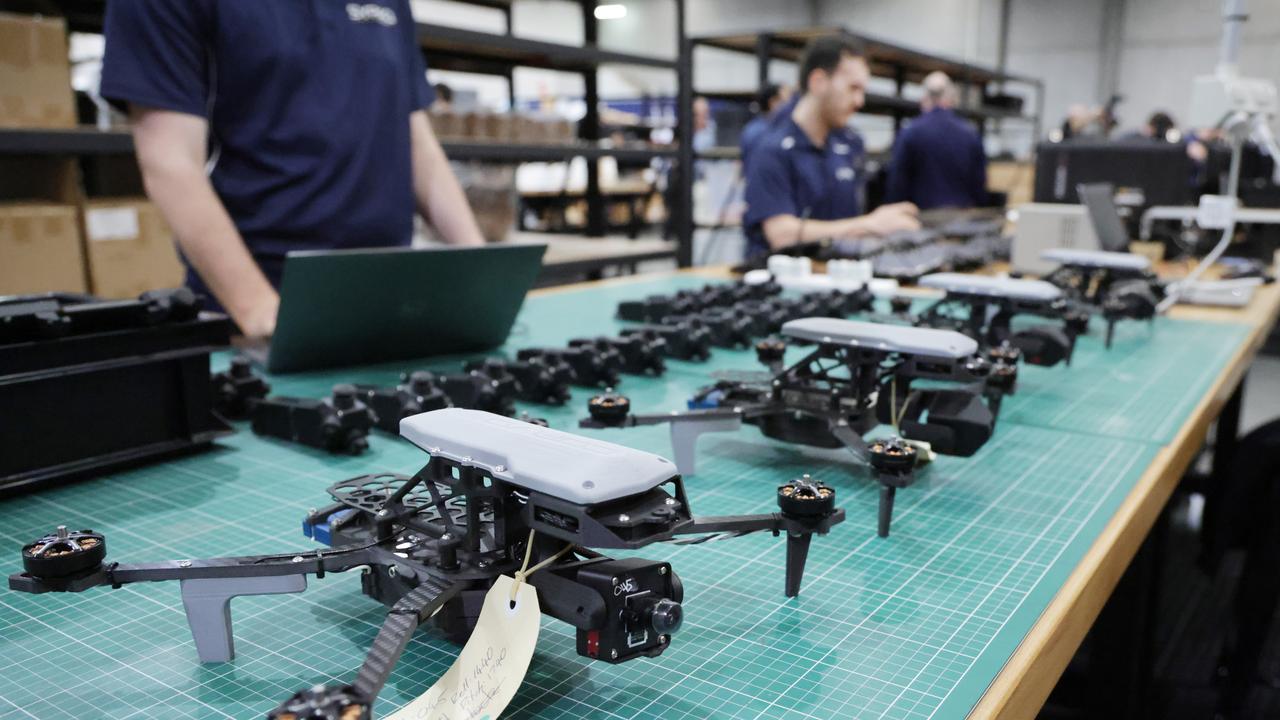
Against a shifting global conflict landscape marked by rising drone usage in Ukraine and the Middle East, Australia’s Albanese government is moving rapidly to equip the Australian Defence Force (ADF) with cutting-edge counter-drone capabilities, locking in two major domestic contracts worth A$31.7 million as part of a 10-year, A$7 billion investment package. The latest funding announcement doubles the government’s existing commitment to counter-drone technology, aligned with the newly unveiled 2026 National Defence Strategy released last week. This strategy, which includes the biggest peacetime increase in Australian defence spending in modern history, boosts overall defence funding to A$887 billion for the 2023–2026 period, with A$425 billion earmarked for core defence capabilities through the Integrated Investment Program (IIP) — a A$150 billion increase since 2020. On Tuesday, the government confirmed A$21.3 million would go to domestic defence firm AIM Defence, while a further A$10.4 million will be awarded to SYPAQ Systems, two Australian companies leveraging local innovation to address evolving battlefield threats. The investment in AIM Defence will advance the development of the company’s Fractl high-powered counter-drone laser system, a revolutionary directed-energy weapon engineered to neutralize both single unmanned aerial vehicles (UAVs) and large drone swarms. Capable of tracking moving targets as small as a 10C coin at distances exceeding 100 kilometers, the system delivers enough concentrated energy to burn through solid steel, making it effective against even hardened drone designs. For SYPAQ Systems, the funding will support the rollout of its Corvo Strike interceptor drone, a purpose-built kinetic weapon designed to autonomously track, target and eliminate the large UAVs increasingly commonly deployed on modern battlefields. In an official statement, the Australian government noted that while the nation’s unique geographic position has traditionally prioritized capabilities for countering large drones, the changing threat landscape requires urgent acceleration of countermeasures for medium-sized UAVs and small drone swarms — threats that Australian personnel may face both in complex overseas operational environments and during domestic security operations protecting critical infrastructure and civilian populations. Defence Industry Minister Pat Conroy emphasized that ongoing conflicts in Ukraine and the Middle East have clearly demonstrated how uncrewed aerial systems have reshaped modern warfare, becoming an increasingly central tool for adversarial forces. “The development of sovereign counter-drone solutions is essential to ensure the Australian Defence Force can detect, assess and respond to these threats,” Conroy said. Major General Hugh Meggitt, head of the Advanced Strategic Capabilities Accelerator (ASCA), explained that the investment is part of Mission Syracuse, a ADF-focused initiative designed to rapidly advance cutting-edge technology for countering UAV threats by leveraging Australian industry’s global leadership in both kinetic weapons and directed energy systems. “Mission Syracuse will exploit Australian industry’s world leading expertise in kinetic and directed energy to find, fix, track, target and engage Uncrewed Aerial Vehicles,” Meggitt said. “It will significantly enhance the ADF’s ability to counter the threat posed by UAVs employed by malicious actors; domestically and abroad.” Last week, Defence Minister Richard Marles announced the Albanese government would increase defence spending by more than A$53 billion over the coming decade, marking the largest expansion of Australian defence investment in peacetime. The new investment in counter-drone technology underlines the government’s priority of preparing the ADF for emerging asymmetric threats that have become increasingly common in 21st century conflict.
Albanese government backs in deals to protect Australian troops from drone ‘swarms’