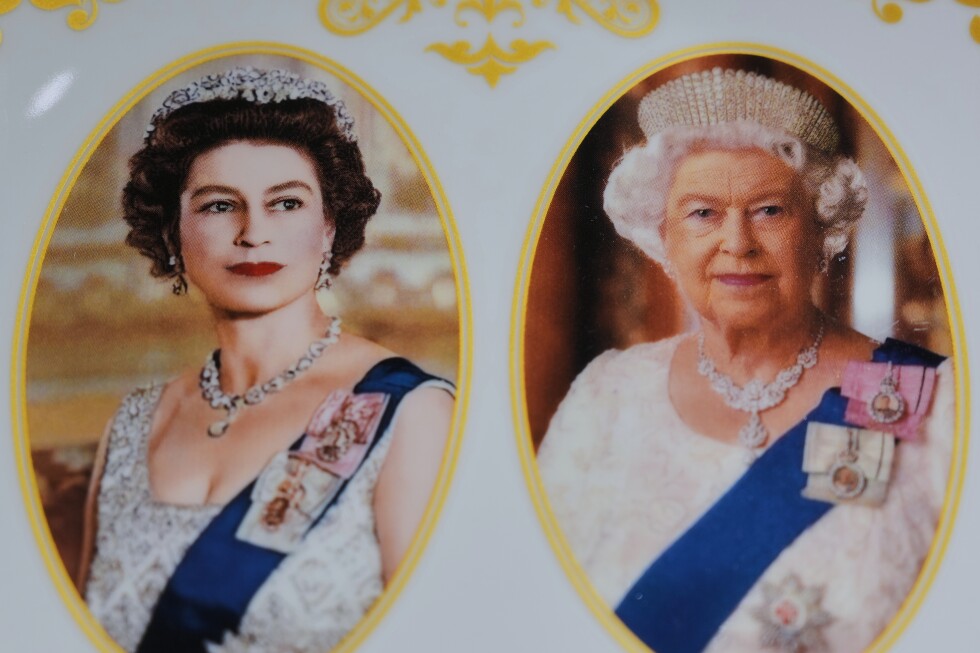
LONDON — As the United Kingdom prepares to mark what would have been the 100th birthday of Queen Elizabeth II on Tuesday, the late monarch’s enduring hold on British public affection remains clearly visible, even as debate simmers over her complicated legacy.
Near Buckingham Palace, the Cool Britannia gift shop tells a clear story of public preference: four years after her passing, mugs, tea towels, key chains and other souvenirs bearing the face of Britain’s longest-reigning monarch sell out rapidly, while merchandise featuring her son, current King Charles III, moves far more slowly. Store manager Ismail Ibrahim confirms that on any given day, Elizabeth II-themed products outsell those of the reigning king by a wide margin. Even two years after her death in September 2022, when most living Britons never knew any other monarch, a reference to “the queen” still brings Elizabeth to mind far more often than King Charles’ wife, Queen Camilla.
Elizabeth’s 70-year on the throne shaped the modern British monarchy, transforming her from a glamorous young sovereign who lifted national morale in the grim post-WWII era into a beloved matriarch figure who united the country through the COVID-19 pandemic. But time has also brought growing scrutiny of her legacy. While she is widely celebrated as a symbol of unbroken tradition and national continuity through the end of the British Empire, shifting economic tides and large-scale migration that reshaped Britain’s national identity, one cloud lingers: the prolonged delay in addressing the Jeffrey Epstein scandal linked to her second son, the former Prince Andrew, with critics questioning why the issue was allowed to remain unresolved for years.
“Despite her absence, Elizabeth II remains this key presence whenever we think about the monarchy,” Ed Owens, author of *After Elizabeth: Can the Monarchy Save Itself?*, told the Associated Press. “She’s certainly the most significant figure in the history of the institution in the last 100 years and, I think, therefore deserves probably the attention that’s going to be focused on her in connection with what would have been her 100th birthday.”
Official centenary celebrations include a Buckingham Palace reception hosted by King Charles, where he will honor other centenarians who share Elizabeth’s birth date. A commemorative memorial garden will also be dedicated in London’s Regent’s Park, and an exhibition showcasing the queen’s iconic wardrobe is already open to the public.
What many have forgotten is that Elizabeth Alexandra Mary Windsor was never born to be queen. Born on April 21, 1926, in a private London Mayfair townhouse rather than a royal palace, she was the eldest daughter of King George V’s second child, Albert. For the first decade of her life, she was expected to live a quiet, comfortable life as a minor royal: focused on horses, dogs, country estate living and a suitable marriage, far from the spotlight of the crown. That all changed when her uncle, King Edward VIII, abdicated the throne to marry Wallis Simpson, an American divorcée. Elizabeth’s father became King George VI, suddenly catapulting the young princess into position as heir to the British throne. She would officially become queen on February 6, 1952, the day her father died, receiving the news at age 25 while on tour in Kenya before rushing back to London to assume her new role.
For seven decades, Elizabeth carried out her royal duties with meticulous consistency. She presided over the annual State Opening of Parliament, robed in ermine and wearing the imperial crown; hosted state banquets for global leaders at Buckingham Palace; and made thousands of public appearances across the United Kingdom, famously wearing vividly colored tailored outfits to ensure she was visible to crowds. She also served as a global ambassador for the United Kingdom, undertaking more than 200 overseas visits to strengthen ties with former colonies including India and Tanzania, post-war former enemies Germany and Japan, and long-standing allies such as the United States.
Late in her reign, she unexpectedly gained new fame as a global internet icon, thanks to a skit alongside James Bond’s Daniel Craig that seemingly saw her parachute into the 2012 London Olympic Opening Ceremony, and a later viral tea party sketch with beloved children’s character Paddington Bear for her Platinum Jubilee celebrations marking 70 years on the throne.
“In a world of relentless change, she moved with the times — applauding the nation’s successes and consoling Britons during difficult times, while remaining above the fray of politics,” Robert Hardman, author of *Elizabeth II: In private. In public. The Inside Story*, told the AP.
That decades-long record of steady public service makes the delayed response to the Andrew Epstein scandal all the more notable. Despite repeated warnings about Andrew’s boorish conduct, questionable business arrangements and connections to convicted sex offender Jeffrey Epstein, Andrew served for 10 years as the UK’s international trade envoy and retained his full royal title until 2022, when King Charles finally stripped him of his royal patronages and title, leaving him known publicly by his civilian name Andrew Mountbatten-Windsor.
“He was problematic and that gave her cause for worry,” Hardman said. “But I do think people let him have an easy ride because they thought if they came down hard on him, they might somehow upset the queen. Now that’s partly attributable to her, but partly attributable to others.”
Even with that controversy, Hardman argues that Elizabeth’s far-reaching achievements as queen far outweigh any missteps. She took the throne as a 25-year-old mother of two, when intercontinental jet travel was nonexistent and human spaceflight had not yet been achieved, and remained a constant, authoritative presence in British public life through seven decades of massive social, technological and political change. “She just reigned through this vast span of the ages and was as authoritative and loved and respected at the end as she was at the beginning,” Hardman said. “And she was working till the very end, ‘til her last day.”
As historians continue to debate her mixed legacy, ordinary visitors to the UK are forming their own nuanced views. Sylvie Deneux and her daughter Clara, traveling from their home in Lille, France, stopped at the Cool Britannia gift shop during their London trip, and praised Elizabeth as an icon of elegance. When asked about the Andrew scandal, Deneux acknowledged that failing to act sooner was a misstep, but offered sympathy for the late queen, noting the decision was as much a mother’s choice as a monarch’s. “Can we blame her?” Deneux asked. “I’m not sure.”