分类: politics

  • A canceled meeting between leaders dashes hopes of families of Colombian prisoners in Venezuela

    A canceled meeting between leaders dashes hopes of families of Colombian prisoners in Venezuela

    VILLA DEL ROSARIO, Colombia — A highly anticipated diplomatic meeting between Colombian and Venezuelan leaders was unexpectedly canceled Thursday evening, crushing the hopes of families seeking the release of detained relatives in Venezuelan prisons. The scheduled encounter between Colombian President Gustavo Petro and Venezuelan acting President Delcy Rodríguez was called off by mutual agreement, with both governments citing “unforeseen circumstances” without elaboration.

    Javier Giraldo, who had traveled to the international bridge connecting Colombia and Venezuela, expressed profound disappointment as his plan to display a sign petitioning for his father’s release evaporated. This marks the third time in 2023 that Giraldo’s hopes have been dashed regarding his 70-year-old father, Javier Giraldo García, who has spent four years detained at El Rodeo III prison near Caracas on terrorism-related charges.

    Despite diplomatic progress that has seen the gradual release of Colombian prisoners in Venezuela since last year, significant numbers remain incarcerated. According to Venezuela-based prisoner rights organization Foro Penal, at least eight Colombian nationals and eleven dual Colombian-Venezuelan citizens are still detained in Venezuelan prisons.

    Relatives of detainees maintained protests near the Atanasio Girardot Binational Bridge despite the canceled meeting. Ninfa Rebolledo, whose son Albeiro Guevara has been imprisoned for over six years on drug trafficking charges he maintains are false, expressed continued hope for eventual release. Both governments issued a joint statement late Thursday assuring the meeting would be rescheduled for a future date, though no specific timeline was provided.

  • EU and UK denounce Israeli settler violence against Palestinians in West Bank

    EU and UK denounce Israeli settler violence against Palestinians in West Bank

    The European Union and United Kingdom have issued coordinated diplomatic statements condemning the surge in Israeli settler violence against Palestinian communities in the occupied West Bank. This unprecedented wave of attacks has resulted in multiple Palestinian fatalities and widespread property damage.

    British diplomatic authorities expressed profound concern through an official statement from the Consulate General in Jerusalem, declaring themselves ‘appalled by the killing of five Palestinians in incidents of settler violence over the past week.’ The statement notably referenced Israeli security forces’ own characterization of such violence as ‘unacceptable’ while demanding comprehensive investigations and accountability for perpetrators.

    The European Union echoed these concerns, issuing a formal appeal to Israeli authorities to implement ‘immediate and effective action’ against settler violence. EU officials emphasized Israel’s obligation under international law to ensure protection for Palestinian populations within occupied territories.

    This diplomatic response follows documented reports of intensified attacks, including a coordinated assault by approximately 100 masked settlers on Abu Falah village that resulted in two fatalities. Separate incidents involved livestock theft and unauthorized road construction expanding settlement infrastructure.

    International humanitarian law explicitly prohibits such settlement activities under Article 49 of the Fourth Geneva Convention, which bans population transfers to occupied territories. Palestinian human rights monitors report a 25% increase in settler violence since the onset of regional conflicts.

    Concurrently, British parliamentary members and civil society organizations have intensified pressure on the UK government to implement economic measures, including bans on imports from illegal settlements and enhanced sanctions targeting settlement expansion activities.

  • Brazil revokes visa of US diplomat in Bolsonaro row

    Brazil revokes visa of US diplomat in Bolsonaro row

    In a significant diplomatic escalation, Brazilian President Luiz Inacio Lula da Silva has revoked the visa of a United States diplomat seeking to visit imprisoned former President Jair Bolsonaro. The move comes amid heightened tensions between the two nations and concerns about foreign interference in Brazil’s upcoming elections.

    The targeted diplomat, Darren Beattie, serves as the US State Department’s newly appointed advisor on Brazil. His proposed March 18 prison visit to Bolsonaro was initially approved by Brazil’s Supreme Court but subsequently canceled following strong objections from the Lula administration. Brazilian authorities cited “lies about the purpose of the visit” as justification for the visa revocation.

    President Lula explicitly linked the decision to reciprocal measures, stating the diplomat would remain barred until Washington lifts its visa ban on Brazilian Health Minister Alexandre Padilha. Padilha faced sanctions late last year regarding his involvement in a program deploying Cuban doctors within Brazil.

    This diplomatic confrontation unfolds against the backdrop of Bolsonaro’s deteriorating health. The 70-year-old former leader was hospitalized with bronchopneumonia, experiencing high fever, oxygen saturation drops, and chills. He remains in intensive care receiving intravenous antibiotic treatment. Bolsonaro’s health has been fragile since his 2018 campaign trail stabbing, though courts continue denying requests for house arrest.

    The Brazilian Foreign Ministry emphasized that Beattie’s visa was granted exclusively for participation in a critical minerals forum and governmental meetings. Officials expressed concern that a foreign representative visiting an imprisoned former president during an election period “could constitute undue interference” in domestic affairs.

    This incident reflects broader geopolitical tensions, with Brazil remaining wary of Trump administration efforts to influence Latin American politics. The situation echoes previous confrontations, including tariff impositions following Bolsonaro’s sentencing for coup plotting after his 2022 electoral defeat to Lula.

    Flavio Bolsonaro, the former president’s son and current presidential candidate opposing Lula, accused authorities of “playing with my father’s life” amid the health crisis. The October elections increasingly appear as a flashpoint in US-Brazil relations, with both nations navigating complex diplomatic boundaries.

  • US eases some Russian oil sanctions but crude prices stay high

    US eases some Russian oil sanctions but crude prices stay high

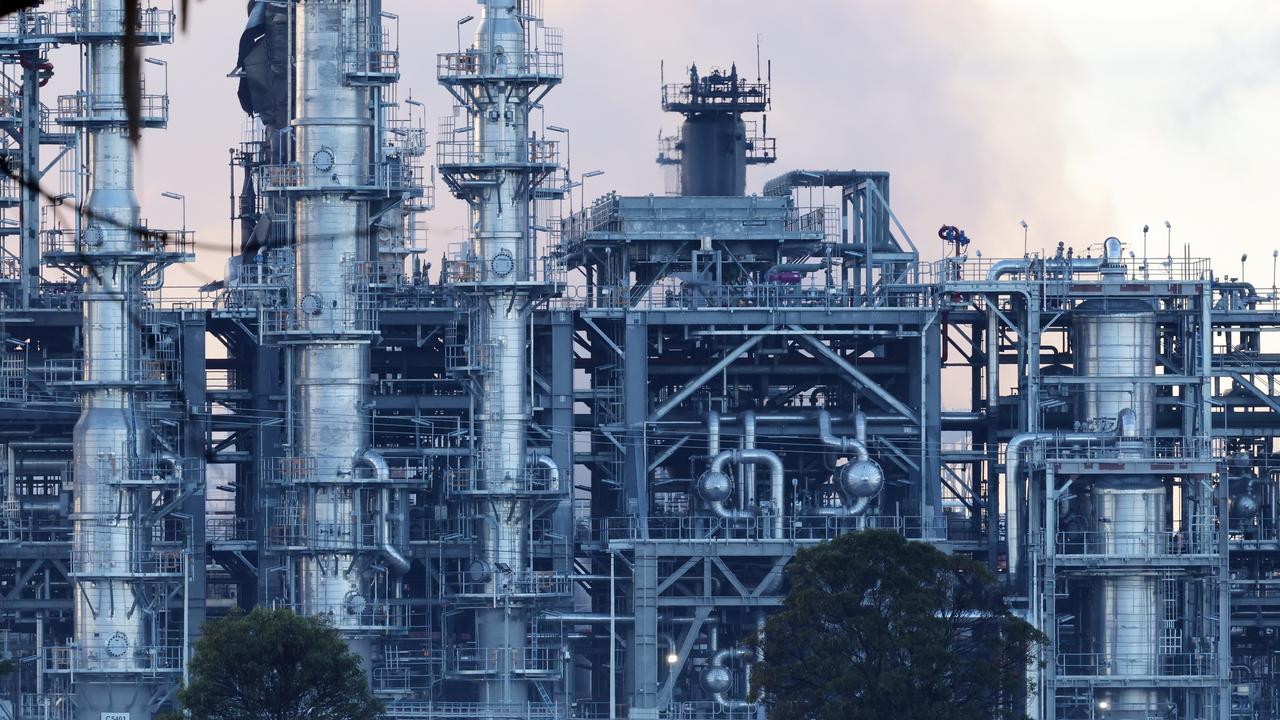
    In a significant policy shift responding to global energy market turbulence, the United States has announced a temporary suspension of sanctions on specific Russian oil shipments. U.S. Treasury Secretary Scott Bessent declared via social media that deliveries of Russian oil already loaded onto tankers as of Thursday would receive a 30-day exemption from sanctions. This narrowly tailored measure aims to alleviate market jitters over supply disruptions caused by the Iran war, which has severely constrained tanker transport through the critical Strait of Hormuz—a passageway for approximately 20% of global oil supply.

    The decision underscores how Middle Eastern conflict has paradoxically strengthened Moscow’s economic position despite international pressure over Ukraine. While maintaining sanctions against Russia’s largest oil companies Lukoil and Rosneft, the administration argues this temporary reprieve will help stabilize energy markets without providing additional financial benefits to the Kremlin. Officials note that Russian oil had already been taxed at extraction, meaning stranded shipments wouldn’t generate new revenue.

    Market response was modestly positive, with Brent crude prices declining 1.5% to $98.76 per barrel following the announcement—though still dramatically elevated from pre-war levels of $72.87. Energy analysts estimate approximately 125 million barrels of Russian oil are currently in transit, equivalent to five-six days of normal Hormuz shipments or just over one day of global consumption.

    The move has generated international controversy. Ukrainian President Volodymyr Zelenskyy condemned the decision, estimating it could provide Russia with $10 billion in additional war funding. Conversely, Kremlin spokesman Dmitry Peskov welcomed the development as necessary for market stabilization. The Trump administration had previously granted similar exemptions to Indian refineries, and reportedly coordinated with other nations to release 400 million barrels from strategic reserves.

    Despite the temporary easing, Russia continues to face substantial financial pressure from sanctions. Prior to the Hormuz disruptions, Russia’s Urals blend traded at a $25 discount to Brent, pushing Kremlin oil revenues to their lowest levels since the invasion began. The ongoing conflict has reshaped global energy flows, with China and India replacing the EU as Moscow’s primary customers while demanding significant discounts for assuming sanctions compliance risks.

  • Larijani and top Iranian officials appear in Al-Quds Day march

    Larijani and top Iranian officials appear in Al-Quds Day march

    Senior Iranian officials, including National Security Chief Ali Larijani and Judiciary Head Gholam-Hossein Mohseni-Ejei, participated in Friday’s Al-Quds Day demonstrations in Tehran, according to verified video footage. Their public appearance comes despite escalating security threats from ongoing U.S.-Israeli military operations that have claimed numerous high-ranking Iranian figures since hostilities intensified in late February.

    During the march, Larijani provided commentary to ANA TV, asserting that allied forces “are running out of steam” in their campaign against Iran. He further criticized former U.S. President Trump’s approach, stating, “Trump’s problem is that he doesn’t understand that the Iranian nation is mature and determined.”

    The demonstrations were marred by violence as Press TV reported civilian casualties, including one Iranian woman killed by shrapnel from alleged U.S.-Israeli strikes during the same event. The participation of top government figures in such volatile conditions underscores Tehran’s determination to maintain visible resistance amid continuing regional tensions.

    The Al-Quds Day observance, an annual event expressing solidarity with Palestinians and opposition to Israeli control of Jerusalem, took on heightened significance this year as it coincided with active military engagements targeting Iranian leadership and infrastructure.

  • Brazil revokes U.S. official’s visa in reciprocal measure

    Brazil revokes U.S. official’s visa in reciprocal measure

    In a significant diplomatic escalation, Brazilian President Luiz Inácio Lula da Silva announced on Friday the revocation of a U.S. State Department official’s visa, characterizing the action as a reciprocal response to similar measures taken against Brazilian officials by Washington last year.

    The decision targets Darren Beattie, a political strategist and media entrepreneur who joined the State Department from private sector. This move directly responds to August 2023 actions by U.S. Secretary of State Marco Rubio, who revoked and restricted visas for Brazilian officials allegedly linked to Cuba’s overseas medical program.

    The situation intensified when Brazilian Supreme Court Justice Alexandre de Moraes denied Beattie access to the Brasília prison where former President Jair Bolsonaro is serving a 27-year sentence for leading a 2023 coup attempt. Justice Moraes’ ruling noted that Beattie had originally requested his visa to attend the Brazil-US Critical Minerals Forum in São Paulo, but Brazilian authorities determined his attempted prison visit represented ‘undue interference’ in domestic affairs.

    President Lula explicitly stated that Beattie would remain barred from Brazil until the United States reinstates visas for Brazil’s health minister and his family members. A Brazilian government official, speaking anonymously due to lack of authorization, told The Associated Press that Beattie’s visa revocation resulted from ‘the omission of information and lies about the purpose of the visit upon his visa request.’

    The White House has declined to comment on both Lula’s decision and the Brazilian Supreme Court ruling. This diplomatic friction occurs amid Lula’s reelection campaign, where he faces potential challenge from Senator Flávio Bolsonaro, son of the imprisoned far-right leader.

  • Brazil’s ex-President Bolsonaro is in intensive care with pneumonia, hospital says

    Brazil’s ex-President Bolsonaro is in intensive care with pneumonia, hospital says

    Former Brazilian President Jair Bolsonaro has been admitted to the intensive care unit of a Brasilia hospital after developing severe bronchopneumonia, medical officials confirmed Friday. The 70-year-old political leader, currently serving a 27-year prison sentence for attempting to overthrow Brazil’s democratic system, was transferred from prison after experiencing concerning symptoms including high fever, chills, vomiting, and dangerously low oxygen levels.

    According to DF Star Hospital, Bolsonaro is receiving intravenous antibiotics and non-invasive clinical support to treat the aspiration-induced bronchopneumonia. His eldest son, Flávio Bolsonaro, initially announced the hospitalization via social media, requesting prayers for his father’s recovery while revealing his own presidential ambitions for the upcoming election cycle.

    The hospitalization marks the latest in a series of medical emergencies for the former president, who has faced significant health challenges since surviving a stabbing attack during his 2018 presidential campaign. In January, he underwent neurological examinations at the same facility following a fall from his bed in prison.

    Bolsonaro’s legal troubles stem from his September conviction by Brazil’s Supreme Court, which found him guilty of leading an armed criminal organization and plotting to violently overthrow the democratic government. The elaborate scheme allegedly included assassination plans targeting current President Luiz Inácio Lula da Silva, Vice President Geraldo Alckmin, and Supreme Court Justice Alexandre de Moraes, along with orchestrating the January 2023 insurrection attempts.

    The political significance of Bolsonaro’s hospitalization is amplified by recent polling data showing competitive numbers between his political movement and the current administration, with Flávio Bolsonaro positioning himself as a potential presidential contender despite his father’s incarceration and ongoing legal battles.

  • Oil-starved Cuba confirms talks with US

    Oil-starved Cuba confirms talks with US

    Cuban President Miguel Diaz-Canel has officially acknowledged ongoing diplomatic negotiations with the United States, marking a significant development in bilateral relations between the historically adversarial nations. The announcement, delivered during a nationally televised government meeting on Friday, confirms earlier revelations by former US President Donald Trump regarding backchannel communications.

    The discussions occur against the backdrop of severe economic pressure on Cuba, particularly following Washington’s imposition of an oil blockade in January. This energy embargo has compounded the effects of the decades-long economic sanctions, pushing Cuba’s already fragile economy toward potential collapse. The restrictions have severely constrained fuel supplies for power generation and agricultural operations, while international airlines have substantially reduced or suspended services to the island due to kerosene shortages.

    President Diaz-Canel characterized the dialogue as an effort to ‘seek solutions through dialogue to the bilateral differences that exist between our two nations.’ While providing limited specifics regarding the negotiation agenda, he indicated the process benefits from support by ‘international factors,’ without further elaboration.

    Separately, Cuba announced the release of 51 prisoners following discussions with the Vatican, which has historically mediated between Washington and Havana. This gesture coincides with reports suggesting Raul Guillermo Rodriguez Castro, grandson of former Cuban leader Raul Castro, has been conducting clandestine talks with US Secretary of State Marco Rubio for several weeks.

    The diplomatic overtures unfold amid heightened regional tensions. Cuban security forces recently engaged a speedboat carrying alleged US-based armed assailants on February 25, resulting in five fatalities. Meanwhile, former President Trump previously predicted Cuba’s imminent political collapse following the administration’s actions against Venezuelan leader Nicolas Maduro, Cuba’s primary oil supplier.

  • Ukraine and allies fear easing Russian sanctions will prolong war

    Ukraine and allies fear easing Russian sanctions will prolong war

    The United States’ recent decision to temporarily ease sanctions on Russian oil shipments has triggered forceful criticism from key European allies, creating significant diplomatic friction within the Western coalition opposing Russia’s war in Ukraine.

    President Volodymyr Zelensky of Ukraine condemned the American policy shift during a Paris news conference, estimating the sanctions relief would provide Russia with approximately $10 billion in additional revenue. ‘This certainly does not help achieve peace,’ Zelensky stated alongside French President Emmanuel Macron, who declared there was ‘no justification’ for the US move.

    European leaders expressed unified concern over the decision announced Thursday by US Treasury Secretary Scott Bessent, which temporarily suspends restrictions on Russian oil already transported via sea tankers. German Chancellor Friedrich Merz characterized the action as ‘wrong,’ while EU Council President Antonio Costa labeled it ‘very concerning.’

    The sanctions relief arrives amid already elevated global oil prices driven by ongoing Middle East conflicts, providing Russia with unexpected economic leverage. European officials fear increased oil revenues will substantially bolster Kremlin finances, enabling enhanced military procurement and personnel recruitment for Ukraine operations.

    This development occurs at a critical juncture in the conflict. Ukraine has recently regained territory and targeted locations deep within Russia, while Moscow faced mounting economic strain and personnel shortages. The sanctions easing potentially reverses this pressure, granting Russia financial breathing space as Western attention diverts to Middle Eastern hostilities.

    Complicating matters, Ukraine’s own funding faces uncertainty due to delayed €90 billion EU assistance blocked by Hungarian disputes over damaged oil pipeline infrastructure. Budapest accuses Kyiv of delaying repairs to pipelines carrying Russian oil to Hungary, while Ukrainian authorities cite extensive damage from Russian strikes.

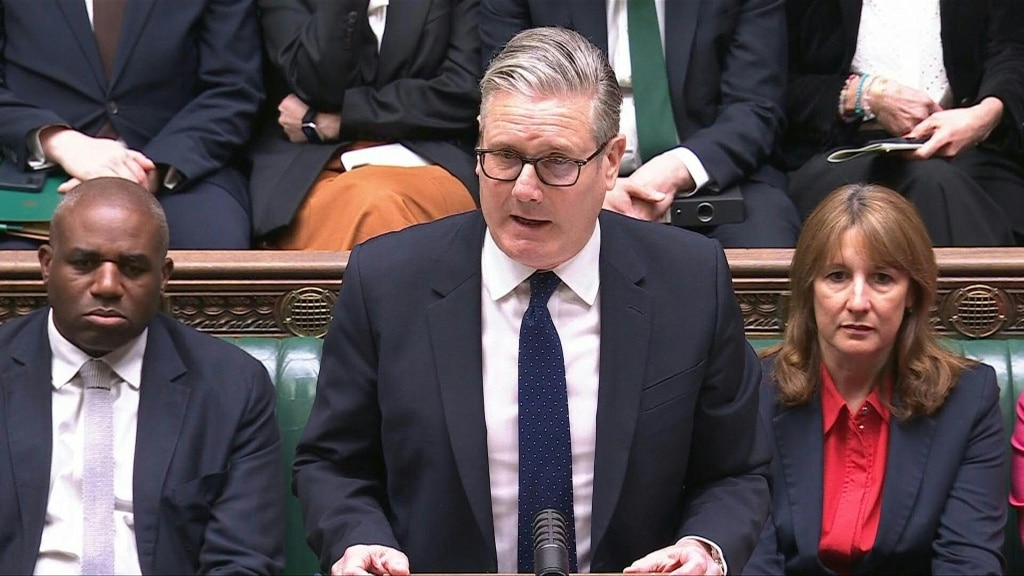
    Despite Trump administration envoys engaging in Ukrainian peace efforts, including recent high-level talks with Kremlin officials in Miami, the unilateral sanctions decision appears to disregard European and Ukrainian concerns. British Prime Minister Keir Starmer’s spokesperson emphasized that ‘all allies should maintain pressure on Russia and its war chest’ through collective action.

    The temporary measure raises apprehensions in European capitals that US sanctions relief might become permanent, potentially undermining coordinated efforts to constrain Russian aggression and prolonging conflict resolution timelines.

  • Why has Trump eased sanctions on Russian oil – and will it help Putin?

    Why has Trump eased sanctions on Russian oil – and will it help Putin?

    The Trump administration has implemented a significant policy shift by temporarily easing sanctions on nations purchasing Russian oil, drawing both praise from the Kremlin and sharp criticism from pro-Ukraine advocates. This one-month waiver permits countries to acquire Russian oil previously stranded at sea due to existing sanctions.

    Treasury Secretary Scott Bessent defended the move as a “tailored, short-term” measure aimed at mitigating economic repercussions from the U.S.-Israel conflict with Iran. He asserted that Russia would gain only limited financial benefits while addressing instability caused by what he termed “the terrorist Iranian regime.”

    However, prominent Putin critic Bill Browder condemned the decision as “a terrible move that will enrich Vladimir Putin and prolong the Ukraine war.” This sentiment was echoed by Benjamin Hilgenstock of the Kyiv School of Economics, who characterized the policy as “a serious bailout” for Putin’s regime. He estimated potential monthly revenue increases of approximately $10 billion from Russian oil exports, with half flowing directly into government coffers as tax revenue.

    The policy reversal marks a dramatic departure from previous U.S. stance, which included imposing a 50% tariff on Indian imports in August over allegations of purchasing Russian oil. The sanctioned oil had accumulated on tankers near India and other Asian coasts as traders sought willing buyers.

    Russian economic envoy Kirill Dmitriev welcomed the development, interpreting it as recognition of Russia’s crucial role in global energy stability and predicting further sanctions relaxation as “inevitable.”

    The strategic implications extend beyond immediate economic impacts. Warren Patterson of ING noted that Asian nations, particularly India, would likely be the primary purchasers of the newly available Russian oil. The ongoing closure of the Strait of Hormuz—normally handling 20% of global oil trade—has created supply disruptions driving prices upward and renewing inflation concerns among policymakers.

    European allies including Britain, Canada, and Germany have expressed opposition to the sanctions easing. UK Energy Minister Michael Shanks warned that Putin would view this as “a chance to invest in the war machine,” while German Chancellor Friedrich Merz noted that six of seven G7 leaders supported maintaining anti-Russian sanctions.

    Analysts from the Centre for Research on Energy and Clean Air suggested Russia would use this opportunity to clear stored oil from tankers and resume production previously constrained by storage limitations. The Hormuz crisis was described from a Russian policy perspective as an “act of God” that has stretched Western sanctions beyond their operational limits.