分类: politics

  • After quieter weeks, Taiwan reports large-scale Chinese military aircraft presence near the island

    After quieter weeks, Taiwan reports large-scale Chinese military aircraft presence near the island

    HONG KONG — Taiwan’s defense ministry reported a significant resurgence of Chinese military aircraft operations around the island on Sunday, following an unusual two-week period of markedly reduced aerial activity that had puzzled regional security analysts.

    The ministry’s latest surveillance data indicates 26 Chinese military planes were detected in Taiwan’s vicinity on Saturday, with 16 aircraft penetrating the northern, central, and southwestern sectors of Taiwan’s Air Defense Identification Zone. Concurrently, seven Chinese naval vessels were observed operating in adjacent waters.

    This escalation ends a perplexing downturn in Chinese aerial operations that began during China’s annual legislative assembly in early March. From February 27 through March 5, Taiwan reported zero incursions by Chinese military aircraft across the median line into its defense zone—a striking deviation from the near-daily operations that have characterized Beijing’s military posture toward Taiwan in recent years.

    Security specialists have proposed multiple theories explaining the unusual reduction. While decreased military activity during major political events isn’t unprecedented, this year’s decline was substantially more pronounced than in previous years. Some analysts suggest China may have been attempting to de-escalate tensions ahead of a potential late-March visit by then-U.S. President Donald Trump, though Beijing never officially confirmed the planned diplomatic engagement.

    Alternative explanations point to possible structural changes within China’s military training protocols. Several observers noted the People’s Liberation Army might be implementing new joint training methodologies as part of its ongoing modernization program, potentially explaining the temporary reduction in aerial operations.

    Despite the fluctuating aerial presence, Taiwan’s defense establishment maintained that China’s naval assets remained consistently active in regional waters throughout the period. Defense Minister Wellington Koo emphasized that Taiwan’s military readiness remained unchanged during the reduction in Chinese flights.

    The resumption of aerial operations reinforces China’s persistent stance regarding Taiwan, which Beijing considers a breakaway province destined for eventual reunification—by military means if necessary. The two territories have functioned under separate governance structures since 1949, when Nationalist forces retreated to the island following their defeat in China’s civil war.

  • French voters head to polls in early municipal test before 2027 presidential election

    French voters head to polls in early municipal test before 2027 presidential election

    French citizens participated in nationwide municipal elections on Sunday, casting ballots to determine local leadership from rural villages to major urban centers. This electoral exercise serves as a critical barometer for political organizations preparing for the 2027 presidential election, which will determine President Emmanuel Macron’s successor upon completion of his second and final term.

    While these elections primarily address community-level governance issues, political analysts are meticulously examining the outcomes for early indicators of party strength ahead of the forthcoming presidential contest. The electoral process will conclude with a second-round runoff scheduled for March 22nd in constituencies where no clear majority emerges.

    Significant attention centers on high-stakes contests in France’s principal metropolitan areas. Paris witnesses an open race following incumbent Socialist Mayor Anne Hidalgo’s decision not to pursue a third term after steering the capital through both the 2015 terrorist attacks and the successful organization of the 2024 Olympic Games.

    Marseille, France’s second-largest city, appears headed for a tightly contested battle between sitting left-wing Mayor Benoît Payan and Franck Allisio, representing the far-right National Rally party. The performance of Marine Le Pen’s National Rally in these local elections undergoes particular scrutiny as observers assess whether the party maintains momentum despite potential complications surrounding its leader’s presidential eligibility.

    Le Pen faces significant legal obstacles following her 2023 conviction on embezzlement charges, resulting in a five-year ban from public office. As the daughter of controversial National Front founder Jean-Marie Le Pen—multiple times convicted for antisemitism and incitement to racial hatred—Marine Le Pen’s political future hinges on an appellate court decision scheduled for July 7th. An unfavorable ruling would substantially undermine her presidential aspirations.

    Over 904,000 candidates competed for municipal positions across approximately 35,000 French communities during this initial voting phase.

  • Kazakhs vote in referendum on new constitution that could keep the president in power

    Kazakhs vote in referendum on new constitution that could keep the president in power

    Citizens of Kazakhstan are participating in a national referendum this Sunday to determine the fate of significant constitutional amendments that would substantially reshape the nation’s political landscape. The proposed changes, championed by President Kassym-Jomart Tokayev, represent the second major constitutional overhaul in just four years.

    The central provisions of the referendum include consolidating the parliament’s two chambers into a single legislative body and granting the president expanded authority to appoint all government officials. The reforms also reintroduce the position of vice-president, further concentrating executive power within the presidential administration.

    President Tokayev, a 72-year-old former Soviet official and Kazakh diplomat with prior service at the United Nations, has framed these constitutional modifications as necessary measures to enhance governmental efficiency. He argues that in an era of rapid global transformation, Kazakhstan requires streamlined decision-making processes to respond effectively to emerging challenges.

    However, political analysts monitoring Central Asian affairs suggest these reforms may serve a more strategic purpose. The current constitution limits President Tokayev to a single seven-year term ending in 2029. Experts including Temur Umarov, a fellow at the Carnegie Russia Eurasia Center, contend that the referendum could potentially reset presidential term limits, creating a constitutional loophole that would enable Tokayev to seek reelection beyond his mandated term.

    The outcome of this referendum will determine whether Central Asia’s largest nation moves toward a more centralized power structure, with implications for both domestic governance and Kazakhstan’s positioning within the complex geopolitical landscape of the region.

  • Republic of Congo’s president reelected to fifth term, provisional results show

    Republic of Congo’s president reelected to fifth term, provisional results show

    BRAZZAVILLE, Republic of Congo — The Republic of Congo’s longstanding leader Denis Sassou N’Guesso has secured a fifth presidential term with an overwhelming 94.82% of votes, as announced by Interior Minister Raymond Zephirin Mboulou in provisional results Tuesday. The 82-year-old leader, who has dominated Congolese politics for over four decades, defeated six challengers in an election marked by internet shutdowns and restricted movement across the capital.

    The electoral process unfolded with characteristic constraints on digital connectivity, while voter turnout was officially reported at 84.65% with approximately 2.6 million ballots cast. However, observations in the capital Brazzaville revealed notably sparse activity at polling stations, with many citizens expressing skepticism about the election’s potential to alter the nation’s political trajectory.

    Sassou N’Guesso’s political journey spans 42 years, beginning with his initial rise to power in 1979. After conceding defeat in the nation’s first multi-party elections in 1992, he returned to leadership through military means following the 1997 civil war. The recent campaign highlighted significant disparities between the incumbent and his opponents, with Sassou N’Guesso being the sole candidate to conduct a nationwide tour while his image dominated the capital’s infrastructure.

    The electoral process faced boycotts from two major opposition parties citing allegations of unfair practices. Constitutional amendments in 2015, which removed presidential age and term limits, paved the way for his continued candidacy.

    This political continuity occurs against a backdrop of severe economic challenges. World Bank data indicates the nation struggles with international debt representing 94.5% of GDP, critically high youth unemployment, and pervasive poverty affecting over half of its 5.7 million citizens. Nearly half the population is under 18 years old.

    Sassou N’Guesso’s extended rule places him among Africa’s longest-serving leaders, trailing only Cameroon’s Paul Biya and Equatorial Guinea’s Teodoro Obiang Nguema Mbasogo in political longevity.

  • Trump says ‘many countries’ will send warships to Hormuz Strait

    Trump says ‘many countries’ will send warships to Hormuz Strait

    In a significant escalation of tensions in the Persian Gulf, former US President Donald Trump declared through social media platforms that multiple nations are preparing to deploy naval forces to ensure the Strait of Hormuz remains accessible for international shipping. The strategic waterway, through which approximately 20% of globally consumed oil passes, has become the focal point of renewed geopolitical tensions.

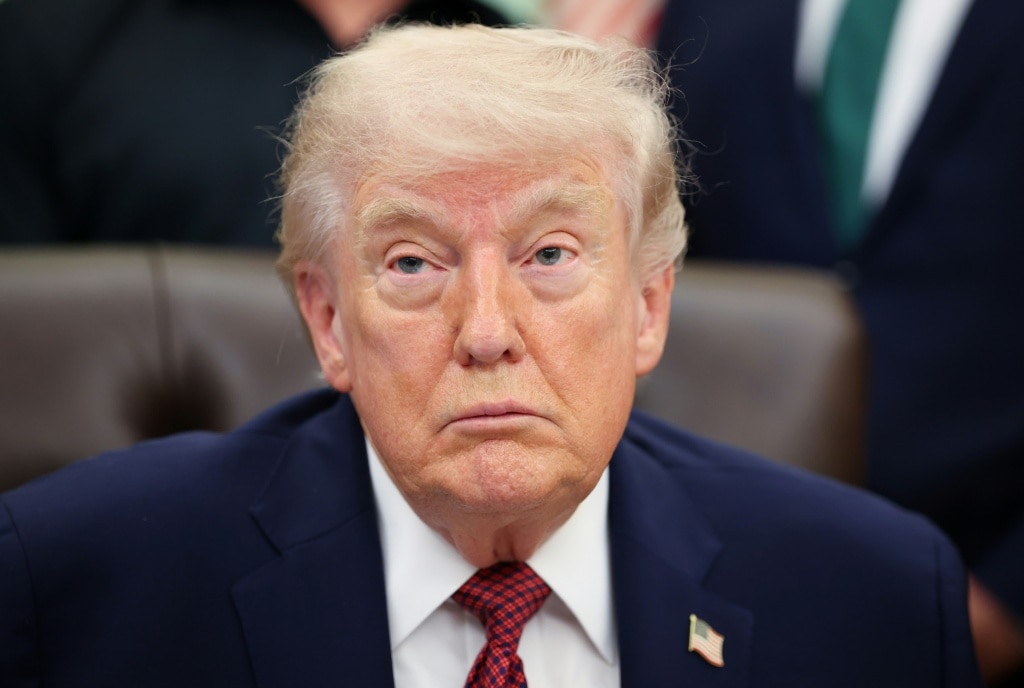
    Trump’s statement on Truth Social indicated that affected nations would collaborate with United States naval assets to maintain open passage through the vital shipping lane. The former president employed characteristically forceful language, vowing aggressive military action including coastal bombardment and the destruction of Iranian vessels attempting to interfere with maritime traffic.

    The announcement follows Trump’s previous remarks to journalists regarding imminent US Navy escorts for commercial tankers transiting the strait. This development occurs alongside provocative statements from Iran’s new Supreme Leader, Mojtaba Khamenei, who has advocated for maintaining the waterway’s closure while promising expanded confrontation against American and Israeli interests.

    Diplomatic tensions further intensified through statements from Iran’s United Nations representative, Amir Saeid Iravani, who attributed regional instability directly to American aggression and security undermining actions. The exchange represents the latest chapter in the long-standing adversarial relationship between Tehran and Washington, with global energy markets closely monitoring developments that could significantly impact oil transportation and pricing worldwide.

  • Millions in Vietnam to vote for a new legislature in general election

    Millions in Vietnam to vote for a new legislature in general election

    HANOI, Vietnam — Vietnamese citizens participated in nationwide parliamentary elections on Sunday to select 500 representatives for the National Assembly. This electoral process follows the Communist Party’s January congress where To Lam secured reelection as general secretary, the nation’s most influential political position.

    Approximately 79 million registered voters were eligible to choose from 864 pre-screened candidates, all vetted and approved by the ruling Communist Party. The electoral system ensures the National Assembly maintains alignment with the party’s political directives and policy objectives.

    Following his vote in Hanoi, General Secretary Lam characterized the election as “a national celebration” demonstrating public support for the political process. He emphasized that citizens were selecting representatives committed to national development, sovereignty preservation, and stability maintenance.

    The newly constituted Assembly, scheduled to convene its inaugural session in April, will formally endorse key governmental appointments and implement policy priorities established during the party congress. These priorities emphasize sustained economic expansion and political continuity under the Communist Party’s centralized leadership framework.

    Vietnam’s remarkable economic transformation over the past decade, fueled by manufacturing exports and foreign investment, provides context for these elections. The country has emerged as a strategic alternative in global supply chains, attracting significant electronics and textile manufacturers diversifying operations beyond China.

    The government has established an ambitious target exceeding 10% annual growth through private sector-led development—a notable policy shift for the communist state. This recalibration focuses on advancing higher-value industries, modernized production systems, and broader integration of technology and digital solutions.

    Despite economic optimism, challenges persist from global trade tensions and tariff implementations, particularly those initiated by the Trump administration, which affect Vietnam’s export-dependent economy.

    Voter participation historically exceeds 90%, with polling facilities established across urban centers, rural communities, and remote regions to facilitate universal access. Retired official Doan Thi Bich expressed typical voter sentiment, stating confidence in selecting “candidates with morals, dedication and competence to serve the country.”

  • Hamas congratulates Iran’s new leader, urges Tehran not to hit neighbours

    Hamas congratulates Iran’s new leader, urges Tehran not to hit neighbours

    The Palestinian organization Hamas has issued a formal condemnation of the joint military campaign conducted by the United States and Israel against Iran, characterizing the offensive as a clear breach of international legal standards. In an official communiqué released on Saturday, the movement articulated its position that the ongoing hostilities fundamentally contradict the broader interests of both the Islamic world and the Middle Eastern region, emphasizing the critical necessity for an immediate cessation of all military operations.

    Beyond its condemnation, Hamas actively called upon regional governments to initiate coordinated diplomatic measures aimed at de-escalating the conflict. Striking a nuanced position, the group also appealed directly to Iranian leadership, urging strategic restraint and specifically requesting that Tehran avoid extending military operations into neighboring nations’ territories. This dual approach reflects Hamas’s attempt to balance its ideological alignment with Iran against the practical realities of regional stability.

    This significant political statement emerges against a backdrop of escalating tensions that threaten to transform the current conflict into a broader regional confrontation. The offensive, initiated on February 28th by American and Israeli forces, resulted in the deaths of numerous high-ranking Iranian officials, including the country’s Supreme Leader Ayatollah Ali Khamenei.

    In a related development, Hamas extended formal congratulations to Ayatollah Sayyid Mojtaba Husseini Khamenei following his appointment as Iran’s new Supreme Leader. Mohammad Darwish, presiding chairman of Hamas’s leadership council, conveyed the movement’s confidence in the new leader’s capability to navigate Iran through this period of regional instability while maintaining the foundational principles of the Islamic Revolution.

    The organization further expressed its expectation that Iran would continue its decades-long policy of supporting the Palestinian cause and their resistance movement. Iranian forces have responded to the initial offensive with coordinated missile and drone attacks targeting both Israeli territory and American interests throughout the region, significantly widening the scope of the conflict and increasing concerns about prolonged regional warfare.

  • Anti-Muslim hate becoming ‘dangerously normalised’ in Australia: Faruqi

    Anti-Muslim hate becoming ‘dangerously normalised’ in Australia: Faruqi

    A prominent Australian Greens senator has launched a severe critique against the Albanese government for its perceived failure to address escalating Islamophobia across the nation. Mehreen Faruqi, one of the few Muslim federal parliamentarians, issued a forceful statement coinciding with the United Nations’ International Day to Combat Islamophobia on March 15th—a date that also marks the seventh anniversary of the Christchurch mosque massacre where 51 worshippers were killed by an Australian white supremacist.

    Senator Faruqi asserted that the horrific 2019 terror attack should have served as a national reckoning but instead, anti-Muslim sentiment has become ‘dangerously normalized’ in Australian society. She accused successive governments of either ignoring or actively fueling the conditions that enable such extremism through decades of political and media portrayal of Muslims as threats to the Australian way of life.

    The senator particularly criticized the current political climate, stating that both major parties—Labor and the Coalition—are engaged in a ‘racist race to the bottom’ with One Nation. Her comments came after the Greens’ recent Senate motion to address the normalization of anti-Muslim rhetoric was voted down by the major parties.

    Supporting these concerns, recent data from Islamophobia Register Australia revealed a staggering 740% increase in reported anti-Muslim incidents following the Bondi terror attack last December. These incidents range from physical assaults and verbal abuse to vandalism and threatening letters sent to mosques, including Sydney’s Lakemba Mosque.

    Aftab Malik, Australia’s Special Envoy to Combat Islamophobia, described the current situation as having reached ‘crisis levels,’ noting that many Muslim Australians now question their safety during daily activities like praying or simply walking in public. He emphasized the need for systemic reform rather than mere statements of condemnation after incidents occur.

    In contrast, Labor MP Anne Aly, Australia’s first female Muslim cabinet minister, shared a more conciliatory message, affirming that ‘Islamophobia has no place in Australia’ and emphasizing the government’s commitment to building an inclusive society. Prime Minister Anthony Albanese similarly reiterated Australia’s stance against hatred and division, celebrating Muslim contributions to Australian society.

  • Why Trump emphasizes US Kharg attack preserved Iran oil lifeline

    Why Trump emphasizes US Kharg attack preserved Iran oil lifeline

    Amid escalating military operations against Iran, the Trump administration continues its assertive rhetoric claiming devastating impacts on Iranian capabilities. Defense Secretary Pete Hegseth described March 10 as witnessing the “most intense” day of strikes, while President Trump asserted the conflict would conclude rapidly due to diminishing targets.

    The White House frames this campaign as systematically dismantling Iran’s capacity to threaten American interests and global security. While previous strikes focused primarily on military and nuclear installations, recent operations have expanded to include critical civilian infrastructure. Israeli forces targeted two oil refineries and storage facilities near Tehran on March 8, with Iran additionally accusing the US of attacking a desalination plant.

    However, Kharg Island—Iran’s paramount oil export terminal handling approximately 90% of crude exports—remained conspicuously untouched until limited strikes on Friday. Notably, Trump emphasized through Truth Social that the operation exclusively targeted military assets on the island, specifically avoiding damage to oil infrastructure.

    US Central Command corroborated this approach, stating their precision strike destroyed naval mine storage facilities, missile bunkers, and over 90 military targets while deliberately preserving oil operations.

    Kharg’s strategic significance cannot be overstated. This coral island processes millions of barrels daily through subsea pipelines from Iranian oil fields, predominantly supplying China. The terminal generates tens of billions in annual government revenue, making it irreplaceable to Iran’s economy.

    Unlike other major oil producers that diversify export capabilities, Iran concentrates virtually all export capacity at this single location. Historical factors including post-revolution self-reliance policies and geographical advantages (deep-water access for supertankers) cemented Kharg’s dominance since its modern development began in 1958.

    Paradoxically, the very vulnerability that makes Kharg an obvious target also protects it. Comprehensive destruction would cripple Iran’s economy for years, potentially triggering global oil prices reaching $150 per barrel—compared to the $100+ levels during the Ukraine invasion that contributed significantly to inflation crises. With American voters prioritizing cost-of-living concerns ahead of midterm elections, Trump faces balancing military objectives against economic stability.

    Additional complicating factors include avoiding actions that would undermine claims of acting in the Iranian people’s interests, as any successor government would inherit a devastated economy. For now, strategic economic considerations appear to outweigh military advantage in preserving Kharg’s operational capacity.

  • Will Trump help or hinder Zimbabwe’s white farmers in their compensation battle?

    Will Trump help or hinder Zimbabwe’s white farmers in their compensation battle?

    Aging white farmers displaced during Zimbabwe’s controversial land reforms two decades ago are pinning their hopes on former US President Donald Trump to secure billions in unpaid compensation from the government. This development comes as Zimbabwe struggles with a massive $23 billion debt burden that has hampered its ability to fulfill a $3.5 billion compensation agreement reached in 2020.

    The land redistribution program under former President Robert Mugabe in the early 2000s saw approximately 4,500 predominantly white-owned farms seized and redistributed to black Zimbabweans. While intended to address colonial-era land imbalances, the program triggered economic collapse and international sanctions that crippled the nation’s agricultural sector.

    Current President Emmerson Mnangagwa, seeking to repair Zimbabwe’s international standing, committed to compensating farmers for infrastructure improvements on the seized lands. However, the government’s financial constraints led to a compromise offering affected farmers just 1% of their total compensation upfront, with the remainder issued as 10-year treasury bonds paying 2% interest semi-annually.

    With many original farmers now elderly and skeptical about the government’s long-term payment capabilities, only 17% have accepted this arrangement. This has prompted some factions to seek international intervention through Washington-based lobby group Mercury Public Affairs LLC, which has connections to the Trump administration.

    The lobbying effort, coordinated through South African consultancy OB Projects Management, aims to persuade US officials to support debt clearance and new financing arrangements through international institutions like the World Bank. This approach gains significance amid potential legislative changes, as a new congressional bill proposes repealing the Zimbabwe Democracy and Economic Recovery Act of 2001, which currently restricts international funding to Zimbabwe.

    The situation has divided the farming community, with the Commercial Farmers Union distancing itself from the US lobbying efforts while other groups explore alternative solutions. Some farmers have even reached out to tech billionaire Elon Musk regarding potential financing arrangements.

    Underpinning these efforts is Zimbabwe’s vast mineral wealth, particularly its significant lithium, chromium, cobalt, and rare earth deposits. The mineral resources are seen as potential leverage for attracting US investment in exchange for debt settlement commitments.

    Zimbabwe’s Finance Minister Mthuli Ncube has expressed openness to external intervention, stating the government remains committed to compensation payments but lacks the financial capacity for immediate settlement. As the situation develops, farmers remain caught between government promises, international politics, and the pressing reality of advancing age and financial uncertainty.