作者: admin

  • Russia launches major ballistic missile attack on Kyiv

    Russia launches major ballistic missile attack on Kyiv

    Overnight drone and missile strikes exchanged between Russia and Ukraine have sent tensions soaring to new heights in the nearly four-year full-scale invasion, with the Ukrainian capital Kyiv absorbing one of the largest ballistic missile assaults of the war to date. Ukrainian officials confirmed that the Russian bombardment left at least one civilian dead and at least 14 others wounded, after a wave of projectiles targeted multiple districts across Kyiv and its surrounding suburbs.

    Ukrainian President Volodymyr Zelenskyy labeled the attack as one of the most extensive ballistic missile campaigns against Kyiv since Russia launched its full-scale invasion in February 2022. In an official update shared via Telegram, Zelenskyy added context to the mounting pressure facing Ukraine, noting that over the preceding seven days, Russian forces had launched roughly 1,450 attack drones, more than 1,640 precision-guided bombs, and 99 missiles of different variants against Ukrainian targets across the country.

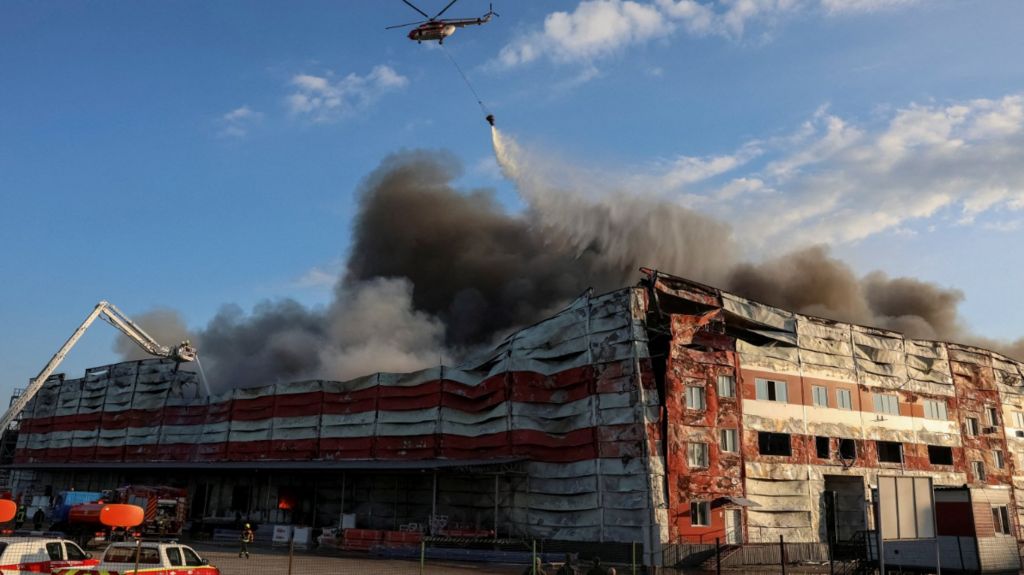
    According to the Ukrainian Air Force, the overnight assault on Kyiv deployed a diverse arsenal of Russian weaponry, including Iskander short-range ballistic missiles, hypersonic Zircon anti-ship cruise missiles, and a total of 125 attack drones. Ukrainian air defense crews managed to intercept 18 of the 41 incoming ballistic missiles, as well as 108 of the drones launched in the wave. Kyiv Mayor Vitaliy Klitschko confirmed that both civilian residential buildings and commercial non-residential structures suffered damage in the strikes, with a local supermarket and a student dormitory among the impacted sites. Emergency response teams remained on scene through Sunday morning, working to extinguish large fires that broke out at two commercial warehouses damaged in the attack.

    The Russian strikes on Kyiv came in direct retaliation for a coordinated Ukrainian drone assault on facilities owned by Wildberries, Russia’s largest e-commerce retailer, widely compared to Amazon in the United States. The drone attacks destroyed two Wildberries warehouses, left eight people dead, and triggered massive uncontrolled fires at the sites. Seven of the fatalities and 25 injuries were reported at a warehouse in Tambov, a city located roughly 475 kilometers southeast of Moscow. One additional fatality and 37 injuries were recorded at a second warehouse in Elektrostal, a city just outside the Russian capital.

    In a statement released Saturday, Zelenskyy defended Ukraine’s cross-border targeting operations, framing them as a direct response to repeated Russian strikes on Ukrainian civilian infrastructure and population centers. The governor of Russia’s Stavropol Krai, a southwestern region of the country, also confirmed that a separate Ukrainian drone attack sparked a large fire at a local industrial park over the weekend, marking another in a growing string of strikes on Russian territory.

    In recent weeks, Ukraine has significantly ramped up its long-range drone campaign against Russian critical energy infrastructure, a strategy that has reportedly caused widespread fuel shortages across parts of Russia. Earlier this month, Ukrainian officials claimed that their strikes had disabled approximately 43 percent of Russia’s total oil refining capacity, a figure that the BBC has not been able to independently verify. Ukrainian officials have repeatedly stated that Russian oil and gas facilities are legitimate military targets, arguing that Moscow depends heavily on revenue from fossil fuel exports to fund its ongoing invasion of Ukraine. Founded in 2004, Wildberries has grown into Russia’s largest e-commerce platform; earlier this year, Forbes Russia valued the combined RWB group, which merges Wildberries and Russian advertising firm Russ, at roughly $12.6 billion.
  • Neighbours actor Terence Donovan dies aged 90

    Neighbours actor Terence Donovan dies aged 90

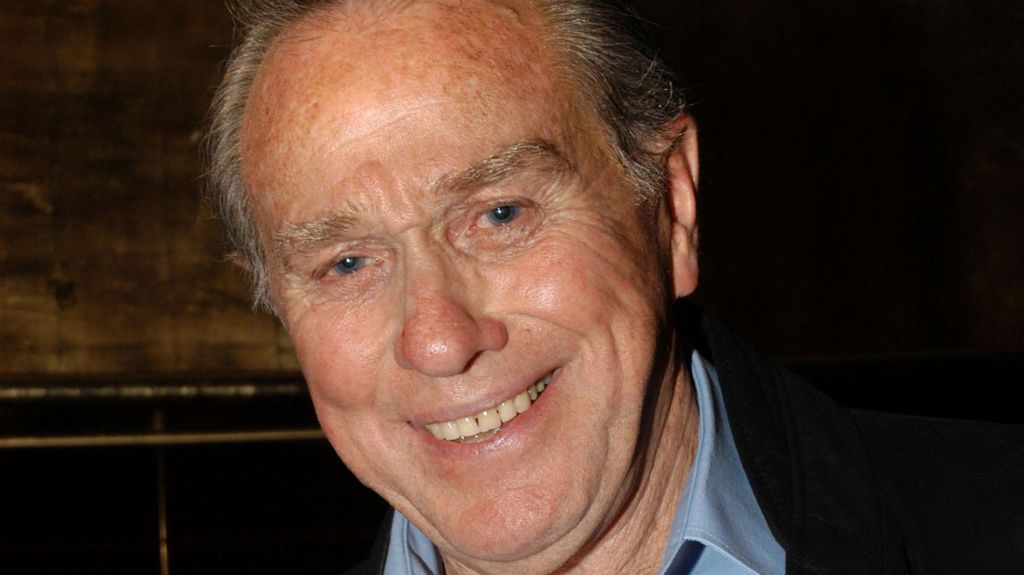
    Beloved British-Australian screen and stage performer Terence Donovan, whose decades-long career cemented his status as a staple of Australian television and film, has passed away at 90, his family has confirmed. The actor drew his final breath peacefully on Saturday night in Melbourne, Australia, according to a joint statement shared by his sons — fellow actor Jason Donovan and Paul Donovan.

    In an emotional public tribute posted to social media, the pair remembered their father as an unforgettable, larger-than-life presence that anchored their family. “Our Dad was a huge character, larger than life. He was our best friend … our world! We will desperately miss him but we take comfort knowing we were all here by his side in his final days,” they wrote. They added that the family finds peace in the knowledge Donovan lived fully, embracing his core mantra: “in life it’s either a daring adventure or nothing at all. How lucky are we to have a Dad like you.”

    Born in London, Donovan moved to Australia as a teenager, launching his entertainment career first as a vocalist before making his on-screen debut in the early 1960s. A decade into his career, he landed two of his most iconic television roles: first as Detective Mick Peters in the hit 1970s Australian police procedural *Division 4*, followed by a turn as Detective Senior Sergeant Vic Cameron on another popular police drama, *Cop Shop*, which ran through the 1980s.

    In the 1990s, Donovan joined the cast of Australia’s most famous long-running soap opera *Neighbours* as Doug Willis, stepping into the role shortly after his son Jason — a former *Neighbours* star who rose to global fame on the show — departed the series. He later took another well-known soap role, playing Al Simpson on fellow Australian drama *Home and Away*. Beyond his 60-year television career, Donovan built an impressive resume in film, with memorable supporting turns in iconic Australian features including *The Man from Snowy River* and *Breaker Morant*, and he also appeared in dozens of stage productions across the country.

    Beyond his work in front of the camera, Donovan was a passionate advocate for the Australian screen industry. In the early 1970s, when local production was being crowded out by an influx of imported content from the U.S. and UK, Donovan used his public profile to rally support for domestic storytelling. Jason Donovan noted in his tribute that his father famously joined public marches demanding local content, carrying banners that read “T.V. MAKE IT AUSTRALIA NOW.”

    That advocacy delivered lasting change: campaigning by Donovan and other supporters led to the introduction of rules requiring commercial Australian broadcasters to air a minimum quota of local content. “Without people like my Dad we might not have seen the growth in the industry during the 70s and 80s, and indirectly, Australian films such as *The Man From Snowy River*, *Breaker Morant*, *Picnic at Hanging Rock*, *Priscilla*, *Muriel’s Wedding*, *Crocodile Dundee* [and] *Strictly Ballroom*,” Jason added, highlighting the far-reaching impact of his father’s activism that continues to benefit Australian entertainment today.

  • Cuban dissident Luis Manuel Otero Alcántara goes into exile in US

    Cuban dissident Luis Manuel Otero Alcántara goes into exile in US

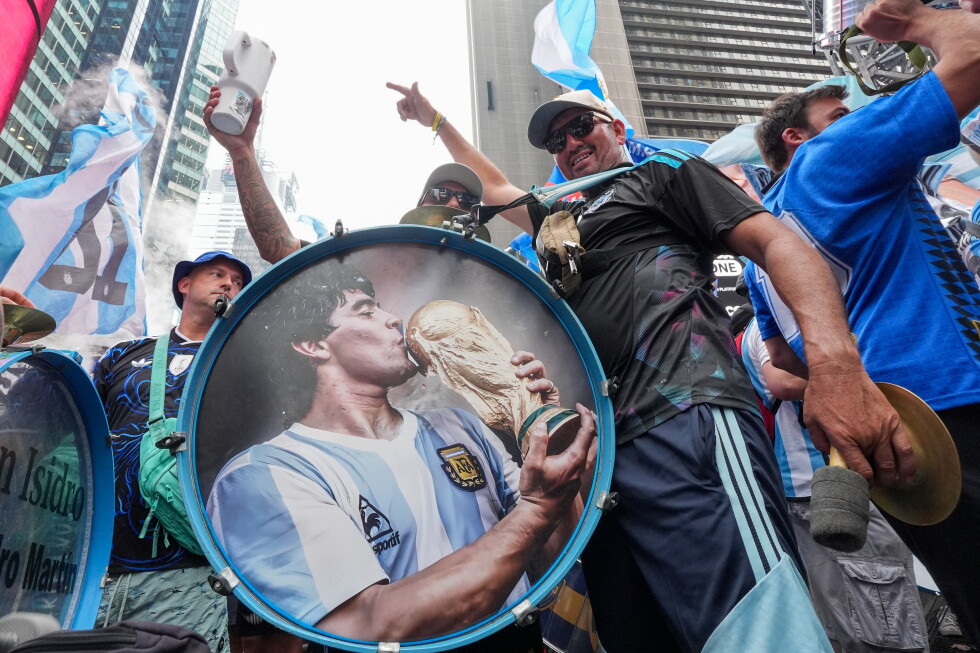
    After serving five years behind bars in Cuba, one of the Caribbean nation’s most high-profile government critics has arrived in the United States to begin a life in exile. Thirty-eight-year-old Luis Manuel Otero Alcántara heads the San Isidro Movement (SIM), a collective of artists, independent journalists, and intellectuals that has spent years organizing grassroots campaigns for expanded freedom of expression and democratic governance in Cuba, a one-party communist state.

    Otero Alcántara was first taken into custody in 2021, amid the largest anti-government demonstrations Cuba had seen in more than 30 years. For his entire sentence, he was incarcerated at the maximum-security Guanajay prison facility on the outskirts of Havana. In the days leading up to his departure, his location remained undisclosed as Cuban officials processed his release while U.S. authorities reviewed and approved his parole application.

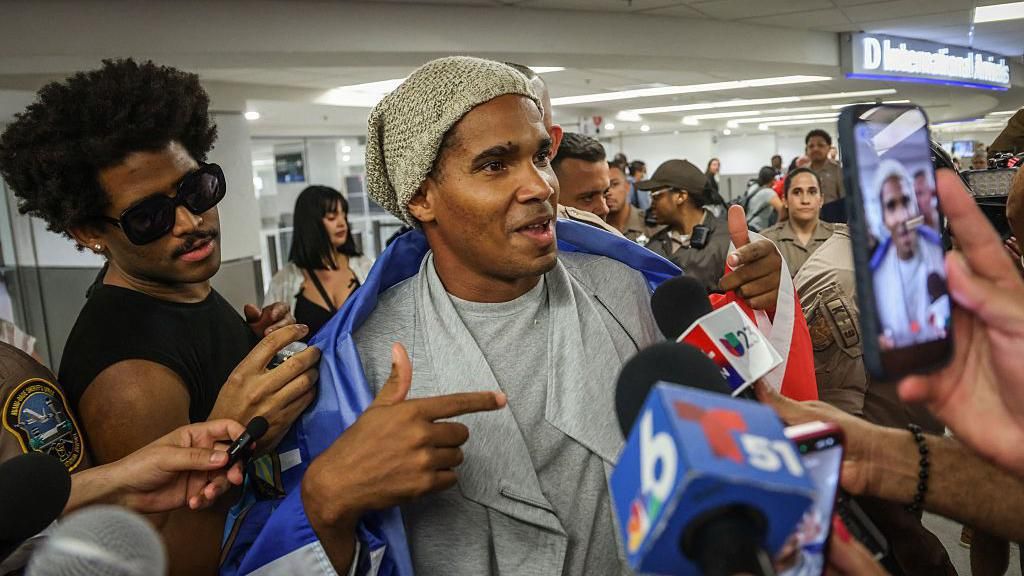
    When he stepped out into the public terminal at Miami International Airport, Otero Alcántara was met by a crowd of cheering supporters who sang the Cuban national anthem in welcome. The dissident held up his hand, curving his thumb and forefinger to form the shape of the letter L – a well-known anti-government symbol that stands for “Libertad,” the Spanish word for freedom. Speaking to reporters shortly after his arrival, Otero Alcántara made clear his criticism of the Cuban government would not end with his exile. “I believe the dictatorship has to end, and the Castro dynasty has to end, as well,” he said. “Because as long as there is a Castro in power, there will be corruption.”

    Cuban authorities have long alleged that the San Isidro Movement receives direct funding from the U.S. government and operates as a front to destabilize the Cuban state – claims the movement and its members uniformly reject. SIM organizers say their members are routinely targeted by Cuban security forces, with many subjected to arbitrary detainment and harassment for their activism.

    The 2021 protests that led to Otero Alcántara’s arrest saw hundreds of demonstrators taken into custody across the island, and the case of the dissident leader and his SIM colleague Maykel Castillo, a musician better known by his stage name Osorbo who is currently serving an eight-year prison sentence, has been a persistent flashpoint in diplomatic relations between Washington and Havana.

    Tensions between the two nations have spiked sharply in recent months under the current U.S. administration, which has imposed a full oil blockade on Cuba, expanded sweeping economic sanctions, and issued open threats of potential military intervention. Just last week, CBS News, the U.S. news partner of the BBC, reported that Pentagon officials had held internal briefings reviewing potential military options for action against Cuba, though the report emphasized that the discussions did not indicate a final decision to launch an operation had been made.

    The U.S. oil blockade has deepened an already severe national fuel crisis on the island, pushing Cuban communities to face extended daily power blackouts and worsening widespread food shortages. In May, the U.S. further escalated hostilities by issuing an unprecedented murder indictment against former Cuban leader Raúl Castro, connected to the 1996 downing of two private aircraft operated by a Cuban exile group, an incident that killed four people. The indictment drew immediate condemnation from both Russia and China, which reject U.S. interference in Cuban sovereign affairs.

    Economic strain from the ongoing sanctions has also hit Cuba’s critical tourism sector hard. Official data from Cuba’s National Office of Statistics and Information (Onei) shows that fewer than 360,000 international tourists visited the island in the first five months of 2026, a nearly 60% drop from the same period in 2025. In comments following Otero Alcántara’s release, U.S. Secretary of State Marco Rubio doubled down on Washington’s stance, calling the Cuban government’s 2021 crackdown on protesters a reminder of “the unique misery and evil that is innate to the communist system.” He added that Otero Alcántara’s only offense was “refusing to stay silent and using his art to demand the basic freedoms everyday Cubans have been denied for almost seven decades.” U.S. officials have repeatedly stated that a peaceful negotiated agreement with Cuba is unlikely under current conditions.

  • The biggest takeaways from the 2026 World Cup

    The biggest takeaways from the 2026 World Cup

    ATLANTA – As Spain and defending World Cup champion Argentina prepare to step onto the pitch in New Jersey for the tournament’s 2026 final, the curtain is set to fall on the biggest edition of global soccer’s flagship event in history. Over nearly six weeks of competition co-hosted by the United States, Mexico and Canada, a record-breaking 104 matches have been played, capping off an expanded tournament that delivered electrifying on-pitch action alongside a wave of lingering controversies. From underdog breakthroughs to political tensions and widespread criticism of new rules and technology, the first 48-team World Cup has been one of the most unpredictable and debated tournaments in modern memory. Below are the defining takeaways from the 2026 event.

    ### More Teams, More Underdog Drama
    When FIFA approved the expansion from 32 to 48 teams, critics immediately warned the new format would produce lopsided group-stage matches and dilute the competitive stakes of the opening round. But several unheralded underdog nations proved the skeptics wrong, writing their own chapters in World Cup history and winning legions of new global fans.

    Cape Verde, making its historic tournament debut, defied all expectations to hold powerhouse Spain to a draw in its opening match, advance to the round of 32, and push defending champion Argentina to the brink before falling 3-2 in extra time in an instant classic. The nation’s 40-year-old goalkeeper Vozinha emerged as an unexpected breakout star, amassing millions of new followers across social media platforms for his series of game-saving performances. Fellow debutants Congo also advanced past the group stage and pushed European powerhouse England to a tight match before elimination, while Curaçao remained in contention for a knockout spot heading into its final group fixture.

    FIFA’s gamble to open the World Cup to more nations was partially vindicated: smaller sides proved they can compete with the sport’s traditional powerhouses on the biggest stage. Even so, it was the sport’s elite former champions — Argentina, Spain, France and England — that claimed the four semifinal spots, reinforcing the hierarchy of global soccer.

    ### The World’s Top Stars Deliver on the Big Stage
    The race for the tournament’s Golden Boot became a showcase for the planet’s best players, with Lionel Messi, Kylian Mbappé, Erling Haaland, Harry Kane and Jude Bellingham all producing consistent, high-scoring performances throughout the knockout stages.

    Heading into Sunday’s final, Mbappé holds the tournament lead with 10 goals, and has already broken the all-time career World Cup scoring record with 22 total goals across his tournament appearances. Messi trails Mbappé by two goals at this tournament, sitting on 21 total career World Cup goals with a chance to equal or surpass the record in the final, and is still in contention for a third career Ballon d’Or if Argentina claims the trophy. While Cristiano Ronaldo could not lead Portugal to a deep run in what he has confirmed is his final World Cup, Spanish teenage sensation Lamine Yamal — who emerged as a star at the 2024 Euros — worked his way back into form after overcoming a pre-tournament injury to play a key role in Spain’s run to the final.

    ### New Technology Sparks Backlash Over Controversial Calls
    The tournament’s embrace of cutting-edge officiating technology put VAR (Video Assistant Review) at the center of multiple contentious decisions that saw goals disallowed for Germany, Croatia and Egypt, sparking fury from coaches and fans alike.
    After Argentina pulled off a dramatic comeback from a 2-0 deficit to beat Egypt 3-2 in the round of 16, Egypt head coach Hossam Hassan launched a scathing attack on officials after a potential opening goal for his side was overturned by VAR review. “We have suffered injustice,” Hassan said after the elimination.

    The tournament’s sensor-equipped official match ball also changed the outcome of a knockout fixture: Croatia had a dramatic late equalizer ruled out against Portugal in the round of 32, when the ball’s sensors detected the slightest touch offside by Igor Matanović before Josko Gvardiol scored. “All these decisions take the joy out of football,” said Croatia head coach Zlatko Dalić, who announced his resignation shortly after the elimination.

    ### Exorbitant Ticket Prices Didn’t Deter Record Fan Turnout
    Leading up to the tournament, critics warned that FIFA’s adoption of dynamic pricing would put match tickets out of reach for average soccer fans, with some describing the policy as a “monumental betrayal” of supporters. Official general sale prices for group-stage matches ranged from $140 to $2,735, with final tickets reaching as high as $8,680 — far above the price point for the 2022 Qatar World Cup. After sustained backlash, FIFA added a batch of $60 tickets for every match allocated to each of the 48 participating national federations, but the controversy extended to FIFA’s official resale platform, which allowed sellers to list tickets for well above face value. One final ticket was listed for nearly $2.3 million on the platform; while FIFA did not regulate resale prices, it took a cut of every secondary sale.

    For all the criticism around pricing, fans still turned out in record numbers across the three host nations, even for matches featuring no elite global teams. After an opening weekend with scattered empty seats for the South Korea-Czech Republic match in Guadalajara, nearly every subsequent match reported sold-out stadiums. Many international visitors also praised the warm hospitality they received during their time in the United States.

    ### Hydration Breeds Draw Major Fan and Critic Pushback
    One of the tournament’s most unpopular innovations was the mandatory hydration break added to the middle of each half of play, introduced to help players cope with summer heat across North American venues. The rule drew loud jeers from fans inside stadiums, and drew criticism from former players as well. “We’re in America, right? So, it is like it is a timeout,” former Ireland international Roy Keane said on The Overlap podcast, echoing widespread complaints that the breaks disrupted the flow of matches.

    FIFA mandated the breaks regardless of match-day temperature, venue or location, and the rule quickly became a tactical loophole: coaches used the pauses to deliver tactical instructions to their players, while broadcasters used the extra time for additional commercial breaks. It remains unclear whether FIFA will retain the rule for future World Cups, and organizers for the 2028 European Championship — co-hosted by the British Isles — have already signaled they will not adopt the policy.

    ### Political Tensions Overshadow Iran’s Participation
    As is often the case at major international tournaments, politics and soccer intersected at the 2026 World Cup, with the highest tensions surrounding Iran’s participation. Amid ongoing conflict in the Middle East, there were widespread doubts that Iran would even send its team to the tournament. The side ultimately competed, but was forced to relocate its pre-tournament base camp from Arizona to Mexico amid security and political concerns.

    Iran’s participation was marked by ongoing barriers: U.S. officials refused to issue visas to multiple members of the Iranian delegation, and the team complained of strict travel restrictions that forced players and staff to leave the United States immediately after every match. When Iran was eliminated in the group stage, U.S. Homeland Security Secretary Markwayne Mullin made his position clear: “I’m just glad they’re done and they’re not coming back,” he said.

    The 2026 tournament also put the relationship between former U.S. President Donald Trump and FIFA president Gianni Infantino under the microscope, after a one-game suspension for U.S. striker Folarin Balogun was overturned ahead of the team’s round of 16 match against Belgium. Trump confirmed he had called Infantino to request a review of the red card decision before Balogun was cleared to play. While FIFA insists its independent disciplinary bodies made the final call, the incident sparked widespread questions about political interference in soccer governance. The controversy ultimately did not benefit the United States, which lost the match 4-1 to Belgium.

  • Former China Development Bank president is under anti-corruption probe

    Former China Development Bank president is under anti-corruption probe

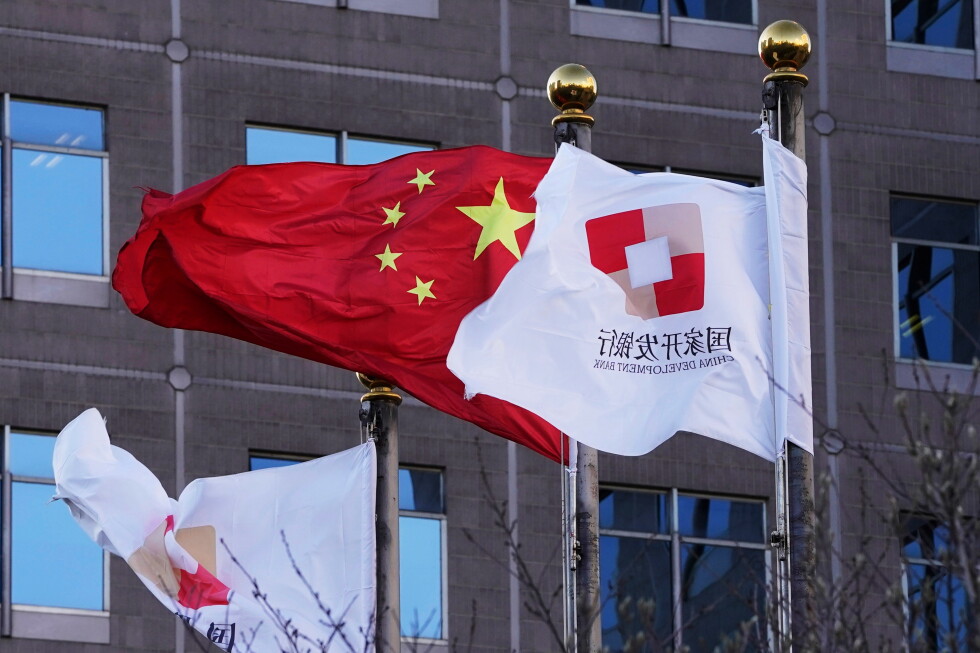
    BEIJING – China’s top anti-corruption oversight body revealed Sunday that Ouyang Weimin, the former president of the state-owned China Development Bank, is facing formal investigation over allegations of severe violations of Communist Party of China discipline and national law. The Central Commission for Discipline Inspection (CCDI) released a brief initial statement confirming the probe, which is being carried out jointly by the CCDI and the National Commission of Supervision, with no further details on the specific allegations disclosed in the initial announcement.

    State-run publication China Daily has shared key biographical details of Ouyang’s decades-long career in public finance and government. Ouyang entered the workforce and joined the Communist Party of China in 1986, with the majority of his early professional tenure spent at the People’s Bank of China, China’s central monetary authority. He later went on to serve as vice-governor of Guangdong Province, China’s dynamic southern economic hub bordering Hong Kong, before being appointed president and deputy Communist Party secretary of the China Development Bank in 2019. He retired from the presidency of the bank in 2023.

    Established in 1994, the China Development Bank is a fully state-owned development finance institution operating under the direct supervision of China’s State Council. Per its official public mandate, the bank focuses on financing projects that support national economic growth, strategic development of key industries, and expansion of infrastructure and services in less developed regions of the country.

    Ouyang’s investigation comes amid a years-long national anti-corruption campaign launched under Chinese President Xi Jinping, which has targeted thousands of current and former officials across all levels of government, state-owned enterprises, and the People’s Liberation Army, including high-ranking generals and senior political leaders. While the campaign frames itself as a crackdown on systemic graft, external critics have argued that it also functions in part as a mechanism to remove political opponents of President Xi from positions of power.

  • Chinese company demands compensation from the UK over British Steel nationalization

    Chinese company demands compensation from the UK over British Steel nationalization

    In a formal statement released Sunday, China’s Jingye Group, the former owner of British Steel, has launched a formal challenge against the United Kingdom government, demanding financial compensation for billions in investment losses one week after the U.K. seized the historic steel manufacturer into public ownership. The dispute has escalated into a bilateral diplomatic flashpoint that risks shaking confidence in the U.K.’s reputation among global cross-border investors.

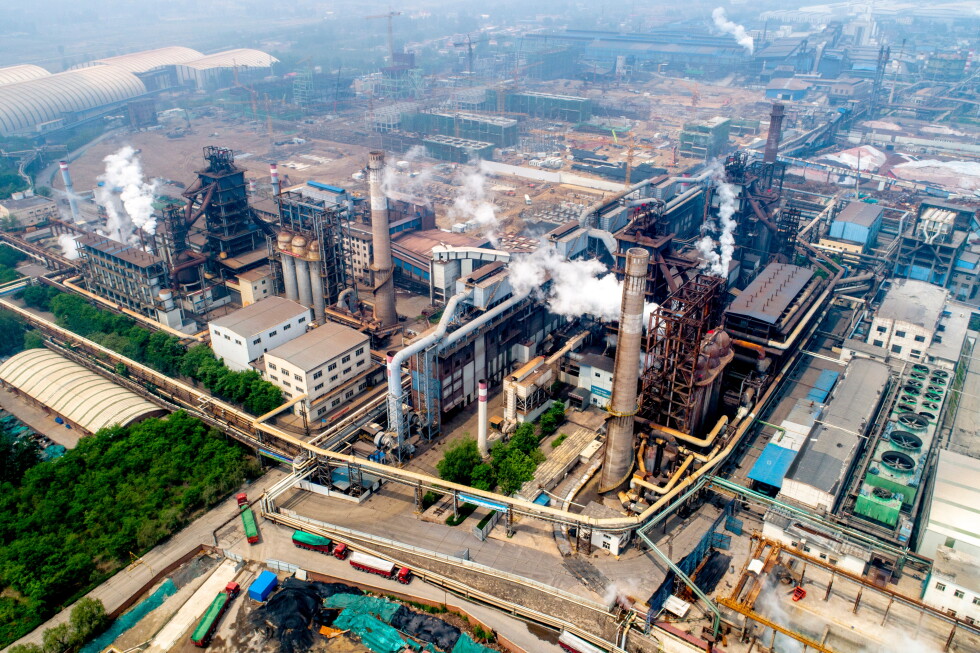
    The sequence of events that led to nationalization began in 2020, when Jingye purchased struggling British Steel out of insolvency, an acquisition the Chinese firm frames as pulling the iconic industrial brand back from the brink of collapse. Tensions flared last year, however, after Jingye warned it was considering shutting down the blast furnaces at British Steel’s Scunthorpe facility—currently the last remaining site in the U.K. that produces virgin steel from raw iron ore and other primary inputs. The British government responded by assuming full operational control of the company, a move formalized by the Department for Business and Trade on July 17. Officials framed the nationalization as a necessary step to protect 2,700 local jobs at the 130-year-old plant, which traces its industrial roots to the U.K.’s Industrial Revolution when British innovations revolutionized global steelmaking. The government added that maintaining domestic steel production is critical for national security, ensuring a steady supply of material for large public construction projects and the country’s defense sector.

    In its statement posted to China’s WeChat social platform, Jingye Group launched a scathing critique of the U.K.’s actions. The company accused the British government of offering “almost zero compensation” for its asset seizure, despite years of sustained investment and major contributions from Jingye to the British steel sector. The nationalization, the firm claimed, has damaged the British government’s global credibility, sown uncertainty among international investors, and caused severe financial harm to both Jingye’s operations and public funds held by British taxpayers. It further called on the U.K. to end its “trampling on international investment rules.”

    Jingye confirmed it has already activated negotiation procedures under the China-U.K. bilateral investment treaty, and has reserved all legal rights, including the option to pursue binding international arbitration. The firm also says it will advocate on behalf of British taxpayers to pursue legal action against both the U.K. government and former British Steel management, though it did not release further details on its planned legal strategy. A spokesperson for the U.K. government noted last week that an independent assessment will be conducted to evaluate if any compensation is owed to Jingye, with no figure or timeline publicly confirmed to date.

    The dispute drew a formal response from China’s Foreign Ministry on Saturday, which warned that how the U.K. resolves the compensation issue will directly shape how Chinese investors evaluate the British investment environment and the reliability of government commitments there. “China urges the UK to earnestly respect market principles and the spirit of contract, and find solutions on compensation and other issues acceptable to both sides,” the ministry said in a statement, adding that Beijing fully supports Chinese companies in defending their legitimate legal rights through formal legal channels.

  • The flight hours and miles of World Cup travels of FIFA’s Infantino in numbers

    The flight hours and miles of World Cup travels of FIFA’s Infantino in numbers

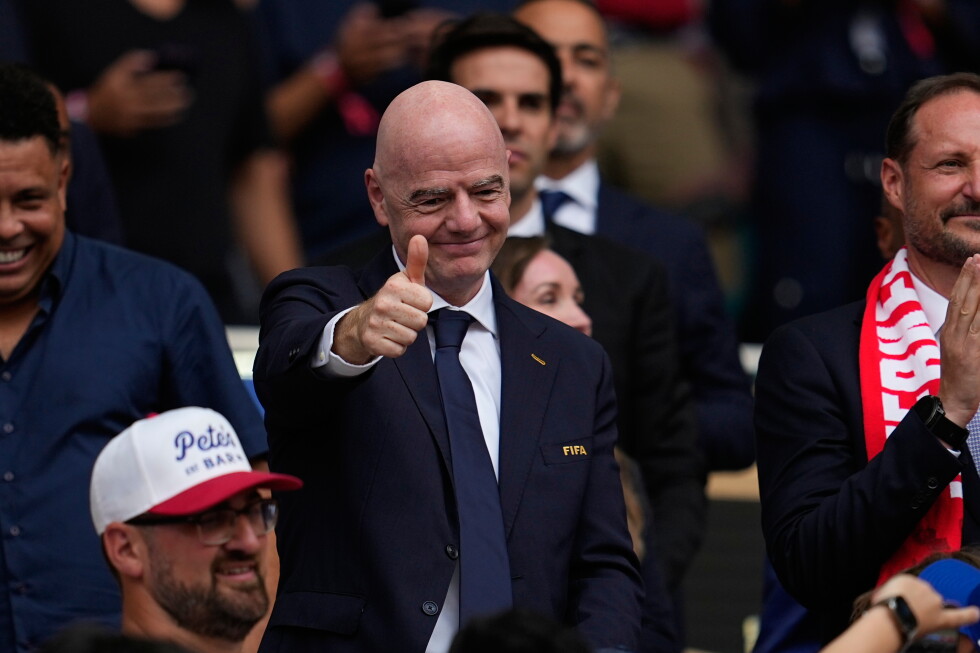
    The 2026 FIFA World Cup, the most geographically dispersed edition in the tournament’s 96-year history, has required a staggering level of travel from the body’s top leader — a new analysis from the Associated Press finds that FIFA President Gianni Infantino has accumulated nearly 60,000 miles of flight time across more than 100 hours aloft during the tournament, a distance large enough to circle the Earth two and a half times.

    Hosted across 16 cities, three North American countries and four separate time zones, the 2026 tournament will wrap up Sunday with the final match in New Jersey, where either Argentina or Spain will claim the world championship. To map the full scope of Infantino’s travel during the tournament, AP reporters cross-referenced private flight logs for the jet he has used in recent years, on-the-ground photos from AP photojournalists, and public social media posts shared by both FIFA and Infantino himself on Instagram.

    The Gulfstream G650 jet used for all of Infantino’s tournament travel is owned by the Qatari government and operated by the private charter division of Qatar Airways, which is an official sponsor of the 2026 World Cup. According to data from flight tracking service FlightAware, the aircraft has averaged more than one flight per day since Infantino’s pre-tournament journey from Los Angeles to Mexico City on June 9, with multiple days seeing three or more separate takeoffs and landings.

    Infantino’s itinerary stretched far beyond match attendance, too. He made stops in New York for a live interview on Fox & Friends, traveled to Miami for a global FIFA summit that brought together representatives from the governing body’s 211 member associations, and even made a round-trip detour to Doha to attend the funeral of Qatar’s former emir, returning to North America in time for the tournament’s semifinal round. FIFA declined multiple requests for comment from the AP regarding Infantino’s travel schedule and private jet arrangements.

    A breakdown of the travel numbers reveals the unprecedented scope of the journey. By the eve of Sunday’s final, Infantino had already attended 43 of the tournament’s record 104 matches, and he has visited all 16 host stadiums at least once — with Miami’s Hard Rock Stadium, where he attended five games, topping his list of most-visited venues. Thirteen days during the tournament saw Infantino attend two matches, often held at venues hundreds of miles apart. The jet has used 21 different airports across North America, leaning on major international airports in host cities most of the time, but occasionally using smaller general aviation airports for quicker access, including Atlanta’s Fulton County Executive Airport and Miami’s Opa Locka Executive Airport. Through the semifinal round, the jet had already made 23 international border crossings between the U.S., Canada and Mexico.

    Excluding the 29 hours of travel for the Doha funeral detour and empty repositioning flights, the Gulfstream has logged 115 total flight hours during the tournament — the equivalent of five full straight days in the air, or enough for a commercial airliner to fly from New York to Los Angeles 20 times. The longest single flight (excluding the Doha trip) clocked in at 5 hours and 44 minutes, a journey from Miami to Seattle for the June 15 Belgium-Egypt match — a duration equal to three full World Cup matches from kickoff to final whistle. The shortest flight was just 28 minutes, a quick hop from Seattle to Vancouver on July 6, about the length of a commercial broadcast episode of a sitcom like *Friends* including advertisements. That day, Infantino attended the U.S.-Belgium match in Seattle before moving on to watch Switzerland face Colombia in Vancouver the next morning.

    By the AP’s calculation, the jet traveled 59,281 miles during the core tournament, excluding the Doha funeral trip. That total is greater than the combined distance of a round-trip flight from New York to Singapore, a round-trip from Los Angeles to Doha, and a round-trip from London to Perth, Australia. The busiest single day for travel was June 26, when the jet covered 5,772 miles: it began with an early morning flight from Miami to Dallas, flew on to Seattle for Infantino to attend the Egypt-Iran match, then departed Seattle late that night for an overnight flight back to Miami, where Infantino watched Colombia take on Portugal the next morning. The only scheduled match Infantino missed was the third-place match between England and France, when thunderstorms across the New York City region grounded all outbound flights from the area Saturday, per Federal Aviation Administration records.

    The massive travel footprint comes amid growing scrutiny of the 2026 World Cup’s carbon footprint. FIFA has publicly committed to cutting carbon emissions from World Cup operations and related activities by 50% by 2030, and aims to reach net-zero emissions by 2040, pledges that are laid out in the organization’s 2026 World Cup sustainability and human rights strategy. However, climate researchers and environmental advocacy groups have warned that the expanded three-nation format, which requires extensive air travel for teams, fans, officials and other event staff, will likely produce more greenhouse gas emissions than any previous World Cup in history, making it the most carbon-intensive tournament to date.

    Associated Press journalist Graham Dunbar in Geneva, Switzerland contributed reporting to this analysis.

  • Nigerian children pay the price for the Iran war as malnutrition and poverty surge

    Nigerian children pay the price for the Iran war as malnutrition and poverty surge

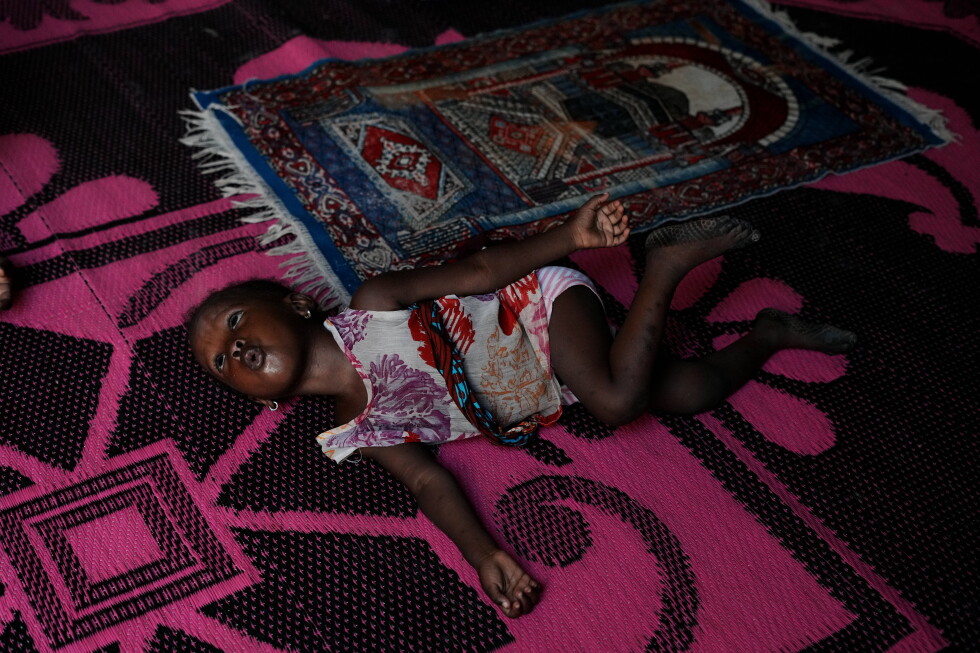
    In the quiet Sokoto State town of Kware, northwestern Nigeria, Maryam Aminu felt a familiar mix of grief and frustration when her 18-month-old toddler became the second of her six children to relapse into acute malnutrition this April. For months, the family has struggled to put consistent, nutrient-dense meals on the table, a hardship that intensified sharply in February after her husband Shehu lost his job as a taxi driver, a casualty of skyrocketing petrol prices triggered by the ongoing war in Iran.

    “Even though I suspected what the diagnosis would be, I was heartbroken and angry because I knew exactly why this happened,” Aminu explained from the plain living area of her family’s two-bedroom home, where coal stove ash drifted through the small space. “Meals are irregular, and we can barely afford enough to eat, let alone food that keeps children healthy.”

    Child malnutrition relapse is no longer an isolated case in Sokoto or across northern Nigeria, local health workers and international aid officials confirm. The ripple effects of the Middle East conflict have piled a new crisis onto a region already reeling from extreme poverty and a years-long insurgency that has displaced thousands and cut off many farming communities from their land. Now, the global fuel shock sparked by the war has pushed food insecurity to catastrophic levels for millions of impoverished people, with children bearing the brunt of the harm.

    This growing crisis comes as Nigeria is already grappling with sustained economic volatility sparked by President Bola Tinubu’s sweeping economic reforms, which included the elimination of national fuel subsidies and currency devaluation three years ago. New data from the World Bank released this week underscores the scale of deprivation: more than 139 million Nigerians now live below the poverty line or are classified as vulnerable to falling into poverty.

    The global spillover of the conflict reaches far beyond the Middle East, the United Nations Children’s Fund (UNICEF) warned in a new report published this week. If hostilities continue through the end of 2024, an additional 23.4 million children worldwide will fall into monetary poverty, defined as lacking sufficient income to cover basic needs. Eighty percent of these newly vulnerable children will live across Africa and Asia, the agency estimates.

    “Children are paying the heaviest price for the escalating conflict in the Middle East, even children thousands of miles from the fighting,” UNICEF Executive Director Catherine Russell said during a visit to Sokoto this week. “The longer hostilities continue, the more devastating the long-term consequences will be for a generation of children.”

    The disruption to global energy supplies stems from the closure of the Strait of Hormuz, the critical chokepoint that carried one-fifth of the world’s total oil and gas trade before the outbreak of war. The shutdown triggered a cascading global fuel crisis that drove up prices for nearly every essential good, from household groceries and gasoline to agricultural fertilizer and commercial travel. In Nigeria, retail petrol prices jumped nearly 75% between February and April, surging from 800 naira ($0.58) per liter to 1,400 naira ($1.02) per liter, passing higher costs directly to low-income households that already spend most of their income on food.

    For months, U.S. President Donald Trump has pursued a range of strategies to force Iran to reopen the strait, including targeted airstrikes, naval blockades, negotiations, and public threats, but the waterway remains closed to commercial traffic.

    At public health facilities across Sokoto, frontline workers say they have seen a sharp and steady rise in the number of children returning for repeat malnutrition treatment this year. Unofficial hospital records shared with the Associated Press show nearly 40 children who had previously recovered from malnutrition after February are now back in care for a second diagnosis — a figure that does not include the many families who cannot afford to travel to facilities for treatment.

    “I’m worried, and often angry, about how quickly these numbers are growing,” said Halimah Muhammad, a community health worker based in Sokoto.

    Beyond the immediate threat to child health, soaring prices and persistent economic hardship are setting the stage for long-term developmental harm, Russell warned. Children growing up in chronically food-insecure households face far higher rates of stunting, which irreversibly impacts physical and cognitive growth. Financial stress also pushes more children to drop out of school to support their families, locking intergenerational poverty in place for decades.

    “Their long-term development will be compromised, and many will not be able to stay in school because their parents face such extreme financial pressure,” Russell said. “The long-term implications for these children are absolutely terrible.”

    The conflict has also disrupted global fertilizer supplies and sent prices soaring, compounding risks for northern Nigeria’s majority farming communities. Many of these communities are already unable to access their farmlands regularly due to ongoing violence by armed insurgent and bandit groups, and higher input costs have made this year’s planting season far more precarious, threatening future harvests and deepening the food crisis.

    Shehu Aminu, Maryam’s husband, says the erosion of purchasing power has been overwhelming. “Two years ago, 2,000 naira could buy a nutritious meal for my whole family. Now that same basket of food costs 5,000 naira,” he said. Most days, the family only eats pap, a cheap corn pudding, and plain rice. “There is simply no way to give our children the food they need to grow. I wake up every morning unhappy, because I can no longer provide for the people I love.”

    Communities across northwestern Nigeria are already caught between overlapping security crises: routine attacks by bandit groups that specialize in kidnapping for ransom, and expanding territorial control by Islamist insurgent groups. The distant war in Iran has only multiplied existing vulnerabilities, analysts say.

    “This distant conflict offers no reprieve for the north’s most vulnerable populations, it only makes every existing crisis worse,” said Ikemesit Effiong, a partner at SBM Intelligence, a Lagos-based geopolitical risk advisory firm.

    The pattern of repeated child malnutrition seen in Maryam Aminu’s family plays out across hundreds of households in the region. Larai Malami, a 35-year-old mother of 10, gave birth to her youngest child last December, and the infant has already been diagnosed with malnutrition twice. Her husband lost his job as a motorcycle taxi rider last year, and crossed the border into neighboring Niger to search for work, leaving Malami to care for their children alone.

    Skyrocketing fuel prices keep food costs unaffordable and keep her husband from being able to afford to return home, Malami says. “I worry that my child will never get fully healthy,” she said.

    It is a fear Maryam Aminu shares. For her 18-month-old daughter, she says, “I just wish she were excited and full of life, like a toddler should be.”

  • A centuries-old festival in Japan brings Shinto traditions and towering floats to the streets

    A centuries-old festival in Japan brings Shinto traditions and towering floats to the streets

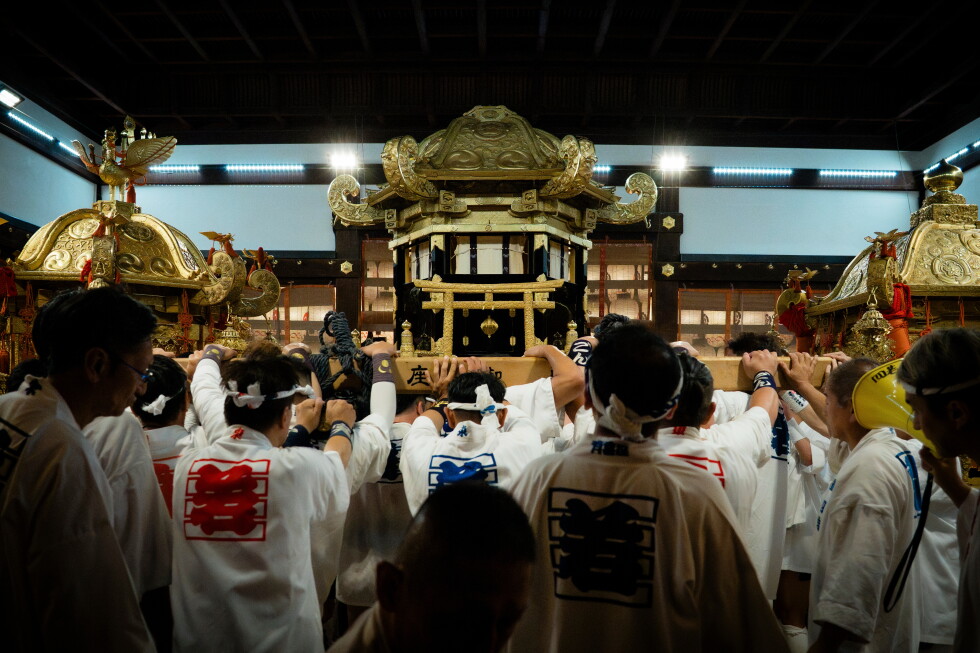
    In the heart of Kyoto, Japan’s former imperial capital, a 1,000-year-old tradition draws thousands of visitors each July, blending ancient spiritual belief, centuries of religious evolution, and tight-knit community bonding. This is the Gion Matsuri, a festival born from a desperate plea to ward off deadly disease that endures today as one of the country’s most iconic cultural events.

    For participants like Katsushi Horikawa, who rides atop one of the procession’s towering, hand-built floats, the experience is inherently sacred. The 12-ton wooden structures, pulled through Kyoto’s crowded streets by teams of organizers, create an unmatched feeling of closeness to the divine. “I am conscious of [the gods] when I’m riding on top,” Horikawa says. “When we’re assembling it as well, but I think the main time is when I’m riding on it.”

    Many casual visitors see the Gion Matsuri as a vibrant public celebration, filled with traditional dance, folk music, and street performances. But religious scholars emphasize the festival’s core purpose remains deeply spiritual, not recreational. “Those performances are not meant primarily for the entertainment of people,” explains Fabio Rambelli, a religious studies professor at the University of California, Santa Barbara. “They are offerings to the gods.”

    Rooted in the late 9th century, the festival originated as a Shinto ritual to appease supernatural spirits believed to cause devastating epidemics. It takes its name from Kyoto’s historic Gion District, with “matsuri” being the Japanese word for festival. At its center is the Yasaka Shrine, a religious site whose history traces centuries of overlapping religious change in Japan. Until 150 years ago, the site operated as a Buddhist temple, a reflection of the long-standing syncretism, or blending, of Shinto and Buddhist traditions that shaped Japanese religious life for millennia.

    In its earliest forms, the shrine centered worship of Gozu Tennō, an ox-headed syncretic deity thought to hold power over epidemics, able to either spread or halt disease. Scholars note the deity drew influences from Indian religious traditions, Korean belief, and local Japanese folklore, a common trait for many Japanese gods that emerged from centuries of cultural exchange. Early processions carried the deity’s image through Kyoto’s streets to demonstrate divine protection from evil forces — a practice that evolved into the parades seen today.

    Japan’s dramatic religious restructuring in the 19th century reshaped the shrine and the festival permanently. In 1868, during the Meiji Restoration, the national government formally separated Shinto and Buddhism, bringing Shinto shrines under state control and centering the emperor — believed to be a direct descendant of the Shinto sun goddess — as the core of Japan’s new national identity. “Because the emperor was the direct descendant of the goddess of the sun, they purified the whole system creating what now we see as Shinto,” says Andrea De Antoni, professor of anthropology and religious studies at the University of Kyoto. The policy sparked a widespread anti-Buddhist movement that saw thousands of Buddhist temples, artworks, and statues destroyed across the country. While Shinto was formally separated from state control after World War II, its modern institutional form still carries the marks of this 19th century restructuring. Today, Shinto is organized around worship of kami, or deities and spirits, a belief system rooted in ancient animist traditions shared with many indigenous cultures across Southeast Asia and the Pacific.

    Beyond its religious history, the Gion Matsuri remains a vital force for bringing Kyoto’s neighborhood communities together, even for long-time foreign residents. Jacques Garrigues, a French resident of Kyoto who has lived in the city for 30 years, attended the 2024 procession with his son, calling it a unifying experience for local residents. “This is the festival of all the people in the neighborhood,” Garrigues explains. “We also come together through a certain sense of religion, although the religious significance is not the same as in France.”

    Many core traditions remain unchanged after centuries. One key custom selects a young boy to serve as a sacred messenger to the gods; during the parade, he sits atop a float with his feet never touching the ground, a sign of his sacred status. Neighborhood teams spend months building and preparing their floats, with many participants holding the belief that the structures ward off evil spirits. Atsushi Matono, who is tasked with installing the shingi — a sacred tree placed at the top of a float, believed to be the point where a deity descends to join the procession — shares the same sense of divine presence felt by riders like Horikawa. “I always carry out my work with great care and respect,” Matono says. “Feeling the presence of the gods.”

  • What to know about the challenges Andy Burnham will face as UK prime minister

    What to know about the challenges Andy Burnham will face as UK prime minister

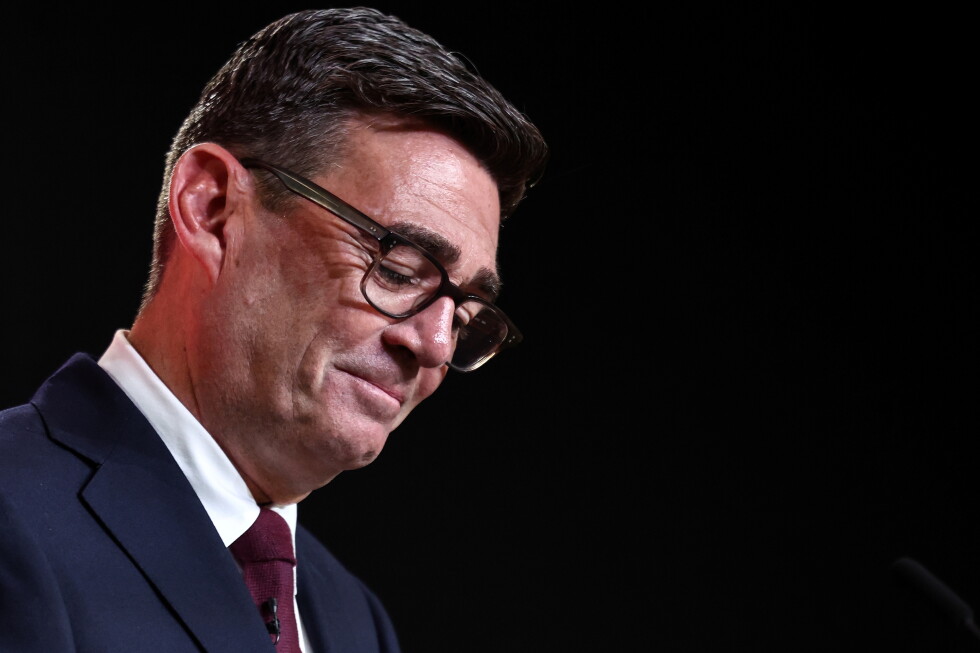
    LONDON – When Andy Burnham crosses the threshold of 10 Downing Street on Monday, he will carry high public expectations into office, while also inheriting a daunting pile of domestic and international crises that mirror the unenviable challenges that forced his predecessor out of Downing Street.

    After nearly a decade serving as Mayor of Greater Manchester in northwest England, and a surprise win in a recent parliamentary by-election that cleared his path back to national politics, Burnham was confirmed as the new leader of the Labour Party last week, and is set to be sworn in as the United Kingdom’s new prime minister. For the regional leader who has spent his career governing a population of just 3 million, steering a national government serving 67 million people across four nations will be a step up of unprecedented scale, bringing with it complex issues he has never before had to address at a national level.

    Below is a breakdown of the most pressing issues facing Burnham’s new administration, and early indications of how he may approach them:

    ### Reviving the Sluggish Economy and Decentralizing Power
    Burnham has so far kept his policy details vague, but has pledged to release a full roadmap this week outlining how he will fund his domestic agenda, which centers on jumpstarting stalled UK economic growth, upgrading public services, and raising household living standards.

    “This change today is the most significant turning point for our politics in 40 years,” Burnham remarked Friday as he officially took the Labour Party reins. “It will lead us to a country where life becomes more affordable, and every person and every region can lift themselves up from where they stand now.”

    The economy Burnham inherits was showing tentative signs of improvement until the outbreak of the Iran war upended global forecasts. Economists now widely predict sharp growth slowdown across 2026 alongside renewed upward pressure on inflation, leaving little room for major new spending commitments.

    A core ideological priority for Burnham is closing the opportunity gap between London and the wider UK, primarily through widespread government decentralization: channeling more funding directly to local authorities, and renationalizing a number of public services that were privatized during the 1980s. His model of business-friendly progressive governance, dubbed “Manchesterism,” seeks to combine private and public investment to upgrade transport, housing and national infrastructure. This ambitious structural reshaping of the UK state could take years to fully implement, however.

    Joshi Herrmann, founder of the independent Manchester-based news outlet The Mill, who has covered Burnham’s career for more than a decade, noted that Burnham may be able to ease financial pressure for struggling households. But, he added: “If the core question facing the country is who can deliver sustained economic growth and reshape the UK economy for the post-Brexit, post-financial crash era, I’d be very surprised if Andy Burnham is that answer.”

    Constrained by tight public finances, Burnham has very little room to increase overall public spending. He is taking over from Keir Starmer, who won power on a manifesto that ruled out increases to the UK’s major tax rates, locking Burnham into that fiscal framework unless he chooses to break those campaign pledges. Burnham has declined to rule out introducing a new wealth tax, telling former footballer and broadcaster Gary Lineker on the Goalhanger podcast last week that the government “might be having to ask for a little more” from the country’s wealthiest citizens.

    ### Navigating Foreign Policy and US Relations With Donald Trump
    One of Burnham’s biggest gaps in experience is on the global stage, but he has already made clear he will maintain the UK’s longstanding commitments to NATO and the country’s independent nuclear deterrent. He has also reaffirmed that Britain will remain a staunch backer of Ukraine in its war against Russian invasion and a reliable ally to the United States.

    The future of US-UK relations will largely hinge on how Burnham handles unpredictable US President Donald Trump, who initially praised Starmer before turning on him over Starmer’s refusal to back the US war with Iran. Burnham has publicly criticized Trump in the past, but says he will treat the US president with respect, just as he treats other political leaders, while being willing to stand his ground on points of disagreement.

    “I like to think I’ve got some personality myself and I’ll just, you know, I’ll deal with him very upfront in the same way,” he told Lineker. “Where you disagree, do it, but do it in a way that is kind of meeting him where he’s at.”

    Trump has repeatedly pressured NATO member states to dramatically increase their military spending, putting Burnham under pressure to go further than the defense spending targets set by Starmer’s government. Starmer’s existing 15 billion pound ($20 billion) defense spending boost is far smaller than what UK military leaders have demanded, and critics have pointed out the plan lacks full funding within the current national budget.

    ### Navigating Sensitive Political Terrain Over the Israel-Hamas War
    Burnham has openly criticized Starmer’s approach to the Israel-Hamas war and the humanitarian catastrophe unfolding in Gaza. He condemned the October 7, 2023, Hamas attacks on southern Israel that killed roughly 1,200 people and took 251 hostages, but has argued the previous UK government waited far too long to call for a permanent ceasefire.

    According to the Gaza Health Ministry, which is run by the Hamas-led administration but staffed by medical professionals that maintain detailed records generally deemed reliable by UN agencies and independent experts, more than 73,000 Palestinians have been killed in Gaza since the start of Israeli operations. Burnham has said his government will consider adding new sanctions against Israeli individuals involved in violence in Gaza and the expansion of illegal settlements in the occupied West Bank.

    The conflict is deeply sensitive for the Labour Party: the party was plagued by accusations of systemic antisemitism before Starmer took leadership, and it also relies heavily on electoral support from the UK’s large Muslim population. Burnham’s stance on the war has already drawn backlash from UK Jewish groups, while pro-Palestinian activists have criticized him for refusing to classify Israel’s bombardment of Gaza as genocide.

    ### Tackling the Politically Thorny Issue of Migration
    Notably, Burnham made no mention of migration in his acceptance speech as Labour leader on Friday, despite the issue ranking as a top priority for a large share of UK voters. Like many wealthy European and Western nations, the UK has seen a sharp rise in arrivals of migrants fleeing war, famine, climate-driven disasters, political persecution and poverty in their home countries.

    Public anger over rising numbers of dangerous small boat crossings of the English Channel has fueled the rise of the anti-immigration Reform UK party, which notched a series of key local and regional election wins that ultimately led to Labour’s decision to oust Starmer and install Burnham as party leader.

    Burnham has said he will largely stick to the outgoing Labour government’s existing framework on migration, which has already overseen a drop in net migration from a peak of more than 900,000 in 2023 to 171,000 in 2025. Data shows small boat crossings this year are already down 40% compared to the same period in 2025. Burnham has committed to continuing the downward trend in net migration, and previously voted in favor of a bill designed to further cut Channel crossings and redirect migrants to safer, legal migration pathways.

    Associated Press writers Pan Pylas and Jill Lawless contributed reporting to this article.