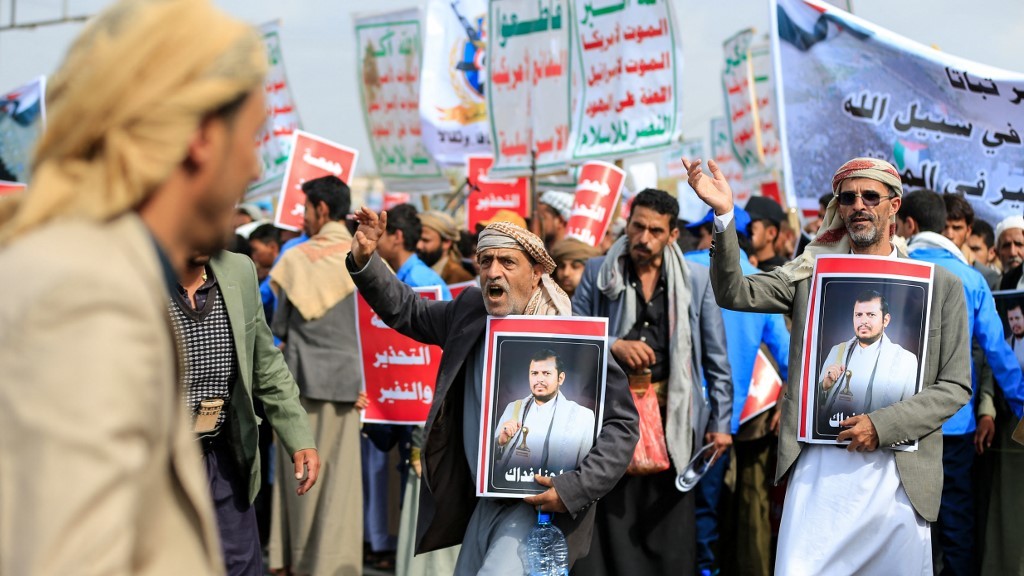
Amid escalating regional tensions that have sent global energy markets reeling, the top leader of Yemen’s Houthi movement has issued a firm public denial of allegations that the group launched a drone attack targeting Saudi Arabia’s holy city of Mecca. In a televised address broadcast to followers and international observers alike, Abdul-Malik al-Houthi dismissed the accusation of targeting the Islamic holy site as a “major lie”, emphasizing that the Houthi movement holds a core commitment to protecting all of Islam’s sacred locations. Instead of claiming or acknowledging any strike on Mecca, al-Houthi shifted blame to what he called the “Zionist enemy” — a reference to the State of Israel — framing Israel as the true source of danger to the region’s holy sites. Al-Houthi warned that Israel seeks to target all major Islamic sacred sites, including Mecca, Medina, and Jerusalem’s Al-Aqsa Mosque, and called for a unified Islamic alliance to confront this purported threat, stating that the movement stands ready to join this collective defensive effort. The denial comes on the heels of major territorial advances and military actions by the Houthis, formally known as Ansar Allah, that have upended security along one of the world’s most critical energy chokepoints. Over just one weekend, the group seized large swathes of Yemen’s coastline adjacent to the Bab-el-Mandeb strait, a key Red Sea chokepoint through which a large share of global maritime energy trade passes. Immediately following this territorial gain, the Houthis carried out an attack on the East-West Pipeline, a critical Saudi energy infrastructure that transports roughly 4% of the world’s total daily oil supply. According to reporting from Reuters, Saudi Arabian energy officials estimate that repairing the damage from the drone strike on the pipeline will take between five and six weeks, leaving a key piece of the kingdom’s energy network offline for more than a month. The recent Houthi advances have already caused significant volatility in global energy markets. Oil prices rose sharply last week in response to the group’s rapid offensive, which secured full control of the Yemeni side of the Bab-el-Mandeb strait, a pinch point for Saudi oil exports heading to global markets. For their part, Houthi officials have framed their ongoing military campaign as a direct response to what they say are unprovoked Saudi attacks on Yemeni territory, including a recent drone strike that targeted Yemen’s capital city of Sanaa. In his address, al-Houthi pushed back against claims that the Houthis are the aggressor in the long-running regional conflict, stating that Saudi Arabia has been the party that initiated hostilities at every turn of the conflict. “We are in a defensive position. We are not the ones who initiate aggression,” al-Houthi said. This original reporting was produced by Middle East Eye, a media outlet that provides independent, in-depth coverage of the Middle East, North Africa, and surrounding global regions. Information on republishing MEE content and details about the organization are available through the outlet’s official channels.
作者: admin
-
Houthi advance aids Iran but saps rebel support in Yemen
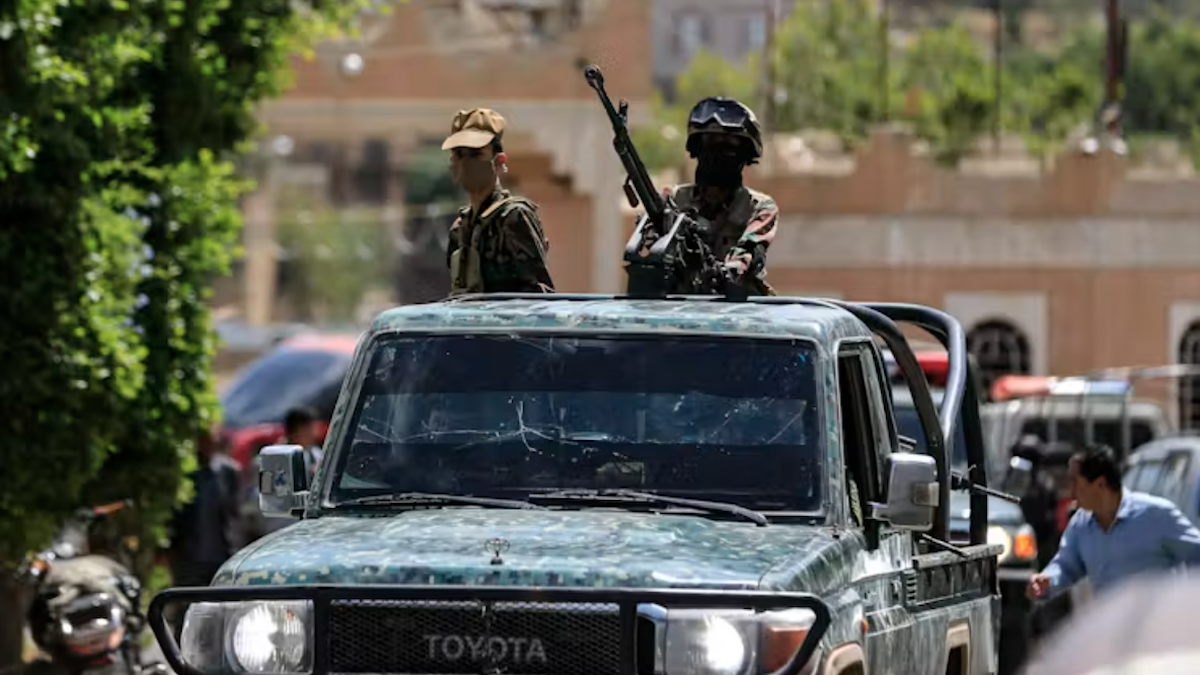
In a lightning eight-day offensive that began on September 3, 2026, Houthi forces have seized control of nearly all of Yemen’s Red Sea coastline, including the shores of the Bab el-Mandeb Strait – one of the world’s most critical maritime chokepoints for global trade. The operation started with a push to sever the strategic highway connecting the Yemeni city of Taiz to the coastal port of Mokha, and by September 11, Houthi fighters had secured Mokha, the coastal town of Dhubab, and Mayyun Island, which sits directly at the strait’s entrance. Per United Nations estimates, the rapid advance has displaced over 100,000 people, many of whom have undertaken dangerous sea crossings to seek refuge in neighboring Djibouti, after the Houthis captured roughly 2,100 square miles of territory. This territorial shift marks the most significant change to Yemen’s frontlines since a UN-brokered truce froze conflict lines in April 2022, ending years of stalemate.
Most international analysis has framed the offensive as a new strategic tool for Iran – the Houthis’ key regional patron – to increase pressure on the United States and raise fresh threats to Saudi Arabia and global commercial shipping. While this framing is not inaccurate, it overlooks deeper, underreported drivers rooted in Yemen’s own domestic politics and the Houthis’ ongoing quest for domestic legitimacy.
To understand why the Houthis launched this attack now, it is necessary to revisit the timeline of Yemen’s decade-long civil conflict. The war entered its current phase in 2014, when the Houthi movement seized the capital Sanaa from the increasingly unpopular administration of President Abdrabbuh Mansur Hadi. A Saudi-led coalition intervened the following year to restore the internationally recognized government, triggering a decade of widespread destruction and famine that left the already impoverished nation in ruins. Since 2022, however, the conflict has been largely stalemated: the Houthis control most of northwest Yemen, while Saudi-backed government forces hold sway over large swathes of the south and east.
Houthi military spokesperson Yahya Saree has framed the offensive as a direct response to years of Saudi military aggression and the ongoing blockade of Houthi-held territory. This grievance is not fabricated: UN agencies have repeatedly documented the severe humanitarian damage caused by coalition restrictions on access to Yemeni ports and airspace throughout the conflict. The Houthis also trace the collapse of the informal truce to a July 13, 2026, strike on Sanaa International Airport’s main runway, carried out by Yemeni government forces with Saudi air support. The attack forced an Iranian aircraft carrying senior officers of the Islamic Revolutionary Guard Corps (IRGC) to divert mid-flight, prompting the Houthis to declare their ceasefire with Saudi Arabia over that same day. Within hours, they launched a missile strike on Abha International Airport in southern Saudi Arabia, announced a naval blockade of Red Sea shipping one week later, and opened a sustained missile campaign in early August, weeks before the September 3 ground offensive.
But analysts argue the coordinated ground campaign and seizure of Bab el-Mandeb’s strategic islands cannot be dismissed as mere retaliation for a single airstrike. Multiple interconnected, deliberate strategic calculations underpinned the move.
First, Iran’s own regional maneuvering created a unique opening. After Iran closed the Strait of Hormuz – another critical global energy chokepoint – in March 2026, following joint U.S.-Israeli strikes on Iranian targets, Saudi Arabia rerouted roughly eight times more crude oil exports through the Bab el-Mandeb Strait than it did in 2025. Houthi control of the strait gives Iran a second strategic chokehold that mirrors the leverage it holds over Hormuz. Yemeni security sources have also confirmed that a senior IRGC commander, Abdul Reza Shahlai, was deployed on the ground to oversee parts of the September operation. For the Houthis, the move also carries clear economic incentives: since closing Hormuz, Iran has charged commercial vessels up to $2 million per ship for safe passage through the strait, and the Houthis are widely believed to be seeking similar economic leverage to shore up their war-battered movement.
The most impactful domestic driver, however, is the Houthi calculation that conditions on the ground had become uniquely favorable for an offensive. Their fractured opposition in southern Yemen has grown even more divided after a 2025 diplomatic rift between Saudi Arabia and the United Arab Emirates led the UAE to withdraw all support for anti-Houthi militias in the south, leaving coastal government forces exposed. With the broader Middle East engulfed in multiple concurrent conflicts and Saudi Arabia focused on other regional priorities, the Houthis saw a window to act.
Crucially, the Houthis have framed the Bab el-Mandeb operation as a sovereign, national Yemeni action rather than a proxy move for Iran, with senior officials repeatedly rejecting claims they are merely an extension of Tehran’s regional agenda. The movement’s core goal has always been securing power within Yemen itself. As recently as 2023, Saudi Arabia and the Houthis were negotiating a comprehensive national ceasefire that would have ended Saudi restrictions and sanctions on Houthi rule, but talks collapsed after the 2023-2024 Red Sea crisis, when the Houthis ramped up attacks on commercial shipping in protest of Israel’s military campaign in Gaza. Riyadh has since shown no urgency to revive diplomatic negotiations.
The Houthis’ bet is that escalating the conflict on Yemeni ground – where any further conflict carries massive strategic and economic costs for Saudi Arabia – is the most reliable way to force Riyadh back to the negotiating table. This time, the movement calculates it holds enough leverage to secure the formal political recognition it has long sought, rather than settling for just the limited economic concessions Saudi Arabia was willing to offer in 2023.
Despite these rapid military gains, the offensive carries severe long-term risks for the Houthi movement that could undermine their core goal of securing domestic legitimacy. Throughout modern Yemeni history, no governing authority has ever managed to maintain full military and political control over the entire country. While the Houthis hold unrivaled military power across most of northwest Yemen, they have never pursued a broad inclusive political bargain with the internationally recognized government or other Yemeni political factions, prioritizing exclusive military control over power-sharing.
The group has taken tentative steps to consolidate popular support in newly captured territories: Houthi-affiliated media confirms that within days of seizing Mokha, the group reopened the port’s customs office, cut port fees and customs duties by up to 50%, distributed 20,000 food baskets to local residents across the coastal region, and offered a general amnesty to anti-Houthi fighters who surrendered control of the coast. Houthi leader Abdulmalik al-Houthi has also directly addressed southern Yemeni communities, clarifying that his forces only target Saudi-backed troops, not local residents.
But analysts characterize these moves as performative legitimacy-building, more public relations than substantive policy reform, and fall far short of the inclusive political bargain needed to unify Yemen. A decade of Houthi rule in Sanaa has demonstrated the movement has little interest in power-sharing, with a long-standing pattern of ruling through military force rather than broad political coalition.
More broadly, controlling the Bab el-Mandeb Strait and restricting Saudi shipping through the waterway reinforces the narrative – both across much of the world and within large parts of Yemen – that the Houthis remain an instrument of Iranian regional policy, regardless of their stated domestic objectives. The offensive also almost guarantees a forceful response from Houthi enemies, which could erode the movement’s newly gained military advantages. Saudi Arabia, which has already waged a decade of war in Yemen at enormous cost to Yemeni civilians, is unlikely to stand by. While few analysts expect Saudi-backed forces to attempt to retake Sanaa by force, the Houthis’ new territorial gains expose both their own fighters and Yemeni civilians to a new wave of devastating airstrikes from the Saudi-led coalition.
In the end, the Houthi gamble carries a high risk of backfiring. Seizing territory is a far simpler task than holding it and consolidating legitimate rule. The movement may now find itself controlling a strategic chokepoint that the international community is determined to reopen, while still failing to secure the one thing control of the strait can never deliver: the consent of the Yemeni people to their rule.
-

US energy consumers have spent $121 bn extra due to war: Moody’s
Eight months after former U.S. President Donald Trump launched an unauthorized military conflict with Iran, new economic analysis has laid bare the steep financial toll the standoff has imposed on American consumers and global energy markets. The conflict, which began in February without formal approval from the U.S. Congress, triggered a cascading series of disruptions that have sent energy costs soaring worldwide: Iran responded to U.S. military strikes by closing the Strait of Hormuz, a critical global shipping chokepoint through which roughly 20% of the world’s daily oil supply passes.
Independent analysis from Moody’s Analytics quantifies the cumulative burden on American families, estimating that the average U.S. household has paid $1,760 in extra expenses since the conflict began. Of that total, more than half — $121 billion nationwide, equal to $930 per household — comes directly from inflated energy costs. The remaining costs break down into two additional categories: $425 per household from higher interest rates driven by inflationary pressure from energy prices, and $405 per household from expanded military spending, which will ultimately be paid by taxpayers either through growing national debt or future tax increases, according to Moody’s chief economist Mark Zandi.
In an interview with CNBC published this week, Zandi emphasized that the numbers underscore the intense financial strain already weighing on U.S. consumers. “Consumers are under a lot of financial pressure,” Zandi told the network.
The outlook for near-term relief remains grim, according to geoeconomics experts, as escalating regional tensions across the Middle East continue to threaten energy infrastructure. Karthik Sankaran, a senior geoeconomics research fellow at the Quincy Institute for Responsible Statecraft, noted that ongoing developments — including Houthi forces capturing a key Red Sea port city and a recent drone strike on a Saudi oil pipeline — have left the global energy system far more vulnerable to shocks than it was at the conflict’s outset.
Sankaran explained that global buffers that normally soften the blow of energy disruptions have already been exhausted. Global seaborne oil storage held in tankers has been largely depleted, the U.S. Strategic Petroleum Reserve has already released roughly 130 million barrels to cool prices, and China, the world’s top oil importer, has ramped up its imports to 7.2 million barrels per day, up from a June low of 6 million barrels, leaving little spare supply to absorb new disruptions.
While American consumers face significant discomfort from elevated prices, the situation is far more severe for low- and middle-income nations across the Global South, Sankaran added. Spikes in diesel prices, in particular, hit these economies disproportionately: diesel powers the trucks, buses, and agricultural equipment that underpin local supply chains, and it is far more critical to daily function in these regions than gasoline, which is largely tied to personal vehicle ownership that remains rare in lower-income countries.
The sustained rise in global fuel prices has already sparked widespread public unrest across six continents, a CNN investigation confirmed this week. Protests over soaring fuel costs have erupted in nations including Syria, Guatemala, France, Portugal, and the Philippines. In Syria, where economic instability has compounded over a decade of civil conflict, demonstrations have been particularly fierce. Sunday protesters blocked the major Hasaka–Deir ez-Zor highway, burning tires and halting oil tanker traffic to voice their anger. Muaz Al Abdullah, a Syria analyst with global conflict monitor Armed Conflict Location and Event Data (ACLED), told CNN that mounting public anger over fuel access, rising prices, plummeting purchasing power, and failing public services has reached a breaking point, with protesters now calling for the dismissal of the country’s energy minister.
-

At least one dead and multiple injured in Philippines school shooting
A deadly shooting at a public high school in the southern Philippines has sent shockwaves through the local community, leaving at least one fatality and multiple people wounded, with authorities working to clarify conflicting details about the attack. The violence unfolded Friday afternoon on the campus of Banga National High School, located in the municipality of Banga, South Cotabato, on the southern Philippine island of Mindanao.
As of initial reports, casualty counts remain inconsistent across official and media sources. South Cotabato Governor Reynaldo Tamayo confirmed to reporters that one person had been killed and four others had been transported to local hospitals for treatment. Tamayo declined to release further details, including the identities of any involved parties, and would not confirm whether the shooter was among the dead or injured. Local media outlets, however, have cited unnamed official sources claiming far higher casualty numbers that have not yet been independently verified. To date, neither the identities of the shooter nor the victims have been released to the public.
In response to the incident, the Philippine Department of Education issued an official statement expressing alarm over the attack. “We are deeply concerned by the reported shooting incident,” the department said, adding that the safety of students, teachers and all school staff remains the agency’s top immediate priority. The department confirmed it is working closely with local law enforcement and emergency authorities to confirm details of the incident and deliver all necessary support to those affected. It also issued a plea to the public to avoid spreading unconfirmed information as the investigation progresses, asking communities to remain calm.
Local disaster management officials in Banga announced the immediate suspension of all classes across every academic level across the entire municipality in the wake of the shooting, a precautionary measure to protect students and staff amid ongoing security operations. Emergency response teams have also been activated to support the response: the Philippine Red Cross confirmed it has deployed specialized medical teams to the area to assist with treatment and aftermath coordination, while local police have established a full investigative presence at the school campus to process evidence and determine a motive for the attack.
School shootings remain a rare occurrence in the Philippines, but gun violence more broadly is a persistent public safety challenge across the nation. The country holds one of the highest rates of civilian gun ownership in Southeast Asia, and authorities have long struggled to regulate unregistered firearms. This latest incident marks the second fatal school shooting in the Philippines this year. In June, a shooting at a high school in the central region of the country left three students dead and multiple others injured. Investigators later determined that attack was motivated by a personal grudge tied to long-running bullying between the perpetrators and victims.
-
‘China Shock 2.0’ fuels EU push for united response to Beijing
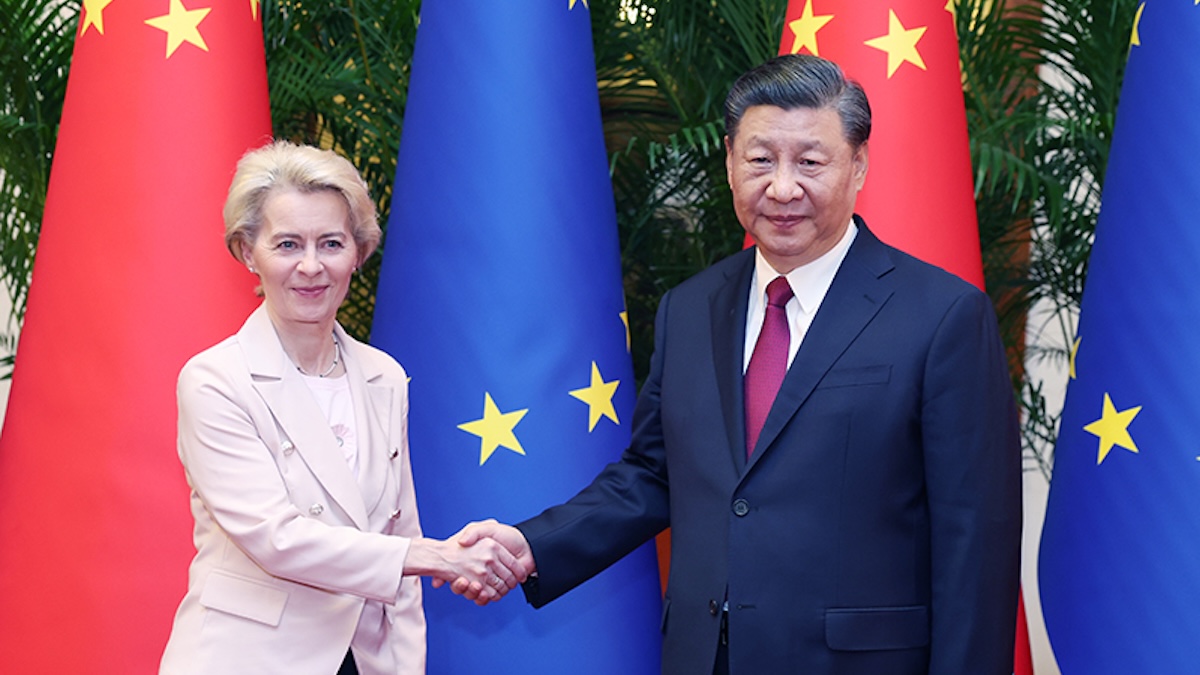
In her annual State of the Union address to the European Parliament last Wednesday, European Commission President Ursula von der Leyen sounded an urgent alarm over what she terms “China Shock 2.0”, arguing that rising Chinese high-value exports have already arrived and are threatening the bloc’s core industrial base, an outcome she calls unsustainable for European economies.
The original “China Shock” emerged after China’s 2001 accession to the World Trade Organization, when a flood of low-cost Chinese consumer goods including toys, textiles and basic electronics reshaped global supply chains and eroded Europe’s low-end manufacturing sectors. At the time, European economies adapted by shifting production up the value chain, focusing on higher-value goods and services to maintain competitive advantage. The new iteration of this trade dynamic, however, looks very different: today’s Chinese exports are concentrated in high-value sectors including electric vehicles, industrial machinery, chemicals and power generation equipment, meaning Chinese manufacturing has now closed the competitive gap that let Europe escape the first shock, leaving few untapped higher-value segments for European firms to retreat into.
Compounding this shift is the legacy of U.S. trade policy: tariffs imposed by the Trump administration on Chinese goods have reduced Chinese access to the American market, pushing the bulk of China’s export surplus toward the European Union, the world’s largest remaining open large economy. Von der Leyen emphasized that the EU’s daily trade deficit with China now hits 1 billion euros (US$1.15 billion), a level that has crossed a clear tipping point. “Some say the second China shock is looming, but it’s already here,” she said. “It shows in our communities and in factories across our Union. It leads to deindustrialization in the industrial heartlands of Europe. This is unsustainable.” She added that Brussels would deploy every policy tool at its disposal to rebalance the bilateral trade relationship, noting that “Words are good. But deeds are better.”
Von der Leyen also highlighted another key point of economic vulnerability: the bloc’s heavy reliance on Chinese critical raw materials, with China supplying more than 80% of the EU’s needs for many key inputs, and 90% of some rare earth minerals critical for clean energy and defense technology. To address this dependence, she announced the creation of a new European Critical Raw Materials Corporation to help the bloc build stockpiles of materials needed for electric vehicles, semiconductors, batteries and defense systems.
Just days before von der Leyen’s address, on September 9, the European Commission proposed an updated Public Procurement Act that would grant public authorities the power to reject bids for major infrastructure and service contracts if less than 50% of the contract’s total value originates within the EU. The proposed rules, which would govern the EU’s 2.5 trillion euro annual public procurement market covering national agencies, schools and hospitals, still require formal approval from the European Parliament and all EU member states to take effect. Industry groups including the International Road Transport Union and European Metropolitan Transport Authorities have already called for targeted adjustments to the draft rules, asking for grace periods for already purchased electric buses, aligned exemption frameworks and protections for operators from unexpected costs caused by manufacturer delivery delays.
In response to von der Leyen’s remarks, China’s Ministry of Commerce reaffirmed Beijing’s consistent stance on Thursday, emphasizing that China rejects confrontational “microphone diplomacy” and has no interest in escalating rhetorical disputes. Ministry spokesperson He Yadong said Beijing favors open communication and pragmatic problem-solving to address bilateral trade frictions.
The same day, EU Trade Commissioner Maroš Šefčovič held a virtual call with Chinese Commerce Minister Wang Wentao to discuss reciprocal market access and ongoing Chinese export controls on rare earth minerals. Šefčovič is scheduled to travel to Beijing on October 8 and 9 to co-chair the second session of the EU-China Trade and Investment Council, with the European Commission stating it hopes the visit will deliver tangible, credible progress on outstanding trade issues. EU member states will also debate the growing trade imbalance at the upcoming European Council summit scheduled for October 15-16, with the timeline made urgent by shifting U.S.-China trade dynamics: the one-year U.S.-China trade truce is set to expire on November 10, just one week after the U.S. November 3 midterm elections that could reshape Washington’s trade approach. U.S. President Donald Trump and Chinese President Xi Jinping are also set to meet in Washington on September 24, with prior media reports indicating Washington may announce an additional 7.5% tariff on Chinese goods tied to industrial overcapacity ahead of the summit, pushing the average U.S. duty on Chinese imports to roughly 20%.
Recent data underscores the scale of the EU’s growing trade imbalance with China. Eurostat reported in April that the EU’s full-year 2025 trade deficit with China widened to a record 359.8 billion euros, with EU exports to China falling 6.5% to 199.6 billion euros while Chinese imports to the EU rose 6.4% to 559.4 billion euros. The growing deficit has already split EU member states to some degree: in late May, a France-led coalition of five countries including Italy, Spain, the Netherlands and Lithuania called on Brussels to expand the use of anti-dumping and anti-subsidy investigations against Chinese imports in steel, automotive and clean technology sectors. Since that call, Brussels has moved toward drafting collective policy responses to the perceived trade challenge.
Beijing has pushed back hard against the “China Shock 2.0” framing, with Chinese officials arguing that growing Chinese industrial competitiveness should be recognized as a global opportunity rather than a threat. In a late July media briefing, Chinese Vice Minister of Commerce Yan Dong argued that the dynamic should be renamed “China Opportunity 2.0”, outlining four core arguments for this re-framing. First, China’s robust manufacturing base acts as a global anchor for supply chains, offsetting product shortages caused by rising protectionism and geopolitical conflict; between 2012 and 2024, China’s textile machinery exports topped $30 billion, helping Southeast and South Asian nations develop into major global manufacturing hubs. Second, China accelerates global technological innovation by rapidly scaling new technologies into affordable mass-market products, with its open-source AI models recording more than 10 billion downloads globally, expanding access to cutting-edge technology for developing nations. Third, China’s booming green manufacturing sector has driven dramatic global cost reductions for clean energy: data from the International Renewable Energy Agency shows that Chinese production has cut global costs for wind and solar power by between 60% and 80% over the past decade, with China’s green industry projected to exceed 20 trillion yuan (US$2.98 trillion) in size by 2030. Finally, China’s high-volume, low-cost industrial output has helped reduce living costs and curb global inflation, a benefit visible this summer in the strong sales of affordable Chinese-made air conditioners across Europe amid record heatwaves.
Chinese analysts note that Beijing holds a range of policy leverage if the EU moves forward with new restrictive trade measures, including potential adjustments to rare earth export policy, tariffs on European agricultural goods, luxury products and high-end industrial equipment, and restrictions on European service providers operating in the Chinese market. Many Chinese observers argue that full decoupling from China is simply not feasible for the EU. As a columnist for Chinese state-affiliated outlet Huanqiu.com put it, “Europe needs the Chinese market to absorb its high-end equipment, luxury goods and professional services, and needs a stable supply of critical raw materials, while China needs Europe’s technical standards, brand channels and regulatory experience.” The columnist added that framing China as a political scapegoat for Europe’s industrial challenges would only raise costs for European businesses and consumers, and that EU leaders should instead prioritize pragmatic engagement through existing bilateral communication channels.
Other Chinese analysts point out that the EU does not have fully unified trade interests when it comes to China: Southern European states like France and Italy favor stronger industrial protectionist measures to shield domestic manufacturers, while Northern European countries including Germany, which maintain deep economic ties with China, fear retaliation against their own firms that rely on access to the large Chinese market. As Guizhou-based analyst Sima noted, China is both a competitor and a critical export market for the bloc, meaning internal divisions will shape any unified EU policy. If the EU proceeds with new tariffs or market access restrictions, Sima noted, China has a range of potential response tools including trade remedies, export controls, an unreliable entity list, counter-sanctions and adjusted government procurement rules, and any retaliation would hit individual EU member states unevenly, exacerbating internal divisions. Sima added that Beijing will not sacrifice its core development rights in upcoming negotiations, and called on the EU to improve the competitiveness of its own domestic products and relax its own high-tech export restrictions to China as a more productive path to narrowing the bilateral trade deficit.
-
Japan raises interest rate to new 31-year high to curb rising prices
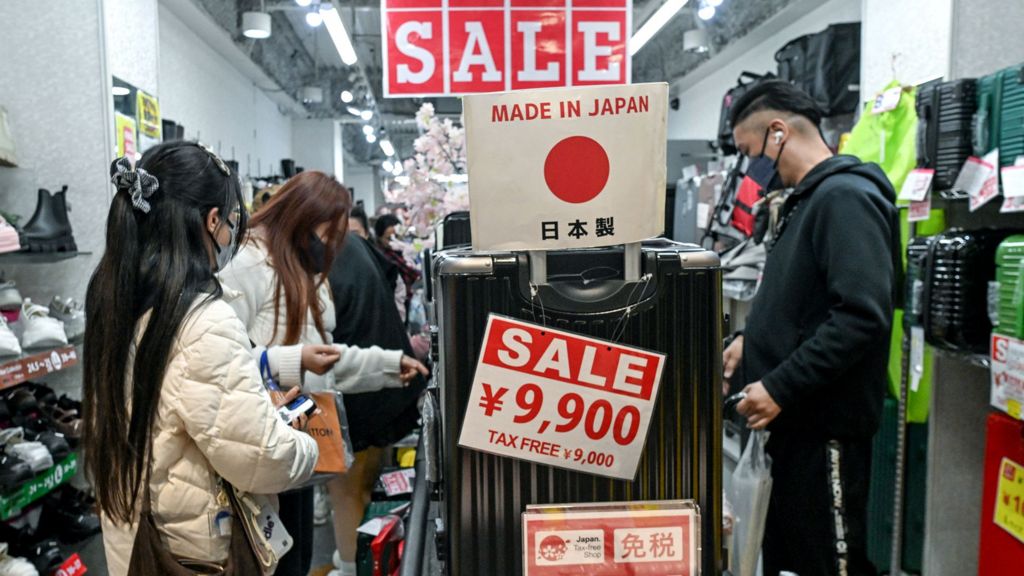
The Bank of Japan (BOJ) has delivered its latest interest rate hike, pushing its main borrowing cost to 1.25% — the highest level recorded since 1995. The widely expected move, announced Friday, marks the sixth consecutive rate increase from the BOJ since 2024, when the central bank began unwinding three decades of ultra-loose monetary policy from a historic low of minus 0.1%.
This decision aligns Japan with a broader global trend of monetary tightening, as major central banks around the world ramp up interest rates to combat soaring inflation driven by rising energy prices. The recent Iran war has disrupted energy shipments through the critical Strait of Hormuz, pushing up global oil and gas costs. Just this week, the U.S. Federal Reserve raised its benchmark rate for the first time in more than three years, and the European Central Bank implemented its own rate hike earlier this September.
Japan faces a unique set of interconnected economic pressures that have necessitated this policy shift. For nearly 30 years, the country grappled with stagnant growth, persistent deflation, or extremely low inflation, but recent years have brought a reversal of that trend. While the latest official data shows core inflation eased slightly to 1.7% in August from 1.8% in July, remaining just below the BOJ’s 2% target, inflation remains a growing concern for Japanese households.
As a nation heavily dependent on energy imports from the Middle East, Japan is particularly exposed to supply disruptions stemming from the conflict in Iran. Beyond inflation, the country has also struggled with a steep decline in the value of the yen, which hit a 40-year low against the U.S. dollar in August. In response, Japan and the United States launched a coordinated currency intervention to halt the yen’s slide — the first joint intervention of this kind since 2011, when the two countries acted to weaken the yen in the wake of the devastating Tohoku earthquake and tsunami.
U.S. Treasury Secretary Scott Bessent has openly pressured BOJ Governor Kazuo Ueda to continue raising rates to support the yen, stating that Japanese authorities should “do the right thing” to stabilize currency markets. Both Japanese finance officials and the U.S. Treasury have also confirmed they stand ready to conduct additional joint interventions if the yen’s decline continues.
Market analysts note that the end of Japan’s era of ultra-cheap borrowing is a landmark shift for the global economy. “One of the world’s last sources of ultra-cheap money is disappearing,” explained Lale Akoner, market analyst at investment firm eToro. Akoner added that if the yen fails to strengthen despite higher interest rates, persistent inflation pressure could force the BOJ to accelerate monetary tightening faster than markets or the Japanese government currently expect.
Higher interest rates typically attract foreign investors seeking higher returns, which usually strengthens a nation’s currency. As Japan aligns its monetary policy with other major global economies, the central bank’s gradual rate hikes are designed to address domestic economic challenges while bringing Japan into line with global monetary conditions.
-
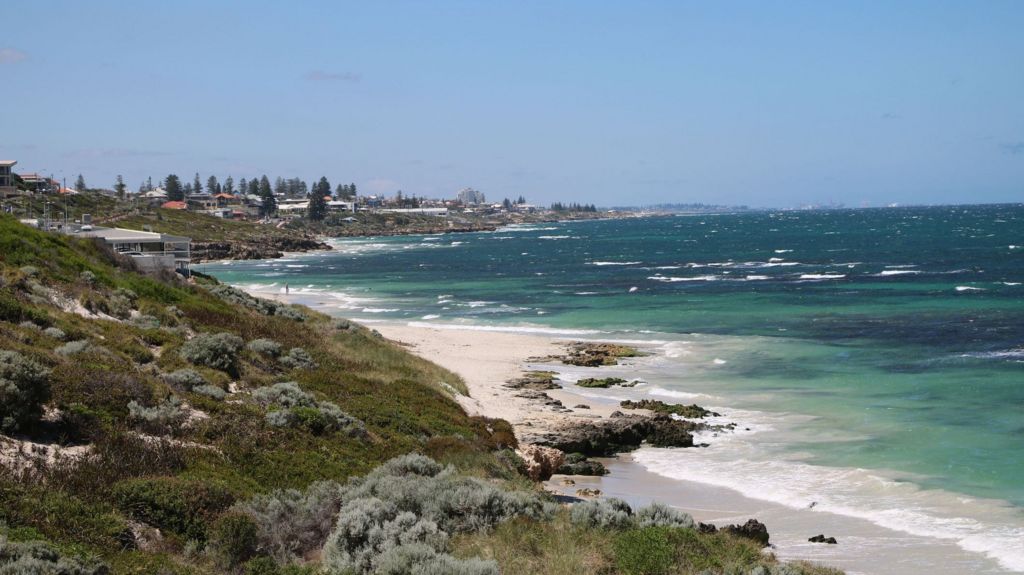
Swimmer missing after suspected shark attack off Australian west coast
A large-scale multi-agency search is ongoing for a missing swimmer following a suspected fatal shark attack off the coast of Western Australia’s Perth, triggering an immediate closure of the popular Sorrento Beach to the public.
Local emergency responders were dispatched to the site shortly after 10:15 a.m. local time on Friday, after reports of a shark-related incident at the coastal location, according to official updates. Three ambulance teams from St John Ambulance arrived at the scene within minutes, while specialist water police units and a police air aircraft have remained on site to comb the waters for the missing person.
Multiple eyewitnesses have shared harrowing accounts of the incident, which unfolded roughly 50 meters from the shoreline. A nurse who witnessed the attack told local Perth-based outlet WAtoday that she saw the large shark drag the male swimmer under the surface, mauling him and tossing him through the water like a small fish. “I work in healthcare, so I am exposed to traumatic, distressing scenes on a regular basis, but seeing someone attacked and killed right in front of me in the ocean is something I can barely process,” the witness said. The frequent open-water swimmer, who lives just a short distance from the beach, added that she would never enter the water at the site again.
Another witness, Jacqui Rapaic, told Australia’s national public broadcaster ABC that she was walking along the coast with a friend when the incident occurred. Glancing out toward the water, she spotted a large dark pool of blood spreading across the surface of the ocean where the attack took place.
As of the latest updates, Sorrento Beach remains fully closed to all visitors, and local law enforcement has issued a public appeal asking all beachgoers to stay away from the area to avoid further risk and allow search operations to proceed unimpeded.
-

UK’s ‘dismal’ Eurovision song choices to be examined by MPs
The United Kingdom’s long-running string of lackluster results at the Eurovision Song Contest has drawn official parliamentary scrutiny, after the nation’s 2026 entry landed firmly in last place with just a single point.
Sam Battle, performing under the stage name Look Mum No Computer, claimed the bottom spot at this year’s contest with his entry “Eins, Zwei, Drei”. His poor finish is far from an isolated outcome for the UK: in 2023, singer Mae Muller finished second-from-last, and in 2021, James Newman ended the competition in last place with zero points, often referred to in Eurovision circles as “nul points”. Over the past 15 years, only one UK entry has placed higher than 15th position: Sam Ryder’s 2022 performance of “Space Man”, which earned the UK a second-place finish, bested only by Ukraine’s winning entry from Kalush Orchestra.
Coming up in 2027, the contest will be hosted in Burgas, Bulgaria, and the event will mark a somber milestone for the UK: it will have been 30 full years since the nation last claimed Eurovision victory. That 1996? No, it was 1997, when Katrina and the Waves took the top prize with their hit “Love Shine A Light”, scoring 227 points to secure the win.
Currently, the selection of the UK’s Eurovision entry is handled primarily by the British Broadcasting Corporation (BBC), often in partnership with a major record label or music management firm. Unlike many other competing nations, which opt for public, televised national selection contests to choose their entry, the UK has not used this open selection format since 2019’s *Eurovision: You Decide*. Even that experiment failed to deliver better results: selected act Michael Rice went on to finish last in that year’s international contest held in Tel Aviv, Israel.
The cross-party parliamentary Digital, Culture, Media and Sport (DCMS) Committee has announced it will probe the roots of the UK’s poor performance. Committee chair Dame Caroline Dinenage outlined the inquiry’s core goals, saying: “We want to get to the bottom of who chooses our entrant, on what basis and whether our dismal record of achievement in recent years [Sam Ryder to one side] is the result of bad song choice, weak performance… or something else.”
The inquiry is part of the committee’s broader “State of Play” series, which allows members of the public and stakeholders to request evidence sessions on issues of public concern. Over the coming months, the committee is expected to call senior BBC leaders and leading music industry experts to give evidence in public hearings, alongside accepting written submissions from interested parties. No firm timeline for the first hearing has been announced, but after reviewing all testimony, the committee will likely publish a formal report with actionable recommendations for the BBC to revamp its selection process.
Dinenage highlighted the stark contrast between the UK’s global musical reputation and its Eurovision track record, noting: “This application interested us because of the UK’s reputation for scoring ‘nul points’, coming bottom, or close to bottom in recent years at Eurovision, despite having world-class song writers and musicians.” Despite the poor results, the Eurovision final remains one of the most-watched annual music events in the UK, with millions of viewers tuning in each year to watch the live broadcast and follow the final vote count.
-
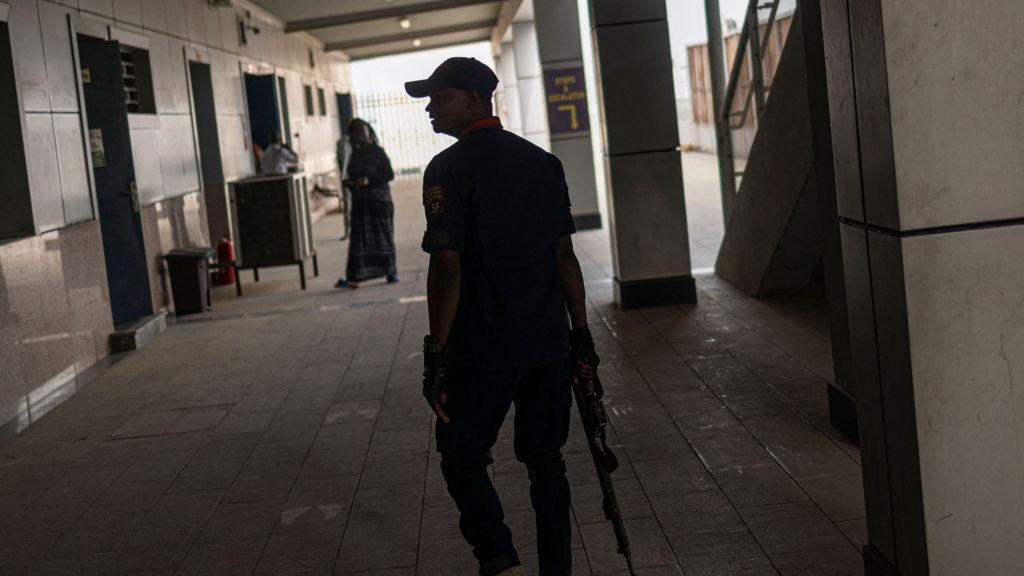
Nigerian police probe 37 deaths in custody of suspected illegal miners
A devastating incident in north-western Nigeria has left 37 suspected illegal miners dead while in government detention, triggering official investigations, public mourning and sharp disputes over the cause of death, local authorities have confirmed.
The group of young men was taken into custody on Tuesday by security forces on suspicion of engaging in unlicensed mining activities near Borgu, a community in Niger state – a mineral-rich region that has long been a hub for small-scale informal gold extraction. Two days after their arrest, all 37 detainees were found dead inside a detention facility operated by the Nigeria Security and Civil Defence Corps (NSCDC).
In an initial statement, the NSCDC attributed the mass death to an apparent outbreak of infectious disease, specifically naming diphtheria – a severe bacterial infection that can turn fatal without prompt medical intervention. However, an intelligence document shared with the AFP news agency has presented an alternative narrative, claiming the deaths stemmed from extreme overcrowding and inadequate ventilation in the holding cell where the suspects were held. Relatives of the deceased have gone further, rejecting the official disease explanation entirely and alleging the suspects were deliberately killed while in custody.
In a press conference held Thursday, Niger state governor Mohammed Umaru Bago described the incident as “sad and tragic”, announcing that a senior NSCDC commander has already been taken into custody in connection with the deaths. Bago has also declared a three-day period of official mourning across the state, and postponed the launch of election campaigning previously scheduled to begin ahead of January’s polls.
Nigerian police have launched an independent probe into the incident. “The Niger State Police Command has commenced an immediate investigation into the unfortunate death of suspected illegal miners while in the detention facility of the NSCDC”, police spokesman Wasiu Abiodun confirmed in an official statement. The bodies of all 37 victims have been transferred to the general hospital in Minna, the capital of Niger state, to undergo post-mortem examinations to determine the exact cause of death.
The incident shines a renewed spotlight on long-running issues surrounding informal gold mining in central Nigeria. According to government officials and independent analysts, unregulated competition for the region’s gold reserves has been a key driver of widespread criminal gang violence across the state. A 2024 investigation by SwissAid also found that a large share of the gold extracted from illegal mines in the region enters global supply chains through illicit trafficking networks.
-

British woman rescued in Malawi shootout that left four suspected kidnappers dead
A 47-year-old British national held captive by kidnappers for nearly six days in southern Malawi has been freed in a dramatic police operation that left four suspected abductors dead and a top-ranking police officer injured, Malawi law enforcement officials have confirmed.
Nusrat Osman, a long-term Malawi resident who works for a local auditing firm and originally hails from Leicester in the UK, was recovered on Thursday during a targeted raid on a location in the outskirts of Blantyre, the country’s second-largest city. A shootout broke out when responding officers encountered the kidnappers, who were armed with a military-grade AK-47 assault rifle and a sidearm. All four suspects were hit by gunfire during the exchange and later died of their wounds after being transported to a local medical facility, the Malawi Police Service said in an official statement.
Deputy Inspector General of Police Noel Kayira, who took part in the rescue mission, was also struck by gunfire during the clash. Authorities confirmed he is currently receiving hospital care and remains in a stable condition as of the latest update.
Following her successful extraction, Osman was reunited with her family and immediately taken to a hospital for routine evaluation and care, including physical and mental health assessments, according to local media reports. Osman had been abducted on September 11 from Blantyre’s Mount Pleasant neighborhood: she was driving to her home when four unidentified men blocked her car, forced her into their vehicle, and abducted her at gunpoint.
Her disappearance triggered a large-scale, cross-agency search operation, with Malawi authorities offering a substantial reward of 30 million Malawian kwacha (equivalent to roughly $17,000 USD or £12,500 GBP) for any information that would lead to her safe recovery and the arrest and conviction of the perpetrators.
Investigators have faced multiple unanswered questions in the case in the days since the abduction. Notably, no ransom demand was ever received from the captors, and no communication was received from the group after Osman was taken – a detail that has left law enforcement confused as they work to establish a motive. Police have not yet released the identities of the four dead suspects, nor have they shared details of how intelligence teams tracked the group to the raided location. Authorities also have not confirmed whether additional accomplices remain at large.
Osman, who is married with two young children, has lived and worked in Malawi for several years. Before the rescue, her family issued heartfelt public appeals for her safe return, describing the weeks of uncertainty as deeply traumatizing and urging anyone with even small details of her whereabouts to contact law enforcement immediately.
The UK Foreign, Commonwealth & Development Office confirmed to the BBC shortly after the abduction that it was aware of the incident and had been in constant contact with local Malawian authorities to support the search effort.
Kidnappings of foreign nationals are considered relatively rare in Malawi, so the abduction sparked widespread anxiety among both the southern African nation’s business community and the small population of British expatriates living in the country. In a statement after the rescue, authorities urged the general public to remain calm as investigators continue to piece together the full sequence of events that led to the kidnapping and the subsequent rescue operation. Police say their investigation into the incident remains ongoing.
For more reporting from across the African continent, visit BBCAfrica.com, or follow BBC Africa on Twitter, Facebook, and Instagram.