作者: admin

  • 5.5 magnitude earthquake hits Peru’s Andes region and kills at least 5 people

    5.5 magnitude earthquake hits Peru’s Andes region and kills at least 5 people

    A destructive 5.5-magnitude earthquake has rocked the Andean highlands of central Peru, leaving at least five people dead and triggering widespread displacement and infrastructure damage, Peruvian national authorities confirmed Sunday. Over 20 residents were treated for quake-related injuries, and roughly 300 people have been forced to leave their damaged or destroyed homes in the aftermath of the disaster.

    According to data from the U.S. Geological Survey (USGS), the seismic event hit at 9:24 p.m. local time Saturday. Its epicenter was positioned just 2 kilometers (1.24 miles) west-southwest of Sicaya, a small city in Peru’s Huancayo province, and the quake originated at a relatively shallow depth of 10 kilometers (6.21 miles) below the Earth’s surface.

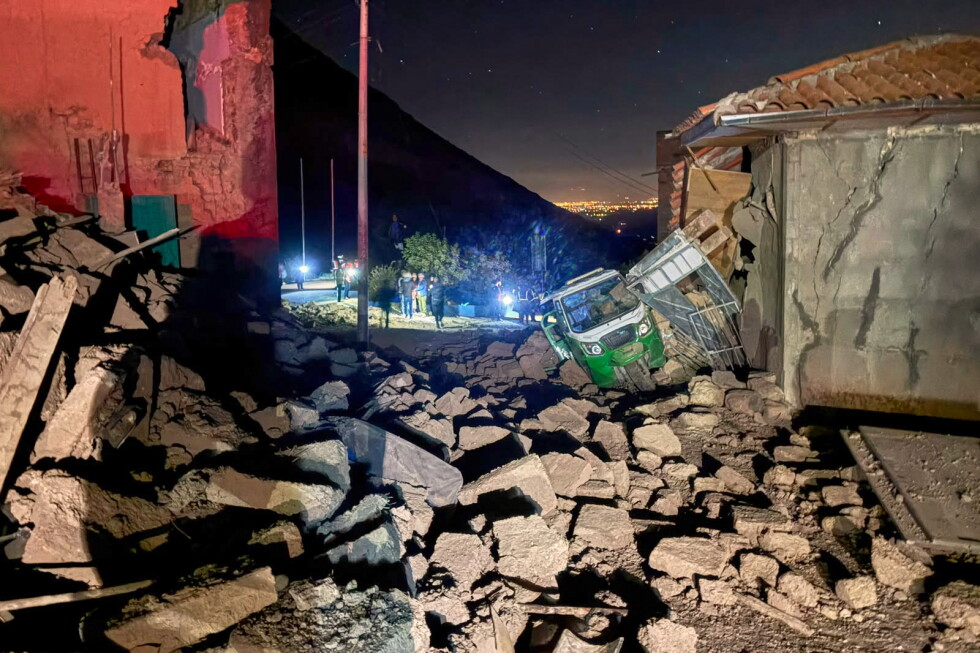
    In an official update, Peru’s National Civil Defense Institute stated that the full scope of the disaster remains unclear, as the total number of people unaccounted for has not yet been confirmed. Multiple structures across the affected region have either completely collapsed or sustained critical structural damage, among them a historic local church and adjacent convent.

    Luis Vásquez, director of the regional civil defense office, explained to reporters that the widespread heavy damage can be partially attributed to common building practices in the Andean region. Many local homes and structures are constructed with traditional rustic adobe, a material that offers far less resistance to seismic shaking than modern engineered building materials, amplifying the disaster’s impact.

    Peru sits along the Pacific Ocean’s geologically active “Ring of Fire,” a zone where constant tectonic plate movement makes major and minor earthquakes a frequent hazard for the country’s population. The 2007 Pisco region earthquake, which measured magnitude 7.9, killed close to 600 people and stands as one of the deadliest seismic events to hit the South American nation in recent decades.

    Footage aired by local Peruvian media outlets has captured the acute distress of residents in one of the hardest-hit communities, the low-lying agricultural zone of Chongo Bajo. Locals can be seen gathered outside their heavily damaged homes, huddled together under blankets to stay warm after being forced to evacuate, with some livestock also reported trapped under collapsed rubble.

    Hermenegilda Guamalato, a displaced resident, shared her experience with local radio after relocating to neighboring Huayucachi province to find emergency shelter. “My home has been destroyed,” she explained, adding that she was now searching for safe, stable accommodation alongside her three children.

    Response teams continue to assess the full extent of casualties and damage across the affected region as of Sunday, with emergency shelter and basic supplies being mobilized for displaced residents.

  • Red and yellow sweep Madrid before World Cup final

    Red and yellow sweep Madrid before World Cup final

    Hours before the kickoff of the 2026 FIFA World Cup final between Spain and Argentina in New Jersey, the Spanish capital of Madrid has been transformed into a sea of the nation’s iconic red and yellow, with widespread excitement and national pride sweeping every corner of the city ahead of what is set to be one of the most tightly contested football matches in recent memory.

    Sixteen years after the Spanish men’s national team claimed its first ever World Cup trophy in South Africa, millions of fans across Madrid have gathered in public squares, neighborhood bars, and dedicated public viewing sites, all holding their breath to see La Roja lift the trophy for a second time. From street-level public transit to major mobile network providers, every corner of the capital has embraced football fever to show support for the young Spanish squad.

    Municipal buses running through Madrid’s busiest core routes now display Spanish flags on their front ends, turning a daily transit network that carries more than one million passengers into a moving, rolling celebration of the national team. Even the capital’s subway system has joined the excitement: one entire train car has been wrapped in the team’s signature bright red, decorated with oversized portraits of head coach Luis de la Fuente and standout players, including teenage breakout star Lamine Yamal, winger Nico Williams and midfield star Pedri. Fans frequently pause their commutes to snap photos of the customized train as it pulls into stations across the network.

    Two large outdoor fan zones have been constructed to accommodate thousands of supporters eager to watch the match on giant projection screens, while a third viewing space has been set up inside Madrid’s iconic air-conditioned Movistar Arena, the city’s primary indoor venue for major concerts and elite sporting events. Local street vendors have reported record brisk sales of official and unofficial team shirts and national flags, while bars across the city have decorated both their outdoor terraces and indoor spaces in red and yellow to welcome packed crowds of fans.
    Major national retailers including El Corte Ingles, Carrefour, Leroy Merlin and Ikea have gone a step further, announcing they would close all of their Spanish locations early to allow all their employees to head out and watch the match with friends and family. Even the country’s mobile telecommunications networks have joined the show of support: millions of Spanish users have noticed their carrier’s standard name on their device screens has been replaced with football-themed messages of national support. Telefonica customers now see “ConLaSeleccion” – meaning “With the National Team” – displayed on their devices, while other leading providers have rolled out their own custom pro-team messages.

    For many fans, confidence in the young Spanish side runs high ahead of the match. Javier Fernandez, a 23-year-old supporter wrapped head-to-toe in a Spanish flag, shared his optimism with Agence France-Presse ahead of heading to a local bar to watch the game with his friends. “I think we’ve had an excellent tournament and we’re going to prove it against Argentina,” he said.

    But not all fans are counting on an easy win for La Roja. Mercedes Rojas, a 50-year-old teacher who traveled from Toledo to Madrid with her husband to watch the match on one of the capital’s giant public screens, acknowledged the strength of the opposing Argentine squad. “Argentina are very good opponents,” she explained. “At this stage, having reached the final, both teams deserve to win.” If Spain does claim victory, Rojas says she plans to keep her celebration simple: “with a small beer and a tortilla.”

  • Sydney Water workers ‘freaking out’ as payroll blunder causes chaos

    Sydney Water workers ‘freaking out’ as payroll blunder causes chaos

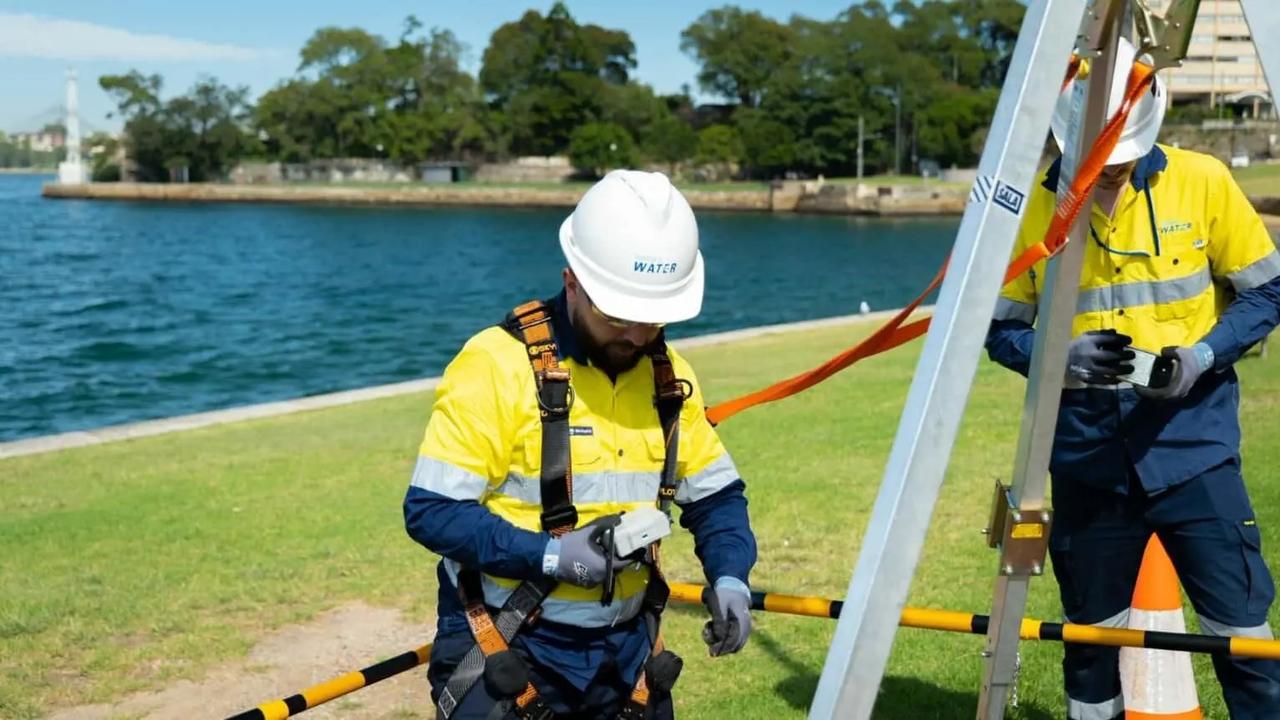
    A major payroll error at one of Australia’s biggest public utility providers has thrown hundreds of workers into financial uncertainty, triggering widespread anxiety and prompting the Australian Services Union (ASU) to take legal action before the Fair Work Commission.

    In early July, Sydney Water, a state-owned utility serving millions of residents in New South Wales, completed a long-planned transition of its employee payroll services to a new cloud-based platform called Dayforce. Even before the full rollout, union representatives had raised red flags about the platform’s ability to accommodate the complex scheduling needs of Sydney Water’s 24/7 operational workforce, warnings that company leadership reportedly ignored during the testing phase.

    The first pay cycle under the new system was scheduled for the previous Tuesday, when the utility’s fortnightly-paid staff were set to receive their wages. But almost immediately after processing, problems emerged: hundreds of workers found they had been underpaid, overpaid, paid days behind schedule, or received no wages at all. Additional issues quickly came to light, including incorrect superannuation contribution calculations and systemic glitches that prevented staff from logging approved rostered days off correctly.

    For workers already navigating the sky-high cost of living in Sydney, consistently ranked one of the most expensive cities in the world, the pay disruption has been devastating. One anonymous Sydney Water production worker described overwhelming collective anxiety across the workforce in an interview, noting that many employees live paycheck to paycheck and depend on timely, full pay to cover essential living costs. “We’re all freaking out with worry, there is mass-level anxiety,” the worker said, sharing that he had spoken to colleagues in tears at 2 a.m., terrified they would miss alimony payments, rent or mortgage deadlines, and even struggle to put food on the table for their children.

    Workers also reported that the company provided little to no training on how to navigate the new Dayforce app before launch, and that communication from senior leadership about the error was extremely limited, with no formal, full acknowledgment of the scope of the problem until the following Friday. The worker added that many staff feel no company leader has taken responsibility for the botched rollout.

    Angus McFarland, ASU’s New South Wales branch secretary, reiterated that the union had explicitly warned Sydney Water that the untested software could not handle the complexities of its shift-based, round-the-clock workforce. “Hundreds of workers at Sydney Water have been short-changed or received their pay late, because (Sydney Water) refused to acknowledge problems flagged during the testing of the new payroll system,” McFarland said. “After this payroll disaster, no one is confident the problems are resolved.”

    In response to the crisis, the ASU filed an official application with the Fair Work Commission, calling on the industrial relations body to order Sydney Water to either fully fix the flawed system immediately or revert to its legacy payroll platform until the transition can be completed without further disruption to workers’ pay.

    In a formal internal email to staff, a copy of which was obtained by NewsWire, Sydney Water publicly acknowledged that the transition “had not gone as we planned” and issued a direct apology for the added stress the error has caused. “This has created uncertainty about pay outcomes, and additional stress at a time when you rightly expect confidence and clarity,” the email read. While the company noted that it had already dedicated significant resources to addressing emerging issues, it also warned staff that fully resolving all problems would “take some time” as the team works to stabilize and optimize the Dayforce platform.

    In a subsequent statement to media, a Sydney Water spokesperson explained the company moved to replace its old payroll system because the legacy infrastructure no longer met its operational requirements. The spokesperson reaffirmed the company’s apology to affected workers, noting that “being paid correctly and on time is a fundamental expectation” and that the company’s top priority is resolving the issues as quickly as possible and supporting impacted employees. “As with many large-scale technology transitions, issues have emerged as the system has been embedded,” the spokesperson said. “We are aware of payroll processing issues affecting some employees and are working directly with those impacted to rectify them as a matter of urgency. We acknowledge the concerns raised by the ASU and are committed to working constructively with employees and unions.”

  • Ryan Fox wins the British Open with birdie on the final hole

    Ryan Fox wins the British Open with birdie on the final hole

    On a sun-battered, tension-filled Sunday at Royal Birkdale in Southport, England, 39-year-old New Zealand golfer Ryan Fox etched his name into golf history, surviving a chaotic back-nine rollercoaster to sink a career-defining 12-foot birdie putt on the 18th hole and claim his first-ever major championship at the British Open.

    The final round was defined by shifting momentum, with five different golfers holding a share of the lead at various stages. American contender Cameron Young sat atop the leaderboard for nearly two full hours without hitting a single stroke, having carded a blistering 6-under 64 in his morning round more than 120 minutes before the final groups teed off the back nine.

    Fox, the son of a former All Blacks rugby player, refused to let a late pair of bogeys derail his bid for the Claret Jug. He pulled even with Young at the top of the leaderboard with a birdie on the par-4 16th, then delivered a stunning closing birdie on Royal Birkdale’s toughest finishing hole to secure victory. The win made him just the third golfer from New Zealand to claim a major men’s championship.

    Finishing the round at 2-under par for a 68, Fox threw his powerful arms into the air in elation immediately after the ball dropped into the cup. Within moments, he was on a call with his family back home, telling them with a shaky, excited voice: “You asked me to bring a trophy home, and I am, aren’t I?” His name will now be added to the base of the iconic silver Claret Jug, joining New Zealand golf legend Bob Charles, who won the event at Royal Lytham & St Annes in 1963.

    For Young, the dramatic finish added another chapter of near-misses in major championship play. The American already finished one stroke shy of victory at the 2022 British Open at St Andrews, and he held a third-round lead at the Masters Tournament before Rory McIlroy overtook him on Sunday.

    Fifth-ranked Sam Burns, the 54-hole leader entering the final round, saw his chances fade over the closing holes. Burns had only planned to compete in the 2025 Open after his wife gave birth to the couple’s first daughter earlier than expected, forcing him to rearrange his tournament schedule at the last minute. He held a two-shot lead heading into the back nine but failed to record a single birdie over his final 12 holes, ultimately finishing two strokes off Fox’s winning pace.

    Defending champion Scottie Scheffler stayed in contention through most of the day, but two costly bad bounces sapped his momentum. A late lucky break gave him an unlikely birdie to stay in the hunt, but he failed to convert a birdie opportunity on the 18th, closing with a 67 to tie for fourth. He shared that spot with local favorite Tommy Fleetwood, the Southport-born golfer who fell back early in the round but sent the thousands of fans lining Royal Birkdale’s dunes into a frenzy with back-to-back closing birdies for a 68.

    In a surprising turn of events, fan-favorite contender Bryson DeChambeau was largely absent from the final-round drama. After losing his tee shot on the 11th hole, he carded a triple bogey that knocked him far down the leaderboard, and he did not record a birdie until he was well out of contention. A two-shot penalty assessed to him on Friday for improving his swing path never ended up impacting the final outcome, as he shot a 1-over 72 to tie for 14th place.

    Sunday’s victory marks Fox’s 10th career win across global professional golf tours. Prior to this major triumph, his most prestigious title came at the 2023 BMW PGA Championship at Wentworth. At 39 years old, Fox is the oldest golfer to win his first major championship since Henrik Stenson won the 2016 British Open at Royal Troon at age 40.

  • US launches strikes to ‘punish’ Iran after troops killed

    US launches strikes to ‘punish’ Iran after troops killed

    Fresh large-scale military clashes have erupted across the Middle East just one month after a preliminary ceasefire agreement was reached, plunging the region back into escalating conflict following the deaths of two United States service members in a cross-border attack.

    The cycle of violence reignited Friday, when US Central Command (CENTCOM) confirmed that two American troops were killed and a third remains missing during Iranian drone and ballistic missile strikes targeting US positions in Jordan. These fatalities push the total number of confirmed US military deaths to 16 since the United States and Israel launched open hostilities against Iranian targets on February 28.

    In response to the Jordan attack, the US launched its eighth consecutive night of airstrikes against Iranian positions on Sunday, with operations explicitly targeting units of the Islamic Revolutionary Guard Corps (IRGC) that Washington blames for the troop deaths. A US Central Command statement confirmed the strikes were ordered to “swiftly punish” IRGC forces for the attack on American personnel.

    Tensions escalated further on Sunday when Iran’s Atomic Energy Organization accused the US of launching an illegal attack on an under-construction nuclear power plant in southwestern Iran. The agency said American forces struck the Darkhovin facility with multiple projectiles, marking an unprecedented escalation that puts critical Iranian nuclear infrastructure in the crosshairs.

    Tehran moved quickly to retaliate for the US airstrikes, confirming it launched drone attacks against two US military bases stationed in Kuwait. Iranian military officials said the strikes hit an ammunition depot at Camp Udairi and damaged Patriot radar and air surveillance systems at Ali Al Salem Air Base. The retaliatory action came in response to more than a week of intensifying US-led strikes that Tehran says have hit civilian and military infrastructure across Iran, including airports, railway stations and critical bridges.

    Clashes spilled over into neighboring countries over the weekend. Air raid sirens sounded across Jordan, where Israeli and Jordanian defense forces intercepted an Iranian missile bound for the Red Sea port city of Aqaba. The US embassy in Amman had previously issued an urgent warning to American citizens of a specific, credible threat targeting Aqaba’s port and airport infrastructure. In Kuwait, the national electricity ministry reported a second consecutive day of attacks on a combined power and desalination plant, which sparked a large blaze at the facility. Bahrain’s military also announced it had intercepted and destroyed a wave of Iranian drones, accusing Tehran of deliberately targeting civilian population centers.

    The current round of hostilities is centered on the Strait of Hormuz, the strategic global chokepoint through which roughly 20% of the world’s oil supplies pass. Fighting first reignited after Iran launched attacks on commercial shipping transiting the waterway, before Tehran closed the strait entirely following the outbreak of open war. Control of the strait has become Tehran’s key leverage in negotiations with Washington, which reimposed a full blockade of Iranian ports earlier this week. On Sunday, IRGC forces announced they had intercepted two of four commercial ships that attempted to violate the closure of the strait, claiming the vessels were acting with American support to disrupt Iranian control of the waterway. The other two ships abandoned their transit attempt after the interception, per IRGC statements.

    The rising violence has officially killed the preliminary ceasefire deal signed just one month ago, which was designed to end the open hostilities between the two sides. International mediation efforts have so far failed to pull Tehran and Washington back from the brink of full-scale war.

    Iran’s top leadership has issued firm vows to escalate retaliation in the coming days if US strikes continue. Supreme Leader Mojtaba Khamenei, who assumed power after his father was killed in the opening US-Israeli strikes in February, pledged Saturday to deliver an “unforgettable lesson” to American forces. Senior military advisor Major General Mohsen Rezaei warned Tehran would resume full-scale offensive operations if US attacks continue, while top Iranian military commander Ali Abdollahi reiterated Sunday that any further American aggression will be met with a “decisive and devastating response.”

    Local populations across Gulf states are already bracing for prolonged conflict. Kuwaiti authorities confirmed Iranian strikes have hit critical civilian infrastructure, and residents have begun stockpiling essential goods amid fears of disrupted supply chains. “The demand for water and canned goods has increased since this morning amid fears that services or supply chains will be affected,” 61-year-old Kuwait City resident Hassan Rayan told reporters.

    As of Sunday, Iranian health officials confirmed 50 civilians and combatants have been killed and more than 500 injured since the latest round of fighting broke out, with casualty numbers expected to rise as airstrikes continue across the region.

  • Grandmother, 82, wins law change so she can enjoy Happy Hour at care home

    Grandmother, 82, wins law change so she can enjoy Happy Hour at care home

    For 82-year-old grandmother-of-five Anita Le Brun, a crisp glass of pinot grigio at 5 p.m. with family and friends at the lakehouse is more than a simple drink—it is a cherished lifelong tradition. When she moved into Minnesota’s Amira Choice Champlin assisted living facility, that tradition nearly came to an abrupt end due to a little-noticed state regulation that blocked care facilities from serving alcohol to residents without an official alcohol license.

    The discovery of the ban came last year, after local regulators cited Amira Choice for breaking rules when it served champagne to mark a facility renovation in April 2025. While residents were already allowed to keep and consume alcohol in their private rooms, and could bring their own drinks to community events, the facility could not serve alcohol from its own stock without a license. For senior care providers, the cost and bureaucratic requirements of obtaining such a license were prohibitively expensive and burdensome.

    A well-loved social butterfly among her fellow residents, Le Brun stepped forward to become the public face of a campaign to rewrite the outdated state rule. Over months of organizing, she prepared her testimony by practicing her remarks in front of a mirror and running through her talking points with her daughters over the phone. She ultimately testified twice before Minnesota’s state legislature, arguing that entering assisted living should not strip seniors of the personal freedoms they enjoyed their entire lives.

    “Just because we are older and live in assisted living doesn’t mean that we should have fewer freedoms than anyone else,” Le Brun told the state Senate committee. “My friends and I love happy hour, just like many of you do. Over a shared drink, we get to reminisce about parts of our life, military service, raising a family, the loss of a friend, and celebrating the golden phase of our lives.”

    This week, that campaign crossed the finish line: Governor Tim Walz traveled to Le Brun’s assisted living facility for a ceremonial bill signing, where the pair shared a celebratory toast to the new law, widely nicknamed the “Grandparents’ Happy Hour” bill. The legislation, which went into effect this month, eliminates the license requirement for nursing homes and assisted living facilities across Minnesota that want to serve alcohol to residents and their guests at special events and regular social gatherings. Facilities only need to notify the state in advance of their plans, and the facility already limits residents to two drinks per event to mitigate known fall risks for older adults.

    “Growing older shouldn’t mean giving up the traditions and freedoms you’ve enjoyed your whole life,” Governor Walz said at the signing ceremony. “This law cuts unnecessary red tape so senior living communities can spend less time worrying about paperwork and more time creating opportunities for residents to celebrate birthdays, anniversaries, Happy Hours, and everyday moments together.”

    The movement for regulatory change has drawn national attention from senior advocates and care providers. Just last month, 96-year-old TikTok star Lillian Droniak—better known to her 15.1 million followers as “Grandma Droniak”—made headlines after she shared a warning letter from her Connecticut assisted living facility that banned her from hosting room parties where she served alcohol to other residents. According to her grandson Kevin Droniak, Lillian praised the new Minnesota rule, saying simply, “Let them drink!”

    Alcohol regulations for senior care facilities are set on a state-by-state basis across the U.S., and many facilities already host regular happy hours to encourage social connection among residents. Erin Huppert of LeadingAge Minnesota, the non-profit advocacy group that supported Le Brun’s campaign, said the change is about more than cutting administrative costs—it is about respecting autonomy for seniors. “This is their home,” Huppert said. “They should be allowed to take part in legal consumption of alcohol, just like they could if they lived in a single-family home in the community of their choice.”

    Huppert added that senior care providers across Minnesota are already moving to take advantage of the new rule, and at Amira Choice, residents and staff are already planning a large celebratory party next month to mark the change. Facility spokesperson Sara Luehmann called Le Brun a “resident superstar” for her months of work to make the new law a reality, and Le Brun says she is proud to have delivered a win that all her neighbors can enjoy. “I’m very proud, because everybody’s so excited about it,” Le Brun said, noting that fellow residents long viewed the old restriction as “ridiculous.”

  • Tour de France rivals Pogacar, Vingegaard given night-time doping controls

    Tour de France rivals Pogacar, Vingegaard given night-time doping controls

    The 2024 Tour de France was thrown into a small but sharp controversy just hours before one of its most grueling mountain stages, when the race’s two leading overall contenders were pulled from their hotel beds for out-of-competition anti-doping testing in the dead of night.

    Race leader Tadej Pogacar, the four-time Tour champion from Slovenia, and his closest challenger, two-time winner Jonas Vingegaard of Denmark, both confirmed the surprise visits from International Testing Agency (ITA) officials ahead of Sunday’s 15th stage. The 183.9-kilometer route, which winds from the Jura region to the high-altitude finish at Plateau de Solaison in the Alps, features four rated climbs and finishes with an 11-kilometer ascent averaging 9% gradient—one of the toughest tests riders will face in this year’s race.

    Le Parisien first reported that both riders were specifically targeted for the unannounced overnight tests at their team hotels. Pogacar, who has held the overall leader’s yellow jersey for more than 10 days (requiring post-stage testing after each of those days of racing), told reporters that inspectors arrived at his room at 5 a.m., leaving him with just four hours of sleep before the stage start.

    “It was a big shock to only get four hours of sleep,” Pogacar said. “I couldn’t fall back asleep after they left, so I spent the morning chilling out, listening to old Eminem tracks and making coffee—ended up over-caffeinated. I was ready to race when the start came, but there’s nothing nice about being woken up mid-dream.” He added that random out-of-competition morning tests are common during the Tour, but this was the first time officials had conducted testing in the middle of the night this year.

    Vingegaard’s test came even earlier, with inspectors knocking at his door at 2 a.m., cutting his sleep short ahead of the high-stakes mountain stage. “The ITA didn’t let me get much sleep last night. I was sleeping really well until that knock,” Vingegaard told reporters. “Don’t get me wrong—it’s good that they test, we all support anti-doping work. But when it disrupts your sleep and can impact your performance out on the road, that doesn’t make sense. It has to be equal for all riders, but getting woken up at two in the morning is never pleasant.” The entire testing process took 40 minutes, Vingegaard said, and while he felt physically able to race, it was far from an ideal preparation.

    Richard Plugge, managing director of Vingegaard’s Visma-Lease a Bike team, told Dutch cycling outlet Wielerflits that multiple teams had riders targeted for night-time testing, though he did not share further details. Plugge acknowledged that rigorous anti-doping oversight is critical to maintaining the sport’s integrity, but admitted the timing of the tests was “unpleasant” for fatigued riders.

    Not all team members took the disruption as calmly as the two overall contenders. Matteo Jorgenson, Vingegaard’s American teammate, slammed the timing as a major snub to rider welfare. “I was told to keep my mouth shut about this, but this is a complete lack of respect for the riders,” Jorgenson told reporters. “Recovery is everything for us, especially between two of the hardest mountain stages of the entire Tour. To get woken up at 2 a.m. right before one of them? That makes me absolutely furious.”

    Heading into the 15th stage, Pogacar holds a commanding 4.5-minute overall lead over Vingegaard, with five other riders sitting within 1 minute 20 seconds of the Dane in the general classification. Both top contenders took the start on Sunday despite the disrupted night of sleep, as the race continues its push toward the Paris finish.

  • A ferry carrying 133 people capsizes off Guyana’s coast, leaving dozens missing

    A ferry carrying 133 people capsizes off Guyana’s coast, leaving dozens missing

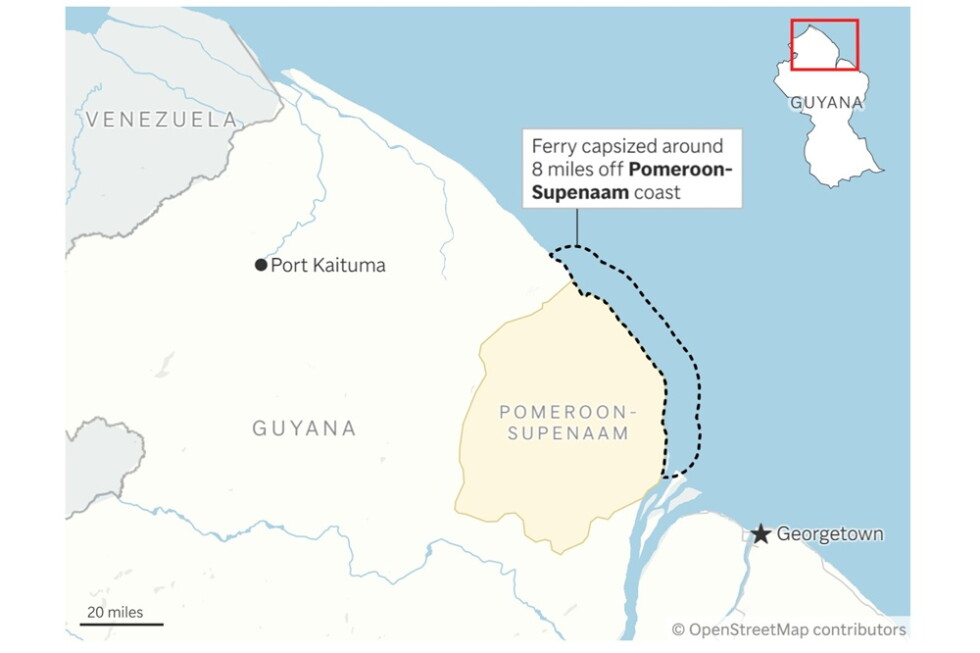
    GEORGETOWN, Guyana – A devastating maritime incident has unfolded off the North Atlantic coast of Guyana, where a government-operated passenger ferry capsized with 133 passengers and crew members on board. As of Sunday, rescue teams have pulled 67 survivors from the water, while urgent search efforts continue across a vast search area to locate dozens of unaccounted-for people, authorities confirmed.

    The vessel in question, the MV Barima, was traveling along the country’s Atlantic coastline from Georgetown, Guyana’s capital, to Port Kaituma when the accident occurred, according to Prime Minister Mark Phillips, who is overseeing the national government’s emergency response to the disaster. Phillips confirmed that the group of rescued people includes 41 adult men, 11 adult women, and 15 children. He declined to comment on whether officials expect fatalities among the missing passengers.

    To cover the wide area where the vessel capsized, search operations have mobilized an extensive fleet of resources: military helicopters, fixed-wing surveillance aircraft, and local fishing vessels are currently combing through a 1,000-square-mile stretch of ocean and coastal water in the hunt for survivors.

    Public Works Minister Juan Edghill shared details of the timeline of the incident in a Facebook post, noting that the MV Barima departed Georgetown just after 3 p.m. local time on Saturday, and began encountering dangerous conditions shortly before midnight. The national emergency response center received the vessel’s distress call at 11:01 p.m. local time (0301 GMT), which immediately triggered the launch of a joint search and rescue operation involving both government-owned and private watercraft.

    The ferry capsized in waters near the mouth of the Pomeroon River, according to official accounts. The MV Barima operates weekly scheduled services to remote, largely Indigenous communities located near Guyana’s border with Venezuela, a key transportation link for residents in the under-served region.

    Edghill pushed back against circulating claims that overloading of passengers or cargo contributed to the capsizing. He confirmed the vessel was properly equipped with 250 life jackets, two rigid life rafts, and six inflatable life rafts, meeting required safety standards. Citing firsthand accounts from rescued passengers, the minister said abnormal tide conditions were the primary cause of the disaster.

  • What to know about the Tate brothers, social media influencers facing rape and trafficking charges

    What to know about the Tate brothers, social media influencers facing rape and trafficking charges

    MIAMI — A years-long international legal case involving high-profile influencer brothers Andrew and Tristan Tate took a sharp new turn Saturday, when U.S. law enforcement took the pair into custody at the request of British authorities who have leveled additional serious charges including rape, sex trafficking, and child indecent image offenses. The development adds another chapter to a sprawling saga that has stretched across three countries and drawn global attention to the pair’s polarizing online presence and repeated denials of wrongdoing.

    Britain’s Crown Prosecution Service (CPS) confirmed that the new charges stem from allegations made by four additional victims, with evidence compiled by investigators from Bedfordshire Police, based in southeastern England. The updated charges bring the total number of alleged victims in the UK case to seven. The offenses are alleged to have occurred between 2010 and 2015, expanding on a previous set of charges filed over claims from three earlier victims dating back to 2012–2015.

    Breakdown of the new charges shows Andrew Tate, 39, faces seven additional counts of rape, three counts of arranging or facilitating trafficking for sexual exploitation, three counts of assault, and 19 offenses related to indecent images of children and extreme pornography. His younger brother Tristan, 38, faces one count of sexual assault, two counts of rape, and three counts of arranging or facilitating sex trafficking. Both brothers are dual U.S.-British citizens, and the CPS has formally requested their extradition from the U.S. to face trial in the UK. The pair remain in U.S. custody as extradition proceedings get underway.

    The Tate brothers first rose to prominence as former professional kickboxers who built a massive global social media following centered on a controversial brand of content that promotes extreme wealth, male dominance, and open misogyny. Andrew Tate, the more prominent of the two, has amassed more than 10 million followers on X, formerly Twitter, but has been permanently banned from major platforms including YouTube, TikTok, and Instagram for repeated violations of hate speech policies. He also operates a paid online academy that markets itself to young men as a guide to building wealth and attracting romantic partners. Both brothers have been open about their vocal support of former U.S. President Donald Trump.

    This is not the first time the pair have faced legal repercussions. In late 2022, they were arrested in Romania, where they had resided since 2016, alongside two local Romanian women. All four were accused of running a criminal network that lured women into coercive sexual exploitation. The brothers have consistently denied all allegations in the Romanian case, and procedural legal delays have kept the case from going to trial, though it remains open. A separate Romanian legal case against the brothers is also still active. Andrew Tate has repeatedly claimed that Romanian prosecutors hold no evidence against the pair and that a political conspiracy is in place to silence him.

    Earlier this year in the UK, a High Court judge rejected a legal attempt by the Tate brothers to force authorities to release the names of their accusers, clearing a key procedural hurdle for the prosecution. Earlier this year in February 2025, after Romanian authorities lifted court-imposed travel restrictions that had kept the pair in the country for more than two years, the brothers were permitted to leave Romania. They flew to Florida on a private jet to enter the United States.

    Their travel to the U.S. sparked minor political controversy after Romania’s foreign minister noted that a former U.S. official from the Trump administration had previously expressed interest in the brothers’ Romanian legal case. When asked whether his administration had pressured Romanian officials to release the Tate brothers, Trump stated he knew nothing about the case. The arrest in Miami marks the latest development in a legal saga that continues to unfold across transnational jurisdictions.

  • World Cup integrity questioned by European rights body urging FIFA to help protect 2030 tournament

    World Cup integrity questioned by European rights body urging FIFA to help protect 2030 tournament

    GENEVA – On the eve of the 2026 men’s World Cup final between Spain and Argentina, the head of Europe’s leading human rights organization has delivered a scathing rebuke of FIFA’s management of the global tournament, calling out systemic threats to competition integrity and pushing for immediate structural reform ahead of the 2030 edition.

    Alain Berset, a former two-term president of Switzerland (FIFA’s host nation) and current Secretary General of the 46-nation Council of Europe, published an open letter Sunday to FIFA, the governing body of global soccer, just hours before the 2026 title match kicked off in East Rutherford, New Jersey. In the letter, Berset warned that the sport’s biggest tournament is already facing a new existential crisis driven by unchecked political influence and outsized commercial interests tied to gambling.

    “The next crisis has already begun. It has two names: money and power,” Berset wrote, pointing to two high-profile incidents from the 2026 tournament that he says expose deep flaws in FIFA’s governance.

    The first controversy centers on U.S. men’s national team forward Folarin Balogun, who was cleared to play in a critical knockout stage match against Belgium just days after receiving a mandatory one-game suspension. Berset confirmed the unusual last-minute reversal of the ban came directly after then-U.S. President Donald Trump personally contacted FIFA President Gianni Infantino to pressure for the decision. Belgium went on to win the quarterfinal-qualifying match 4-1, eliminating the U.S. from the tournament. Berset emphasized that when tournament rules are bent to accommodate political pressure, every match outcome becomes vulnerable to legitimate doubt.

    “Political influence has also moved onto the field,” Berset wrote. “The sanction suspended mid-tournament came after a head of state called the president of FIFA.”

    UEFA, European soccer’s governing body, has already publicly condemned FIFA’s disciplinary ruling on Balogun, saying the decision “crossed a red line” for the rule of law and transparency in global soccer. As of the publication of Berset’s letter, FIFA has still not released any official documentation explaining the reasoning behind the reversal of the ban, which was decided by a FIFA disciplinary judge from the United Arab Emirates.

    A second major integrity risk Berset outlined stems from FIFA’s controversial $150 million sponsorship deal with ADI Predictstreet, an Abu Dhabi-backed prediction betting firm that was formally registered just one week before the partnership was announced in April 2026. The deal is part of a broader series of commercial partnerships FIFA has struck with gambling industry entities for the 2026 World Cup, the first edition of the tournament expanded to 48 teams and 104 total matches.

    Critics have long argued that micro-prediction betting markets create openings for insider trading and match manipulation, because they allow bettors to wager on small, in-game moments that individual players can influence without altering the final score. Berset echoed these concerns, writing that this type of commercial partnership “is an open door to fraud, and this World Cup has opened the door wider.”

    Beyond the two high-profile controversies, Berset also raised a series of additional concerns about the 2026 tournament, including eroded authority for on-field referees, unaddressed racist abuse of players (some of which came from elected public officials), and the proliferation of micro-betting on nearly every in-game event from passes to corner kicks.

    The public rebuke from the Council of Europe carries particular weight, as the intergovernmental body – whose core mission is advancing democracy, human rights and the rule of law across the globe – has maintained a formal working partnership with FIFA since 2018. When the memorandum of understanding was signed eight years ago, Infantino emphasized that the alignment was natural, as both organizations shared core values of transparency, accountability, competition integrity, and respect for human and children’s rights. Berset and Infantino most recently met on the sidelines of the 2024 United Nations General Assembly in New York to discuss cooperation.

    Looking ahead to the 2030 men’s World Cup, which will be hosted primarily by Spain and Portugal with additional matches co-hosted by Morocco and three opening games split between Argentina, Paraguay and Uruguay to mark the centenary of the first World Cup held in 1930, Berset laid out a clear call to action for FIFA.

    “So here is my proposal to FIFA,” Berset wrote. “A working dialogue that starts tonight, to build the integrity framework of the 2030 World Cup before it is played.”