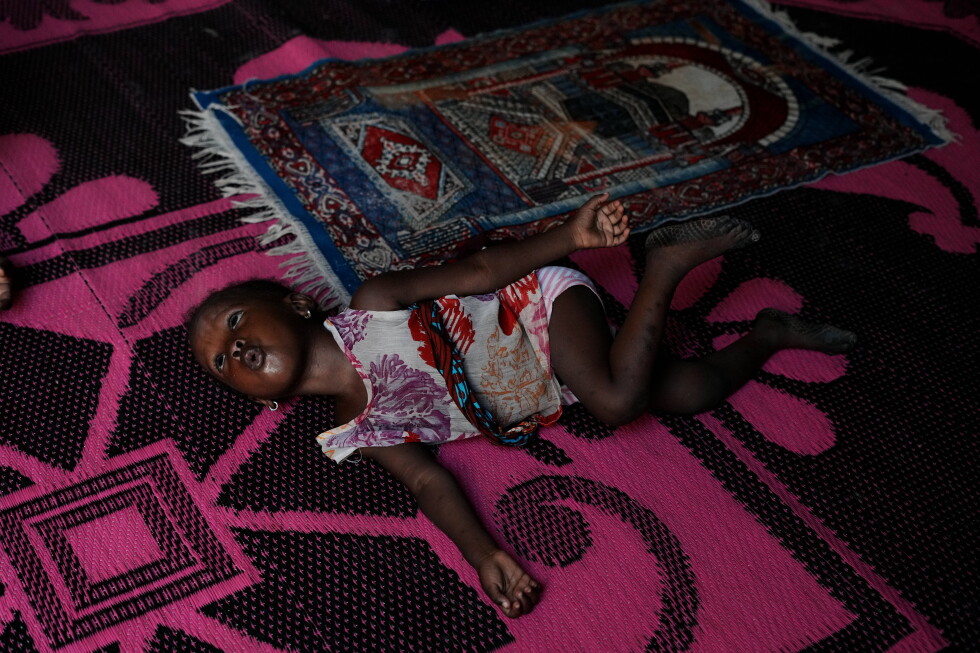
In the quiet Sokoto State town of Kware, northwestern Nigeria, Maryam Aminu felt a familiar mix of grief and frustration when her 18-month-old toddler became the second of her six children to relapse into acute malnutrition this April. For months, the family has struggled to put consistent, nutrient-dense meals on the table, a hardship that intensified sharply in February after her husband Shehu lost his job as a taxi driver, a casualty of skyrocketing petrol prices triggered by the ongoing war in Iran.
“Even though I suspected what the diagnosis would be, I was heartbroken and angry because I knew exactly why this happened,” Aminu explained from the plain living area of her family’s two-bedroom home, where coal stove ash drifted through the small space. “Meals are irregular, and we can barely afford enough to eat, let alone food that keeps children healthy.”
Child malnutrition relapse is no longer an isolated case in Sokoto or across northern Nigeria, local health workers and international aid officials confirm. The ripple effects of the Middle East conflict have piled a new crisis onto a region already reeling from extreme poverty and a years-long insurgency that has displaced thousands and cut off many farming communities from their land. Now, the global fuel shock sparked by the war has pushed food insecurity to catastrophic levels for millions of impoverished people, with children bearing the brunt of the harm.
This growing crisis comes as Nigeria is already grappling with sustained economic volatility sparked by President Bola Tinubu’s sweeping economic reforms, which included the elimination of national fuel subsidies and currency devaluation three years ago. New data from the World Bank released this week underscores the scale of deprivation: more than 139 million Nigerians now live below the poverty line or are classified as vulnerable to falling into poverty.
The global spillover of the conflict reaches far beyond the Middle East, the United Nations Children’s Fund (UNICEF) warned in a new report published this week. If hostilities continue through the end of 2024, an additional 23.4 million children worldwide will fall into monetary poverty, defined as lacking sufficient income to cover basic needs. Eighty percent of these newly vulnerable children will live across Africa and Asia, the agency estimates.
“Children are paying the heaviest price for the escalating conflict in the Middle East, even children thousands of miles from the fighting,” UNICEF Executive Director Catherine Russell said during a visit to Sokoto this week. “The longer hostilities continue, the more devastating the long-term consequences will be for a generation of children.”
The disruption to global energy supplies stems from the closure of the Strait of Hormuz, the critical chokepoint that carried one-fifth of the world’s total oil and gas trade before the outbreak of war. The shutdown triggered a cascading global fuel crisis that drove up prices for nearly every essential good, from household groceries and gasoline to agricultural fertilizer and commercial travel. In Nigeria, retail petrol prices jumped nearly 75% between February and April, surging from 800 naira ($0.58) per liter to 1,400 naira ($1.02) per liter, passing higher costs directly to low-income households that already spend most of their income on food.
For months, U.S. President Donald Trump has pursued a range of strategies to force Iran to reopen the strait, including targeted airstrikes, naval blockades, negotiations, and public threats, but the waterway remains closed to commercial traffic.
At public health facilities across Sokoto, frontline workers say they have seen a sharp and steady rise in the number of children returning for repeat malnutrition treatment this year. Unofficial hospital records shared with the Associated Press show nearly 40 children who had previously recovered from malnutrition after February are now back in care for a second diagnosis — a figure that does not include the many families who cannot afford to travel to facilities for treatment.
“I’m worried, and often angry, about how quickly these numbers are growing,” said Halimah Muhammad, a community health worker based in Sokoto.
Beyond the immediate threat to child health, soaring prices and persistent economic hardship are setting the stage for long-term developmental harm, Russell warned. Children growing up in chronically food-insecure households face far higher rates of stunting, which irreversibly impacts physical and cognitive growth. Financial stress also pushes more children to drop out of school to support their families, locking intergenerational poverty in place for decades.
“Their long-term development will be compromised, and many will not be able to stay in school because their parents face such extreme financial pressure,” Russell said. “The long-term implications for these children are absolutely terrible.”
The conflict has also disrupted global fertilizer supplies and sent prices soaring, compounding risks for northern Nigeria’s majority farming communities. Many of these communities are already unable to access their farmlands regularly due to ongoing violence by armed insurgent and bandit groups, and higher input costs have made this year’s planting season far more precarious, threatening future harvests and deepening the food crisis.
Shehu Aminu, Maryam’s husband, says the erosion of purchasing power has been overwhelming. “Two years ago, 2,000 naira could buy a nutritious meal for my whole family. Now that same basket of food costs 5,000 naira,” he said. Most days, the family only eats pap, a cheap corn pudding, and plain rice. “There is simply no way to give our children the food they need to grow. I wake up every morning unhappy, because I can no longer provide for the people I love.”
Communities across northwestern Nigeria are already caught between overlapping security crises: routine attacks by bandit groups that specialize in kidnapping for ransom, and expanding territorial control by Islamist insurgent groups. The distant war in Iran has only multiplied existing vulnerabilities, analysts say.
“This distant conflict offers no reprieve for the north’s most vulnerable populations, it only makes every existing crisis worse,” said Ikemesit Effiong, a partner at SBM Intelligence, a Lagos-based geopolitical risk advisory firm.
The pattern of repeated child malnutrition seen in Maryam Aminu’s family plays out across hundreds of households in the region. Larai Malami, a 35-year-old mother of 10, gave birth to her youngest child last December, and the infant has already been diagnosed with malnutrition twice. Her husband lost his job as a motorcycle taxi rider last year, and crossed the border into neighboring Niger to search for work, leaving Malami to care for their children alone.
Skyrocketing fuel prices keep food costs unaffordable and keep her husband from being able to afford to return home, Malami says. “I worry that my child will never get fully healthy,” she said.
It is a fear Maryam Aminu shares. For her 18-month-old daughter, she says, “I just wish she were excited and full of life, like a toddler should be.”