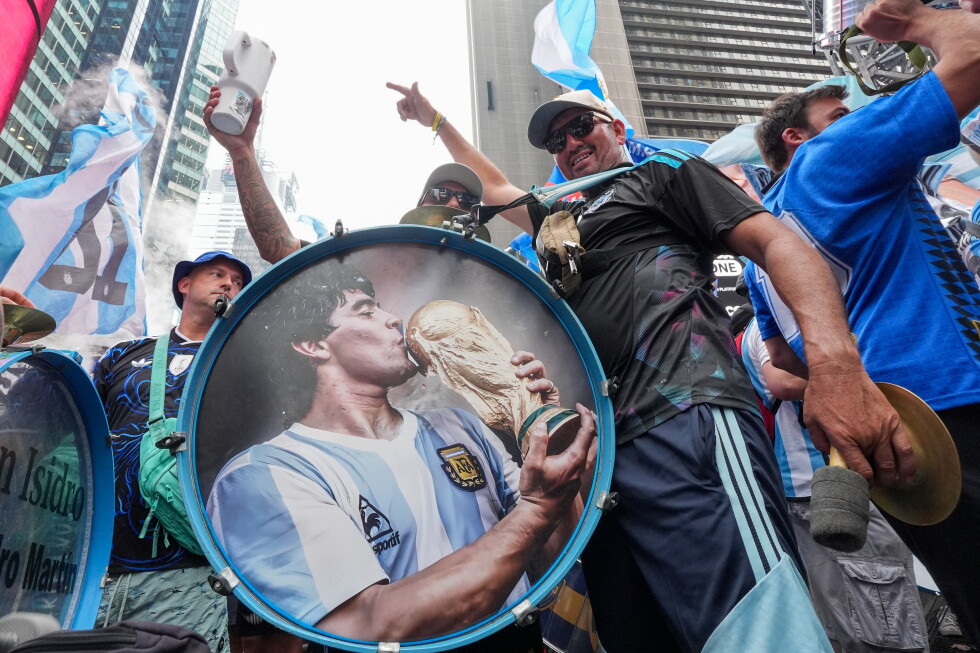
ATLANTA – As Spain and defending World Cup champion Argentina prepare to step onto the pitch in New Jersey for the tournament’s 2026 final, the curtain is set to fall on the biggest edition of global soccer’s flagship event in history. Over nearly six weeks of competition co-hosted by the United States, Mexico and Canada, a record-breaking 104 matches have been played, capping off an expanded tournament that delivered electrifying on-pitch action alongside a wave of lingering controversies. From underdog breakthroughs to political tensions and widespread criticism of new rules and technology, the first 48-team World Cup has been one of the most unpredictable and debated tournaments in modern memory. Below are the defining takeaways from the 2026 event.
### More Teams, More Underdog Drama
When FIFA approved the expansion from 32 to 48 teams, critics immediately warned the new format would produce lopsided group-stage matches and dilute the competitive stakes of the opening round. But several unheralded underdog nations proved the skeptics wrong, writing their own chapters in World Cup history and winning legions of new global fans.
Cape Verde, making its historic tournament debut, defied all expectations to hold powerhouse Spain to a draw in its opening match, advance to the round of 32, and push defending champion Argentina to the brink before falling 3-2 in extra time in an instant classic. The nation’s 40-year-old goalkeeper Vozinha emerged as an unexpected breakout star, amassing millions of new followers across social media platforms for his series of game-saving performances. Fellow debutants Congo also advanced past the group stage and pushed European powerhouse England to a tight match before elimination, while Curaçao remained in contention for a knockout spot heading into its final group fixture.
FIFA’s gamble to open the World Cup to more nations was partially vindicated: smaller sides proved they can compete with the sport’s traditional powerhouses on the biggest stage. Even so, it was the sport’s elite former champions — Argentina, Spain, France and England — that claimed the four semifinal spots, reinforcing the hierarchy of global soccer.
### The World’s Top Stars Deliver on the Big Stage
The race for the tournament’s Golden Boot became a showcase for the planet’s best players, with Lionel Messi, Kylian Mbappé, Erling Haaland, Harry Kane and Jude Bellingham all producing consistent, high-scoring performances throughout the knockout stages.
Heading into Sunday’s final, Mbappé holds the tournament lead with 10 goals, and has already broken the all-time career World Cup scoring record with 22 total goals across his tournament appearances. Messi trails Mbappé by two goals at this tournament, sitting on 21 total career World Cup goals with a chance to equal or surpass the record in the final, and is still in contention for a third career Ballon d’Or if Argentina claims the trophy. While Cristiano Ronaldo could not lead Portugal to a deep run in what he has confirmed is his final World Cup, Spanish teenage sensation Lamine Yamal — who emerged as a star at the 2024 Euros — worked his way back into form after overcoming a pre-tournament injury to play a key role in Spain’s run to the final.
### New Technology Sparks Backlash Over Controversial Calls
The tournament’s embrace of cutting-edge officiating technology put VAR (Video Assistant Review) at the center of multiple contentious decisions that saw goals disallowed for Germany, Croatia and Egypt, sparking fury from coaches and fans alike.
After Argentina pulled off a dramatic comeback from a 2-0 deficit to beat Egypt 3-2 in the round of 16, Egypt head coach Hossam Hassan launched a scathing attack on officials after a potential opening goal for his side was overturned by VAR review. “We have suffered injustice,” Hassan said after the elimination.
The tournament’s sensor-equipped official match ball also changed the outcome of a knockout fixture: Croatia had a dramatic late equalizer ruled out against Portugal in the round of 32, when the ball’s sensors detected the slightest touch offside by Igor Matanović before Josko Gvardiol scored. “All these decisions take the joy out of football,” said Croatia head coach Zlatko Dalić, who announced his resignation shortly after the elimination.
### Exorbitant Ticket Prices Didn’t Deter Record Fan Turnout
Leading up to the tournament, critics warned that FIFA’s adoption of dynamic pricing would put match tickets out of reach for average soccer fans, with some describing the policy as a “monumental betrayal” of supporters. Official general sale prices for group-stage matches ranged from $140 to $2,735, with final tickets reaching as high as $8,680 — far above the price point for the 2022 Qatar World Cup. After sustained backlash, FIFA added a batch of $60 tickets for every match allocated to each of the 48 participating national federations, but the controversy extended to FIFA’s official resale platform, which allowed sellers to list tickets for well above face value. One final ticket was listed for nearly $2.3 million on the platform; while FIFA did not regulate resale prices, it took a cut of every secondary sale.
For all the criticism around pricing, fans still turned out in record numbers across the three host nations, even for matches featuring no elite global teams. After an opening weekend with scattered empty seats for the South Korea-Czech Republic match in Guadalajara, nearly every subsequent match reported sold-out stadiums. Many international visitors also praised the warm hospitality they received during their time in the United States.
### Hydration Breeds Draw Major Fan and Critic Pushback
One of the tournament’s most unpopular innovations was the mandatory hydration break added to the middle of each half of play, introduced to help players cope with summer heat across North American venues. The rule drew loud jeers from fans inside stadiums, and drew criticism from former players as well. “We’re in America, right? So, it is like it is a timeout,” former Ireland international Roy Keane said on The Overlap podcast, echoing widespread complaints that the breaks disrupted the flow of matches.
FIFA mandated the breaks regardless of match-day temperature, venue or location, and the rule quickly became a tactical loophole: coaches used the pauses to deliver tactical instructions to their players, while broadcasters used the extra time for additional commercial breaks. It remains unclear whether FIFA will retain the rule for future World Cups, and organizers for the 2028 European Championship — co-hosted by the British Isles — have already signaled they will not adopt the policy.
### Political Tensions Overshadow Iran’s Participation
As is often the case at major international tournaments, politics and soccer intersected at the 2026 World Cup, with the highest tensions surrounding Iran’s participation. Amid ongoing conflict in the Middle East, there were widespread doubts that Iran would even send its team to the tournament. The side ultimately competed, but was forced to relocate its pre-tournament base camp from Arizona to Mexico amid security and political concerns.
Iran’s participation was marked by ongoing barriers: U.S. officials refused to issue visas to multiple members of the Iranian delegation, and the team complained of strict travel restrictions that forced players and staff to leave the United States immediately after every match. When Iran was eliminated in the group stage, U.S. Homeland Security Secretary Markwayne Mullin made his position clear: “I’m just glad they’re done and they’re not coming back,” he said.
The 2026 tournament also put the relationship between former U.S. President Donald Trump and FIFA president Gianni Infantino under the microscope, after a one-game suspension for U.S. striker Folarin Balogun was overturned ahead of the team’s round of 16 match against Belgium. Trump confirmed he had called Infantino to request a review of the red card decision before Balogun was cleared to play. While FIFA insists its independent disciplinary bodies made the final call, the incident sparked widespread questions about political interference in soccer governance. The controversy ultimately did not benefit the United States, which lost the match 4-1 to Belgium.