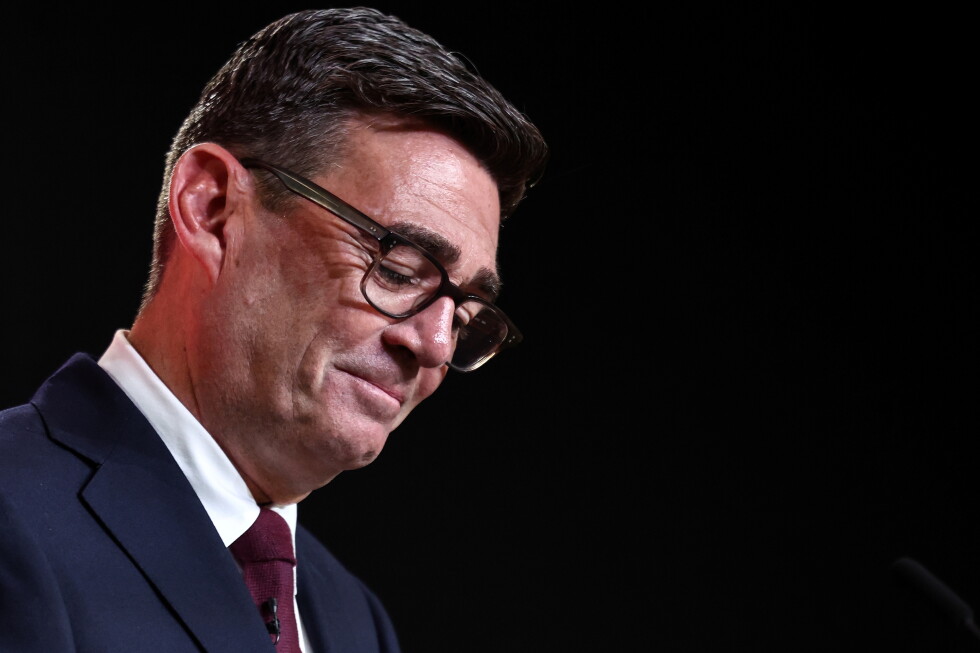
LONDON – When Andy Burnham crosses the threshold of 10 Downing Street on Monday, he will carry high public expectations into office, while also inheriting a daunting pile of domestic and international crises that mirror the unenviable challenges that forced his predecessor out of Downing Street.
After nearly a decade serving as Mayor of Greater Manchester in northwest England, and a surprise win in a recent parliamentary by-election that cleared his path back to national politics, Burnham was confirmed as the new leader of the Labour Party last week, and is set to be sworn in as the United Kingdom’s new prime minister. For the regional leader who has spent his career governing a population of just 3 million, steering a national government serving 67 million people across four nations will be a step up of unprecedented scale, bringing with it complex issues he has never before had to address at a national level.
Below is a breakdown of the most pressing issues facing Burnham’s new administration, and early indications of how he may approach them:
### Reviving the Sluggish Economy and Decentralizing Power
Burnham has so far kept his policy details vague, but has pledged to release a full roadmap this week outlining how he will fund his domestic agenda, which centers on jumpstarting stalled UK economic growth, upgrading public services, and raising household living standards.
“This change today is the most significant turning point for our politics in 40 years,” Burnham remarked Friday as he officially took the Labour Party reins. “It will lead us to a country where life becomes more affordable, and every person and every region can lift themselves up from where they stand now.”
The economy Burnham inherits was showing tentative signs of improvement until the outbreak of the Iran war upended global forecasts. Economists now widely predict sharp growth slowdown across 2026 alongside renewed upward pressure on inflation, leaving little room for major new spending commitments.
A core ideological priority for Burnham is closing the opportunity gap between London and the wider UK, primarily through widespread government decentralization: channeling more funding directly to local authorities, and renationalizing a number of public services that were privatized during the 1980s. His model of business-friendly progressive governance, dubbed “Manchesterism,” seeks to combine private and public investment to upgrade transport, housing and national infrastructure. This ambitious structural reshaping of the UK state could take years to fully implement, however.
Joshi Herrmann, founder of the independent Manchester-based news outlet The Mill, who has covered Burnham’s career for more than a decade, noted that Burnham may be able to ease financial pressure for struggling households. But, he added: “If the core question facing the country is who can deliver sustained economic growth and reshape the UK economy for the post-Brexit, post-financial crash era, I’d be very surprised if Andy Burnham is that answer.”
Constrained by tight public finances, Burnham has very little room to increase overall public spending. He is taking over from Keir Starmer, who won power on a manifesto that ruled out increases to the UK’s major tax rates, locking Burnham into that fiscal framework unless he chooses to break those campaign pledges. Burnham has declined to rule out introducing a new wealth tax, telling former footballer and broadcaster Gary Lineker on the Goalhanger podcast last week that the government “might be having to ask for a little more” from the country’s wealthiest citizens.
### Navigating Foreign Policy and US Relations With Donald Trump
One of Burnham’s biggest gaps in experience is on the global stage, but he has already made clear he will maintain the UK’s longstanding commitments to NATO and the country’s independent nuclear deterrent. He has also reaffirmed that Britain will remain a staunch backer of Ukraine in its war against Russian invasion and a reliable ally to the United States.
The future of US-UK relations will largely hinge on how Burnham handles unpredictable US President Donald Trump, who initially praised Starmer before turning on him over Starmer’s refusal to back the US war with Iran. Burnham has publicly criticized Trump in the past, but says he will treat the US president with respect, just as he treats other political leaders, while being willing to stand his ground on points of disagreement.
“I like to think I’ve got some personality myself and I’ll just, you know, I’ll deal with him very upfront in the same way,” he told Lineker. “Where you disagree, do it, but do it in a way that is kind of meeting him where he’s at.”
Trump has repeatedly pressured NATO member states to dramatically increase their military spending, putting Burnham under pressure to go further than the defense spending targets set by Starmer’s government. Starmer’s existing 15 billion pound ($20 billion) defense spending boost is far smaller than what UK military leaders have demanded, and critics have pointed out the plan lacks full funding within the current national budget.
### Navigating Sensitive Political Terrain Over the Israel-Hamas War
Burnham has openly criticized Starmer’s approach to the Israel-Hamas war and the humanitarian catastrophe unfolding in Gaza. He condemned the October 7, 2023, Hamas attacks on southern Israel that killed roughly 1,200 people and took 251 hostages, but has argued the previous UK government waited far too long to call for a permanent ceasefire.
According to the Gaza Health Ministry, which is run by the Hamas-led administration but staffed by medical professionals that maintain detailed records generally deemed reliable by UN agencies and independent experts, more than 73,000 Palestinians have been killed in Gaza since the start of Israeli operations. Burnham has said his government will consider adding new sanctions against Israeli individuals involved in violence in Gaza and the expansion of illegal settlements in the occupied West Bank.
The conflict is deeply sensitive for the Labour Party: the party was plagued by accusations of systemic antisemitism before Starmer took leadership, and it also relies heavily on electoral support from the UK’s large Muslim population. Burnham’s stance on the war has already drawn backlash from UK Jewish groups, while pro-Palestinian activists have criticized him for refusing to classify Israel’s bombardment of Gaza as genocide.
### Tackling the Politically Thorny Issue of Migration
Notably, Burnham made no mention of migration in his acceptance speech as Labour leader on Friday, despite the issue ranking as a top priority for a large share of UK voters. Like many wealthy European and Western nations, the UK has seen a sharp rise in arrivals of migrants fleeing war, famine, climate-driven disasters, political persecution and poverty in their home countries.
Public anger over rising numbers of dangerous small boat crossings of the English Channel has fueled the rise of the anti-immigration Reform UK party, which notched a series of key local and regional election wins that ultimately led to Labour’s decision to oust Starmer and install Burnham as party leader.
Burnham has said he will largely stick to the outgoing Labour government’s existing framework on migration, which has already overseen a drop in net migration from a peak of more than 900,000 in 2023 to 171,000 in 2025. Data shows small boat crossings this year are already down 40% compared to the same period in 2025. Burnham has committed to continuing the downward trend in net migration, and previously voted in favor of a bill designed to further cut Channel crossings and redirect migrants to safer, legal migration pathways.
Associated Press writers Pan Pylas and Jill Lawless contributed reporting to this article.