作者: admin

  • New ‘Nakba’ in Jerusalem: Israel steps up Silwan demolitions near Al-Aqsa

    New ‘Nakba’ in Jerusalem: Israel steps up Silwan demolitions near Al-Aqsa

    Standing amid the crumbled concrete and twisted metal that was once his family home in occupied East Jerusalem, Fakhri Abu Diab’s gaze falls on a small corner where he once shared a warm cup of tea with his mother. For the 55-year-old Palestinian father of five and grandfather of 16, the rubble is more than just destroyed property—it is the erasure of a lifetime of memories, of a childhood spent tending nearby land with his mother, and of the tight-knit community life his family built over generations.

    Abu Diab’s home, located in the al-Bustan neighborhood of Silwan just south of Jerusalem’s Old City and Al-Aqsa Mosque, was demolished by Israeli authorities in early 2024. It is one of dozens of Palestinian homes leveled in the area this year as part of long-running plans to expand Israeli settler infrastructure and build religiously themed national parks. A veteran anti-occupation activist, Abu Diab shared his grief with Middle East Eye: “They demolished my childhood, my memories, and even the scent of my mother.”

    Silwan, a Palestinian district hugging the southern walls of the Old City, has been a flashpoint for Israeli displacement efforts for decades. Alongside other high-risk Palestinian neighborhoods including Sheikh Jarrah to the north of the Old City and Ras al-Amoud to the southeast, Silwan has been the target of systematic state-backed campaigns to clear land for expanding Israeli settlements. For years, sustained Palestinian resistance and international scrutiny slowed the pace of demolitions and expulsions—but that shifted dramatically after the outbreak of the Gaza conflict in October 2023.

    Since that time, Israeli authorities have sharply accelerated home demolitions and forced expulsions across occupied East Jerusalem, with al-Bustan emerging as one of the worst-affected zones. Across the entire city, an estimated 20,000 Palestinian-owned properties currently face active demolition orders. As Israeli forces have also stepped up violent crackdowns on local protest and dissent, Palestinian residents say they are increasingly isolated and defenseless, with little meaningful international support or global media attention focused on their plight. Local residents and rights activists warn that if the current pace of demolitions continues, entire Palestinian communities across Silwan, Sheikh Jarrah and Ras al-Amoud could be completely cleared. This demographic shift would leave Al-Aqsa Mosque surrounded entirely by Israeli settler compounds and biblical parks, cutting the holy site off from its surrounding Palestinian community.

    Today, the scale of destruction in al-Bustan is visible along every narrow, winding street, with piles of rubble and empty flattened lots appearing every few meters. “I used to live here with my wife, my children, and my grandchildren. Ten of us lived in this house,” Abu Diab said. “The suffering is not only in the demolition of the house, but in the demolition of our past, our lives, and our future.”

    The campaign to displace Palestinians from Silwan dates back to 1967, when Israel occupied East Jerusalem and immediately introduced laws that enabled the transfer of Palestinian property to Jewish ownership, while launching large-scale archaeological excavations in the district’s Wadi Hilweh neighborhood. Today, Silwan is home to roughly 55,000 Palestinians spread across 12 neighborhoods covering 6,000 dunams in the Kidron Valley and southern slopes of the Mount of Olives. For decades, three neighborhoods—Wadi Hilweh, al-Bustan and Batn al-Hawa—have borne the brunt of demolition and displacement campaigns, as powerful state-backed settler organizations push to clear the area to expand biblical tourist sites including the “City of David” and the planned “King’s Garden.” Since the early 2000s, more than 2,000 Palestinians across these three neighborhoods have faced expulsion threats, framed either as settler property claims or responses to alleged unpermitted construction. Between 2006 and 2023, Israeli authorities demolished an average of just one to two homes per year in Silwan, held back by ongoing Palestinian resistance and public pressure. But that pace has exploded since October 2023.

    Local residents and researchers confirm that Israeli authorities have demolished 54 homes in al-Bustan alone—more than half of the approximately 115 total homes in the neighborhood—since the Gaza war began. Most of the remaining properties now face imminent demolition. The Jerusalem municipality has adopted increasingly aggressive tactics to push residents out: it gives homeowners strict deadlines to demolish their own homes, imposing heavy financial penalties for any delay, and has openly warned residents that crews will return weekly to carry out demolitions if residents refuse to comply. Aviv Tatarsky, a researcher with Israeli human rights organization Ir Amim, calls the current campaign a devastating escalation that marks a dangerous turning point for Palestinian communities in the area. “The people of Silwan defended their homes for over 20 years, and now they feel they can no longer stop what is happening,” Tatarsky told Middle East Eye. “It increasingly looks as though Israel will wipe out al-Bustan. We do not know how to stop it.”

    The accelerated demolitions in al-Bustan are no accident, Tatarsky explains. The neighborhood, home to roughly 1,500 Palestinians, sits in a strategically critical position: it links the existing heavily guarded settler enclaves of Wadi Hilweh to the northwest and Batn al-Hawa to the east, where 2,500 Israeli settlers already reside. Clearing Palestinians from al-Bustan would create uninterrupted territorial continuity between these existing settler areas, and connect the Silwan settlements directly to West Jerusalem, which lies on the other side of the 1949 Green Line armistice boundary. The ultimate goal, Tatarsky says, is to normalize the erasure of Palestinian Silwan in Israeli public consciousness, rebranding the entire area as an extension of West Jerusalem tied exclusively to biblical Jewish history. “So al-Bustan is central to dramatically changing what Silwan is,” he added.

    Israeli authorities have publicly justified the demolitions by citing building code violations, claiming most Palestinian homes in al-Bustan were constructed without permits. But critics note that permits are effectively impossible for Palestinian residents to obtain under Israeli zoning rules, and the law is enforced selectively against Palestinians while ignoring violations by settler groups. Israeli newspaper Haaretz has reported that demolition orders for multiple al-Bustan properties were suddenly dropped after the land was sold to settler organizations, even as those same groups have been allowed to build an events hall, synagogue, restaurant and visitor center without required permits. The clear end goal, researchers say, is to clear al-Bustan to make way for the “King’s Garden” biblical archaeological park, which will connect to the existing “City of David” tourist complex built on seized Palestinian land in Wadi Hilweh.

    “There is no ownership dispute, no court ruling, and no justification for these executive measures other than transforming a built and inhabited neighbourhood into a park shaped by Zionist religious narratives,” said Ziad Ibhais, a Jerusalem affairs researcher. “That is what makes al-Bustan emblematic of the wider conduct of the occupation municipality in Jerusalem. These powers are being used against Palestinian landowners to impose nationalist-religious visions adopted by the [Israeli] occupation municipality on land over which it has neither sovereignty nor legal authority under international law.”

    International law widely recognizes Israel’s occupation of East Jerusalem as illegal, holding that an occupying power cannot claim sovereignty over occupied territory or make permanent demographic changes to the area. Currently, more than 233,000 Israeli settlers reside in occupied East Jerusalem, alongside more than 500,000 in the occupied West Bank, according to the Israeli NGO Peace Now. All Israeli settlements are widely regarded as a violation of international law.

    Two major settler organizations, Ateret Cohanim founded in 1978 and Elad founded in 1986, lead the displacement campaign in Silwan. Though formally registered as private non-profits, both groups operate with extensive backing from the Israeli state, receiving political support from the Israeli parliament, cooperating closely with Israeli police, and accessing direct government funding. “They are effectively an arm of the state,” Tatarsky noted.

    Palestinian residents have exhausted all available channels to stop the demolitions, bringing multiple legal challenges to both settler claims and municipal plans, and even drafting two alternative community development plans that would preserve existing homes while upgrading neighborhood infrastructure. In a recent proposal, most residents agreed to an extremely strict set of planning concessions to save their neighborhood, in negotiations with the Jerusalem municipality. But the municipality pulled out of talks in February 2024 and announced it would move forward with full demolition plans.

    The collapse of negotiations and lack of legal recourse has left residents in deep despair. Most families whose homes are demolished initially move in with extended relatives, while some manage to rent alternative housing elsewhere in Jerusalem—but skyrocketing housing prices put that option out of reach for many, forcing extended families to scatter across different regions. For Abu Diab, the damage goes far beyond housing insecurity: the displacement has destroyed the traditional Palestinian extended family social structure that sustained generations of residents. “Our way of life is to live together as extended families – with your children, your brothers, your cousins, all close to one another,” he said. “Now we are facing a housing crisis, a psychological crisis, and a health crisis. We have been completely scattered. They have destroyed our social fabric and our support system.”

    Tatarsky argues the accelerated demolitions are only possible because of the current regional context: with the international community focused almost exclusively on the Gaza conflict and many Western powers having signaled implicit support for Israeli actions, the Israeli government feels it can act with complete impunity to push through its long-term demographic goals in East Jerusalem. For Abu Diab, the stakes extend far beyond al-Bustan, extending to the future of Jerusalem’s Palestinian community as a whole. “Al-Bustan matters because it is where we were born and raised, but also because it is the heart of Silwan,” he said. “If Israel takes control of Silwan, it will pave the way for greater control over Al-Aqsa Mosque. If there is no real action, the area will change completely, and there will be a new Nakba for the people of Jerusalem.”

  • Anti-work anthems, Boy George and controversial lyrics: A guide to all 35 Eurovision songs

    Anti-work anthems, Boy George and controversial lyrics: A guide to all 35 Eurovision songs

    As a much-anticipated burst of joy for global audiences weary from geopolitical and social uncertainty, the 2026 Eurovision Song Contest is gearing up to kick off its semi-final round in Vienna this Tuesday. This year’s competition brings a smaller lineup than recent editions, with just 35 participating nations – the most compact field since 2003 – a shift driven by a widespread partial boycott over Israel’s inclusion in the contest. While the political controversy remains impossible for many fans to separate from the spectacle, the 2026 iteration still delivers the chaotic, larger-than-life pageantry that has made the annual event a cultural staple, with everything from a silver-painted AI-themed performance and a fake gorilla cameo to pop legend Boy George and the longest sustained high note in contest history.

    Following the trend of back-to-back winners Nemo of Switzerland and JJ of Austria, who integrated operatic vocal techniques into their winning tracks, 2026 sees a wave of contestants drawing from classical and operatic inspiration. Leading this pack is 17-year-old French prodigy Monroe, the youngest competitor this year, whose entry *Regarde!* blends frenetic string arrangements, glitched drum beats and powerhouse “Queen of the Night” style vocals. Billed as a celebration of the diverse musical heritage of France, the track builds to a showstopping climax, and industry analysts predict a top 10 finish with thoughtful stage staging. Montenegro’s Tamara Živković takes a maximalist approach on *Nova Zora*, pairing a thunderous techno beat with a Greek chorus to deliver a message about women breaking gender barriers. Co-written by professional opera singer Vesna Aćimović, the track comes as Montenegro aims to end a decade-long semi-final qualification drought that stretches back to 2015. Closing out the operatic category is Latvia’s Liene Atvara, whose haunting ballad *Ēnā* explores the lifelong trauma of growing up with a parent struggling with alcoholism. The soft, muffled opening verses build to a cathartic operatic finale that is guaranteed to leave not a single dry eye in the venue.

    Controversy has already erupted around Romania’s return entry *Choke Me*, performed by Bucharest physics master’s student Alexandra Căpitănescu. Critics have labelled the track dangerous and reckless, claiming its lyrics reference unsafe sexual choking, a practice linked to permanent brain injury and death. But Căpitănescu pushes back against this interpretation, explaining the song is a metaphor for the emotional suffocation caused by self-imposed pressure and self-doubt. Regardless of the lyrical debate, the track itself is widely praised for its gritty, urgent energy, built on churning demonic guitar riffs and Căpitănescu’s distinctive raspy vocals. Equally layered is Switzerland’s entry *Alice* from Veronica Fusaro: on the surface a gentle waltz-time ballad about love, the track actually tells a chilling story of abusive stalking from the perspective of the perpetrator, adding a dark twist that elevates the already solid composition.

    For fans craving upbeat dance tracks to cut loose to, the 2026 contest delivers no shortage of high-energy options. Bulgaria’s entry *Bangaranga*, performed by established pop star Dara, is a delightfully unapologetic, sass-filled bop packed with a speaker-shattering drum beat and an gratuitous, crowd-pleasing dance break. Germany’s Sarah Engels offers a more conventional Euro-dance anthem *Fire*, which draws clear inspiration from Dua Lipa’s pop-dance sound and relies on the familiar rhyme of “fire” and “desire”, but the track remains stubbornly catchy enough to perform well in public televoting. Belgium’s brooding pop entry *Dancing On the Ice* from Essyla is a sleek, hypnotic track that lacks the knockout chorus needed to take the top prize, while Cyprus’s Antigoni – a former *Love Island* contestant – invites audiences to the dance floor for sun-soaked Mediterranean escapism with *Jalla*. Blending traditional Tsifteteli belly dance rhythms with the Latin-infused sensuality associated with Shakira, the track already made headlines when a group of conservative Cypriot public figures condemned its music video as offensive to local history and traditions – a controversy that has only boosted the track’s popularity.

    Many 2026 contestants have embraced the challenge of packing multiple distinct sonic ideas into Eurovision’s strict three-minute time limit, resulting in some of the most surprising genre-bending entries in recent memory. Current pre-contest favorites Finland’s Linda Lampenius & Pete Parkkonen deliver *Liekinheitin* (Flamethrower), which opens as a brooding passionate ballad before abruptly shifting into high-energy demonic electro-pop, anchored by a frantic violin solo. Already a number one hit in Finland, the track uses the metaphor of third-degree burns from intimate contact to describe all-consuming red-hot love, building to a climax as tense as a bomb countdown. Close behind Finland in the rankings is Greece, whose entry *Ferto* from Akylas blends traditional Greek instrumentation with retro Super Mario video game sound effects and a pulsing house beat. While the track initially reads as a brash anthem chasing fame and fortune, it shifts to a heartfelt tribute to Akylas’s single mother, who raised him through Greece’s devastating financial crisis, with a promise to end their lifelong struggle. Poland’s Alicja *Pray* also uses clever misdirection, opening with a gospel-style organ and mass chorus before shifting into sharp-edged rap, though the overall composition feels disjointed. Lithuania’s Lion Ceccah makes a dramatic visual statement, performing *Sólo Quiero Más* fully covered in silver paint. Sung in six languages, the track explores the rise of artificial intelligence and growing human detachment from reality, with a stage performance reenacting the struggle to break free from machine dependence – a concept that comes off as overly dramatic for many critics.

    This year’s contest features two tracks centered on the universal frustration of corporate burnout and workplace dissatisfaction. Armenia’s Simón Hovhannisyan leads this theme with the gritty rock track *Paloma Rumba*, whose lyrics mock unproductive corporate meetings and empty workplace perks, with the line “This meeting could have been an email / Free coffee won’t keep me here, man.” His stage performance sees him flinging stacks of paper across the stage while backflipping toward the exit, backed by traditional Armenian folk instruments the duduk and dohl, though critics note the high-energy track becomes exhausting over its three-minute run time. The United Kingdom’s entry from the uniquely named Look Mum No Computer echoes this frustration. Over a rambunctious synth-driven sound that blends Kraftwerk’s electronic experimentation with Kaiser Chiefs’ Britpop energy, he laments being trapped in an office cubicle before escaping on a road trip across Europe, delivering the catchy chorus “Ein, Zwei, Drei” in German – a playful move clearly designed to appeal to EU voters, which the UK has struggled to win over in recent years. The entry has already divided audiences: some praise the UK for taking a creative risk, while others find the track irritating, meaning its final result will likely hinge on the quality of its live performance.

    The slow, dramatic ballad category is packed with powerhouse vocal performances this year. Australia is sending one of its biggest pop stars, Delta Goodrem, to Vienna with *Eclipse*, a sweeping romantic ballad in the tradition of Celine Dion that describes a passion so intense it blocks out the sun. While the premise is scientifically unlikely, Goodrem’s conviction and vocal control make the track a credible contender for the grand prize. Denmark’s Søren Torpegaard Lund delivers a torrid tale of toxic romance on *Før Vi Går Hjem* (Before We Go Home), anchored by a simmering intensity that captivates audiences even if the simple chorus feels unremarkable. Azerbaijan’s Jiva delivers a cinematic break-up ballad *Just Go*, with cold, cutting lyrics about erasing a former lover from one’s soul, though the track blends into the crowd of similar overblown ballads that have failed to qualify for the final in recent years. Malta’s Aidan, one of the country’s biggest stars, brings a tender, wounded sincerity to the sentimental ballad *Bella*, in which he pines for the title character, whose name is repeated 20 times across the track. Israel’s Noam Bettan offers another heartbreak ballad *Michelle*, which tells the story of being trapped in emotional pain after a devastating relationship, with flourishes of Spanish guitar, but fails to connect emotionally with listeners. Ukraine’s band Leléka delivers one of the most resonant entries of the contest with *Ridnym*, a delicate, understated track that explores the feeling of hopelessness during war and the quiet drive to keep going despite everything. The song closes with a stunning 30-second-long high note – the longest in Eurovision history – that leaves audiences breathless just thinking about it.

    Several entries this year center deeply emotional, personal storytelling rooted in national history. Albania’s Alis delivers the devastating ballad *Nân*, which tells the story of a mother waiting for her child to return home, a theme that resonates deeply in Albania, where 40% of the population has emigrated since the fall of communism in 1991. A former X Factor winner, Alis delivers the track with a raw sincerity that is hard to match. Croatia’s ethno-pop quintet Lelek shares a harrowing historical story on *Andromeda*, which explores the suppression, abduction and forced marriage of Christian women during the Ottoman Empire, and the secret cross tattoos they used to protect their identity. Portugal’s entry *Rosa* from Bandidos do Cante stands out from the crowded field with its simple, stunning a capella arrangement drawn from the traditional cante Alentejano musical tradition, born from bull-herders who sang to coordinate their work. Turning the energy back up, Moldova’s Satramos delivers *Viva, Moldova!*, a raucous celebration of the first generation of Moldovans born after independence, blending the upbeat energy of hits like Chumbawamba’s *Tubthumping* with traditional pan flute. Satramos performs in a football jersey printed with the number 373 – Moldova’s international dialing code – and the track even opens with a playful nod to the arrival jingle played at Chișinău International Airport, making it a joyful love letter to Moldovan culture.

    For fans craving nostalgic disco vibes, 2026 offers several throwback entries. San Marino brings a high-profile collaboration with three-time contestant Senhit teaming up with 80s pop icon Boy George for the transcontinental disco track *Superstar*, though critics note the track lacks the fizz of past memorable entries, falling flat despite its star power. Georgia’s entry *On Replay* from junior Eurovision 2008 winners Bzikebi is a generic club track that fails to stand out, despite the band’s energetic live performance. Italian veteran Sal Da Vinci’s throwback disco track *Per Sempre Sì*, dedicated to his long-time wife and childhood sweetheart, leaves audiences with a warm, nostalgic glow, though its dated sound makes a win unlikely. Luxembourg’s Eva Marija, a songwriting student at a London music school, rounds out this group with *Mother Nature*, an uplifting eco-themed pop track that draws comparisons to young indie-pop stars Griff and Sigrid, which her classmates immediately identified as a potential hit when she first performed it.

    Several 2026 entries play with language and unexpected conceptual narratives, resulting in some of the contest’s most quirky entries. Host nation Austria pins its hopes on 19-year-old Cosmó, whose track *Tanzschein* – literally translated as “dance license” – opens with the deadpan declaration “You need a dance licence, I have to be strict about that” over a slinking bass line. The track compares clubgoers to jungle animals, and features a stage performance with costumed gorillas and lions, leading to widespread confusion over whether it’s a commentary on toxic nightlife culture or just a chaotic bit of fun. Sweden’s Felicia performs *My System* wearing a diamond-studded face mask, which she reveals represents her struggles with mental health and self-image, while the lyrics tell the story of a destructive relationship she experienced early in her music industry career, paired with a thunderous techno drop sure to shock older audiences. Czechia’s Daniel Žižka embraces mixed metaphors on *Crossroads*, placing himself simultaneously in open waters, foreign fields, a golden cage and a vicious spider web to explore the difficulty of making decisions in an age of information overload. The brooding ballad builds to a stunning vocal climax, but it remains to be seen whether voters will be turned off by its convoluted lyrical concept.

    Rock makes a strong return to the 2026 contest, five years after Måneskin’s iconic victory. Norway’s Jonas Lovv delivers *Ya Ya Ya*, a catchy, charisma-filled stomp-rock track with a riff echoing The Hives’ *Hate To Say I Told You So*, built for group singing. Estonia’s Vanilla Ninja, who previously represented Switzerland in 2005, offers the perky pop-rock anthem *Too Epic To Be True*, which carries the playful energy of early 2000s *Josie & The Pussycats*, though it currently sits near the bottom of pre-contest betting odds. For fans who prefer their rock dark and menacing, Serbia’s nu-metal band Lavina delivers *Kraj Mene* (Next To You), a smouldering track about suffocating infatuation that builds to a genuinely terrifying final scream from frontman Luka Aranđelović – a chilling note to end our preview on.

    With semi-finals set to kick off in just a few days, the 2026 Eurovision Song Contest delivers something for every taste, from dance bops to emotional ballads, conceptual oddities to crowd-pleasing rock. All that remains is to see which entries will win over the global audience and claim a spot in the grand final, and hopefully end the UK’s recent streak of low-point finishes.

  • How Palestine Action defendants ended up back in prison

    How Palestine Action defendants ended up back in prison

    A high-profile retrial of six pro-Palestine activists linked to a 2024 raid on a UK facility operated by Israeli arms manufacturer Elbit Systems has concluded with four convictions, triggering fierce condemnation from legal teams, family members, and human rights advocates over what they decry as a politically skewed, unfair judicial process.

    On 6 August 2024, the six activists carried out a direct action at Elbit Systems’ plant near Bristol, leading to charges including criminal damage, violent disorder, and assault against law enforcement. After a first trial that ended with a full acquittal on aggravated burglary charges and mixed outcomes for other counts, the CPS opted to retry the group on the outstanding criminal damage charge. Two activists – 31-year-old Jordan Devlin and 22-year-old Zoe Rogers – were ultimately cleared of criminal damage in the retrial, which concluded at London’s Woolwich Crown Court last Tuesday.

    The four found guilty are 30-year-old Leona Kamio, 23-year-old Samuel Corner, 21-year-old Fatema Rajwani, and 29-year-old Charlotte Head. All were convicted unanimously on criminal damage charges connected to the raid. Corner faced an additional charge of causing grievous bodily harm with intent for hitting a police officer with a sledgehammer; he was acquitted of the more severe count, but found guilty by an 11-1 majority verdict of the lesser offence of inflicting GBH without intent. Following the initial trial, the CPS also dropped all outstanding violent disorder charges against the four convicted activists.

    Prior to the first trial’s conclusion, all six defendants spent 18 months in pre-trial detention – a period that far exceeds the UK’s standard custody time limits ahead of trial. They were granted bail in February this year, and legal representatives confirm none of the activists have breached any bail conditions in the months since their release. Despite this track record of compliance, Justice Andrew Johnson ruled to remand the four convicted activists back into custody immediately after the guilty verdicts were returned, to await their sentencing scheduled for 12 June.

    In justifying his remand decision, Johnson argued there were “substantial grounds” to believe the four would reoffend, noting that their closing statements made it clear they still viewed their actions as morally justified. The ruling left Rajwani and Head visibly distraught, with the pair breaking down in tears in the dock.

    Defence legal teams have roundly rejected the justification for remand. Mira Hammad, representing Kamio, pointed out that the evidence presented in the retrial is identical to the evidence available when Johnson granted bail back in February, with no new factors to justify a change in custody status. Audrey Cherryl Mogan, counsel for acquitted defendant Zoe Rogers, called the decision “shocking”, emphasizing that the activists had fully complied with all bail requirements, providing tangible proof that they posed no risk of reoffending or failure to attend court.

    Family members of the activists have gone further, denouncing the custody decision as cruel and politically motivated. Clare Hinchcliffe, mother of Zoe Rogers, told reporters outside Woolwich Crown Court that the 18 months the group spent in pre-trial detention without conviction already amounts to a sentence equivalent to that for a four-year criminal offence. “The cruelty of that and the spite of that just takes my breath away,” Hinchcliffe said, adding that the entire trial had been shaped by political influence and unfair restrictions on what evidence jurors were permitted to hear. In a social media post, Hinchcliffe added that Rogers found the convictions of her co-defendants devastating, and that Rogers had said she would not have shed a tear if all six had been found guilty.

    Speaking to reporters after the verdict, Rogers said her convicted co-defendants should not be behind bars, and added that she does not fault the jury, given that critical context was withheld from them throughout the proceedings. Devlin, who was also acquitted, publicly admitted he had damaged drone equipment at the facility, calling the act an honour. He argued that his acquittal came about after missing security camera footage – including footage showing him being struck in the face by a security guard during the raid – backfired for the prosecution, and that the conviction of his co-defendants is a travesty of justice, noting “the damage to Elbit weapons they’re accused of was to save Palestinian lives.”

    Beyond the convictions and remand decision, the case has sparked major constitutional controversy over judicial restrictions on defence argument and ongoing contempt of court proceedings against lead defence counsel Rajiv Menon KC. From the outset of the first trial, Justice Johnson barred defendants from presenting evidence about their motivations connected to Elbit’s role supplying arms to Israel for its military campaign in Gaza, instructing jurors that their views on Israel’s actions in Gaza were irrelevant to the case. He also barred defence lawyers from reminding jurors of their long-established right to acquit defendants based on conscience, a legal principle known as jury equity, which dates back to the 1670 Bushell’s Case that established jury independence in English common law.

    During his closing statement in the first trial, Menon – who represents Head in both trials – read the inscription on a Bushell’s Case plaque at London’s Old Bailey, and argued that it was ridiculous to expect jurors to ignore the wider context of the activists’ actions, including Elbit’s role in Gaza. Justice Johnson ruled that Menon’s speech defied the court’s pre-trial directions, leading to contempt of court proceedings against the barrister. Menon has challenged the ruling, and the case is now awaiting a decision from the Court of Appeal.

    Veteran human rights barrister Michael Mansfield KC, who has worked alongside Menon on high-profile public inquiries including the Grenfell Tower fire and Hillsborough disaster, called the proceedings against Menon unprecedented. “I’ve been at the bar for well over 50 years, and I am unaware of any case where counsel has been accused of contempt of court,” Mansfield told Middle East Eye. He noted that even if no punishment is ultimately issued, the contempt allegation itself already risks damaging Menon’s reputation and ability to practice. He added that the case creates a dangerous chilling effect, adding that the court’s handling of the issue – which was processed publicly rather than through the standard internal professional route through the Bar Council – is extraordinary. Garden Court Chambers, Menon’s chambers, echoed these concerns, saying the prosecution is “wholly without historical precedent” and undermines the core principle that defendants in high-profile political cases are entitled to robust, committed legal representation.

    Towards the end of the retrial, the defendants took the unusual step of dismissing their legal team and delivering their own closing statements. Head told jurors that court restrictions had prevented her defence team from representing the group fairly, adding that proposed UK government reforms to eliminate jury trials in many cases are rooted in fear of the power that juries hold: “They are afraid of the power you hold as a jury,” she said. Rogers echoed the criticism of evidence restrictions, telling jurors that throughout the three-week trial, key terms including “genocide” had been effectively blacklisted from court proceedings, with no mention of the word permitted until the closing statements by the defendants.

    Outside the court, the Metropolitan Police imposed a Section 14 order banning demonstrations near the Woolwich Crown Court building during the trial. Nine supporters were arrested in April for breaching the order after holding signs reminding jurors of jury equity, a move that came despite a recent High Court ruling that found a similar placard held by activist Trudi Warner was protected free speech and did not improperly influence juries.

    The Judicial Office declined to comment on the case when approached by Middle East Eye. Ahead of the 12 June sentencing, the defence has called for full disclosure of the value of damage claimed by Elbit Systems, noting the prosecution has cited an unsubstantiated figure of £1 million from an anonymous witness, with no disclosure of the witness identity or itemized list of damaged property. Justice Johnson has said sentencing will be based on an assessment of offence seriousness rather than a strict financial value of damage, and the defence has urged the judge to consider that the action targeted an arms manufacturer supplying weapons to Israel, arguing the context requires a different assessment than an attack on an unrelated civilian business.

  • Israeli army chief recommends commander who destroyed Gaza university for senior role

    Israeli army chief recommends commander who destroyed Gaza university for senior role

    Israel’s military chief of staff Eyal Zamir has put forward the name of controversial senior commander Barak Hiram to serve as military secretary to Prime Minister Benjamin Netanyahu, according to Israeli outlet Ynet. The nomination has reignited debate over far-right ideological shifts within the country’s top military ranks, given Hiram’s long record of divisive actions and hardline political views tied to the ongoing war in Gaza.

    Hiram is one of two final contenders for the position, which will be vacated by outgoing official Roman Gofman, a close ally of Netanyahu who is widely expected to take over as head of the Mossad intelligence agency. The other candidate for the role is Tal Politis, a senior leader in the Israeli Navy.

    Hiram first became a polarizing public figure immediately after the October 7 attacks led by Hamas, when he ordered Israeli tank forces to fire on a residential home in Kibbutz Beeri where Hamas fighters were holding Israeli civilian captives. Of the 15 hostages inside the building during the strike, only two survived the incident. Despite widespread public outcry over the deadly incident, Hiram has repeatedly defended his decision, noting in subsequent media interviews with outlets including *The New York Times* and Israel’s Channel 12 that the operation also killed multiple Hamas militants.

    Months before Israel launched its full ground invasion of Gaza, Hiram also laid out an uncompromising stance on eliminating the group, stating publicly that the Israeli military could not fully destroy Hamas’ infrastructure and governing institutions without a full ground incursion and reoccupation of Gaza territory. That position put him firmly in line with the most hardline elements of Netanyahu’s governing coalition.

    Even amid sustained criticism over the Kibbutz Beeri incident, Hiram has continued to climb the military leadership ladder. He was later appointed to lead the Israeli military’s Gaza Division, and was previously reported by Israeli media to be in consideration for the role of head of the military’s Operations Directorate, one of the most powerful positions in the entire Israeli armed forces.

    In 2024, then-Israeli military chief Herzi Halevi issued a formal reprimand to Hiram over the unauthorized demolition of a university building in central Gaza City. Israeli media confirmed the demolition was carried out without approval from senior command, and military assessments found the structure did not pose any immediate threat to Israeli troops deployed in the area. Later that same year, while Hiram commanded the Gaza Division, a unit under his leadership was linked to the killing of 15 Palestinian aid workers and paramedics in the Tel al-Sultan neighborhood of Rafah. No formal disciplinary or legal action has ever been brought against Hiram in connection with that killing.

    In 2025 comments tied to ongoing hostage release negotiations with Hamas, Hiram echoed hardline Israeli government and military positions that calling for holding humanitarian aid access to Gaza hostage as leverage, stating that captive Israelis held by Hamas would only be freed “through pressure.”

    Critics warn that Hiram’s potential promotion to a key post in Netanyahu’s immediate office comes as part of a broader trend of growing influence for far-right ideologues and West Bank settlement supporters within Israeli military leadership. One high-profile example of this shift is Avi Bluth, the current head of the military’s Central Command, who generated global outrage earlier this year for publicly boasting that Israeli forces were killing Palestinians at a rate “not seen since 1967.”

    Investigative reporting from Israeli newspaper Haaretz has shed additional light on Hiram’s long-held hardline views: the outlet confirmed that Hiram expressed ideological alignment with far-right extremist Meir Kahane during his youth. Kahane, who infamously advocated for the forced expulsion of all Palestinians from Israel and occupied Palestinian territories, saw his Kach movement banned in Israel and designated as a terrorist organization by multiple governments. A former high school classmate told Haaretz in May 2025 that a “Greater Israel” expansionist vision was core to Hiram’s beliefs even as a teenager.

    Haaretz further reported that Hiram previously lived in an unauthorized Israeli settler outpost in the occupied West Bank, before moving to the formal Israeli settlement of Tekoa, located southeast of Bethlehem, where he currently resides. When Hiram took command of the Gaza Division in August 2024, his inaugural speech drew sharp condemnation from liberal Israeli voices, when he framed the ongoing war in Gaza as a generational opportunity to advance a Zionist vision of greater Israeli control over the territory. “Our steadfastness stands in complete contrast to the Israeli culture that has developed here, which seeks everything now,” Hiram said in the address, adding that the war offered a chance to secure Israel’s future and advance “the shared Zionist vision for which we longed, prayed, and hoped over thousands of generations.”

  • Australian by-election a litmus test for right-wing One Nation Party

    Australian by-election a litmus test for right-wing One Nation Party

    Polling stations opened Saturday in the high-stakes Farrer by-election, a contest that could reshape Australian federal politics by delivering right-wing populist party One Nation its first ever elected member of the House of Representatives. The race was called after Sussan Ley, former leader of the conservative opposition Liberal Party, stepped down from the sprawling regional New South Wales seat following her ousting after just nine months in the leadership role. Though the Liberal Party has fielded a candidate to retain the historically conservative-held electorate, recent polling points to a tight, unexpected race between local independent candidate Michelle Milthorpe and One Nation’s nominee David Farley.

    Milthorpe, a local educator, secured second place in the two-candidate preferred count against Ley during the 2025 federal election, where Ley turned in her weakest electoral performance since first capturing the seat in 2001. Under Australia’s preferential voting system, voters rank candidates by preference, and the final result is determined by a head-to-head count after lower-ranked candidates’ preferences are distributed to remaining contenders. Notably, the center-left Labor Party, which holds a commanding majority in the federal parliament, has opted not to contest the by-election, opening a path for neither of the country’s two major political blocs to reach the final two-candidate preferred count — a first in modern Australian federal electoral history.

    The by-election doubles as a critical first electoral test for One Nation, led by founder Pauline Hanson, fresh off the party’s strongest ever showing at the state level. In March’s South Australian state election, One Nation secured the second-largest share of the national vote across the state, a milestone that signaled growing voter appetite for the party’s populist platform. While Hanson has served in the Australian Parliament as a senator since 2016, and briefly held a lower house seat as an independent in the 1990s, One Nation as an organization has never won a federal lower house constituency.

    One Nation’s candidate Farley, former chief executive of major Australian beef producer Australian Agricultural Company, has centered his campaign on growing voter disillusionment with the country’s major political parties. “I’ve lost a bit of faith in the major parties,” Farley said in a campaign video circulated on social media. “They say one thing to your face and then go and do something else in parliament.”

    Stretching across 127,000 square kilometers — an area larger than the entire nation of South Korea — the Farrer electorate covers major regional hubs including Albury, Griffith and Deniliquin, and has been held exclusively by either the Liberal Party or its conservative coalition partner the National Party since its creation. This by-election also marks the first electoral test for the new leadership of both opposition conservative parties: Angus Taylor, who replaced Ley as Liberal leader in February, and Matt Canavan, who took over the National Party leadership from David Littleproud in March. The Liberal-National coalition has faced ongoing internal turmoil and consistently poor polling since suffering a historic landslide defeat in last year’s federal election.

    Voting is scheduled to close at 6 p.m. local time Saturday, 9 a.m. BST, with official projections and results expected to emerge shortly after polls close. While the final outcome will not alter Labor’s governing majority in Canberra, a One Nation victory would mark a seismic shift in Australian conservative politics, reflecting sustained erosion of support for the traditional major parties among regional voters.

  • Watch: Declassified footage shows ‘unidentified anomalous phenomena’

    Watch: Declassified footage shows ‘unidentified anomalous phenomena’

    Newly declassified video footage capturing what U.S. officials term “unidentified anomalous phenomena,” commonly known as UFOs, has been released to the public, bringing fresh attention to long-running questions about unexplained aerial sightings across the globe. The declassified material, which documents multiple encounters with objects that do not match known aircraft or natural atmospheric phenomena, has reignited public curiosity about potential extraterrestrial activity and gaps in current government knowledge of airspace activity.

    Following the release of the footage, U.S. government agencies confirmed that after comprehensive analysis of the video and related reports from pilots, defense personnel and civilian observers, they have not reached a definitive conclusion about the nature and origin of the events captured on camera. Multiple sightings of these unidentified objects have been recorded in regions across the world, with many documented near sensitive military training areas and commercial flight routes, prompting ongoing review by national security teams.

    The release of the declassified footage marks a continued shift toward greater transparency from the U.S. government regarding UAP investigations, which were largely shrouded in secrecy for decades. While no conclusive evidence of extraterrestrial visitation has been confirmed to date, the lack of a definitive identification has led to ongoing calls for more rigorous, public research into the phenomena to better understand potential risks to national security and advance scientific knowledge.

  • Hovering objects and flashing lights: what we learned from UFO documents released by the Pentagon

    Hovering objects and flashing lights: what we learned from UFO documents released by the Pentagon

    In a historic move aligned with a presidential directive, the U.S. Pentagon has publicly released 161 declassified documents detailing decades of reported unidentified anomalous phenomena (UAP) — more commonly known as UFOs — spanning sightings from Earth-bound civilians to Apollo astronauts walking on the surface of the moon. Additional files are expected to be made public in the coming months.

    The disclosure, posted Friday to the Department of Defense’s official website, came at the direction of President Donald Trump, who ordered the release earlier this year after noting overwhelming public curiosity around the topic of extraterrestrial life. Trump first announced his plan to declassify the full cache of UAP-related records after growing public pressure for greater federal transparency, a conversation that gained new momentum following comments made by former President Barack Obama in a February interview.

    During that interview, Obama sparked global headlines when he referenced that aliens are “real, but I haven’t seen them.” He later walked back the provocative statement, clarifying that while statistical probability suggests extraterrestrial life could exist elsewhere in the universe, he never encountered any confirmed evidence of alien visitors during his time in office. Within weeks of Obama’s comments, Trump formally instructed the Pentagon to declassify all records related to UAP, UFOs and potential extraterrestrial life.

    The newly released tranche of documents includes decades of internal military memoranda, civilian witness reports, mission transcripts from NASA’s iconic Apollo program, declassified audio recordings, and military footage captured across the globe. Notably, the files contain previously secret communications from three of NASA’s successful moon landing missions in the 1960s and 1970s, all of which document unexplained sightings by astronauts on the lunar surface and in lunar orbit.

    Apollo 11 astronaut Buzz Aldrin, the second person to walk on the moon, described a puzzling bright light source during his 1969 mission, according to a 1969 interview included in the release. Aldrin told interviewers the object was bright enough to stand out against the black backdrop of space, and the crew initially tentatively attributed it to a possible laser transmission from Earth.

    For Apollo 12, which landed on the moon later in 1969, astronaut Alan Bean reported seeing tiny particles and flashes of light “sailing off in space” that appeared to be “escaping the Moon” from his vantage point on the surface. Apollo 17 astronaut Jack Schmitt, who walked on the moon during the 1972 final mission of the Apollo program, similarly described a display of flashing lights so striking he compared it to a Fourth of July fireworks display. The crew of Apollo 17 ultimately hypothesized the lights could have been reflections from stray fragments of ice, but the observation remains formally unconfirmed.

    The records also date back further than the Apollo program: a 1965 audio recording from the Gemini 7 spaceflight captures astronaut Frank Boman reporting an unidentified object, which he called a “bogey,” alongside “trillions of little particles” floating to the left of his spacecraft to NASA mission control.

    Beyond space missions, the declassified files include dozens of civilian sighting reports collected across decades. One 1957 report to the FBI details a civilian witness account of a large, circular craft rising from the ground, while more recent interviews from 2023 include multiple accounts from U.S. residents describing hovering metal objects that emerged suddenly from bright light. The Pentagon also published previously unreleased 2022 military footage captured in multiple locations across the Middle East, including Iraq, Syria, and the United Arab Emirates, that the DoD labels as “unresolved unidentified anomalous phenomenon.” One clip, filmed at an undisclosed Middle Eastern location, shows an oval-shaped object moving rapidly from left to right across the frame, with the accompanying incident report flagging it as a “possible missile” that was never formally identified.

    Reaction to the release has split along political lines, even among members of the Republican Party who have long pushed for greater UAP transparency. Congressman Tim Burchett of Tennessee, a leading GOP advocate for UAP disclosure, praised the release in a post on X, calling it a “great start” toward greater government openness. Florida Congresswoman Anna Paulina Luna, another transparency advocate, similarly called the disclosure “a massive first step in the right direction.”

    Not all political figures welcomed the move, however. Former Congresswoman Marjorie Taylor Greene, a once-close ally of Trump who has since split with the president and left Congress, argued the disclosure was a deliberate distraction from far more urgent issues facing American voters, including persistent price inflation and ongoing conflict in Iran. “I’m so sick of the ‘look at the shiny object’ propaganda,” Greene wrote in a post on X.

    The release comes amid a years-long resurgence of public and congressional interest in UAP in the United States. In 2022, Congress held the first formal hearings on UFOs in more than half a century, and the U.S. military has repeatedly committed to increasing transparency around unexplained sightings reported by military personnel and pilots.

  • Aboard the hantavirus-hit cruise ship, some passengers fear what awaits back home

    Aboard the hantavirus-hit cruise ship, some passengers fear what awaits back home

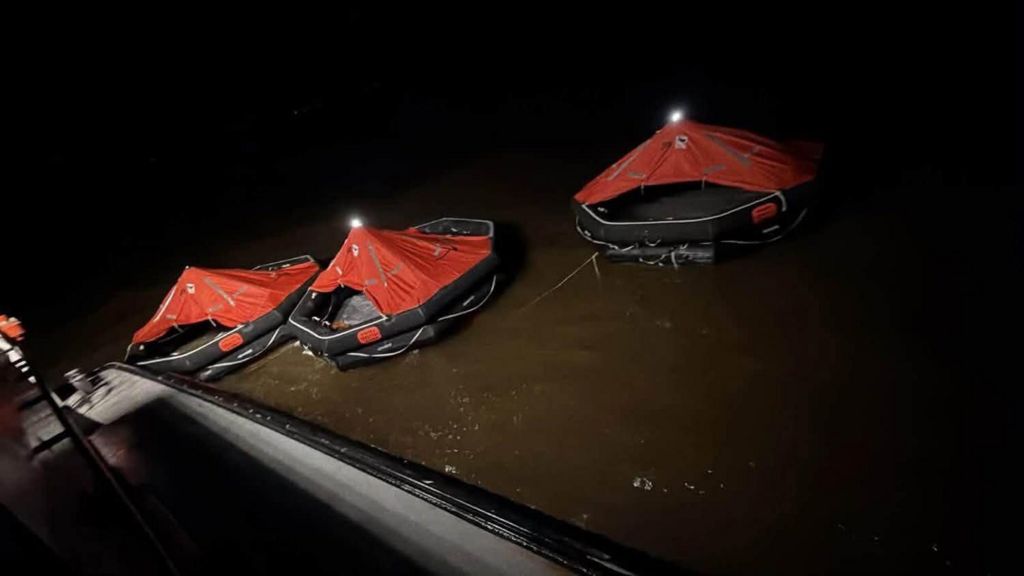
    As the cruise ship MV Hondius, hit by an outbreak of hantavirus, steams toward the Spanish port of Tenerife in the Canary Islands, a surprising tension has emerged among its 140+ passengers and crew. For the Spanish nationals on board, anxiety stems not from the risk of contracting the virus itself, but from the hostile public reception they expect to face once they set foot on land. In exclusive phone interviews with the Associated Press on Friday, two anonymous Spanish passengers — a man and a woman — detailed the vitriol and misinformation spreading across public platforms about the ship and those aboard.

    Sensationalized mainstream coverage and inflammatory social media content, including memes calling for the vessel to be sunk, have painted passengers as dangerous viral vectors to be shunned. “You go onto social media – they want to dynamite the boat. They want to sink the boat,” the male passenger told AP. “You see what’s out there and you realize you’re heading into the eye of a hurricane,” the female passenger added. “Many people forget that in here there are more than 140 passengers. In reality, there are 140 human beings.” Both requested anonymity out of fear of further backlash once they disembark, currently scheduled as early as Sunday.

    This wave of public panic has echoes of the early days of the COVID-19 pandemic, when viral outbreaks on cruise ships sparked global alarm. But World Health Organization officials have repeatedly pushed back against misplaced comparisons, stressing that hantavirus poses minimal risk to the general public and this event is not the start of a new global pandemic. “This is very different virus. I want to be unequivocal here,” stated Maria Van Kerkhove, WHO’s head of epidemic and pandemic preparedness, on Thursday. “This is not the start of a COVID pandemic.”

    Unlike SARS-CoV-2, which spreads easily between people, hantavirus is most commonly transmitted to humans through inhalation of particles contaminated by rodent droppings. While the Andes strain detected on the MV Hondius can spread between people in extremely rare cases, the overall risk of widespread transmission remains very low. Despite these clear expert assurances, misinformation and distrust in public health guidance — a trend that took hold during the COVID pandemic — have persisted. A Spanish anti-establishment group called Iustitia Europa, which gained prominence opposing COVID-19 public health restrictions, has publicly called for the MV Hondius to be barred from entering Spanish territorial waters. “The Canary Islands cannot become Europe’s health laboratory … We demand transparency, responsibility, and protection for Spaniards to avoid repeating the mistakes of the past,” the group posted on social media platform X.

    Even some regional Spanish politicians have echoed public anxiety, taking a hard defensive stance against the ship’s arrival. Canary Islands regional president Fernando Clavijo told Spanish newspaper El País on Friday that he would not feel at ease until the ship departs Spanish waters and all passengers have reached their designated quarantine sites. Madrid regional leader Isabel Díaz Ayuso also publicly opposed the decision to transfer 12 Spanish passengers from the ship to a Madrid military hospital for quarantine, as planned by national authorities.

    “The public narrative has painted this as a boat of infected people, a boat of multimillionaires, full of rats,” the male passenger on board explained. “Society is in some way contaminated with a lot of noise and a lot of lies.” He did note that he has found some comfort in the Spanish government’s promise of official escorts upon arrival in Tenerife, where port workers held a protest this week over a lack of transparency regarding planned safety protocols. Spanish authorities have clarified that the escorts are standard protocol to maintain isolation requirements, not a measure to protect passengers from violent confrontation.

    Contrary to chaotic public portrayals of life on board, daily routines on the MV Hondius have remained calm in the days approaching port. After a team of epidemiologists boarded the ship off the coast of Cape Verde to brief passengers on the actual risks of the outbreak, most have been reassured that human-to-human transmission is extremely rare. Passengers who leave their cabins for common areas follow masking and social distancing rules, spending time reading, attending educational talks, joining early morning exercise groups on the upper decks, or birdwatching — a key activity for many travelers who had embarked on the voyage to photograph wildlife in remote Atlantic regions, not to become the center of a global public health story.

    Remarkably, despite the stigma and uncertainty they now face, both Spanish passengers say the experience would not stop them from taking another cruise in the future. “For me, personally, traveling is a means to … live out what I’m passionate about — which is observing nature and documenting nature,” the female passenger said. “Of course I would go on a cruise again.”

  • Trump claiming Iran war ‘win’ – here’s the reality

    Trump claiming Iran war ‘win’ – here’s the reality

    Two full months have passed since the outbreak of open conflict between the United States and Iran, and the core justifications Washington initially laid out for launching military operations, along with its stated minimum benchmarks for declaring victory, have collapsed into incoherence. The confusion has grown so severe that senior US officials now claim the conflict already ended in an American victory nearly a month ago, when a temporary ceasefire took effect.

    Few examples illustrate the utter failure of Donald Trump’s catastrophic Iran war more starkly than the remarks Secretary of State Marco Rubio delivered to reporters on May 5. Rubio told press that Washington’s top remaining priority was restoring the Strait of Hormuz to its pre-war status: open to all commercial traffic, free of naval mines, and unburdened by unauthorized transit fees. This mission, he insisted, was a standalone defensive and humanitarian operation, one that would only escalate back to full war if US vessels came under direct attack. That same day, US ships were targeted. What Rubio failed to acknowledge was the glaring contradiction: the humanitarian operation he touted was only necessary because of the same war he had already declared a success.

    The day’s absurdities did not end there. Within hours of Rubio’s briefing, Trump announced he was suspending “Project Freedom” — the US Navy’s planned tanker escort mission through the strait — just one day after it launched. The president cited “great progress” toward a negotiated settlement with Iran. In a pattern that has repeated throughout the conflict, global stock markets initially rallied on the news of a potential breakthrough before retreating to previous levels as the lack of concrete progress became clear.

    While there is no question Trump is eager to put the disastrous war behind him, especially ahead of his scheduled May 14 trip to Beijing, he has vastly overstated the scale of any diplomatic breakthrough. All Iran has agreed to do is consider a 14-point framework for 30 days of negotiations aimed at reaching a durable end to hostilities — nothing more.

    A far more credible explanation for Trump’s sudden cancellation of Project Freedom is that the initiative was already clearly doomed to fail. Of the roughly 1,500 commercial vessels stranded on either side of the closed strait, most ship owners refused to risk transit even with US naval protection. Meanwhile, Iran’s retaliatory strikes on commercial shipping and missile attacks against the United Arab Emirates had already put the fragile ceasefire itself at serious risk.

    Washington faces a core bargaining obstacle: Iran has made clear that talks cannot formally begin, and the Strait of Hormuz will not reopen, unless Trump first agrees to lift the economic blockade on Iranian maritime trade. The US embargo has already inflicted severe damage on the Iranian economy, and Tehran views its removal as a logical reciprocal gesture to match any opening of the strait. Iranian leaders also recognize that the prolonged closure of the strait — one of the world’s most critical energy and trade chokepoints — is already causing lasting structural damage to the global economy, a reality that strengthens their negotiating hand dramatically.

    Even if formal negotiations get underway, the same fundamental barrier that blocked a deal before the war still stands. Trump lacks the disciplined, well-resourced institutional policy framework that Barack Obama relied on to negotiate the 2015 Iran Nuclear Deal, the agreement Trump has long sought to surpass. Obama’s landmark deal required 20 months of intensive, detailed diplomacy to finalize; Trump has neither the patience, technical policy expertise, nor established direct diplomatic channels to replicate that achievement.

    The war has also introduced new layers of uncertainty. Iran’s internal decision-making process has grown more fragmented, and hardline elites who tolerate higher levels of military and economic pressure have gained greater influence. Most importantly, Iran has now fully recognized the extraordinary leverage it holds through its ability to shut down a critical artery of the global economy.

    On the core issue of Iran’s nuclear program, any eventual agreement will likely be a messy compromise. Iran could agree to a temporary moratorium on uranium enrichment, without committing immediately to shipping its existing stockpiles of enriched uranium out of the country or diluting them — a fudge that would allow negotiations to continue. If relatively more moderate factions in Tehran gain the upper hand (a very large if), this would be a straightforward concession to make: Iran’s geographic advantages and advanced ballistic missile program already provide a credible deterrent against any future large-scale attack.

    The open question remains whether anything short of total Iranian surrender on the nuclear issue will be acceptable to Trump, and whether he is willing to push back against inevitable fierce opposition from Israel to blurring Washington’s stated red lines. If no compromise can be reached, Trump has already threatened to resume bombing campaigns at a far higher intensity than before. Yet analysts widely doubt Trump has the political appetite for a renewed escalation, and even if he does move forward, there is little reason to believe that any amount of US and Israeli bombing can force the Iranian regime into total capitulation.

    Trump’s constantly shifting war aims and frantic scramble for an exit strategy make one conclusion unavoidable: the entire US military enterprise in Iran has been a colossal strategic failure. The war will shape Trump’s political legacy, reorder the balance of power in the Middle East, and deepen the humanitarian suffering of the Iranian people — all outcomes that are the exact opposite of what Trump repeatedly promised to deliver.

    The conflict has also shattered confidence among Washington’s regional allies in the US government’s ability to provide security and predictability. It has alienated long-standing traditional US partners, who have been blamed and punished for failing to resolve a crisis they did not create and could not fix. The combined US and Israeli military campaign has further entrenched hardline rule in Iran, made future negotiation far more difficult, and completely sidelined moderate political voices within the country.

    If negotiations do ultimately succeed, the limited gains that Trump and his advisors have touted — the destruction of portions of Iran’s military industry and naval fleet — are technically real. But the damage to military industrial capacity will likely only be temporary, and the degradation of Iran’s navy has done nothing to meaningfully restore freedom of navigation through the strait.

    The only bright spot in this saga is that Trump’s brief experiment with unilateral military adventurism — an aberration even within his own inconsistent political trajectory — appears to be coming to an end. This analysis is by Christian Emery, Associate Professor of International Politics at UCL, republished with permission from The Conversation under a Creative Commons license.

  • Sydney’s worst suburbs for hiding fuel prices named and shamed

    Sydney’s worst suburbs for hiding fuel prices named and shamed

    A sweeping compliance inspection of Sydney service stations conducted by New South Wales Fair Trading has laid bare a stark geographic divide in fuel pricing rule adherence, with regulators issuing hundreds of fines to non-compliant operators and pushing for stiffer legal penalties to protect motorists.

    The recent audit, which targeted sites across the Sydney metropolitan area, resulted in more than 245 financial penalties being handed out to petrol station operators found violating pricing transparency rules. Approximately 80% of these penalties stemmed from mismatches between the fuel prices listed on the state government’s FuelCheck platform and the actual charges applied at the pump, a deceptive practice that leaves consumers misled when they plan their fuel purchases.

    The inspection results revealed sharp disparities across different regions of Sydney. In Sydney’s north western suburb of West Ryde, one in three service stations failed to meet compliance standards. In the 2142 postcode zone, which covers the western Sydney communities of Granville, Rosehill, Camellia, Clyde and Holroyd, two out of 12 inspected stations were sanctioned for rule breaches. By contrast, every single one of the 35 service stations surveyed in south western Sydney’s Liverpool, Chipping Norton, Prestons and Mount Pritchard areas passed inspection with full compliance. Neighbouring western Sydney suburbs including Greystanes, Girraween, Pendle Hill and Wentworthville also recorded perfect compliance records across all their petrol outlets.

    The FuelCheck scheme, the state’s official fuel pricing monitoring program, requires all service stations to update and lock in real-time fuel prices to the platform, allowing motorists to compare costs across retailers before they travel to fill up. Consumers are also actively encouraged to report any discrepancies they notice between the advertised price and the price charged at the bowser.

    NSW Fair Trading Commissioner Natasha Mann explained that inspectors have ramped up targeted checks across the entire state to root out non-compliance. “Our inspectors have been working around the clock and in every corner of the state checking compliance in petrol stations to ensure motorists are getting the right price at the pump,” Mann said. “This compliance work helps ensure fuel retailers are doing the right thing and that consumers can rely on accurate pricing information before they get to a petrol station.”

    To strengthen regulators’ ability to penalize repeat and serious offenders, the NSW state government has introduced new legislation to state parliament that will codify the FuelCheck price reporting requirement into law. Under the proposed new rules, deliberate failure to update and report accurate prices to FuelCheck will become a formal criminal offense, with maximum penalties reaching AU$110,000 for serious breaches – a significant increase from current penalty levels.

    Better Regulation and Fair Trading Minister Anoulack Chanthivong echoed the government’s call for active consumer participation in policing fuel pricing, urging motorists to remain vigilant and report any suspected mismatches directly to the FuelCheck program for follow-up by inspectors.