作者: admin

  • Calls grow for diplomacy amid sea standoff, retaliation threats

    Calls grow for diplomacy amid sea standoff, retaliation threats

    Tensions between the United States and Iran have reached a new boiling point this week, as a newly imposed US naval blockade on Iranian ports has triggered sharp retaliatory threats from Tehran, even as global and regional diplomatic momentum builds to convene a second round of high-level nuclear talks. Pakistan has emerged as a key intermediary, confirming it is ready to host the next round of negotiations after the first round of talks in Islamabad collapsed in a stalemate over the weekend.

    Despite the breakdown of initial negotiations, top US officials have signaled openness to compromise. JD Vance, the US Vice President who led the American delegation to the first talks, told Fox News on Monday that Washington had already made significant headway in laying out potential concessions for Tehran. “I really think the ball is in the Iranian court, because we put a lot on the table,” Vance said, with a second senior US administration official confirming that ongoing behind-the-scenes work continues to salvage a diplomatic agreement.

    The current showdown took shape on Monday, when the US naval blockade officially entered into force. Iran responded immediately with a credible threat of retaliation that has raised global alarms: the standoff threatens to upend fragile global economic recovery, disrupt critical energy supply chains, and collapse the existing ceasefire to resume full-scale open hostilities between the two nations. The International Energy Agency issued a stark warning on Tuesday, noting that crude oil demand is projected to see its sharpest second-quarter decline since the 2020 COVID-19 pandemic crashed global markets.

    In a related military move, US Naval Institute News reported this week that the USS George H.W. Bush aircraft carrier is rerouting to the Arabian Sea along the African coast, intentionally bypassing the Red Sea and Bab el-Mandeb Strait. The detour avoids the strategic waterway that has been the site of repeated drone and missile attacks on US shipping by Yemen’s Houthi militants in 2024 and 2025.

    An Iranian military spokesman condemned the US shipping restrictions as unlawful acts of piracy, issuing a clear warning that if Iranian commercial ports are placed under blockade, no ports across the Persian Gulf or Gulf of Oman will remain safe from retaliation.

    Core disagreements between the two sides remain centered on the future of Iran’s nuclear program. US President Donald Trump has repeatedly stated that any final agreement must permanently end Iran’s capacity to develop a nuclear weapon, while Iranian officials have consistently reaffirmed that their country’s nuclear activities are exclusively for peaceful civilian energy and medical purposes. Trump told reporters on Monday that Tehran has reached out to Washington to signal its strong desire to reach a negotiated settlement: “They’d like to make a deal. Very badly, very badly.”

    Details released by The New York Times shed light on the gap between the two sides’ initial proposals from the Islamabad talks. During the weekend negotiations, US negotiators pushed for a 20-year suspension of Iran’s uranium enrichment program, while Iran countered with an offer of a five-year freeze on enrichment activities, a proposal US officials rejected outright.

    Pakistan, which hosted the first round of discussions, has ramped up its diplomatic mediation efforts. Pakistani Prime Minister Shehbaz Sharif confirmed Monday that the country is making “all-out efforts” to broker a final agreement that would end hostilities, adding that the current ceasefire between the two sides remains intact. Hadi Golriz, head of press for Iran’s embassy in Islamabad, told Xinhua News Agency on Tuesday that while future talks could be held at any time and any location, no official agreement on timing or venue has been reached yet, dismissing some earlier media reports of an agreement to reconvene this week as “baseless.” Despite Golriz’s pushback, Reuters earlier this week cited multiple anonymous sources confirming that both sides are preparing to return to the Pakistani capital as early as the end of this week.

    Regional analysts note that both Tehran and Washington are actively seeking a diplomatic exit from the current crisis, but each needs a face-saving way to back away from open conflict. Mohamad Elmasry, a professor at the Doha Institute for Graduate Studies, told Al Jazeera that the ongoing conflict has imposed extreme costs on both nations and the wider region. “Iran has greater leverage than it did at the start of the war, but I have no doubt they would seek an end to hostilities,” Elmasry said.

    Iranian President Masoud Pezeshkian has reaffirmed Tehran’s red line for future negotiations, stating that Iran will only continue talks within the framework of international law, according to Iran’s state broadcaster IRIB. Third-party diplomatic offers remain on the table to help bridge the gap: Kremlin spokesman Dmitry Peskov confirmed Tuesday that Russia’s standing offer to accept Iran’s enriched uranium as part of a potential final deal between the US and Iran remains available.

  • The Middle East war: latest developments

    The Middle East war: latest developments

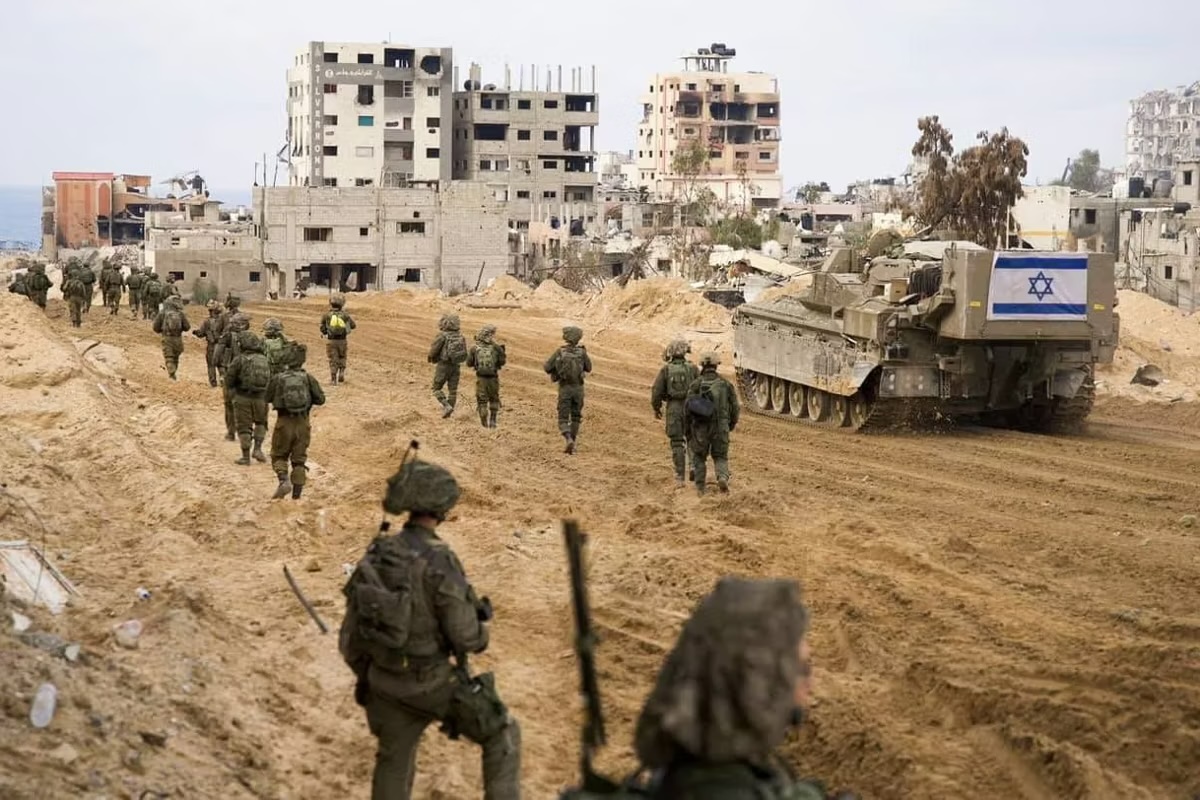
    Just hours after Lebanon and Israel reached an agreement to begin direct negotiations in Washington, fresh military violence upended the region on Wednesday, bringing new volatility to a conflict that continues to ripple across global energy markets and international diplomacy.

    Israeli military forces carried out two targeted strikes on vehicles in southern Lebanon, Lebanese state media confirmed Wednesday. One strike hit a vehicle in the coastal town of Saadiyat, while the second targeted a car on the coastal highway in nearby Jiyeh, located roughly 12 miles south of Beirut and outside the traditional strongholds of the Iran-aligned militant group Hezbollah. In response to the strikes, Hezbollah launched approximately 30 rocket projectiles toward northern Israeli territory starting in the early hours of Wednesday, an Israel Defense Forces spokesperson confirmed to Agence France-Presse. Israeli authorities also issued a new mandatory evacuation order for civilian residents in southern Lebanon, escalating warnings ahead of anticipated further clashes.

    The fresh outbreak of violence came as diplomatic activity surrounding the broader Middle East conflict accelerated across multiple fronts. Pakistan’s Prime Minister Shehbaz Sharif launched a four-day shuttle diplomacy tour Wednesday, with stops planned in Saudi Arabia, Qatar and Turkey, as regional powers position themselves ahead of potential new peace negotiations between the United States and Iran.

    In a major development that lifted global market sentiment, former U.S. President Donald Trump announced Wednesday that a second round of direct talks between U.S. and Iranian negotiators could begin within 48 hours, stoking widespread optimism that a breakthrough deal could reopen the strategically vital Strait of Hormuz, through which roughly a fifth of global oil supplies pass daily. Trump reinforced that optimistic tone in an interview with Fox Business Network’s *Mornings with Maria*, set to air Wednesday, saying the open conflict with Iran is “very close to being over.”

    Market indicators reacted immediately to the news of upcoming talks: South Korea’s Kospi index surged more than 2%, ending the trading session just hundreds of points away from its all-time record high, while major European indices in London and Frankfurt held steady. Crude oil prices, which have spiked repeatedly amid conflict-related supply disruptions, dropped for a second consecutive session, with West Texas Intermediate crude trading at approximately $90.39 per barrel and Brent North Sea crude settling at $94.62 per barrel.

    Despite the upbeat rhetoric around upcoming negotiations, U.S. authorities have moved to maintain harsh economic pressure on Tehran. U.S. Central Command confirmed that American naval forces have “completely halted economic trade going into and out of Iran by sea,” though maritime tracking data from Tuesday showed multiple commercial vessels that recently docked at Iranian ports passing through the Strait of Hormuz in open defiance of the U.S. naval blockade. Industry analysts note that Trump’s blockade strategy targets not just Iranian oil export revenue, but also aims to pressure China — Iran’s largest crude oil customer — to compel Tehran to reopen the critical chokepoint.

    The U.S. Treasury Department announced Tuesday it will not extend a temporary sanctions waiver that allowed for the sale of Iranian oil already held in storage tankers at sea, a measure originally introduced to cushion global supply shocks caused by the conflict. The short-term authorization is set to expire in coming days and will not be renewed, the department confirmed, adding that it remains committed to “maintaining maximum pressure” on the Iranian government.

    U.S. Vice President JD Vance laid out the core U.S. negotiating position Wednesday during an event hosted by conservative advocacy group Turning Point USA, saying Trump has offered Iran a clear grand bargain: Tehran will be allowed to rebuild economically and “thrive” if it commits to permanently abandoning its nuclear weapons program. The dispute over Iran’s nuclear activities remains the central sticking point in any potential diplomatic deal; Trump launched the original conflict on the claim that Iran was developing an atomic weapon, a charge Tehran has repeatedly denied. “That’s the kind of Trumpian grand bargain that the president has put on the table. Man, we’re going to keep on negotiating and try to make it happen,” Vance said.

    Diplomatic activity is also ramping up in Beijing, where regional and global powers are coordinating positions amid the conflict. Chinese President Xi Jinping met with Russian Foreign Minister Sergei Lavrov this week, Chinese state media reported, as a wave of leaders from conflict-impacted states travel to the Chinese capital for talks. Lavrov told reporters after the meeting that Russia stands ready to “compensate” for any energy shortages China may face if Strait of Hormuz shipping remains disrupted by the ongoing conflict, according to Russian state media reports.

    In a separate humanitarian development, Sri Lanka has completed the repatriation of 238 Iranian sailors who were stranded in the South Asian nation after their vessel was torpedoed by a U.S. submarine in the Indian Ocean on March 4, a Sri Lankan government minister confirmed to AFP.

  • Ottawa eyes pragmatic approach to Beijing ties

    Ottawa eyes pragmatic approach to Beijing ties

    Following a series of landmark high-level exchanges between China and Canada, Canadian policy and academic experts say Ottawa is moving toward a distinctly pragmatic approach to resetting its strained bilateral relationship with Beijing, after years of diplomatic friction.

    The turning point traces back to the January meeting between Chinese President Xi Jinping and Canadian Prime Minister Mark Carney, a gathering that former senior Global Affairs Canada official Jeff Mahon described as laying the groundwork for a “positive upward trajectory” in Canada-China relations.

    Mahon, who previously served as deputy director of Global Affairs Canada’s China division, noted that both governments have already taken tangible, good-faith steps to advance cooperation. Most notably, the two sides have moved forward with commitments outlined in a preliminary agreement-in-principle, launching measures to roll back some of the restrictive trade barriers that have hampered bilateral commerce for years.

    “While more work remains to be done in order to deepen and expand collaboration, these initial steps highlight the good-faith approach adopted by the two leaders,” Mahon told China Daily in an interview.

    The most recent concrete demonstration of Ottawa’s outreach came with an official visit to Beijing by Canadian Finance Minister Francois-Philippe Champagne, a trip that experts frame as a direct follow-through on the January summit outcomes. To expand structured, institutional cooperation, Mahon explained that both countries are advancing joint initiatives aligned with a pre-agreed bilateral road map, and have formally agreed to establish a new financial working group. This new body will create dedicated channels for regulatory and policy officials to deepen collaboration across Canada’s competitive financial services sector, opening new doors for private sector engagement on both sides.

    More frequent high-level dialogue has also emerged as a core pillar of the improved relationship, creating space for candid, constructive exchanges on thorny sensitive issues while creating momentum for expanded collaborative work, Mahon added. This shift, he noted, reflects a deliberate broader policy reorientation by the Canadian federal government in Ottawa.

    Even as ties warm, both sides will need to manage existing differences with deliberate care, experts emphasize. Resolving long-running trade frictions remains a critical priority: this includes forging durable solutions to persistent trade irritants, particularly in the agricultural sector, and negotiating expanded mutual market access that benefits producers and businesses on both sides. Against a backdrop of widespread global economic uncertainty, sustaining this stable, constructive trajectory is essential for both economies, Mahon added.

    Jiang Wenran, founding director of the China Institute at the University of Alberta, explained that since Carney took office, Ottawa has made a deliberate push to rebuild closer bilateral ties and move past the diplomatic standoffs that defined Canada-China relations in previous years. This policy shift, Jiang noted, has earned broad support from most Canadian provincial premiers, the national business community, and a growing share of the Canadian public, though it still faces scattered political opposition. Security-focused policy debates remain one of the most prominent constraints on deeper bilateral engagement, he added.

    Ottawa has formally moved forward with what it frames as a “new strategic partnership” with Beijing, and has begun implementing all agreements reached at the leaders’ summit, Jiang said. Early areas of expanding cooperation include electric vehicle supply chains, cross-border energy trade, and financial sector collaboration.

    Against that backdrop, Champagne’s Beijing visit — which included a large delegation of Canadian business leaders — stands as a tangible step toward turning summit consensus into actionable cooperation. The trip also highlights Ottawa’s commitment to deepening financial sector collaboration, a field where Canadian financial institutions have long-standing global expertise and competitive advantages. Beyond bilateral ties, Jiang noted that the visit also fits into Canada’s broader strategy to diversify its international economic partnerships, reducing overreliance on a single trade partner.

    A key sign of deepening institutional engagement, Jiang added, is the planned launch of a new bilateral policy forum: the China-Canada Economic and Financial Strategic Dialogue, scheduled to convene in the second half of 2026.

    Jiang explained that Canada’s current approach aligns with what Prime Minister Carney has described as an independent “third path” in foreign policy. A sustainable, durable China policy requires Canada to pursue an independent diplomatic course, he noted — one that does not automatically align with the United States’ strategic containment approach toward China.

  • Hollywood stars sign open letter against deal

    Hollywood stars sign open letter against deal

    LOS ANGELES – A growing wave of opposition is roiling Hollywood’s top creative circles, as more than 1,000 influential industry figures have signed a public open letter condemning the proposed $111 billion acquisition of iconic Warner Bros. by Paramount Skydance. The list of signatories reads like a who’s who of A-list talent and award-winning creators, including Academy Award-winning actors Jane Fonda and Joaquin Phoenix, Breaking Bad star Bryan Cranston, blockbuster director J.J. Abrams, and Dune visionary Denis Villeneuve.

    The core argument laid out in the petition centers on the risks of further media consolidation in an already overly concentrated entertainment landscape. Signatories warn that the merger, which would shrink the number of major U.S. film studios from five to just four, would deliver widespread harm across the entire industry—from working creators to global audiences. “This transaction would further consolidate an already concentrated media landscape, reducing competition at a moment when our industries — and the audiences we serve — can least afford it,” the letter reads. The group projects that the merger would lead to fewer creative opportunities for emerging and established artists alike, widespread job losses across the production ecosystem, inflated content costs, and diminished viewing options for consumers.

    Paramount Skydance, helmed by CEO David Ellison, first unveiled its takeover plans for Warner Bros.—home to some of Hollywood’s highest-grossing and most culturally influential franchises including *Harry Potter*, *The Lord of the Rings*, and *Game of Thrones*—in February. The bid beat out an earlier offer from streaming giant Netflix, which many Hollywood insiders had viewed as the more favorable of the two potential suitors.

    Across Los Angeles’ entertainment community, widespread anxiety persists that merging two major studios will trigger sweeping cost cuts, a concern amplified by reports that the massive acquisition price will be largely debt-financed, forcing new leadership to pursue aggressive savings to offset the purchase. These cuts would not only impact high-profile writers, directors and actors, organizers argue, but would also decimate employment for the tens of thousands of below-the-line workers and small business operators that underpin Southern California’s film production ecosystem—from makeup artists and set builders to local limousine services, on-location food vendors, and event florists.

    The letter also notes that the U.S. entertainment sector, one of America’s most valuable cultural and economic exports, has already been pushed to the breaking point by decades of successive industry consolidation. “Competition is essential for a healthy economy and a healthy democracy. So is thoughtful regulation and enforcement. Media consolidation has already weakened one of America’s most vital global industries — one that has long shaped culture and connected people around the world,” the statement continues.

    The proposed merger has already attracted high-level political backing: multiple industry reports confirm that the bid has the support of U.S. President Donald Trump. For its part, Paramount Skydance has pushed back against critics, releasing a public statement on Monday reaffirming its commitment to robust theatrical film production. The company said, “We have been clear in our commitments to increase output to a minimum of 30 high-quality feature films annually with full theatrical releases.”

    As regulatory review of the proposed acquisition gets underway, the open letter signals that the Hollywood creative community is prepared to keep organizing against the merger to protect the industry’s long-term health and competitiveness.

  • Vance says to push for ‘grand bargain’ as fresh US-Iran talks loom

    Vance says to push for ‘grand bargain’ as fresh US-Iran talks loom

    Fresh diplomatic negotiations between the United States and Iran are on the cusp of resuming this week in Pakistan, with US Vice President JD Vance confirming he will spearhead the push for a sweeping, comprehensive ‘grand bargain’ between the two long-adversarial nations. Vance laid out the administration’s negotiating goals during a public event hosted in Athens, Georgia, at the University of Georgia on April 14, 2026, just days after he led an initial 21-hour closed-door negotiating session with Iranian delegates in Pakistan over the weekend.

    Decades of deep-rooted mistrust have separated Washington and Tehran, but Vance stressed that all stakeholders at the upcoming talks in Islamabad are aligned in their goal of reaching a viable final agreement. He emphasized that US President Donald Trump has rejected incremental, small-scale agreements in favor of a far-reaching deal that enshrines one non-negotiable core US priority: preventing Iran from developing an operational nuclear weapon.

    According to a Tuesday CNN report citing anonymous sources close to the planning process, Vance will not be the only senior US representative at the potential second round of talks. He will be joined by two other high-profile members of the US negotiating team: Trump’s special envoy Steve Witkoff, and the president’s son-in-law and former senior White House advisor Jared Kushner. While Trump confirmed the likelihood of new negotiations in the coming days, a senior anonymous US official clarified that no formal agenda or timeline has been finalized for the follow-up meeting, noting that logistical plans are still under active discussion.

    Speaking in a phone interview with The New York Post earlier on Tuesday, Trump confirmed that the next round of talks could get underway within 48 hours in Pakistan. “Something could be happening over the next two days, and we’re more inclined to go there,” the president told the outlet.

    On Monday, Trump publicly identified the core sticking point in the initial round of negotiations: Iran’s nuclear program. He added that retrieving Iran’s existing stockpiles of enriched uranium is a top US priority for the talks. Initial proposals presented in the first session highlight the gap between the two sides’ positions, The New York Times reported Monday. Washington has tabled a proposal calling for a 20-year pause on all of Iran’s sensitive nuclear activities, while Tehran has countered with an offer to suspend its nuclear program for a maximum of five years.

    The potential for a major breakthrough in US-Iran relations comes after more than 40 years of severed formal diplomatic ties, making these talks one of the most significant diplomatic overtures between the two nations in modern history. The outcome of the negotiations could have far-reaching implications for regional security in the Middle East and global non-proliferation efforts.

  • Watch: Moment gunman tackled by school principal

    Watch: Moment gunman tackled by school principal

    Surveillance camera footage has captured the dramatic moment a brave high school principal in Oklahoma intervened to stop an armed former student on campus, an incident that has drawn widespread attention to the quick thinking and courage of school leaders facing violent threats.

    The closed-circuit television recording documents the principal making the split-second decision to charge directly at the individual, who was carrying a weapon on school grounds. The rapid, fearless action by the principal ended the threat before it could escalate into a mass casualty event, leaving many praising the administrator for putting his own safety at risk to protect students and staff at the school.

    While additional details about the incident, including whether any injuries were reported or what charges the suspect may face, have not been fully released, the footage has circulated widely, sparking conversations about the preparedness of school personnel to respond to active threats and the extraordinary acts of courage that often occur in these dangerous situations. Communities across the country have also highlighted the role that school principals and staff play in keeping students safe beyond their traditional administrative and educational duties.

  • Consumer trends tied to ’emotional value’

    Consumer trends tied to ’emotional value’

    Against a backdrop of rising living standards and shifting consumer priorities, the concept of “emotional value consumption” has evolved from a cultural buzzword to a core policy focus and fast-growing economic driver across multiple Chinese provinces. The movement first gained formal recognition this year when it was officially written into Hubei province’s 2026 government work report, paving the way for a surge in consumer spending centered on personal well-being, stress relief, and experiential joy.

    Wuhan, Hubei’s capital, has emerged as a leading example of how this trend translates into tangible economic gains, with its world-famous “cherry blossom economy” driving record tourism and business activity. In late March, the city played host to the annual Wuhan Marathon, drawing more than 30,000 runners from 69 countries around the globe. Race organizers designed the course to highlight the city’s most iconic landmarks—from the ancient Yellow Crane Tower to the historic Yangtze River Bridge—and wove the region’s famous spring cherry blossoms into the route, with competitors passing more than 3,500 blooming trees and finishing on a 760-meter stretch lined with falling pink petals. “The scenery kept me energized mile after mile,” shared Fang Bo, a Beijing-based runner who took first place in the men’s half-marathon.

    That widespread enthusiasm for the seasonal floral spectacle has translated into a massive financial windfall for local businesses. Roughly 55 percent of Wuhan’s leading catering companies rolled out cherry blossom-themed menus, featuring creative offerings ranging from cherry blossom-infused noodles to limited-edition floral rice wine. Data from Wuhan Customs shows the spring blossom season triggered a 110.99 percent year-on-year jump in inbound international visitors from major source markets including South Korea, Malaysia, Singapore, and the United States. During the April 4–6 Qingming Festival holiday, searches for “Wuhan cherry blossoms” on Chinese travel platform Tongcheng Travel nearly quadrupled compared to the previous month, reflecting sustained, growing demand for the seasonal experience.

    Beyond large-scale tourism events, the emotional economy also thrives in small, relatable everyday comforts that resonate with modern consumers. One viral local success story is the “Suan Niao” (literally “forget it”) plush toy, a creation of designer Li Mangguo who drew inspiration from a sprouted garlic bulb. The soft toy is paired with a slogan in local Wuhan dialect: “Forget it, life isn’t easy for any of us.” The down-to-earth, relatable message struck a chord with online audiences, and the toy has already sold more than 200,000 units to date.

    This shift toward “self-pleasing consumption”—purchases prioritizing personal emotional satisfaction over practical utility—is particularly pronounced among Generation Z consumers. At a popular recreational sports center on bustling Jianghan Road in Wuhan, young people fill the facility every day, participating in activities from bowling to indoor horse riding. “These activities meet a specific need for self-indulgence and social connection,” explained Gu Wei, the center’s manager, in an interview with Xinhua News Agency.

    Industry experts note that this consumer shift marks a clear break from traditional spending patterns. “Consumers are moving past the ‘practical utility’ of goods,” explained Hu Fen, a professor in the School of Tourism Management at Hubei University. “The core drivers are a rigid demand for stress relief and the desire for ‘social currency.’ The younger generation prioritizes how a purchase makes them feel.”

    What makes this trend particularly notable is its formal integration into regional government policy. When the fourth session of the 14th Hubei Provincial People’s Congress opened in Wuhan, Governor Li Dianxun announced that the province would prioritize responding to new consumer demand for practical, emotional, and knowledge-based value in 2026. Wang Shenghui, a deputy to the Hubei Provincial People’s Congress and deputy director of Suizhou Museum, noted that including “emotional value” in the government work report underscores the province’s growing focus on public spiritual needs and represents an innovative breakthrough in governance. Wang added that sectors across Hubei have already begun exploring emotional value-driven offerings: “Suizhou Museum’s immersive chime bells and dance show offers visitors a journey through ancient times, while the Yellow Crane Tower’s night tour uses lighting and poetry to inspire visitors’ cultural empathy.”

    Ge Tiancai, a provincial congress deputy and chairman of Wuhan Mulan Flower Township Tourism Development, framed the trend as a natural outcome of broader economic progress. “People’s living standards have improved and the problem of food and clothing has been solved,” he said, explaining why consumers are now prioritizing emotional fulfillment over basic needs. During this year’s regional “two sessions” (annual legislative and political consultative conferences), emotional value, the emotional economy, and the self-pleasing economy became top buzzwords, and the concept has since been included in government work reports for multiple other provinces, including Jiangxi and Guizhou.

    Industry projections underscore the massive scale and future growth of this market. According to an insight report on China’s emotional economy spending trends covering 2025 to 2029, the national market for emotional value consumption reached 2.31 trillion yuan (approximately $330 billion) in 2024, and is on track to surpass 4.5 trillion yuan by 2029. Jia Xiaoling, account director of consumer insights firm Worldpanel China, offered a strategic recommendation for local policymakers and businesses: by integrating local natural resources and unique cultural features to build distinctive consumption experiences, stakeholders can form genuine emotional bonds with consumers and unlock long-term growth in this fast-expanding sector.

  • Ye postpones Marseille concert after French authorities say they will seek a ban

    Ye postpones Marseille concert after French authorities say they will seek a ban

    In a development that follows growing international backlash against the rapper formerly known as Kanye West, who now goes by Ye, the artist has announced he will postpone his planned June 11 performance at Marseille’s iconic Stade Vélodrome, after top French officials confirmed they would pursue every legal avenue to ban the event entirely.

    The artist’s announcement arrives just seven days after UK officials barred him from entering the country, where he was scheduled to headline July’s Wireless Festival. That ban came in response to sustained public outrage over Ye’s long-documented history of antisemitic comments and hate speech.

    Ye shared his decision with the public via a post on the social platform X on Wednesday, framing the postponement as his own independent choice. “After much thought and consideration, it is my sole decision to postpone my show in Marseille, France until further notice,” the 48-year-old wrote. “I know it takes time to understand the sincerity of my commitment to make amends.”

    Long before Ye’s announcement, local and national French leaders had already made their opposition to the concert clear. Laurent Nuñez, France’s interior minister, confirmed through his office that the government was prepared to leverage “all possibilities” to stop the performance from moving forward as originally scheduled.

    Marseille Mayor Benoît Payan was among the earliest and most vocal critics of the planned concert, arguing that the multicultural port city — which has centuries of deep-rooted immigration history and one of the largest Jewish communities in France — should not platform a figure who spreads hate. “I refuse to let Marseille be a showcase for those who promote hatred and unabashed Nazism,” Payan said in a previous statement. “Kanye West is not welcome at the Vélodrome, our temple of community and home to all Marseillais.”

    Ye’s planned Marseille show is the latest in a string of canceled or blocked events across the globe stemming from his inflammatory remarks. Last year, he drew near-universal international condemnation after releasing a song titled “Heil Hitler” and listing a swastika-printed T-shirt for sale on his personal website. By the following July, Australian authorities revoked his performance visa and blocked him from entering the country, forcing the cancellation of a planned tour stop.

    In January of this year, Ye issued a public apology for his actions, publishing a full-page open letter in The Wall Street Journal. In the apology, he attributed his harmful behavior to a four-month manic episode tied to his bipolar disorder, writing that the episode left him acting in “psychotic, paranoid and impulsive behavior that destroyed my life.”

    In his latest social media post, Ye attempted to frame the postponement as a gesture of respect for his supporters. “I take full responsibility for what’s mine but I don’t want to put my fans in the middle of it. My fans are everything to me. Looking forward to the next shows. See you at the top of the globe.”

    As of Thursday, no new date for the Marseille performance has been announced, and it remains unclear whether the concert will be rescheduled at a later date, or if it will be canceled entirely.

  • The human cost of the war in Sudan, three years on

    The human cost of the war in Sudan, three years on

    It has now been three full years since violent conflict first erupted across Sudan in 2023, and the accumulated human cost of the ongoing crisis has reached a scale that can only be described as staggering, according to senior BBC correspondent Barbara Plett Usher. What began as a clash between rival military factions quickly spiraled into a full-scale civil conflict that has upended the lives of millions of Sudanese people, leaving a trail of destruction that extends far beyond the front lines of battle. Unlike statistics that often reduce human suffering to numbers on a page, the toll of this war is measured in broken families, displaced communities, and lost futures that will shape the nation for generations to come.

    In the three years since hostilities began, millions of Sudanese have been forced to flee their homes, with hundreds of thousands seeking refuge in neighboring countries such as Chad, South Sudan, and Egypt. Inside the country, critical infrastructure including hospitals, schools, and water treatment facilities have been repeatedly targeted or destroyed, leaving countless communities without access to basic life-saving services. Food insecurity has reached catastrophic levels in large swathes of the country, with the United Nations warning that millions of children and vulnerable adults face acute malnutrition and even starvation as aid organizations struggle to deliver assistance to hard-to-reach areas.

    Civilian casualties continue to mount, with thousands of non-combatants killed and many more injured in cross-fire, airstrikes, and targeted attacks on residential areas. Healthcare workers, aid volunteers, and journalists documenting the crisis have also been targeted, making it even harder to capture the full extent of the human suffering unfolding across the country. As the international community has largely turned its attention to other global conflicts, the people of Sudan have been left largely abandoned to bear the brunt of a war that shows no immediate signs of ending. Plett Usher’s reporting underscores the urgent need for renewed global diplomatic efforts to broker a ceasefire and open up unimpeded access for humanitarian aid, before the human toll grows even more catastrophic in the months ahead.

  • Lesbian Action Group wins Federal Court appeal to exclude transgender women

    Lesbian Action Group wins Federal Court appeal to exclude transgender women

    A high-stakes legal dispute over inclusion and exclusion in Australian community organizing has hit a new milestone, with a Melbourne-based lesbian rights organization securing a successful federal court appeal in its push to bar transgender women from its public events. But the fight is far from settled, with the case set for a fresh review.