作者: admin

  • South Africa names apartheid-era politician as new ambassador to the US

    South Africa names apartheid-era politician as new ambassador to the US

    After more than a year of vacancy at the highest diplomatic post between Pretoria and Washington, South Africa has filled its ambassadorial slot to the United States with a figure whose legacy is deeply tied to the country’s historic transition from racial segregation to democracy. The office of South African President Cyril Ramaphosa confirmed on Wednesday that 78-year-old Roelf Meyer, a former senior official in the final apartheid-era national government, will take up the role immediately.

    The position has sat empty since last year, when former ambassador Ebrahim Rasool was expelled from Washington after publicly criticizing then-President Donald Trump, accusing him of dog-whistle politics that centered and amplified white victimhood. The expulsion exacerbated tensions between the two nations, a rift that deepened dramatically following Trump’s return to the US presidency earlier this year.

    Meyer’s selection carries profound historical weight, as he and Ramaphosa once stood on opposite sides of the table during the 1990s negotiations that dismantled South Africa’s system of white-minority apartheid rule. At the time, Meyer served as the chief negotiator for the National Party – the political organization that first implemented apartheid in 1948 – while Ramaphosa led negotiations for Nelson Mandela’s African National Congress (ANC), the anti-apartheid movement that would go on to lead post-transition South Africa.

    Following the successful conclusion of negotiations and the country’s first multiracial democratic elections in 1994, Meyer remained in government as a member of the landmark unity administration formed by President Mandela. His long track record of bridging deep political and racial divides to deliver historic democratic change is widely seen as a key factor behind his appointment to the sensitive US posting at a time of particularly fraught bilateral relations.

    Ramaphosa’s spokesperson Vincent Magwenya officially verified the appointment in a statement to the BBC, confirming that the nomination would go into effect without delay. “I can confirm that President Cyril Ramaphosa has appointed Meyer as South Africa’s ambassador to the US,” Magwenya said.

  • Trump claims Iran war ‘very close’ to completion

    Trump claims Iran war ‘very close’ to completion

    WASHINGTON, April 15 (Xinhua) – In a recent interview with FOX News on Tuesday, former and current U.S. President Donald Trump made a striking announcement regarding the ongoing conflict between the United States and Iran, stating that the war is “very close” to being completed. The comment comes amid long-standing geopolitical tensions between Washington and Tehran that have escalated into open military conflict in recent years, drawing global concern over regional stability and energy market disruptions across the Asia-Pacific and beyond. While Trump did not elaborate on specific timelines or terms for a potential end to the conflict, his remark has sparked immediate analysis from international policy circles over what a nearing conclusion to the conflict could mean for global geopolitics, energy security, and diplomatic relations across the Middle East. This development arrives alongside a raft of other shifting global political dynamics, from changing regional policy approaches in Southeast Asia to debates over multipolar global governance that are reshaping international order.

  • Magyar meets Hungarian president as Trump says next PM ‘a good man’

    Magyar meets Hungarian president as Trump says next PM ‘a good man’

    After ending Viktor Orbán’s 16-year grip on power in Hungary with a historic electoral landslide, incoming prime minister Péter Magyar has moved quickly to lock in a speedy handover of government, meeting with President Tamás Sulyok this week to formalize his transition to office. Sunday’s general election delivered a staggering rebuke of Orbán’s long-ruling Fidesz party, with Magyar’s newly formed Tisza Party securing a two-thirds supermajority in parliament — a result that upends more than a decade of Hungarian politics.

  • To Lam’s visit signifies stable growth of ties

    To Lam’s visit signifies stable growth of ties

    Vietnam’s highest-ranking leader To Lam launched a four-day state visit to China on Tuesday, a landmark diplomatic engagement that analysts and policymakers across both countries expect will cement the positive trajectory of bilateral relations and advance shared prosperity across the Asia-Pacific.

    The timing of the visit carries special symbolic weight: it comes just one week after To Lam, already General Secretary of the Communist Party of Vietnam Central Committee, was elected President of Vietnam during the first session of the 16th National Assembly, the country’s top legislative body. This immediate high-level diplomatic outreach to China underscores the consistent importance both Beijing and Hanoi place on their long-standing neighborly relationship.

    Marking a dynamic start to his trip, To Lam traveled from Beijing via Fuxing high-speed rail to visit Xiong’an New Area, the nationally significant future-oriented development zone in Hebei province, where he observed the project’s ongoing progress firsthand. Later the same day, he held a formal meeting with Wang Huning, Chairman of the National Committee of the Chinese People’s Political Consultative Conference, China’s top political advisory body.

    Ahead of official discussions, To Lam published a signed article in China’s official newspaper People’s Daily on Tuesday, laying out his vision for the next phase of bilateral cooperation. In the piece, he emphasized the goal of building on the deep traditional friendship shared by the two parties, states, and peoples, while elevating strategic connectivity and charting a shared course for Vietnam-China relations in the new era. To Lam noted that decades of shared history have proven that a strong, stable bilateral relationship directly serves the core interests of both nations’ peoples and makes a tangible positive contribution to regional peace and sustained development. He added that moving forward, the two sides should prioritize expanding mutually beneficial cooperation while working to maintain a peaceful regional environment, manage existing differences constructively, and resolve long-standing outstanding issues appropriately.

    To Lam’s visit unfolds against a backdrop of already steady, positive momentum in China-Vietnam relations, with cooperation deepening across a wide range of sectors in recent months. Key milestones leading up to the engagement include a high-level telephone call between the two nations’ top leaders in January, the 17th gathering of the China-Vietnam Steering Committee for Bilateral Cooperation in March, and the inaugural ministerial session of the bilateral “3+3” strategic dialogue covering diplomacy, defense, and public security, also held in March.

    Economic ties between the two countries have hit new highs in recent years: official data from China’s Ministry of Commerce shows that total bilateral trade volume hit a record of over $290 billion in 2025. China retains its position as Vietnam’s largest single trading partner, while Vietnam remains China’s top trading partner within the Association of Southeast Asian Nations and its fourth-largest trading partner globally.

    Analysts point out that the visit sends a clear signal that Vietnam’s new leadership will maintain the country’s long-standing diplomatic priority of fostering strong ties with China. Vietnamese Ambassador to China Pham Thanh Binh described the trip as the most important bilateral diplomatic event for the two nations in 2026 in an interview with Vietnam News Agency. He expressed confidence that bilateral cooperation holds vast untapped potential, driven by the complementary nature of the two countries’ development strategies — particularly as Vietnam begins implementing the resolutions of its 14th National Party Congress and China rolls out its 15th Five-Year Plan (2026-2030). Pham added that priorities for deepening engagement should include strengthening economic bonds, maximizing the benefits of existing free trade agreements, expanding market access for Vietnamese agricultural exports, working toward more balanced bilateral trade, and attracting high-quality foreign investment from China to Vietnam.

    Shi Zhongjun, Secretary-General of the ASEAN-China Centre, noted that both countries are currently at a critical juncture in their socialist development efforts, building on decades of progress to pursue new shared development goals. Ding Duo, a research fellow at the National Institute for South China Sea Studies, observed that against the backdrop of rising global geopolitical volatility, To Lam’s visit sends a clear message that Vietnam’s new leadership refuses to be influenced by outside interference and remains firmly committed to safeguarding positive and productive bilateral relations with China.

    As a complementary initiative to deepen people-to-people ties alongside high-level diplomatic talks, 200 young Vietnamese people launched an eight-day “Red Study Tour” on Saturday, with scheduled activities in Guangzhou, Guangdong province and Beijing to foster cross-cultural understanding and people-level connections between the two nations.

  • Kenya fuel prices rise sharply despite reduction in tax due to Iran war

    Kenya fuel prices rise sharply despite reduction in tax due to Iran war

    Against the backdrop of escalating geopolitical tensions in the Middle East that have roiled global energy markets, Kenya has implemented one of its sharpest ever increases in petroleum prices, even after the government rolled out a temporary fuel tax cut to soften consumer impact. The East African nation’s Energy and Petroleum Regulatory Authority (Epra) announced the new price adjustments in its monthly review, raising diesel costs by a historic 40 Kenya shillings to hit 206 shillings (approximately $1.60) per litre. Petrol prices saw a 28-shilling uptick, bringing it to the same 206-shilling per litre benchmark. These new rates will remain in effect until the next scheduled pricing review on 14 May.

    Regulators attribute the massive price jump to skyrocketing global crude oil costs and elevated shipping expenses, impacts that outstripped the government’s recent reduction in value-added tax on fuel from 16% to 13%. The tax cut is a temporary measure set to expire in July, part of a broader continent-wide trend of African nations rolling out short-term relief to buffer consumers from global price volatility. Even before the new pricing took effect, reports of widespread fuel shortages had emerged across multiple regions of Kenya. While the Kenyan government maintains that national fuel stockpiles remain adequate, it has accused independent fuel suppliers of deliberately hoarding inventories to exacerbate supply gaps and drive up profits.

    The shortage reports have been further complicated by an ongoing national controversy surrounding a controversial, off-contract fuel import shipment that arrived last month. The consignment, arranged outside of official government-to-government supply agreements, was purchased at a far higher cost than standard market rates and has been flagged for potential substandard quality. Public anger has boiled over amid circulating reports that the questionable fuel was already blended into official government storage stocks and released into the domestic market, spurring widespread demands for transparent accountability from senior energy sector leaders.

    Government officials initially stated that they had canceled the controversial shipment over quality and cost concerns, and issued an official ban prohibiting any domestic marketers from distributing the fuel. However, the scandal has already triggered significant political upheaval: multiple senior energy officials have been arrested, and others have resigned from their posts, with a formal investigation into the affair still ongoing. In its latest statement Wednesday, Epra moved to clarify that the cost of the disputed consignment was not factored into the calculation of the new round of fuel price increases.

    The root cause of Kenya’s domestic fuel price shock traces back to the ongoing regional conflict between the United States, Israel and Iran that erupted on 28 February, which has upended global energy supply chains. Although a conditional two-week ceasefire was agreed to last Wednesday – a deal that includes a provision to reopen the Strait of Hormuz, the world’s most critical chokepoint for global oil and gas maritime shipments – persistent fears remain that the global energy crisis will worsen in the coming weeks. Commercial shipments through the strategic strait have remained largely halted since the conflict began, creating massive supply bottlenecks that have driven up crude prices worldwide.

    In response to the unfolding crisis, governments across the globe and across Africa have implemented a range of emergency policy measures to shield consumers from sudden price hikes. Beyond Kenya’s VAT cut, South Africa announced a one-month reduction to its national fuel levy two weeks ago to cap retail pump prices. Several other African nations including Zambia, Namibia and Ghana have rolled out similar tax relief measures, while harder-hit economies have taken more drastic steps: South Sudan has implemented mandatory electricity rationing to cut domestic energy consumption, and Ethiopia has reallocated limited fuel supplies to prioritize critical economic sectors. As the ceasefire holds for the moment, markets and consumers across Africa are closely watching developments in the Middle East to see if energy prices will stabilize in the weeks ahead.

  • ASX 200 gives back strong early gains amid ongoing oil market disruption

    ASX 200 gives back strong early gains amid ongoing oil market disruption

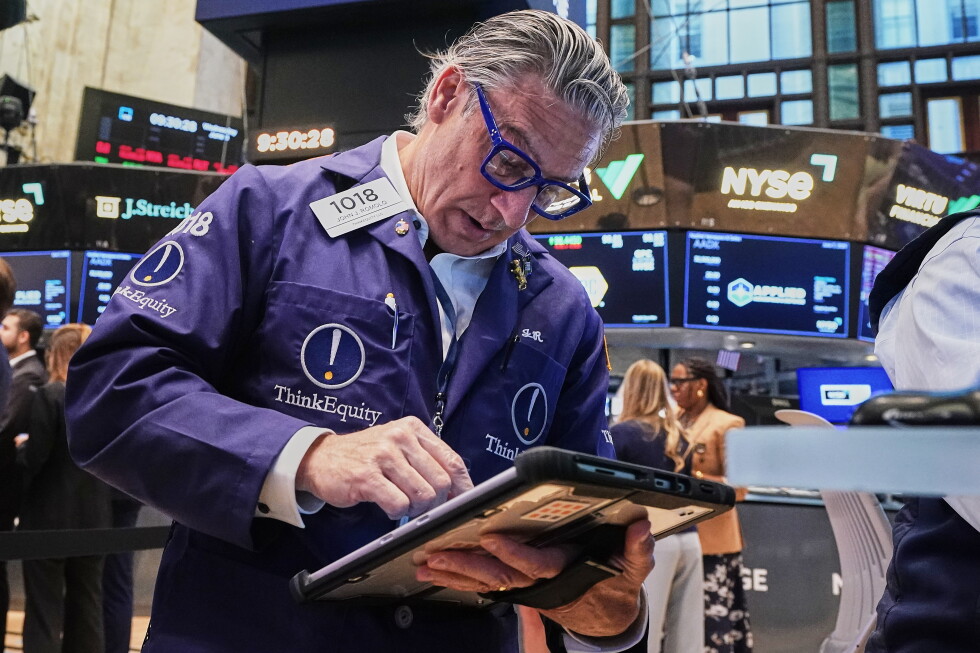
    After a promising morning rally fueled by optimism over potential diplomatic progress in the Middle East, Australia’s benchmark sharemarket surrendered nearly all its early advances on a choppy day of trading, as investors recalibrated their expectations for a swift resolution to ongoing regional tensions. By the closing bell, the ASX 200 posted only a marginal gain of 7.90 points (0.09%) to settle at 8978.70, while the broader All Ordinaries index fared slightly better, climbing 16 points (0.17%) to 9181.10. The Australian dollar also saw a bump, rising to 71.40 US cents against its American counterpart.Trading across the benchmark’s 11 sectors was deeply mixed, with just five closing in positive territory. The information technology, healthcare and materials sectors led the modest uptick, with standout performers including logistics tech firm WiseTech, which gained 3.63% to reach $39.96, accounting software provider Xero that climbed 2.62% to $75.10, and enterprise tech provider Technology One that rose 2.86% to $28.81. In healthcare, global biotech leader CSL added 0.98% to $139.44, sleep apnea device maker ResMed gained 1.52% to $32.70, and medical imaging technology firm Pro Medicus jumped 4.09% to $137.42.The day’s bullish opening came on the heels of another strong overnight session on Wall Street, which had pushed the ASX 200 as high as 9015.4 points early in the day. Over the prior 10 trading days, both the S&P 500 and tech-focused Nasdaq had notched gains of more than 10% each, driven largely by early hopes that new peace talks between the U.S. and Iran would ease regional conflict. Kyle Rodda, senior financial market analyst at Capital.com, explained that the overnight global equity rally was sparked by falling oil prices tied to news that fresh U.S.-Iran negotiations would move forward as ceasefire talks progressed. Even so, Rodda warned that underlying risks of a renewed escalation of conflict remain largely unaddressed. “Superficially, the markets appear to be holding onto hopes rather than anchoring themselves in reality,” he noted, adding that ongoing blockades in the region continue to disrupt global oil supplies, leaving the global economy in a precarious position.Those underlying risks dragged on investor sentiment through the second half of Australia’s trading session, erasing most of the morning’s gains even amid confirmation that U.S.-Iran talks could resume in Pakistan within 48 hours. Benchmark Brent crude prices reversed earlier falls, rising 0.8% to $US95.58, a development that reinforced investor jitters over energy market volatility.In individual corporate news, several companies posted notable gains on the day. Virgin Australia shares jumped 7.23% to $2.52 after the airline announced it had hedged most of its exposure to rising fuel costs, offsetting projected half-year cost increases of $30 million to $40 million with a planned 1% cut to domestic flight capacity to reduce further expenses. Gold explorer Evolution Mining rallied 9.55% to $14.45 following the release of strong positive drill results from its Mungair and Cowal operations. Agricultural chemical maker Nufarm surged 11.26% to $2.47 after an upbeat trading update forecast underlying earnings before interest, depreciation and amortization between $239 million and $244 million, marking a 17% increase from the prior year. The day’s largest corporate loss came from Telix Pharmaceuticals, whose shares fell 4.21% to $14.80 after the company announced a $US600 million convertible note offering set to mature in 2031.

  • Kiln it — porcelain hub pulls foreign artists

    Kiln it — porcelain hub pulls foreign artists

    Nestled in China’s Jiangxi province, Jingdezhen — a city whose name has been synonymous with porcelain craftsmanship for more than a millennium — is steadily building a new reputation as a welcoming crossroads for creative talent from across the globe. Blending centuries-old artisanal traditions with cutting-edge modern infrastructure and an open, inclusive creative culture, the city is drawing a growing stream of international artists, designers, and cultural explorers who find its unique duality irresistible.

    One of the many foreign creatives who have put down roots in Jingdezhen is Canadian artist Philip Read. In the center of his local studio sits a porcelain plate that stands as his most cherished work, and a quiet meditation on the city that inspires him. The hand-painted piece depicts a river cutting through Jingdezhen, splitting its landscape into two complementary worlds. One bank bustles with distinctly modern energy, dotted with recognizable global brand logos from popular chain restaurants KFC and McDonald’s. The opposite bank unfolds into a serene, timeless landscape of sloped tiled roofs, arched stone bridges, green fields, and still water — a slower, calmer existence that holds its own gentle power against the hurry of 21st-century life.

    For Read, the painted plate is far more than just an art object: it is a perfect reflection of Jingdezhen itself. “It is both modern and international, but if you look a little further, Jingdezhen is still calm, still able to make you focus,” he explained. “That is part of its charm.”

    This unique balance — an open, globally connected creative ecosystem that never loses the textured, quiet soul of its centuries-old craft heritage — is the core of Jingdezhen’s growing magnetic pull for artists from overseas. Long renowned globally as China’s unrivaled porcelain capital, the city earned international recognition for its cultural legacy when it was named a UNESCO Creative City of Crafts and Folk Art back in 2014. In recent years, targeted investments in artist residency programs, large-scale international ceramic art exhibitions, open-air creative markets, and cross-cultural exchange platforms have turned the city into a must-visit destination for ceramic artists and creatives of all disciplines. Photographs of international artists at work in Jingdezhen’s creative hubs, like Taoxichuan Ceramic Art Avenue, have showcased the city’s vibrant, inclusive creative scene to audiences around the world, cementing its rising status in the global contemporary art world.

  • Australian pleads guilty to creating deepfake porn in landmark case

    Australian pleads guilty to creating deepfake porn in landmark case

    In a groundbreaking legal milestone that highlights Australia’s escalating battle against AI-fueled online abuse, 19-year-old William Hamish Yeates has entered a guilty plea to multiple charges related to non-consensual deepfake pornography, becoming the first person prosecuted under the country’s newly enacted national law criminalizing manipulated sexual content. The law, which targets the non-consensual creation and distribution of altered intimate imagery, carries a maximum penalty of seven years imprisonment for offenders.

    During Wednesday’s court hearing, Yeates pleaded guilty to four counts: creating and altering sexual material without a victim’s consent, distributing the illicit content, and using a digital communications service in a harassing and offensive manner. Originally, the teenager faced 20 separate Commonwealth charges, but prosecutors from the Commonwealth Director of Public Prosecutions (CDPP) withdrew the remaining counts following his guilty plea. Court documents confirm that Yeates shared the manipulated intimate images of his unnamed victim across multiple accounts on X, the social media platform formerly known as Twitter, without her permission. As he left the courtroom, Yeates declined to answer questions from reporters, and he is scheduled to return for a sentencing hearing next month.

    While a small number of Australian states had previously implemented their own local regulations governing deepfake content, this case marks the first prosecution brought under the unified national law, setting a critical legal precedent for future cases across the country.

    Digital safety experts have long warned that non-consensual deepfake pornography, most often generated using advancing artificial intelligence technology, represents an evolving and dangerous frontier of gender-based abuse and youth bullying. Official data collected by Australia’s eSafety Commission, the country’s internet regulator, backs up these concerns. In 2024 testimony to the Australian parliament, eSafety Commissioner Julie Inman Grant highlighted the explosive growth of harmful deepfake content online, noting that the volume of explicit deepfake material has surged by 550% year-over-year since 2019.

    Grant’s data also underscores the disproportionate impact of this abuse on women and girls: of all deepfake material currently circulating online, 98% is pornographic, and 99% of that explicit content targets female victims. In response to the growing crisis, the eSafety Commission has actively pushed to restrict and ban so-called “nudify” apps within Australia, tools that allow users to generate non-consensual explicit deepfakes from ordinary photos with minimal technical skill.

    For individuals affected by image-based abuse or deepfake harm, support services are available through the BBC Action Line Australia.

  • Xi makes four-point proposal for Mideast peace and stability

    Xi makes four-point proposal for Mideast peace and stability

    Amid a persistently volatile security landscape in the Middle East, triggered by a February joint military strike on Iran by the United States and Israel that sent conflict spiraling across the region and threatened global energy and economic stability, Chinese President Xi Jinping has put forward a comprehensive four-point proposal to advance enduring peace and stability in the region. The proposal was delivered during a Tuesday meeting in Beijing with Sheikh Khaled bin Mohamed bin Zayed Al Nahyan, Crown Prince of Abu Dhabi, United Arab Emirates.

  • Pope heads to Cameroon as separatists announce 3-day pause in fighting

    Pope heads to Cameroon as separatists announce 3-day pause in fighting

    In the opening leg of his four-nation African tour following a stop in Algiers, Algeria, Pope Leo XIV — the first American pope in history — is set to arrive in Yaoundé, Cameroon’s capital, on Wednesday for a high-stakes visit focused on advancing peace, confronting systemic corruption, and clarifying the ethical obligations of political leadership. This trip puts the Vatican at the center of one of central Africa’s longest-running crises, pitting the Church’s commitment to democratic governance against the entrenched authoritarian rule of 93-year-old President Paul Biya, who has held uninterrupted power since 1982 and secured a disputed eighth term in national elections last October.

    The disputed election result has remained a flashpoint of national tension since October 2023. Biya’s main challenger, Issa Tchiroma Bakary, has publicly rejected the official outcome, claiming he won the vote and urging Cameroonians to refuse to recognize Biya’s new term. Even ahead of the pope’s arrival, Vatican officials have made clear that Catholic social doctrine stands in opposition to the authoritarian style of leadership Biya has cultivated over his four decades in power. Just days before the visit, Pope Leo outlined his broader vision for ethical governance in a message to the Pontifical Academy of Social Sciences, dated April 1, that did not name Biya or Cameroon explicitly but carried clear resonance for the trip. In the address, the pope argued that authentic democracy acts as a critical guardrail against the abuse of political power, and that democratic systems only remain healthy when rooted in moral principle and a universal commitment to human dignity. Without that foundational commitment, he warned, democracy risks devolving into either majoritarian tyranny or a thin facade that masks unchecked control by narrow economic and technological elites.

    Upon his arrival in Yaoundé, the pope’s first official engagement will be a face-to-face meeting with Biya at the presidential palace. Following that audience, Leo will address a gathering of government officials, civil service leaders, and foreign diplomats, before traveling to a local orphanage operated by a Catholic congregation of nuns. With roughly 29 percent of Cameroon’s population identifying as Catholic, the visit carries deep cultural and spiritual weight for the country, alongside its political implications.

    The centerpiece of Pope Leo’s time in Cameroon will be a landmark peace gathering scheduled for Thursday in Bamenda, the capital of the country’s Northwest Region, which has borne the brunt of nearly a decade of separatist violence. The conflict erupted in 2017, when English-speaking separatist factions launched an armed rebellion to split from Cameroon’s French-speaking majority and form an independent state, Ambazonia. According to data from the International Crisis Group, the years of fighting have left more than 6,000 people dead and forced over 600,000 residents from their homes.

    In a gesture of goodwill timed to the pope’s visit, separatist groups have announced a temporary ceasefire. The Unity Alliance, a coalition of multiple separatist factions, confirmed the three-day pause in hostilities in a statement released Monday evening, noting that the truce reflects the profound spiritual importance of Pope Leo’s trip and is intended to ensure safe passage for civilians, pilgrims, and visiting dignitaries throughout the visit.

    Following the peace meeting in Bamenda, the pope’s second major public event will be an open-air Mass on Friday in Cameroon’s largest coastal city, Douala, where event organizers are projecting an attendance of roughly 600,000 worshippers and attendees. After wrapping up his time in Cameroon on Friday, Pope Leo will travel on Saturday to Angola for the third leg of his African tour, which will conclude the following week in Equatorial Guinea.

    This Associated Press religion coverage is produced through a collaboration with The Conversation US, with financial support from Lilly Endowment Inc. The AP retains sole editorial responsibility for all content.